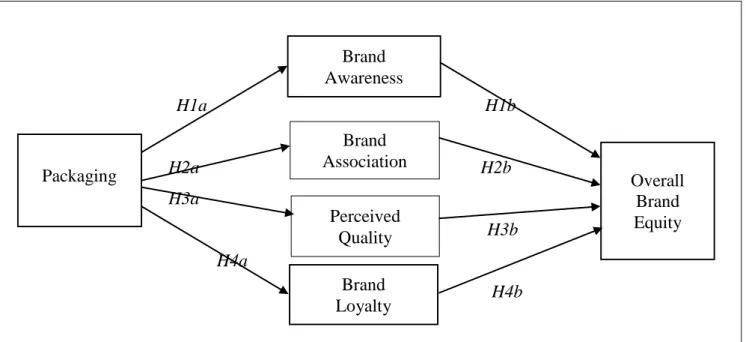
Research findings indicate that brand loyalty, brand awareness, and brand association are the primary sources of customer perceptions of brand equity in the off-the-shelf market. Additionally, traditional herbal medicine companies should consider packaging in their brand building efforts to strengthen overall brand equity in the OTC market.
Introduction
This chapter contains the introductory part of the study, specifically background information, research problem, rationale, scope, research objectives and questions, and contributions, ethical aspects and limitations of the research. Building strong brands is widely recognized as a company's most valuable intangible asset as it adds financial value to the company.
Background to the Research
- Health Care System in Ghana
- Health Infrastructure
- State of Traditional Herbal Medicine in Ghana
- Packaging in Ghana
In the Ghanaian context, alternative medicines are practices and therapies that are not part of the allopathic and traditional health care system. Medicines are estimated to account for nearly 60 to 80 percent of health care costs in Ghana (MOH, 2004).
Statement of the Problem
Although serious efforts have been made to increase and sustain the sale of most Made-in-Ghana herbal medicines in the local market, patronage is low. The problem statement in this research is based on considerations of the impact of packaging and brand equity on the distribution of herbal medicines in the OTC market.
Motivation of the Study
Consequently, this study will contribute to bridging the existing gap on the key sources of brand equity, packaging meaning, and brand equity in the OTC pharmaceutical marketing literature. The study will also provide information to traditional medicine practitioners on the key sources of brand equity for building and managing brand equity and the strategic importance of packaging for brand equity in the OTC market.
Purpose of the Research
Specific Objectives
The purpose of this study is to examine the impact of packaging and brand equity on over-the-counter herbal medicines in Kumasi Metropolis. This will contribute to enriching the strategic packaging and branding decisions of traditional medicine practitioners in the industry.
Research Questions
Study Conceptual Model and Research Hypotheses
All the details of the proposed conceptual model and hypotheses are discussed in the third chapter of this research.
Significance of the Research
The findings of the current study revealed the key role of packaging in supporting the overall brand value of herbal medicinal products in the OTC market. Additionally, the current research is one of the few studies that has examined the empirical importance of packaging and proprietary branding, particularly in the pharmaceutical OTC market.
Overview of Research Methodology
In addition, structural equation modeling was used to determine the significant relationship that existed between packaging and customers' perceptions of brand equity. All hypotheses raised in the study were tested using the standardized coefficient and critical ratio.
De-limitation of the Study
Product Selection
Descriptive statistics were used to capture respondent demographics and participants' perceptions of herbal medicine packaging. Similarly, structural equation modeling was used to evaluate the significant relationships that existed between CBBE and its dimensions.
Theoretical and Geographical Boundary
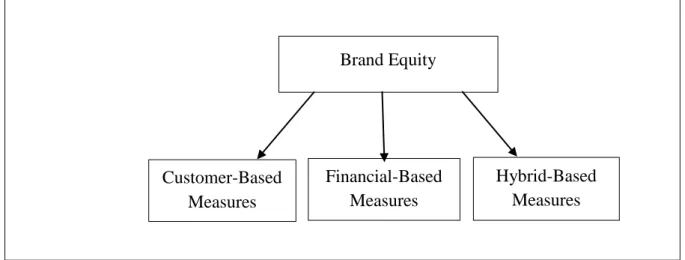
The concept of brand equity was critically examined from the customer perspective as the study sought to identify customer perceptions of the brand equity of herbal medicines in the OTC market. In this case, financial and other hybrid approaches to brand equity research fell outside the scope of the study.
Structure of the Study
The conceptual model also contributed to formulating research hypotheses for realizing the research objectives. The purpose is to extract the data linked to the research questions and objectives for a meaningful interpretation.
Chapter Summary
In addition, the research philosophy, design and approach are discussed, followed by sampling and sampling techniques, the research location and the data source. Chapter six discusses the findings, which involves comparing the empirical results with other relevant previous studies and literature in relation to the research objectives to provide a meaningful explanation for the results.
Introduction
Traditional Medicine
- Traditional Medicine Patronage
- Herbal Medicine
- Medicinal Herbal Market
- Challenges of Herbal Medicine Industry
For example, the World Health Organization (2002b) pointed out that the ratio of traditional health workers to the population in Uganda was between 1:200 and 1:400. It is estimated that herbal medicines have been a key source of primary health care for about 75% to 80% of the world's population, especially in least developed countries (Kamboj, 2000).
Over–the–Counter Medications
Over–the–Counter Medications and Health Care Delivery
It is estimated that over 100,000 OTC health products are dispensed in the United States, which include nearly 1000 major active ingredients (NCPIE, 2002). Also, the use of over-the-counter medications has been promoted by healthcare professionals as more affordable healthcare compared to prescription medications (DeLorme et al., 2010).
Adverse Effects of Over-the-Counter Medications
As a result, misdiagnosis can result in failure to treat the actual cause of the current condition (Brass, 2011). This often creates the impression that over-the-counter medicines are just another consumer health product that can be over-consumed, potentially leading to non-medical use of the product (WHO, 2000b).
Overview of Packaging
Pharmaceutical Packaging Industry
The authors further stated that the pharmaceutical packaging industry is growing, with approximately US$142 billion worth of drug patents expiring in 2017, which could lead to an increase in the generic market and the pharmaceutical industry as a whole. These developments in the pharmaceutical industry have contributed immensely to the promotion of the pharmaceutical packaging industry (Kunal et al., 2012).
Conceptualization of Packaging
In this study, packaging is seen as the container of the product including its appearance and therefore, the definition proposed by Arens 1996 cited in Kuvykaite et al. The second stage of packaging contains the primary container and is usually discarded when the product is consumed.
Elements of Good Packaging Design
According to Robertson (1993), distinctive packaging should reveal the contents of the product and powerfully convey to the customer the satisfaction the product provides. Effective packaging design not only drives demand for the product, but also supports brand loyalty.
Packaging and Over-the-Counter Drug Market
- Functions of Packaging in Over-the-Counter Drug Market
- Logistic Functions
- Marketing Functions
- Environmental Functions
- Packaging and Marketing Mix
The convenience feature of the packaging simplifies the use of the product to the end user. Additionally, warranties and guarantees which are an important part of product strategy often appear on packaging (Kotler & Keller, 2009).
Components of Packaging Design
Visual Elements
It has been suggested that customers may better recall the image elements on the left side of product packaging (Rettie & Brewer, 2000). Previous research shows that the image of a package significantly influences customers' opinions about the taste of the product.
Informational Elements
It is also emphasized that the information written on the package facilitates the easy recognition of the medicinal product (Lalor, 2011). This becomes possible as the information written on the package conveys the product's research, experience and trust attributes (Dimara & Skuras, 2005).
Brands and Products
Branding in the Drug Industry
Companies in the industry are now looking for new ways to consolidate in the market. Furthermore, it is argued that there is a lack of brand focus in the ethical pharmaceutical industry (Shuiling & Moss, 2003).
Branding Strategies in the Drug Industry
More importantly, the perception created by the brand must be demonstrated in the actual features of the product (Ladha, 2005). The brand name should be easy to pronounce, short, memorable, unique and difficult to imitate.
Definition of Brand Equity
- Perspectives of Brand Equity
- Customer – Based Brand Equity
- Financial Perspective of Brand Equity
- Hybrid Approach to Brand Equity
- Empirical Measures of Brand Equity
- Brand Resonance Model
For example, Keller (2013) defined brand equity as the marketing effects that are solely attributed to the brand name. Buyer-defined measures of brand equity include everything associated with the brand and in the buyer's memory (e.g.
Chapter Summary
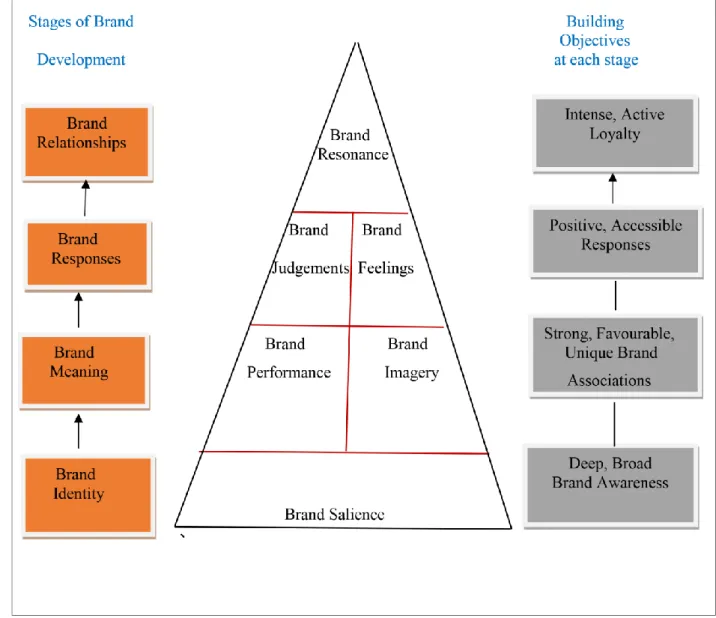
The intensity of brand relationships is the strength of the attitudinal attachment and sense of connection the customer has with the brand. Brand resonance is the ultimate goal of the model and can be a focus of marketing actions and means of interpreting brand-related marketing activities.
Introduction
Another component of brand equity is customers' perception of brand quality (Aaker, 1996). The purpose of the research was to examine the impact of customer-based packaging and brand equity on the OTC market.
Keller`s Brand Equity Theory
Aaker`s Brand Equity Theory
Adopted Customer-Based Brand Equity Theory
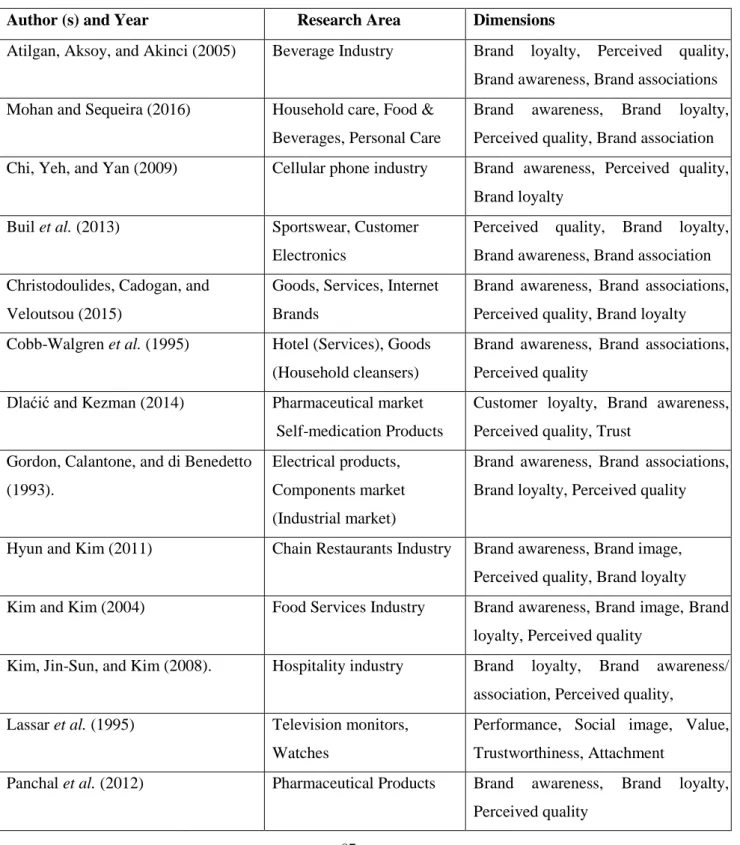
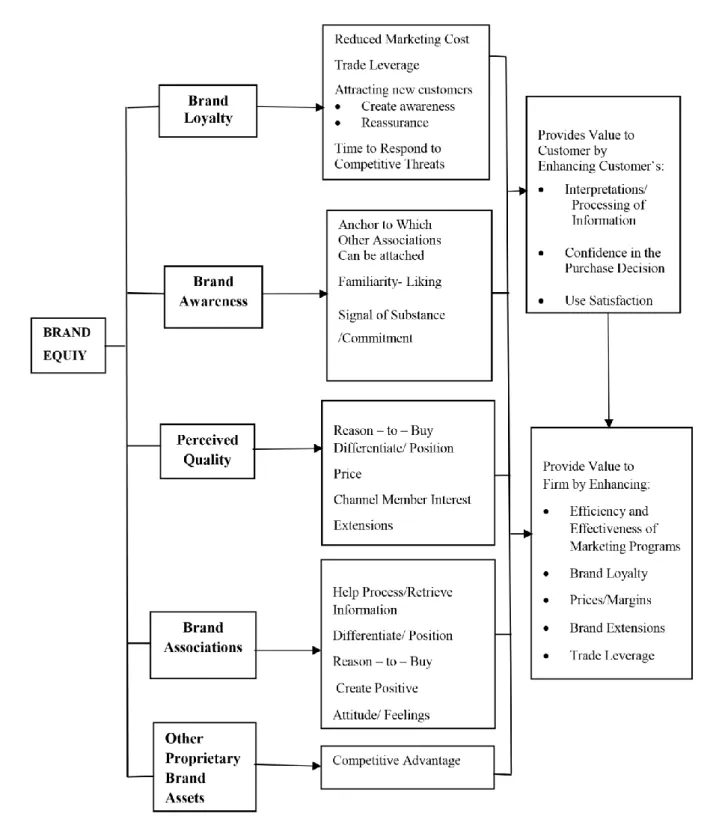
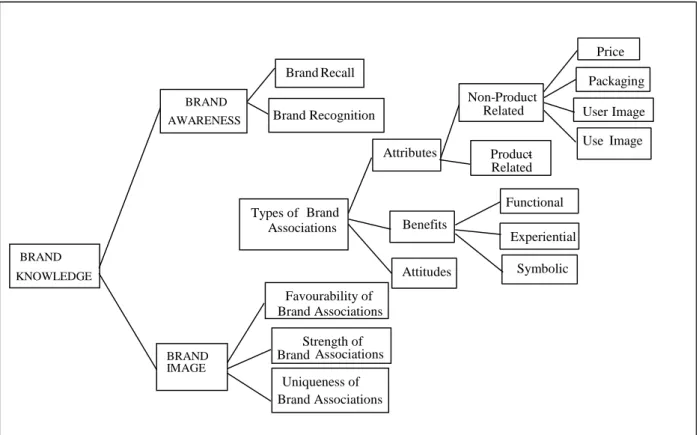
Although the above two models are foundational theories of CBBE in the marketing literature, this dissertation is closely guided by Aaker's CBBE model. For example, Moss (2007) stated that developing brand awareness is an important strategic objective in the pharmaceutical market.
Research Hypotheses
Relationship between Brand Equity and its Dimensions
Relationship between Packaging and Brand Equity Dimensions
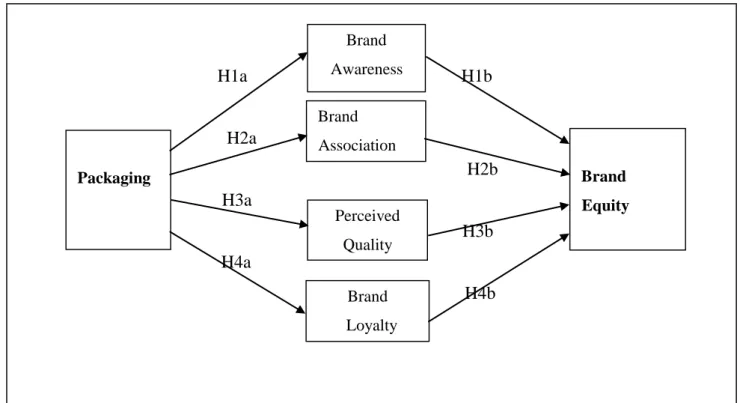
This shows that the majority of the participants in the study indicated that herbal medicine was purchased repeatedly. The results of the relationship between packaging and overall brand equity are summarized in the context of the study's conceptual model in Figure 5.3 below.
Study Conceptual Model
Chapter Summary
The current chapter used Aaker's customer-based brand equity model to develop the conceptual framework of the study. Packaging is considered as an independent construct, brand equity dimensions are considered as mediating factors, while brand equity is the dependent variable in the conceptual framework of the study.
Introduction
Research Problem
- Purpose of the Study
- Specific Objectives
- Research Questions
- Research Hypotheses
To what extent does packaging affect brand awareness in the OTC pharmaceutical market in Kumasi. To what extent does packaging affect perceived quality in the OTC drug market in Kumasi?
Research Philosophy
Positivist Paradigm
It is also argued that it is impossible to completely avoid the inclusion of the researcher's value system from the research. Epistemology indicates the nature of knowledge and the relationship that exists between the researcher and the participant in the study (Mertens, 2010).
Research Approaches
Quantitative Research Method
Quantitative research method refers to an approach that involves the collection, analysis, and presentation of information that is numerical (Teddlie & Tashakkori, 2009). Johnson and Onwuegbuzie (2004) stated that the potential advantages of a quantitative research approach are that it is suitable for studying larger populations and that research findings are objective and generalizable when replicated with many different populations.
Research Design
Survey Research Strategy
Kumasi Metropolis in Ghana
Kumasi Metropolis is one of the thirty administrative districts of the Ashanti Region and contains about 36.2 percent of the population of the region. Ghanaians by birth constitute 95.4 percent of the population, while 0.6 percent are naturalized and 2.1 percent are non-Ghanaians (KMA, 2014).
Study Population
This section provides the results of participants' perceptions of the overall packaging of herbal medicines and its elements in the OTC market in Kumasi. All fit indices also supported the path analysis results in this sample.
Sampling Strategy
Sample Size Determination
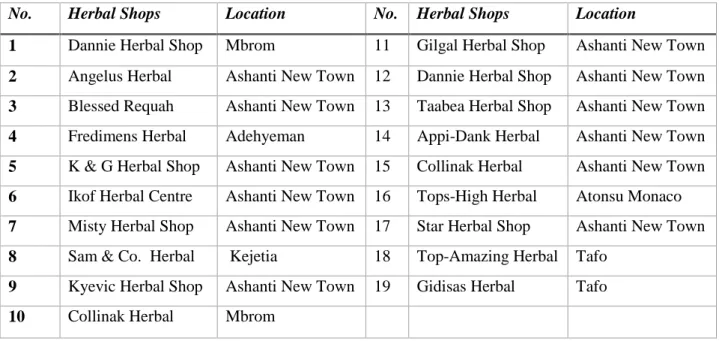
8 Baseman Nnurutɔnbea Atonsu 34 Me Hemmaa Ayaresa Kronom Guadibea 9 Fawus Nhabannurutɔnbea Conch 35 Mojisto de Nhabannuru Ayigya. P Nnuruyɛbea Ahemman 16 Ɔhene Edward Nhabannuru Guadibea 42 Ɔbɔfo Nhabannurutɔnbea Ashanti Kurow Foforo 17 Elshadai Nhabannurutɔnbea Breman U.G.C 43 Fawohobo Awurade Ɔman.
Sampling Techniques
22 A & C Herbal Shop Ayigya 48 Angel Herbal Shop Ashanti New Town 23 Caesar Herbal Shop Kwadaso 49 K & G Herbal Shop Atonsu Monaco 24 Young & Old Herbal Dichemso 50 O & A Herbal Shop Kentikrono 25 Wiselyn Herbal Shop Buokrom Estate 51 Lukanji Herbal Shop Atonsu Monaco. Stratified random sampling was chosen to ensure that each stratum is well represented in the sample to increase the accuracy of the sample at lower cost (Malhotra & Birks, 2007).
Data Sources
- Data Collection Instruments
- Questionnaire Design
- Questionnaire Pilot–Testing
- Questionnaire Administration
- Data Quality Control
The results show that 34.7% of the respondents who buy herbal medicines were extremely poor, while. All measures of fit also supported the structural model results as shown in Table 5.36 below.
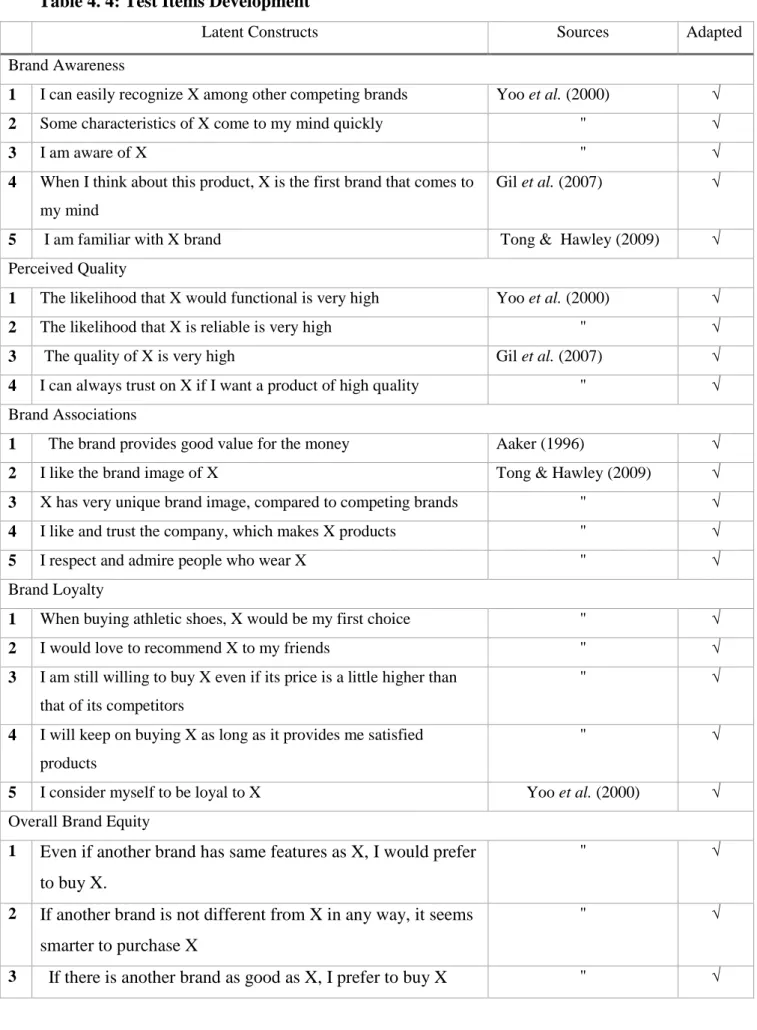
Exploratory Factor Analysis
Confirmatory Factor Analysis
Floyd and Widaman (1995) also noted that the appropriateness of confirmatory factor analysis can be assessed through a number of appropriateness indices. In general, common indices reported in the literature include the chi-square statistic, the goodness-of-fit index (GFI), and the adjusted goodness-of-fit index (AGFI).
Data Analysis Plan
Data Analysis Procedure
Descriptive Statistics
Inferential Statistics
Structural equation modeling (SEM) is increasingly used by researchers across many disciplines as an important statistical technique and ingredient for theory testing as well as theory building (Babin & Svensson, 2012). Furthermore, the maximum likelihood estimation method was used when the structural equation modeling was performed in the present study.
Ethical Considerations
Chapter Summary
Research Objectives
To examine customer perceptions of herbal medicine packaging in the OTC market in Kumasi. To examine the brand equity of herbal drugs in the OTC drug market in Kumasi.
Research Questions
Study Hypotheses
Response Rate
To investigate the influence of packaging on brand loyalty in the OTC drug market in Kumasi.
Data Quality Controls
Reliability of Test Instruments
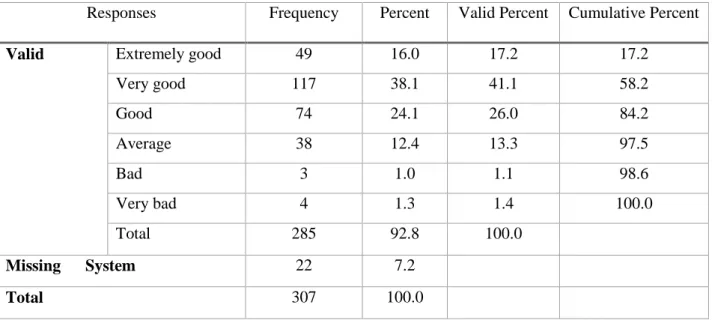
Overall, the impression of a large majority (90%) of respondents is that the packaging color of herbal medicines is of good quality. However, 1.4% (4) and 0.7% (2) believe that the packaging of herbal medicines is poor and very poor respectively.
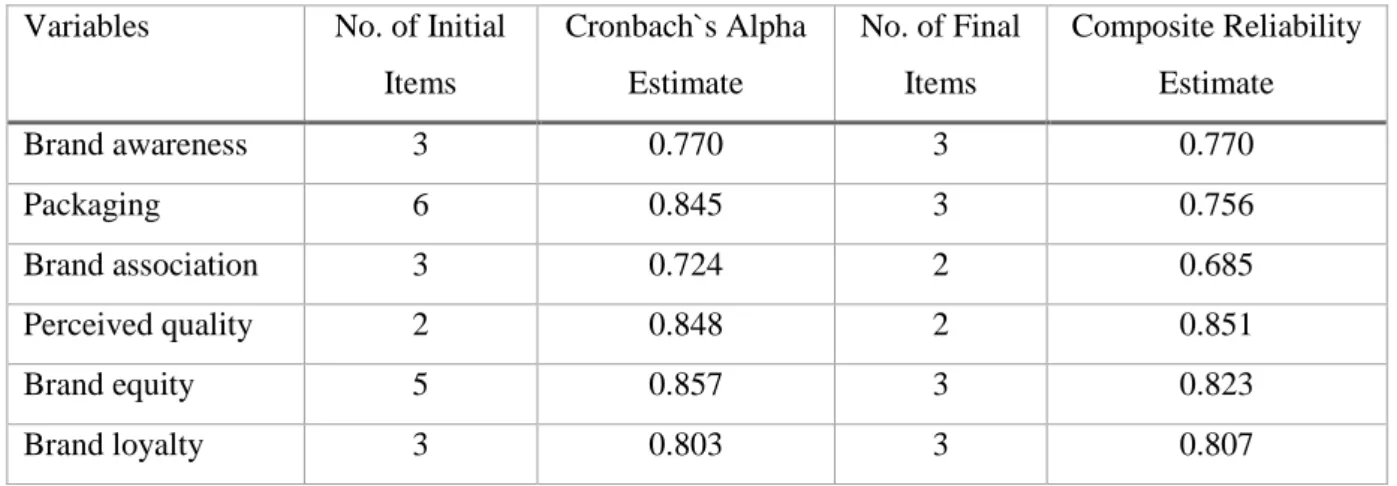
Reliability of Test Instruments of Packaging and Brand Equity
Construct Validity of Packaging and Brand Equity Constructs
Demographic Structure of Respondents
- Gender Characteristics
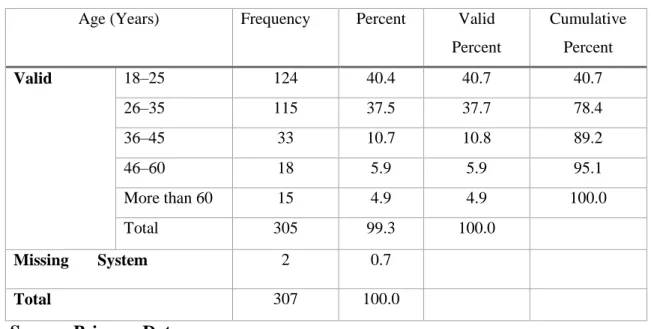
- Age Structure of Respondents
- Educational Characteristics of Respondents
- Occupational Distribution of Respondents
- Respondents` Expenditure per Day
In general, the results show that most of the participants in the study had secondary education, followed by tertiary education and the lowest was basic education. This shows that most of the respondents were traders, followed by those of other professions and the least were clerks.
Herbal Medicines Purchased from the OTC Medicine Market
Capsules of Herbal Medicines
Creams / Ointment of Herbal Medicines
Mixtures/ Liquids of Herbal Medicines
The results indicate that 41.0% of Taabea herbal mixture, 16.8% of Time herbal mixture and 9.8% of Adutwumwaa herbal mixture were purchased from the OTC drug market. The rest was 4.1% of Adom herbal mixture, 3.7% of Solak herbal mixture, 2.0% of Givers herbal mixture, 1.6% of Sparnis herbal mixture and 1.2% of Rooter mixture which out of a total of 244 herbs were purchased.
Herbal Medicines Patronage
Chi-Square Test of Income Spent per Day and Patronage of Herbal Medicine
A Pearson chi-square test of 4.167 with a degree of freedom of 4 and a probability value of 0.384 demonstrates that the observed relationship between income spent per day and frequency of patronage of herbal medicines is not significant at the p < 0.05 level (Saunders et al., 2007). This shows that there is no relationship between the respondents' daily expenditure and the frequency of purchasing herbal medicines.
Respondents` Education Level and Frequency of Patronage of Herbal Medicines
Thus, participants' repeated patronage of herbal medicines in the OTC market does not depend on the level of their income.
Chi-square Statistic of Level of Education and Patronage of Herbal Medicines
Objective One: To Examine Customers` Perceptions of Packaging of Herbal Medicines
- Packaging Colour
- Packaging Photography
- Printed Information
- Packaging Material
- Packaging Typography
- Packaging Shape and Size
- Overall Packaging of Herbal Medicine
The results show that the participants are of the opinion that the information printed on the packaging of herbal medicines sold in the OTC pharmaceutical market is extremely good, very good and good respectively. Overall, a greater majority (73.6%) of the participants are of the opinion that the shape and size of the packaging of herbal medicines sold in the OTC pharmaceutical market in Kumasi is of good quality, while 3.4%.
Relationship between Packaging and Brand Equity
- Factor Analysis
- Structural Equation Modelling
- Path Estimates of Packaging and Overall Brand Equity
- Structural Model Fit Indices of Packaging and Overall Brand Equity
- Structural Model Path Diagram of Packaging and Overall Brand Equity
PL5 I will continue to buy this brand as long as I am satisfied with the packaging of this brand. PL5 I will continue to buy this brand as long as I am satisfied with the packaging of this brand Brand Equity.
Summary Results of Hypotheses Testing
Objective Two: To Examine the Brand Equity of Herbal Medicines in the OTC Drug
Relationship between Packaging and Brand Equity Dimensions
Chapter Summary
Introduction
To Examine Customers` Perceptions of Packaging of Herbal Medicines Sold at the OTC
To Examine the Brand Equity of Herbal Medicines in the OTC Drug Market
To Examine the Influence of Packaging on Brand Awareness in the OTC Drug Market
To Examine the Influence of Packaging on Perceived Quality in the OTC Drug Market
To Examine the Influence of Packaging on Brand Loyalty in the OTC Drug Market
Chapter Summary
Introduction
Summary of the Research
Recommendations
Contribution to Body of Knowledge
Limitations of the Research
Direction for Future Research
Conclusion
Informed Consent
Questionnaire
Turnitin Originality Report
Ethical Clearance Certificate
Gatekeepers Letters
Editing Confirmation