M ANAGEMENT OF A VOCADO P OSTHARVEST P HYSIOLOGY
Robert John Blakey
Submitted in partial fulfilment of the requirements for the degree of
Doctorate of Philosophy in Agriculture
Discipline of Horticultural Science
School of Agricultural Sciences and Agribusiness Faculty of Science and Agriculture
University of KwaZulu-Natal Pietermaritzburg
South Africa
March 2011
Abstract
Avocados are an important horticultural crop in South Africa, especially in the provinces of KwaZulu-Natal, Mpumalanga and Limpopo. The distance to traditional export markets, phytosanitary restrictions to lucrative markets such as China, the USA and Japan and increased competition in the European market have challenged the South African avocado industry. The industry has responded with improved logistics and shipping, a co-ordinated market access program and a global system to co-ordinate exports of avocados to the European market. To remain competitive on the global market, further improvements and innovations are required to improve the efficiency of postharvest operations. These improvements and innovations should be guided by a greater understanding of postharvest physiology. Avocados are a relatively new export crop, so there is still much to be learnt about avocado postharvest physiology and the optimisation of postharvest management. In this regard, reduced temperature storage (1°C) and modified humidity packaging (MHP) were investigated for their effect on fruit physiology and quality, the effect of a water- and ABA- infusion on ripening was examined and the effect of a cold chain break on fruit physiology and quality determined; near-infrared spectroscopy was also examined for its potential for its use in the avocado industry.
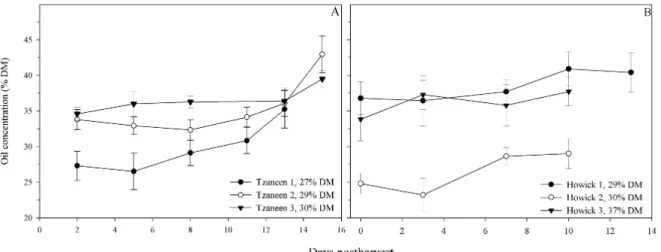
As an initial study, the relationships between individual sugars, protein and oil were studied to understand the changes in avocado fruit during ripening. It was found that mannoheptulose and perseitol were the predominant sugars at harvest, but declined to very low levels during the first 10 days postharvest. The concentrations of glucose and fructose increased, while sucrose declined slightly during ripening. The concentration of protein increased sigmoidally during ripening, reflecting the increase in the ripening enzymes, particularly cellulase and polygalacturonase. The oil content fluctuated slightly during ripening. It is suggested that mannoheptulose and perseitol are important carbon and energy sources during ripening. Glucose concentration was also found to increase earlier in fast ripening fruit compared to slow ripening fruit, which is related to increased cellulase activity and may be related to the ABA functioning.
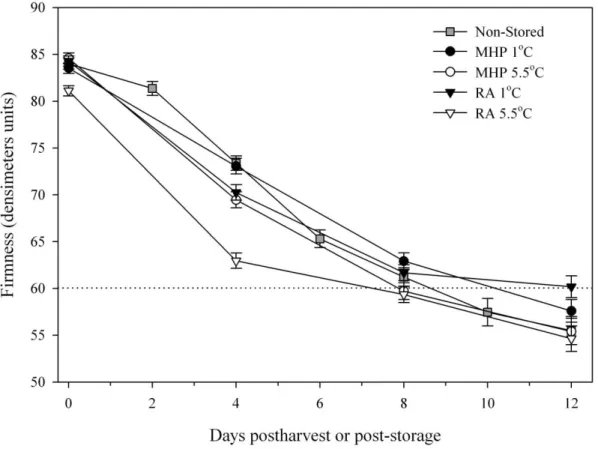
Thereafter, storage and ripening trials in two consecutive seasons showed that 1°C storage and the use of MHP for 28 days reduced mass loss, water loss, ethylene production, respiration, softening and heptose consumption, without appreciably affecting fungal rots, physiological disorders or external chilling injury, compared to fruit stored at 5.5°C and
regular atmosphere respectively. Also, the storage of fruit in MHP delayed the rise in the activity of cellulase during ripening, compared to fruit not stored in MHP, but there was no significant difference in the peak activity of cellulase, polygalacturonase or pectin methylesterase.
In a separate experiment, fruit ripening was significantly affected by the infusion of ABA in an aqueous solution. Water slightly reduced the variation in ripening while ABA reduced the time to ripening and the variation; it is suggested that water stress and ABA are intrinsically involved in the ripening processes and may act as a ripening trigger. The water concentration in fruit was measured non-destructively using reflectance NIR; this model was used to determine the maturity of fruit and the loss of water during cold storage.
In the cold chain break experiment, it was found that although fruit recovered after a cold chain break, in terms of ethylene production and respiration, there was a loss in quality because of severe shrivelling as a result of increased water loss. Fruit that were stored at 1°C were generally of a better quality at ripeness, if the cold chain was broken, compared to fruit stored at 5.5°C. In a follow-up experiment, it was found that significant changes occurred in avocado physiology over a 6h period. The respiration rate of fruit significantly increased after 4h at room temperature and mannoheptulose declined by 32% in control fruit and by 16% in ethephon-treated fruit after 6h. This demonstrates the potential for quality loss in a short amount of time.
Furthermore, a model of avocado ripening is proposed, outlining the role of water, ABA, ethylene, respiration, ripening enzymes and individual sugars. This study has contributed to the understanding of avocado postharvest physiology and should aid in better management of avocados for improved fruit quality and consumer satisfaction.
Declaration
I, Robert John Blakey, declare that the research reported in this thesis, except where otherwise indicated, is my original work. This thesis has not been submitted for any degree or examination at any other university.
Robert J. Blakey March 2011
We certify that the above statement is correct.
Prof John P. Bower
Supervisor March 2011
Dr Isa Bertling Co-supervisor March 2011
Acknowledgements
I would not have been able to complete my degree without the help of many people. I would like to thank the following:
My Father God, for His amazing blessing and provision in my life. To God be the glory.
My mom Kathleen, for her untiring help in the lab and for her support during my studies.
My lovely wife Emily, for her help in the lab and for her patience and support during my writing up.
Prof John Bower and Dr Isa Bertling, for their supervision and guidance and for permitting me to see the world by studying avocados.
My Eritrean brother, Dr Samson Tesfay, for wonderful conversations about life, love and avocados over countless jugs of coffee, and for his incredible help and support.
Molipa Mosoeunyane for his support, advice and guidance.
Lynne Phipson, from the UKZN library, for her help with my incessant journal article requests.
Jacquie Whyte from Higher Degrees, for her great help in getting my thesis accepted.
The many other AGPS postgraduates and academic, technical and administrative staff over the years.
The South African Avocado Growers’ Association for financial support throughout my studies The Hans Merensky Foundation for financial support.
Westfalia Fruit Estates for the provision of fruit
Westfalia Technological Services, especially Dr Zelda van Rooyen, for their considerable assistance in this study and my career.
he message of the cross is foolishness to those who are perishing, but to us who are being saved it is the power of God. For it is written:
“I will destroy the wisdom of the wise;
the intelligence of the intelligent I will frustrate.”
Where is the wise man? Where is the scholar? Where is the philosopher of this age?
Has not God made foolish the wisdom of the world? For since in the wisdom of God the world through its wisdom did not know him, God was pleased through the foolishness of what was preached to save those who believe. Jews demand miraculous signs and Greeks look for wisdom, but we preach Christ crucified: a stumbling block to Jews and foolishness to Gentiles, but to those whom God has called, both Jews and Greeks, Christ the power of God and the wisdom of God. For the foolishness of God is wiser than man’s wisdom, and the weakness of God is stronger than man’s strength. Brothers, think of what you were when you were called. Not many of you were wise by human standards; not many were influential; not many were of noble birth. But God chose the foolish things of the world to shame the wise; God chose the weak things of the world to shame the strong. He chose the lowly things of this world and the despised things – and the things that are not – to nullify the things that are, so that no one may boast before him. It is because of him that you are in Christ Jesus, who has become for us wisdom from God – that is, our righteousness, holiness and redemption. Therefore, as it is written:
“Let him who boasts boast in the Lord”.
1 Corinthians 1:18-31
T
Table of Contents
Hypotheses ... i
Aims ... ii
Objectives ... ii
Chapter 1 Literature review ... 3
1. Introduction ... 5
2. Ripening Physiology ... 5
3. Cold Storage ... 30
4. Mitigating Treatments for Cold Storage ... 38
5. Near-Infrared Spectroscopy ... 49
6. Conclusion ... 53
Literature Cited ... 54
Chapter 2 The relationships between sugars, protein and oil of ‘Hass’ avocado fruit during ripening ... 75
1. Introduction ... 76
2. Materials and Methods... 77
3. Results ... 80
4. Discussion ... 83
5. Conclusion ... 85
Literature Cited ... 92
Chapter 3 Effects of reduced storage temperature and modified humidity packaging on ‘Hass’ avocado physiology and quality ... 95
1. Introduction ... 96
2. Materials and Methods... 97
3. Results ... 101
4. Discussion ... 104
5. Conclusion ... 105
Literature Cited ... 110
Chapter 4 Influence of water and ABA supply on the ripening pattern of
‘Hass’ avocado fruit and the prediction of water content using
near-infrared spectroscopy ... 113
1. Introduction ... 114
2. Materials and Methods... 115
3. Results ... 117
4. Discussion ... 118
5. Conclusion ... 119
Literature Cited ... 121
Chapter 5 The importance of cold chain maintenance and storage temperature to ‘Hass’ avocado ripening and quality ... 123
1. Introduction ... 124
2. Materials and Methods... 125
3. Results ... 127
4. Discussion ... 129
5. Conclusion ... 130
Literature Cited ... 141
Chapter 6 Changes in ‘Hass’ avocado stress physiology following a postharvest application of ethephon ... 143
1. Introduction ... 144
2. Materials and Methods... 145
3. Results ... 148
4. Discussion ... 150
5. Conclusion ... 150
Literature Cited ... 156
Chapter 7 General Discussion ... 159
1. Introduction ... 159
2. Sugars ... 159
3. Enzymes and Cell Wall ... 161
4. Lipids ... 161
5. Phytohormones ... 162
6. Water ... 162
7. Ripening Model ... 163
8. Commercial Considerations ... 166
9. Commercial Implications of Study ... 167
10. Future Research ... 167
11. Conclusion ... 168
Literature Cited ... 169
Hypotheses
The main hypothesis of this study was:
The reduction in metabolic activity and water stress during cold storage, by the reduction of the storage temperature, use of modified humidity packaging and minimisation of cold chain breaks, will result in improved fruit quality of South African ‘Hass’ relative to storage at 5.5°C in regular atmosphere.
Subordinate to this main hypothesis were the following:
1. The heptose sugars, mannoheptulose and perseitol, are important in avocado physiology as sources of carbon and energy in avocado ripening.
2. The storage of South African ‘Hass’ avocados at 1°C for 28 days will reduce metabolic activity during cold storage and will not significantly worsen external fruit quality compared to fruit stored at 5.5°C.
3. The use of modified humidity packaging will reduce the rate of water loss during cold storage of fruit stored at 1°C and 5.5°C. This, in turn, will reduce the ethylene production rate and respiration rate of fruit stored in modified humidity packaging.
4. Near infrared spectroscopy can be used to measure the moisture content of avocado fruit.
5. Avocado ripening is stimulated by water stress and an increase in abscisic acid.
6. A break in the cold chain will cause a transient increase in the metabolic activity of avocados and result in premature softening and increased internal disorders.
7. Exposure to exogenous ethylene, in the form of ethephon, will increase the risk of internal disorders during or after cold storage.
Aims
Determine the effects of 1°C cold storage, modified humidity packaging and cold chain breaks on the ripening physiology and quality of South African ‘Hass’ avocados to better understand the postharvest physiology of avocados and develop an integrated model of ripening. This is in relation to the desire of the South African avocado industry to export fruit to markets with phytosanitary requirements.
Objectives
The objective of the study was to analyse the critical compounds and enzymes in avocado ripening physiology and how these compounds are affected by 1°C storage and the use of modified humidity packaging, two potential commercial cold storage treatments for South African ‘Hass’ avocados. Specifically the objectives were:
1. Identify the role of soluble sugars and their relation to protein synthesis and oil metabolism in South African ‘Hass’ avocado ripening physiology.
2. Determine the effects of storage at 1°C on the physiology of South African ‘Hass’
avocados, particularly respiration rate, ethylene production rate, soluble sugars, total protein, cellulase, polygalacturonase and pectin methylesterase, oil and fruit quality.
3. Determine the ability of near infrared spectroscopy to measure moisture content of whole avocados.
4. Determine the effect of water and ABA infusion on the ripening pattern of avocados.
5. Determine the effects of cold chain breaks on ripening and quality during simulated export of South African ‘Hass’ avocados to Europe.
6. Determine the short term effects of ethephon on stress physiology.
Chapter 1
Literature review
Table of Contents
1. Introduction ... 5
2. Ripening Physiology ... 5
2.1. The Climacteric ... 6
2.2. Carbohydrates ... 7
2.2.1. Monosaccharides ... 7
2.2.2. Polysaccharides ... 8
2.3. Ripening Enzymes ... 10
2.3.1. Cellulase ... 11
2.3.2. Pectinases ... 12
2.3.3. Hemicellulases ... 14
2.3.4. Expansins ... 15
2.3.5. Isozymes ... 15
2.4. Lipids ... 16
2.4.1. Anatomy ... 16
2.4.2. Physiology ... 16
2.4.3. Health Benefits ... 18
2.4.4. Methods to Measure Oil Concentration ... 19
2.5. Water ... 20
2.5.1. Maturity measurement ... 20
2.5.2. Water Stress ... 20
2.6. Phytohormones ... 22
2.6.1. Auxins ... 22
2.6.2. Cytokinins ... 23
2.6.3. Gibberellins ... 23
2.6.4. Ethylene... 24
2.6.5. Abscisic Acid ... 26
2.6.6. Jasmonic Acid ... 27
2.6.7. Salicylic Acid ... 27
2.6.8. Roles of Phytohormones in the Stress Response ... 28
2.7. Anti-Oxidants ... 28
2.7.1. Non-Enzymatic Anti-Oxidants ... 29
2.7.2. Enzymatic Anti-Oxidants ... 29
2.1. Ripening Temperature ... 30
3. Cold Storage ... 30
3.1. Objectives of Cold Storage ... 31
3.2. Chilling Injury ... 32
3.2.1. Chilling Injury Model ... 32
3.2.2. Physiology of Chilling Injury ... 33
3.3. Cold Chain Maintenance ... 37
3.4. Phytosanitary Cold Sterilisation ... 38
4. Mitigating Treatments for Cold Storage ... 38
4.1. Pre-harvest Factors ... 39
4.1.1. Genetics ... 39
4.1.2. Orchard Management ... 39
4.1.3. Growth Regulators ... 40
4.1.4. Nutrition... 40
4.2. Postharvest Methods ... 41
4.2.1. Postharvest Handling ... 42
4.2.2. Storage Temperature ... 42
4.2.3. Heat Treatments ... 43
4.2.4. Low Temperature Conditioning and Acclimation ... 44
4.2.5. Ethylene Control ... 44
4.2.6. Water Loss Reduction ... 46
4.2.7. Atmosphere Modification ... 47
5. Near-Infrared Spectroscopy ... 49
5.1. Background ... 49
5.2. NIR in Horticulture ... 50
5.3. NIR in the Avocado Industry ... 51
6. Conclusion ... 53
1. Introduction
Avocados are still a relatively new crop outside of Central America and the Caribbean, although crop physiology has been studied extensively, problems such as variable ripening and poor internal and external quality abound in the global avocado industry. These problems are due, in part, to the oleaginous nature of the fruit, the low concentration of sugars in the mesocarp, a protracted flowering period and chilling sensitivity. The solutions to these problems depend on adequately understanding fruit physiology and applying mitigating treatments and management practices. It may be impossible to minimise fruit variability, but it may be possible to sort fruit accordingly to minimise variation within cartons and pallets using near-infrared spectroscopy. Avocado ripening physiology, the effects of cold storage on physiology and mitigating postharvest treatments during cold storage to maintain fruit quality are reviewed. A section on near-infrared spectroscopy is included as this branch of spectroscopy offers the opportunity to measure internal quality attributes, such as fruit maturity, of avocados.
Plants are designed to function holistically, in an integrated manner, so the concepts of holism and systems biology have been used as much as possible, but this is challenging because of the linearity of writing and the multi-dimensionality of physiology.
2. Ripening Physiology
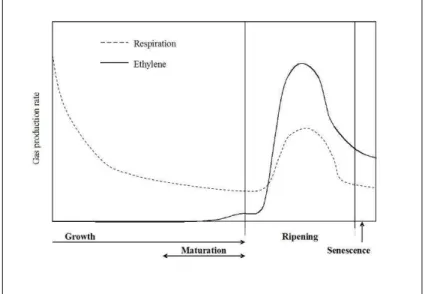
During ripening major biochemical, organoleptic and rheological changes occur that make fruit palatable. Fruit have four major physiological stages of development: growth, maturation, ripening and senescence (Figure 1). Cell division and enlargement are part of growth and determine the final size of the fruit. In avocado fruit, cell division and enlargement continue until harvest, although at a slower rate than immediately after anthesis (Cowan et al., 1997). Growth and maturation, collectively termed the development stage, only occur preharvest. Fruit is deemed mature when it is capable of ripening; if immature fruit are harvested they will merely senesce and decay. In avocados, the maturation stage can be extended by delaying harvest and allowing the fruit to accumulate more oil. Ripening is the result of a number of complex physiological and physical changes with distinct anabolic and catabolic processes that require large amounts of energy and prolonged membrane integrity (Bower and Cutting, 1988; Wills et al., 1998). Senescence is the period when catabolic
processes exceed anabolic processes, resulting in aging and necrosis (Wills et al., 1998).
Harvesting places stress on a fruit as the fruit are detached from the mother plant and must rely on water and energy reserves acquired during preharvest development. These resources are depleted during storage and ripening and the management of these resources determines postharvest fruit quality. Ripening is controlled by many physiological factors: water movement, phytohormones, mineral nutrition, carbohydrates and ripening enzymes all contribute to ripening rate and fruit quality (Awad and Young, 1979; Cutting et al., 1986;
Lieberman et al., 1977; Tingwa and Young, 1974; van Rooyen, 2006).
Figure 1: The four stages of avocado fruit ontogeny: growth, maturation, ripening and senescence.
2.1. The Climacteric
The climacteric phase is part of the ripening process of certain fruits during which a series of biochemical changes is initiated and accompanied by the autocatalytic production of ethylene and an increase in respiration (Rhodes, 1981). Softening, with the concomitant climacteric, is the most evident change in avocados and has been extensively and intensively studied over the years (Pesis et al., 1978a). For fruit to ripen, it is necessary for fruit to accumulate sufficient energy and carbon reserves from the mother plant to supply the postharvest respiratory and metabolic requirements. Ripening requires large amounts of energy because of the numerous metabolic processes that are required to achieve softness. An adequate carbon source is also required for anabolic processes, particularly the synthesis of cell wall modifying enzymes. The management of the climacteric is critical for maintaining fruit quality. Fruit must remain in the pre-climacteric stage during cold storage to ensure
internal quality is not compromised. Fruit quality changes rapidly once fruit enter the climacteric and commercially fruit need to be monitored carefully during ripening to prevent spoilage. These points are discussed in the relevant sections.
2.2. Carbohydrates
Carbohydrates are the carbon source of all biological compounds and major energy source in respiration (Mann, 1987). Carbon dioxide is converted to glucose during the Calvin Cycle and from there various pathways, such as the shikimic acid and pentose phosphate pathways, are used for the synthesis of other organic compounds. Carbohydrates are also a major energy store in plants and are involved in cellular signalling. Sugars are therefore crucial multi-functional compounds in plant physiology. A detailed review of carbohydrates in avocado was made by Tesfay (2009).
2.2.1. Monosaccharides
Avocados contain approximately twenty sugars and sugar alcohols (Bean, 1958), including relatively high concentrations the naturally rare heptose mannoheptulose (D- manno-2-ketoheptose) and its sugar-alcohol perseitol (D-glycero-D-galacto-heptitol) (Liu et al., 1999b). Although their presence in avocado has been long known (Avequin, 1831; Fischer and Passmore, 1890; La Forge, 1917; Muntz and Marcano, 1884), the functions of these sugars have not previously been clearly defined, nor their prevalence over hexoses fully explained, but their importance in avocado ripening has been suggested (Liu et al., 1999a; Liu et al., 2002; Meyer and Terry, 2010). Liu et al. (2002) proposed that mannoheptulose may be a ripening inhibitor, but the heptoses may also be involved in avocado physiology as carbon and energy sources (Liu et al., 1999a; Liu et al., 2002; Meyer and Terry, 2010; Tesfay, 2009; Tesfay et al., 2010) and the decline in heptoses may be due to their utilisation in respiration and metabolism during ripening. Sugar alcohols are thought to function as osmo-protectants during water stress conditions (Popp and Smirnoff, 1995). Perseitol may fulfil this function, particularly in the seed and mesocarp where the water content is relatively low (Tesfay, 2009).
Monosaccharides are used as the carbon source during anti-oxidant synthesis, particularly the synthesis of ascorbic acid and glutathione from glucose (Noctor and Foyer, 1998; Smirnoff et al., 2001). Monosaccharides are also the building blocks of the cell wall.
Glucose is the monomer of cellulose and galacturonic acid and xylose are the predominant
monomers in pectin and hemicellulose, respectively. The low concentration of hexose sugars in the mesocarp may be due to the unusually high concentration of lipids, because fructose is a precursor in triglyceride synthesis (Basciano et al., 2005; Zavaroni et al., 1982). Fruit from the Lowland (West Indian) race have a higher concentration of sugars, and have a lower concentration of oil, compared to fruit from Mexican and Guatemalan races (Shaw et al., 1980). This is further discussed in Section 2.4.
Besides being used as carbon and energy sources, sugars are also signalling molecules (León and Sheen, 2003) and each sugar may exert different effects (Campbell et al., 2000).
Glucose and ethylene are antagonistic and glucose contributes to the regulation of abscisic acid (ABA) biosynthesis and signalling (Campbell et al., 2000; León and Sheen, 2003).
2.2.2. Polysaccharides
Carbohydrate polymers are used extensively in the plant for energy storage and cell wall synthesis.
2.2.2.1. Starch
The exo- and mesocarp contain very little starch, 9-11 mg.g DM-1 (Liu et al., 1999a; Liu et al., 2002; Pesis et al., 1978b). Pesis et al. (1978b) found that the concentration of starch declined and the activity of amylase (EC 3.2.1.1 or 3.2.1.2) increased in the mesocarp during ripening; at ripeness starch was not detectable. Liu et al. (2002), however, found that the starch was not completely solubilised during ripening. Starch probably contributes to the energy supply during ripening (Pesis et al., 1978b), but is present in lower concentrations than the heptoses.
Most plants store carbohydrates as starch, but sugar alcohols and oligosaccharides can also fulfil this function (Heldt and Heldt, 2005). Perseitol is thought to be a storage compound in avocado (Tesfay, 2009). Oligosaccharides are quite rare in avocados, but their importance should not be neglected. Further research on starch and oligosaccharides is warranted.
2.2.2.2. The Cell Wall
The cell wall is a complex structure that provides support and rigidity to plant cells and the plant as a whole. The cell wall of fruit consists of cellulose, hemicellulose and pectin (Colinas-Leon and Young, 1981). Cellulose is composed of long chains of β-1,4-glucan (Fischer
and Bennett, 1991). Hemicellulose is predominantly composed of xyloglucan with numerous side chains (Colinas-Leon and Young, 1981; Fischer and Bennett, 1991). Cellulose and hemicellulose are intrinsically associated in the cell wall microfibrils (Cosgrove, 2001; Fischer and Bennett, 1991). Pectin is a heteropolysaccharide and may consist of homogalacturonan or rhamnogalacturonan with numerous side chains (Willats et al., 2001). The strength of the cell wall depends on the mechanical properties and linkages between the wall constituents (Jarvis, 1984), but the construction of the cell wall and how the constituents interact to form a strong yet tractable network is not entirely certain and a number of models have been proposed (Cosgrove, 2001; Fischer and Bennett, 1991). The substrate for the ripening enzymes, i.e. the cell wall, is not adequately characterised, highlighting the lack of understanding of fruit ripening.
Pectin may consist solely of α-D-1,4-galactopyranuronic acid (GalpA), forming homogalacturonan, or include rhamnopyranose (Rhap), when the disaccharide α-D- GalpA(1→2)αL-Rhap forms rhamnogalacturonan (Highley, 1997; Willats et al., 2001). The galacturonic acid residues may be methyl-esterified, acetylated and/or substituted with xylose or apiose. Rhamnogalacturonan can have oligosaccharide side chains attached that increase the resistance to degradation by pectinases (Fischer and Bennett, 1991; Willats et al., 2001).
The two most common side chains are galactan and (1→5)-α-L-arabinan (Fischer and Bennett, 1991; Geshi et al., 2002). The galactan side chain provides additional strength and rigidity to the wall (McCartney et al., 2000). Boron and calcium are both necessary for the cross-linkage of pectin chains (Hu et al., 1996; Jarvis, 1984; Matoh and Kobayashi, 1998).
Pectin chains are joined when non-esterified galacturonan segments are bonded together non- covalently by calcium ions (Jarvis, 1984).
Homogalacturonan is highly methylated when exported into the cell wall and is de- esterified by the action of pectin methylesterase (PME) (Willats et al., 2001). Different PME isozymes determine the methyl-esterification distribution pattern in the pectin chains, which in turn affects the physical properties of pectin gels by affecting calcium binding. The compressive strength, elasticity, water holding capacity and porosity of homogalacturonan, and therefore the cell wall, is significantly influenced by the pattern and degree of methyl- esterification in the primary cell wall (Willats et al., 2001).
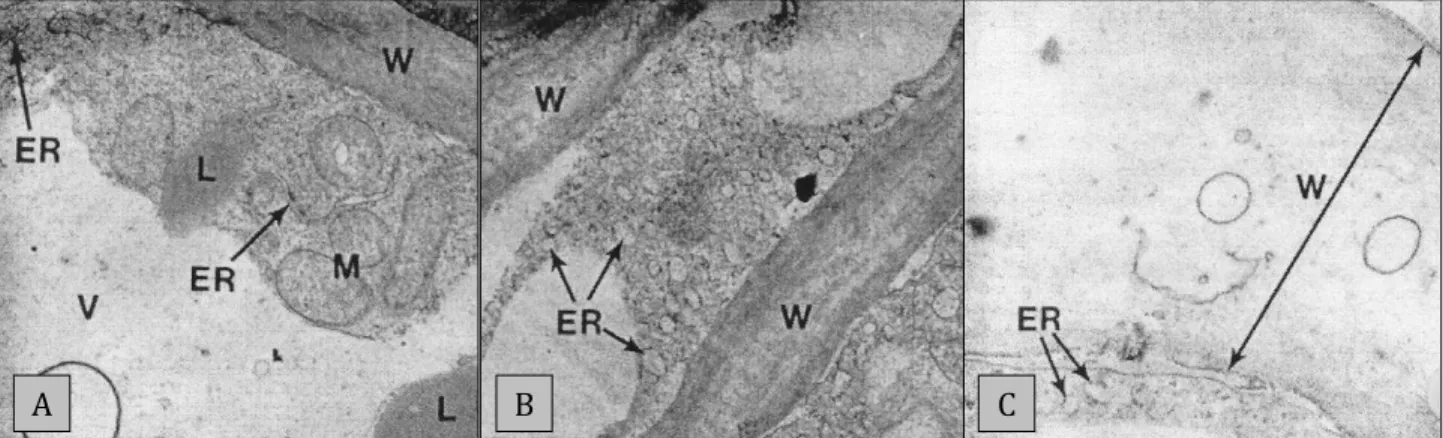
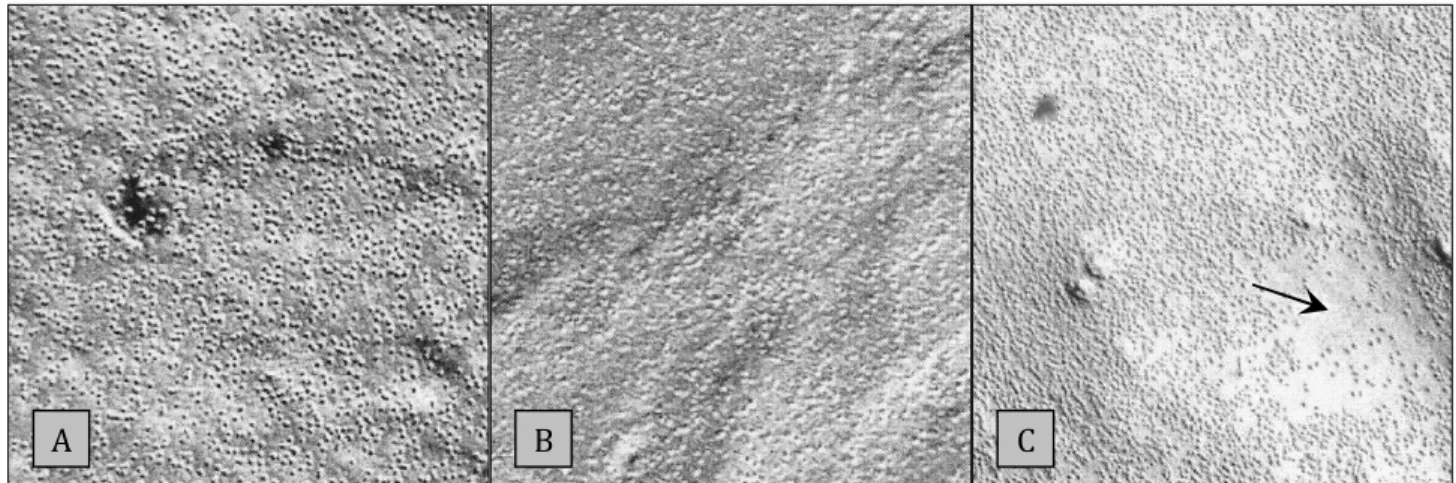
The degradation of the cell wall during ripening is shown in Figure 2. In an unripe fruit the fibrils and matrix of the cell wall are compacted (Figure 2A). At the climacteric the fibrils have been loosened and there is a loss of electron density; the endoplasmic reticulum is also swollen and vesiculate (Figure 2B). At ripeness, the cell wall is almost completely degraded.
The vesicles in the wall are thought to be the remnants of the plasmodesmata (Figure 2C) (Platt-Aloia, 1980). Comparisons in the cell wall at different maturity stages were not made, but may provide insight into ripening physiology as more mature fruit ripen more rapidly than less mature fruit, and stored avocados ripen more rapidly than unstored fruit (Cutting et al., 1986; Cutting and Wolstenholme, 1991; Pesis et al., 1978a). This is likely due to alterations in the cell wall during maturation and cold storage that has an effect on the ripening rate (Cosgrove, 2001). PME has an inverse relationship to fruit maturity, i.e. declining through the season and less mature fruit showed a rapid decline in PME activity postharvest while the PME activity in more mature fruit declined only after 3-5 days (Zauberman and Schiffmann- Nadel, 1972). These alterations would make the middle lamella more susceptible to enzyme action later in the season. Also, the concentration of alcohol insoluble solids (polysaccharides such as cellulose, hemicellulose, starch and pectin) declined from 30 to 20% DM as ‘Hass’ fruit matured from 23 to 36% DM (Eaks and Sinclair, 1978). It is thought that continued enzyme activity during cold storage results in fruit ripening sooner after removal from cold storage.
Figure 2: Electron micrographs of mesocarp cell wall of an (A) unripe, (B) climacteric and (C) ripe fruit, taken from Platt-Aloia (1980).
* ER = endoplasmic reticulum, L = lipid, M= mitochondria, V = vacuole, W = cell wall
2.3. Ripening Enzymes
The changes in the cell wall are the most important changes that occur during ripening because this brings about softening and palatability. Softening is achieved by the solubilisation and depolymerisation of the cell wall by a number of enzymes. The enzymes operating during ripening function co-operatively, synergistically and in a prescribed manner to break down the cell wall (Ali et al., 2004; Awad and Young, 1979; Brummell et al., 2004; Hatfield and Nevins, 1986; Hofman et al., 2002a; Ronen et al., 1991; Tateishi et al., 2007). Therefore, looking at one enzyme in isolation will not provide adequate answers about avocado ripening (Ali et al.,
A B C
2004).
The cell wall is not completely solubilised; rather it is disrupted and weakened by the combined action of the ripening enzymes (Colinas-Leon and Young, 1981; Hatfield and Nevins, 1986; Pesis et al., 1978a; Platt-Aloia, 1980). The cell wall has to be modified before most depolymerising enzymes can act on the cell wall because the native cell wall is not a suitable substrate. Each component of the cell wall (cellulose, pectin and hemicellulose) has an enzyme system (cellulases, pectinases and hemicellulases) composed of different individual enzymes to prepare and then depolymerise each cell wall component (Karr and Albersheim, 1970). The ability of an enzyme to depolymerise a model substrate cannot be directly correlated to its ability to act in vivo because its exact substrate may not be available in vitro; the activity of other enzymes may improve – or be a requirement for – the activity of the enzyme of interest (Goulao et al., 2008).
The model crops for studying fruit ripening enzymes for climacteric and non-climacteric fruit are tomato (Lycopersicon esculentum) and strawberry (Fragaria × ananassa), but different crops, and even cultivars, show different patterns of enzyme expression during ripening, so inferences cannot be made from the model crops (Ali et al., 2004; Brummell, 2006; Goulao et al., 2008; Goulao and Oliveira, 2008). Avocado enzymology has been studied in a fair amount of detail since the late 1970s, but far more research in this area is still required. Cellulase, PG, PME, β-galactosidase, xylanase and xylosidase are all involved in avocado ripening, but only the former three enzymes have been studied in detail.
Besides being involved in fruit ripening, the cell wall modifying enzymes are also involved in response to fungal pathogens so they are critical components of postharvest quality (Matteo et al., 2005; Ronen et al., 1991).
2.3.1. Cellulase
The correlation between cellulase activity and fruit softening has been known for over thirty years, when it was also found that ethylene plays a role in controlling cellulase activity (Pesis et al., 1978). Cellulase is critical in avocado ripening, because of its relationship with the ethylene climacteric and its activity is required for functioning of other cell wall hydrolases (Hatfield and Nevins, 1986). Avocado cellulase has been extensively studied because of its involvement in softening and sensitivity to ethylene. Cellulase activity was linked with avocado softening in the late 1970s (Awad and Young, 1979; Pesis et al., 1978a). Later studies analysed cellulase activity in relation to the ethylene action inhibitor 1-methylcyclopropene
(1-MCP) and it was found that cellulase activity is inhibited by 1-MCP (Feng et al., 2000; Jeong and Huber, 2004).
Measuring cellulase activity, because of the heterogeneous nature of cellulose in vivo, is difficult (Highley, 1997). Furthermore, the cellulase complex is also comprised of endo-β-1,4- glucanases (EC 3.2.1.4), exo-1,4-glucanases (EC 3.2.1.91) and β-1,4-glucosidases (EC 3.2.1.21).
These enzymes also have isozymes with specific roles in abscission and ripening (Bonghi et al., 1992; Ferrarese et al., 1995; Highley, 1997; Kanellis and Kalaitzis, 1992) and induced by different phytohormones (ethylene or auxin) (Durbin and Lewis, 1988). The analysis of total enzymatic activity is often masked by the presence of multiple isozymes with different patterns of expression under different modes of regulation (Goulao et al., 2008; Ronen et al., 1991). It is therefore most useful to study each isozyme separately but this is seldom done.
2.3.2. Pectinases
The pectinases depolymerise and solubilise native pectin (pectinic acid) to bring about final softening in avocado fruit. Before pectin can be depolymerised pectinic acid must be demethylesterified to pectic acid (polygalacturonic acid) by pectin methylesterase (PME). This allows polygalacturonase (PG) to act on the pectic acid and produce oligogalactronic acid and galacturonic acid. β-Galactosidase (Gal) further breaks down the oligogalacturonic acid to galacturonic acid (Figure 3). It is apparent that PG activity in vivo is extremely limited without the action of PME.
Pathogenic pectinases have been studied extensively and intensively because pectinases are responsible for the symptoms of soft-rot diseases and because pectinases and pectin fragments induce a number of physiological responses in plants (Highley, 1997).
Pectinicacid
PME
Pecticacid PG Oligogalacturonicacid Galacturonicacid
Gal
Galacturonicacid
Figure 3: Enzymatic break down of pectinic acid to galacturonic acid during ripening, via the action of pectin methylesterase (PME), polygalacturonase (PG) and β-Galactosidase (Gal).
2.3.2.1. Pectin Methylesterase
PME (EC 3.1.1.11) activity has been found to fluctuate considerably during avocado ripening, but is thought to decline during ripening (Awad and Young, 1979; Awad and Young, 1980; Fuchs and Zauberman, 1987; Kaiser et al., 1996; Rouse and Barmore, 1974; Zauberman and Jobin-Décor, 1995). Besides preparing pectin for solubilisation by PG, the enzyme also has other roles in plant physiology. PME generates free carboxylic groups during demethylesterification which modifies the pH and cation exchange properties of the cell wall, affecting a range of ripening enzymes (Matteo et al., 2005; Micheli, 2001). PME activity is modulated by pH and ion concentration, with isoform expression being sensitive to pH and the degree of esterification of the substrate, indicating a possible feedback mechanism (Bordenave et al., 1996; Catoire et al., 1998; Willats et al., 2001). Complicating the matter further, a specific proteinaceous inhibitor of PME has been identified in kiwifruit (Actinidia deliciosa) and Arabidopsis thaliana (Matteo et al., 2005). While a PME inhibitor has not been identified in avocado as yet, the possibility of its existence makes studies in pectinase activity potentially very complex.
2.3.2.2. Polygalacturonase
Polygalacturonase (EC 3.2.1.15) activity increases sigmoidally during ripening, with very little activity during the first week postharvest (Awad and Young, 1979). It has been proposed that cellulase disrupts the cell wall matrix, allowing PG access to the pectin in the wall matrix;
early softening is controlled by cellulase, mediated by ethylene, with polygalacturonase responsible for final softening (Jeong et al., 2002). It was found that cellulose was only depolymerised when PG activity increased (Colinas-Leon and Young, 1981), lending weight to the theory that cellulase initially alters the bonding of the fibrils and the cell wall is only depolymerised later in ripening (Platt-Aloia, 1980).
PG activity is increased in wounded fruit (Zauberman and Fuchs, 1981). PG synthesis is decreased in low oxygen conditions below about 7.5% O2 (Kanellis et al., 1991); PG activity is stimulated by treatment with ethylene and inhibited by treatment with 1-MCP (Buse and Laties, 1993; Feng et al., 2000; Jeong et al., 2002).
2.3.2.3. Galactosidase
β-Galactosidase (EC 3.2.1.23) is characterised by its ability to hydrolyse terminal, non- reducing β-D-galactosyl residues from a variety of substrates. Numerous isozymes have been identified in various species. Three isoforms have been identified in avocado: AV-GAL I, AV- GAL II and AV-GAL III (De Veau et al., 1993; Tateishi et al., 2001, 2002; Tateishi et al., 2007).
AV-GAL I is indirectly up-regulated by ethylene; the trend in activity tracks the climacteric. AV- GAL II activity increases slightly postharvest. AV-GAL III is also ethylene-dependent, but does not decline at softness as AV-GAL I does, and is the most active against native cell wall polysaccharides (Tateishi et al., 2007). The activity of α- and β-galactosidase declined postharvest (Jeong et al., 2002). The authors explained this decline as being a net effect and isozymes will show different responses during ripening, but the same method was used in both investigations. The decline in α-galactosidase was slowed by the application of 1-MCP, indicating that this enzyme is negatively regulated by ethylene.
2.3.2.4. Arabinanase and Galactanase
Arabinanase and galactanase degrade arabinan- and galactan-type side chains of rhamnogalacturonan (Yashoda et al., 2007). Arabinanase and galactanase had the second and third highest glycanase activity, after mannanase, in ripe mango fruit - which in some ways is similar to avocado, as a climacteric subtropical fruit (Yashoda et al., 2007). These enzymes have not been assayed in avocados and provide an opportunity for study. EC numbers are not provided because the enzymes have not been characterised in avocados.
2.3.3. Hemicellulases
Hemicellulose comprises about 30% of the cell wall so the hemicellulases are an important category of cell wall hydrolases.
2.3.3.1. Xylanase & Xylosidase
β-1,4-xylan is the most abundant hemicellulose and is the second most abundant polysaccharide after cellulose (Highley, 1997). Xylanase (endo-β-1,4-D-xylanase, EC 3.2.1.8) and xylosidase (exo-β-1,4-D-xylosidase, EC 3.2.1.37) are responsible for the hydrolysis of xylan. Xylanase hydrolyses xylan to xylopentose and xylose is produced from this product by xylosidase (Kar et al., 2006; Ronen et al., 1991) (Figure 4). The concentration of xylose
increased during ripening, indicating the activity of these hemicellulases (Hatfield and Nevins, 1986). A later study showed that, preharvest, xylanase decreased early in the season and then stabilised; xylosidase showed an opposite trend, with the ratio between the two changing from 1:1 to 1:3 through the season (Ronen et al., 1991). In early season fruit, xylanase declined slightly from harvest to day 3 and then increased to ripeness. Xylosidase showed a similar trend to cellulase, with a peak at the climacteric peak, six days after harvest (Ronen et al., 1991).
xylanxylanasexylopentosexylosidasexylose Figure 4: Enzymatic decomposition of xylan to xylose
2.3.3.2. Mannanase and Mannosidase
β-1,4-Mannan is the an abundant hemicellulose comprised of mannose (Highley, 1997).
The trends for mannanase (endo-1,4-β-D-mannanase, EC 3.2.1.78) and mannosidase (exo-β- 1,4-D-mannosidase, EC 3.2.1.25) in avocados have not been published, but mannanase and mannosidase were the glycanase and glycosidase with the highest specific activities in mango (Yashoda et al., 2007). It is suggested that these enzymes will similarly increase during ripening.
2.3.4. Expansins
Expansins play an important role in the fruit softening phenomenon (Giovannoni, 2001;
Yashoda et al., 2007). They are a group of extra-cellular proteins that regulate cell wall extension and dissolution by disrupting hydrogen bonds between cellulose microfibrils and xyloglucans (Goulao et al., 2008; Rose and Bennett, 1999; Rose et al., 2003). Expansins play a role in finger drop and ripening of bananas (Mbéguié-A-Mbéguié et al., 2009), apple softening (Goulao et al., 2008) and tomato ripening (Giovannoni, 2001; Rose et al., 2000). The only published information on expansins in avocado found that expansins do cause cell wall extension in ripe avocado fruit (Rose et al., 2000).
2.3.5. Isozymes
The study of ripening enzymes is complicated by the number of isozymes for each enzyme (Goulao et al., 2008). The relative concentrations of isozymes and their activity levels
appear to be important in regulating the ripening rate (Ali et al., 2004; Soh, 2002). Cellulase has at least eleven isoforms in avocado (Kanellis and Kalaitzis, 1992). PG has a number of isozymes, because of post-translational modifications (Buse and Laties, 1993). Three isoforms of β-galactosidase have been identified in avocado (Tateishi et al., 2007).
2.4. Lipids
Being an oleaginous fruit, the oil content of avocado is one of the fruit’s primary characteristics. A high proportion of avocado oil is monounsaturated and there is much interest because monounsaturated fatty acids reduce blood cholesterol and thereby the risk of coronary heart disease and strokes (Requejo-Tapia, 1999). Coronary heart disease and strokes, caused by atherosclerosis, are increasingly common worldwide because of the increased consumption of saturated fats (Enser, 1995).
Oil concentration is the best measure of avocado maturity and contributes to eating quality (Hofman et al., 2002a). Oil content increases during maturation from about 10% to over 50% DM in late season fruit. Lipid production is energy intensive and has been identified as a yield limiting factor in avocados, compared to carbohydrate-rich fruit (Kaiser et al., 1992;
Wolstenholme, 1986).
2.4.1. Anatomy
Avocado mesocarp predominantly contains isodiametric parenchyma cells penetrated by vascular strands and a small percent (2%) of scattered idioblasts – specialised oil storage cells (Platt-Aloia, 1980). Idioblasts have a triple-layer cell wall comprised of a cellulose primary wall, a suberin layer and an esterified pectin tertiary wall. These cells accumulate oil to such an extent that the cytoplasm is compressed and virtually non-existent at maturity and hence are metabolically inactive (Platt-Aloia, 1980). Oil continues to accumulate until harvest so that late harvest fruit have a much higher concentration of oil than early season fruit, with the associated decrease in water content.
2.4.2. Physiology
Plants principally utilise lipids in cell structures and for energy storage. The structural lipids form the cell membrane as phospho- and glycolipids, while the storage lipids are triglycerides in the idioblasts (Requejo-Tapia, 1999). The role of oil in avocado physiology is
not well understood although there is evidence that lipid metabolism continues postharvest (Erickson and Kikuta, 1964; Kikuta and Erickson, 1968).
2.4.2.1. Fatty Acids
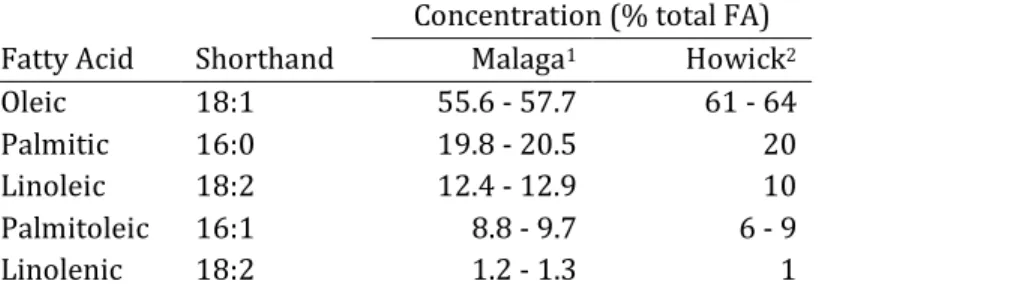
Avocados contain five triglycerides in significant amounts: palmitic (16:0), palmitoleic (16:1), oleic (18:1), linoleic (18:2) and linolenic (18:3) acids. Oleic acid is the most abundant fatty acid (FA) in mature fruit, followed by palmitic, linoleic, palmitoleic and linolenic (Table 1), but the relative concentrations depend on production location and cultivar (Luza et al., 1990; Requejo-Tapia, 1999). The FA profile is an adaptation to environment, where fruit grown in cooler climates have a higher proportion of unsaturated to saturated fatty acids.
Saturated fatty acids exist in a trans configuration and can therefore pack closer together to remain in a liquid crystal (fluid) state at higher temperatures. When the temperature increases, the molecules increase their kinetic movement and carbon-carbon rotation results in cis arrangements to increase fluidity while maintaining membrane integrity (Stryer, 1988).
Unsaturated fatty acids invariably exist in the cis configuration, which is unsuitable for close packing of the triglycerides, so the liquid crystal state occurs at relatively lower temperatures.
Micro-organisms grown at lower temperatures have increased unsaturated fatty acids to maintain the liquid crystal state of the membrane (Moreton, 1988; Stryer, 1988). Avocados grown in cooler climates also had a higher ratio of monounsaturated to saturated fatty acids (Kaiser and Wolstenholme, 1994; Requejo-Tapia, 1999). Increased FA unsaturation may also improve the ability of fruit to withstand cold storage because the cell membrane will remain liquid at lower temperatures. Minimal change in the fatty acid composition was found to occur postharvest (Luza et al., 1990).
Table 1: Approximate concentration of fatty acids in unripe Spanish and South African ‘Hass’ avocado mesocarp.
Concentration (% total FA)
Fatty Acid Shorthand Malaga1 Howick2
Oleic 18:1 55.6 - 57.7 61 - 64
Palmitic 16:0 19.8 - 20.5 20
Linoleic 18:2 12.4 - 12.9 10
Palmitoleic 16:1 8.8 - 9.7 6 - 9
Linolenic 18:2 1.2 - 1.3 1
1 Early season fruit from Malaga, Spain with a warm Mediterranean climate (Meyer and Terry, 2008; Meyer and Terry, 2010).
2 Mid season fruit (August) from cool subtropical KwaZulu-Natal midlands, South Africa (Kaiser etal., 1992).
2.4.2.2. Preharvest
Oil synthesis requires more than twice the energy input compared to carbohydrate synthesis; this may explain the relatively low yields of avocado when compared to crops that use carbohydrates as an energy store (Wolstenholme, 1986). Kaiser et al. (1992) compared the oil accumulation pattern pre-harvest of two production locations and found that there was a slight decline in oil concentration in fruit from the warmer location concomitant with the spring flush (November in the southern hemisphere). They hypothesised that this could be because the oil was used as an energy source for the vegetative flush, the oil was used as an energy source for the fruit and respiration increased as the ambient temperature increased, or oil synthesis ceased. The third option seems most likely because the idioblasts are metabolically inactive once the suberin layer is laid down and there was no evidence of plasmodesmata penetrating beyond the primary cell wall into the suberin layer, preventing movement of the oil out the idioblasts (Platt-Aloia, 1980). Further, as Kaiser et al. (1992) noted, cell division continues until harvest and the concentration of oil may have declined relative to fruit size.
2.4.2.3. Postharvest
Early reports found that oil concentration fluctuated postharvest but increased during storage and declined during ripening; however these results were expressed on a fresh mass basis (Erickson and Kikuta, 1964). It was later concluded that this increase during storage was due to continued dehydration postharvest (Requejo-Tapia, 1999). The increase in the concentration of oil during ripening was attributed to an increased recovery of lipids due to cell wall break down (Meyer and Terry, 2008; Mostert et al., 2007). This may be partly responsible, but idioblast cell walls are not degraded to the same extent as parenchyma cells and idioblasts are only 2% of the mesocarp (Platt-Aloia and Thomson, 1992). Lipid metabolism in avocados is not sufficiently understood to be able to comment without much speculation, but lipids are not inert and postharvest handling can affect the lipids in avocado fruit.
2.4.3. Health Benefits
The consumption of saturated fatty acids increases the low density lipoproteins (LDL) levels in blood. LDL, which contains cholesterol, can lead to atherosclerosis, causing coronary
heart disease and strokes (Requejo-Tapia, 1999). Monounsaturated fats have been noted for their beneficial effect reducing LDL in the blood, while polyunsaturated fatty acids reduce LDL, but in excess can reduce beneficial high density lipoproteins (HDL). Monounsaturated fatty acids, on the other hand, lower LDL and protect HDL and the consumption of monounsaturated fatty acids reduced blood cholesterol more than a fat-free diet (Grundy, 1986, 1988). Avocado is an ideal food to reduce blood cholesterol because it contains predominantly monounsaturated fatty acids with small amounts of polyunsaturated and saturated fatty acids. Avocado compares favourably to olive oil, which is noted as being a cholesterol-reducing food (Requejo-Tapia, 1999).
2.4.4. Methods to Measure Oil Concentration
Oil concentration is the best measure of maturity, but its quantification is time- consuming and specialised (Hofman et al., 2002a). A number of methods have been investigated to provide an accurate, safe method to measure oil content, such as the Soxhlet, Halowax and nuclear magnetic resonance (NMR), but these methods require specialised equipment, are expensive and slow. Therefore oil content of fruit is estimated using dry matter or moisture content assuming a moisture content and oil sum to a constant value for each cultivar (Kosenthal et al., 1985; Lee, 1981). This method is simple and useful as an estimation of a large batch of fruit, but is inaccurate on an individual fruit basis (Kaiser et al., 1992;
Kruger et al., 1995). A quick method, capable of handling large sample numbers, using hexane as an extraction solvent, was recently described by Meyer and Terry (2008). This method was used to track the changes in oil content during storage and ripening and was found most useful for handling large amounts of samples. It was noted that the cold hexane extraction technique resulted in a slightly reduced extraction efficiency compared to a Soxhlet apparatus, but this method permits the quantification of fatty acids, specifically triglycerides because the extraction solution is not heated. Hexane is a more suitable extraction solvent for triglycerides because the Soxhlet method extracts more non-target compounds such as sterols, pigments and hydrocarbons, while cold extraction is well-suited for the extraction of triglycerides (Meyer and Terry, 2008). For example, Kaiser and Wolstenholme (1994) found lipid concentrations of up to 75% DM using a Soxhlet apparatus and petroleum ether as the extraction solvent. The reduced extraction time of the cold extraction method resulted in the reduced total lipid extraction efficiency, but did permit many more samples to be assayed. It also provides a more accurate measure of avocado fruit maturity because of its greater
specificity for triglycerides. Hexane also increases the oil recovery compared to super critical CO2 and lyophilisation increases the recovery of oil, compared to oven-drying (Mostert et al., 2007).
2.5. Water
Fruit are typically more than 90% water and can be regarded as colourfully packaged water. Even small amounts of water loss significantly reduce product mass, reduce the consumer appeal and affect many physiological processes. Water can be regarded as the primary regulator of plant growth because of its copious effects on plant growth and physiology.
2.5.1. Maturity measurement
Water content, or dry matter, is used as a maturity marker in the avocado industry because of the lack of a suitable method to measure oil concentration, but the water content or dry matter of fruit fluctuates pre- and postharvest and is open to manipulation. This can be done to obtain better market prices for early season fruit. Fruit samples can be taken from stressed trees or sun-exposed fruit to ensure the sample water content is lower than the orchard mean to imply that the orchard is suitable for harvest earlier that is actually the case.
While oil concentration could be tracked during the season using a suitable wet chemistry technique to provide a more reliable measure of fruit maturity, but it would be preferable to measure oil concentration using near-infrared spectroscopy because this method is rapid, non-destructive and non-toxic.
2.5.2. Water Stress
Pre- and postharvest water stress significantly affect fruit ripening and reduce shelf-life (Wills et al., 1998) and water management is critical in determining yield and fruit quality (Bower, 1985). Although water loss is required during ripening, it must be minimised pre- harvest and during cold storage and managed during ripening to reduce physiological and quality problems at consumption.
2.5.2.1. Preharvest Water Stress
Water management is a major factor in tree growth, yield and fruit quality (Lahav and Whiley, 2002). Shoot growth is directly related to water availability by reducing the number of flushes per season, as well as trunk circumference and tree height (Lahav and Kalmar, 1977).
For crop management, there are two critical periods where water stress can result in significant crop losses. These are flowering, due to increased water loss from the flowers (Whiley et al., 1988) and the initial fruit growth phase (Lahav and Whiley, 2002). Water stress during flowering and initial fruit growth results in the production of ABA and ethylene and can cause the abscission of young fruit (Adato and Gazit, 1977), which results in crop losses in the current season and has affects crop management the following season. Water stress later in the growing season will reduce final fruit size. Fruit size is an important economic consideration in avocado production. Fruit size is increased by reduced intervals between irrigation and increased volumes of water applied (Lahav and Kalmar, 1977; Meyer et al., 1990). For ‘Hass’ this increase was 9% when irrigation was shortened from an internal of 28 days to 7 days (Lahav and Kalmar, 1977). From the same study it was found that an increase in the frequency of irrigation advanced fruit maturity, measured using the mesocarp oil concentration. This is thought to be because avocado fruit are energy-expensive because of the high concentration of oil (Wolstenholme, 1986) and photosynthesis, and therefore oil accumulation, is reduced during periods of water stress.
In terms of fruit quality, fruit from trees that were water stressed (insufficient or excess water) showed more browning potential than fruit from trees which were irrigated optimally (Bower, 1985). Pre-harvest water stress is thought to increase postharvest disorders partly due to a lack of calcium in the fruit during the first 17 weeks after fruit set (Bower and Cutting, 1988). Long term water stress, particularly during the first three months of fruit development, alters the ethylene evolution pattern during ripening. If fruit are water stressed, ethylene production is initiated earlier, but the magnitude of the ethylene climacteric peak is much reduced. This early water stress affects the ethylene synthesis pathway and hence ripening physiology, causing uneven ripening and poor fruit quality (Bower, 1985), possibly because long-term water stress impairs membrane functioning (Bower, 1984).
2.5.2.2. Postharvest Water Stress
Postharvest water loss in fruit is particularly problematic because the water cannot be replaced. Even a slight loss of water from a piece of fruit causes a significant loss in income by
reducing its consumer appeal and by the loss of product mass. Physiologically, fruit with a lower water potential at harvest tend to ripen faster after storage (Bower, 1985; Dixon et al., 2003; Dixon et al., 2004b), and the incidence of fungal rots is higher (Dixon et al., 2005). This is probably because of increased ethylene production due to stress (Lallu et al., 2004).
Postharvest treatments should perhaps focus more on limiting water loss to prevent the initiation of the climacteric response, because ABA and ethylene synthesis are stimulated by water stress.
2.6. Phytohormones
Phytohormones regulate and co-ordinate plant growth and development. Ethylene is the most studied phytohormone in relation to avocado fruit quality, but it must be borne in mind that phytohormones interact among themselves and other compounds to regulate physiology (Tian and Lu, 2006). There is a paucity of information on the effect of the growth phytohormones (auxins, cytokinins and gibberellins) on avocado postharvest physiology. This is probably because the stress phytohormones (ethylene, abscisic acid, jasmonic acid and salicylic acid) have a greater effect during ripening and senescence. Studies on phytohormones in seedlings abound, but it would be incorrect to draw conclusions from these studies because the plant response depends on many other factors, including tissue, maturity and concentration of the exogenous phytohormones (León and Sheen, 2003). A prolonged study was done on hormonal homeostasis in relation to the ‘Hass’ small fruit phenotype. It was found that elevated concentrations of ABA and reduced concentrations of indole-3-acetic acid (IAA) in the seed contributed to the cell division and therefore fruit size (Cowan et al., 2005) and would presumably have a postharvest effect too.
2.6.1. Auxins
Auxins have received the much attention because of their relationship with calcium accumulation and therefore avocado fruit quality (Bower and Cutting, 1988). The export of IAA from a tissue regulates the accumulation of calcium and hence has an effect of fruit quality (Cutting and Bower, 1989). Fruit are poor IAA exporters compared to leaves and excessive competition between these tissues can reduce calcium accumulation in fruit, especially if transpiration is low (Cutting and Bower, 1989). The export of IAA is more important than transpirational flow for calcium accumulation in the fruit (Witney et al., 1990b). Calcium
accumulation, and therefore auxin movement, is affected by orchard management practices, for example nitrogen fertilisation results in increased vegetative growth, reduced relative IAA export from the fruit and reduced calcium accumulation in the fruit which can cause physiological disorders like mesocarp discolouration (van Rooyen, 2006). Additionally, auxin transport is strongly inhibited by phenolic compounds (Jacobs and Rubery, 1988), and avocado fruit have high concentrations of phenolic compounds, which reduce auxin export from fruit (Cutting and Bower, 1989).
When IAA (0.1 mM) was applied to pre-climacteric tissue, ethylene production increased by 15% after 10 h, but suppressed ethylene production by 10% when applied post-climacteric (Lieberman et al., 1977). The authors acknowledged that the increased ethylene production was probably due to the super-physiological concentration of IAA. A lower concentration of auxins, applied pre-climacteric, delayed ripening and when applied post-climacteric delayed senescence (Tingwa and Young, 1975).
2.6.2. Cytokinins
Cytokinins - specifically isopentenyl adenosine (IPA) - are antagonistic to ABA, whereby cytokinins promote the oxidative catabolism of ABA (Cowan et al., 1999), and ethylene (Lieberman et al., 1977). The application of IPA (0.1 mM) suppressed ethylene production by 40% after 10 h and the application of kinetin and IPA post-climacteric reduced ethylene production by 47 and 57%, respectively (Lieberman et al., 1977). However, the infiltration of cytokinin into pre-climacteric fruit had no effect on ethylene production (Tingwa and Young, 1975).
2.6.3. Gibberellins
The role of gibberellins in ripening physiology has not been studied extensively, but it is known that they decline with increasing maturity and during ripening and may be more involved in fruit growth than quality (Hofman and Husband, 1987). In apple slices, gibberellic acid-3 did not affect ethylene production and ripening (Lieberman et al., 1977). The application of gibberellic acid (10 or 20 ppm) did not have a consistent effect on external chilling injury, although it has been shown to reduce chilling sensitivity in citrus (Bower and Papli, 2006).
2.6.4. Ethylene
Ethylene (C2H4) is a gaseous phytohormone that has extensive effects on plant physiology. It has been estimated that ethylene controls 7% of the genes in Arabidopsis thaliana (Zhong and Burns, 2003). Ethylene synthesis is stimulated by biotic and abiotic stresses. The biotic stresses, i.e. disease, will not be discussed here because that is the realm of plant pathology. Reviews on ethylene biochemistry abound (Burg, 1968; Lelievre et al., 1997;
Tian and Lu, 2006; Wang et al., 2002). Rather than repeating these findings, an interpretation on these findings in relation to avocados are discussed.
2.6.4.1. Biosynthesis
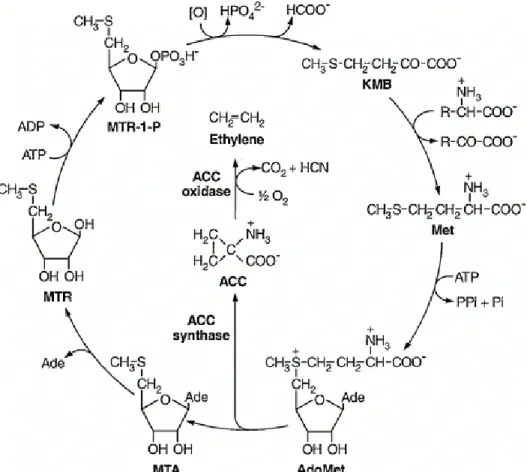
In the 1950s it was hypothesised that ethylene is the terminal product of a chain of metabolic processes in fruit and that ethylene synthesis is connected with organic acid metabolism (Buhler et al., 1957; Hall, 1951). Later, the amino acid methionine was found to be the precursor in ethylene biosynthesis. The first stage in ethylene biosynthesis is the conversion of methionine to S-adenosyl-L-methionine (AdoMet) by AdoMet synthetase (EC 2.5.1.6). AdoMet is converted to 1-aminocyclopropane-1-carboxylic acid (ACC) by ACC synthase (EC 4.4.14). The final reaction is the formation of ethylene from ACC by ACC oxidase (Figure 5). CO2 and hydrogen cyanide (HCN) are produced as by-products of ACC oxidation.
The HCN is detoxified to β-cyanoalanine by β-cyanoalanine synthase (EC 4.4.1.9). Methionine is recycled by using a modified methionine cycle, at the cost of one molecule of ATP so ethylene synthesis does not require an increasing pool of methionine (Bleecker and Kende, 2000; Wang et al., 2002). Ethylene biosynthesis is controlled by ACC synthase, which limits the conversion of AdoMet to ACC because it is present in low concentrations. The enzyme is also labile and the different isoforms contribute control (Wang et al., 2002; Wills et al., 1998). ACC synthase production is increased in response to abiotic stress, increasing ACC formation (Wang et al., 2002). Avocado fruit only contain trace amounts of ACC at harvest, but the concentration rises before the climacteric, driven by an increase in ACC synthase activity (Blumenfeld et al., 1986). These authors hypothesised that the ACC concentration in the fruit is the limiting factor preventing on-tree ripening and that the ACC synthase activity would increase postharvest leading to an increase in ACC and subsequently ethylene, but did not discuss what may cause the increase in ACC synthase activity. This may simply be the increase in stress associated with harvest. Ethylene production is autocatalytic, and is very difficult to limit production once initiated, as well as being adverse to fruit quality if stimulated before
ripening is required.
2.6.4.2. Commercial Use of Ethylene
Ethylene is used commercially to ripen fruit (e.g. citrus, bananas and avocados) uniformly and predictably to provide ripe fruit to consumers. A dose of 100 μL.L-1 every few hours at 20-22°C for 24 h is used to ripen fruit in four to six days - depending on cultivar and maturity (Hofman et al., 2002a); a continual stream of 10 μL.L-1 is also used commercially1. Adverse effects of using exogenous ethylene, especially an increase in fungal rots, have been noted. This may be because the high concentration of ethylene stimulated the growth of anthracnose complex and the stem end rot complex (Flaishman and Kolattukudy, 1994), especially if exogenous ethylene is present before or during cold storage (Pesis et al., 2002).
2.6.4.3. Ethylene Inhibition
1-Methylcyclopropene (1-MCP) is used commercially to block ethylene receptors (Section 4.2.5) but is also a useful tool for studying ripening physiology (Ochoa-Ascencio et al., 2009). The application of 1-MCP at advanced stages of ripening affected gene expression and ripening physiology indicating that ethylene is required throughout the ripening process (Hoeberichts et al., 2002; Jeong and Huber, 2004; McGarvey et al., 1992). Ethylene inhibitors (i.e. silver ions and 1-MCP) suppressed the synthesis of cellulase mRNA and PG mRNA (Buse and Laties, 1993). Treatment with 1-MCP (450 nL.L-1) for 12 or 24 h completely suppressed PG activity, delayed cellulase activity by four days, delayed the climacteric and reduced the ethylene production rate and respiration rate by 50 and 40% respectively. Exogenous ethylene cannot overcome 1-MCP inhibition until new receptors are synthesised and indeed there was no hastening of PG activity with the application of ethylene after 1-MCP exposure, although the exogenous ethylene did increase the PG activity very late in ripening - once new ethylene receptors had been synthesised - and the cellulase activity in 1-MCP treated fruit, subsequently treated with ethylene, was hastened by four days and increased compared to fruit that were only treated with 1-MCP (Jeong and Huber, 2004).
1 Pers. comm. P.J. Hofman, Department of Employment, Economic Development and Innovation, Agri-Sciences Queensland, Australia.
Figure 5: Ethylene biosynthetic pathway and the methionine cycle, taken from Bleecker and Kende (2000).
ACC, 1-aminocyclopropane-1-carboxylic acid;
Ade, adenine;
AdoMet, S-adenosyl-L-methionine;
KMB, 2-keto-4-methylthiobutyric acid;
Met, L-methionine;
MTA, 50-methylthioadenosine;
MTR, 50-methylthioribose;
MTR-1-P, 50-methylthioribose-1-phosphate.
2.6.5. Abscisic Acid
Water stress, ABA and ethylene are all important in the initial stages of ripening (Bower and Cutting, 1988). ABA is a ripening promoter and is closely associated with the ethylene climacteric (Adato, 1974; Adato et al., 1976; Bower and Cutting, 1988; Bruinsma, 1981;
Cutting et al., 1986; Cutting and Bower, 1987). ABA is both synthesised and catabolised during ripening (Cutting et al., 1989). Water stress resulted in an increased ABA concentration (Bower, 1985; Bower and Cutting, 1988). More mature fruit have less water and are more vulnerable to water stress, and in South Africa more mature fruit are harvested in the dry
winter months and subject to water stress (Cutting and Bower, 1987). It was found that ABA concentration correlated well with polyphenol oxidase (PPO, EC 1.10.3.1 and EC 1.14.18.1) activity and mesocarp browning (Cutting et al., 1989). Delayed harvest and stress were found to increase ABA and PPO activity; the infusion of ABA resulted in increased PPO activity in late season fruit (Cutting and Bower, 1987). However, in another study ABA was found to not correlate with mesocarp disorders (Hofman and Husband, 1987).
Avocados are thought to have an endogenous ripening inhibitor because fruit will not ripen while still actively attached to the tree (Bower and Cutting, 1988; Schroeder, 1953). This ripening inhibitor has never been identified, although there has been conside