I would like to dedicate this study to my wife, Hunadi Natie Molotja, who was the pillar of my strength, taking care of the family while I was busy with the project. I would like to acknowledge the presence of strength from God, the Almighty who gave me the power and strength to continue this study.
INTRODUCTION AND BACKGROUND
INTRODUCTION AND BACKGROUND
Students' lack of academic reading competence is also related to the nature of the training their teachers receive. The reading problem faced by students is also emphasized by Jackson et al., (2006, p. 265) when they say that “the majority of students in all educational institutions have problems with what is traditionally known as 'academic literacy'.
PROBLEM STATEMENT
This means that most students do not know the structure of academic reading texts. The researcher believes that this study can address some of the above problems of the students as in the basic program and improve their academic reading skills.
OBJECTIVES OF THE STUDY
Both local and global literature, Ralenala (2005); Parkinson, Jackson, Kirkwood, and Padayachee (2007); Rose, Chivizhe, McKnight, and Smith (2003) confirm that academic reading is a challenge, especially for ESLs. In addition, the researcher believes that this study will contribute to knowledge creation in academic literacy and academic reading in particular.
RESEARCH QUESTIONS
As this study investigates the academic reading skills of first-time science college students entering university, it aims to design strategies to develop students' reading skills that can meet their academic and future needs. What reading intervention strategies/activities can be provided to assist students based on their identified academic reading profiles.
LITERATURE REVIEW
The purpose of the study was to evaluate whether students took a deep approach or a surface approach to reading. The results of the study indicated that a majority of the students followed a surface approach to reading.
THEORETICAL FRAMEWORK
- Reading
- The Cognitive Development Model of reading
- Approaches to reading
- What is Academic Literacy?
Based on the views expressed above, reading should be accessible in content and in the appropriate genre (Parkinson et al., 2008, p. 15). Reading ability depends on whether the reader is familiar with the content and genre of the reading. . This means that academic literacy is subject/discipline specific (Parkinson et al., 2008). Language, for example, as used in the scientific discipline may not be the same as the language used in commerce.
RESEARCH DESIGN AND METHODOLOGIES
- Methodology
- Ethical consideration
- Reliability and Validity
- Delimitations
The purpose of the test was to determine the students' profiles in relation to their academic reading skills. The results of the NBT test were analyzed by the University of Cape Town using the SPSS system.
DEFINITION OF CONCEPTS
Cheng (2006, p.77) defines 'genre' as "the abstract, purposeful, elevated and socially recognized ways of using language delineated by communicative purposes, social interactions carried out within rhetorical contexts and formal characteristics" (Negretti & Kuteeva, 2011, p.96). In this chapter, the results of the NNT were analyzed on the basis of the themes on academic literacy competencies as detailed in the literature review in chapter 2.
INTRODUCTION
READING
- Definition of reading
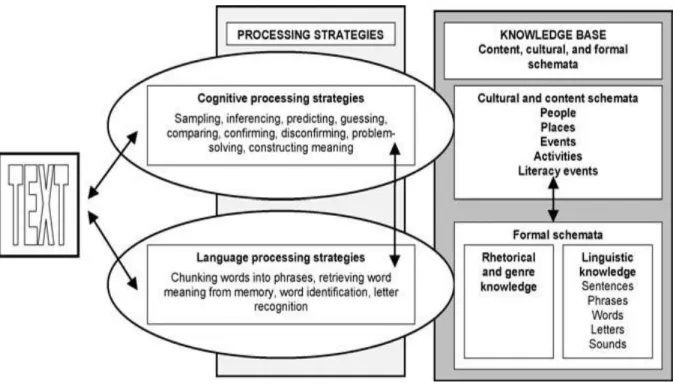
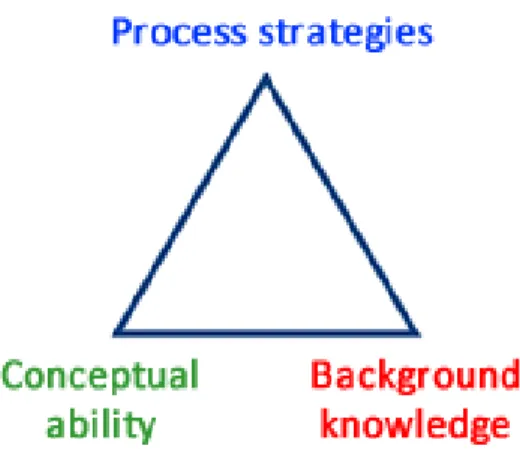
He claims that when reading, "the reader probably thinks about what he/she is reading; what it means to him/her, how it relates to other things he/she has read, to things he/she knows, to what he/she expects to come next in texts like this.” Ralenala (2005, p.77) argues that reading “is not only a supportive tool for learning but is the very process through which university learning takes place .” The act of reading is related to the students' background knowledge.
THEORIES OF READING
- Schema Theory
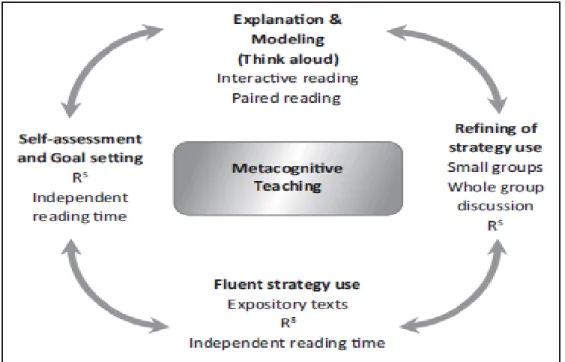
Metacognition and reading
It is in the context of the above definition that a text is seen as a process. The students' background knowledge is brought into the text to give meaning to the text.
MODELS OF READING
- Bottom–up models of reading
- Top-down approach
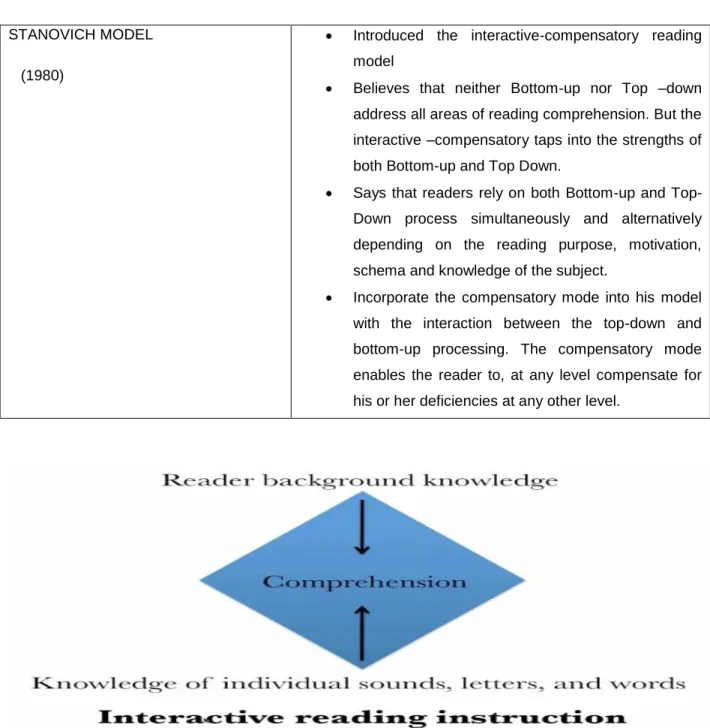
- Reading as an interactive process
- The text model of reading
- Situational model of reading
Bottom-up reading comprehension is a text-driven process that begins with the perception and recognition of letters, then phonetic elements, and then words (Ralenala, 2005; Pardede, 2010). The reader makes meaning out of the text depending on his or her knowledge of text cues such as sounds, words, and grammatical relationships. The model then becomes more suitable for advanced readers than for beginners. The construction of meaning also depends on the situation of their reading.
TYPES OF READING
- Extensive reading
- Intensive reading
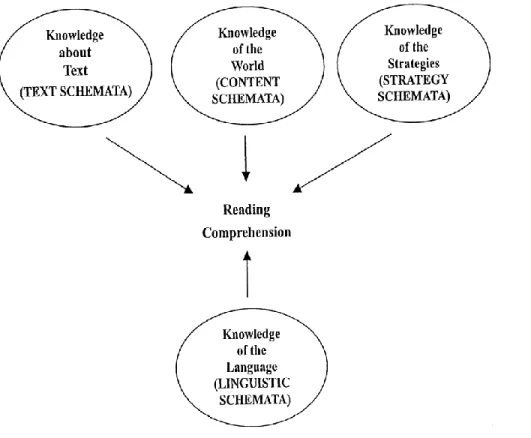
Recent studies on extensive reading have shown positive effects of extensive reading on academic reading. This means that students who use extensive reading have more positive attitudes towards academic reading.
READING STRATEGIES
- Pre-reading strategies
- During-reading strategies
- Post-reading strategies
- Use of background knowledge
- Self-questioning
- The use of prediction and contextual cues
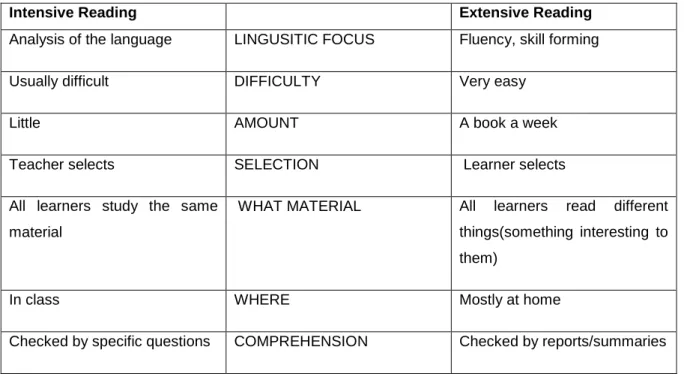
Strategies during reading are described as strategies that relate to the main reading of the text. Krashen (2007, p.2) also sees the use of background knowledge as necessary for academic reading.
ACADEMIC READING
- Careful reading of texts
- Awareness of text structure and discourse organization
- Vygotsky’s theory of Language Development
- Krashen Input Hypothesis
Grabe and Stoller (2001, p.8) note that awareness of text structure is very crucial in academic reading. The above view is shared by Carrel et al., (1998, p. 98) when they demonstrate the impact of knowledge of text structure in academic reading.
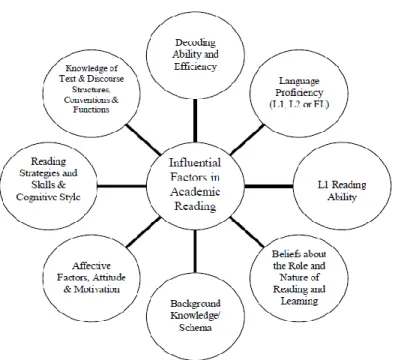
READING AND ACADEMIC LITERACY
- Definition of Academic Literacy
- New Literacies
- Academic Literacy competencies
Berzilanovich (2008, p. 2) describes cohesion as “one of the properties of a text that contributes to the organization of discourse”. Knowing the genre of a text is considered important in academic reading, as it can inhibit or enhance comprehension of a text.
REVIEW OF STUDIES CONDUCTED ON ACADEMIC LITERACY
The findings of the study showed that the IEP program can significantly contribute to the use of metacognitives. The findings of the study showed a positive relationship between prior knowledge and readers' reading comprehension performance.
SUMMARY
This means that students must have the opportunity to participate (collaborate) with others so that they can develop the necessary skills. Ozumu, Dempsey and McNamara (2008) focused on the relationship between prior knowledge and the readability of a text.
INTRODUCTION
APPROACHES TO RESEARCH
- Methodology
- Research
- An approach
- Quantitative Study
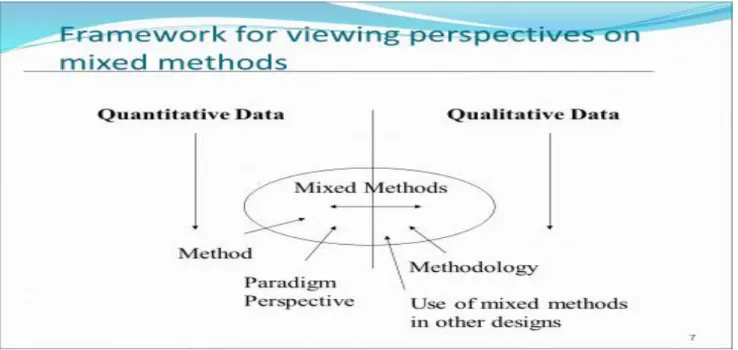
One of the disadvantages of the qualitative research method is that researchers become embedded in the study. Denscombe (2013, p.138) postulates that the relevance of the mixed method lies in the fact that it is problem-driven.
RESEARCH DESIGN
- Case Study
- Location
- Duration of the Test
- Sample
- Data collection method
- Data analysis
- Intervention strategy
- Ethical consideration
Purposive sampling involves the purposeful selection of a particular unit of the universe to form a sample that represents the universe (Kothari, 2004, p.15). The researcher decided to purposefully sample the class based on his/her experience teaching the class. for a period of three years. The researcher saw the NBT as the best instrument to measure the academic reading skills of the science students of Univen SFP.
SUMMARY
INTRODUCTION
PRESENTATION OF RESULTS
- Data collection method applied
- Presentation and summary of results
- Part B: Reading competencies
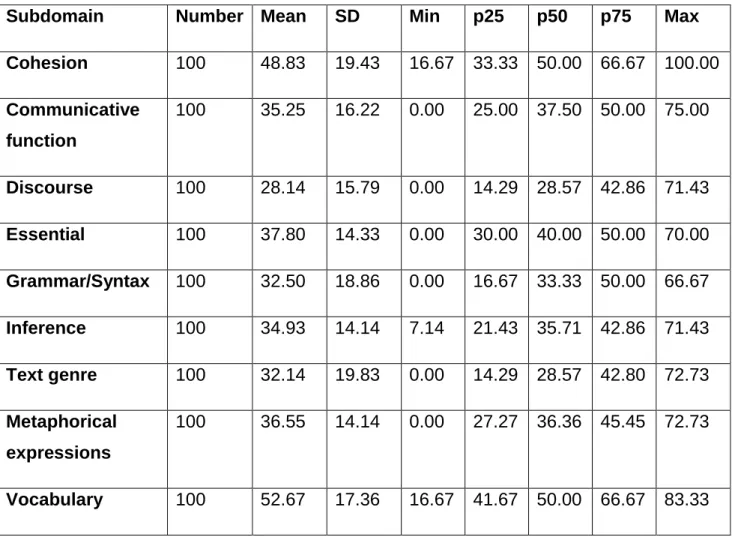
Student performance in each sub-area is plotted on the Book and Whisker chart (see Fig.4.2). The following column "SD" is for the standard deviation of student performance in each domain.
DATA PRESENTATION ON ACADEMIC READING COMPETENCIES
- Cohesion
- Communicative function
- Discourse
- Essentials
- Grammar/Syntax
- Inferences
- Text genre
- Vocabulary
Structures in the inner ear called "the labyrinths" regulate posture by sending signals to the brain that indicate our position in space from moment to moment. Students registered the highest percentage of 52, 67, with a significance level of 66.67% at the third Quartile level of 75%. The performance in the first Quarter is also satisfactory with a percentage of 41.67%.
SUMMARY OF FINDINGS ON THE DOMAINS
PART C: ACADEMIC LITERACY
Students in the intermediate grades performed at (41%). The performance is above the minimum benchmark level of 38% as stated in the benchmark table. The data presented showed that only 8 students performed in the secondary higher education category, which represents only 8%. The implication of this achievement is that only 8 students are able to meet the academic challenges when admitted to universities.
SUMMARY
The performance of the students is placed according to the quartiles, that is, from the lowest to the highest quartile.
DISCUSSION OF RESULTS
INTRODUCTION
SUMMARY OF THE PROBLEM
- Summary of the procedure
- Summary of the findings
The results of this study showed that the performance of students in the basic category is 51%, which means that only 51 students passed at this level. As with the elementary level, the results suggest that students who have reached this level should be enrolled in a foundational program and given more attention to developing their academic reading skills.
SUMMARY OF THE READING COMPETENCIES/SKILLS
- Cohesion
- Communicative Function
- Discourse
- Essentials
- Grammar
- Inferences
- Metaphorical expressions
- Text genre
- Vocabulary
However, it is regrettable that students' knowledge of the discourse used in academic texts is at the lowest percentage (28%). The implication of these results is that there should be more focus on developing students' discourse competence so that they can read academic texts.
METACOGNITIVE READING STRATEGIES
Students' achievement of 52% also relates to the use of bottom-up reading strategies without knowledge of the relevant scientific vocabulary. Hasan's (2014, p.1) description of the bottom-up reading strategies also shows the importance of vocabulary knowledge in creating meaning.
ACADEMIC LITERACY
Mobalegi and Saljoushian (2012); Boulware and Gooden (2007) indicate the importance of metacognitive reading strategies in academic reading. Wyk and Greyling (2008) found in their study about the academic readiness of students entering higher education.
SCHEMA THEORY
The fact that the majority of students in this study performed at the basic level (see 4.1) confirms the fact that students' academic reading skills are below the expected university entry level.
INTRODUCTIONS
- Recommendations based on the reading theories
The reviewed literature on schema theory showed how important the activation of students' basic knowledge is (Chapters 2.2.1 and 2.3.1). Students should then be able to apply metacognitive reading skills to their academic reading (Chapters 2.11.1 and 2.11.4).
ACADEMIC LITERACY LEVELS
- Academic reading subdomains or content
The activation of background knowledge depends on the students' mental readiness, which is related to the application of metacognitive reading strategies. The researcher agrees with Alderson (2000) about the micro-skills in reading that students should be familiar with and be able to apply in their academic reading process.
LECTURER’S ROLE
Successful activation of students' background knowledge requires someone skilled, qualified, and knowledgeable in academic reading skills. The researcher also views the stage as a strategy that lecturers should use to teach academic reading to their students (Street, 2003, Hart, 2014).
IMPLICATIONS FOR TEACHING
The teacher who develops academic reading strategies must create conditions conducive to students so that they become competent to deal with the materials presented.
AN INTERVENTION STRATEGY
The researcher therefore designed an intervention strategy (see appendix E) that would help address the academic reading challenges identified in the study. One of the reasons for the dropout rate is the challenging academic reading programs at freshman level.
IMPLICATIONS
In addressing the inadequate general and reading levels of most students, Barutham (2012) recommends that an intervention strategy be developed. The designed intervention strategy can help address challenges in academic reading at the freshman level and can also be used by high school teachers in preparing students for university studies.
RECOMMENDATIONS FOR FUTURE STUDIES
LIMITATIONS
SUMMARY
2013. The Effect of Intensive and Extensive Reading Strategies on Reading Comprehension: The Case of Iranian High School Students. 2005. The relationship between the construct of academic reading as measured by IELTS and the reading experience of students in their first year of study at a British university.