I would also like to thank all the staff at the Denis Hurely Center for their support. The aim of the study was to determine the prevalence of malaria and intestinal parasites among refugees visiting the Denis Hurley Center in Central Durban, South Africa in 2014.
Introduction
- Background
- Aim of the study
- Objectives
- Malaria
- Intestinal parasites
- Research problem statement
- Format of Dissertation
To determine risk factors for the transmission of malaria and intestinal parasites among refugees attending the Denis Hurley Center in Central Durban. In South Africa, limited data are available on the prevalence of malaria and intestinal parasites among refugee populations.
- Literature review
- Malaria and intestinal parasites
- Malaria in Africa
- Malaria in South Africa
- Co infection of malaria and intestinal parasites
- Status of refugees within South Africa
Despite the fact that a third of the global population lives in areas with low malaria endemic re-. 5, 14 The threat of the spread of malaria and intestinal parasite infections as a result of these unsanitary living conditions must be addressed immediately.
Parasitemia and Haematological Alterations in malaria-infected refugees in
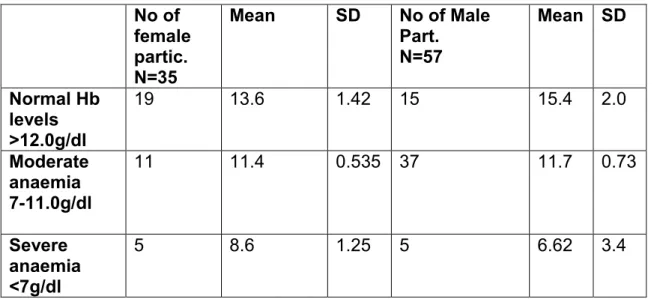
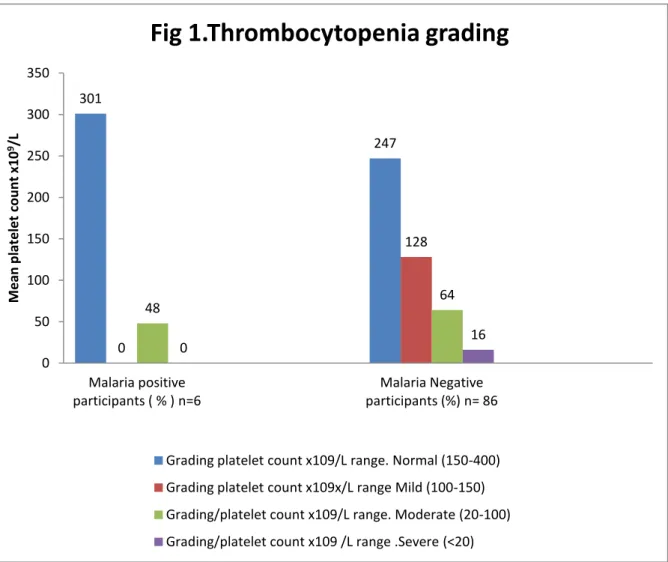
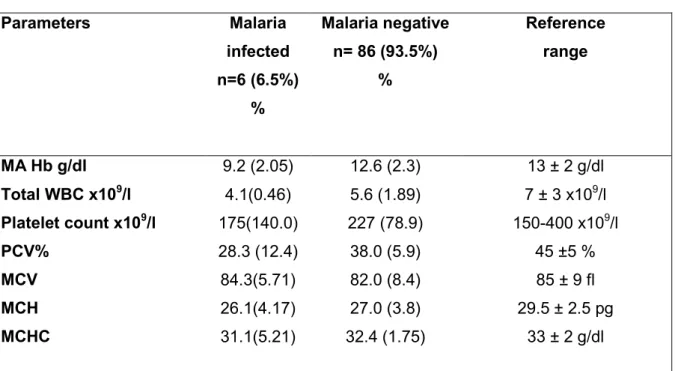
The mean absolute hemoglobin (Hb) level was reduced in 6.5% of malaria-positive patients (9.2 g/dl) with an extremely low packed cell volume (PCV) of 28.3%. None of the 16 malaria-positive cases showed classic symptoms of malaria in the form of fever, rigors, chills, sweating or splenomegaly.
Systematic errors (Validity of Data Source)
The quality of the data collected during this study depended on efforts to enhance the validity and reliability of the data collection instruments. Ethical approval was obtained from the Biomedical Research Ethics Committee of the Nelson R Mandela School of Medicine in South Africa. The authors would like to acknowledge and thank the University of KwaZulu-Natal college of health sciences for funding this research.
This article was co-authored by Prof Joyce Tsoka Gwegweni and Uchenna E Okafor from the department of public health medicine at the University of KwaZulu-Natal South Africa. The authors would also like to thank Mr. Kimoto Kungwa, from Usizo Lwethu Clinic, Denis Hurley Center (DHC) for collecting the participant samples and overcoming language and communication barriers that may have hindered this study and would also like to thank all the staff at the Denis Hurley Center for their support Theirs. This work was supported by the University of KwaZulu-Natal College of Health Sciences for funding this research.
CONCLUSIONS
Conclusion
The first article, titled "asymptomatic malaria in refugees living in a non-endemic South African city," aimed to determine the prevalence of malaria among refugees visiting the Denis Hurley Center in central Durban in 2014 and beyond. All malaria-positive participants were asymptomatic, and none had any classic symptoms of malarial disease. The incidence of asymptomatic malaria was 3.8 for RDT, 5.9% for thin blood smears and 4.5% for thick blood smears.
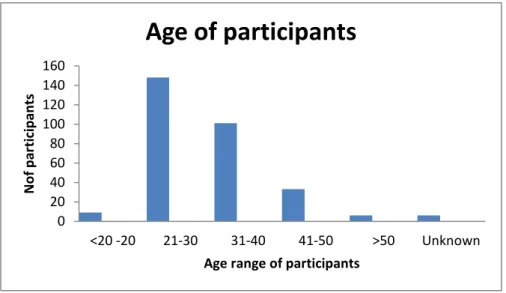
High prevalence of malaria infection was shown among participants from the DRC and Burundi, in the age group 21-30 years and had a secondary level of education. This has important implications for the city, the province and South Africa in terms of the malaria elimination strategy planned for 2018. 6 To avoid jeopardizing the malaria elimination plan and introducing malaria into the city, it is important to introduce a malaria screening and treatment program for refugees in facilities where they seek health care.
Prevalence of intestinal parasites in adult refugees living in Central Durban,
This sampling bias we encountered during the sampling phase of this study could be the result of voluntariness. The volunteer samples in this study may actually be healthier than the general population of refugees visiting the center and therefore provide a lower estimate of the true prevalence of malaria and enteric infections among this population. This only takes about 30 minutes of your time. The test results are available after one week. If you want to know the results, you can pick them up after a week at the Usizo Lwethu Clinic. You will be reimbursed R50 for this. your transport costs. The aim of the study is to determine the prevalence of malaria and intestinal parasites among refugees who visited the Denis Hurley Center in Central Durban in 2014.
This is a descriptive observational cross-sectional study with an analytical component, among refugees in Central Durban in 2014. The study will be conducted at the Usizo Lwethu Clinic at the Denis Hurley Center (DHC), Emmanuel Cathedral Parish in Central Durban. The center offers a range of social services, including food and clothing, as well as health services provided by the Usizo Lwethu Clinic. Staff are able to speak a range of international languages such as French, Swahili and Portuguese, and the center caters specifically to the needs of refugees and the homeless. The clinic provides primary health care services and refers patients to health services within public health services for more specialized care. The Denis Hurley Center serves approximately 3,000 people, of which 70% are refugees and the rest live as homeless individuals on a monthly basis. Refugees will be identified based on their country of origin and refugee status.
Parasitemia and Haematological Alterations in malaria-infected
Study limitations
Data collection errors
The nurse also assisted in the collection of blood samples to detect malaria and stool and urine samples to detect the presence, intensity and types of intestinal parasites. If stool or urine samples could not be provided on the same day by the patients, they had to bring the samples later. This may have affected the quality of the samples and resulted in an underestimation of prevalence.
Bias in Epidemiological studies (issues of trustworthiness related to the
- Additional limitations
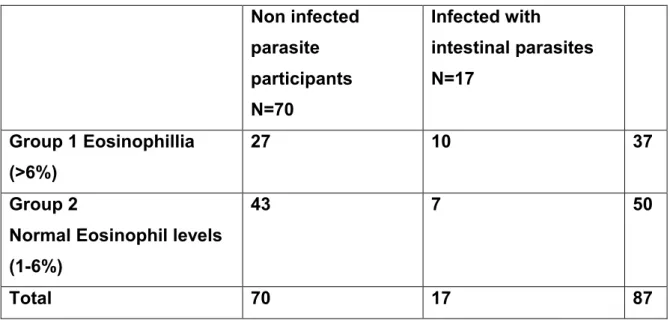
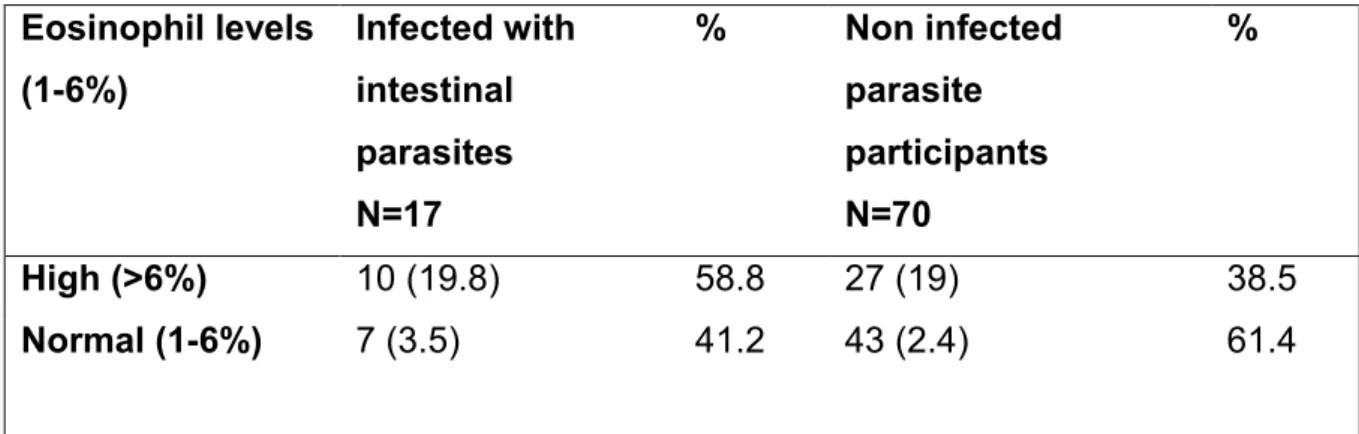
A communication problem between the refugees and the researcher may have resulted in the collection of incorrect data about the participant. Clinical measurement of analytes could also be compromised by error. Most participants, both those infected with parasites and healthy participants, were anemic and had low MCH levels, which are not only indicators of parasitic infections but also indicators of nutritional deficiencies.
Since many of the refugees come from African countries where local South African languages are not spoken. As a result, only people who were willing to participate were recruited into the study. Also, although refugees are more concentrated in the city center, there are other groups of refugees living outside the city that the study did not reach.
ANNEXURES
- Research ethics approval
- Registration of degree acknowledgement
- Acknowledgement of role played by student in the research study
- Technical appendices
My role in the research was to assist in data collection in the form of administering the questionnaire to the English-speaking refugees. My role involved overseeing sample collection and transport from the Dennis Hurely Center in Central Durban to the laboratory for analysis of blood, urine and stool samples collected from the participants. The samples were analyzed by me in the laboratory, the collected data was recorded in the Microsoft Excel software package.
Quantitative data analysis was performed to describe the infectious disease profile of the participants by measuring the prevalence of malaria and intestinal parasites and the risk factors for their infection. Then the data will be analyzed using SPSS version 18 or another advanced statistical package.
Invalid result: If the control line does not appear within the test window, the test is considered invalid.
The thin films are fixed with methyl alcohol for approx. 30 seconds before they are stained with the Giemsa stain. The smears are placed face down in a staining tray with diluted Giemsa stain and left for 15 minutes for the thin stain and 20 minutes for the thick stain. The staining tray will then be flooded with pH 7.2 buffered water for thin film 5 minutes and thick film a few seconds respectively.
Strains of the malaria parasite will be evaluated by examining the stained thin and thick film slides with the oil immersion using x 100. At least 50 fields of the thin smear and the thick film are used as a confirmatory slide. The Giemsa stain for thin films will then be used on a thin blood film to determine the malaria parasite count. A handheld counter will be used to count infected red blood cells in 5 - 10 fields that have approximately 1000 red blood cells, all cells containing parasites in this field will be counted.
We need to select 344 study participants from all those who visit the Denis Hurley Center to take part in the research. You may feel uncomfortable bringing the bottles of urine and stool samples into the presence of other people; this will be done privately with no other person present except the nurse. If you have tested positive for any of these diseases you will be treated for malaria and intestinal parasites at the Usizo Lwethu clinic.
In the long term, the risk of transmission and infection among the community will be reduced, thereby reducing this disease problem and improving the quality of life. Data that we collect from you will collect from you will be confidential. When data from the research is analyzed, your names will not be used to identify you, only numbers will be used. Personal information may not be disclosed if required by law. If results are published, no individual or cohort identification will be used (results will be published anonymously).
If so, were you treated for malaria infection in your country of origin?
The results of the proposed study will be used to describe the prevalence of malaria and intestinal parasites among refugees visiting the DHC in Central Durban. As a result of these dynamics, the efficacy of the drug in the destination country will be affected. All refugees visiting the Denis Hurley Center during the data collection period for the study, regardless of clinical symptoms, previous testing for malaria and intestinal parasites, will be included in the study.
Presence of malaria: The presence of malaria will be detected using rapid diagnostic tests and microscopy. Logistic regression will be used to identify possible risk factors for malaria and intestinal parasite infection. The middle layer will be separated from the sides of the tube.with an applicator stick.
By decanting the supernatant liquid, the sediment is mixed by tapping the bottom of the test tube. I will receive a signed copy of the document and a participant information sheet which is a written summary of the research.