As churches, we also have deeper roots in the struggle for justice and democracy in South Africa. MEKOA and all staff for their encouragement, constructive criticism and guidance in the process of completing this research.
CHAPTER ONE: INTRODUCTION 1.1Background and Information to the Study
The Research Problem or Problem Formulation
There is a problem of poverty in South Africa and Christianity can contribute to the eradication of poverty. Recent statistics show that poverty levels in South Africa have risen to high levels.
Aims and Research Objectives of the Study
Empower the community as an agent for sustainable development to participate in priority setting and project planning and implementation.
Assumption
To enable the church to contribute towards the Earth's goals - the Rio Summit (1992), and the World Summit on Sustainable Development (2002). In this study, the researcher wants to challenge that the church should deal with poverty.
Defmition of Key Concepts
But how will the mainstream of the uneducated, the poor and the unemployed experience this?. This involves a socio-economic as well as cultural religious analysis of the church's role in poverty alleviation.
CHAPTER TWO
VARIOUS SCHOLARLY VIEWS ON POVERTY
The Measurement of Poverty
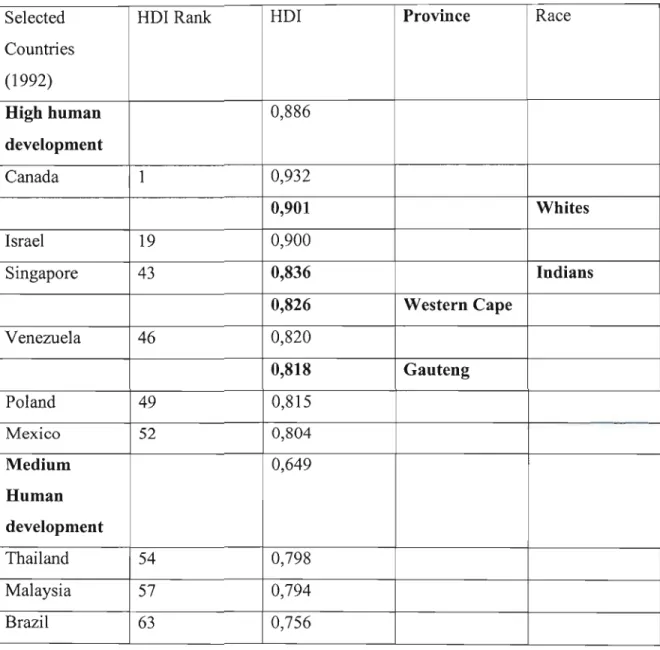
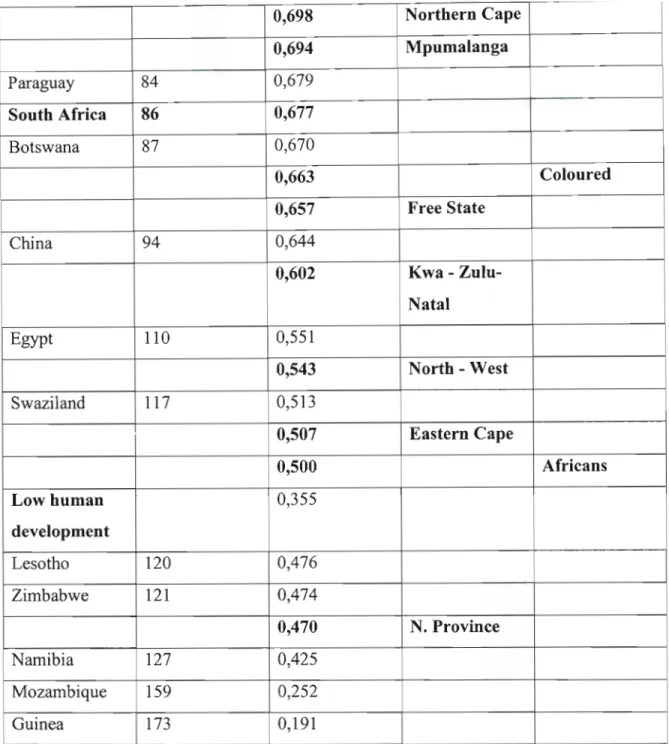
Then they came to the conclusion that "about 50 percent of households in South Africa were poor in 1980". The rural poverty rate (ie the percentage of poor individuals living in rural areas) is 70 percent.
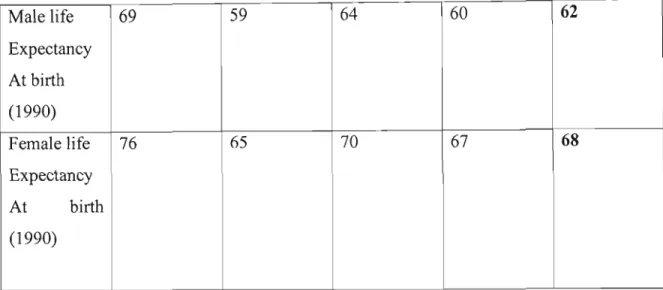
MEDICAL PERSPECTIVES OF POVERTY
For example, babies born during famines consistently show lower birth weights than those born in the same country in times of adequate food supplies. Improvement in nutritional status during pregnancy may lead to a decrease in the incidence of low birth weight infants in rural and urban low socioeconomic groups. Brain growth in humans is very rapid during the first year of life and almost complete by the end of the second year.
It has been well shown by Stoch and Smythe that "severe malnutrition in the first two years of life inhibits brain growth as assessed by a lower average head size and leads to a decline in intellectual potential. Thus, for example, measles can average affluent household is a disruptive , but not dangerous disease, while in malnourished children it can be a killer disease. Fifth, Dr. Dankwart (Numberger 1978:37) notes that "poverty and ignorance are the central factors in a vicious circle for the individual as well as the community" The diagram below, adapted from Morley, 1973, illustrates most of the points in the previous sections.
For example, the poor often develop a sense of helplessness and uselessness in the face of the never-ending struggle to make ends meet.
PSYCHOLOGICAL CONSIDERATIONS OF POVERTY
On the other hand, cultural approaches would propose that no economic change would lead to a change in poor lifestyles. In the first stage, the criterion group perceives the poor who are not an integral part of the community, but are apparently marginal. This labeling implies a moral status, etiology, diagnosis and therapy for the poor. a) Moralizing perspective: poverty is the result of moral degradation.
One of the central problems of this study is that the measurement group (the non-poor) tends to value and label the poor unconditionally or unambiguously. Motivation is increasingly believed to be an important indirect variable in the maintenance of poverty. Pareek (1970), in Allen, 1970) refers to the Harvard Research - Program for the Motivational Development of the Poor.
Many other intervening variables have been identified that influence the possibility of education of the poor and especially the method of education, e.g.
BIBLICAL PERSPECTIVES OF POVERTY Poverty in the Scriptures
- Conclusion
Hear this word, you cows of Bashan, who are in the mountains of Samaria, who oppress the poor. For the poor (Ebyon) shall never rest from the earth, therefore, I command you and you shall open your hands to your brother, the needy (Ebyon) and the poor (Ani) of the earth (Peter Lee 1986: 50). However, the fifth Hebrew word used in the Old Testament is Ani (used 80 times) and its derivative Anaw, which is the word Jesus used when speaking of the blessed poor (Luke 6:20).
The Greek word ptochos is used in the New Testament to refer to a poor person. This type of poverty is consistent with Anna described in the Old Testament. One of the most important variables in perpetuating poverty is the definition and labeling of the poor and their internalization of these labels, e.g.
This poor person was defined in the Old Testament as Ani (lack or insufficiency, deprivation of property, weakness and weakness, need, dependence and oppression) and ptochos (one who does not have what is necessary for subsistence, the poor who are driven to begging ) in the New Testament.
CHAPTER THREE
THE HUMAN SCALE DEVELOPMENT APPROACH TO HUMAN NEEDS
Development in Africa meant serving the African people to serve foreign aid, International Monetary Fund (IMF) and World Bank. Western development has always been heavily against rural areas and in favor of the towns. Similarly, Friedman (1958:78) also expressed that "foreign aid is likely to retard improvement in the welfare of the masses".
The so-called moral, Christian and humanitarian spirit behind foreign aid has actually worsened the conditions of the African people. Foreign aid has led to a huge indebtedness of poor countries to donor countries. In Philip Ndengwa's phrase, poor countries are fast becoming client states of richer developed nations.
With the exception of the need for subsistence, that is, to stay alive, there are no hierarchies of needs in the system of human-scale development.
SUBSIS~
The wheel can be used to diagnose the most pressing needs for a local community or of wider society. In a South African context, what can we say about this image of the Wheel? Van Nickerk, with reference to J. In terms of human scale development, these additional elements of the wheel (see diagram 2) indicate the further essential categories in the Human Scale Development on. system with which to organize, describe and classify what can be called satisfiers: BE, HAVE, DO and INTERACT.
The Men on the Side of the Road project in Cape Town is the first initiative of its kind in South Africa to work with people (mostly men) waiting for day jobs. And, importantly, in the context of this study, how can communities complement and strengthen an initiative like the Men on the Road project, especially from a human scale development point of view. The study of Human Scale Development (HSD) leads to the conclusion that Human Scale Development was conceived by Manfred Max-Neef (i991: 1-8), a Chilean economist, and an international team of researchers who searched for new approaches for development in the 80s.
One of the values of human scale development theory is that it provides a framework that clearly distinguishes between need on the one hand and satisfiers on the other.
CHAPTER FOUR
THE CHURCH AND DEVELOPMENT: CAN THE CHURCH PLAY A ROLE IN DEVELOPMENT?
But at this stage, churches do not have a fully developed theology of development due to the above reason. Justice also implies gradually expanded freedom - a freedom in the context of the needs and rights of others. Individual Christians cannot emphasize one aspect of the Christian message at the expense of another.
Stewardship of natural resources therefore becomes very important (Gnana Robinson 1994:3). c) A genuine understanding of development encompasses all aspects of human life. The international character of the church therefore has the advantage that the church can benefit from international donors and churches. In developing countries, this will include, among other things, a greater willingness to develop regional trade patterns and a rethinking of the level of production that is desirable at current levels.
Therefore, more attention needs to be paid to how the leadership and members of the churches can be educated in the theology of development so that they can be agents of social change.
CHAPTER FIVE
THE CHURCH IN SOUTH AFRICA AND POVERTY ISSUES
African Initiated Churches and Poverty Alleviation
The church has a crucial role to play in ensuring that the voices of the poor are heard by policymakers and economists. The workshop members came from academia, business, the NGO movement and, of course, the church. In the first phase of the workshop, Njongonkulu examined the rules of the game relevant to poverty and anti-poverty programs.
These are beyond the workshop participants' control to change and are fairly certain to apply in the estimated future, regardless of which scenario unfolds. The third and fourth phases of the workshop then explored the options available in light of the scenarios and the actions to be taken. Although it can be argued that the process is in the control of the parties covered by the workshop (and therefore should be classified as an opportunity), the fact is that development is an activity in which everyone has a promise.
Another purpose of the middle block will be to act as a database for communities to use.
I UNCERTAIN I
KGOKAGANO
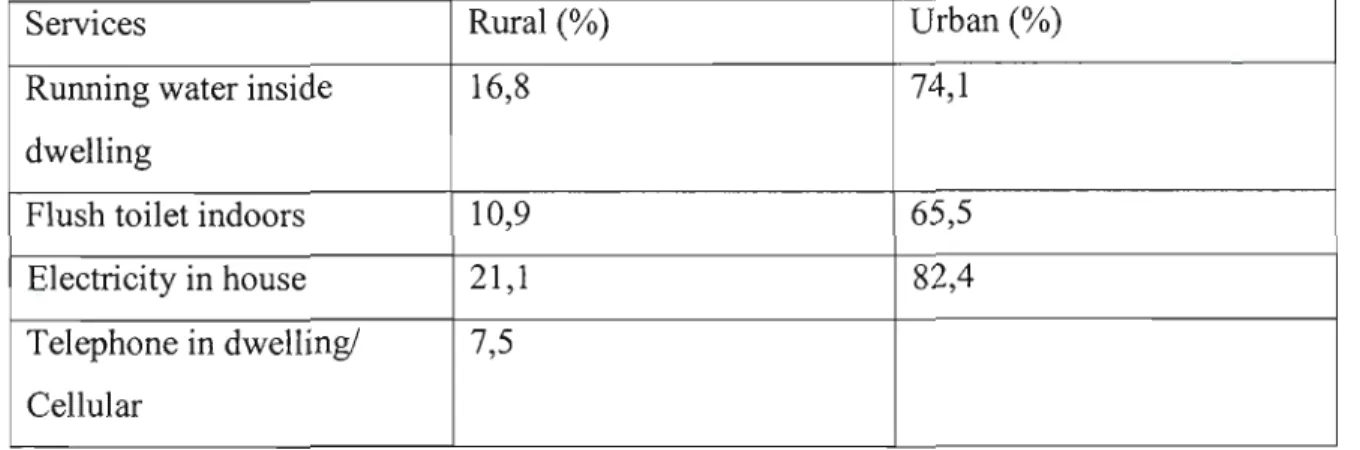
The main languages are Sepedi, Xitsonga and Thivenda. (Mautji Pakati et al 1996:3) NP is the gateway to our African neighbours, Botswana, Zimbabwe and Mozambique. The number of matric passes has fallen from 44 percent in 1994 to 38 percent in 1999, although this appears to be a national trend. (Mautji Pakati et al 1996:4) Most of the villagers do not have enough water and therefore do not meet international standards. According to Mautji Pakati et al, the current money lending industry started between 1988 and 1992 in the Northern Province.
The consumer money lending industry can be categorized into formal and informal lenders. The money lending industry is a national industry and as such its influence is felt throughout South Africa. As the money lending industry flourished, there was growing public concern about alleged abuses in the industry.
People are also expected to pay for TB drugs and care for patients at home. The lending industry merely reflects deeper underlying problems that make borrowers vulnerable.
CHAPTER SIX
SUMMARY AND CONCLUSION
If poverty is to be effectively tackled, all aspects of the system that maintain these definitions, e.g. It recognizes that people are not the means of development, but should be the end of the development process itself. For example, agriculture has always been the backbone of the African economy, so development must focus on this sector.
The experience of the last three decades has shown that foreign aid has failed to develop Africa since independence. It also brings out of the rich store of non-conventional resources in African traditional culture and worldview, some things that make the Western mind with its linear time scale and dualistic view of reality pause. Two critical tasks face the church community in South Africa, namely: a) to make the voices of the poor heard by those formulating public policy, and b) to implement frontline programs that satisfy basic needs, build assets and promote opportunities for economic lift.
The issue of exploitative money lending should be discussed and understood as part of the church war.
Prosperity, poverty and God's world: An interdisciplinary study program from the Missiological Institute Mapumulo.