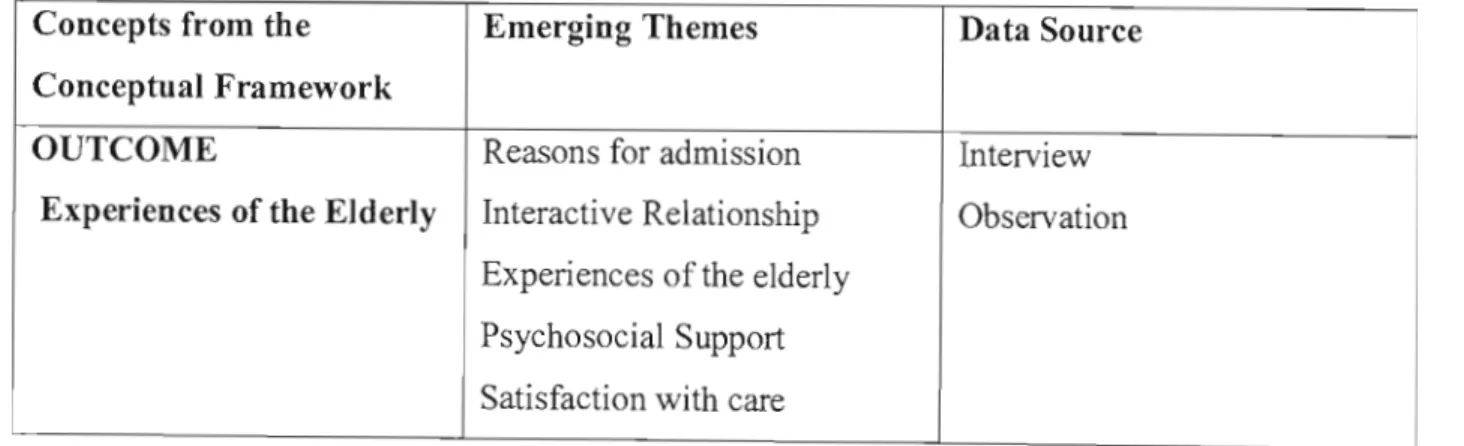
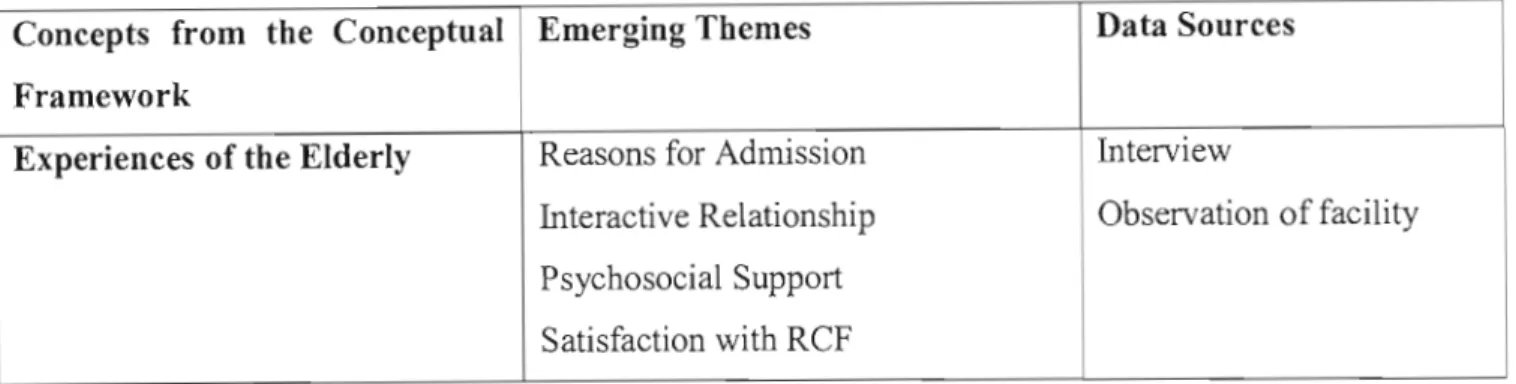
The results from the outcome were focused on success and challenges in elderly care, the experiences of the elderly and the nursing staff's care experiences. New themes from the nursing staff's experiences of caring for the elderly were mainly focused on their professional knowledge of elderly care.
Rationale for the research
However, it is unknown whether nursing home operators comply with government regulations regarding elder abuse. Chapter Three, Section 14(1) of the Act provides that persons providing residential care must ensure that healthcare providers receive prescribed training.
Problem statement
Literature suggests that the characteristics of the elderly living in RCFs include frailty, cognitive impairment and communication problems (Mandiracioalu o & Cam 2006· , Gaugler, Leach, Clay & Newcomer 2004). In addition to the gaps identified in the Older Persons Act, very little is known about residential care in terms of its structure, process and outcome, and how those characteristics may affect the care of the elderly in Ethekwini District.
Purpose for the study
Research objectives
The structure
To compare the process of care and provision of services to the elderly in each institution;. To analyze the various challenges and obstacles we face in the care of the elderly in each institution.
Operational definitions of concepts
The study was conducted to explore and describe residential care for the elderly in eThekwini Municipality, KwaZulu-Natal, South Africa. This chapter focuses on reviewing the relevant literature related to residential care for the elderly.
Residential care
Historical perspective of residential care
The major step towards residential elderly care in the United States took place after the enactment of the United States Social Security Act (1935). It was not until the 1950s that changes in the Social Security Act led to state welfare authorities negotiating with private nursing homes over the care of the elderly.
Ageing and the elderly: international and national perspectives
They go on to explore that the elderly make up about 7% of the world's 65-and-old population. In many countries the elderly are now the fastest growing part of the total population.
Trends in life expectancy
Health expectancies
Meanwhile, disability data suggests there is an increase in the number of 65+ year olds who are able to perform most daily activities, such as climbing stairs and personal care activities. However, the general consensus in the academic community is that these trends reflect increased years of mild disability and a decrease in severe disability.
The Need for residential care placement
Sometimes the elderly are placed in long-term care (LTC) facilities and separated from the rest of the family due to physical decline when they can no longer fulfill their family and community roles. The need for long-term care for the elderly can be influenced by many factors.
Characteristics ofthe elderly
The old-age pension is currently the largest social grant program in South Africa (Maitra & Ray, 2003). The author further notes that while the availability of the grant may promote health benefits among the elderly, the allocation of pensions prevents many elderly people from meeting their financial needs, resulting in frustration and the perception of recipients as impoverished.
Impact of disease and disability on care
Elder Abuse
Due to the predicted rapid growth of the elderly population worldwide, it is worth noting that the problem of elder abuse is likely to increase. The Halt Elder Abuse Line (HEAL), a toll-free national helpline, provides some evidence that elder abuse is widespread throughout South Africa (Joubert & Lindgren, 2003).
Population Ageing
In a study in the USA, Hawes (2003) found that 12% - 13% of residents were married, while many of the others lack a close family member who may live nearby. By 2030, the world is likely to have one billion older people, accounting for 13 percent of the total population, with the fastest increases in the less developed world.
Gerontology Nursing
Describes a field of study related to diseases of the elderly (Barton and Mulley). The Older People's Act (Act No. l3 of 2006) is a framework that sets a new standard for the care of older people in communities and institutions.
The conceptual framework
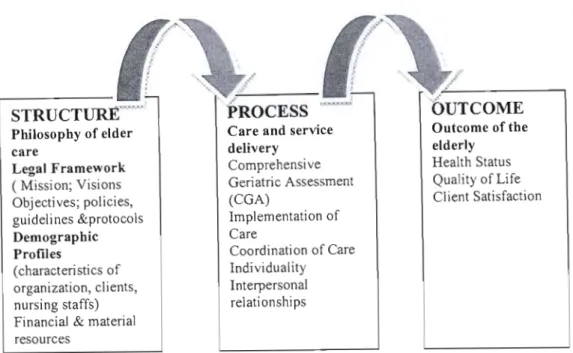
The concept that applies to elderly care is the concept of "a person". Staff composition: The use of several different providers in elderly care is. The Comprehensive Geriatric Assessment (CGA): The Comprehensive Geriatric Assessment (CGA) is a large part of the process of elder care.
The Outcome component
Conclusion
The chapter examined and described related literature on residential care for the elderly in terms of the historical background of residential care from a global perspective. This section provides an overview of the research process used to explore and describe residential care for the elderly in eThekwini Municipality, KwaZulu-Natal, South Africa. A study of residential care for the elderly addressing administrators, nursing staff and elderly residents IS an undertaking that requires a comprehensive research approach.
Research design
- Components of case study
- Criteria for interpreting the findings: The structure, process and output of the study' s conceptual framework formed the basis for comparing and interpreting the
Terre Blanche and Durrheim (2004) suggest that the choice of a research design is based on the purpose of the research. The need for this design was born from the researcher's desire to describe and explore the three dimensions of the study's conceptual framework; the structure, process and outcome of residential care. These five components of the case study were applied to the relevant sections of the study.
Population
Sampling and sample size
- Sampling of the residential care facilities
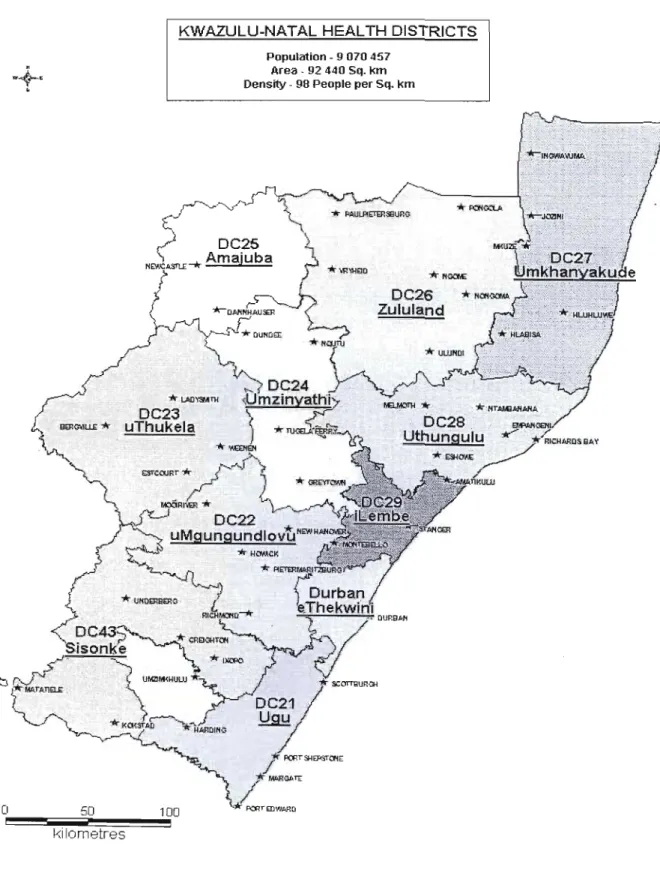
Specific sampling methods were selected for the relevant participants from the study population. The second list contained some of the names of the facilities that were on the first list. The purpose of establishing the home was to meet the needs of the vulnerable elderly.
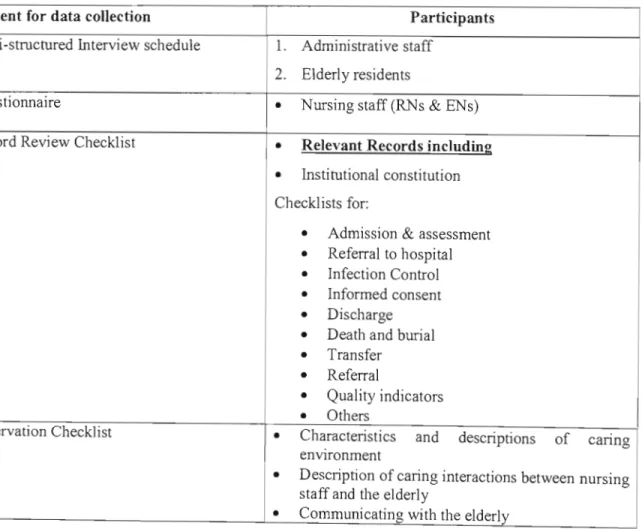
Instruments for data collection
Section two was the main interview schedule, targeting the outcome of the elderly (see Appendix IV). The research instruments (qualitative and quantitative) cover all variables in the study appropriately and have addressed the structure, process and outcome of the conceptual framework. External validity refers to the generalizability of the research findings to other settings or samples.
Trustworthiness
- Dependability of qualitative data refers to the stability of data over time and over conditions. The research proposal was first scrutinized by the School of Nursing during
The study was conducted in four residential care facilities, with different people (administrative staff RNs, ENs ENAs and elderly residents) at different times (days and nights) as well as on different days of the week. Finally, the data and other supporting documents were examined by external and reviewers selected by the authority of the UKZN's School of Nursing. The focus of confirmability of qualitative data is on the characteristics of the data (are the data confirmable?).
Data collection
- Phase One: overview of case project
- Phase Four: guide for case study report
The researcher also provided a detailed explanation of the data collection process to the nursing staff and the elderly residents and clarified misunderstandings. To this end, the researcher developed questions to remind herself of the data she wanted to collect and why. The researcher is obliged to inform the participants about the research results; therefore, a copy was provided to each of the RCFs where the survey was conducted.
Data analysis
- Qualitative data analysis
- Quantitative data analysis
The data analysis process therefore began with transcribing the interviews from the four RCFs. The participants for the qualitative data were the administrators and older residents of the four RCFs. The resident instrument was also divided into two parts: 1) the demographic part and 2) Elderly Outcomes (the main interview schedule).
Ethical considerations
- Ethics approval and permission to conduct research
- Ethical considerations for vulnerable groups
- Management of research data
A copy of the research proposal was submitted to the relevant authorities seeking permission to conduct this research. Those who volunteered to participate in the study signed the consent page of the permission letter. Confidentiality has been respected and the names of the participants are not mentioned anywhere in the written document.
Conclusion
The data were then combined to form a more comprehensive picture of the whole as discussed in detail in Chapter Three. Qualitative data were obtained from administrative staff and elderly residents of each ReF using semi-structured interview schedule. Survey data were obtained through questionnaires from the nursing staff of each facility, and the data were analyzed using the Statistical Package for the Social Sciences (SPSS version 15.0).
CASE ONE .1 Introduction
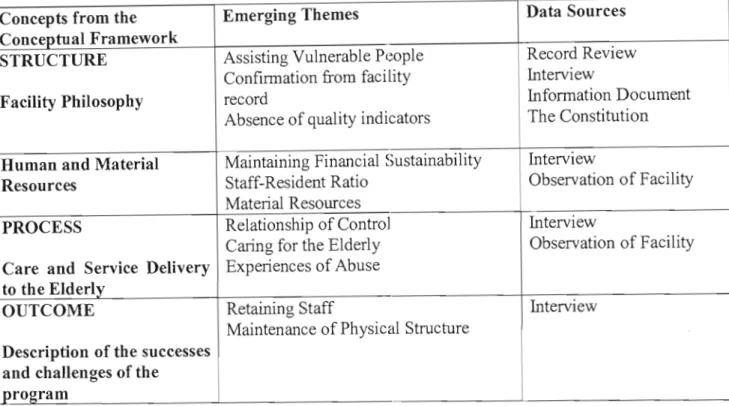
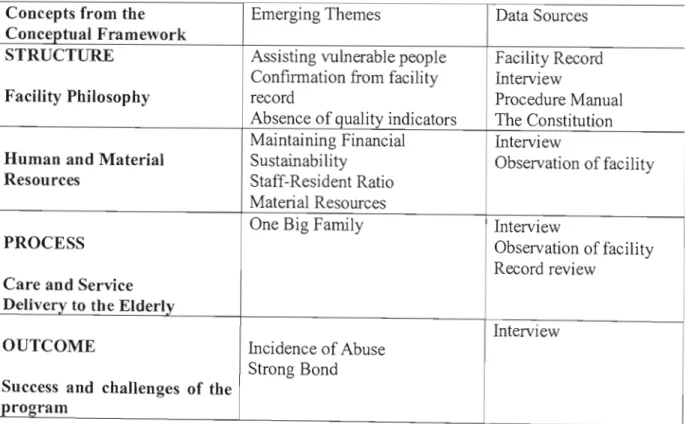
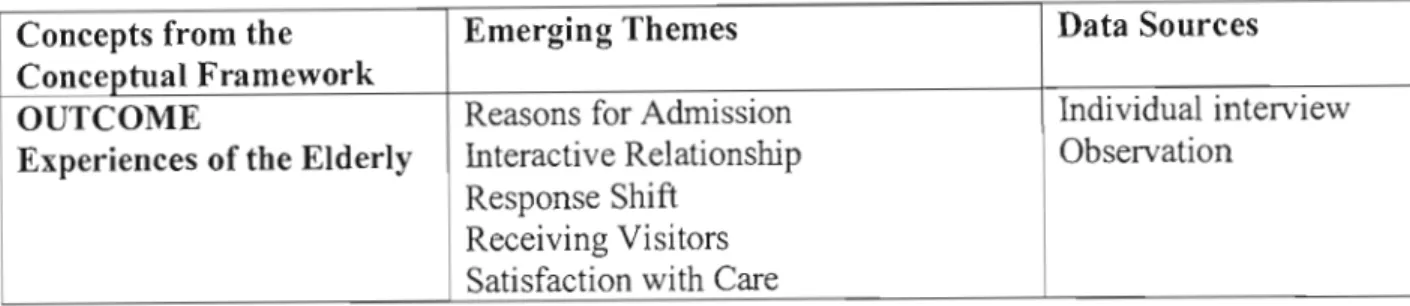
The findings of the RCF trustees, review of records and observations of the first case researcher are presented in Table 4.1 below. Eight themes emerged from the data, namely; helping vulnerable people, confirmation from institutional records, maintaining financial sustainability, staff-to-resident ratio, material resources, one large family, frequency of abuse and strong bond.
THE STRUCTURE
Findings from the administrators .1 Assisting vulnerable people
- Confirmation from facility record
- Maintaining financial sustainability
- Staff-resident ratio
- Strong bond
The researcher also noted that residents in frail care are a mix of young and old. One Case One administrator described the residents of the entire facility as quite diverse. In the above sections, the researcher presented the findings of care and services for the elderly on the topics: "one big family" and "frequency of abuse".
FINDINGS FROM THE ELDERLY RESIDENTS
- Findings from interview with elderly residents and observation
- Reasons for admission
- Interactive relationship
- Response shift
- Receiving visitors
- Satisfaction with care
Participants reported that they were all happy at RCF because the nursing staff members were always very nice to them and helped them with all their needs. Despite their poor health, participants reported that they were well cared for. Most participants reported that they had no living siblings, although a few still had some living family.
FINDINGS FROM NURSING STAFF
- Demographic data of nursing staff
- Caring for the elderly
- Nursing staff self -reported knowledge about elder care
- Nursing staff experiences of caring for the elderly
Nursing staff reported that the main element of caring for the elderly included providing holistic ADLs and basic nursing care to them with respect. Nursing staff were asked to describe their experiences in caring for the elderly and the following themes emerged from the data. Participants reported that caring for older residents was a challenging but rewarding experience because older people typically require a lot of caregivers' time, patience, and commitment.
CASE TWO
- Introduction
- Findings from administrators, confirmation from facility record and observation
- Findings from the administrators .1 Assisting vulnerable people
- Staff-resident ratio
- Material resources
- Caring for the elderly
- Maintenance of physical structure
- FINDINGS FROM ELDERLY RESIDENTS
- Demographic data
- Findings from Interview with elderly residents and observation
- Reasons for admission
- Interactive relationship
- Experiences of the elderly
- Psychosocial support
- Satisfaction with care
- Demographic data of nursing staff
- Caring for the elderly
- Nursing staff experiences of caring for the elderly
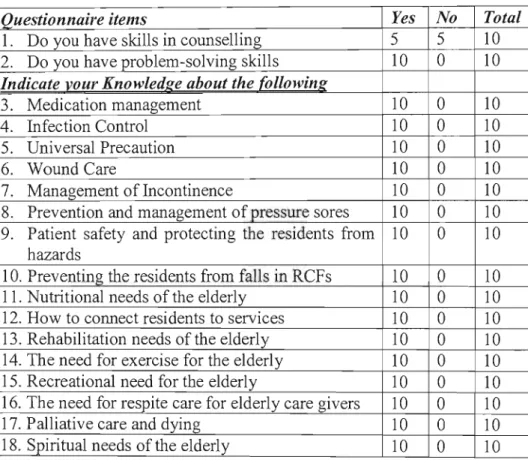
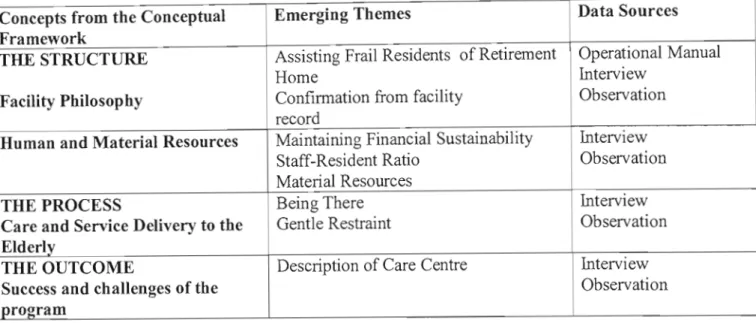
The mission and goals further acknowledge the facility's primary stakeholders (i.e., the residents, their families, the staff, etc.), and the responsibilities of the facility, such as dissemination of information, to those stakeholders. According to the nursing service manager, the mortality rate of the residents was generally low, except during the winter. Ten out of 10 nurses reported that they have the above skills that are necessary for caring for the elderly.
CASE THREE .1 Introduction
- Findings from RCF administrators, confirmation from facility record and observation
- Assisting frail residents of retirement home
- Confirmation from facility record
- Maintaining financial sustainability
- Staff-resident ratio
- Material resources
- Gentle restraint
- FINDINGS FROM ELDERLY RESIDENTS
- Interviews with elderly
- Reasons for admission
- Interactive relationship
- Psychosocial support
- Satisfaction with ReF
- FINDINGS FROM NURSING STAFF
- Demographic data of nursing staff
- Caring for the elderly
- Nursing staff's experiences of caring for the elderly
A mission statement guides the activities of the care center and commits the staff to be. The following section presents the findings on the care and provision of services to the elderly according to the study's conceptual framework process. In the previous part, the findings of the reasons for admission to the RCF according to the reports of the residents were presented.
CASE FOUR .1 Introduction
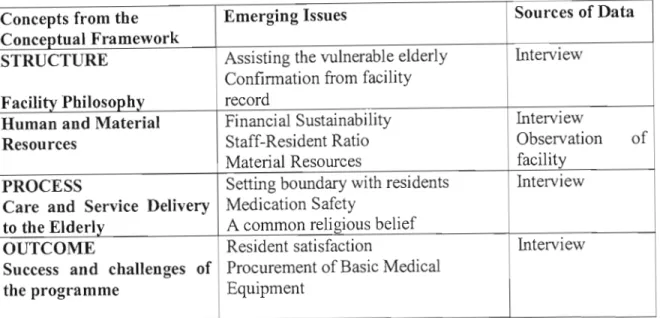
- Findings from RCF administrators, confirmation from facility record and observation
- Confirmation from facility record
- Financial sllstainability
- Staff-resident ratio
- Material resources
- Medication safety
- A common religious belief
- Procurement of basic medical equipment
- FINDINGS FROM ELDERLY RESIDENTS
- Findings from Interview with elderly residents
- Reasons for admission
- Interactive relationship
- Psychosocial support
- Well respected
- FINDINGS FROM NURSING STAFF
- Nursing staff self-reported knowledge about elder care
- Nursing staff's experiences of caring for the elderly
It shows that five out of five nurses indicated that they have very good skills in elderly care. In response to the first question, participants indicated that they have acquired these different forms of professional knowledge in the field of elderly care. Finally, two participants reported that many older adults need people to socialize and connect with.
Conclusion
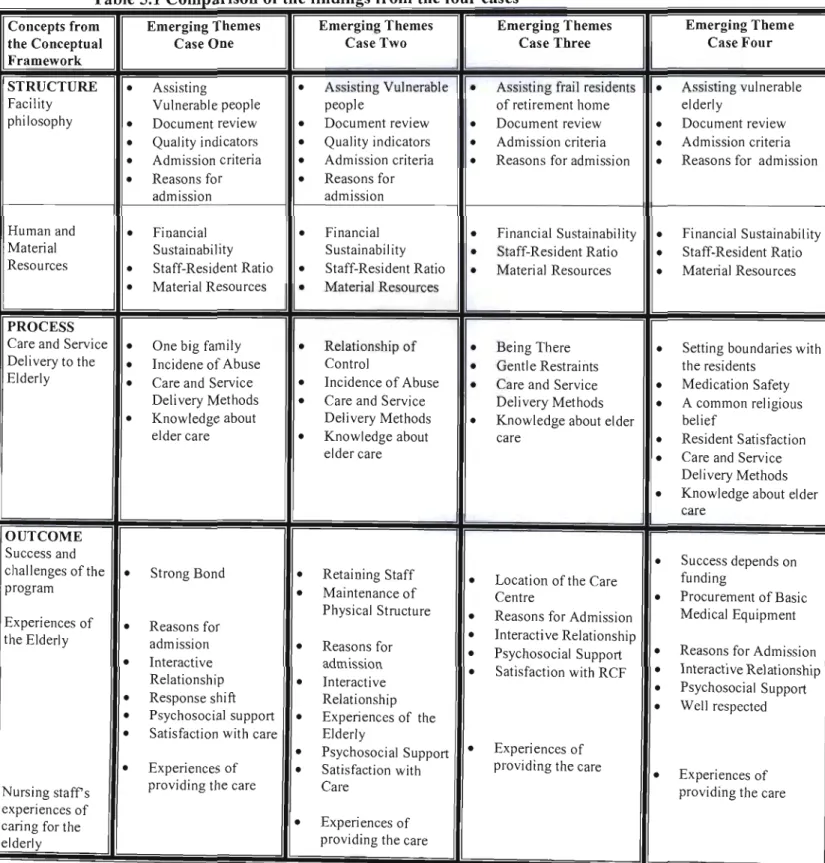
It was guided by concepts from the conceptual framework of the study (Donabedian, 1966) and emerging issues observed from the data of each object. The interviews were based on the structure, process and outcome conceptual framework of the study (Donabedian, 1966). Thirty nursing staff from four RCFs participated in the quantitative aspect of the study via questionnaires.
The Structure
- Facility philosophy
- Confirmation from facility record
- Admission criteria
- Human and material resources .1 Maintaining financial sustain ability
- Staff-resident ratio
As far as the definition of vulnerable is concerned, the majority of the elderly in the four cases were vulnerable, specifically in ten parts of their health status. These documents were generally for the operation of ReF and not just for elderly care. The results of this study are consistent with the literature in that in each of the RCFs abuse was reported by only one resident.