To describe and analyze the HIV and AIDS policy and programs of the ELCT Northern Diocese;. To examine the extent to which the theological beliefs underlying HIV and AIDS programs and policies encourage gender sensitivity in these programs.
Background and objectives
The programs show awareness of gender issues that perpetuate the spread of HIV and AIDS. What are the theological beliefs that underpin the HIV and AIDS programs and policies.
Locating the study within the context of HIV and AIDS as a gendered pandemic
The final case study reveals the consequences of polygamy in the context of HIV and AIDS. The Ecumenical Initiative on HIV and AIDS in Africa (EHAIA), which is a program of the World Council of Churches, works in collaboration with the Circle of Concerned African Theologians (Circle) in addressing the HIV and AIDS pandemic.
Structure of the study
This work will assess the extent to which HIV and AIDS programs of the Northern Diocese of ELCT are responding to the aforementioned gender issues that threaten women's lives. The chapter also highlights Luther's practical response to the bubonic plague in relation to HIV and AIDS programs.
Introduction
Gendered conceptual framework – Rao Gupta
- Programmes that focus on stereotypes of women and men
- Programmes that are gender neutral
- Programmes that are gender sensitive
- Programmes that aim at empowerment
- Programmes that are transformational
This raises an important question for my research: are the ELCT Northern Diocese's HIV and AIDS programs gender sensitive enough to do this. Do the diocese's HIV and AIDS programs also promote the availability of health facilities for women?
Luther‟s theologies
Luther’s theology of suffering
The theology of the cross speaks of God's redemptive work for his creation through Christ's suffering and death on the cross and of God's participation in human suffering. 106. But through the theology of the cross, those who suffer gain the strength to cope.
Luther’s theology of healing
Meanwhile, the psychological aspect of laying on of hands has to do with the touch that expresses love. I am interested in what aspects of Luther's healing theology are being adopted by the diocese's HIV and AIDS programs.
Luther’s theology of gender
Having explored, as part of the second theoretical framework used in the study – the theology of healing – I now turn to the final aspect of Luther's theology that is important to this study, namely Luther's theology of gender. In view of this, the question relevant to my research is: to what extent has Luther's theology on gender influenced the various programs of the church.
Feminist theologies and African feminist cultural hermeneutics
Feminism and feminist theologies
During the interpretation, they began to respond to biblical passages that the church uses to oppress and exclude women. This awareness resulted in the formation of various women's theologies, not only for African-American and Hispanic women in the United States, but also for women in Asia, Africa, and Latin America.
African women’s theologies
African women's theologies, like other liberation theologies elsewhere in the world, emerged in response to oppressive experiences in a particular context. African women's theologies are a critical, academic study of the causes of women's oppression, especially the struggle against social, cultural and religious patriarchy.
Feminist cultural hermeneutics
African women's theologies take women's experiences as their starting point and focus on the oppressive areas of life caused by injustices such as patriarchy, colonialism, neocolonialism, racism and globalization.148. After looking at the formation and tasks of African women's theology, we will explore feminist cultural hermeneutics, one of the three frames of reference for this study.
Conclusion
These are important theories because they provide me with tools to analyze the Church's HIV and AIDS programs and assess their sensitivity to culture's contribution to the issue of gender oppression that is driving the spread of HIV and AIDS stimulates. . Develop theologies that encourage relevant HIV and AIDS programs that take both men and women into account.
Introduction
Location of the study
The Diaconal Department was established at the end of 2005 as a coordinating body of the HIV and AIDS programs for the entire diocese, due to the enormous challenges that the pandemic brings. The Diaconal unit was originally one of the three units of the Department of Health, Diaconal and Social Welfare.
Research sample
The second category of respondents in my sample of research were those of the implementers of the HIV and AIDS programs of the diocese. Out of the five public health education coordinators, four were female nurses and one was a male coordinator.
In-depth interviews
These were the policy makers, implementers of the ELCT Northern Diocese HIV and AIDS programs and parishioners. In the category of the implementers, the diocesan public health education coordinator (PHEP) was the most important person to connect me with the circuit coordinators.
Participant observation
Case studies
Limitations
The draft HIV and AIDS policy reflects the diocese's current HIV and AIDS programs with minor advances in some of the programs, particularly physical and medical care.
Confidentiality
Conclusion
Having described the methodology of my research, I now move on to the first objective of my study in the next chapter. The purpose of the next chapter is thus to describe the context of HIV and AIDS in Tanzania in order to understand the overall context in which the church's HIV and AIDS programs are developed and implemented.
Introduction
Profile of Tanzania
There are more than 130 ethnic groups in Tanzania.171 The Sukuma, Chagga, Nyamwezi, Zaramo and the Makonde outnumber the other groups.172 Swahili is the official language, spoken by most of the Tanzanian population. The religions include Christianity for 45%, Islam for 35% and traditional faith, accounting for 20% on the Tanzanian mainland, while in Zanzibar 99% of the population is Muslim.173.
Current situation of HIV and AIDS in Tanzania
Modes of HIV transmission in Tanzania
Mother-to-child transmission is another form of HIV infection in Tanzania, which occurs during pregnancy, childbirth and breastfeeding.188 This accounted for about 4.6 percent of all cases reported in 2004.189 Medical care service to prevent transmission mother-to-child (PMTCT) of HIV was introduced in the country during 2000.190 National guidelines for this service state that out of ten babies, two to three will be infected through the above-mentioned routes.191 Since breastfeeding is the way best to feed an HIV positive baby. the mother, regardless of her status, has the opportunity to fully breastfeed her child for the first six months, and therefore needs greater support from the family and community to enable her to fulfill this crucial responsibility. 192 EMTPT services. 190 UNICEF, “2002 TNZ: Evaluation of the UNICEF-sponsored Prevention of Mother-to-Child Transmission (PMTCT) Pilot Project in Tanzania,”.
Determinants of the pandemic in Tanzania
Socio-economical determinants
- Poverty
- Migrant labour
In this context, only women are considered vectors of HIV transmission; therefore, it leaves a loophole for men to continue their risky behavior, which is harmful to all those involved in their sexual networking. The TACAIDS report is silent on the sexual behavior of male migrants while living in cities; instead, it assumes that women who are abandoned easily engage in extramarital affairs.
Socio-cultural determinants
- Female genital mutilation or female circumcision
- Early marriage
- Polygamy
The operation was performed using knives or blades in the homes of the male and female circumcisers. However, many of the indigenous people refused to give up the practice, which resulted in violence.
The National Response to HIV and AIDS
HIV and AIDS education awareness
HIV and AIDS education was identified as the most important tool for responding to the spread of the pandemic in Tanzania. Various non-governmental organizations (NGOs) and government departments are engaged in HIV and AIDS education programs.
Care for people living with HIV and AIDS
Caring for PLWHA is another program highlighted by the national HIV and AIDS policy as a strategy to respond to the pandemic. However, it recognizes the efforts of the community, non-governmental organizations (NGOs), community-based organizations (CBOs), faith groups and private sectors to support people living with HIV and AIDS in various ways.
Human rights and gender issues
- Stigma and discrimination
- Failure to access health care services
- Failure to eradicate harmful cultural practices
- Denial of the right to equal education, employment and property
This case highlights the experience of the violation of human rights through the stigma associated with HIV and AIDS and its consequences. Violation of human rights is also evident in the fact that some members of the population are unable to access treatment for HIV and AIDS, which is the subject of our following discussion.
Conclusion
Finally, the effectiveness of the initiatives taken by the government to curb the pandemic was also examined in detail. In the next chapter, I will describe the diocese's HIV and AIDS programs, and evaluate whether and how they address sociocultural and gender dynamics that government programs have failed to do, as I have illustrated. in this chapter.
Introduction
A brief history of the inception of HIV and AIDS programmes of the ELCT
Similarly, the backgrounds of the candidates selected to draft the diocese's HIV and AIDS control program confirmed the above argument. HIV and AIDS and Community Health,” as mentioned above, and it involved a designated team and the circle coordinators.
A gender analysis of the HIV and AIDS programmes/policy of the ELCT Northern
HIV and AIDS education awareness
The question remains of how gender-sensitive the content of the HIV and AIDS education program is. In addition, the respondents also found that the HIV and AIDS awareness program was not gender sensitive.
Voluntary counselling and testing/ARVs/PMTCT
- Voluntary counselling and testing (VCT)
- Antiretroviral therapy (ARVs or ART)
- Prevention of mother-to-child transmission of HIV
In the next section, I will conduct a gender analysis of three other diocesan programs that offer clinical services. This is the only circumstance in which the diocesan program advises the use of condoms.
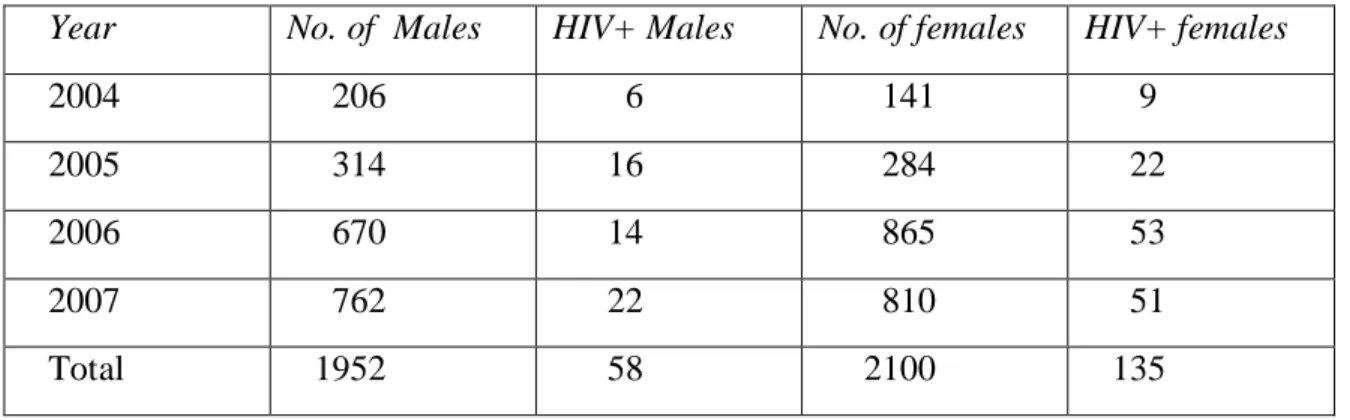
Physical and spiritual care for PLWHA
This question is addressed to the implementers of the ELCT Northern Diocese's HIV and AIDS programs and to parishioners. The majority of respondents indicated that family members or family members provide care for their sick members.
Support groups
Therefore, it cannot be assumed that the mixed age and gender of support groups for PLWHA programs fully facilitate the free and open sharing of such feelings and experiences by all group members. In addition to forming support groups for PLWHA, another program of the diocese includes small income generation projects as a way to provide people with adequate food and as a means of poverty alleviation.
Income generating activities
Rather, the diocese was only able to identify that income-generating projects were important for people already living with HIV and AIDS. Given that the diocese's programs provide education on income generation without linking it to gender factors fueling the pandemic, this suggests that the gendered rationale behind these projects in terms of reducing women's economic dependence on men has been obscured.
Provision of social support to orphans
Bible study, how to be self-reliant, and the experiences of orphans were the main themes of the initial work with orphans. The diocese's draft HIV and AIDS policy has recognized the importance of addressing the social needs of PLWHA, which is the topic of the following discussion.
Social support system to PLWHA
In view of this, it is clear that by entrusting the commission with the task of spiritual or pastoral care, the diocese has realized the magnitude of the pandemic and that this task has actually been fulfilled. In this case, the Church is acting in accordance with the theology of the priesthood of all believers, in which every individual has a role to play in building the body of Christ.
A multi-sectoral approach in response to HIV and AIDS pandemic
Despite these agreements, however, there are differences between the diocese and the government's HIV and AIDS policy. The government's HIV and AIDS policy shows a greater concern for human rights and gender issues than that of the church.

Conclusion
As discussed in chapter four, eighty-five percent of societies in Tanzania are patriarchal in that men dominate all aspects of life in the social, cultural, religious and political spheres. However, government policy has taken into account gender issues related to HIV and AIDS, even if the implementation of such considerations is pending.
Introduction
Lutheranism and Luther‟s theologies as the basis of the diocese‟s HIV and AIDS
- A theology of good works
- The theological concept of love for one’s neighbour
- A theology of the freedom of a Christian
- A theology of the priesthood of all believers
556 Martin Luther, “Small Catechism,” in Theodore Tappert (ed.), The Book of Concord: The Confessions of the Evangelical Lutheran Church, p. 566 Martin Luther, “The Babylonian Captivity of the Church,” in Abdel Ross Wentz (ed.), Luther's Works, Vol.
The mission of the Lutheran Church in the context of HIV and AIDS
This resonates with Nurnberger, a Lutheran theologian, who insists that the church's mission is not limited to spiritual matters. Compassion, conversion and care are three themes of the Action Plan that guides churches in their response to HIV and AIDS.
Luther‟s response to the bubonic plague in relation to the HIV and AIDS
- Caring for sick persons
- Protection or care for orphans
- Precautions to avoid infection and the taking of the medication
- Prepare people for death
As indicated in the previous chapter, most diocesan HIV and AIDS programs are carried out by the PHEP team, who are diocesan and district coordinators and zonal educators. By Luther's time, confession was an integral part of the Christian tradition.
Critical reflections on Luther‟s theology from a gendered perspective
Strengths of Luther’s theology
It is part of the good works that Christ himself initiated during his ministry through words and deeds. Since the law to love one's neighbor is given to all Christians, it is essential that both men and women become aware of the need to participate fully in caring for their sick relatives.
Weaknesses of Luther’s theology
Although these leaders are outside the scope of this study, their views may be representative of the attitudes of other church leaders in the Lutheran Church in Tanzania. 628 Letty Russell, Church in the Round: Feminist Interpretation of the Church, Kentucky: John Knox Press, p.
Conclusion
Concluding summary
A theology of life
A theology of the body and sexuality
Interview questions to PHEP coordinators
Interview questions to PHEP zonal educators
Interview questions to members of the congregation
Letter to the diocese requesting for permission to conduct research
Letter of approval to conduct research
Letter to the respondents requesting for their participations in the study
Consent form for participation in the research project
List of participants
Map showing the location of each of the 20 dioceses of the Evangelical
Map of the HIV Prevalence by Region in Tanzania 2007-08
HIV Prevalence Trend in Tanzania 2007-08
Diocesan Policy on HIV and AIDS