SOCIAL SUPPORT, SATISFACTION WITH LIFE AND GENERAL WELL BEING OF CAREGIVERS OF PEOPLE WITH SCmZOPHRENIA.
MADIPERE MAHANGO
REGISTRATION NUMBER: 200201287
SUBMITTTED IN PARTIAL FULFILMENT OF THE DEGREE MASTER OF ARTS IN CLINICAL PSYCHOLOGY
IN THE
SCHOOL OF PSYCHOLOGY (FACULTY OF HUMANITIES) UNIVERSITY OF KWAZULU - NATAL (WESTVILLE CAMPUS)
APRIL
2006
AKNOWLEDGEMENTS
I would like to express my gratitude to the following people for the contribution they made towards the completion of thismini - dissertation.
• I offer my greatest thanks to God for giving me the courage, strength and the people who have assisted me to undertake this project.
• My supervisor Mr. S. Roche, for his constructive criticism and guidance. This mini- dissertation would not have seen the light of day without your guidance and dedication.
• Ms Indrina Naidoo (Principal IT Consultant) and Ms Nolwazi Dlamini (Secretary in the School of Psychology [Westville Campus]), for the assistance with statistical analyses.
• My family (Mohlapa, Mabitsane Boshielo, Ngoato and Mashegoane Jr.) especially my parents (Mr. & Mrs. M. Z Mahango) for their patience, love, encouragement and fmancial assistance.
• Motshegwa Mushi for having faith in me.
• The people who participated in the study and those who gave me permission to conduct this studyinthe places under their control.
TABLE OF CONTENTS
Acknowledgements .
Table of contents .
Abstract .
Lists of tables .
Chapter One: INTRODUCTION 1. Introduction
1.1 Psychological well - being 1.2 Psychological distress 1.3 General well - being 1.4 Social support
1.5 Social support appraisal
2 3 6
35
8 9 9 9 10
10
Chapter Two: LITERATURE REVIEW
1. Introduction 11
2. Literature review 11
3. Response to schizophrenia 12
3.1 The impact of schizophrenia on the family 14
4. Stress and Coping 16
4.1 Forms of social support 18
4.2 The role of social support 19
4.3 Mechanisms of social support on Psychological well- being 20
4.4 Psychological well- being 21
5. Hypotheses 23
6. Theoretical framework 7. Conclusion
23 27
Chapter Three: METHODOLOGY
3. Introduction 28
3.1 Design 28
3.2 Research participants 28
3.3 Hypothesis 29
3.4 Aims 30
3.5 Measurement instruments 30
3.5.1 Biographical questionnaire 31
3.5.2 General well- being scale 31
3.5.3 Social support appraisal scale 32
3.5.4 Satisfaction with life scale 32
4. Ethical issues 33
Chapter Four: RESULTS 4.1 Introduction
4.2 Description of research participants 4.2.1 Response rate
4.2.2 Demographic characteristics of the participants 4.3 Social support and Psychological well - being 4.4 Social support among participants
4.4.1 Correlations among social support (social support appraisal), satisfaction with life and general well -being
34 34 34 34 39 41
42
5. Summary 44
45 Chapter Five DISCUSSION
5.1 Introduction
5.2 Interrelationships among social support and
psychological well - being 45
5.2.1 Social support and psychological well- being 45
6. Conclusion 50
Chapter Six: LIMITATIONS AND RECOMMENDETIONS 52
REFERENCES 55
APPENDICES 63
LIST OF TABLES
TABLE PAGE
Table 4.1 Demographic Characteristics of the participants 35 Table 4.2 Means and Standard Deviations for Social support 40
appraisal, satisfaction with life and general well - being of caregivers in a support group and non - support group
Table 4.3 Pearson correlation coefficients of social support 42 satisfaction with life and general well - being for the sample.
Abstract
Schizophrenia is a serious mental illness that affects a person's ability to think and function well. Perceptions, feelings, and behaviour become impaired, making it difficult for the person to manage emotions, make decisions, and relate to other people (Dyck, Short & Vitaliano, 1999). According to Brady and McCain (2005) schizophrenia does not only affect individuals, but the entire family. Very often a family member becomes the primary caregiver to a loved one with schizophrenia. Brady and McCain (2005) point out that the lifetime emotional, social, and financial consequences experienced by individuals with schizophrenia have significant effects on their families. Family responses to having a family member with schizophrenia include: care burden, fear and embarrassment about the illness signs and symptoms, uncertainty about the course of the illness, lack of social support and stigma.
This study investigated the nature of the relationship between indicators of psychological well- being (satisfaction with life and general well- being) and social support as a stress buffering mechanism in a sample of 29 caregivers who were not affiliated to a support group and 30 caregivers in a support group residing in the areas within Polokoane Municipality. The instruments used were the General Well - Being Schedule (Dupuy, 1977), the Satisfaction with Life Scale (Diener, Emmons, Larsen & Griffin, 1985) and the Social Support Appraisal Scale (Vaux, Phillips, Holley, Thompson, William &
Stewart, 1985).
Findings revealed a positive correlation between satisfaction with life and social support appraisal for example in a support group. A negative correlation was found in caregivers who were not affiliated to a support group between social support appraisal and general
well - being. Furthennore social support appraisal was found to be the best predictor of satisfaction with life. Additionally the fmdings revealed no significant difference in general well - being between the two groups.
This study was however conducted in areas within the Polokoane Municipality using a small sample which limits the generalizability of findings. Itis recommended that future studies use a larger and representative sample as well as instruments that have been culturally nonned.
This study examined the psychological well - being of 30 caregivers of individuals with schizophrenia affiliated to Tshepo Family Support Group and 29 caregivers of people living with schizophrenia who were not affiliated to a support group. The study indicated the importance of being connected with other families living with people diagnosed with schizophrenia. By connecting with other families living with schizophrenia caregivers may not feel isolated and may also share the challenge of caring for someone with schizophrenia, this would increase the caregivers' psychological well - being.
Chapter One INTRODUCTION
1. Introduction
Kaplan and Sadock (1998) indicate that symptoms of the condition diagnosed as schizophrenia usually first appear when an individual is an adolescent or young adult.
The course of the young person's life is forever changed. Frightening experiences, such as hearing voices or seeing people and scenes that seem real but are not: feeling threatened by dangerously powerful but unknown forces: losing the ability to concentrate, losing the ability to remember, and follow the topic in normal conversations or a television show; as well as losing the "will" or energy to accomplish activities of daily living are often expressions of schizophrenia. Brady and McCain (2005) mention that trying to cope with these experiences often results in behaviours leading to social isolation and withdrawal, and interferes with individual development and family life.
Furthermore Brady and McCain (2005) postulate that caring for someone with schizophrenia can take a tremendous emotional and physical toll on the caregiver. In the caregivers' efforts to care and do best for their loved ones caregivers often are neglecting the very person who also need solid support - themselves.
This study examined the extent to which the care giving role assumed by family members of mentally ill people, impact on their well - being. The study examined the differences in support systems: formal support which includes caregivers affiliated to a support group and informal support which includes caregivers not affiliated to a support group, general well being and satisfaction with life of the caregivers. It focused on two groups; one group of 30 caregivers in a support group and 29 caregivers who were not affiliated to a
support group. Through observation and relatives' accounts it has been noticed that caregivers in a support group have a good satisfaction with life predicted by the social support appraisal. The study does not attempt to discredit the contributions made by caregivers who are not affiliated to a support group but seeks to indicate the importance of creating social networks with other families caring for people living with schizophrenia.
1.1 Psychological well - being: According to Napholz (1994a) psychological well - being is not a unitary construct and studies of well - being have focused on varying aspects such as self - esteem, life satisfaction or depressive symptomatology, occurring either separately or in combination. This study focused on the levels of satisfaction with life and general well - being to explain and describe psychological well - being. Those who obtain high scores on General Well - Being Schedule (Dupuy, 1977) and a high score on the Satisfaction with Life Scale (Diener, Emmons, Larsen& Griffin, 1985) were described as being psychologically well adjusted.
1.2 Psychological distress: In this study those who reported less satisfaction with life and obtained low scores on General Well - Being Schedule (Dupuy, 1977) were described as psychologically distressed.
1.3 General well- being: Dupuy (1977), cited in MacDowell and Claire (1987), identify general well - being as "the individual's feelings about his inner personal state rather
than about external conditions such as income, work environment or neighbourhood" (p 189). Six components of general well - being are identified. These include anxiety, depression, general health, positive well- being, self control and vitality.
1.4 Social support: House (1985) defines social support as a flow of emotional concern (liking, love, and empathy), instrumental aid (goods and services), information and for appraisal (information relevant to self evaluation) between people. He identified four different types of support: emotional, instrumental, informational and appraisal. The task of this research was to determine the nature of the relationship between social support appraisal and indicators of psychological well - being (general well - being and satisfaction with life) in a sample of caregivers of people with schizophrenia, in order to indicate that caregivers with less perceived social support are expected to show poor psychological well being than caregivers with higher perceived social support.
1.5 Social support appraisalrefers to the quality/ extent to which an individual believes, thinks or feels she/ he is loved and esteemed by, and involved with other people (Vaux, Phillips, Holley, Thompson & Steward, 1986). Social support appraisal is the focus of this study since the availability of support, if not positively perceived by the individual, appears to have negative effects on the individual's well- being (Vaux, Phillips, Holley, Thompson& Steward, 1986). Social support helps people cope with stress by buffering the individual from the stressor (Ogden, 2004).
Chapter Two
LITERATURE REVIEW 1. Introduction
This chapter presents a review of literature related to the theoretical framework within which this study was formulated. It also presents the conceptualisations of social support and psychological well - being.
2. Literature Review
For the purpose of this study a carer is described as an individual who provides or intends to provide practical and emotional support to someone with schizophrenia. The individual mayor may not live with the person cared for, and it can be a relative, partner, friend or neighbour. In order to be an effective caregiver over the long term, Brady and McCain (2005) suggest that caregivers must take care of themselves. Brady and McCain (2005) indicate that the first step of proper caregiving is to be aware that their loved one's illness has affected their psychological well - being. In addition, acknowledging the emotional, social, psychological and physical impact of caring for someone living with schizophrenia is important as it might help caregivers to develop some coping strategies.
This can mean any number of things: such as creating a hobby or doing something that the caregiver enjoys, focusing more attention on someone else or going to a support group (Brady& McCain, 2005).
The progressIOn of the illness, with the consequent impairment of cognition and functional abilities, often leads caregivers to feel powerless and have difficulty with patients' daily care (Gignac & Gottlieb, 1996). Biegel, Sales, and Schulz, (1991) and Pariente and Carpiniello (1996) indicate that the level of burden experienced by caregivers of persons with schizophrenia is equivalent to that of caregivers of persons with other neurological disorders (e.g. Alzheimer's disease, mental retardation) and physical disorders (e.g. diabetes, cancer).
Patient stressors such as negative symptoms, disruptive symptoms (e.g. psychotic and aggressive symptoms) frequent psychiatric hospitalizations, and short illness duration have been linked to increased burden in caregivers of persons with schizophrenia (Biegel, Milligan, Putman,& Song, 1994; Dyck, Short, & Vitaliano, 1999; Gibson, Horn, Powell
& Gibson 1984). Lowyck, De Hert, Peeters, Gilis and Peuskens (2001) suggest that it is
important to note that not all researchers consistently find a link between these patient stressors and family burden, however persons with schizophrenia who are symptomatic, have many hospitalizations, may be the most burdensome for caregivers. Furthermore caregivers ' resources, such as effective coping, as well as high social support have been repeatedly linked to low levels of burden (Bibuo-Nakou, Dikaiou, & Bairactaris, 1997;
Biegel et aI, 1994; Dyck et aI, 1999; Potasznik & Nelson, 1984; Solomon & Draine, 1995).
3. The Response to Schizophrenia
Families affect patients and patients affect families. The way a family reacts to a member with schizophrenia or a member developing schizophrenia depend on the way they perceive schizophrenia and the practical impact of the illness on themselves. Bradyand
Mc Cain (2005) mention that it is important for the caregiver to provide structure and routines such that the loved one can feel connected to the environment and the caregiver.
The structure and routine provides safety and stability to the individual who may find other aspects of his or her life very unpredictable. The structure and routine include:
setting up rules, setting goals and including the individual in the decision - making process of establishing rules and goals might help him or her feel a sense of ownership and less like his or her freedom is being taken away (Brady& Mc Cain, 2005).
The family's attitudes to schizophrenia must be seen in the wider context of society's attitudes (Atkinson& Coia, 1995). Negative attitudes by society to schizophrenia can be interpreted as stigmatisation. Leff (1994) indicate that the stigma of schizophrenia is a barrier to those trying to rehabilitate themselves. Stigmatisation is also a very real problem for their families. Leff (1994) further mention that when the patient exhibit 'weird' behaviour family members may be bewildered and resentful, and often blame and criticize theill individual. Members may blame other members of the family as their fear and frustration grow. Caregivers' experiences encompass distress, worry, shame and guilt, and positive aspects such as caregiver reward (Szmukler, Burgess & Herman, 1996). In addition, Brady and Mc Cain (2005) indicate that caregivers of people living with schizophrenia might experience various emotions such as sorrow, fear, disruption of family relationships, shame, isolation guilt, anger, anxiety, burnout and apprehension about the future. Barrowclough and Tarrier (1995) emphasize that it is essential to join a support group in order to fmd ways of managing the challenges that often comes with the burden of caring for someone with schizophrenia.
Atkinson and Coia (1995) point out that schizophrenia can alter patients' and relatives' attitudes to themselves and others, and challenge values. For instance, to a spouse or
parent this may mean giving up a career for a more routine job, or leaving paid employment altogether to adopt a caring role. Plans for the future may have to be substantially reviewed. Conversely, Atkinson and Coia (1995) indicated that it may bring understanding and a degree of satisfaction in the caring role.
Atkinson and Coia (1995) suggest that it is severity and chronicity that lead relatives to experience stress in responding to, and coping with, the illness. The family's response must be addressed both as a response to the illness itself and as a response to caring.
These response to the illness and the response to caring often overlap, but it is important to separate them since they cause different problems and not all family members will accept, or even need, to take on the role of care-giver yet they still experience difficulties (Atkinson & Coia, 1995).
3.1 The impact of Schizophrenia on the family
The impact of schizophrenia depends on the resources of relatives: their physical health and age, their social assets, including their marital relationship and social networks, their material assets and their psychological strengths and coping skills (Atkinson & Coia, 1995). Ithas been extensively documented (Biegel, et ai, 1994; Biegel, et ai, 1991) that living with, and caring for, someone who has schizophrenia can cause problems, traditionally described as 'family burden', a term that may be offensive both to people with schizophrenia and to families (Atkinson & Coia, 1995). The people with schizophrenia might be unwilling to accept they are a burden, have a lack of comprehension or insight that they present a problem or, when well, be struggling to seek independence and find such a concept of dependency a retrograde step. Families may
find the idea of a loved and cherished family member being burdensome extremely upsetting and the idea of considering their care stressful and guilt- provoking.
Atkinson and Coia (1995) point out the importance to distinguish family hardship, a much broader concept than burden, which is specific to 'patient' - related problems.
Since uniform criteria on burden have not been applied across studies, it is not possible to quantify or make absolute comparisons. Equally, Atkinson and Coia (1995) indicate little empirical information on how burden varies with time and illness severity. It can only be stated with certainty that it exists and that it is a feature of the caring process in the majority of families.
Grad and Sainsbury (1963) found considerable evidence of family disturbance, hardships and strained social relationships. The concept of burden was refmed into two dimensions, objective and subjective. Objective burden, in terms of adverse effects on the household, is that which exists externally, can be observed by others, and includes quantifiable, measurable problems such as physical care, fmance and over-crowding.
Subjective burden, in contrast, is less tangible and viewed as personal, internal feelings such as guilt, shame or worry over the future, or attitudes to experiencing burden.
Interestingly, Atkinson and Coia (1995) indicate that one does not automatically imply the other. Many families experiencing high levels of objective burden do not necessarily have high levels of subjective burden. On the other hand, families with high levels of subjective burden tend to cope less well irrespective of their objective burden, and subjective burden also appears to be linked to high expressed emotion and thus, perhaps, to a high risk of patients' relapsing.
Having described a structure for assessing burden, it is perhaps important to look at the processes of managing stressors or burden that might have been appraised as challenging
or beyond the family's resources and the efforts to manage environmental and internal demands.
4. Stress and Coping
The issues encompassed by the concept of stress are certainly not new. Stress research is extensive and has long been established in the health care fields and other fields such as education, political science and business. Research foci have also included stress and coping, which focused on the concern with individual differences. There was also a resurgence of interest in psychosomatics, the development of behaviour therapy aimed at the prevention of disease or life styles that increase the risk of illness, and a mounting concern with the role of the environment in human affairs. Thus it may be concluded that stress and coping represents an extensive and long established research field (Lazarus &
Folkman, 1984).
Stress can be defmed as a negative emotional experience accompanied by predictable biochemical, psychological, cognitive and behavioural changes that are directed either towards altering the stressful event or accommodating to its effects (Baum, 1990). Stress is viewed as a real or perceived imbalance between environmental demands required for survival and an individual capacity to adapt to these requirements (Lazarus & Folkman, 1984). Stress is thus a consequence of a person's appraisal processes: the assessment of whether personal resources are sufficient to meet the demands of the environment and, may be regarded as a function of the degree of person - environment fit (Lazarus &
Folkman, 1984). Furthennore, Lazarus and Folkman (1984) define coping as constantly changing cognitive and behavioural efforts to manage specific external and! or internal demands that are appraised as taxing or exceeding the resources of the person.
Cohen (1980) suggested that coping efforts exist on five main tasks:
• to reduce harmful environmental conditions and enhance the prospects of recovery
• to tolerate or adjust to negative events or realities
• to maintain a positive self image
• to maintain emotional equilibrium and
• to continue satisfying relationships with others.
In addition the individual must first deal with the immediate demands of the stressor itself. He or she must come to tenns with the negative and irreversible problems that the stressor has produced. Lazarus& Folkman (1984) point out that people and groups differ in their sensitivity and vulnerability to certain types of events, as well as in their appraisals. This appraisal process mediates reactions and is essential for adequate psychological functioning. A cognitive appraisal reflects the unique and changing relationship taking place between a person with certain distinctive characteristics (values, commitment, styles of perceiving and thinking) and an environment whose characteristics must be predicted and interpreted (Lazarus & Folkman, 1984).
4.1 Forms of Social Support
Having people from whom one receives emotional, informational and for tangible support has been receiving growing attention as a coping resource in stress research, behavioural medicine and social epidemiology (Cobb, 1976; Cohen, 1980; Lazarus & Folkman, 1984). As indicated by Ngcobo (1998), social support is only one factor in a number of factors that work to reduce psychological distress. Itis also essential that the person is resourceful in finding ways of using other coping resources to counter the environmental demands. To say that the person is resourceful means that the person needs to draw upon resources whether they are readily available or whether the resources exist as competencies that are needed but not available. The ability to find resources determines the person's coping skills.
Ngcobo (1998) indicates that in many situations an individual's coping efforts are of an explicitly social nature, in that the help and comfort of other people are actively sought.
While social support perceived, and received, by the individual appears to reduce psychological distress, there are many other factors that work to reduce distress, where social support works as either a buffering or mediating mechanism.
Cobb (1976) defines social supportas information leading the subject to believe that he or she is cared for and loved, esteemed, and a member of a network ofmutual obligations.
The evidence that supportive interactions among people are protective against the health consequences of life stress is reviewed.
Taylor (1995) describes various forms of social support: the appraisal support, tangible assistance, information, and emotional support.
Appraisal support includes helping an individual to understand a stressful event better and what resources and coping strategies may be mustered to deal with it.
Tangible assistance involves provision of material support, such as services, financial assistance, or goods. On the other hand family and friends can provide information by suggesting specific actions an individual can take to combat a stressor. Supportive friends and family can also provide emotional support by reassuring the person that he or she is a valuable individual who is cared for by others. The reassurance and the warmth enable the person under stress to approach it with greater assurance.
4.2 The role of social support
Social support is beneficial and its absence could be stressful. The stress buffering hypothesis suggests that social support helps people cope with stress, therefore mediating the stress - illness link by buffering the individual from the stressor i.e. social support influences the individual's appraisal of the potential stressor (Ogden, 2004).
Furthermore the existence of other people enables individuals exposed to a stressor to select an appropriate coping strategy by comparing themselves with others. For example, if an individual was going through a stressful life event, such as divorce or caregiving, and existed in a social group where other people had dealt with divorce or were dealing with caregiving, the experience of others would help them to choose a suitable coping strategy (Ogden, 2004).
Research indicates that social support effectively reduces distress during time of stress (Cohen & Wills, 1985; Kessler & McLeod, 1985; Wallston, Alagna, DeVellis &
DeVellis, 1983 cited in Taylor, 1995). In addition it has been shown that those with high levels of social support are also less likely to suffer psychological or physical adverse health consequences of highly stressful events. Moreover, social support appears to reduce the distress that may accompany illness and people receiving it are more compliant with their medication regimens (Christensen, Smith, Turner, Holman, Gregory
& Rich, 1992). They are also likely to use health services, especially when the support network is positively inclined toward those services.
Ireys, Chernoff, DeVet and Kim (2001) found that a family support intervention could have beneficial effects on the mental health status of mothers of children with chronic illnesses. Christensen et al (1992) studied the role of social support as a predictor of long - term survival among patients with schizophrenia and found social environment, specifically the quantity of social support available to the patient, may increase longevity in psychiatric populations.
4.3 Mechanisms of Social Support on Psychological Well - Being
Over the past decades, the association between social support and health has been well documented (Cassel, 1976; Cobb, 1976; Cohen & Syme, 1985; House, Landis &
Umberson, 1988). Several studies provided compelling evidence that individuals who lack adequate social support tend to have low levels of psychological well - being (Hirsh, 1980; Thoits, 1983; Thoits, 1995; Turner& Marino, 1994).
Social support is known to have two effects on well - being: (1) the main effect suggests that social support itself is beneficial and that the absence of social support is itself stressful. This indicates that social support mediates the stress-illness link, with its very
presence reducing the effect of the stressor and its absence itself acting as a stressor, (2) the buffering effect suggests that social support helps individuals cope with stress, therefore mediating the stress-illness link by buffering the individual from the stressor (Ngcobo, 1998; Ogden, 2004).
The buffering hypothesis maintains that the health and mental health benefits of social support are primarily evident during periods of high stress. Therefore when there is little stress social support may have fewer physical or mental health benefits. According to this hypothesis social support acts as a reserve and resource that blunts the effects of stress or enables the individual to cope with stress more effectively when it is at high levels (Taylor, 1995). This is perhaps the most common theme in the social epidemiological literature on social support and health i.e. support acts as an immediate buffer to stress and its destructive somatic consequences. As indicated before it can help prevent stress by making harmful or threatening experiences seem less consequential, or provide valuable resources for coping when stress does occur (Ogden, 2004).
4.4 Psychological Well - Being
Psychological well - being, although extensively studied, appears to lack a coherent theoretical framework. This is evident in the existence of many definitions and conceptualizations of this construct. A number of studies (Napholz, 1994a; Napholz,
1994b) indicate that psychological
well - being is a multidimensional construct which includes emotional or affective states such as happiness, distress, morale or positive affect as well as cognitive states such as alertness, confusion or impaired thought and concentration (Ren, Lee & Kaziz, 1996).
Within the field of psychology, several perspectives, models and constructs have been developed which all attempted to grasp the essence and characteristics of psychological well- being (Wissing& Van Eeden, 1998). An analysis of these theoretical formulations reveals that the conceptualizations of psychological well - being are diverse. According to Hunt (1993) part of the problem on the lack of a theory of psychological well- being is that well - being itself has many different components, including among others, the absence of negative affect or pathology, the balance of negative and positive affect, life satisfaction and affect intensity.
Inthe domain of personology, for example, different views of optimal psychological well - being have been described in line with different personality theories (Ryff, 1989).
However, no generally accepted theory on the nature and dynamics of optimal psychological functioning or wellness seems to exist. While there are similarities, there are also differences between personality theories on conceptualization of psychological well - being. Lubinski, Tellegen and Butcher (1981), for example, outline the various areas which are encompassed by the construct psychological well - being. These factors are self - appraisal, personal or job satisfaction, self - actualisation or ability to realize life and perceived control, all of which contribute to life satisfaction and contentment.
Diener (1985) reviewed 18 studies on the measurement of subjective well - being and concluded that well - being should be understood as composite of negative affect, positive affect, affect intensity and global life satisfaction. Similarly, Ryff (1989) emphasizes the composite nature of psychological well - being.
Therefore there is consensus in the literature that psychological well - being is not a unitary construct, but a broad concept consisting of various aspects such as self - esteem, life satisfaction, levels of distress (Napholz, 1994a; Napholz, 1994b; Wissing & Van
Eeden, 1998). Napho1z (1994b) argues that to simplify matters the conceptual differences of psychological well - being, one should rather speak of the indicators of psychological well - being and refer to specific issues that are of interest in one's argument. Napholz (1994b) further states that justifications should however be made.
Similar to the other previous studies, this study considers psychological well - being as a super ordinate construct which subsumes other constructs such as life satisfaction and negative and positive aspects of well - being as indicators of psychological well - being.
This study hence, focuses on life satisfaction and general well - being as indicators of psychological well - being.
5. Hypotheses
The task of this research was to determine the nature of the relationship between social support appraisal and indicators of psychological well - being (general well - being and satisfaction with life) in a sample of caregivers. It is hypothesised that psychological well - being would be higher for caregivers in a formal support than caregivers in an informal support as indicated by the general well - being and satisfaction with life.
Further that the caregivers in a formal support group would rate social support appraisal higher than caregivers in an informal support group.
6. Theoretical Framework
The view that an individual is isolated and independent is deeply embedded in western culture and values. In contrast, an ecological systems model (Hinde 1989; Kreppner &
Lerner, 1989) emphasizes the interconnections of events and the bi-directionality of
effects between organism and environment. This indicates that individuals are not independent and that, over and above any commonalities at the biological level they share experiences and influences owing to their membership in higher - level systems such as families, organizations , communities ,societies and historical periods. This study will be based on the ecological perspective that views human development from a person-in-environment context, emphasizing the principle that all growth and development take place within the context of relationships. Thus, an individual must be studied in the context of the family environment and the family must be understood within the context of its community and the larger society. The most consistent advocate of a theory of development in context is Bronfenbrenner (1979). Bronfenbrenner has devised an ecological model for the systematic analysis of environmental influences on development. Bolger, Capsi, Downey and Moorehouse (1988) show that Bronfenbrenner conceptualises developmental contexts as nested, hierarchical structures with influences ranging from those located in the distal (macro level setting) to those located in the proximal setting (micro level setting ), see fig 1- 1(p.24)
NallimalilY
Figure 1 - 1 the four levels of the environment comprising the ecological systems model.
Adapted from Bolger, Capsi, Downey& Moorehouse (1988).
According to Bronfenbrenner (1979, 1989), three types of proximal settings can be distinguished effectively: the exosystem, microsystem and mesosystem. The exosystem consists of face - to- face settings in which the individual does not actively participate but that can affect or be affected by the person. The microsystem is that part of the environment that an individual is in contact with and can interact with directly in daily life during a certain period of time. Itcontains those settings in which people can readily engage in face - to - face interaction, and these patterns of interaction, as they persist and evolve through time constitute the vehicle of behaviour change and individual development. The mesosystem consists of relationships between major microsystem settings at a particular point in the individual's life (Bolger, Capsi, Downey and Moorehouse, 1988). Bronfenbrenner's ecological model requires that one consider the interactive ways in which individuals are influenced by and simultaneously influence the context that envelops them. Influencing all other systems is the macrosystem, this is the outermost layer that does not refer to a specific setting but includes cultural values, political philosophies, economic patterns, and social conditions; all of which define the character, structure and functioning of proximal settings. Together, these systems are termed the social context of human development (Craig, 1996).
While interventions to encourage development can occur at all levels. Bronfenbrenner (1989) suggests that those at the macrosystem level are especially critical. This is because the macrosystem has the power to influence every other level.
The ecological systems model (Bronfenbrenner, 1989) indicates that the interaction among the family (microsystems) , community ( exosystem) and society (macrosystem)
is essential in determining the psychological well being of caregivers. Bronfenbrenner (1993) indicates that factors such as material, physical and social resources, the stability of those resources and the extent to which they are organised or disorganised, serve to facilitate or impede development. This model was applied to the study because Taylor (1995) reports that social support effectively reduces distress during time of stress.
Therefore this indicates that people constantly seek and offer support. To have support means to be involved in social relationships, to be connected with other people. In the presence of support a person feels loved, valued and cared for, and one knows that she or he has resources available to him or her above and beyond his or her own. Friends, relatives, co-workers and spouses serve as a source of social support and all these social relationships are embedded in the distal (macrosystem) and proximal (microsystem) processes.
The central concern of Bronfenbrenner's ecological model (1989) is the mutual relationship or mutual reciprocity between individuals and their environments. The nature of proximal processes varies in environments characterised as being either rich or poor in material resources. Economic hardships, whether having to do with features of the physical environment (quality of housing , safety of the neighbourhood) or the availability and nutritional quality of food, interacts with proximal processes to have an impact on outcomes for the individual. In addition Christensen, Smith, Turner, Holman, Gregory, and Rich (1992) reported that those with high levels of social support are less likely to suffer adverse psychological or physiological health consequences of highly stressful events. This indicates that social support serves as a buffer in reducing stress that may accompany illness, and people receiving it are more likely to report positive outcomes in their caring role.
7. Conclusion
This chapter has focused on the review of literature related to the response and impact of schizophrenia on families and psychological well- being, the conceptualization of social support, how social support functions and its relationship to psychological well - being.
Different conceptualizations of psychological well - being were highlighted. There appears to be an agreement in literature that psychological well - being is not a unitary construct, but a broad concept consisting of various aspects.
The present study serves as a quantitative correlational study. Itis believed that it would provide valuable information which would stimulate more research on the variables (social support appraisal and psychological well being) that were the focus of the present study.
Chapter Three
METHODOLOGY
3. Introduction
This chapter describes how the study was conducted.Itbegins with the description of the research design. This is followed by a discussion on the selection of research participants, measures used to collect data and the procedure used in the study.
3.1 Design
This study is a quantitative correlational study where the relationship between social support appraisal and psychological well being (satisfaction with life and general well being) of 59 caregivers of individuals diagnosed with schizophrenia was explored. It is hypothesised that caregivers who were in a formal support group have higher psychological well - being than caregivers who were not affiliated to a formal support group. The caregiver's perception of psychological well - being is dependent on his or her subjective appraisal of social support.
3.2 Research Participants
For the purpose of this study, two methods (snowball sampling and convenient sampling) of identifying potential participants were used. Among these was the snowball method in which caregivers who were not affiliated to a support group were approached at Seshego hospital. These caregivers then sent the researcher to other caregivers who were also patients at the hospital. The snowball sample consisted of 29 caregivers who were not
affiliated to a support group. In the other method of identifying participants the chairperson of the Tshepo Family Support Group was approached and permission was asked to utilize some of their time during their meeting. This provided a convenience sample of 30 caregivers. The participants that were not affiliated to a formal support group had males (n= 7) and females (n= 22) whereas the Tshepo Family Support Group had males (n= 6) and females (n= 24). Both groups had an age range of 15 to 45 years, with mean ages of27.3 years and 30.8 respectively.
3.3 Hypotheses
This study focused not only on the availability of social support but also investigated the quality of that support by assessing caregivers' satisfaction with social support. It was hypothesised that caregivers in a formal support group would rate social support appraisal higher than caregivers in an informal support group. It was further hypothesised that caregivers in a formal support group (Tshepo Family Support Group) would indicate higher psychological well - being (satisfaction with life and general well - being) than caregivers in an informal support group. Subjective appraisal of support appears to be especially important in regard to the individual's psychological well - being.
The null hypothesis is therefore that caregivers in a formal support group do not have greater psychological well - being (satisfaction with life and general well - being) than the caregivers in an informal support group.
3.4 Aims
The aim of the study was therefore to investigate the impact social support appraisal played on satisfaction with life and general well - being of caregivers in the Tshepo Family Support Group and as well as caregivers who were not affiliated to a support group. The results of the study would provide members of Tshepo Family Support Group with greater understanding of their motivation to continue helping each other on a daily basis. By investigating the psychological well - being of caregivers who were not affiliated to a support group, furthermore aimed to provide Tshepo Family Support Group with an overall idea or perhaps validation of the great work they do as caregivers. The great work such as caregivers' daily visits to other caregivers living with people diagnosed with schizophrenia, workshops to educate the community about schizophrenia and daily activities that are planed for their loved ones and meetings that are held monthly to plan and seek more activities to help each other and also help other family members to create support groups in their own communities. This would then lead to improvements in the running of the group, and establishing other support groups around the Polokoane area.
3.5. Measurement Instruments
Sixty questionnaires were sent to potential participants. Of these questionnaires 59 were returned. Research participants completed a questionnaire package consisting of a biographical information questionnaire and three research measures. These were General Well - Being Schedule (Dupuy, 1977), Satisfaction with Life Scale (Diener, Emmons,
Larsen and Griffin, 1985) and the Social Support Appraisal Scale (Vaux, Phillips, Holley, Thompson, Williams & Stewart, 1986).
3.5.1 Biographical Questionnaires: A biographical questionnaire developed by the researcher was included. This questionnaire collected information on some characteristics of the participants that were presumed to affect their well - being. These characteristics included the participant's age, marital status, specification of the patient's illness, their affiliation into a group that offers help, highest level of education, annual income and the type of help received (see appendix C).
3.5 .2 General well being schedule (Dupuy, 1977): The General Well- Being Schedule (GWB) was a self - rating measure of subjective feelings of psychological well - being and distress. The scale reflected both negative and positive feelings. It covered symptoms of anxiety and depression as well as an individual's general health, positive well - being, self-control and vitality. The specific dimensions of well - being included in this scale were health, worry, satisfying interesting life, depressed - cheerful mood, emotional - behavioural control and relaxed vs. tense anxious. In order to score, the scores run from 0 to 110, which is obtained by reverse scoring items 1,3,6, 7, 11, 13, 15 and 16 and adding the total number of scores. From the total score, 14 were subtracted.
Dupuy (1977) proposed cutting points to represent three levels of well - being. Scores between 0 and 60 reflected' severe distress ' scores between 61 and 72 reflected 'moderate distress ' whereas scores between 73 and 110 reflected 'positive well - being '. Fazio (1977) reported a test - retest reliability coefficient of 0.85 after three months and validity index of between 0.65 and 0.90 based on the results of College students for GWB.
3.5.3 Social support appraisal scale (Vaux et ai, 1986): The Social Support Appraisal Scale (SSA) assessed the extent to which an individual feels, thinks or believes she is loved and esteemed by, and involved with family, friends and other people. It is a 23 - item scale based on the idea that social support is support only if the individual believes it is available. There were 8 'family' items that include 'SSA family sub - scale' and 7 'friend' items that include an 'SSA friend sub - scale '. The remaining items referred to other people in general. The research participants responded by choosing one of the following categories: Strongly agree, agree, disagree and strongly disagree.
The SSA yields one score, which was obtained by reverse scoring items 3, 10, 13,21,22 and adding up the individual items, with lower scores indicating a stronger subjective appraisal of social support. The SSA has a very good internal consistency, with alpha coefficients that range from 0.81 to 0.90. This scale was used in South Africa by Singh (1990) with a sample of nurses working as flight attendants and Ngcobo (1998) with a sample of nurses workingina rural hospital.
3.5.4 Satisfaction with Life Scale(Diener et ai, 1985): The Satisfaction with Life Scale (SWLS) is a 5 - item scale designed to measure global life satisfaction as a cognitive - judgemental process. Total scores range from 5 (low satisfaction) to 35 (high satisfaction). A two - month test - retest correlation coefficient was 0.82 and coefficient alpha 0.87 based on the responses of undergraduate students. Napholz (1994 a) states that scores on the SWLS correlate moderately to highly with other measures of subjective well- being and correlate predictably with specific personality characteristics. This scale was used in several South African Studies (Brownlee, 1987; Forshaw, 1991).
4. Ethical Issues
Various ethical issues were considered in the formulation of the study. These included the need to obtain informed consent from all potential participants. In this regard, participants were informed about the aims of the study, and were also provided with information regarding how they could contact the researcher, particularly to facilitate the snowball method of participant recruitment. Identified participants were also informed about what they were required to do. This explanation included a description of procedures that they would undergo and provided an indication of possible hazards or discomfort that they may experience. An estimate of the total time of involvement in the project was given to the participants. The participants were informed about potential benefits that may be derived as a result of their involvement n the study. Issues surrounding confidentiality and anonymity of participants, the use of any video, audio, or written recordings, the fact that decisions not to participate would not result in any form of disadvantage, and the freedom to withdraw from the study at any stage and for whatever reason, were also discussed. Before giving consent, potential participants were given time to read, question and understand the information. This time also included the opportunity to discuss participation with family and friends without the investigator being present.
Chapter Four RESULTS
4.1 Introduction·
This chapter presents a summary of the results of statistical analyses. The raw data was analysed on a computer using the Statistical Package for the Social Sciences 11.5 (1999) statistical package. Raw data yielded by psychological measures were analysed in terms of the aims and hypotheses set out for this study.
Details of the results of the various statistical analyses are presented below. The statistics computed included frequencies, means and standard deviations, correlation coefficients and variances. The results are presented in terms of the hypotheses of this study as well as for the purpose of the discussion.
4.2 Description of the research participants
4.2.1 Response rate
Sixty questionnaires were distributed. The fifty - nine were returned and analysed.
4.2.2 Demographic characteristics of participants
. Table 4.1 (p. 35) presents the demographic data of the participants. The participants that were not affiliated to a formal support group had males (n
=
7) and females (n=
22) whereas the Tshepo Family Support group had males (n=
6) and females (n=
24), bothgroups had an age range of 15 to 45 years. The participants of both groups of caregivers reside in the areas within Polokoane municipality. The data presented in Table 4.1 consists of means and standard deviations, frequencies and percentages.
Table 4.1 Demographic Characteristics of the Participants
Age of caregiver Formal support group Informal support group (Tshepo F. S. G.) (NSupport G.)
15 - 25 19 12
25-34 5 8
35 -44 1 5
45+ 5 5
Gender of caregivers Formal support group Informal support group (Tshepo F. S. G.) (NSupport G.)
Female 24 (40%) 22 (36.7)
Male 6 (10%) 7 (13%)
Occupants of household Formal support group Informal support group (Tshepo F. S. G.) (NSupport G.)
2-5 11 (18%) 15 (25%)
6-10 17 (28.3) 15 (25%)
Residential area Formal support group Informal support (Tshepo F. S. G.) (NSupport G.)
Rural 0 12 (20%)
Urban 30 (50%) 10 (16.7%)
Semi - urban 0 8 (13.3%)
Level of education Formal support group Informal support group (Tshepo F. S. G.) (NSupport G.)
Primary education 2 (3.3%) 6 (10%)
High school education 12 (20%) 15 (25%)
Post matric education 16 (26.7%) 9 (15%)
Formal support group= Tshepo Family Support Group (Tshepo Fo So) Informal support group= Not affiliated to a support group (N Support Go)
Demographic data was collected for statistical purposes and provided information about the formal support group and informal support group regarding the caregivers' age, gender, number of occupants in each household, geographical areas, as well as the caregivers' education level. The caregivers' affiliation to a formal/informal support was also recorded.
Both groups had an age range of 15-45+, as a result the mean age (M) of the formal support group (FSO) was 27.3 years with the standard deviation (SD) of 17.2years. On the other hand the mean age of the informal support group (ISO) was 30.8 years with the standard deviation of 12.2 years. The data analysed indicated that 40 percent (N= 24) of caregivers in the FSO were females and 10 percent (N =6) were males. The results of the ISO indicated that 36.7 percent (N=22) were females and 13 percent (N=7) were males.
Analysis of the demographic features of the FSO indicated 2-5 caregivers occupied a household which showed a percentage of 18.3, furthermore, 6-10 caregivers occupied a household indicated with a 28.3 percent (N=17). On the other hand, the ISO analysis indicated 2-5 caregivers occupied a household which presented a percentage of 25.0 (N=15) and for 6-10 occupants the analysis showed a percentage of 25.0 (N=15).
In terms of the geographical area 50 percent (N=30) of the FSO resided in an urban area.
Whereas 20 percent (N=12) of the ISO resided in rural area, 16.7 percent (N=10) lived in an urban area and 13.3 percent (N=7) resided in a semi-urban area.
Among the FSO caregivers, 26.7 percent (N=16) possessed a post matric education, 3.3 percent (N=2) had primary education and 20 percent (N=12) had high school education.
The ISO indicated 15 percent (N=9) of caregivers had post matric education, 25 percent (N=15) had a high school education and 10 percent (N=5) had a primary education.
In terms of membership to a particular group, the analysis indicated that among the 59 participants, 50 percent (N=30) of caregivers were affiliated to a formal support group called Tshepo Family Support Group and 40 percent (N=29) of the caregivers were not affiliated to a support group.
Analysis of the perceived support indicated that 36.6 percent (N=22) of the FSG received support in the form of visits from other members (emotional/expressive support), being offered transport to take the patient to the hospital (tangible support), being helped to find the patient when missing (tangible support) as well as when the patient is given odd jobs to do (tangible support) or keeping the patient company. Whereas 6.7 percent (N=4) of caregivers perceived support in the form of visits and 5.0 percent (N=4) of caregivers perceived support when they were being transported to the hospital with their loved one (patient). The ISG's analysis indicated that 3.3 percent (N=2) perceived support when given food parcels (tangible support ), 8.3 percent (N=5) of caregivers indicated that the support was received from neighbours and relatives by being offered transport to take the patient to hospital as well as being helped to search for the patient when missing.
Furthermore, 33.3 percent (N=20) caregivers perceived support in the form of visits and 1.7 percent of the caregivers reported the perceived support as visits, food parcels, being accompanied to the hospital and when the patient was kept busy with odd jobs and finally 1.7 percent of caregivers reported not receiving any form of support.
The analysis indicated that 43 percent (N=26) of the FSG reported that the support group was meeting their needs as agreed upon and 5.0 percent (N=5) reported that the support group was not offering what it promised to offer. Furthermore the questionnaire in Appendix D number 19 (p.7l) examined which activities the caregivers wished to see happening in the support group and the analysis indicated that 5.0 percent of the
caregivers wished to see more outreach programmes about schizophrenia and day care for the significant other ( patient).
4.3 Social support, Psychological well- being (satisfaction with life and general well - being)
This section below presents data obtained on interrelationships among social support appraisal, satisfaction with life and general well - being of caregivers receiving formal and informal social support .
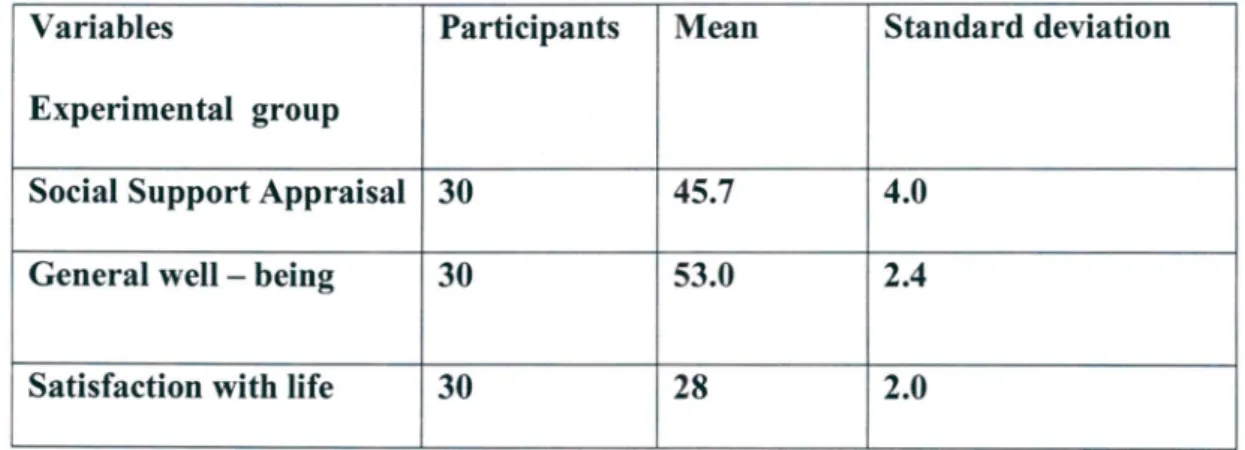
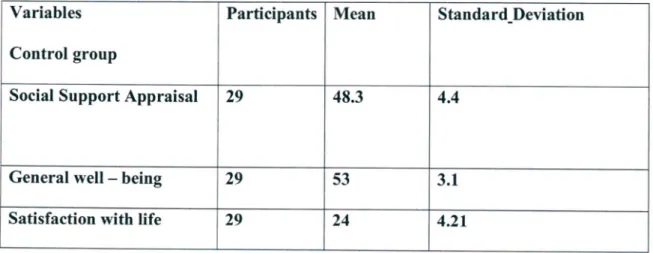
The overall mean scores for the variables provided a basis for the comparisons and correlations (see Table 4.2.1 & 4.2.2) (PAO). The overall mean score for Social support appraisal in a support group was 45.7 (SD = 4.0). The low score in Social support appraisal indicates that the participants in a support group put great importance on the subjective support received. The mean score for General well- being was 53.3 (SD=2A) suggesting distress among the participants. The overall mean score for Satisfaction with life was 28 (SD = 2.0). On the other hand the overall mean score of the Social support appraisal in non - support group was 48.3 (SD = 404). The mean of General well- being was 53 (SD= 3.1) representative of distress among the participants. The overall mean score for Satisfaction with life was 24 (SD = 4.21).
Table 4.2 Means and Standard Deviations for Social support appraisal, satisfaction with life and general well - being of caregivers in a support group and non - support group
Variables Participants Mean Standard deviation
Experimental group
Social Support Appraisal 30 45.7 4.0
General well - being 30 53.0 2.4
Satisfaction with life 30 28 2.0
Table 4.2.1 Descriptive statistics of the experimental group
Variables Participants Mean Standard_Deviation
Control group
Social Support Appraisal 29 48.3 4.4
General well - being 29 53 3.1
Satisfaction with life 29 24 4.21
Table 4.2.2 Descriptive statistics of the control group
4.4 Social support among the participants
According to the scoring method those who scored low in the Social Support Appraisal Scale (Vaux et aI, 1986) were classified as an indication of a stronger subjective appraisal of social support.
Of the 59 caregivers, 50 percent (N
=
30) of the caregivers III a support group (experimental group) indicated a stronger subjective appraisal of social support (see Table4.2.1) (p.40).4.4.1 Correlations among social support (social support appraisal), satisfaction with life and general well-being.
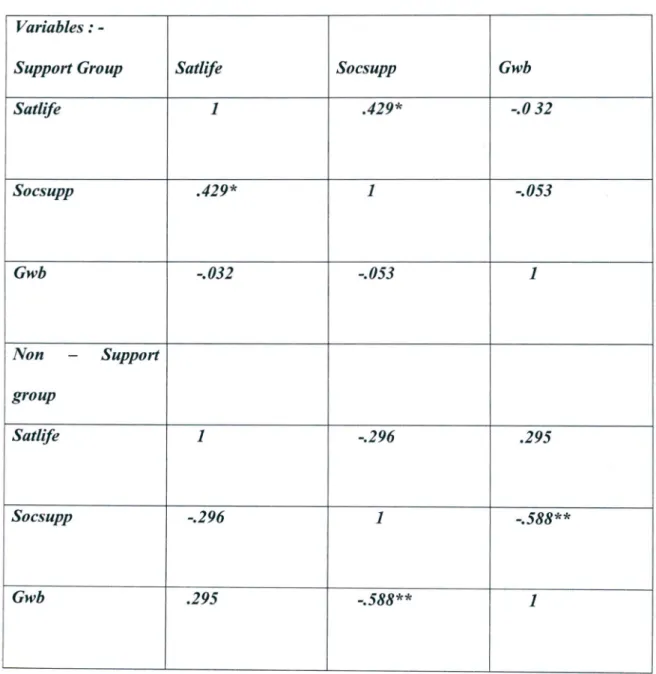
Table 4.3 (PA2) shows the intercorrelations among social support appraisal, satisfaction with life as well as general well- being.
Table 4.3: Pearson correlation coefficients of social support satisfaction with life and general well - being for the sample.
Variables: -
Support Group Satlife Socsupp Gwb
Satlife 1 .429* -.032
Socsupp .429* 1 -.053
Gwb -.032 -.053 1
Non - Support group
Satlife 1 -.296 .295
Socsupp -.296 1 -.588**
Gwb .295 -.588** 1
N=59
*
P< 0.05Satlife=Satisfaction with life Socsupp= Social support appraisal Gwb= General well - being
The results of the correlation matrix of caregivers in a support group indicated a significant positive relationship between satisfaction with life and social support appraisal (r = .429; p < 0.05). Furthermore a negative but not significant relationship was found between social support appraisal and general well- being (r= -.032; p<0.05).
The results indicated that there was a significant negative relationship in general well - being and social support appraisal in caregivers that were not affiliated to a support group.
5. Summary
As it was hypothesised that psychological well - being would be higher for caregivers affiliated to a support group than caregivers who were not affiliated to a support group as indicated by the general well - being and satisfaction with life. This has been supported by the results. The results demonstrated that the caregivers in a support group rated social support appraisal higher than caregivers who were not affiliated to a support group.
The statistical analysis showed positive correlations were found between satisfaction with life and social support of caregivers in a support group, whereas a non- significant negative relationship was found between general well - being and social support of caregivers not affiliated to a formal support group.
There was no significant difference in general well - being between caregivers in a support group and caregivers that are not affiliated to a support group. However there is a significant positive relationship between social support and satisfaction with life in the two groups.
Chapter Five
DISCUSSION OF THE RESULTS
5.1 Introduction
In the previous chapter the results of statistical analyses were presented. These results are discussed in the current chapter. The discussion is structured in terms of the aims and hypotheses, which motivated the study.
5.2 Interrelationships among social support and psychological well - being
When the correlation between social support appraisal and indicators of psychological well - being (satisfaction with life and general well - being) were analysed, significant relationships between satisfaction with life and social support appraisal of caregivers in a support group were found. A significant positive relationship between satisfaction with life and social support appraisal was found in caregivers who are affiliated to a support group. Furthermore, a significant negative relationship was found between general well - being and social support appraisal of the caregivers not in a support group. These results support the hypotheses set out for the present study. The relationships among the above variables are discussed below.
5.2.1 Social support and psychological well- being
In the present study a positive relationship between indicators of psychological well - being and social support was found. These results can be interpreted in terms of the
ecological framework; which indicates that individuals are influenced by and simultaneously influence the context that envelops them (Bronfenbrenner, 1993). The face - to - face interactions that individuals are involved in and these patterns of interaction as they persist and evolve through time constitute the vehicles of behavioural change and individual development. The correlation between psychological well - being indicators and social support that was found in this study seem to corroborate Bronfenbrenner's (1993) model which is mainly concerned with the mutual relationship or mutual reciprocity between the individuals and their environment. The overall relationship between social support and psychological well - being found in this study confmns and validates Ngcobo's (1998) and Rice's (1992) observations that subjective appraisal of social support is more significant than the quantity of support received by the individual. In addition Rice (1992) has observed that a person receiving low quality of support is more likely to report feelings of distress than the one who receives less support, but of higher quality. Ngcobo (1998) and Rice (1992) highlight that it is not only the number of people supplying social support but the satisfaction with the social support that is crucial. The findings also support Procidano and Helier's (1983) assumption that individuals who believe that they are cared for, loved and esteemed and belong to a network of communications are likely to report greater psychological well - being than those who report low social support.
Inthis study a high level of social support appraisal was positively related to a high level of psychological adjustment. The data also suggest that subjective appraisal of support is a more important detenninant of psychological well - being than is the sheer presence of support providers. This study focused not only on the availability of social support but also its quality by assessing satisfaction with support. The research indicates that the
caregivers in a formal support group who felt supported showed a greater satisfaction with life than caregivers in an informal support group who felt unsupported. In the review it was indicated that the satisfaction with support brings about a sense of control and enhances the ability to cope. The caregivers are able to use the resources within their reach to meet the demands exerted by the environment. Procidano and HelIer (1983) indicated that subjective appraisals of support appear to be especially important in regard to the individual's psychological well - being. Therefore this indicates that social support appraisal has a crucial role to play in the process of adapting to stressful situations. It therefore acts as a reserve and resource that blunts the effects of stress or enables the individual to cope with stress more effectively when it is at high levels (Taylor, 1995), thus it may be regarded as a stress - buffering mechanism. Furthermore Pretorius and Diedericks (1993) and Ogden (2004) state that satisfaction with support is better able to moderate the negative effects of stress thus improving psychological health.
For example this study found that when the person with schizophrenia goes missing or is non - compliant to medication the caregivers' in a support group are able to offer informational support or/and tangible assistance to each other.
In preceding studies, investigators have reported that individuals who perceived themselves as highly supported and with a substantial degree of control over their lives also displayed high levels of health and well- being (Napholz, 1994a; Napholz, 1994b, Rice 1992). The findings of the present study supported this statement. Itappeared that in the present study caregivers who perceived themselves as being supported and pleased with the support were protected from the negative effects of their stressful life situations.
Bronfenbrenner (1993) points out that, factors such as material, physical and social resources, the stability of those resources and the extent to which they are organised or disorganised serve to facilitate or impede development. Conversely, lack of social
support during times of need can itself be very stressful, especially for people with high needs for social support but insufficient opportunities to obtain it. Such people may include people living in an area that influence their accessibility to resources such as in a rural area, overcrowding, family relationships, multiple roles and community conditions.
Brannon and Feist (2004) indicate that family relationships are a potential source of stress, but they can also buffer against stress. That is, problems in family relationships can create stress, but these relationships also have the potential to protect against stress.It is also shown that, within families, people may occupy different roles at different hierarchical structures within the ecological model, for example roles such as spouse, parent and child. Employment adds another role and the conflict between the demands of family and work present additional possibilities for stress (Brannon & Feist, 2004).
Furthermore Taylor (1995) shows that the positive or negative effects of work and family roles depend on the resources people have available. Therefore filling multiple obligations is not necessarily stressful but low control and poor support for multiple roles can produce stress. Caregivers in both groups are obligated to multiple roles in their families and also in their community and therefore caregivers in an informal support group who engaged in these roles, with less perceived social support, indicated poor satisfaction with life; unlike caregivers in a support group with high perceived in a formal support group indicated competence in coping, by employing external resources such as forming a support group and reaching out to extended families, friends, neighbours and community resources. As indicated by Bronfenbrenner (1993) the stability of resources and the extent to which they are organised or disorganised serve to facilitate or impede development.
As mentioned in the literature review there are different kinds of social support that may be valued from different members of one's social support network, in that each member
may have unique abilities to be helpful along particular dimensions. Providing effective social support requires skill as social support may also be ineffective if the type of support provided is not the kind that is needed. It has been found in this study that provision of material support, such as transport, financial assistance or goods (food) and hands-on assistance reduces psychological distress. The provision of material support was valuable to the caregivers and this perceived valuable support brings in greater satisfaction with life to caregivers. Furthermore sharing information and offering reassurance, warmth and nurturance provided by other caregivers in a support group can enable a person under stress to approach care giving with greater assurance. The kind of social support received, the extent of one's social networks, the quality of the relationships one has with others, how often people are in contact, and the level of intimacy all affect how one perceives social support (Cohen, 1980; Lazarus& Folkman, 1984).
Furthermore Brannon and Feist (2004) postulate that these relationships (family, friends, neighbours, colleagues) have a potential to protect against stress and therefore give people a better control over events. The interaction among the family (microsystem), community (exosystem) and society (macrosystem) is essential in determining the psychological well - being of caregivers. Christensen et al (1992) reported that those with high levels of social support are also less likely to suffer adverse psychological or physical health consequences of highly stressful events. This indicates that social support serves as a buffer in reducing stress that may accompany illness, and people receiving it are more likely to report positive outcomeintheir caring role.
This study indicates that social support is advantageous. Taylor (1995) points out that social support reduces the experience of stress, enhances the ability to cope, can reduce the prospects of mental and physical distress or illness, and speeds recovery when illness does occur.
6. Conclusion
In this chapter the results of statistical analysis were discussed in terms of the aims and hypotheses set out for this study. The limitations of this study as well as recommendations made on the basis of the findings will be discussed in the following chapter.
The study investigated social support appraisal and its impact on psychological well - being of caregivers of people with schizophrenia. The sample consisted of 30 caregivers who were affiliated to the Tshepo Family Support Group and 29 caregivers who were not affiliated to a support group. The measures used revealed higher satisfaction with life and general well - being scores in caregivers in a support group. When compared to those not affiliated to a formal support group the results of the study indicated that the caregivers in a support group had higher psychological well - being (satisfaction with life and general well - being) than caregivers who were not affiliated to a support. As a result this has shown that social support appraisal had an effect on the psychological well - being of caregivers in a support group as opposed to those who were not affiliated to a support group because caregivers in a formal support group with perceived social support showed a higher satisfaction with life than caregivers who were not affiliated to a formal support group. This indicated that the caregiver's perception of psychological well - being was dependent on his or her subjective appraisal of social support.
50