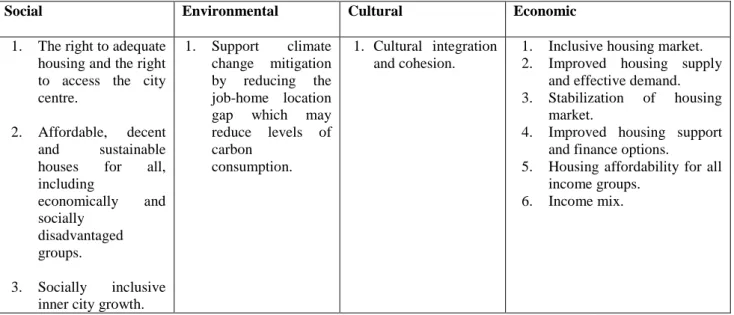
This study examined the feasibility of meeting the housing needs of the urban poor in central Lagos through an inclusive housing strategy. Thus, the main objective of this study was to identify ways to introduce inclusive housing in the inner city of Lagos.
Research problem 4
This raises the question of housing affordability for the poor in downtown Lagos. Access to affordable housing by the poor in the inner city of Lagos is therefore a current and growing concern.
Main research question and subsidiary questions 7
- Key question asked 7
- Subsidiary questions 7
- Research hypothesis 8
- Aim and objectives 8
To review the existing literature on inclusive housing to integrate lessons from best practices into housing policy in the inner city of Lagos Metropolis. The available housing in the inner city excludes the poor because of their economic inability.
Scope of the study 10
Therefore, the study aims to understand the current situation in the housing market and mechanisms of land use allocation in the inner city of central Lagos. Therefore, the contribution of the study lies in identifying the strategy that can help the return of the low income group in the inner city of Central Lagos through an inclusive housing process.
The study area 11
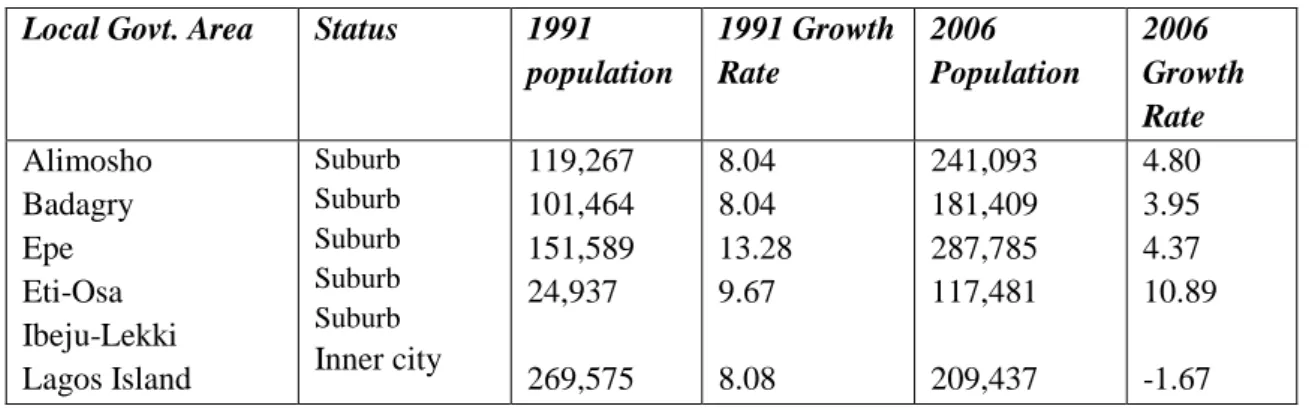
It is colloquially called "Isale-Eko" (Lagos Down Town) and includes Lagos Island itself and the CBD, Marina, Obalende, Victoria Island and Lekki in recent times (see Figure 1.3). It covers the political and administrative unit called Lagos Island Local Government Area and parts of Eti-Osa Local Government Area.
Definition of concepts 14
Housing 14
Inner city 16
Qualitative research 23
Data types, sources and instrument of collection 23
Research population, sample size and sampling techniques 30
The chapter discusses the factors responsible for the movement of the poor and residential land use in the inner city of central Lagos. The rich (mainly whites and in some cases influential blacks) thus appropriated the land of the poor in the inner city. This was done in the name of the state revitalization plan for the inner city of central Lagos.
Topic Two: Declining Housing Function in Lagos Central and Exclusion of the Poor. Topic Two: Declining housing function and exclusion of the poor in inner-city Lagos. Thus, the majority of respondents (685 or 95%) worked in the CBD or central part of Lagos city.
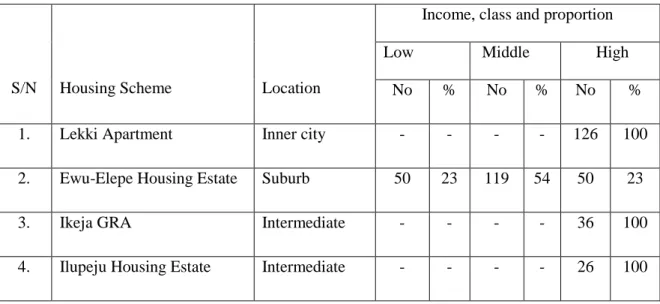
Further analysis reveals variations among different neighborhoods of the inner city of central Lagos.
Ethical consideration 31
Reliability and viability 32
The housing supply on the housing market in the inner cities is limited due to the small area of the city. It enables the development of the CBD and downtown areas of central Lagos on a segmented basis.
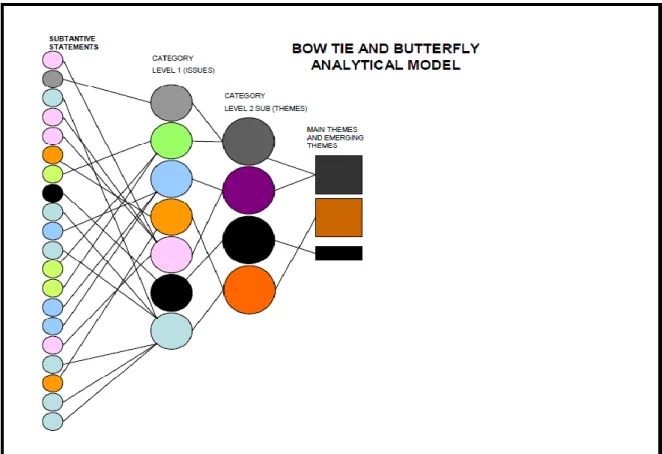
Data organisation, analysis and presentation 33
Data analysis 34
From a sustainability perspective, some of the poor should therefore be relocated to the city centre. The cost of housing in the inner city of central Lagos is a function of the cost of the available land and/or existing buildings.
Data organisation and presentation 35
Limitation of study 36
The sector model 42
The concept of social justice justifies inclusive housing in the inner city of central Lagos. This suggests that housing unaffordability in the inner city of central Lagos has a long history.
Multi nuclei model 43
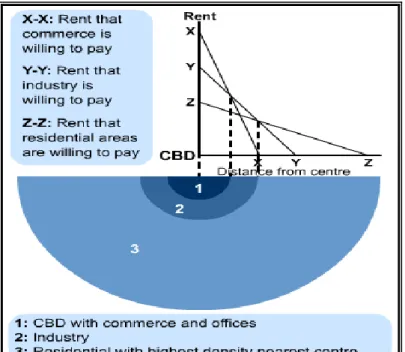
The rent bid-theory 47
The exclusion of the poor from the inner-city housing market of central Lagos can also be understood within the parameters set by William Alonso's rent theory of geographic economy. One of the two supply ratios advocated by rent supply theory is the ratio between poor and high income groups.
Other location theories 49
The central place theory 50
The argument for inclusive housing in the inner city of central Lagos is supported by several assumptions of this theory. Productivity increases when the poor who provide labor in Lagos' economic sectors live closer to where employment is concentrated - the CBD. Therefore, consumer welfare, equity and fairness, especially when it comes to the poor, should be the most important factor in the housing market in downtown Lagos.
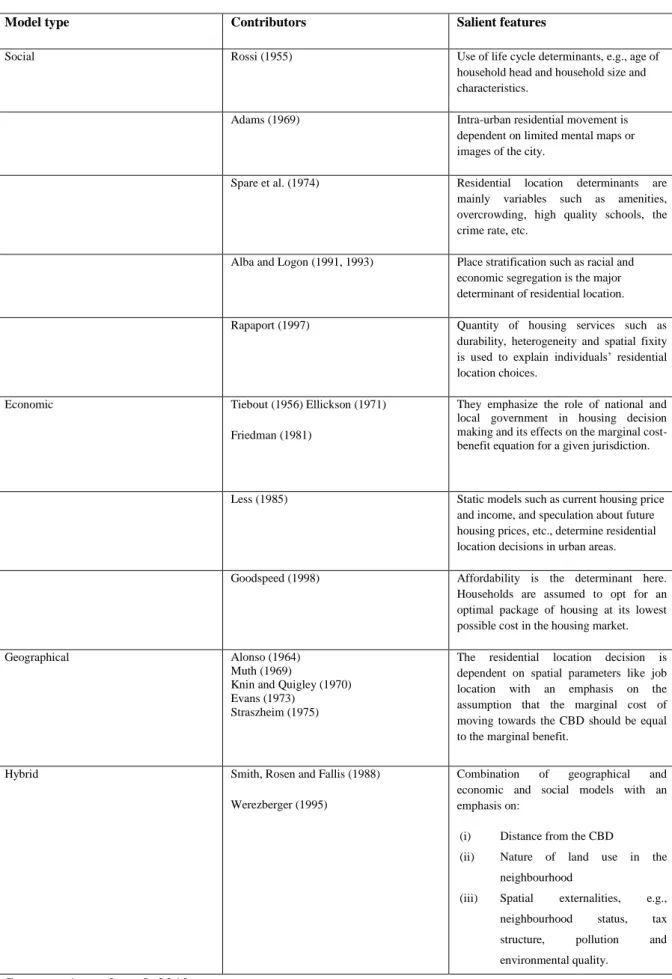
Residential location theory 51
Policy interventions such as financial support, subsidies and inclusive zoning for the poor would enable low income earners to participate in the Lagos Central inner city housing market. The total number of employees in the city is fixed and located in the center of the city - the CBD. However, it should be noted that the CBD is not the only employment center in the city.
Conceptual framework 54
- Compact city 55
- Inclusionary housing 57
- Social – justice 58
- Sustainable city development 60
The reality is that a very significant proportion of city households cannot afford to pay the market price for housing in the inner city of central Lagos. In the inner city of central Lagos, low and moderate income workers are denied ready access to the CBD. All these land use practices have the ability to promote sustainable development in the inner city of Lagos.
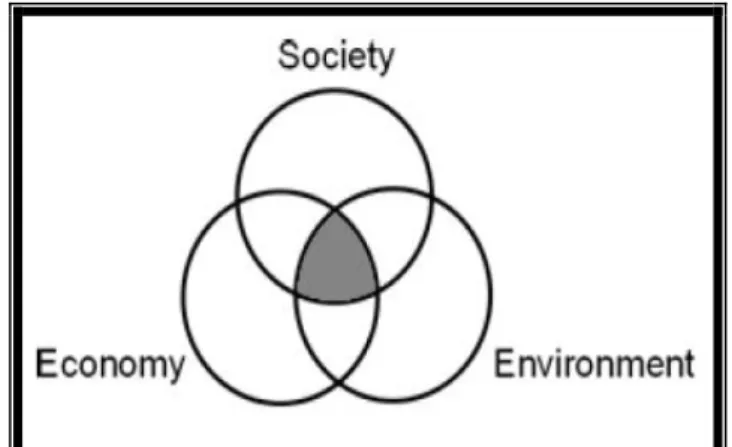
Economic considerations in housing provision 63
The study subscribes to the welfare liberalism school of economics in terms of providing housing in the inner city of Lagos as this would protect the welfare of the poor. This chapter has examined the land use structure of the inner city of Central Lagos and how it has contributed to the quantitative decline of the residential function and involuntary exclusion. The concepts of social justice and sustainable development were separated to justify the need for inclusive housing in the heart of Central Lagos.
Historical context of inclusionary housing 67
The promulgation of the Planning Act encouraged the growth of inclusive housing in the country (Monk 2010). All these issues point to the need for an inclusive housing strategy in the inner city of central Lagos. The owner occupied sub-market is generally unpopular in the inner city of central Lagos.
Nwana (2012) notes that this market classification is based on the structural characteristics of the housing market in the inner city of Lagos Central. They opined that this legislation could empower LPAs to enact regulations that promote inclusive housing in the inner city of central Lagos. Theme Three: Challenges and Prospects of an Inclusive Housing Strategy in the Inner City of Central Lagos.
Officials noted that, like in other parts of the state, land use conversion in the inner city of central Lagos has been scrapped.

Inclusionary housing in the United State of America 69
Inclusionary housing in Australia, Sydney 71
Inclusive housing has developed in Sydney in response to the rising cost of housing in the country. In Sydney, a city not far from Canberra, the capital of Australia, housing has become so expensive that the median cost of a residence in 1998 in the range of. According to Howe (1993), this led to the first affordable housing project in Australia in the western area of the city.
Inclusionary housing in South Africa 72
England 80
According to Crook and Monk (2011), this contributed to the achievement of inclusive housing, as all developers were required to dedicate 25% of the total number of units in their housing projects to affordable housing. The process of determining the value of the developer's contribution to inclusionary housing is another striking feature of the British system. Good examples of inclusionary housing sites in England include Cambridge Urban Extension Greenfield Site, Newbury, West Berkshire Brownfield Mixed Site and developments in many other parts of the country.
Lessons from the literatures 83
While the nationalization of land through the Land Use Act of 1979 provides a veritable legal instrument for the successful implementation of an inclusive housing program in the inner city of central Lagos, it is suggested that it should be used with caution. To introduce and implement an inclusive housing strategy in the inner city of central Lagos, the state government must initiate broad consultation through citizen participation and demonstrate courage and political prowess to implement the strategy. The study's proposal provides an adequate framework aimed at strengthening legal provisions for inclusive housing in the inner city of central Lagos.
Inner city decline: A general overview 86
The Colonial era (1863-1955) 98
Derived demand factors identified by Alonso (1964) and Muth (1960) also affect housing prices in the inner city of central Lagos. This suggests the practice of housing exclusion in the central city of Lagos even within the public sector housing market. This excludes low income earners from participating in the public housing market within the central Lagos city.
In the long term, socio-economic disparities within the inner city of Lagos' central CBD will decrease. Low building density indicates underutilization of space or land in the inner city of Lagos' central CBD.
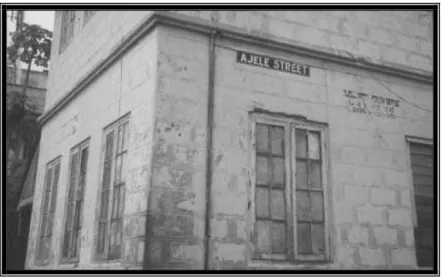
Post colonial era: 1956 to date 104
Dynamics of the housing market in the inner city of central Lagos 108
The poor and the good condition housing sub-markets 110
Formal and informal sub-housing market 112
Housing demand: 114
All these features are visibly expressed in the demand for housing in the inner city of central Lagos. According to Nubi (2010), demographic factors and household income are the two major forces shaping the demand for housing in the inner city housing market. Changes in household size, structure and composition can affect inner-city housing demand.
Housing supply 115
Urban planning policies for the regulation, control and enforcement of zoning also greatly affect the supply of housing in the inner city. This reduces the supply of buildings and land for inner-city housing and negatively affects housing supply. The increase in the price of housing in the inner city over the years has been a motivating factor for the increase in housing supply.
Housing pricing 117
The residential function and the poor are most lacking in the city center of Lagos Central. Moreover, the serviced plots in the projects around the inner city are generally expensive and out of reach of the poor. According to Baker (1974), these revitalization plans have contributed enormously to the depletion of residential uses and the exclusion of the poor from the inner city of central Lagos.
Most of the panelists agreed that the state's housing policies need to be reviewed or redesigned to mitigate unintended exclusionary housing in the inner city of central Lagos. Respondents were also asked to identify the disadvantages of living in the inner city.