Towards a Sustainable Urban Form, the influences of Social and Physical Environment:
A Case study of Albert Park, eThekwini Municipality
Chanden Naidoo 208517365
A dissertation submitted in partial fulfilment of the requirements for admittance to the Degree of Masters in Town and Regional Planning (MTRP) in the School of Built Environment
and Development Studies, University of KwaZulu-Natal (UKZN), Durban.
February 2017
ii
DECLARATION
__________________________________
I declare, that this dissertation is my own unaided work. All citations, references and ideas have been duly acknowledged. I confirm that an external editor was used for proof reading. None of the work presented has been previously submitted for any degree or examination at any other University.
Mr. Chanden Naidoo (Candidate)
________________________________
Signature
Dr Rosemary Awuor-Hayangah (Supervisor)
________________________________
Signature
iii
ACKNOWLEDGEMENTS __________________________________
I would firstly like to thank my supervisor, Dr Rosemary Awuor-Hayangah, for her patience, constructive criticism and guidance throughout my studies.
To the municipal officials and private sector professionals who gave up their personal time to provide assistance during my fieldwork, thank you.
I thank God for giving me the strength, resilience and motivation I needed to continue after hitting a few rough patches.
Lastly, I would like to express my sincere gratitude to the most important people in my life, my family and loved ones who have encouraged me, stood by me and supported me throughout my years at University.
iv ABSTRACT
__________________________________
This study examined the interactions between the social and physical environment as manifested in urban areas. The study examined the extent, ways in which urban decay has affected Albert Park. In addition, it examined the design of the area, and took into consideration whether proper facilities, security, exist to create a link between the social and physical environment, which ultimately can encourage sustainability.
The objective of this study was to examine the conditions in the Park by focusing on the degree to which both the social and physical environment have affected the area, the causes and effects of the decay, and solutions to the problem. The study focused on the interactions between the social and physical environment. This was a qualitative study in which both secondary and primary data was used. Interviews were held with relevant stakeholders as residents of Albert Park.
The research findings revealed that Albert Park is experiencing major issues, including crime, drug abuse, and vagrancy, and there are no proper measures in place at present to prevent these problems. Consequently, the area has decayed from lack of proper maintenance and control measures. It is clear that this will continue unless appropriate corrective measures are implemented. It was evident from observation and the interviews conducted that the conditions in Albert Park are due to the low income of its residents, as well as vagrants. Other contributing factors include lack of management and security. Due to low job opportunities available within the area, individuals are exploited by unscrupulous landlords. Thus, Albert Park requires further research on proper planning and control measures in order to prevent these poor conditions from escalating and to achieve a sustainable urban area.
v CONTENTS
CHAPTER 1: INTRODUCTION ... 1
1.1 Background ... 1
1.2 Location of the study area ... 2
1.3 Motivation ... 4
1.4 Hypothesis ... 4
1.5 Research Problem ... 5
1.6 Research Objectives ... 5
1.6.1 Subsidiary Objectives ... 6
1.7 Main research questions ... 6
1.7.1 Subsidiary Questions ... 6
1.8 Research Methodology ... 6
1.9 Research Process ... 7
1.9.1 Design of the study ... 7
1.9.2 Land Use study ... 8
1.9.3 Data sources ... 8
1.9.4 Secondary Data Sources ... 9
1.9.5 Sampling Procedure ... 9
1.9.6 Data Collection ... 10
1.9.6.1 Tools and Instruments ... 10
1.9.6.2 Techniques ... 10
1.9.7 Data analysis ... 11
1.9.8 Problems encountered in the field ... 12
1.10 Validity, Reliability and Rigour ... 12
1.11 Dissertation Structure ... 13
1.12 Summary ... 14
CHAPTER 2: LITERATURE REVIEW ... 15
2.1 Introduction ... 15
2.2 Sustainable Development and Urban form ... 15
2.3 The history of Urban Regeneration and Urban Form ... 16
2.4 Urban Regeneration and Legislation in South Africa ... 17
2.5 Interventions towards Urban Regeneration ... 20
2.5.1 Inner City eThekwini Regeneration and Urban Management Programme (ITRUMP) 20 2.5.2 The Approaches towards Urban Renewal ... 21
vi
2.5.2.1. Flagship projects and Prestige Projects ... 21
2.5.2.2. City improvement Districts (CIDs) ... 22
2.6 Responses to urban Decay in South Africa ... 22
2.6.1 Johannesburg... 22
2.6.2 Cape Town ... 23
2.7 International cases dealing with urban regeneration ... 24
2.8 Conclusion ... 25
CHAPTER 3: CONCEPTUAL AND THEORETICAL FRAMEWORK... 26
3.1 Introduction ... 26
3.2 Concepts informing this study ... 26
3.2.1 Urban Regeneration, Gentrification and Urban renewal ... 26
3.2.1.1 Urban Regeneration ... 26
3.2.1.2 Gentrification ... 27
3.2.1.3 Urban Renewal... 27
3.2.2 Blight and urban decay ... 30
3.2.3 Sustainability ... 32
3.2.4 Community Participation and Economic Development ... 32
3.3 Theoretical Framework ... 33
3.3.1 Structure of cities ... 33
3.3.2 Models relevant to case study ... 36
3.4 Theories governing urban renewal ... 36
3.4.1 Collaborative planning ... 36
3.4.2 The political economy... 36
3.5 Predicaments of urban renewal ... 37
3.6 The role of planning policy in urban renewal ... 38
3.7 Conclusion ... 38
CHAPTER 4: THE CASE STUDY AREA ... 39
4.1 Introduction ... 39
4.2 Orientation to the case study area ... 39
4.2.1 History and background of Albert Park ... 39
4.2.2 Albert Park Today – Location... 40
4.2.3 Analysis of Albert Park ... 42
4.3 Zoning of Albert Park ... 43
4.4 The Existing Land-Use in Albert Park ... 45
vii
4.4.1 Land use within the study area ... 48
CHAPTER 5: SUMMARY OF FINDINGS, CONCLUSIONS AND RECOMMENDATIONS ... 49
5.1 Introduction ... 49
5.2 Summary of findings ... 51
5.2.1 Aesthetic environment ... 51
5.2.2 Economic opportunities ... 52
5.2.3 Socio-economic... 53
5.2.4 Quality of life ... 53
5.2.5 Transport and Accessibility ... 54
5.2.6 Sustainability... 55
5.3 Results from Questionnaires with residents ... 56
5.4 Residents Opinions on Albert Park ... 56
5.5 Results from Questionnaires with Landlords and Tenants ... 56
5.6 Conclusion ... 57
5.7 Recommendations for the Renewal of Albert Park ... 57
BIBLIOGRAPHY ... 59
viii
LIST OF PHOTOGRAPHS
Photo 1.1: Litter along Park Street 50
Photo 1.2: Rubbish collection on a Wednesday 50
Photo 1.3: Trees along the centre of the road 51
Photo 1.4: Small shop found on Diakonia Avenue 52
Photo 1.5: Salon situated on Park Street 52
Photo 1.6: Predominant race group in Albert Park 52
Photo 1.7: Citizens walking through the CBD 52
Photo 1.8: Cameras within residential apartments 53
Photo 1.9: Fingerprint identification within apartments 53
Photo 1.10: Public transport along Diakonia Avenue 54
Photo 1.11: Mini Bus Taxis on Diakonia Avenue 54
Photo 1.12: Rubbish thrown on grass 55
Photo 1.13: Park underutilised 55
___________________________________________________________________________
LIST OF TABLES
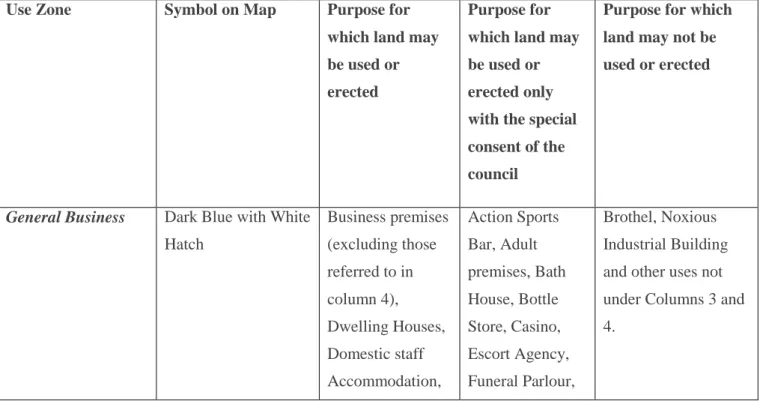
Table 1: Zoning eThekwini Municipality City Engineers Department 42
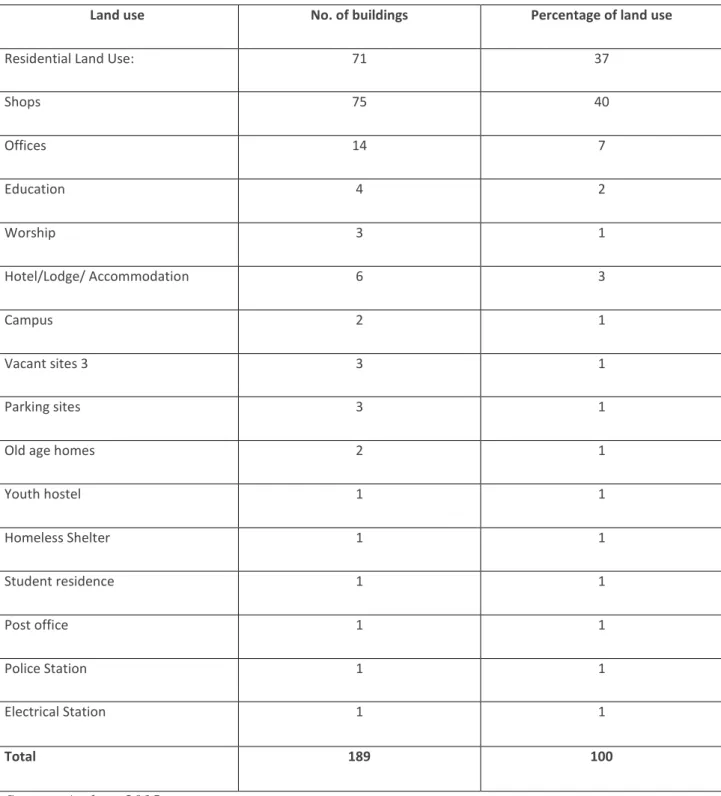
Table 2: Land Use Table 45
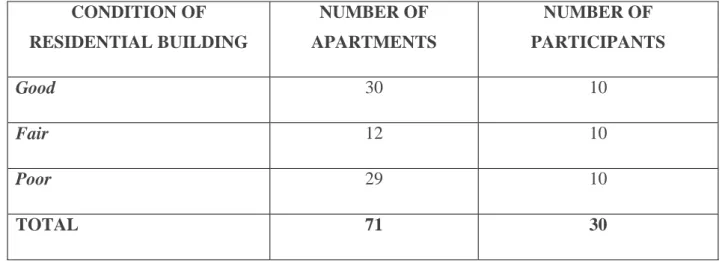
Table 3: Condition of Buildings with participation involvement 49
ix
LIST OF MAPS
Map 1: Locality map outlying the study area within the city centre 03
Map 2: Aerial photo of Albert Park 40
Map 3: Zoning map of Albert Park 44
___________________________________________________________________________
LIST OF BAR GRAPHS
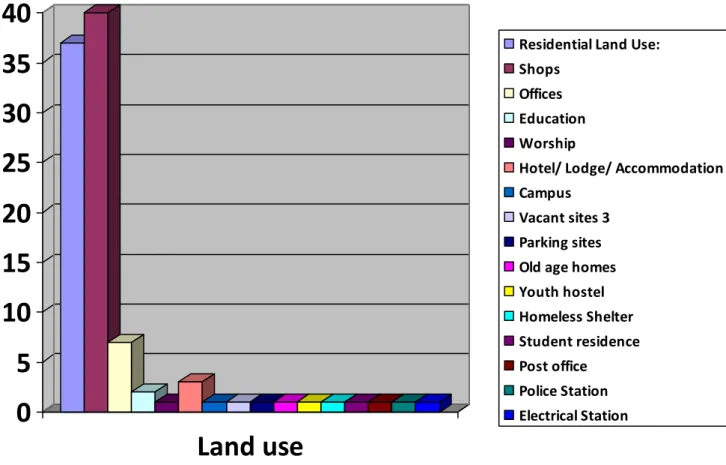
Bar Graph 1: Percentage of land uses in Albert Park 46
Bar Graph 2: Number of apartments in different conditions 49
Bar Graph 3: Number of participants in the study 49
Bar Graph 4: Total number of apartments and
Total number of participants 49
___________________________________________________________________________
APPENDIX
Appendix A: Questionnaire 65
Appendix B: Interview Schedule 68
Appendix C: Letter of Informed Permission 70
x
LIST OF ABBREVIATIONS CBD Central Business District
IDP Integrated Development Plan GIS Geographical Information System ANC African National Congress
DPLG Department Of Provincial and Local Government
ITRUMP Inner eThekwini Regeneration and Urban Management Programme ICC International Conference Centre
MURP Mayoral Urban Regeneration Programme GDP Gross Domestic Product
CID City Improvement Districts KZN Kwazulu-Natal
LAP Local Area Plan
LED Local Economic Development PID Public Improvement District
RDP Reconstruction and Development Programme SDF Spatial Development Framework
1
CHAPTER 1: INTRODUCTION
____________________________________________________________________________
1.1 Background
The importance of the built environment stems from its strong social foundation and its physical environment, as these spheres are significant in creating a sustainable urban form (Maharaj and Mpungose, 1994). This study looks at the ways in which society and the physical environment interact to create a sustainable urban form. The important approaches of regeneration and urban renewal will provide insights into whether these approaches can reduce or even eradicate urban decay.
This research focuses on Albert Park, Durban as its case study.
This research examines the interactions of both the social and physical environments that make the urban form sustainable. Herein, it is argued that focusing on urban decay and regeneration is a possible solution to urban blight, as noted by Maharaj and Mpungose (1994), concerning Albert Park, the oldest active park in Durban. By 1991, Albert Park had become an integrated suburb hosting a rainbow society after exposure to conflict situations, harassment, and antagonistic attitudes.
According to Singh (2001), Albert Park is seriously deteriorating due to political and demographic changes attributed to an increase in population, vast cultural differences among racial groups in the area, income levels, and job opportunities. Many buildings are not maintained. Most people living or occupying the area are vagrants, perhaps drug peddlers, and have no accommodation; others face relocation problems stemming from apartheid Group Areas Act, and unemployment. Albert Park was once predominantly a white area but now it is home to the poor who seek refuge and shelter (Mohamed, 1999).
Albert Park, has medium to high rise buildings, with a high population. The area has gone from being pleasant and well-kept to a ‘grey’ area. The park has a significant history and is an important area that should be maintained in order to preserve its sentimental value (Singh, 2001). However, it lacks security and is easily accessible. There are no controlling measures in place, hence it is an extremely unsafe haven for drug peddlers and users (Singh, 2001). This researcher argues that proper planning measures need to be taken to restore the park to its original state. Albert Park is an historical area that is a part of the many stories of the people residing there. Therefore, this study was conducted in order to clarify the park’s problems and identify the extent of decay. Major factors play an important role in establishing the differences between the conditions that existed in the past and the current conditions.
2
Albert Park has suffered severe mismanagement due to the lack of the locals’ maintenance skills (Ibid). At a stakeholders’ meeting held on the 26th of February 2014 at City Hall, the Mayor Councillor James Nxumalo noted that there was an urgency to deal with the challenges of vagrancy, loitering, drug-abuse, and criminal elements in Albert Park (http://www.durban.gov.za/Resource_Centre/new2/Pages/Stakeholders-Pledge-To-Eradicate- social- Ills-at-Albert-Park.aspx). It is evident that a range of factors affect the neighbourhood negatively including social aspects from criminal behaviour to environmental issues.
According to Mohamed (1999), Albert Park is facing major issues such as prostitution and drug trafficking with residents battling to rid the area of these problems. In addition to mismanagement, the area is being taken for granted, as a substantial amount of levies are not being paid in sectional title blocks, which has led to a serious decline in services and adding to the decay within the area. In addition, property owners charge high rents in order to maximize their income. This is achieved by means of overcrowding and the collection of rentals through violent means (Mohamed, 1999: 2). All these factors are the cause of degradation in the area. Thus it is vital that the park should undergo major urban regeneration. Singh (2001: 4) added that “Albert Park is currently undergoing small pockets of urban decay.” It is surrounded by buildings in reasonable condition; however, these buildings are also beginning to deteriorate to a state of disrepair and will soon become decayed if there is no intervention. This study thus examines how these aspects contribute to urban form.
1.2 Location of the study area
Albert Park is situated in the south-east of the Durban Central Business District (CBD), primarily a residential area characterized by medium and high-rise flats, with small formal and informal businesses that operate on the road sides (refer to map 1 on page 3). The area is bounded by Russell Street in the west, Broad Street in the east, Smith Street in the north and St. Andrew's Street on the south (Maharaj and Mpungose, 1994).
3
4 1.3 Motivation
It cannot be contested that Albert Park has suffered severe mismanagement over the years. This study seeks to identify factors that led to the deterioration of Albert Park. This can be seen by looking at the social and physical environment in the area (Singh, 2001). The populace, who enter Albert Park, often enter the area by illegal occupancy as they have nowhere else to stay and are not pursued by local authority thereby making the neighbourhood prone to vagrants. Some of the people are not aware of the importance of a clean environment, they abuse drugs and alcohol which then impacts negatively on the physical environment causing harm to the ecosystem, thus damaging and devaluing the urban form of the city (Mohamed 1999). The social environment shows a lack of maintenance of buildings by inhabitants (Singh, 2001). The residents of the buildings and the tenants who rent out the buildings for business purposes tend to neglect the buildings they live in due to lack of control by the local authorities as well (Mohamed 1999). Although a democratic government promised better opportunities and housing for people who were excluded in the past, it is quite disturbing how many people still live on the streets in Albert Park causing neglect of the environment (Rajasekar, 2006).
Albert Park was once classified as the most iconic area in Durban. Given the fact that Albert Park is located in the heart of the Durban CBD, deterioration is visibly appalling thus there is an urgent need for regeneration. Hence the need to understand how the social, economic and physical environment have impacted the urban form.
1.4 Hypothesis
The degeneration of Albert Park built form is a function of the physical and socio-economic dynamics. The high levels of unemployment, poor living conditions and lack of maintenance that are a result of the from the prevailing social and physical environments conditions in Albert Park. These have been translated into observed urban decay and a degraded neighbourhood. It is the task of this study to examine the extent of the degeneration and the role which the dynamics of the social and physical environment which play a major role on impacting the condition of the built form.
The hypothesis is that the designs of the social and environmental aspect and their interactions of Albert Park have a major impact on the urban form.
5 1.5 Research Problem
The social and physical environments are main foundations which affect the urban form (Maharaj and Mpungose, 1994). Thus social aspects such as crime, economic pressures, unemployment, drug abuse and vagrancy are some of the issues affecting the urban form. The physical environment challenges include issues such as accessibility, poor management and damage to the ecosystem. Singh (2001), argues that Albert Park is undergoing urban decay and the area has become a run-down area. In addition, this has given insight to the extent and causes of the decay within the inner city neighbourhood of Albert Park. There is need to undertake research to ensure that the area does not continue deteriorating by identifying the factors which are causing the problem.
This study investigates the urban decay in Albert Park which ultimately affects the urban form with associated environmental issues. The study found is due to mismanagement and the exploitation of the study area that has directly influenced the sustainability of the urban form (Maharaj and Mpungose, 1994). Therefore the current focus is on urban design planning being effectively implemented and urban regeneration being a solution to the decay. If this is addressed Albert Park could have sustainable environmental and social growth.
This study also examines the urban form with specific emphasis on the social and environmental spheres as well as the urban planning strategies with specific emphasis on Regeneration and Urban renewal theories as an approach and solution to urban decay.
1.6 Research Objectives
This research achieves the evaluation of whether designing activities such as social and environmental interactions aid in obtaining a sustainable urban form within the city. It also looks at the positive impacts that mainly promote societies’ needs as well as the environment.
The objective of this study was to evaluate the degree to which the urban form is failing and to what level it is spreading. This was accomplished by monitoring the rate of urban decay. Furthermore, it looked at degree to which people play a role in the degradation of the area. In addition, it aimed to prove that designs play an essential role in achieving a sustainable urban form. Urban regeneration can be seen as an approach and solution towards urban decay.
Thus by focusing on sustainability of cities in its entirety, Albert Park is identified as an area undergoing both social and physical environmental challenges which relate to urban degradation. As a result, strict adherence to regeneration procedures and levies are required to promote sustainability within the area.
6 1.6.1 Subsidiary Objectives
This dissertation aimed to achieve the following four specific Subsidiary objectives:
1. To identify the social parameters that influence sustainable urban form.
2. To assess the physical strategies that promotes sustainable urban form.
3. To examine the procedures of attaining a sustainable Albert Park community.
4. To identify the stakeholders necessary to create a sustainable Albert Park community.
1.7 Main research questions
The main research question has been asked in order to meet the objectives of this thesis. The main research question is:
“How can urban degeneration in Albert Park be addressed to promote a sustainable urban form?"
1.7.1 Subsidiary Questions
1. What factors explain the deterioration in leading to Albert Park’s decay?
2. What past measures were in place that could be used in the present?
3. Albert Park is one of the most significant areas in Durban’s CBD. How did the area lack proper management and how did the facilities in the area become inactive?
1.8 Research Methodology
Methodology is a series of choices that relate to what information and data is needed, and how to analyse that information and data (Rajasekar, 2006). It is important to have clear research questions so that one can know exactly what information is needed to be gathered. According to Rajasekar (2006), the study of research methodology provides the necessary training in choosing methods, materials and tools relevant for the problem.
The research methods entailed an onsite transit walk to observe the physical layout, social, and environmental aspects of the Park. It also entailed interviewing individuals who occupied the area on
7
a regular basis. Further, relevant stakeholders, such as government officials, landlords, tenants, and the public, as well as people who use the area frequently, were key sources of information
The next step is analysing the data that has been collected. In order to analyse the case study of Albert Park, various tasks have to be undertaken. This includes questionnaires and interviews with the residents of Albert Park, Metro Police patrolling the area and Ward Councillor as well as personal observations. To show the visual impact of the built environment, the use of images and tables were implemented in this research as they form an integral part of this study. These will be further discussed in the relevant sections of this paper to follow.
1.9 Research Process 1.9.1 Design of the study
The dissertation is qualitative in nature. Its objective seeks to establish the extent to which the influence of the social and physical environment promotes a sustainable urban form. According to Wyse (2011: 2), “Qualitative research is used to gain an understanding of underlying reasons, opinions and motivations. It provides insight into the problem or helps in developing ideas”.
The dissertation is case study-based, as it is designed to evaluate the extent to which Albert Park in the eThekwini Municipality is deteriorating. This evaluation is founded on the factors that influence the social and physical environment, and how these factors affect the urban form of Albert Park. In addition, the feedback from the interviews done with key stakeholders of Albert Park was discussed.
There was also an assessment of responses obtained from the participants living in and among Albert Park, who are residents and key stakeholders. Therefore, the analytical objective is to describe the opinions and experiences of these participants directly and indirectly. This information was obtained through questionnaires and structured open-ended interviews. The data format obtained from this approach was textual in the form of notes.
The researcher obtained sufficient data on through observation while driving through and walking in the area for two hours per day. The land use study took two days to complete in the month of January 2015, approximately 4 hours. The researched observed the area in the mornings and afternoons.
Observation was conducted on one weekend and one weekday in order to gain insight of the study area. Thus Albert Park was analysed during both peak and off-peak periods to obtain the vital information.
8 1.9.2 Land Use study
According to Young (1993), The Land Use study is the process in which lands are evaluated and assessed to become a basis for decisions involving land disposition and utilisation. The Land Use Study assisted the researcher in establishing the distribution of commercial, residential, industrial and open space systems located within the study area. A land use study is a recording of the way in which land is being used in an area, usually classified in different types of land categories. Lynchian elements (paths, edges, districts, nodes and landmarks) were incorporated to establish the way users utilised their surroundings. Densities and concentration of uses were also observed during the Land Use Study. The land use study was completed according to the existing land use of the buildings found in Albert Park according to individual categories as listed below:
Residential
Business/Commercial
Recreational
Educational
Religious
Health
1.9.3 Data sources
The primary data sources that were utilized during the data collection process included:
Observation & Visual interpretation, by physically taking notes of the surroundings within the study area and recording the status of the structures.
Transit site visits was undertaken by physically walking through the study area that was divided into specific transit zones based on the transport structure of the Park.
Municipal Professionals – provided information on the study area in relation to Town planning regulations and land use zoning.
9
Information obtained from the key stakeholders of Albert Park including the Project Manager, Town Planner and the Municipal Ward Councillor regarding the study area itself focusing on the site, land and people who influenced or have knowledge of the development of the area.
Residents of Albert Park who gave first-hand information about the day to day activities being experienced within the area, which also assisted in establishing the levels of crime, pollution, living standards and basic services.
Metro Police located in the study area assisted with providing information relating to crime levels and precautions being taken.
1.9.4 Secondary Data Sources
Secondary data sources offer an interpretation of information obtained from primary sources that, originally, was presented elsewhere. The secondary data used for this study included maps, journals, articles, publications, relevant unpublished dissertations, electronic resources and images, the Durban Integrated Development Plan (IDP), and geographical information system (GIS) shapefile data.
The libraries used for the literature review were the Durban City Library, City Engineers Library, University of KwaZulu-Natal (UKZN) Westville Library, UKZN Howard College Main Library, and UKZN Howard College Architecture Library. The review gathered more knowledge on concepts and procedures regarding local and international urban renewal, policies and legislation. This enabled a comparison of places that have effectively applied the relevant concepts to places that have failed to do so. This helped to isolate the standards and criteria that permit the successful implementation of renewal policies.
Journals, articles, publications, and electronic resources proved to be advantageous, and they were extremely useful in providing much guidance and valuable information for this study. These resources also provided a history of the relevant area and any urban renewal theories that may have been applied. However, these sources’ disadvantage is that they reflect individuals’ opinions and, as such, are not reliably factual. An example of this is journal articles written by authors who refer to their own thoughts and opinions.
1.9.5 Sampling Procedure
A sampling procedure and sample size entails determining the number of individuals who will be selected to participate in a survey or interview (Korb, 2012). The sampling method chosen was purposive sampling, in which 1 ward councillor, 5 landlords, 1 community organiser and 30
10
individual residents were identified as key stakeholders and who have played a major role in Albert Park. These stakeholders provided information regarding the processes preceding and following the influences that resulted in the study area’s deterioration, on questionnaires and in open-ended interviews. Random sampling was used to select participants within Albert Park. These provided relevant information regarding the extent of decay and major factors that have led to an unsustainable urban environment. The completed questionnaires and interviews’ contents also clearly portray a sense of dissatisfaction in participants’ living conditions.
1.9.5.1 Focus Group
According to Wyse (2011: 3), qualitative data collection methods vary in their use of unstructured or semi-structured techniques. Some common methods include focus groups, individual interviews and participant observation. In addition, if the sample size is small, further respondents can be selected to fulfil a given quota.
For this part of the research, 71 residential buildings were identified in the study area. The researcher undertook a formal survey after which these buildings were categorized as in good, fair and poor condition, thereof 3 different focus groups were chosen. A representative sample of 10 household individuals per building condition category was selected. These 3 focus groups comprised of individual residents from good condition, fair condition and poor condition buildings, totalling 30 household individuals participating in the discussions were held.
1.9.6 Data Collection
1.9.6.1 Tools and Instruments 1.9.6.1.1 Questionnaires
Questionnaires were completed by residents and community members. The questionnaire comprised 10 questions relating to individuals and service delivery within dwellings, as shown in the questionnaire included in Appendix A.
1.9.6.2 Techniques 1.9.6.2.1 Interviews
The data were collected by means of four semi-structured, open-ended interviews conducted with Albert Park key stakeholders and four open-ended interviews with residents. The stakeholders were identified as ward councillors, landlords/managers, owners/ratepayers, and community organizations.
These interviews helped the researcher to gather more information regarding the study area. The
11
resulting data were then analysed, and conclusions were drawn from the answers obtained, forming the basis for a better understanding of Albert Park.
1.9.6.2.2 Observation
This study was also based on qualitative field research, which was conducted through direct, informal observations. The observation method involved interacting with the community and individual residents to obtain insights into daily activities and experiences.
The observations were conducted by following these steps:
Using pen and paper to take notes
Recording visual sightings in writing
Making notes of ideas on paper about events as they occurred
Drawing conclusions
Taking photos as evidence of visual sightings and support for ideas
Asking individuals to confirm information
Observational research was conducted within Albert Park to gain a better understanding of the study area. The objective was to find out why the area is deteriorating and what factors impact on the sustainability of this urban environment.
1.9.7 Data analysis
The primary and secondary data that had been collected were carefully scrutinised and evaluated in light of the research objectives. The data had been analysed in order to answer the main research questions, the primary and secondary data gives a direct understanding of the problems that occur in the area. Questionnaires and interviews gave deeper insight from the perspectives of the community, where graphs are tabulated to have a better understanding of the opinions of people.
Thematic analysis was applied during the data analyses process. Coding was a way of indexing or categorising the text in order to establish a systematic approach of acquiring ideas. It allowed for the researcher to define, in a single category, what the aspects pertained to were to be found. The researcher was essentially able to add to that specific category any information relevant, allowing for management of the data. The researcher captured data according to certain themes such as interviewees, key stakeholders and other important information. For example, if a key respondent gave information regarding the environment quality, that particular information will be kept under
12
theme labelled environment, or if a person argued about crime in the area that would fall under safety and security. The information collected through the field work and from key stakeholders allowed the researcher to make informed conclusions and recommendations regarding the study area.
1.9.8 Problems encountered in the field
The difficulty with collecting data in the field was that of safety issues. Albert Park has a reputation for high crime rate, perpetrated by vagrants, drug and alcohol abusers. There were also a number of people crowded in corners of streets which was very intimidating. The researcher carried much digital equipment such as cellular phone and camera. As an individual carrying a camera and taking photos proved to be extremely risky especially when the area is unfamiliar and dangerous. Bearing these risks in mind, the researcher initially drove around to scout the area in order to make judgement on the safer routes to take when walking and to capture data (images and information). Some residents showed dissatisfaction and disapproval to me taking photos of the area. However they were informed that it was part of a study to improve their livelihood and the area and they were more than welcome to help.
1.10 Validity, Reliability and Rigour
Rigor and reliability come into question when qualitative research is conducted according to Rajasekar (2006). Qualitative approach was adopted in this research. However, Thomas (2007), states that the information received through interviews has the risk of responses, being in partial preference as well as bias of the participants that are being interviewed. Thus a range of interviews were conducted with relevant informants that include key stakeholders in Albert Park and questionnaires conducted with focus groups (being the residents of Albert Park). An informed consent form detailing the particulars of the research study as well as indicating the nature, conduct and context within which the analysis were undertaken. These consent forms nevertheless were explained and the persons willing to participate in the research were required to sign the consent form prior to participation.
The information in the literature review is based on subject matter that is beneficial in providing vital material to the research and in analysing and understanding both the context and the results of the study. The researcher has had no prior involvement within the research areas or the chosen case studies therefore personal influences will not affect the analysis by the researcher. Any primary data sources such as observations undertaken during field work study will be factored in and considered.
13
Conclusions were drawn from literature and undertaken fieldwork. This formed a significant and reliable source of information as it is directly taken from the study area itself.
Reliability deals with the instruments used in data collection for the relevant study, whether the instrument has the ability to be consistently tested (test-retest reliability) or when used by other researchers (inter-rater reliability), it is able to produce the same or similar results (Wyse, 2011).
Reliability, in this dissertation was achieved by validating interview and survey data with observatory deductions. These were established from direct contact with inhabitants of the study area by gaining valid and true information first hand from the community as well as key stakeholders.
1.11 Dissertation Structure
The thesis structure is briefly outlined below.
Chapter 1: Introduction
This chapter introduces the research project describes the problem and how the research project will contribute in resolving the relevant issues. The chapter gives a motivation as to why research needs to be conducted for this specific case study. Research questions aim to obtain in-depth knowledge and understanding into the way of life of Albert Park residents and related parties concerned and it’s social and physical environmental effects.
Chapter 2: Literature review
This chapter reviews literature used. It focuses on the sources used in aiding this research. This chapter then defines concepts from various literature which helps understand the diverse perspectives.
In addition, the history, legislation, approaches, responses and international perspectives are also discussed in relation to different literature.
Chapter 3: Theoretical framework
This chapter looks at the theoretical framework that gives an insight as to the importance of theories within a study. It is then followed by theories governing urban renewal, predicaments of urban renewal and the role of planning policy in urban renewal.
14
Chapter 4: Case Study of Albert Park, eThekwini Municipality
This chapter describes the study area. It shows the location of the study area, history, physical analysis, zoning and a brief observation of the surrounding area in relation to the urban form focused on social and environmental impacts.
Chapter 5: Research findings, recommendations and conclusions
This chapter presents the summary of the results and analysis, as well as recommendations to the study and the sustainable urban form through urban regeneration.
1.12 Summary
The first chapter described the background of the research study that focused on Albert Park, eThekwini Municipality. The chapter presented the background of the study particularly the promotion of sustainable urban form by looking at the influences of social and the physical environment. The researcher identified the research problem and what motivated the researcher to conduct the study. In addition, a hypothesis was developed, whereby research objectives and research questions where formulated to aid the study. A methodology was developed to carry out the research study, that entailed a specific design of the study, relevant data sources including primary and secondary, sampling and data collection techniques and data analysis methods. In addition the chapter provided a dissertation structure that helped to identify and provide a backbone to how the research was conducted in conjunction with the relevant chapters. Albert Park has been a victim of severe urban dilapidation over the years and is in need of serious urban regeneration. The area is currently undergoing problems of urban decay and surrounded by buildings in reasonable condition which are also beginning to deteriorate to a state of disrepair and will soon become decayed if there is no intervention.
15
CHAPTER 2: LITERATURE REVIEW
____________________________________________________________________________
2.1 Introduction
The literature review is aimed at explaining to the reader that the information found within this research is read, and understood by the researcher of the main published work concerning the study.
The literature review is the guiding framework for the study and provides the information in regard to the topic. It provides various different arguments and opinions of the research topic from different authors and is compared and contrasted. The literature review is guided by the research objectives within this study such as the theories and knowledge of the topic.
The literature review takes the form of a critical discussion, showing understanding and awareness of the different arguments, theories and approaches. The literature review is an analysis of relevant publications linked together and described in the researchers own purpose and rationale. The literature review plays an important role in the research as it defines and limits the problem under scrutiny. It also places the research project under historical perspective and helps to avoid duplication.
The main role of the literature review is that it is critical of publications, identifies certain areas that conflict, raises questions and identifies further areas that require more research.
Firstly the important step was to gain access to relevant literature on urban form, urban decay, regeneration and sustainability. The sources used to acquire this information were books, journal articles, the internet, lecture notes from lectures and relevant case studies pertaining to the similar research. The literature review helped in understanding and giving a broader insight into appropriate and common terms that are used in conjunction with the urban form that facilitated the familiarisation of these relevant concepts.
2.2 Sustainable Development and Urban form
The term sustainable development first appeared in the Brundtland Report (1987), and is defined as development that meets the needs of the present without compromising the ability of future generations to meet their own needs”. Jenks et al (1996: 6) argues that “sustainable development is an imperative if the dire consequences of global warming are to be ameliorated”. In Khodabakhshi (2011), “One important factor of the sustainable city, among many different factors like climate,
16
environment, urban management, sociology, and culture, is the form of the city. He also adds that sustainable urban form means a structure that establishes and organizes sustainable ecological cycle (Khodabakhshi, 2011).
According to Hendrix (2014), sustainability can be described as the practice of preserving resources for the future generation without causing any harm to the environment and any other components thereof. Together sustainability carries the capacity of the natural systems with the social, political and economic challenges being faced by humanity. Therefore there is a major responsibility of society to regenerate, maintain and improve the planets resources in order for future generations to continue the process (Hendrix, 2014). Magee et al (2013) argue that Environmental Sustainability involves the importance of the natural environment and how it tolerates and remains diverse and productive. The particular concern is on the state of air, water and the climate as these form the foundations where natural resources are derived from the environment. However it is important to realise that environmental sustainability requires the need for society to develop certain activities that will meet human needs on one hand and on the other hand preserve life support systems of the planet (Magee et al, 2013). This is done by using water in a managerial and sustainable manner, utilising renewable energy and sustainable materials at a rate that will maintain the biomass and biodiversity (Magee et al, 2013).
Ecological Sustainability of human settlements forms part of the association between human society and their natural, social and built environments (IISD Annual Report, 2011). This is also referred to as human ecology where the focus of sustainable development is to include the domain of human health.
The fundamental human needs such as the availability and quality of good clean air, water, food and shelter are important ecological foundations for sustainable development (IISD Annual Report, 2011).
Thus sustainability and urban form go hand in hand. Sustainable urban form can be seen as well designed places where people feel safe, secure and comfortable without fear of crime which tends to hinder on the quality of life or structure. The researcher explored the relevance of these concepts in the analysis of the built form in Albert Park.
2.3 The history of Urban Regeneration and Urban Form
According to Smith (2012), in recent years major sporting and cultural events have emerged as significant elements of public policy in an effort to achieve urban regeneration. These events are
17
viewed as ways to stimulate investment, gain civic engagement and publicise progress to assist urban regeneration processes (ibid). McCarthy (2007: 7) mentions that the magnitude of change in many of the world’s cities is unprecedented, and processes of urban restructuring are re-shaping cities in ways unforeseen in earlier decades. According to Jones (2008: 2), one of the most significant figures in the early history of Urban Regeneration was “Michael Heseltine, who brought about a series of policy interventions attempting to redevelop derelict and under-utilised sites, bringing economic activity and social change to deprived areas”.
The industrial revolution in Britain was not merely an acceleration of economic growth, but an acceleration of growth because of, and through, economic and social transformation (Hobsbawn 1968: 6). In addition, the growth in industrial and commercial activity led to increased urbanisation.
According to Mkunqwana (2013), urban regeneration is seen as a way to restructure a city, in South African context the notion emerged in the 1990’s, a combination of contextual factors are in favour:
The enhanced decay of the inner cities;
The entrepreneurial change of the 90s, when concerns over efficiency, fiscal discipline, growth and competitiveness became prevailing and impacted on the cities fabric; and
The decentralisation of urban governance and administration, more precisely the establishment of the metropolitan municipalities.
It is evident that urban regeneration approaches had been in existent in the past history and was adopted in order to revitalise the areas that were undergoing major deterioration (Elnokaly et all 2011). It is also noted by the researcher that this form of urban regeneration lead towards a sustainable urban form as it allowed for the development of investment, economic development and a prevailing sense of living within a safer environment. Some events like the Fifa World cup in South Africa opened up opportunities for economic avenues, this event helped regenerate dilapidated areas and in-turn had contributed positively to both environmental and economic rehabilitation (Smith 2012). The researcher recognises the importance of history related to urban regeneration and these concepts are applied in the study.
2.4 Urban Regeneration and Legislation in South Africa
Practitioners of urban renewal are finding it problematic to handle the economic and social duality that exists in South African cities. Urban centre upgrades are more complex through the intersection of formal and informal business interest that have an influence on everything from public transport to
18
open space control. Engelbrecht (2004), argues that it is inferior due to legislation and regulations that either undermine urban management, through deregulating or sheltering certain activities or by imposing building or operational standards which are inappropriate, unaffordable or unenforceable.
There is no formal national policy framework for the renewal of urban centres in the context of South Africa, thus the importance of urban centres stressed in a number of sectoral policy documents outside of South Africa (National Planning Commission 2012). Nevertheless, Local governments are developing a policy as they have an invested interest on reducing the decline in urban centres in order to promote local economic growth, protect their asset base as well as supporting their fiscal objectives (Engelbrecht, 2004).
According to the Department of Provincial and Local Government – DPLG (2006), in 1950 Apartheid had been formally introduced in South Africa. It was characterised by a ruling of racial segregation, irregular settlement patterns and functional inefficiency. Schensul (2009) points out that the apartheid government over the next twenty years continued to impose these racial based policies, however during this time the African National Congress (ANC) opposed the apartheid government by leading widespread opposition movements.
Some of the laws imposed during the Apartheid government, included:
Black Land Act No 27 of 19 June 1913
This law was passed down on June 19 1913, which prohibited blacks from being owners or renting land outside designated reserves. It was repealed by section 1 of the Abolition of Racially Based Land Measures Act No 108 of 1991 (Evans, 2011).
The Natives (Urban Areas) Act No 21 of 1923
The Native (Urban Areas) Act was based on a major platform regulated towards the presence of Africans in Urban areas. This means that it gave local authorities power to demarcate and establish African predominant locations on the outskirts of white urban and industrial areas, as well as determining access and funding of these areas (Evans, 2011). Local authorities or employers were expected to provide housing for Africans or those of their workers who did not reside at the locations.
However, Africans living in white areas were forced to move to the locations.
The Group Areas Act, Act No 41 of 1950
After the National Party won the elections, the regime institutionalised and consolidated existing policies and bills of discriminatory and segregator. The Group Areas Act was strengthened and extended in 1948, whereby the primary aim was to make residential separation compulsory (Evans, 2011). The Act sets out provisions on specific areas, in which different population groups could own
19
property, reside and work. The main reason why this Act was introduced and strengthened was to control the movement of non – whites (blacks) from rural areas into the big cities (CBD) which was allocated to whites only.
The influx into the big cities was caused by the booming economy, to counter this influx semi-urban townships were created by the government for black, Indian and coloured population groups (Evans, 2011). The government was trying to keep riots and any form of threat to the white population group by non – whites under control. It also cut through traditional property rights and led to the eviction of thousands of blacks, Indians and coloureds. However, the Indian community suffered the most as they owned businesses within the CBD and were forced out of the central city area (Evans, 2011).
The Bantu Authorities Act, Act No 68 of 1951
In this Act it was the objective in 1995 to keep black people permanently out of urban areas, hence the introduction of The Bantu Authorities Act. It specifically aimed at keeping South African citizens apart based on the foundations of race and ethnicity. The government introduced this act through the setting up of black ethnic governments known as “Homelands”. Hence the government used this Act to push black people out of urban areas in order to stay in these homelands.
It is clear that the Apartheid regime prevented blacks Indians and coloured from living and working within the CBD and they were forced to live in rural areas. However, the unfortunate reality is that the African National Congress Party (ANC) had inherited the legacies of the Apartheid South Africa.
This means that South African cities were characterised with spatial inequality and poor accessibility to vital goods and services. Therefore, government’s goals and objectives are to improve the lives of the previously disadvantaged by giving them opportunities and privileges that they had been previously restrained from due to Apartheid in order to create an integrated society (Evans, 2011).
In South African Cities, Central Business Districts (CBD) were regarded as the hubs of opportunities.
However, they were subject to numerous amounts of pressure related to infrastructure, housing and services even through to the Apartheid regime. According to Hoorgendorn et al (2008), during the Apartheid era CBD’s were historically considered as prime locality within South African cities, however once the laws no longer restricted access to non – whites, CBD’s became less influential.
The upliftment of these restrictions saw many people populate the CBD areas which resulted in heavy strain on CBD’s and surrounding areas. According to Hoorgendorn et al (2008), this influx of people into the CBD and surrounding areas has allowed for urban decay to occur. The continual entry into the CBD by rural migrants and the occurrence of urban decay has led to the counter-migration of wealthy inhabitants from the CBD to the outer parts of the city. According to Robbins (2005),
20
buildings were left abandoned and not taken care of or maintained, in turn creating a degree of inactivity towards economy and poor aesthetic environments.
2.5 Interventions towards Urban Regeneration
2.5.1 Inner City eThekwini Regeneration and Urban Management Programme (ITRUMP)
As a response to the rapid failure of major inner cities according to the DPLG (2006), the newly elected South African government embarked on devising laws and policies that would address issues such as the social, economic and environmental inequalities of the past, and in doing so, offset the numerous challenges associated with the urban environment.
According to eThekwini Municipality (2011), the Inner City EThekwini Regeneration and Urban Management Programme (ITRUMP) area extends itself all the way from the Umgeni River in the north, to the east the Beachfront and Point, Victoria Embankment to the south and to the West Warwick Avenue and Umgeni Road.
The ITRUMP was initially established to respond to the urgent need to industrialise regeneration of the inner city as a major priority. At the core of its business, ITRUMP places the strategic value of the inner city to maximise its vast opportunities. The programme focuses on six outcomes namely:
increasing economic activity;
reducing poverty and social isolation;
making the inner city more viable;
effective and sustainable urban management;
improving safety and security and
Developing institutional capacity.
ITRUMP’s goal is to create a sustainable living city in the new South Africa. It strives to be proactive rather than reactive. It works to stimulate the private sector interest as well as fulfilling the needs of individuals that use public spaces. ITRUMP’s aim is to create a sustainable city in the New South Africa. The initiative strives to be proactive rather than reactive, and working to stimulate private sector interest while fulfilling the needs of individuals that use public spaces (ibid). The researcher examines the extent to which ITRUMP goals have been implemented in Albert Park.
21 2.5.2 The Approaches towards Urban Renewal
2.5.2.1. Flagship projects and Prestige Projects
The approach Flagship projects signifies a strategic location or unique facilities of a city. According to Carriere (2002), it attempts to adjust the city structure through means of creating secondary urban centres. Rauch (2002) argues that the government's flagship Urban Renewal Programme contains elements of crime prevention approaches predicted in the 1996 National Crime Prevention Strategy:
The Urban Renewal Programme. This is a comprehensive approach that emphasises both innovation, and integration of the efforts and resources of a wide range of agencies at local ‘nodes’. These are two of the vital key elements proposed in the earlier crime prevention policies. Loftman et al (1995) describe Flagship projects as being aimed at local property developers or private investors and attempt to support organic growth within these urban areas through changing the perceptions of particular localities. The flagship projects are seen as a representation for place marketing tools in the global inter-urban competition for private investment (ibid).
The prestige projects can primarily be described as a variety of flagship projects that pursue to create innovative, high profile, large-scale, self-contained developments which attract international inward investment. The projects are mainly focused with changing the image of the city through large international events that involve the creation of a distinctive urban neighbourhood (Loftman et al, 1995). These types of projects are mainly found in central business districts or at waterfront locations.
These prestige projects take a number of different forms such as convention centres, festival markets, office complexes and even leisure and sport facilities.
The aim and objectives of these types of projects according to Loftman et al (1995) are to promote new urban images, boost civic pride and to act as a hub of a radiating renaissance. As a result, this will help enhance business confidence; facilities will increase in value and allow for development activities in adjacent areas. The flagship and prestige projects is fairly a common feature of urban centre upgrades according to Loftman et al (1995), such as the V & A Waterfront in Cape Town, the International Conference Centre (ICC) in Durban and the Newton Cultural District in Johannesburg.
22 2.5.2.2. City improvement Districts (CIDs)
According to Hoorgendoorn, et al (2008), the City Improvement District (CIDs) is a model intervention stemmed through public-private partnerships throughout the world. They are vital tools for urban regeneration, enhancing physical, economic and social factors of different geographical localities. McKenzie et al (2008), add by stating that the City Improvement Districts originated in Canada as a result of Free-riding businesses with no contribution other than the voluntary efforts of neighbourhoods. In essence the CIDs are primarily authorized by the public but compelled by the private sector (ibid).
Peyroux (2006:9), on the other hand views City Improvement Districts as self-taxing’ ‘self-help public partnership organisations which are primarily set up by residential property as well as local business owners to achieve the result of maintaining, promoting and developing public areas within a certain area through enhancement of public services. Communities benefit from these initiatives as their shared spaces and services are improved as a result they are in full support of City Improved Districts.
2.6 Responses to urban Decay in South Africa
2.6.1 Johannesburg
The City of Johannesburg is the provincial capital of the Gauteng Province. According to the Official website of the City of Johannesburg (2015), the provincial government is primarily one of the largest landowners in the Central Business District (CBD) that occupies a vast number of office blocks that were once an area occupied by the private sector.
The people living in Gauteng constitute a fifth of the nation’s population (ibid). According to City of Johannesburg (2004), the city is the most significant contributor to growth and development, as Johannesburg is seen as the most rapid paced developing city in South Africa. However, the provincial economy is somewhat gradually shifting away from heavy industrial products and more towards information technology and communications. In Gauteng alone some 60% of South Africa's research and development takes place. The City of Johannesburg has adopted a competitive cities approach with a vision towards building a ‘World-Class’ city. It’s one of the most economically active cores within Africa. Bremner (2004) describes the cities’ transformation as soaring at an
23
intense pace. The city gained its recognition as the major commercial and financial hub within Africa through the discovery of the Witwatersrand gold reef in 1886 (ibid).
The city of Johannesburg is an area of high economic activity with great employment opportunities, hence the rise in rapid rural–urban migration (Ngwabi 2009). However, this fundamentally resulted in the lack of space causing overcrowding and overuse of facilities. As a result, this led to the decay of many buildings and infrastructure. According to Bremner (2004), many inhabitants responded to this by migrating further away whilst Johannesburg’s government lacked sufficient control over the inner city environment, eventually leading to the need for large scale urban regeneration.
The city of Johannesburg has taken the approach of attracting investment as the most viable approach to the regeneration of any developing city. According to Ngwabi (2009), The City and private investors, has constructed mechanisms to help revive the city. These mechanisms are the Urban Development Zone, City Improvement District, the Johannesburg Development Agency and the Better Building Programme. The promotion of private sector investment is a vital part of the regeneration strategy within the City of Johannesburg.
2.6.2 Cape Town
According to the Community Survey (2007), Cape Town also known as Kaapstad is the second most populated city in South Africa after Johannesburg, and is the provincial capital and major city of the Western Cape. Cape Town is well renowned for its famous harbour, it’s beautiful setting in the Cape Florist Region and popular landmarks such as Table Mountain and Cape point.
According to the Global City GDP (2011), Cape Town is seen as the economic hub of the Western Cape Province, which is South Africa's second main economic centre and Africa's third main economic hub city. Cape Town also suffered dearly from urban degeneration, however according to the City of Cape Town (2015), The City of Cape Town’s Mayoral Urban Regeneration Programme (MURP) resulted in a number of hands-on improvements to some of the cities’ poorer communities when it was introduced in early 2012. The program’s aim was to achieve improvement in safety, quality of life and socio-economic situation of areas that were previously neglected, nonetheless focus is primarily on public and shared environment.
The main foundation of the programme is to maintain public facilities and infrastructure in line with communities in stabilised areas (Cape Town Executive Mayor, Alderman Patricia de Lille, 2011). It
24
also aims at providing a basis for public and private investment that are incorporated into negotiated Community action Plans where this is achieved through the setup of area Co-ordinating teams. The city of Cape Town is confident in putting an end to urban decay in the selected areas thus creating vibrant safe places where businesses and residents can have access to economic opportunities. The improvements within these areas are the result of extensive community input, as this hinders on vandalism and offers a sense of ownership towards public facilities (Global City GDP (2011).
Evidence shows that the areas selectin in Cape Town within the project were aimed to redress the spatial and economic exclusion of the past, as well as help to stimulate growth and development as they are found close to transport corridors. It is also clear that an important factor within Cape Town’s strategy of combating urban decay is to extensively promote community participation. This is vital in the sense that people tend to develop a sense of ownership towards the public facilities. It is perceived as the communities’ property and they in turn take care of the facilities which in turn prevent vandalism and abusive behaviour (Global City GDP, 2011).
2.7 International cases dealing with urban regeneration
In the South African context, the process of urban renewal is complex with local factors. These factors include the legacy of apartheid, legislation and settlement planning, private sector investment decisions, political, social and economic transitions and inter-governmental relationships, government capacity and financial constraints. There are various underlying factors that contribute to the urban regeneration with international cases. Boston and England are examined as the examples of international cases that will mainly focus on urban regeneration.
According to Engelbrecht (2004), it is argued that trends in globalisation hold intense implications for the restructuring of the urban form and sustainability of cities. In addition to this local governments are challenged to restructure the urban fabric of their cities, and to diversify their local economies.
Although urban renewal and urban decline is primarily linked to international trends and local circumstances that is possibly beyond the control of government, it is still clear that the decline maybe the result of non-cyclical factors and may be ameliorated by the quality of public leadership and partnership (ibid).
Urban regeneration is a major issue in most American cities, where the nation has been working at it for fifteen years with little more than just ordinary success. According to Wilson (1966: 260), ‘Boston is being turned into a laboratory demonstration of renewal techniques; these are being applied to its waterfront, its central business district and to eight of the city’s ancient neighbourhoods. Wilson adds
25
that Boston currently favours putting up garden apartments, which makes available very low-cost financing for non-profit sponsors of housing developments.
There are however complications regarding humanity, which is seen as neighbourhoods in Boston that are unwilling to let the redevelopment authority come near them through fear of what happened in the West End. In the West end an entire neighbourhood of thirty eight blocks, forty one acres with nine thousand residents in the middle of the city was wiped out. This area was a low-rent, low-rise Italia tenement section, which was cleared out to make way for cluster of high-rise, high rental apartments (ibid).
England’s solution to urban regeneration is through several approaches. According to the Urban Task Force (1999), the report recommended that it would create urban regeneration companies in order to boost new investment into areas that are suffering from econ0omic decline and to coordinate plans for the urban renewal. In McCarthy (2007: 41), English partnerships developed the URC Model, which are independent companies established by local authority and Regional development agency. They aim to involve the private sector in sustainable urban renewal strategies in the context of a much wider strategic framework or master plan realising a vision for the future of the area.
There have also been efforts to make communities sustainable as seen within the Office of the Deputy Prime Minister (2003) that sets out the government’s sustainable community’s programme which addresses problems of housing shortages, affordability and abandonment, hence the search to identify opportunities for sustainable housing developments (McCarthy, 2007).
2.8 Conclusion
Chapter two has focused primarily on the literature review of the research study which provides a better understanding on how the literature used was understood. This chapter looked at the relevant sources of literature and definitions of important concepts and terms used in this paper. It also compared related literature with different authors, to grasp their understanding and arguments on the significant information. The chapter identified and compared different views of authors in relation to the history, legislation, interventions and approaches of the urban form and Urban renewal literature.
Responses to urban decay in South Africa and related international cases were also evaluated and discussed.
26
CHAPTER 3: CONCEPTUAL AND THEORETICAL FRAMEWORK
____________________________________________________________________________
3.1 Introduction
The conceptual framework is vital for the preparation of conducting a thesis, as it provides the foundation of which the research will be based upon (Kira, 2011). It deals with the combination of informed ideas, concepts, theories, policies, methods and techniques that provide a rationalization of the theoretical examinations, towards a background for this study. It gives a more distinct understanding towards urban renewal, terminologies used, theories involved, examples of similar case studies and the affects that policies have on urban renewal.
The concepts that were used in this research are described further to clarify the common and significant terminology that was used in this paper and how it correlates with Albert Park the study site of this research. These are described further below.
3.2 Concepts informing this study
The following concepts are described and explained further in order to simplify the significant terminologies employed in this dissertation.
3.2.1 Urban Regeneration, Gentrification and Urban renewal
In order to properly define urban regeneration, the researcher provides a brief understanding of urban regeneration, urban renewal and gentrification.
3.2.1.1 Urban Regeneration
According to Diamond and Liddle (2005: ix), Regeneration is seen as the “current wave of initiatives involving much more than the physical redevelopment of a defined area; it also has profound social, organisational and political implications for those living and working in the area which last after the regeneration caravan has moved on”.
According to Smith (2012), Regeneration has become a world renowned term and is used to refer to a variety of processes. Smith adds that “it is hard to separate regeneration from the general urban policy; however its distinctive characteristic is that it involves attempts to reverse the decline in cities or in certain parts of the cities”. In Oatley (1998), the term “regeneration was used to refer to housing