The Perinatal HIV Research Unit, located at the Chris Hani Baragwanath Hospital, took the lead in strategies used to prevent mother-to-child transmission of HIV. These findings in Gray and Mclntyre's studies are very relevant to the current study, which is examining factors in women's relationships that make them vulnerable to HIV infection.
Perinatal Research Unit
The PHRU involves the Soweto community in research issues through Community Advisory Boards (CABs). Many of the consultants working on most of these studies, and other categories of workers at the PHRU, are from Soweto.
Research Process: problem, objectives and design
The research methodology chosen for this study was a qualitative research conducted in two clinics that prevented mother-to-child transmission. As the study focused on the nature of freedom, or lack thereof, in the pregnant women's relationship, the theories of Sen (1999) on Freedom as Development, and a member of the Circle of African Women Theologians, Isabel Apawo Phiri, on theological perspectives on women's liberation, was chosen.
Theoretical Framework
Isabel Apawo Phiri, together with her companions in the Circle of Concerned African Women Theologians (Circle), made a great contribution in the conscience of the church to the need for women's freedom. The freedom of women is the key area of exploration in this study, both in the secular world and churches that contribute to women's vulnerability to HIV infection, poverty and disease.
Research finding
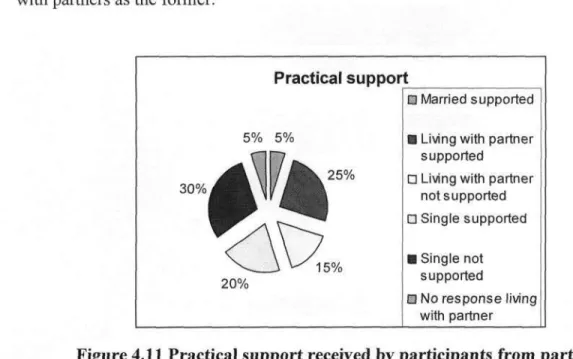
Finally, more than half of these women received financial support from their partners for all their needs. The issue of deprivation as a cause of a risky life is evident in the dependent situation in which these women found themselves.
Outline of the study
In this chapter, the author would like to provide the reader with the political history of Soweto and show how the apartheid regime shaped the lifestyle of the people of Soweto, including the women interviewed in this study. The role of the church and religion in the fight against HIV and AIDS will also be discussed.
Brief history of Soweto
This chapter will also discuss the impact of HIV and AIDS in the midst of poverty. The housing problem arose from the increased influx of blacks from the countryside coming to the Witwatersrand.
Socio-economic conditions in Soweto
Poverty, unemployment and the breakdown of family life
This meant that about a third of the African labor force was men living without their families, which further contributed to the disorganization of the family (Walshe 1995:68). The apartheid policy of the Nationalist government disrupted the cohesiveness of the black family with its values of extended family life, which provided protection to orphans (Thomas and Mabusela 2006).
Sexual violence and transactional sex
From the men's perception, their reason for buying beer for women was to get sex in return (Mfecane et al. Another study by Kristin Dunkle in Soweto, demonstrated how transactional sex, gender-based violence, drug abuse and socio- economic hardship may place women at risk of HIV infection (Dunkle et al.
HIV and AIDS epidemic
This usually caused problems when the mother died and the grandmother had to look after the child. Some of these midwives were found to be unaware of the mother's HIV status, leaving health workers in a difficult position when they came to collect free infant formula, especially if the baby was over six months old and no longer eligible for free milk formulas (Interviews with PHRU HIV/AIDS counselors in the PMTCT program).
Role of religion in managing HIV and AIDS
Activities covered by the churches working in Soweto include voluntary counseling and testing conducted with the assistance of doctors, addressing socio-economic issues that perpetuate the spread of HIV and AIDS, support groups for those infected and AIDS orphans and prevention education workshops. The church has made sufficient statements about the serious nature of HIV and AIDS and must now do its part.
Conclusion
Working with Phiri are other women theologians who have made a major contribution to the Circle, making their advocacy for the freedom and recognition of women as other beings heard around the world through their writings. In the next part, the researcher presents Sen's theory of Development as Freedom from an economic point of view.
Development as Freedom
Freedom
Sen proposes in his theory that in such cases there should be retraining and acquisition of new skills instead of those that will be displaced. Also, the issue of safety nets should be put in place to take care of those who bear the brunt of the downside of globalization (Sen 1999: 240). For example, women become the first category to be affected, hence the need for women's agency.
Capability deprivation
Lack of ability hinders such progress in women's lives, as will be shown in the next section. Socially, unemployment can disrupt a family in the sense that roles must change if the usual breadwinner can no longer do so. The poverty that comes with unemployment affects both sexes, but women are usually hardest hit because of their low status in the country.
Women's agency
Also, the extent of rights in terms of equal sharing of the family's joint benefits depends on who in the family contributes how much in terms of income. If you analyze what Sen is saying here, you hear that women, as agents, need opportunities to become empowered and that they are like a sleeping giant when it comes to the potential they have for social transformation. To be responsible for one's life and to function according to one's capabilities, one must have sufficient freedom, opportunities and opportunities to do so.
The Circle of Concerned African Women Theologians
Her arguments revolve around gender justice, resistance to patriarchy and the urgent need for culture. The Circle's approach to HIV and AIDS issues is gendered, with special attention to physiological differences, social differences, cultural norms and economic factors, religious factors, violence against women and healthcare providers. However, for the purposes of this study, the focus will be on her reflections on the issues that she believes leave women underdeveloped and therefore in need of liberation.
Development as women's agency
In the following section the researcher wishes to present Phiri's work in the context of HIV and AIDS. Finally, Phiri brings up the issue of healing in the context of HIV and AIDS as another important area where the church can play an important role. She argues strongly for the abolition of cultural and religious practices that undermine women's humanity.
Women's freedom in theoretical and theological perspective
In the case of women's development, many areas need to be addressed first before women can be free. First, men and women should share a view of the existing. This means that political, economic and social barriers to women's liberation must be identified and changed to promote women's development.
Conclusion
Both Sen's theory and Phiri's theological perspectives address the denial of opportunities that individuals should experience due to a lack of human rights that allow them to have a voice to express their needs and to address them through discussions and debates that can bring about social transformation. , whether in the establishment of policies or the revision of cultural practices that are not life-giving. Sen and Phiri address the same issues of deprivation in different forms, although each comes from a different perspective, but their ideas compliment each other when it comes to women's freedom. Variables from the secular issues and from the religious point of view were investigated to give an answer to this question.
Research findings
- Research process
- Process of Interviews
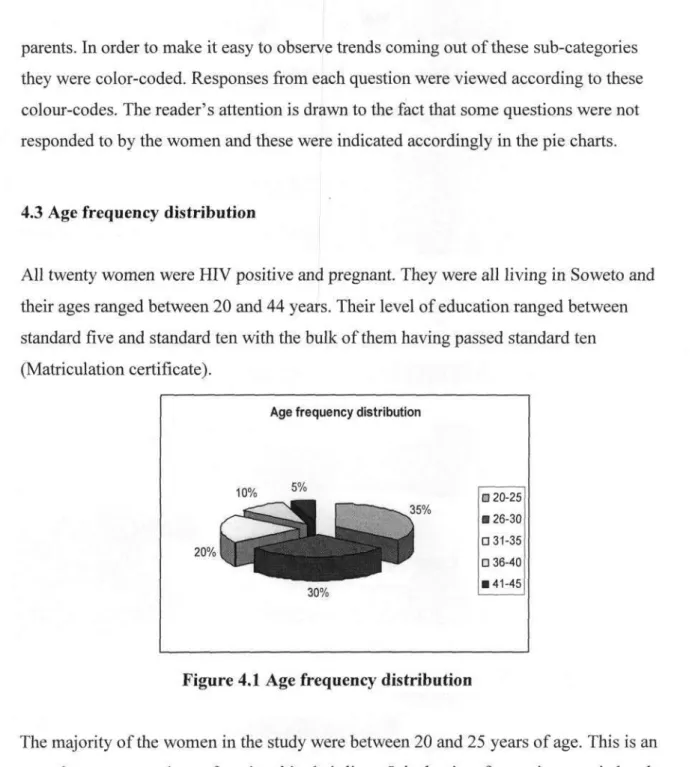
- Age frequency distribution
- Educational level
- Marital status
- Relationship with the father of the unborn child
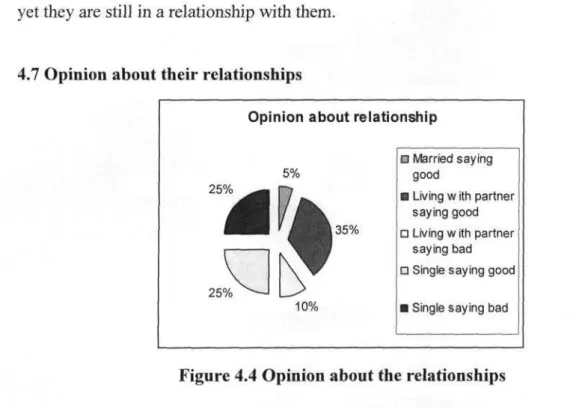
- Opinion about their relationships
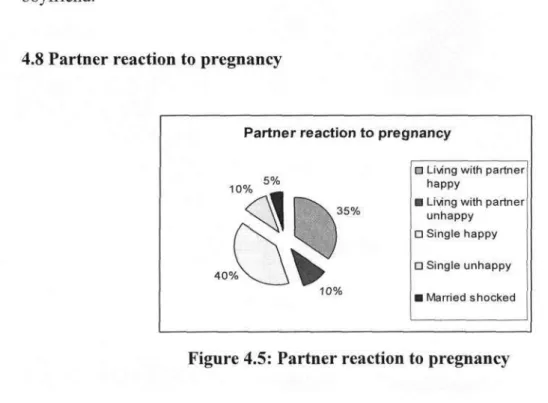
- Partner reaction to pregnancy
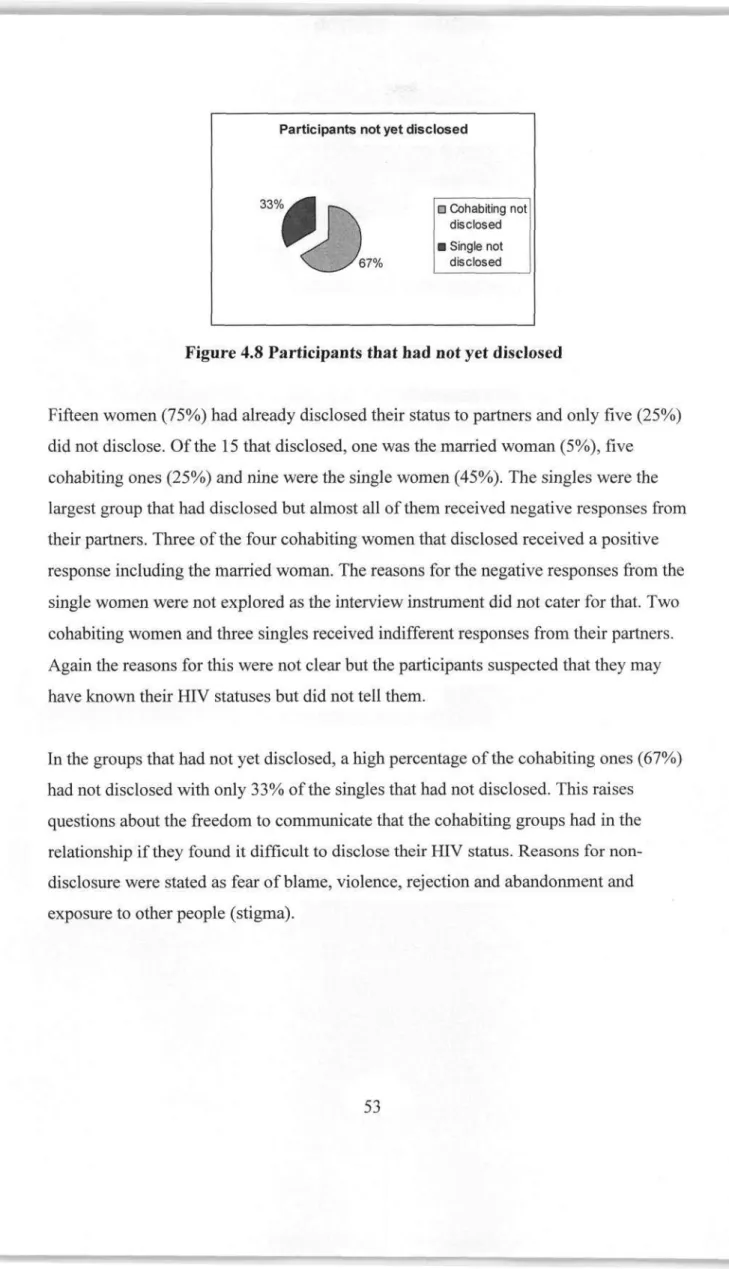
- Disclosure of HIV status to partner and knowledge of partner status
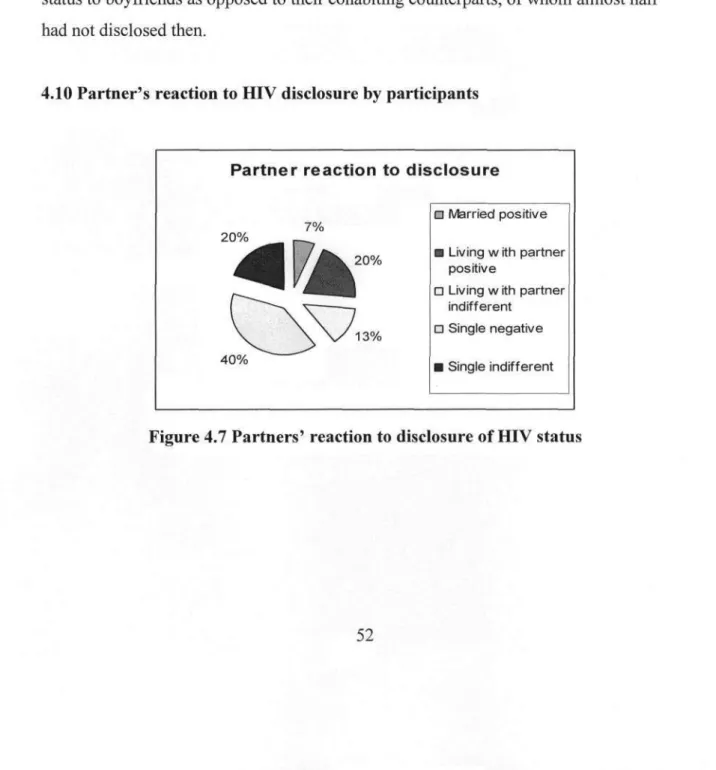
- Partner's reaction to HIV disclosure by participants
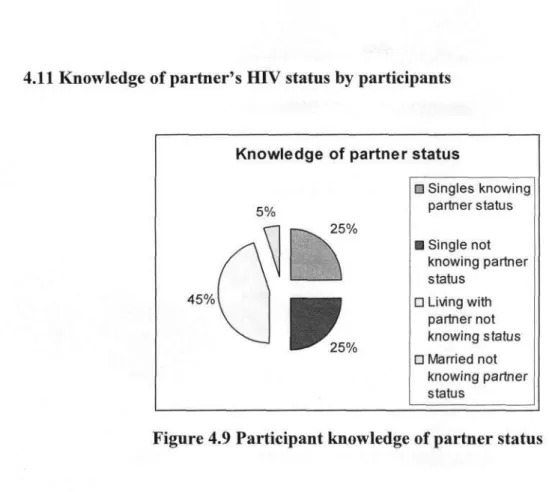
- Knowledge of partner's HIV status by participants
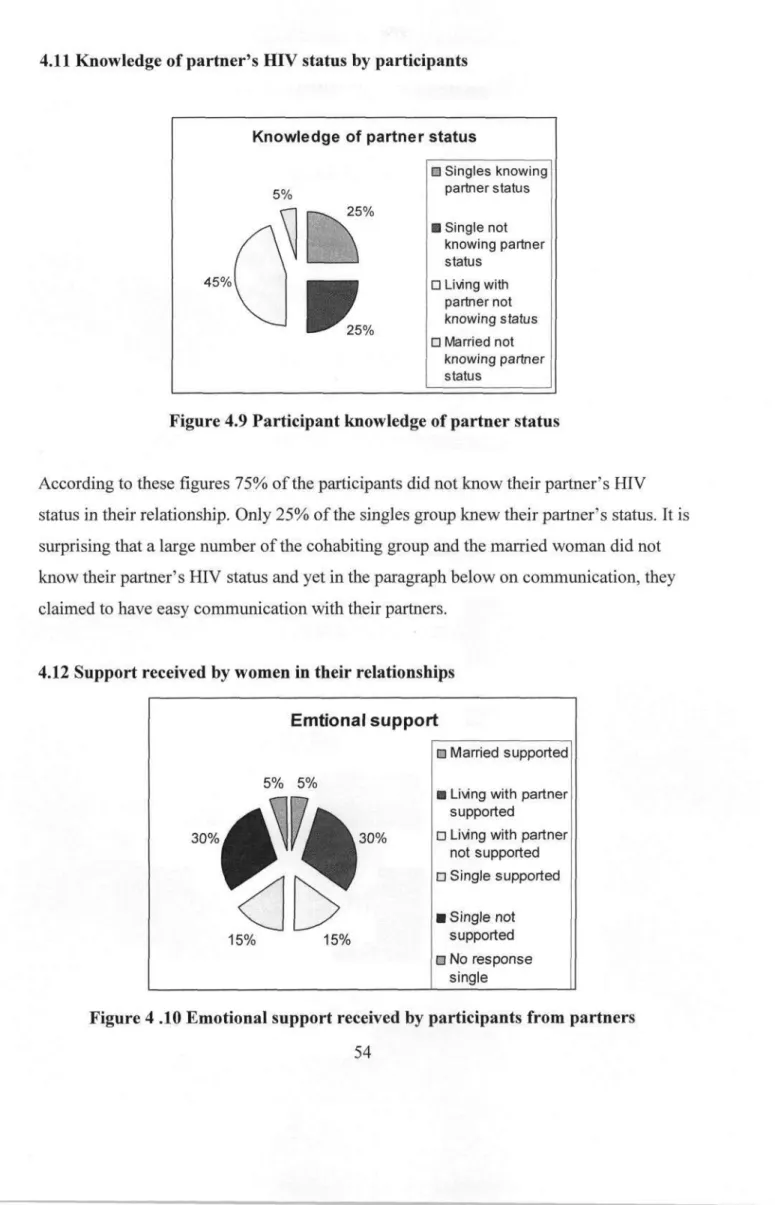
- Support received by women in their relationships Emtional support
- Parity
- Safer sex practices
- Knowledge of HIV status before pregnancy
- Plans for future pregnancies
- Communication between study participants and their partners Communication with partners
- Economic issues and decision making in the relationship Employment details
- Role of religion
- Relationship with God
- Involvement in church activities
- Participants' observations on current church decision makers
As shown in the graph, married woman had standard ten, 15% of cohabiting women had standard ten and 30% of them did not. According to these figures, 75% of participants did not know the HIV status of their partner in their relationship. The investigation did not investigate who the fathers of the other children were.
Participants' opinion on who should be decision makers in the church
Participants were asked for their opinion on what they believed the church could do to address the issues of HIV and AIDS. Young girls get pregnant right in church to prove that what is preached doesn't work.]. In other words, they said this value must be reviewed by the church.
Conclusion
In the previous chapter, a presentation of the findings was made and the important themes emerging from the data were highlighted. In this chapter a critical analysis of the data will be done using the theories of Amartya Sen (1999), on Development as Freedom and Isabel Phiri, on the theological perspectives on women's freedom as described in Chapter 3. The data presented in Chapter 4 showed areas that demonstrate "indolence" in the lives of the participants in the study.
Demographic data
This meant that they were not tradable on the labor market, which has implications for their financial independence. The issue of cohabitation seemed to be the solution to the problem of economic deprivation. The consequences of such deprivation of basic education, which Sen describes as significant "unfreedoms", can be seen in the lack of job opportunities for the women in the study.
Unequal power in the relationships
The data presented in the previous chapter showed that most of the participants were completely dependent on their partners for survival. From Phiri's understanding of the liberation message, the women in the study are clearly poor and marginalized by both structural and gender injustice. Most unmarried women in the study did not disclose their status for fear of discrimination.
Freedom of choice and self-determination
In their responses, the participants indicated that they felt that they would have a better relationship with the church if the topic of HIV and AIDS is discussed openly. This suggests that churches need to find ways to enable HIV-positive pregnant women to see the church as a place of comfort and healing where they are accepted. The study has shown that this is the biggest challenge for the church in connection with HIV and AIDS.
Conclusion
The next chapter will focus on the implications of these findings in the HIV and AIDS epidemic. It also raises the question of family values regarding the level of cohabitation noted in the survey. In the next section, the researcher will discuss the needs expressed above in terms of theological and practical implications for the church.
Theological implications
Practical implications
Suggested areas for further research
How would you describe the emotional support (such as caring and sensitivity to your needs) you receive in the relationship. How would you describe the practical support (such as help with clinic visits and housework) that you receive in the relationship. How would you describe the economic support (such as paying for food, medicine, and transportation) that you receive in the relationship.
26 only for respondents who answered la and b