ANNUAL REPORT
2020
TASMAN DISTRICT COUNCIL
ANNUAL REPORT
2020
TASMAN DISTRICT COUNCIL
CONTENTS
A Message From Our Mayor and Chief Executive Officer 4
Our Council Members 6
PART ONE: OVERVIEW 7
2019/2020: A Year in Review 8
Our Non-Financial Performance at a Glance 17
Key Financial Information 20
PART TWO: COUNCIL VISION AND COMMUNITY OUTCOMES 25
Vision and Mission Statement 26
Community Outcomes 26
PART THREE: ROLES, COMPLIANCE AND AUDIT STATEMENT 27
The Role of the Annual Report and Financial Statements 28
Statement of Compliance and Responsibility 28
How the Annual Report Fits Into Council’s Overall Planning Framework 29
Independent Auditor’s Report 30
PART FOUR: FINANCIAL AND NON-FINANCIAL PERFORMANCE 33
Statements of Objectives and Service Performance 34
Environment and Planning 36
Environmental Management 36
Public Health and Safety 47
Engineering 53
Transportation, Roads and Footpaths 53
Coastal Structures 60
Water Supply 63
Wastewater 71 Stormwater 77
Solid Waste 81
Flood Protection and River Control Works 87
Community Development 91
Governance 104
Council Enterprises 106
Support Services 110
PART FIVE: FINANCIAL STATEMENTS 114
Statement of Accounting Policies 115
Statement of Comprehensive Revenue and Expense 118
Statement of Financial Position 119
Statement of Cashflows 120
Statement of Changes in Equity 121
Council Funding Impact Statement 122
CONTENTS
PART SIX: NOTES TO FINANCIAL STATEMENTS 123Note 1: Summary of revenue and expenditure for groups of activities 124
Note 2: Rates 125
Note 3: Other revenue 126
Note 4: Subsidies and grants 127
Note 5: Fees and charges 128
Note 6: Employee benefit expenses 128
Note 7: Other expenses 129
Note 8: Finance expense and finance income 130
Note 9: Tax 131
Note 10: Cash and cash equivalents 132
Note 11: Trade and other receivables 132
Note 12: Derivative financial instruments 134
Note 13: Financial assets 135
Note 14: Non-current assets (property) held for sale 138
Note 15: Property, plant and equipment 138
Note 16: Intangible assets 147
Note 17: Depreciation by group of activity 149
Note 18: Forestry assets 149
Note 19: Investment property 151
Note 20: Investment in joint ventures 152
Note 21: Interest in joint operations 155
Note 22: Trade and other payables 157
Note 23: Provisions 157
Note 24: Employee benefit liabilities 158
Note 25: Borrowings 159
Note 26: Revaluation reserve 161
Note 27: Accumulated equity 162
Note 28: Restricted and Council created reserves 163
Note 29: Cashflow reconciliation 166
Note 30: Related party transactions 167
Note 31: Severance 168
Note 32: Remuneration 168
Note 33: Financial instruments 169
Note 34: Capital management 171
Note 35: Urban portions of the State Highway network 172
Note 36: Significant variances compared to the Annual Plan 173
Note 37: Events after the reporting date 173
Note 38: Elected representatives 174
Note 39: Financial performance in relation to regulations benchmarks 175
Note 40: Rating base and insurance of assets 184
Note 41: Commitments and contingencies 186
Note 43: Standards, amendments and interpretations issued but not yet effective 190
Note 43: Covid-19 impact 190
APPENDICES 194
Appendix One: Applications Processed 195
Appendix Two: Council’s Committees, Responsibilities and Portfolios 197
Appendix Three: Community Boards 200
Appendix Four: Management Staff 201
Appendix Five: Glossary of Terms 202
Directory 206
Welcome to Council’s Annual Report for the 2019/2020 year.
The 2019/2020 year was one of change and challenges.
The triennial election held in October 2019 saw a change in Mayor, and five new Councillors. The Council then faced the unprecedented challenges as a result of the Covid-19 pandemic and alert level restrictions.
We are pleased to report that we were able to maintain essential infrastructure and community services during the lockdown phase, while adjusting to having most of our staff working from home.
We are grateful to all of those who responded to the pandemic, including iwi, community groups, Nelson City Council, and other organisations, including central government. Once again, our community came together to support each other, and to play their part to halt the spread of Covid-19.
In response to the economic pressures on parts of our community, the Council provided rent relief for some commercial tenants, reduced registration fees for campgrounds and commercial vessels, and increased the frequency of payments to our local suppliers. The Council also set a zero percent rates revenue increase for 2020/2021.
Despite these challenging times, the Council has managed to make progress on a number of key projects across the District, which were identified for 2019/2020, Year 2 of the Long Term Plan (LTP) 2018 – 2028. Many of these are significant multi-year projects, including the Waimea Community Dam, Motueka Library, Brightwater Town Centre Upgrade, a new water supply for north-west Motueka, and water supply and wastewater upgrades in Māpua.
There have been significant infrastructure projects to support the rapid growth in Richmond, including a new water main through Richmond south and west, and the widening of Bateup Road, which included upgrading underground services at the same time.
We have worked collaboratively with developers on stormwater channel improvements at Poutama Drain and Borck Creek to achieve efficiencies and cost savings for all parties.
Several important infrastructure upgrades were completed, including the Headingly Lane trunk water main in Richmond, a watermain renewal in Wakefield, a new wastewater pump station in Pōhara and a stormwater upgrade in Collingwood. The Gardner Valley Road/Moutere Highway and Lower Queen Street/McShane Road intersections were upgraded and the first stage of upgrading Tākaka’s Resource Recovery Centre was also completed. We also made progress on flood mitigation works for Ned’s Creek in Murchison.
We also celebrated the completion of several exciting new recreation projects, including the Tākaka to Pōhara cycleway, a beautiful new entrance for Te Maatu/Thorp Bush in Motueka and new playgrounds in Mārahau and Tākaka. We made further improvements to the facilities at Saxton Field, including a new junior mountain bike track. New toilets were installed in Richmond, Alexander Bluff and St Arnaud.
The Council has also continued to take a long-term view, particularly in terms of the Tasman environment and climate change. The Council adopted the Tasman Climate Action Plan, setting itself new goals, targets and actions. We also embarked on a complete review of its resource management plans, to guide planning for growth, climate change and natural hazards, and how natural resources are managed.
During 2019/2020, the Council also adopted several other strategic plans, such as the Future Development Strategy and the Joint Waste Management and Minimisation Plan, both in conjunction with Nelson City Council.
The Council and iwi of Te Tau Ihu have continued to engage in a more meaningful and collaborative manner supported by our Kaihautū, Te Waari Carkeek, and our two Kaumātua (Matua Harvey Ruru and Whaea Jane du Feu) who were all welcomed to the Council late last year. Throughout the year Council and local iwi have worked together closely on several projects and iwi were at the heart of the Civil Defence response during lockdown. The Council has also started to develop a bilingual identity, adopting an official te reo Māori name, Te Kaunihera o te tai o Aorere.
A MESSAGE FROM OUR MAYOR
AND CHIEF EXECUTIVE OFFICER
The projects outlined here are a reflection of the diverse range of activities that we undertake to help ensure Tasman has a healthy environment, strong economy and a vibrant community. Many of our projects take a collaborative approach with other organisations, particularly local iwi, neighbouring councils, government agencies and community groups.
The strength of these relationships is a taonga of our District. In line with the purpose of local government, many of these projects also aim to enhance social, economic, environmental and cultural outcomes.
Looking forward to 2020/2021, while there is still a high level of uncertainty, Tasman is well placed for recovery. Project Kōkiri – the Nelson Tasman Economic Response and Recovery Plan was released in June 2020 and aims to stimulate the economy, protect and create new jobs and accelerate investment into the region.
The Council has also developed a fast-track capital works programme which will provide the community services we need, while at the same time boosting the local economy.
We would like to thank the community, Councillors, Community Board members, staff, iwi, volunteers and contractors for their contributions throughout the year to support the vibrant place we live in. Your support ensures that we continue to enjoy the Tasman District from the mountains to the sea (ki uta ki tai), as a beautiful place to live.
A MESSAGE FROM OUR MAYOR AND CHIEF EXECUTIVE OFFICER
Tim King Mayor
Janine Dowding Chief Executive Officer
He rau ringa e oti au
With many hands the work will be done
OUR COUNCIL MEMBERS
Moutere/Waimea Ward
Lakes/Murchison Ward Tasman Mayor
Golden Bay Ward
Motueka Ward
Richmond Ward
Cr Christeen Mackenzie Cr Dean McNamara Cr Anne Turley
Cr Stuart Bryant Cr Celia Butler Cr Chris Hill
Cr David Ogilvie Cr Trindi Walker Cr Barry Dowler
Mayor, Tim King
Cr Mark Greening Cr Kit Maling Cr Trevor Tuffnell Cr Dana Wensley
PART ONE
OVERVIEW
COVID-19 PANDEMIC AND RESTRICTIONS
The Covid-19 pandemic has had a huge impact on a global scale. Although the Tasman community has not experienced the health impacts that many overseas countries are suffering, the uncertainty and economic impacts continue to prevail, and the recovery is going to be a long haul. But one thing is certain: we can achieve a great deal when we work together and support each other.
During the initial lockdown period, Council was able to maintain essential infrastructure, environmental, and community services. Our Information Services team quickly responded to enable most of our staff to work from home, providing online tools and capabilities.
Council’s Customer Service Centres and Libraries closed when Level 3 restrictions came in, from 23 March. The Customer Service Centres reopened on 14 May (Level 2). Libraries opened with restricted hours from 20 May, and with normal hours on 10 June (once at Level 1).
Council supported the Nelson Tasman Civil Defence Emergency Management Group (NTCDEM) to assist people with urgent welfare needs. Council staff also kept in touch with all of our community housing tenants to ensure they were coping during the lockdown.
Local government actions also play a significant role in recovery and rebuilding the local economy.
To reflect the challenges faced by our residents and ratepayers, the Council made the decision to set a zero percent rates revenue increase for 2020/2021. Council also made the decision to continue various capital investment projects to provide local construction jobs and support to the region. We also provided rental
relief for some commercial tenants; halved registration fees for operators of registered campgrounds and commercial vessels; made more frequent payments to businesses who provide services to Council; and streamlined our procurement process. Ratepayers could also apply to defer the payment of any remaining rates for 2019/2020.
In close collaboration with Nelson Regional Development Agency, Nelson Tasman Chamber of Commerce, Nelson City Council, Iwi and the government’s regionally based agencies, Council contributed to developing Project Kōkiri – the Nelson Tasman Economic Response and Recovery Plan. Project Kōkiri was formed during the lockdown to deal with the economic fallout from Covid-19 in a coordinated and aligned way across the region. Released in June 2020, the plan aims to stimulate the economy, protect and create new jobs and accelerate investment into the region.
ELECTION
Council’s triennial elections were held on 12 October 2019. Voter turnout was 51.7% (compared with the national average of 41.4%) and the final outcome of the election resulted in a new mayor, Tim King, five new councillors, and two new Motueka Community Board members. The resignation in February 2020 of Motueka Councillor Claire Hutt meant the need to hold a by-election to fill the vacancy. The by-election was scheduled for 12 May 2020 but was extended to 26 May due to the difficulty faced by some voters during the Covid-19 restrictions. Barry Dowler was the successful candidate to be elected as a Motueka Councillor.
A poll on electoral systems was held in conjunction with the triennial elections which resulted in 11,460
2019/2020:
A YEAR IN REVIEW
Over the last year, we have welcomed a new Mayor and several new faces to the Council table. We farewelled the previous mayor, Richard Kempthorne, after nearly 12 years in the job, as well as Councillors Peter Canton, Paul Hawkes, Sue Brown and Paul Sangster.
We have progressed and completed many of the plans and projects which the Council and the community agreed were our priorities for Year Two of the LTP 2018 – 2028.
However, we have also experienced unprecedented challenges this year with the
Covid-19 pandemic and Alert Level restrictions.
electors voting to retain the First Past the Post (FPP) Electoral System, as against 6,692 electors voting for the Single Transferable Vote (STV). The FPP electoral system will therefore be the system used for the 2022 and 2025 Tasman District Council triennial elections, including any other by-elections or polls.
WORKING WITH IWI
The Council and iwi of Te Tau Ihu have continued to engage in a more meaningful and collaborative manner supported by the Kaihautū and Kaumātua who we welcomed to Council late last year. Te Waari Carkeek (Ngāti Toa Rangatira and Ngāti Raukawa) joined Council in October 2019 as our full-time Kaihautū, a new senior advisory role that will help Council strengthen the relationships with our region’s eight Te Tau Ihu iwi and Ngāi Tahu.
The Kaihautū role provides cultural support to Council, ensures Māori perspective informs our decision- making, and helps foster an internal culture which is welcoming, inclusive, and acknowledges Te Ao Māori (Māori world view). It will also help us, iwi, and our community realise the partnership embodied by Te Tiriti o Waitangi.
Kaumātua, Archdeacon Emeritus Harvey Ruru QSM and Jane du Feu MNZM, also commenced their role in October 2019 following the retirement of Archdeacon Emeritus Andy Joseph QSM. Jane and Harvey are recognised as taonga and highly respected elders by Council and iwi and provide the Mayor and elected members with tikanga Māori support at civic events, and help us understand iwi and Māori priorities.
Council has also started to develop a bilingual identity, adopting an official te reo Māori name, Te Kaunihera o te tai o Aorere, and a bilingual logo. Te Tai-o-Aorere is an ancient name for Tasman Bay and many continue to use the name today. ‘Te Kaunihera’ means the Council, while ‘o te tai’ refers to the sea. ‘Aorere’ can be likened to ‘the many rivers of floating clouds’. Incorporating te reo Māori into our name is an important way to respect Council’s connection with Māori who live in our communities.
Throughout the year, Council and local iwi have been working closely on several projects:
• Covid-19 response: Iwi were at the heart of the NTCDEM response during lockdown, and were quick to organise and take advantage of online technology to keep connected and well- informed. They responded quickly to extraordinary challenges, establishing protocols and ensuring their most vulnerable whānau were receiving the support they needed.
• Te Tau Ihu Regional Intersectoral Forum (RIF): Our CEO is the co-chair of the forum group, and staff contribute to the Cultural, Environmental, and Economic Pou. Under the Environmental Pou, Council staff also supported the Project Moturoa iwi cadetship programme since early 2019.
• Tasman Environmental Policy Iwi Working Group:
a group of staff and iwi representatives who meet regularly to work on and discuss the full review of the Tasman Resource Management Plan and Regional Policy Statement, which will become the new Tasman Environment Plan.
• Appointment of a Mātauranga Māori expert on the Council hearing panel for the Responsible Camping Strategy, and involvement in recent discussions around Waitapu Bridge in Golden Bay/Mohua.
• Waimea Community Dam: Ngāti Koata are a key local land owner, with the Dam partly covering their land. Their involvement in the project and their role as kaitiaki will continue to build strong links between us.
• Port Tarakohe Redevelopment: Iwi are part of the Steering Group for this project, including Maara Moana, an iwi-owned aquaculture company.
• Replanting Mārahau with native forest: a
partnership between Ngāti Tama ki Te Waipounamu Trust, Ngāti Rārua Settlement Trust, Ministry for Primary Industries, and Council. The purpose is to manage sediment and land disturbance by replanting 114 hectares of former pine forest on highly erodible Separation Point Granite land with permanent native forest cover. It is set up as successional planting with the initial plantings being all Manuka while future planning may involve inter-planting with older growth species such as native conifers/podocarps.
• Kotahitanga Mō Te Taiao Alliance Strategy: an inter- generational strategy to deliver landscape scale conservation outcomes for the region, co-designed through a partnership between councils, iwi and the Department of Conservation. The Alliance aims to drive large-scale conservation projects with wider social, cultural and economic outcomes across the Buller, Tasman, Nelson, Marlborough and Kaikōura regions. The Strategy embraces the values of Matauranga Māori (Māori world knowledge), but also relies on science and empowered people, to achieve the strategic vision.
• Waimea Inlet Management Strategy: a coordination group involving both Nelson and Tasman Councils, iwi, Department of Conservation and other stakeholders have collaboratively developed an action plan to implement the Strategy.
• Te Tauihu Intergenerational Strategy: a collaboration between Wakatū Incorporation, Tasman, Nelson and Marlborough Councils, Iwi, Chambers of Commerce, Nelson Regional Development Agency, Nelson Marlborough Institute of Technology (NMIT) and businesses, to develop an intergenerational growth strategy for Te Tau Ihu that looks at the long term wellbeing of the region’s people, economy and environment.
• Urban Stormwater Strategy and Richmond Catchment Management Plan: staff have worked with our iwi partners on the development of the Strategy’s key components and the Management Plan. The process helped to develop closer partnerships between Council and iwi for the management of stormwater.
• Motueka Library redevelopment: three iwi representatives have attended working group meetings, and a matakite walkover of the site at Decks Reserve has taken place. Recommendations from a cultural impact assessment by Tiakina Te Taiao have been implemented. The iwi
representatives are assisting the project team with appropriate tikanga and cultural elements in the design of the library.
• Collingwood Campground upgrade: the campground is a significant archaeological site and Council has worked with our iwi partners and Heritage New Zealand to ensure cultural and heritage sensitivities are respected.
• Wastewater Strategy for Motueka: staff have undertaken early engagement with iwi to seek their input to inform the development of a long- term wastewater strategy for Motueka. All eight iwi trust representatives have been invited to join a working group. The role of the working group is to work with Council staff to gather community input, convey community needs/concerns, identify opportunities, and provide project guidance.
• Bio Strategy: this is a significant and collaborative piece of work to develop a Strategy for restoring and sustaining our natural biodiversity and ensuring biosecurity in Tasman. Iwi representatives are part of both the working group and governance group.
• Review of the Moutere-Waimea Reserve Management Plan: Early engagement with iwi has taken place and will continue throughout the Plan review.
• Golden Bay Community Board: since July 2019, a Manawhenua ki Mohua advisor has been invited to attend Golden Bay Community Board meetings, with speaking, but not voting rights.
• Iwi advisors as members of committees: both the Nelson Regional Sewerage Business Unit and the Nelson-Tasman Regional Landfill Business Unit have iwi members with full voting rights. The Tasman Regional Transport Committee includes an iwi member with non-voting rights.
Te Kaunihera o te tai o Aorere staff have also been developing their Māori language skills through attending te reo Māori courses. Staff have also formed a waiata group that meets regularly to sing a variety of Māori waiata, learn the meaning behind the waiata and tikanga, and participate in Council events. A Te Ao Māori Working Group of staff meet regularly to discuss iwi engagement, current projects affecting iwi, and ways of improving awareness and understanding of Te Ao Māori.
PROTECTING AND ENHANCING OUR NATURAL ENVIRONMENT
CLIMATE CHANGE ACTION
In 2019, the Council developed and adopted an internally-focused ‘Tasman Climate Action Plan’. The Action Plan brings together all the work that Council is already doing, along with new goals, targets and actions. Council staff have set up an internal working group to ensure the Action Plan progresses.
One of the actions was involvement in the Nelson Tasman Climate Forum, with the launch taking place on 29 February 2020. Mayor King spoke at the launch and several Councillors attended this event, along with over 350 people. Councillors Wensley and Walker have been appointed to attend Climate Forum meetings.
Key progress highlights include:
• Implementing the Joint Waste Management and Minimisation Plan that was adopted in 2019.
• A NIWA-commissioned report outlining the likely impacts of climate change on Tasman District, with a focus on primary production.
• Replacement of lights to LED at the Richmond Library, and a type 1 energy audit of Council buildings and assets.
• Funding secured from the Ministry for Primary Industries (MPI) to expand the size of Council’s willow and poplar nursery over the next three years.
• An e-bike added to the Council pool vehicle fleet, for staff use on short trips from the Richmond service centre, to help reduce CO2 emissions from business travel.
• Investigations underway regarding inundation issues impacting Te Mamaku/Ruby Bay and Motueka residents.
• Investigations to reduce construction and organic waste production.
• A monthly column in Newsline, with tips for how residents can reduce their impact on the environment.
Council has also continued its review of the natural hazards strategic policy, with a focus on coastal inundation and land disturbance. The purpose of the policy is to ensure that we are prepared and ready to adapt to our ever-changing environment, including sea level rise and natural hazards. Following our first round of community engagement (22 July – 27 September 2019), work is underway to identify areas, objects or experiences that our communities value and that may be impacted by sea level rise and coastal hazards. These will then be assessed for their risk and vulnerability. Long-term adaptive planning work will take several years to complete and the conversations with our communities will be ongoing.
ENVIRONMENTAL PLANS AND PROJECTS
During the year, Council progressed several plans and strategies that are aimed to protect and enhance our natural environment.Council has started work on a new Bio Strategy for restoring and sustaining our natural biodiversity and ensuring biosecurity in Tasman. Taking advantage of the huge expertise in this region and with a desire to collaborate across organisations and interests, we’ve set up a working group of external advisors.
By the end of 2020, the group will produce a draft Bio Strategy for the Council to consider.
2019/2020: A YEAR IN REVIEW
The purpose of this process is to help Council, our community, and tangata whenua collaborate on how we can improve and secure biodiversity for everyone’s benefit, by changing our practices and through active care and protection.
Council has embarked on a complete review of its resource management plans and aims to create a single plan called the Tasman Environment Plan. The current plans – the Tasman Regional Policy Statement and the Tasman Resource Management Plan – provide a blueprint for where and how our communities will grow and how we manage natural resources. Creating the new Tasman Environment Plan is anticipated to take the next six to 10 years to complete and there will be plenty of opportunities for the public to be involved.
The priorities for the review are: planning for growth, climate change and natural hazards, and reviewing freshwater management and land disturbance policies.
On 15 August 2019, Council adopted a new Nelson Tasman Waste Management and Minimisation Plan.
Developed jointly with Nelson City Council, the Plan aims to guide future decision-making to minimise and manage waste in our region. The Plan includes an aspirational goal to avoid unnecessary waste to landfill and a target of a 10 per cent reduction per person in waste going to landfill by 2030. To do this, our three goals are to avoid the creation of waste, improve the efficiency of resource use, and reduce the harmful effects of waste.
The implementation of the Kotahitanga Mō Te Taiao (KMTT) Alliance Strategy has taken a step forward with the appointment of a programme coordinator, as part of a relationship between the Alliance and The Nature Conservancy (TNC). TNC is a world-wide environmental, not for-profit organisation who will also contribute to the funding model and provide additional in-kind support. The TNC programme coordinator will provide expertise, connections and potential funding to more effectively enable the successful implementation of the strategy and long-term sustainability of the Alliance. The Alliance aims to drive large-scale conservation projects with wider social, cultural and economic outcomes across the Buller, Tasman, Nelson, Marlborough and Kaikōura regions.
In July 2019, 1300 hectares of fire-damaged land in Eves Valley was re-sown with grass seed to reduce the risk of large amounts of sediment run-off into our rivers
and estuaries. The project cost $700,000 which was entirely funded by the Lotteries Grants Board.
PROVIDING FOR OUR COMMUNITIES
DRINKING WATER SUPPLY AND QUALITY
Ensuring a safe and secure water supply for our households and businesses was identified as a key issue in the Long Term Plan 2018 – 2028.The Waimea Community Dam will provide a secure supply of drinking water to the Richmond, Brightwater, Māpua and Redwood Valley communities, now and in the future. The three-year construction project began in early March 2019. Waimea Water Ltd is a Council- controlled organisation which has been established to manage and oversee the dam construction and ongoing operation once it is built. Throughout 2019, work progressed with the upgrade of the Lee Valley access road and preparation of the construction area, including vegetation clearance and sediment retention ponds. In August 2019, a ground-breaking ceremony at the construction site formally marked the start of the dam build. In March 2020, the costs and timeframe were revised by Waimea Water Ltd, after encountering unforeseen geological conditions. Although the Covid-19 pandemic caused further delays, the project reached a significant milestone in August 2020 with the completion of the 165-metre-long diversion culvert.
Several other projects have been underway to provide a safe and secure water supply. Work has progressed on a new water supply system in the north-west urban area of Motueka, and new or upgraded water mains in Richmond, Māpua and Wakefield.
In September 2019 the Council adopted an amended Public Water Supply Bylaw to protect and manage the community’s access to safe and secure water supply.
The Bylaw includes a water restrictions protocol for how we will manage water use during a drought or in an emergency.
Following the Havelock North water contamination event in 2016, all Councils are required to ensure higher standards for drinking water quality are met.
In May 2020, the Council approved a Drinking Water Quality Management Policy which sets the overarching framework for Council’s Water Safety Plans.
2019/2020: A YEAR IN REVIEW
Throughout 2019/2020, staff have been investigating options for meeting drinking water standards. In August 2020, Council consulted on a proposal to introduce chlorination to another five of Council’s water supply schemes.
Due to the high number of private domestic water bores in Motueka and Riwaka, bore water quality testing began in October 2019 to identify any potential health risks. The results will be reported to the Council before the end of 2020.
GROWTH
The Long Term Plan 2018 – 2028 identified growth and infrastructure as a key issue, including the need to enable an adequate supply of serviced and zoned land and to manage the environmental impacts of growth.
In recent years, Tasman’s population has grown at a relatively high rate, and reached 55,100 as at June 2019 (according to the latest Stats NZ estimate).
Similarly, there has been a relatively high number of new dwellings, with 491 consented in 2019/2020.
Throughout the year, there has been significant progress on growth-related infrastructure projects.
In Richmond, a multi-year project is underway to install a new water main through Richmond south and west. The widening of Bateup Road was completed, which included upgrading underground services at the same time. We have worked collaboratively with developers in Richmond west on stormwater channel improvements at Poutama Drain and Borck Creek, achieving efficiencies and cost savings for all parties. Also supporting growth in Richmond west, the Headingly Lane trunk water main was completed.
Work has continued on the water and wastewater upgrade in Māpua. The replacement of the water main provides a safe and secure water supply for future subdivisions and means the moratorium on new water connections in Māpua will be lifted from August 2021.
To guide future planning, the Council, together with Nelson City Council, adopted the Future Development Strategy. This high level plan identifies potential growth locations for housing and business to provide for our growing population over the next 30 years.
2019/2020: A YEAR IN REVIEW
GETTING AROUND TASMAN
Our transport network plays a key role in both social and economic connection and there have been several significant projects progressed over the last year to improve the accessibility and safety of various transport options.
The new Tākaka to Pōhara cycleway was officially opened with a celebration event on 30 January 2020.
The 7.5km cycleway is a welcome addition to the walking and cycling network in the Bay, for both residents and visitors, and provides a safe option for children biking to school.
The Gardner Valley Road/Moutere Highway and Lower Queen Street/McShane Road intersections were both upgraded, improving safety in these growth areas.
The Brightwater Town Centre upgrade is underway, which will see Ellis Street become a safer, more attractive public space.
Ensuring road speed limits are appropriate for the conditions is an important part of a safe roading network. Following public consultation, we made changes to the Speed Limits Bylaw which lowered the speed limits for many local roads.
A new Wakefield Community Bus service began in August 2019, run by Nelson Tasman Community Transport Trust (NTCTT) and supported by Council.
While the Trust is a separate entity, its mission aligns with our desire to enable a public transport service for those that have limited transport options.
COMMUNITY SPACES AND PLACES
During the last year, Council has approved the location, design and construction contract for the new Motueka Library, and construction began in September 2020.
The new library has been planned for several years to replace the ageing and undersized library in Pah Street with a modern, sustainable new building in Decks Reserve. Council reconsidered the project in light of Council’s zero rates revenue increase for 2020/2021 and confirmed the project would continue. The project will provide local construction jobs and support to the region, as well as provide long-term benefits to the Motueka community.
At an extraordinary meeting on 19 March 2020, the Council decided to progress towards repairing the Golden Bay Grandstand in Tākaka. Once completed, it will be available for public use once again.
A new entrance way has been installed for Te Maatu/
Thorp Bush in Motueka, a project which was initiated by the Motueka Youth Council. Visitors to the reserve can now enter the park through two carved pou, gifted by Ngāti Rārua Ātiawa Iwi Trust (NRAIT).
The redeveloped entrance also incorporates lighting and social seating arrangements, and information panels contributed by Keep Motueka Beautiful.
New public toilets have been installed at Fittal Street (funded through central government’s Responsible Camping Fund), at Alexander Bluff, and at St Arnaud near the Lake Rotoiti Hall (partly funded through central government’s Tourism Infrastructure Fund).
New playgrounds were completed at Newhaven Crescent in Mārahau and at the Golden Bay Recreation Park (funded by the Golden Bay Shared Recreation Facility Committee).
The Motueka Community Board provided funding from its Special Projects fund for seven community projects, including a skate park upgrade and new footpaths, cycle lanes, and seating.
During the year we made further improvements to facilities at Saxton Field, in conjunction with Nelson City Council. The junior mountain bike track was completed, the athletics track was resurfaced, and lighting was installed for the velodrome. Designs were completed for stage 2 of the Champion Road – Saxton Drive link road.
We began work to review the Moutere-Waimea Reserve Management Plan and the Saxton Field Reserve Management Plan. These plans will provide future vision and direction for managing opportunities for sport, recreation and play in these public reserves, as well as the natural environment and landscape.
INFRASTRUCTURE PROJECTS
As well as the growth, water supply and transport infrastructure projects mentioned above, we have completed several other key engineering upgrades to maintain or improve the levels of service to our community. These include:
• Pōhara Valley Wastewater Pump Station
replacement – installing a new pump station and replacing old pipes.
• Collingwood Gibbs Road Stormwater Upgrade – installing an underground piped stormwater system to reduce the risk of flooding.
• Murchison Ned’s Creek Flood Mitigation – building a small levee (stop-bank) and new culvert to reduce flooding.
• Tākaka Resource Recovery Centre – construction of a new waste handling area on the lower level of the site and improvements to the recycling drop-off area on the upper level.
PLANNING FOR THE FUTURE
Council also started work on several key planning documents.
Work began to develop the Long Term Plan (LTP) 2021 – 2031 and the strategies and policies associated with Council’s long term planning. Between March and June 2020, Council undertook an early community engagement process (2020 Vision for Tasman) to help inform the development of the LTP 2021 – 2031. The deadline for providing feedback was extended twice due to the Covid-19 restrictions occurring over this time. The proposed LTP key issues and financial implications will go back out to the community in early 2021 for formal consultation.
This year was the first year of a 6 – 10 year project to review the Tasman Regional Policy Statement and Tasman Resource Management Plan. The project will culminate in a single new “Tasman Environment Plan”. Work this year involved reviewing how effective the existing plans have been, including what needs to change.
Work continued on the Te Tauihu Intergenerational Strategy. The Strategy looks at the long term wellbeing of the region’s people, economy and environment. It is a collaboration between Wakatū Incorporation, Tasman, Nelson and Marlborough Councils, Iwi, Chambers of Commerce, Nelson Regional Development Agency, Nelson Marlborough Institute of Technology (NMIT) and businesses. The initiative is backed by investment from central government’s Provincial Growth Fund. The development of the Strategy began in early 2019 and a series of community conversations were held across Te Tau Ihu throughout July and August 2019. The draft strategy was open for community feedback in early 2020, and the final strategy was launched in November 2020.
In April 2020, Council adopted the Responsible Camping Strategy to provide direction on how freedom camping is managed across Tasman District. Management will be undertaken through a combination of regulations, provision of appropriate facilities and information.
Over the 2019/2020 summer, there was a trial programme of Freedom Camping Ambassadors, working across the District to encourage responsible camping behaviour. The trial programme was funded by a grant from the Ministry of Business, Innovation and Employment Responsible Camping Fund.
2019/2020: A YEAR IN REVIEW
We also progressed planning work for some of community spaces and places. The Kingsland Forest Park Development Plan was adopted in July 2020, to guide future planting and recreational use of an area of Council land on the flanks of the Barnicoat Range above Richmond. The Plan also considers stormwater management, biodiversity restoration and landscape enhancement.
WORKING TOGETHER WITH OUR COMMUNITY
Many of Council’s activities and projects also benefit from the contribution from the wider community.
Achieving our Community Outcomes and promoting community well-being relies on Council working in partnership with the whole community, including individuals, businesses, government agencies, philanthropic trusts, and community organisations.
There are numerous volunteers and community groups, including iwi and churches, who support our community’s welfare needs, such as providing food parcels during the Covid-19 response.
There are now several community-led transport services across the District, helping our rural communities to stay connected and access services.
Tasman residents also care deeply about our unique natural environment. There is a huge amount of work happening across the district to protect and restore the special places, landscapes, water bodies, native species and natural ecosystems of Tasman.
We are grateful to the many residents who maintain local facilities, including community halls, walking tracks, and gardens.
These are just a few examples which demonstrate the collective and collaborative approach by the Tasman community to enhance Tasman’s social, economic, environmental and cultural outcomes. Many hands make light work, or he rau ringa e oti ai. The strength of these relationships is a taonga of our District.
DELIVERING OUR BUSINESS AS USUAL
The services we provide underpin almost every aspect of people’s daily lives. These services and facilities are funded by rates, user charges and subsidised by income from our commercial activities. They help to keep people safe, protect and improve the environment, provide essential infrastructure, and bring our community together to do the things they want, in the places they want. Every day our staff and contractors are working hard to:
• Maintain roads, bridges, footpaths, cycleways and walkways, car parks, streetlights, traffic signs and culvert pipes;
• Look after parks, reserves, playgrounds, libraries, public toilets and some of our District’s historic sites;
• Provide regulatory services like animal and noise control, food safety, resource and building consents, and alcohol licensing;
• Maintain the water, wastewater and stormwater networks across our District;
• Engage with communities and create partnerships to undertake local projects;
• Monitor and manage the quality of our land, air, water, coasts and biodiversity;
• Collect and manage waste and recyclables;
• Maintain flood protection along 285km of our major rivers;
• Ensure new buildings are safe and healthy;
• Ensure our coastal waters are accessible and safe for boaties and swimmers;
• Make sure our popular places and activities can continue to be enjoyed, such as Richmond Aquatic Centre, Moturoa/Rabbit Island Reserve, and Tasman’s Great Taste Trail;
• Provide Land Information Memorandums (LIMs) on request and respond to the multitude of enquiries from the public received by mail, email, telephone or in person;
• Register more than 11,000 dogs; and
• Ensure that rates are collected to fund Council’s activities and respond to rates queries from the public.
2019/2020: A YEAR IN REVIEW
OUR NON-FINANCIAL
PERFORMANCE AT A GLANCE
We measure our performance in delivering services to our community using a set of performance targets which are set out in the LTP 2018 – 2028. Reporting against these targets presents a high level view of our performance. More results on other aspects of performance, such as environmental and regulatory monitoring can be found in the public reports held on our website or by contacting Council.
We have 121 targets that we report on through this Annual Report. We aim to report on most, but not all of these targets each year. Full details on all the performance indicators are included in Part 4 of this Annual Report.
We achieved 85 of our targets fully, 12 were achieved within 5% of the target, 19 were not achieved, and there were 5 that we either did not have the full information available to report on or they were not due to be measured this year.
Overall, there was a higher level of achievement in 2019/2020 than in 2018/2019, with 85 targets achieved this year, compared with 74 last year.
PERFORMANCE HIGHLIGHTS
Of swimming beaches and rivers are suitable for contact recreation (fine weather samples)
Customer satisfaction with kerbside recycling services
Of dairy farms fully compliant with effluent discharge rules
Resident satisfaction with recreational facilities
Working days on average to process a Building Consent, compared with 12 days last year
Resident satisfaction with public toilets
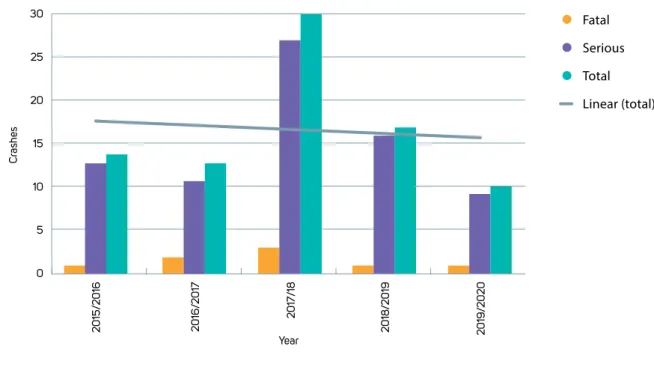
A downward trend in the number of serious and fatal injury crashes occurring on our road network
Tenant satisfaction with community housing
Customer satisfaction with our water supply services
Customer satisfaction with public libraries
Customer satisfaction with our wastewater services
Customer satisfaction with Aquatic Centre facilities
Customer satisfaction with the stormwater service
Customer satisfaction with the service received when contacting Council
92
%99
%90
%91
%90
%88
%9.4 81
%83
%99
%81
%92
%84
%OUR NON-FINANCIAL
PERFORMANCE AT A GLANCE
68
%74
% Satisfaction with Resource Consent processing (e.g.water takes, subdivisions etc)
Satisfaction with Building Control (i.e. building consents)
Number of plants complying with drinking water standards (bacteria treatment)
Number of schemes complying with drinking water standards (protozoa treatment)
10/14
2/15
AREAS FOR IMPROVEMENT
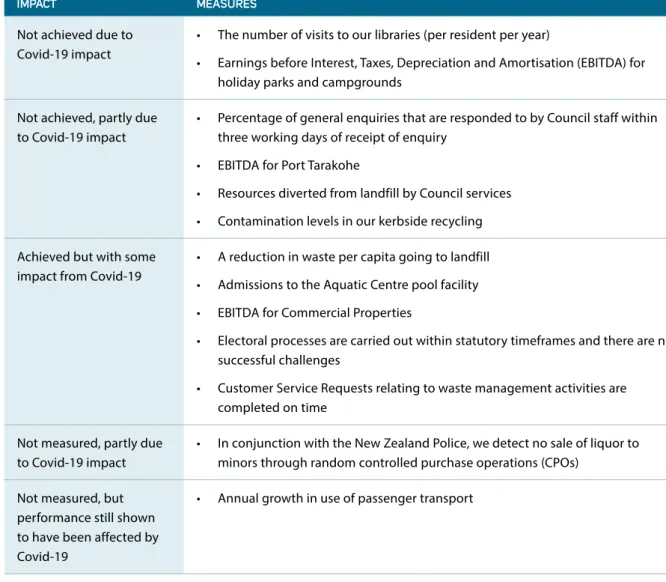
There are a range of reasons for the number of performance targets that have not been achieved this year. In some cases, the impacts of the Covid-19 pandemic and alert level restrictions affected performance (eg library visits, earnings for Council Enterprises, recycling, and customer response timeframes). These impacts are outlined in Table 1 on the following page. Staff capacity and workload issues
affected our performance in areas such as resource consent processing times. In other cases, further investigation and investment is required to address performance issues, such as compliance with drinking water and fire protection standards. However, there has been an overall improvement in the achievement of performance targets, with 16 performance measures which did not achieve their target in 2019/2020, compared with 26 in 2018/2019.
TABLE 1. Performance measures significantly affected by Covid-19
OUR NON-FINANCIAL
PERFORMANCE AT A GLANCE
Details of our performance against all our targets and the impact of Covid-19 is provided in Part 4: Financial and Non-Financial Performance of this report.
IMPACT MEASURES
Not achieved due to Covid-19 impact
• The number of visits to our libraries (per resident per year)
• Earnings before Interest, Taxes, Depreciation and Amortisation (EBITDA) for holiday parks and campgrounds
Not achieved, partly due to Covid-19 impact
• Percentage of general enquiries that are responded to by Council staff within three working days of receipt of enquiry
• EBITDA for Port Tarakohe
• Resources diverted from landfill by Council services
• Contamination levels in our kerbside recycling Achieved but with some
impact from Covid-19
• A reduction in waste per capita going to landfill
• Admissions to the Aquatic Centre pool facility
• EBITDA for Commercial Properties
• Electoral processes are carried out within statutory timeframes and there are no successful challenges
• Customer Service Requests relating to waste management activities are completed on time
Not measured, partly due to Covid-19 impact
• In conjunction with the New Zealand Police, we detect no sale of liquor to minors through random controlled purchase operations (CPOs)
Not measured, but performance still shown to have been affected by Covid-19
• Annual growth in use of passenger transport
COVID-19 IMPACTS
Some of our performance measures were affected to varying degrees by the Covid-19 pandemic and restrictions. In some cases the performance targets were still achieved. In other cases, the performance for the eight months to 31 March 2020 was on track to reach the target, but the Covid-19 restrictions meant the annual result did not achieve the target.
KEY FINANCIAL INFORMATION
We have continued our positive financial trend from the previous year and recorded another surplus. The surplus for the 2019/2020 year was higher than budgeted. The accounting surplus was $26.9 million and total comprehensive revenue and expense was $103 million.
The net debt position of $156.2 million was well below the planned debt level of
$191.0 million, with rates revenue also remaining within the agreed cap of 3%.
The positive financial position reflects ongoing operational savings achieved by Council and delayed capital expenditure for some large projects. The result was also assisted by a number of external factors which moved in our favour. These external factors include:
• Increased revenue from forestry activities
• Lower borrowing costs
• Low inflation
• Higher than anticipated population growth.
Offsetting these were:
• Costs associated with delays in projects due to the Covid-19 pandemic.
A fuller description of the financial variances from the Annual Plan 2019/2020 are contained in Note 36 to the Accounts in this Report.
REPORTING AGAINST OUR FINANCIAL STRATEGY
The Financial Strategy in the LTP 2018–2028 provides an outline of our policy on financing capital works and managing debt. The LTP 2018 – 2028 provides for capital expenditure of between $43 million and
$64 million per annum, and operating expenditure of between $115 million and $124 million per annum for the 2018/2019 to 2020/2021 years.
The majority of proposed capital expenditure and associated loans are for engineering works such as water, stormwater, wastewater and transportation networks, with a small percentage for community facilities.
The Financial Strategy outlines how we will manage our revenue, expenses and assets, liabilities and investments. The objective is to provide for the current and future interests of the community while also:
• Providing for growth and changes in land use;
• Ensuring that the level of rates and borrowing is financially sustainable and is kept within our set limits;
• Being accountable for maintaining the assets that Council owns on behalf of the community;
• Funding network infrastructure and maintaining levels of service;
• Obtaining reasonable returns on investments; and
• Meeting new central government standards for services such as drinking water.
NET EXTERNAL DEBT
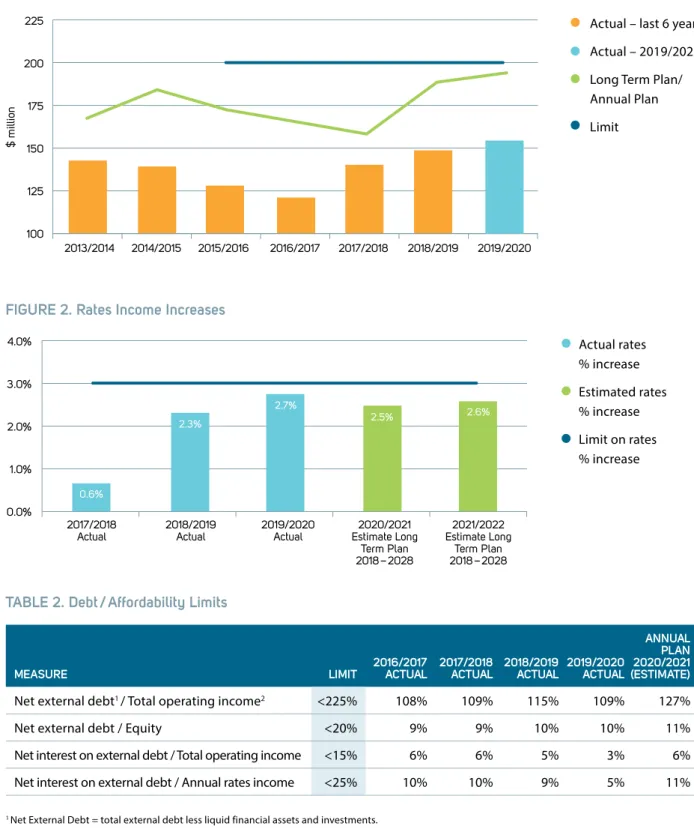
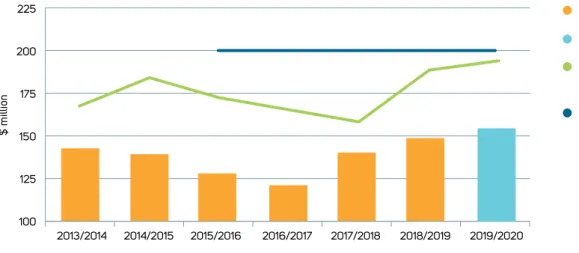
Our net external debt at 30 June 2020 was $156.2 million (after adjusting for liquid financial assets in joint ventures), which is below our net external debt cap of $200 million in our current Financial Strategy. This is also lower than the $191.0 million forecast in the Annual Plan 2019/2020 (and $194.3 million in the LTP 2018 – 2028 for year 2). See Figure 1 on page 22.
Debt has been reduced due to:
• Direct savings from operational budgets which have been used to repay debt;
• Favourable interest and borrowing conditions;
• A lower opening debt position than budgeted;
• Delays to some large capital works;
• Higher than anticipated income due to things like higher population growth than forecast; and
• Greater forestry income than planned.
KEY FINANCIAL INFORMATION
RATES AFFORDABILITY
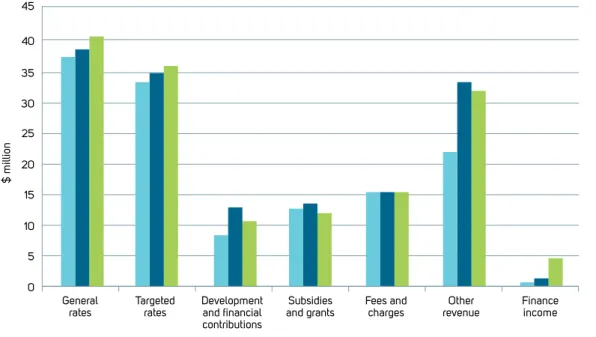
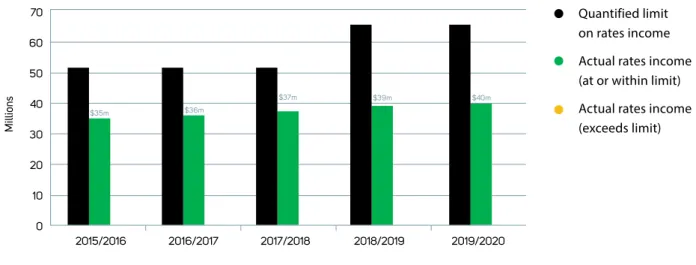
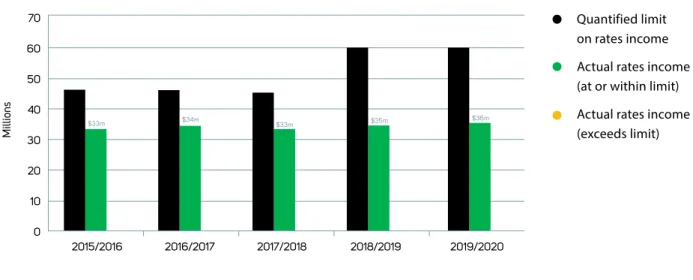
To help manage rates affordability, we include a limit on rates revenue in our Financial Strategy. For the LTP 2018 – 2028 this limit was set at $65 million for General Rates and $60 million for Targeted Rates per annum over the life of the LTP, reflecting the work done to address rates affordability issues. This Annual Report shows our actual levels were below the limit, at $40.3 million for General Rates and $35.7 million for Targeted Rates.
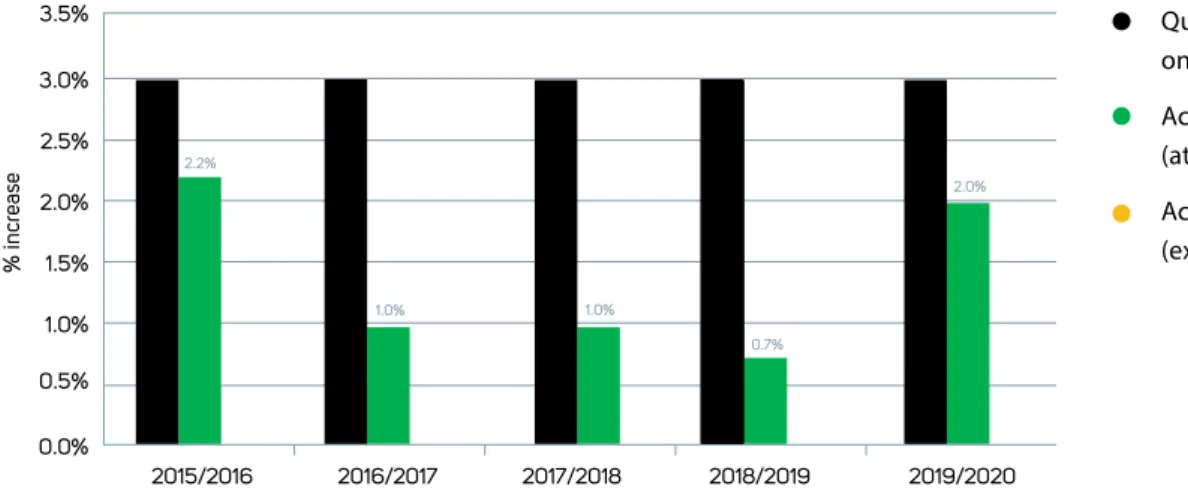
We also include a limit in our Financial Strategy on rates income increases. Increases are currently limited to a maximum 3% per annum, plus an allowance for annual growth in rateable properties. This was a new limit set as part of the LTP 2015 – 2025 (which is why the graph starts at 2015/2016) and retained in the LTP 2018 – 2028.
The blue bars in Figure 2 (see page 22) show how we have performed against the 3% limit. The 2019/2020 year saw rates income increase by 2.74% while the 2020/2021 Annual Plan has a 0% rate rise as a result of Covid-19.
DEBT AFFORDABILITY
The debt/affordability limits were developed based on external advice as to what levels would be appropriate for a Council of our size. The limits set enable us to retain our current credit rating of AA. We remain well within the limits set out in our Financial Strategy. The limits are also in line with the local government sector as a whole (See Table 2 on page 22).
FINANCIAL PERFORMANCE SUMMARY
Our credit rating is ‘AA with a stable outlook’ (Standard and Poor’s). This rating reflects our strong financial management, budgetary flexibility, liquidity and low contingent liabilities; and enables us to borrow funds at more favourable interest rates.
Total Council net assets now total $1.59 billion, which is an increase of $103 million since 2019.
REVENUE AND SAVINGS
Total rates revenue for the year was $76 million, and revenue from all other sources totalled $84.5 million.
General rate revenue increased partially as a result of growth in the District being higher than expected for the year (see Figure 3 on page 23).
FIGURE 2. Rates Income Increases
Actual rates
% increase Estimated rates
% increase Limit on rates
% increase 4.0%
3.0%
2.0%
1.0%
0.0%
0.6%
2.3%
2.7%
2.5% 2.6%
2020/2021 Estimate Long
Term Plan 2018 – 2028
2021/2022 Estimate Long
Term Plan 2018 – 2028 2018/2019
Actual 2017/2018
Actual 2019/2020
Actual
KEY FINANCIAL INFORMATION
Actual – last 6 years Actual – 2019/2020 Long Term Plan/
Annual Plan Limit
FIGURE 1. How Are We Tracking Against Planned Net Debt?
225
200
175
150
125
100
2013/2014 2014/2015 2015/2016 2016/2017 2017/2018 2018/2019 2019/2020
$ million
MEASURE LIMIT 2016/2017
ACTUAL 2017/2018
ACTUAL 2018/2019
ACTUAL 2019/2020 ACTUAL
ANNUAL PLAN 2020/2021 (ESTIMATE) Net external debt1 / Total operating income2 <225% 108% 109% 115% 109% 127%
Net external debt / Equity <20% 9% 9% 10% 10% 11%
Net interest on external debt / Total operating income <15% 6% 6% 5% 3% 6%
Net interest on external debt / Annual rates income <25% 10% 10% 9% 5% 11%
TABLE 2. Debt / Affordability Limits
1 Net External Debt = total external debt less liquid financial assets and investments.
2 Total Operating Income = cash earnings from rates, government grants and subsidies, user charges, interest, dividends, financial and other revenue and excludes non-government capital contributions (e.g. developer contributions and vested assets).
The definitions contained in our Financial Strategy differ from those applied to the Financial Regulations Benchmarks reported in our Annual Reports.
The Benchmark reporting is prepared in line with the Local Government (Financial Reporting and Prudence) Regulations 2014.
2017/2018 2018/2019 2019/2020
FIGURE 4. Total Council Expenditure by Department
50 60 70 80
40 30 20 10 0
Environment
and planning Council enterprises
and property Community
development Engineering
services Corporate
services Governance
$ million
KEY FINANCIAL INFORMATION
FIGURE 3. Main Sources of Revenue (excluding joint arrangements and fair value gains)
2017/2018 2018/2019 2019/2020 35
40 45
30 25 20 15
5 10
0
General
rates Targeted
rates Development and financial contributions
Subsidies
and grants Fees and
charges Other
revenue Finance income
$ million
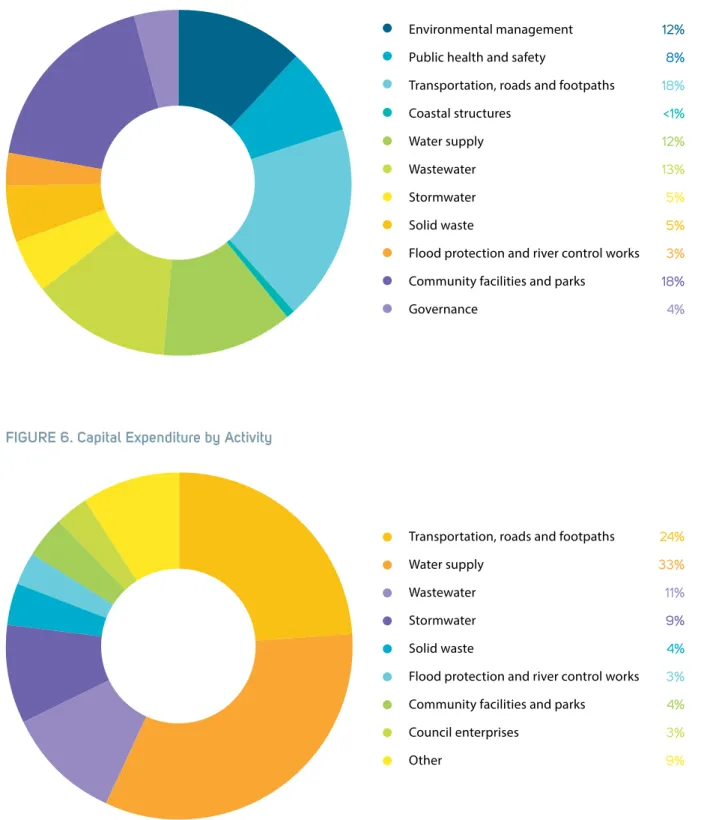
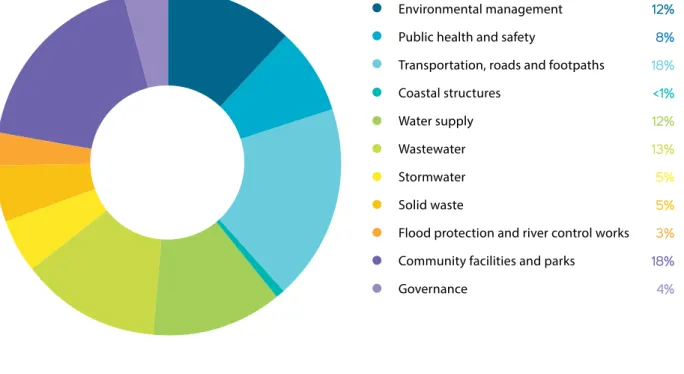
FIGURE 5. Operating Expenditure by Activity
Environmental management Public health and safety
Transportation, roads and footpaths Coastal structures
Water supply Wastewater Stormwater Solid waste
Flood protection and river control works Community facilities and parks
Governance
12%
8%
18%
<1%
12%
13%
5%
5%
3%
18%
4%
FIGURE 6. Capital Expenditure by Activity
Transportation, roads and footpaths Water supply
Wastewater Stormwater Solid waste
Flood protection and river control works Community facilities and parks
Council enterprises Other
24%
33%
11%
9%
4%
3%
4%
3%
9%
KEY FINANCIAL INFORMATION
PART TWO
COUNCIL VISION
AND COMMUNITY
OUTCOMES
COMMUNITY OUTCOMES
VISION AND MISSION STATEMENT
In the Long Term Plan 2018 – 2028 Council retained the same Vision and Mission that was included in the Long Term Plan 2015 – 2025.
BACKGROUND
Community Outcomes are the outcomes Council is working towards in order to promote the social, economic, environmental, and cultural well-being of our community. They reflect what Council sees as important for our community’s well-being and they help to build up a picture of the collective vision for the District’s future – how we would like Tasman District to look and feel in 10 years and beyond. They also inform Council decision-making and the setting of priorities.
Council believes that achievement of Community Outcomes relies on working in partnership with the whole community, including individuals, businesses, government agencies and community organisations.
Everyone’s views on describing how our District would look if we achieved these Outcomes will be slightly different. Full descriptions of the Outcomes are available in the LTP 2018 – 2028.
COMMUNITY OUTCOME STATEMENTS
• Our unique natural environment is healthy, protected and sustainably managed.
• Our urban and rural environments are people-friendly, well planned, accessible and sustainably managed.
• Our infrastructure is efficient, cost effective and meets current and future needs.
• Our communities are healthy, safe, inclusive and resilient.
• Our communities have opportunities to celebrate and explore their heritage, identity and creativity.
• Our communities have access to a range of social, cultural, educational and recreational facilities and activities.
• Our Council provides leadership and fosters partnerships, a regional perspective, and community engagement.
• Our region is supported by an innovative and sustainable economy.
In Part Four, we have listed which community
OUR VISION
Thriving communities enjoying the Tasman lifestyle
The vision recognises that there are many different communities within our District, not just geographic communities, but non-profit organisations,
environmental communities, art communities, church
communities, sporting communities, to name just a few. We would like all these communities to succeed and to benefit from the many opportunities that our District provides.
OUR MISSION STATEMENT
To enhance community wellbeing and quality of life
COUNCIL VISION AND COMMUNITY OUTCOMES
PART THREE
ROLES, COMPLIANCE AND AUDIT
STATEMENT
THE ROLE OF THE ANNUAL REPORT AND FINANCIAL STATEMENTS
We are required to produce an Annual Report each year to account for the money provided by ratepayers, financial institutions and Government agencies.
The Annual Report is also an important tool for showing how our community outcomes are being achieved. This document, therefore, also represents an opportunity to provide interested parties with a range of additional information to give a more complete picture of the District’s affairs.
The contents of this Annual Report will make reference to the District’s strategies and plans, including the LTP 2018 – 2028. The LTP 2018 – 2028 was adopted by Council on 28 June 2018, after considerable consultation with ratepayers and interested others.
This is the second Annual Report prepared under the LTP 2018 – 2028.
Many of the ways in which this information is presented are governed by legislation and standard accounting practices. However, we recognise that the readers of this report are from diverse backgrounds so steps have been taken to present the information in an accessible and understandable form.
The message from the Mayor and Chief Executive Officer provides commentary on some of the year’s key strategies, objectives, highlights and challenges.
The Financial Statements and Statements of Service Performance look at the District affairs in greater detail.
We thank you for your interest in our activities and our leadership role in developing Tasman District.
STATEMENT OF COMPLIANCE AND RESPONSIBILITY
T B King Mayor
J W Dowding Chief Executive Officer
COMPLIANCE
Council and management of the Tasman District Council confirm that all the statutory requirements of the Local Government Act 2002 in relation to the Annual Report have been complied with.
RESPONSIBILITY
Council and management of Tasman District Council accept responsibility for the preparation of the annual financial statements and the judgements used in them.
Council and management of Tasman District Council accept responsibility for establishing and maintaining a system of internal control designed to provide reasonable assurance as to the integrity and reliability of financial and non-financial reporting.
In the opinion of Council and management of Tasman District Council, the annual financial statements for the year ended 30 June 2020 fairly reflect the financial position, operations and service performance of Tasman District Council.
ANNUAL REPORT
Produced every year.
Lets you know whether the Council did what it said it would do.
ANNUAL PLAN
Produced every non-Long Term Plan year.
Lets you know how the Council’s work is going to be paid for each year, and any variances from
the Long Term Plan.
LONG TERM PLAN
Reviewed every three years.
Lets you know what the Council is doing and why.
COMMUNITY OUTCOMES
Knowing the environment in which people live.
Knowing what the community and people want.
PLANNING THE CYCLE
HOW THE ANNUAL REPORT FITS INTO
COUNCIL’S OVERALL PLANNING FRAMEWORK
INDEPENDENT
AUDITOR’S REPORT
To the readers of Tasman District Council’s annual report for the year ended 30 June 2020
The Auditor-General is the auditor of Tasman District Council (the District Council). The Auditor-General has appointed me, John Mackey, using the staff and resources of Audit New Zealand, to report on the information in the District Council’s annual report that we are required to audit under the Local Government Act 2002 (the Act). We refer to this information as “the audited information” in our report.
We are also required to report on:
• whether the District Council has complied with the requirements of Schedule 10 of the Act that apply to the annual report; and
• the completeness and accuracy of the District Council’s disclosures about its performance against benchmarks that are required by the Local Government (Financial Reporting and Prudence) Regulations 2014.
We refer to this information as “the disclosure requirements” in our report.
We completed our work on 18 December 2020.
This is the date on which we give our report.
OPINION ON THE AUDITED INFORMATION
In our opinion:
• the financial statements on pages 115 to 174 and pages 184 to 192:
» present fairly, in all material respects:
› the District Council’s financial position as at 30 June 2020; and
› the results of its operations and cash flows for the year ended on that date; and
» comply with generally accepted accounting practice in New Zealand in accordance with Public Benefit Entity Reporting Standards;
• the funding impact statement on page 122, presents fairly, in all material respects, the amount of funds produced from each source of funding and how the funds were applied as compared to the information included in the District Council’s Long-term plan;
• the statements of objectives and service performance on pages 34 to 113:
» present fairly, in all material respects, the District Council’s levels of service for each group of activities for the year ended 30 June 2020, including:
› the levels of service achieved compared with the intended levels of service and whether any intended changes to levels of service were achieved; and
› the reasons for any significant variation between the levels of service achieved and the intended levels of service; and
» complies with generally accepted accounting practice in New Zealand;
• the statement about capital expenditure for each group of activities on pages 46 to 109, presents fairly, in all material respects, actual capital expenditure as compared to the budgeted capital expenditure included in the District Council’s Long- term plan; and
• the funding impact statement for each group of activities on pages 46 to 109, presents fairly, in all material respects, the amount of funds produced from each source of funding and how the funds were applied as compared to the information included in the District Council’s Long-term plan.
REPORT ON THE DISCLOSURE REQUIREMENTS
We report that the District Council has:
• complied with the requirements of Schedule 10 of the Act that apply to the annual report; and
• made the disclosures about performance against benchmarks as required by the Local Government (Financial Reporting and Prudence Regulations 2014) on pages 175 to 184, which represent a complete list of required disclosures and accurately reflects the information drawn from the District Council’s audited information and, where applicable, the District Council’s long-term plan and annual plans.