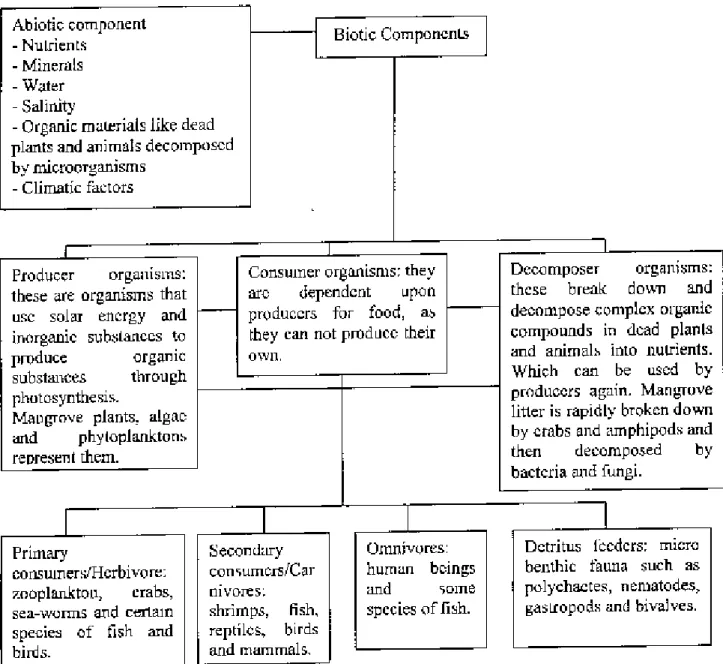
Since the viability of the Sundarbans rests on the hydrology of the Ganges and its tributaries, climate change is expected to have a significant impact on the SWldarbans. Consequently, reduced freshwater flows combined with sea level rise will further increase dry season salinity in the Sundarbans. The vulnerability of 88 cm of sea level rise to the ecological health of the Sundarbans has bccn calculated taking into account the spaces to be affected and it is 0.07, so the risk to the ecological health is 1.45 percent.
IUCN
UNEP TAR
EPA DOE
SLR DIll
Background
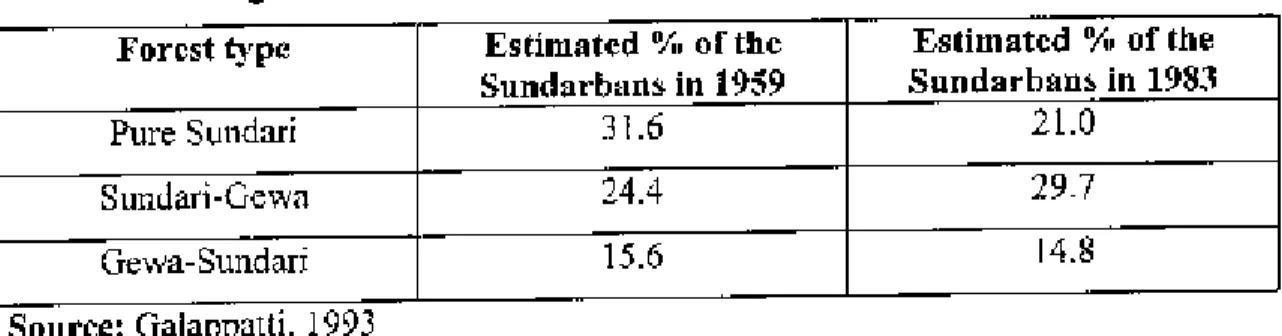
The low-salinity zone is located in the eastern and northeastern part of the forests. The floristic composition of the Sundarbans IS rich compared to many other mangroves in the world. One of the changes taking place in the Sundarban ecosystem is a small increase in salinity.
Due to the reduced flow, seawater intrusion has occurred in the southern pair. In Bangladesh, it is believed that (the increase in salinity in the Sundarbans is largely due to the composition of the Farakka Dam).
CLIMATE CHANGR AND SEA LEVEL RISE 3.1 Climate Change and Sell Level Rise
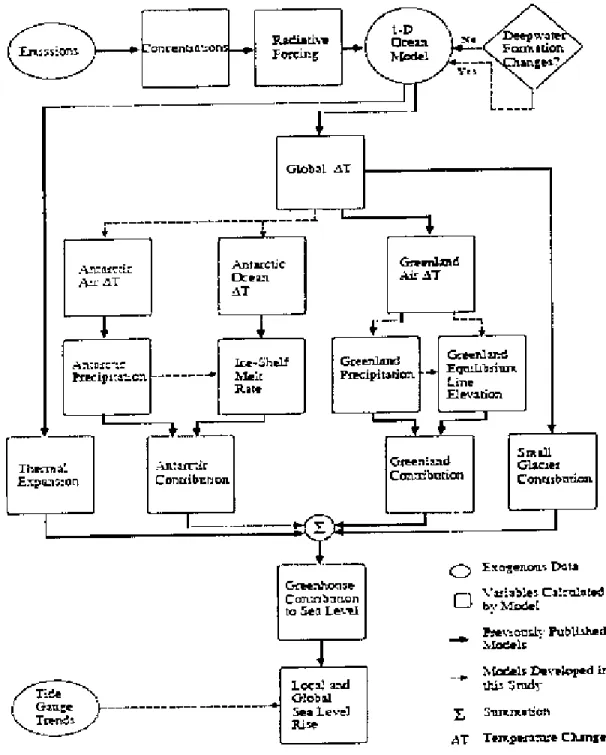
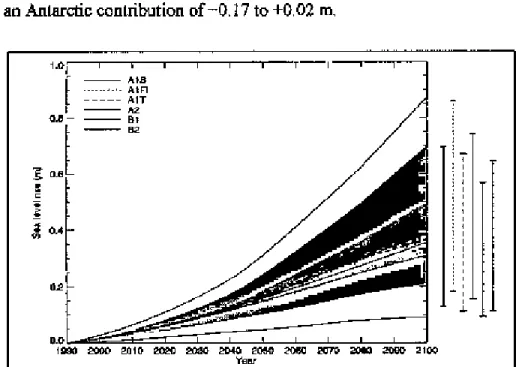
This nano-power range reflects an improved understanding of some processes that affect sea level (eg okan heat content). Projections of sea level in the future assessment include but exclude the observed contributions from the Greenland and Antarctic ice sheets between 1992 and 2003. In the first phase, EPA developed a simple guided model for estimating sea-level rise as a function of thirty-five key parameters, derived probability distributions for each parameter from the existing literature, and performed a Monte Carlo explosion using
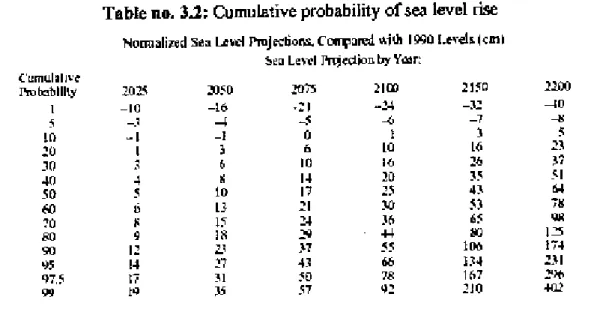
To estimate the relative sea level at a specific location, Onc can combine tide observations with the estimated contribution of the glaciers and the thermal pansion. EPA has developed an unanalyzed sea level projection. Table 3.2 shows the cumulative probability of sea level rise. A project on Climate Change and Sea Level Change in Part of the Indian Subcontinent (CLASIC) was undertaken to investigate the situation.
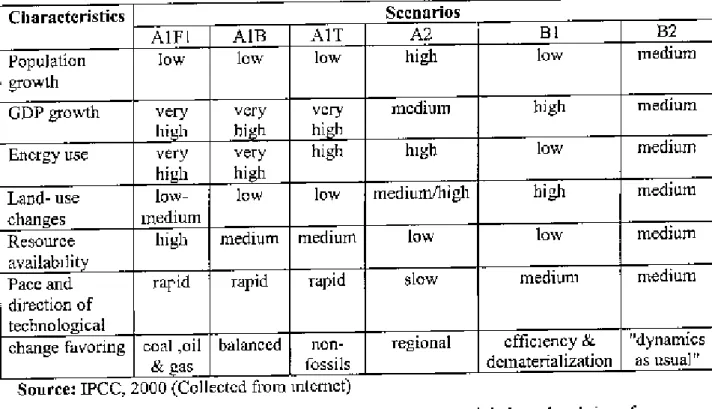
If, in the absence of more specific information, one assumes that the sediment load solves the problems of compaction and subsidence, it can be assumed that the net sea level rise is close to the global average, as predicted by the IPCC. The likely climate change and sea level rise scenarios selected for developing climate change adaptation options are shown in Table 3.4. CEGlS used a model to refine the current and future salinity distribution under different sea level rise scenarios.
The existing calibflllcd and validated models were used for this study with the latest available data to simulate the hydrodynamic condition for different sea level rise scenarios.
Chapter Four Methodology
Methodological Framework
- Selected Entities
Reports from government and non-governmental organizations, various magazines and books on the Sundarbans and climate change have been studied to get an idea about mangrove forests and the effects of climate change. Climate change is a global problem, causing sea level rise and other problems around the world. While reviewing the literature, the problem of Sundarbans due to sea level risk has been identified.
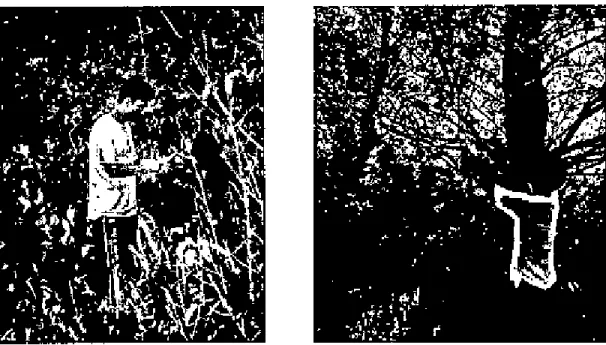
The EPA criteria were used to select ecological values that may be appropriate for assessment of ecological entities. To identify the entities, a field visit was carried out, the opinion of expulsion was considered and literature was also reviewed. A field visit from 6h, May to 11 May 2006 was undertaken to have an idea about mangrove specks and to verify the secondary data collected from the Forest Department (FD).
To identify the different mangrove species with the help of local people working in Slndarbans. Reviewing literature, getting opinion from experts and after a field visit, the ecological entities of this study were selected. It is sensitive to ~alinity_ This is why productivity was selected as an ecological entity.
The impad on these three units was u~cd to qllanify the ecological impact resulting from (0 sea level rise,.
Salinity distribution at diffrrrnt stft I""rl Itrnnrios
Productivity vulnerability can be estimated for low and moderate salinity zones and also for entire Sundarbans. Vulnerability =Loss of productivity in low salinity water ~onel Average productivity of compartments to he aJfcctcd in low salinity water zone. Vulnerability =Loss of productivity in moderate saline water ~-onclAverage productivity of compartments to be assigned ill moderate saline water zone.
They also informed that Ve1ki is common in low salinity zone ilke in Saronkhola nll1gc. For example, the productivity of the spaces of low salinity zone will be replaced by the productivity of nearby areas of moderate salinity zone. If we subtract the production of moderate saline water zone from the production of low saline water, w111gct the changes in production that will be res LIltaf the sea level rise.
So dLle to transfer of zone, the production of affected compartments under moderate saline water zone will be replaced by the production of compartments of high saline water zone ncar the affected compartments. Similar to the production, only seedlings from a few eompartrnL'tlts of a low and moderate saline water zone will be reded. From the above table it can be seen that, as a result of transfonnation from a part of a low salt water zone to moderate salt water Y,onc, approximately number of seedlings will be reduced.
Only compartment 8 will lose seedling numbers, while the other compartments will gain III moderately saline seedlings. In a similar way, part of the moderately saline Lonc water will be transferred to an area with high saline water. From the table above, it can be seen that due to sea level rise, the number of Sundari in the moderately saline water zone will decrease and the number will be approximately 44,761,075.
Vulnerability analysis
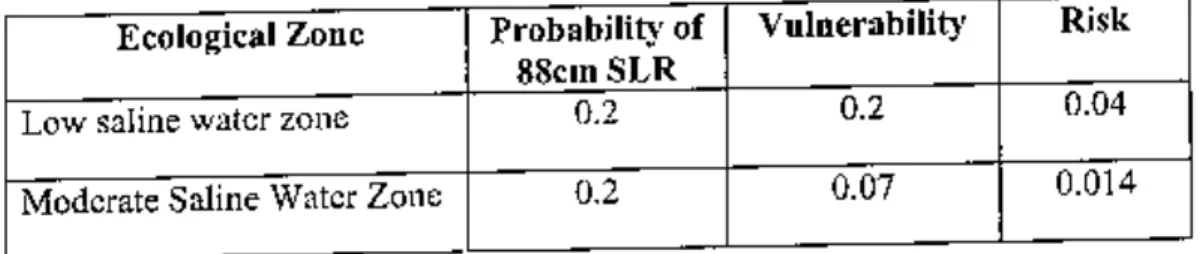
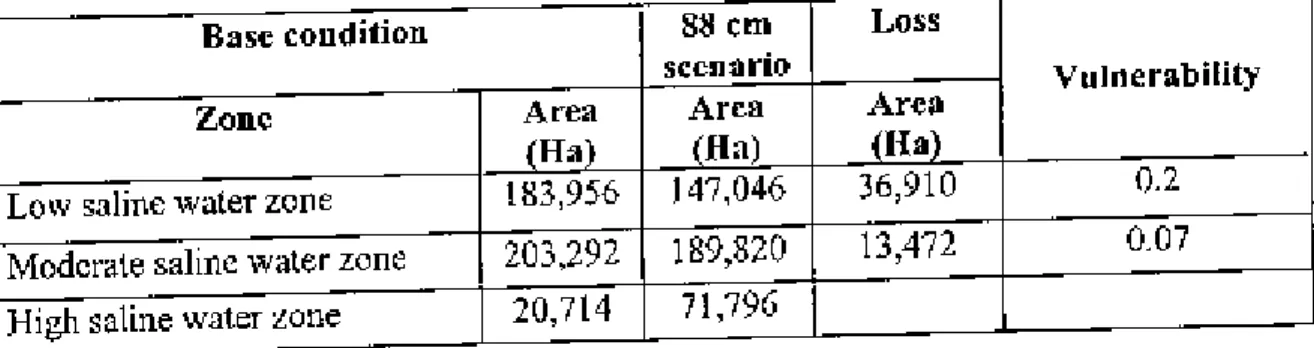
Table 6.8 shows that the vulnerability due to the transfer of an area with low salinity water to moderately saline water is ~ one 0.2, while the vulnerability due to the transfer of an area of moderately saline water to high salinity water is - one 0.07. So, the vulnerability to transfer a low-salinity water zone from one to a moderate-salinity water zone is greater than the vulnerability to transfer a moderate-salinity water zone to a high-salinity water zone. It can be said that an area with low salinity water is more sensitive to salinity than an area with moderate salinity_ If we are going to calculate the vulnerability for transmission of the ecological area, then O.12.
Vnlnerability will be about 0.07 and 0.06, respectively, for the transformation of a small part of the low-salinity water zone to the moderate-salinity water zone and the transformation or small portion of the medium-salinity water zone to high-water water. /.one. The table below shows the vulnerability to regeneration for the z.one low salinity waters and the medium salinity water zone. The regeneration of freshwater mangrove species is more sensitive to salinity than the temperate saltwater zone.
Due to the 88 cm rise in sea level, the regeneration number of Suldar will be reduced more than other species in both freshwater and moderately saline water zones. Due to a sea level rise of 88 cm, the vulnerability to regeneration of Sundari species in the low salinity zone and in the moderate salinity zone will be 0.42 and 0.34, respectively. So, 88 cm from sea level will be more dangerous for Sundari species in Sundarbans, especially in low saline water zone, because it is more distributed in low salme water zone than other areas.
The 88 cm SLR risk to regeneration of species other than the freshwater Goran and the temperate saltwater zone will be 4.4 percent and 1 percent, respectively, while the risk to regeneration of the entire Sundarbans will be 3 percent.
Hi£tle Salile Zone
Moderate Salile ZOne
Table 6.13 shows that the risk of the Sundari seedling of low salinity zone due to 10 88 cm sea level rise is 8.4 percent, while it is 6.8 percent in moderate salinity zone. The risk to the Suudari seedling due to 88 cm sea level rise for the entire Sundarbans, then the risk will be 8 percent. The following table shows the risk of S8cm SLR to production in each zone of the Sundarbans.
The risk for production in the low salt water zone will be 1.4 percent, where the risk for production in the moderate salt water zone will be 1.2 percent.
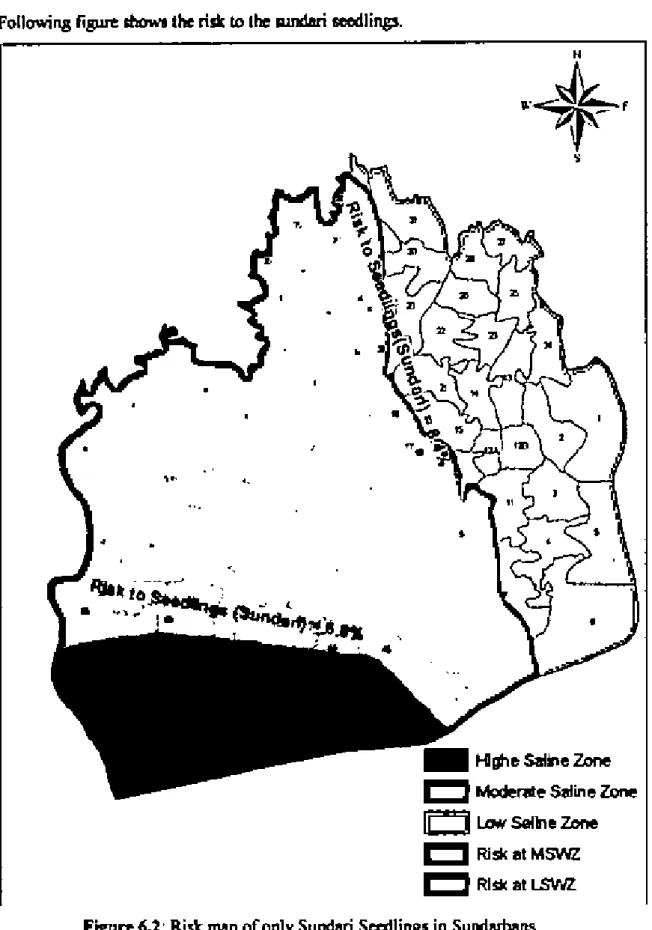
Risk map ofrone Il'1\mfa- in Sundarball5
The study found that the vulnerability of 88 cm SLR for the ecological zone for transmission is 0.12, so the ecological zone transmission risk will be about 2.4 percent. Two key issues were discussed and that is how this will affect the Sundarban mangroves and how much risk they will face in the future. Due to the transformation of the ecological zone, the productivity of the affected areas in the zone of low salinity water z,onc and moderate salinity water zone will be replaced by the productivity of the nearby area.> zone of moderate salinity water and high salinity water zone.
The vulnerability for transfer from low salinity zone to moderate salinity zone will be 0.2 while the vulnerability for transfer from moderate salinity to high salinity zone will be 0.07. The vulnerability to transfer from ecological mne w111be 0.12 and therefore the nsk to ecological zone transfer will be 2.4 percent. In terms of productivity, the vulnerability will be 0.07 and 0.06 at low and moderate salinity zone, respectively, while it will be 0.07 for whole Sundarhans and the risk to production will be 1.4 percent.
From the regeneration point of Vicw, the vulnerability to the low saline zone will be 0.22 and to the moderate saline zone 0.05, while the vulnerability to regeneration for entire Sundarbans will be 0.15 and the risk will be 3 percent amounts. The main adaptation strategy will be to reduce the threat of increasing salinity, especially during the period of low water discharge. Chmate and sea level change in part of the Indiaart Snb-Contillcnt, Department of International Devc1opment, KAR project.
Hussalll og G, Acharya, (Ed5.) Mangrovcs of the Sundarbans: Volume Two: Bangladesh, IUCN- The World Conservation Union, Glantz.