Informasi Dokumen
- Penulis:
- Netilia Desiana
- Mata Pelajaran: Political Science
- Topik: Campaign Strategy of Candidate Pair Bachtiar Basri and Umar Ahmad in Head District Election at West Tulang Bawang Regency 2011
- Tipe: Research Paper
- Tahun: 2011
Ringkasan Dokumen
I. Introduction
This research paper, 'Campaign Strategy of Candidate Fair Bachtiar Basri and Umar Achmad in Head District Election at West Tulang Bawang Regency 2011,' by Netilia Desiana, examines the campaign strategies employed by the winning candidates in the 2011 West Tulang Bawang Regency election. The study's introduction establishes the context of Indonesian elections, highlighting their significance in democratic processes. It emphasizes the role of campaign strategies in achieving electoral success and introduces the specific research question: how did Bachtiar Basri and Umar Achmad's campaign strategize their victory? This sets the stage for a valuable analysis of political campaigning in a specific Indonesian context, offering insights into the effectiveness of different strategies.
1.1 Background of the Problem
The introduction provides essential background on Indonesian elections and the specific context of the 2011 West Tulang Bawang Regency election. It details the significance of these elections for Indonesian democracy, the electoral system, and the importance of understanding the strategies used by candidates. The inclusion of Table 1, listing the competing candidates and their party affiliations, provides valuable quantitative data illustrating the competitive landscape of this specific election. This contextual information grounds the study within a broader political and social framework.
1.2 Research Problem
The research problem clearly articulates the central focus of the study: to analyze the campaign strategy of Bachtiar Basri and Umar Achmad. This concisely states the core research question that drives the investigation. The clear formulation of the research problem enables focused data collection and analysis, ensuring that the study remains focused on the primary objective.
1.3 Research Objectives
The research objectives clearly state the aim of the study: to understand and describe the campaign strategies employed by the winning candidates. This directly links to the research problem, ensuring a coherent and focused research design. The clarity of the objectives facilitates the evaluation of the study's success in achieving its intended goals and demonstrates a strong methodological approach.
1.4 Usefulness of the Research
The section on the usefulness of the research outlines the study's theoretical and practical contributions. The theoretical contribution lies in enriching the understanding of social and political science, specifically campaign strategies. Practically, the study's findings can offer valuable insights for future campaigns, improving the effectiveness and efficiency of campaign strategies. This highlights the real-world applicability of the research, thus increasing its academic significance and potential impact.
II. Literature Review
This section provides a review of relevant literature on strategy and political campaigning, laying the theoretical groundwork for the analysis. The review examines the concept of 'strategy' from various perspectives, highlighting its essential components and application in different contexts. It then delves into the specifics of political campaigning, covering definitions, types, techniques, and models of campaign strategies, particularly focusing on the application of marketing principles to political campaigns. This comprehensive review provides a solid theoretical foundation for understanding and interpreting the findings of the empirical study.
2.1 Strategy
This subsection delves into the concept of 'strategy,' drawing upon various definitions and perspectives from management and organizational theory. It explores different dimensions of strategy and outlines the strategic process in organizations. By examining multiple theoretical frameworks, the study lays a strong foundation for understanding how strategy is conceptualized and implemented in political campaigns. The review explores the concept of strategy beyond its application to the political context, giving the reader a broad overview of strategic thinking.
2.2 Campaign and Political Marketing
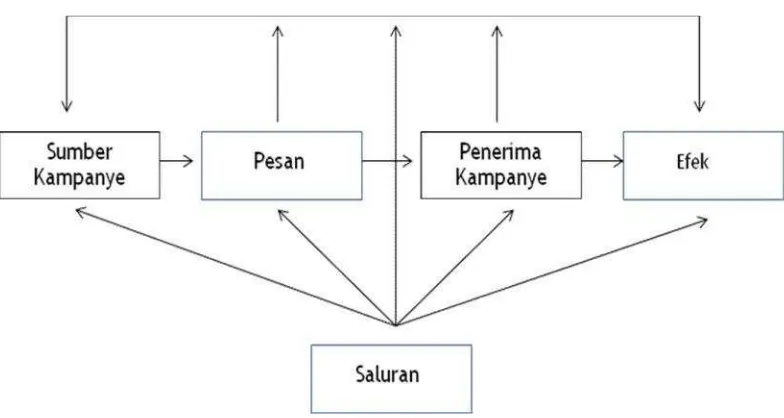
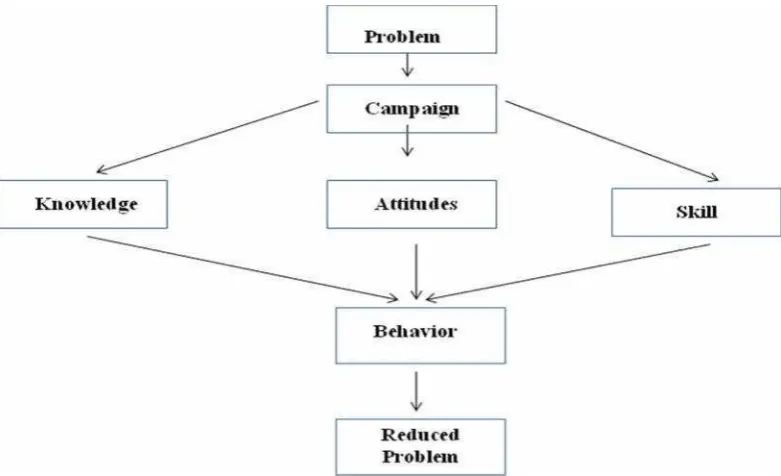
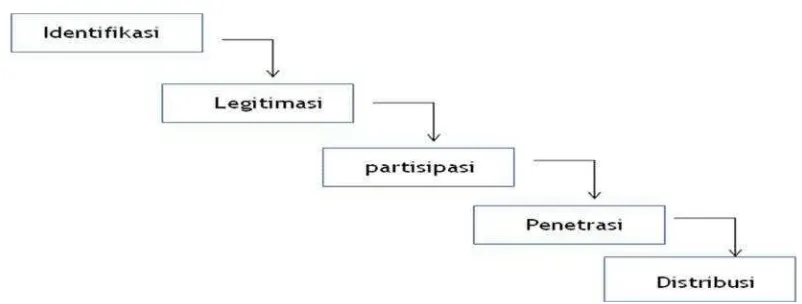
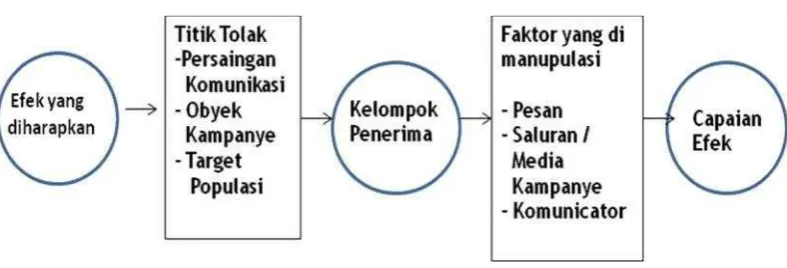
This section explores the intersection of campaign strategy and political marketing. The definition of campaign is discussed, highlighting its communicative aspects and goals. Further, the concept of political marketing is introduced, exploring its unique features and differentiating it from commercial marketing. The exploration of various campaign techniques, types, and models provides a comprehensive understanding of the practical tools and frameworks used in political campaigning. The section lays the theoretical foundation to assess how these concepts were employed in the case study.
III. Research Methodology
While not explicitly detailed in the provided text, a methodology section would be crucial. It would outline the research design, data collection methods (likely interviews with Bachtiar Basri and his campaign team, as suggested), data analysis techniques (qualitative analysis of interview transcripts), and any ethical considerations. The inclusion of a robust methodology section would enhance the study's credibility and allow for critical evaluation of its findings. Details on the specific approach (qualitative research design) and data analysis are key elements to include here.
IV. Results and Discussion
This section presents the findings of the research, detailing the campaign strategies employed by Bachtiar Basri and Umar Achmad. The core findings – segmentation, targeting, and positioning – are discussed, drawing on the theoretical framework established in the literature review. The study analyzes the effectiveness of these strategies in achieving electoral victory, relating them to the election results (Tables 2 and 3). This section would demonstrate how the theoretical concepts apply to the practical context, enhancing the analysis’s academic value.
4.1 Segmentation
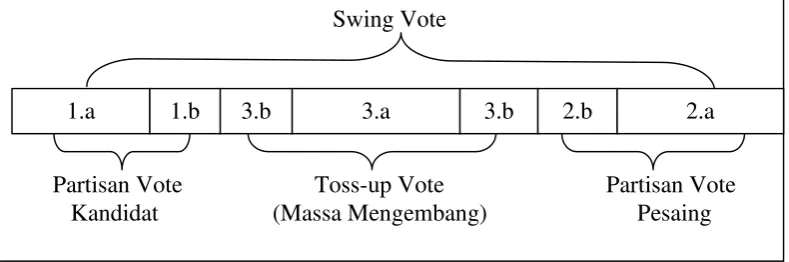
This subsection would detail the segmentation strategy used by Bachtiar Basri and Umar Achmad. It would describe how the candidates identified and categorized their target audience into distinct groups (core supporters, swing voters, and opponent supporters), relating this to marketing concepts and the broader political context. Analysis of the effectiveness of this segmentation, considering factors like demographic and geographic profiles, is important. This section would demonstrate an application of marketing principles to political strategy.
4.2 Targeting
This subsection would explore the targeting strategy used to reach the identified segments. It would describe how the candidates focused their efforts and resources on specific groups, outlining the communication strategies employed with each segment. An analysis of the tailoring of messaging and campaign activities to resonate with the unique characteristics of each group would enrich the analysis. This section would discuss the role of targeted messaging in achieving electoral success.
4.3 Positioning
This subsection would analyze the positioning strategy, describing how Bachtiar Basri and Umar Achmad presented themselves and their platform to the electorate. The analysis would examine how they leveraged their past experience (incumbency, DPRD chairmanship) and their policy proposals (pro-people APBD) to create a distinctive and appealing image. This section would explain how the candidates strategically differentiated themselves from their opponents. This analysis is key to understanding how positioning influenced voter choices.
4.4 Election Results and Analysis
This subsection would integrate the findings on campaign strategy with the election results (presented in Tables 2 and 3). It would analyze the correlation between the implemented strategies and the achieved electoral success, acknowledging other contributing factors. The discussion would also identify any limitations or weaknesses in the employed strategies and suggest avenues for future research. This section demonstrates the practical implications of the study and validates the theoretical framework used.
V. Conclusion
This section summarizes the key findings of the study, reiterating the main strategies employed by Bachtiar Basri and Umar Achmad and assessing their effectiveness. The conclusion should offer insights into the broader implications of the study, potentially suggesting applications for future research or practical implications for campaign strategists in similar contexts. It restates the findings within the Indonesian political context and potentially discusses the generalizability of findings.
Referensi Dokumen
- Pemilihan Umum ( Haryanto )
- Pemilihan Umum ( Harris G. Warren )
- Pemilu ( Muhammad A.S Hikam )
- Pemilihan Kepala Daerah dan Wakil Kepala Daerah ( PP Nomor 06 Tahun 2006 )
- Memenangkan Pemilihan Umum ( Rabbi Shabsi Bulman )
- Kampanye Politik ( Asep Saeful Muhtadi )