ii
DEVELOPMENT OF TIMETABLING PROGRAM
FONG WOON KEAT
This report is submitted in partial fulfillment of the requirements for the award of Bachelor of Electronic Engineering and Computer Engineering With Honours
Faculty of Electronic and Computer Engineering Universiti Teknikal Malaysia Melaka
iii
UNIVERSTI TEKNIKAL MALAYSIA MELAKA
FAKULTI KEJURUTERAAN ELEKTRONIK DAN KEJURUTERAAN KOMPUTER
BORANG PENGESAHAN STATUS LAPORAN PROJEK SARJANA MUDA II
Tajuk Projek : Development Of Timetabling Program
Sesi
Pengajian : 2 / 2009/2010
Saya ……….FONG WOON KEAT.………..……….. (HURUF BESAR)
mengaku membenarkan Laporan Projek Sarjana Muda ini disimpan di Perpustakaan dengan syarat-syarat kegunaan seperti berikut:
1. Laporan adalah hakmilik Universiti Teknikal Malaysia Melaka.
2. Perpustakaan dibenarkan membuat salinan untuk tujuan pengajian sahaja.
3. Perpustakaan dibenarkan membuat salinan laporan ini sebagai bahan pertukaran antara institusi
pengajian tinggi.
4. Sila tandakan ( √ ) :
SULIT*
(Mengandungi maklumat yang berdarjah keselamatan atau kepentingan Malaysia seperti yang termaktub di dalam AKTA RAHSIA RASMI 1972)
TERHAD* (Mengandungi maklumat terhad yang telah ditentukan oleh organisasi/badan di mana penyelidikan dijalankan)
TIDAK TERHAD
Disahkan oleh:
__________________________ ___________________________________
(TANDATANGAN PENULIS) (COP DAN TANDATANGAN PENYELIA)
Alamat Tetap: 12, Jalan Batai Laut 4, Taman Rashna, 41300 Klang, Selangor.
iv
“I hereby declare that this report is the result of my own work except for quotes as
cited in the references.”
v
“I hereby declare that I have read this report and in my opinion this report is
sufficient in terms of the scope and quality for the award of Bachelor of Electronic Engineering and Computer Engineering With Honours.”
Signature : ………..
Supervisor’s Name : ………..
vi
vii
ACKNOWLEDGEMENT
First and foremost, I’m very grateful and deep gratitude to all those who
viii
ABSTRACT
ix
ABSTRAK
Laporan ini mengandungi maklumat tentang penghasilan program jadual waktu yang tidak bertindih dari awal penghasilan hingga masa kini. Pada permulaan, objektif projek adalah untuk menghasilan jadual waktu yang tidak bertindih dari segi subjek dan pensyarah, dan menerbitkan jadual waktu untuk kursus dan pensyarah. Pengkajian projek berhenti pada tahap yang sama dengan perisian komputer yang
digunakan untuk menghasilkan program jadual waktu seperti ‘Free Evolutionary
Timetable (FET)’, ‘iMagic Timetable Software’ dan ‘ASC timetable Software’.
x
TABLE OF CONTENTS
CHAPTER CONTENT PAGE
PROJECT TITLE i
REPORT STATUS ii
DECLARATION iii
DEDICATION vi
ACKNOWLEDGEMENT vii
ABSTRACT viii
ABSTRAK ix
TABLE OF CONTENTS x
LIST OF FIGURES xiii
LIST OF ABBREVIATIONS xiv
I INTRODUCTION
1.1 Background study 1
1.2 Objective 2
1.3 Problem Statement 2
1.4 Scope 2
1.5 Methodology 3
1.6 Report Structure 3
II LITERATURE REVIEW
2.1 Background Study 5
2.2 Literature Review 6
xi 2.2.2 HTML, CSS and Javascript 8
2.2.3 AJAX 9
2.2.4 Data Mining 9
2.2.5 jQuery 11
2.2.6 Constraint Programming 12
III METHODOLOGY
3.1 Methodology 13
3.2 Literature Review 14
3.3 Software Development 15
IV IMPLEMETATION
4.1 Database Structure 16
4.2 Sorting Algorithm 19
4.3 Dynamic Display 20
4.4 User Interface 23
V RESULT
5.1 Result 24
5.2 End Result 25
VI CONCLUSION
6.1 Discussion 30
6.2 Conclusion 31
xii
VII REFERENCE 33
xiii
LIST OF FIGURE
NO TITLE PAGE
1 Web Document Structure 8
2 Flow Chart Methodology 14
3 ctte table orientation 17
4 tts table orientation 17
5 studtime table orientation 18
6 place table orientation 18
7 lectime table orientation 18
8 Sugu time table 20
9 Azan time table 21
10 Zaiton time table 21
11 Mouseon on seach link 23
12 Mouse not over search link 23
13 jQuery auto-suggestion 23
14 Static header and on mouse highlight field table 24
15 Dynamic event box, drag and drop box 25
16 Page navigation and search control panel 26
17 Loading taskbar with AJAX 27
18 Dynamic timetable display 27
19 Student 3 BENC Timetable 28
20 Insert subject page 28
xiv
LIST OF ABBREVIATIONS
ADO - ActiveX Data Objects DAO - Data Access Objects
DBMS - Database Management System FET - Free Evolutionary Software GUI - Graphic User Interface SQL - Structured Query Language HTML - HyperText Markup Language RDO - Remote Data Object
UTeM - Universiti Teknikal Malaysia Melaka URL - Uniform Resource Locater
VB - Visual Basic
CHAPTER I
INTRODUCTION
1.1 INTRODUCTION
Timetable had being redefined in many way, generally it define as a schedule of the times certain things are to happen. Others define it as collective of occasion that plan to happen within a set of time on a place. In any definition, there are range of time, place, purpose and people that involve. The combination will of these entities will determine the feasibility of a timetable.
2
1.2 OBJECTIVE
The project objectives has been outlined as follows:
a) Enhance previously developed timetable with more features.
b) Develop timetable software that assist administrator to produce a feasible timetable and fulfill as many constraints imposed.
c) Assist lecturer for planning activities that involve university resources. d) Introduce new method of scheduling and sorting timetable.
1.3 PROBLEM STATEMENT
A few problems has been identified prior to the development of the project as follows:
FKEKK administrator use general purpose software, Microsoft Excel for managing time table which was prone to human error and low efficiency.
Timetabling is complicated due to many programs, insufficient amount of lectures, lack of classes and the timetable changes due to many cases.
There are many people involved in preparing the timetable. It’s taking too much time and adjustment.
Programming language of the legacy software is not efficient for high traffic browsing.
Network security was ignored in the previous development. Therefore, implementing new framework for improved security.
1.4 SCOPE
3 accommodate a functionality that will be assisting administrator to create feasible timetable. This new functionality requires some case study and learning resources to develop it. Moreover, this report will show the early stage result which is an improvement from the previous timetable development.
1.5 METHODOLOGY
The software development for this project was adapted from waterfall software development model. There will be few stages in defining each of the success stage that carry the development to next level. The success for each stage is determined by users where the feedback will be analyzed and remodel the software until users are satisfied with it. There are two major development stage; user interface and data mining model. Both these stage define the purpose of this project, attaining the user interface success is the most important as there is no value for this software if there is no user while the data mining model is features that represent the brain of the software as all of the analyzing and sorting was done here. Detail method used will be discussed in chapter 3.
1.6 REPORT STRUCTURE
The first chapter is a short briefing of the project that introduced more detail about the previous timetable development in detail and comparison with the current development. This chapter will give clear understanding of the project before going much deeper into other chapters.
The second chapter is literature review for the technology and programming code that involved in this project. There will be comparison between the previous development coding and current development coding. This will clear all the queries for the transition of programming language.
5
CHAPTER II
LITERATURE REVIEW
2.1 BACKGROUND STUDY
The main factor that lead to the development of a timetable software for FKEKK is the absent of such tool in the faculty. The problems that often arisen are class clash with other course, poor management of time caused lecturer exhausted and resources are not fully utilize. Initial development had identified these issues and came out with a web base timetable software solution. The software is better than some timetable software on the market as most of them are not accessible through internet.
6 will be selected base on the performance. It takes some time before the timetable can act independently without human supervision.
Initial timetable is built by using Visual Basic Studio Software which is proprietary development where there is not much of code sharing for building a secure and fast web application. This causes a lot of debugging and possible security leak. Whereas the further development will be using open source programming language where there are many examples that can be referred and learned. For
example, ‘Wordpress’ the famous blog CMS is built on PHP and MySQL. The proof
of concept from open source development can be learned for building faster and secure web application.
2.2 LITERATURE REVIEW
Initial development programming language is Visual Basic for the Graphic User Interface (GUI) in webpage form and SQL as database. Since the emergence of Web 2.0, cloud computing and social media network, the timetable software will undergo revolution to utilize the fast moving technology and improved features that encourage the technology application.
7 Approach and Brute-force method will increase the effectiveness of timetable scheduling process.
2.2.1 PHP and ASP.net
PHP is a relatively simple language to use than ASP.net. Initially, PHP was written in the C programming language to replace a set of scripts in Perl. That is the reason why coding in PHP remains simple even today [2]. Many developers find themselves to be more at ease with the user-friendly nature of PHP when it comes to coding.
PHP has much better support for the database management system, MySQL. In fact, the very popular blogging platform, WordPress uses the formidable combination of PHP coding on MySQL for its content management system, which includes about hundreds of thousands of blog posts every single day. Another very popular and frequently updated service that uses the combination of PHP and MySQL is Wikipedia. PHP is better for embedded support with another database management system. PHP can use the command line to perform many everyday activities. Some of the things that the PHP command line is useful for manipulating across many files and for putting files into multiple directories at once. Since PHP is older, there are many people who claim that it is much more secure than ASP.net where coding is concerned [3]. ASP.net is much new, and the security options may not be fully in place yet.
8
2.2.2 HTML, CSS and Javascript
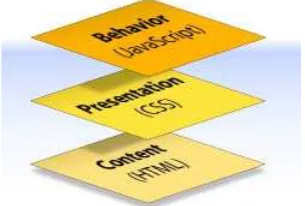
[image:21.595.243.396.191.294.2]A web document consists of three layers which are content, presentation, and behavior. Separating web interface into 3 documents can modify or replace any of the layers without having to change the others [4].
Figure 1: Web Document Structure
The content layer is always present. It comprises the information the author wishes to convey to the audience, and is embedded within HTML or XHTML markup that defines its structure and semantics [4]. Most of the content on the Web today is text, but content can also be provided through images, animations, sound, video, and whatever else an author wants to publish.
The presentation layer defines how the content will appear to a human being who accesses the document in one way or another. The main advantage of CSS over presentational HTML markup is that the styling can be kept entirely separated from
the content. For example, it’s possible to store all the presentational styles for a
10,000-page web site in a single CSS file. CSS also provides far better control over presentation than do presentational element types in HTML.
9
2.2.3 AJAX
AJAX (Asynchronous JavaScript and XML) is a group of interrelated web development techniques used on the client-side to create interactive web applications. With AJAX, web applications can retrieve data from the server asynchronously in the background without interfering with the display and behavior of the existing page. The use of AJAX techniques has led to an increase in interactive or dynamic interfaces on web pagesand better quality of Web services due to the asynchronous mode [1].
2.2.4 Data Mining
Data mining is the process of extracting patterns from data. Humans have been extracting patterns from data for centuries, but the increasing volume of data in modern times has called for more automatic approaches. Early methods of identifying patterns in data include Bayes' theorem (1700s) and Regression analysis (1800s). The proliferation, ubiquity and increasing power of computer technology has increased data collection and storage. As data sets have grown in size and complexity, direct hands-on data analysis has increasingly been augmented with indirect, automatic data processing. This has been aided by other discoveries in computer science, such as Neural Networks, Clustering, Genetic Algorithms (1950s), Decision Trees (1960s) and Support Vector Machines (1980s). Data mining is the process of applying these methods to data with the intention of uncovering hidden patterns.It has been used for many years by businesses, scientists and governments to sift through volumes of data such as airline passenger trip records, census data and supermarket scanner data to produce market research reports.
10 software which had 3 modules; Administrator Module, Lecturer Module and Student Module. The Lecturer Module will set individual lecturers timetable and the master timetable for all the lectures in the university. Similarly through the Student Module, students can set their own timetable for the whole semester. They can also do add and drop subject through this module. In the Administrator Module, the administrator can manage the student registration, class and subject registration by adding or deleting class or subjects. Adilah research show that Genetic Algorithm is the best solution for constructing a feasible timetable yet Genetic Algorithm had weakness in solving huge amount of data due to its heuristic character; shifting, crossover and mutation will take longer time and server capacity.
Another research on timetable did by Manu Bansal and Himanshu Prakash from University of Queensland, Australia; they had successfully improved the speed
of the Genetic Algorithm by an extra input ‘constraint’. They propose each timetable
that generated from Genetic Algorithm has an associated cost value. The cost value is a measure of correctness of the solution, which is calculated by a cost model based on the constraints. The model assigns penalties to constraint violations and adds up the penalties for a given timetable. Thus, each timetable has a cost value, and the population has a minimum cost and an average cost associated with it. The algorithm works to minimize the average cost, and, in turn, the minimum cost. A zero minimum cost, considering all constraints, means that a solution has been found. Outcome of their project is the implementation effectively optimizes the constructed objective function for the modelled population, under sufficiently heavy constraints. The execution is reasonable for a large problem size, which would not be possible with conventional algorithms.
11
2.2.5 jQuery
jQuery is a lightweight cross-browser JavaScript library that emphasizes interaction between JavaScript and HTML. It was released in January 2006 at BarCamp NYC by John Resig. Used by over 27% of the 10,000 most visited websites, jQuery is the most popular JavaScript library in use today.
jQuery is free, open source software, dual-licensed under the MIT License and the GNU General Public License, Version 2. jQuery's syntax is designed to make it easier to navigate a document, select DOM elements, create animations, handle events, and develop AJAX applications. jQuery also provides capabilities for developers to create plugins on top of the JavaScript library. Providing this option, developers are able to create abstractions for low-level interaction and animation, advanced effects and high-level, theme-able widgets. This contributes to the creation of powerful and dynamic web pages [1].
Working with RAW JavaScript or DOM Programming does bring-in its challenges while handling the browser-specific quirks. JQuery provides quite a few utilities to help working in browser agnostic environments. JQuery library strikes right balance between size, feature set and ease of use.
Why use jQuery? It is believed that this is the most prompt question that everyone will pop up as there are many Javascript libraries such as Mootools and Prototype. The first advantage is that jQuery would help bring-in considerable
productivity gains and it’s easy to learn and work apart from its progressive