IN THE NAME OF ALLAH THE
MOST GRACIOUS AND
CONCEPTUAL PROPOSAL
FOR FUTURE MACROPRUDENTIAL FRAMEWORK
UNDER DUAL FINANCIAL SYSTEM IN INDONESIA
Ascarya, Adiwarman A. Karim, Siti Rahmawati, Masyhudi
Muqorobin, and Dimas Bagus Wiranatakusuma
Thematic Workshop on
Macroprudential Regulation and Policy for Islamic Finance
Industry: Theory and Applications
Jointly Organized by
Repeated financial crises and money
markets instability have transmitted
some shocks to financial institutions
including those of islamic one due to an
increased interconnectedness. The call
for macroprudential policy is highly
needed to restore and preserve
financial system stability.
The study is focused on several aspects,
such as (1) the risks exposed in Islamic
banks in Indonesia; (2) the way(s) to
develop criteria to design
macroprudential policy under dual
financial system in Indonesia; and (3)
implementation of macroprudential
policy in countries adopting dual
financial system
Elaboration of the issues by
intensifying and exploring the
literary study related to
macroprudential is of concerned.
The Gap analysis is used to further
propose the future macroprudential
design under dual financial system
in Indonesia
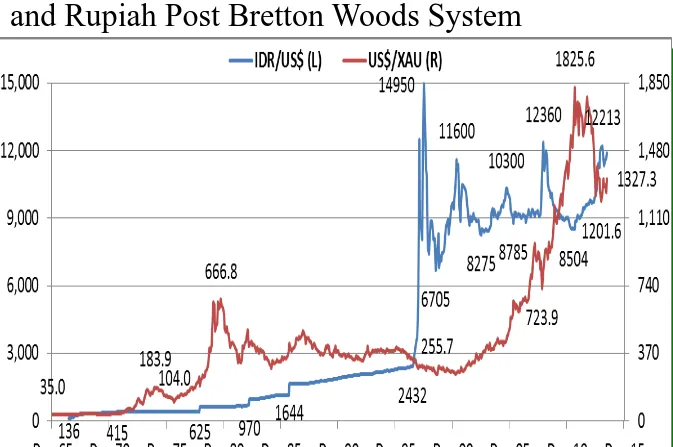
Fig. 1.1Instability and Decline in Value of US$
[image:7.720.31.704.53.500.2]Components of Macroprudential Policy as defined by G30
COMPONENTS OF MACROPRUDENTIAL POLICY
Macroprudential policy seeks to develop, oversee, and
deliver appropriate policy response to the financial
system as a whole
Macroprudential policy aims to enhance the resilience
of the financial system and to dampen systemic risks
Macroprudential policy should use variable and fixed
tools and to reduce systemic risk
The institutions involved must inform and be informed
by policies, and give due regard to the primary
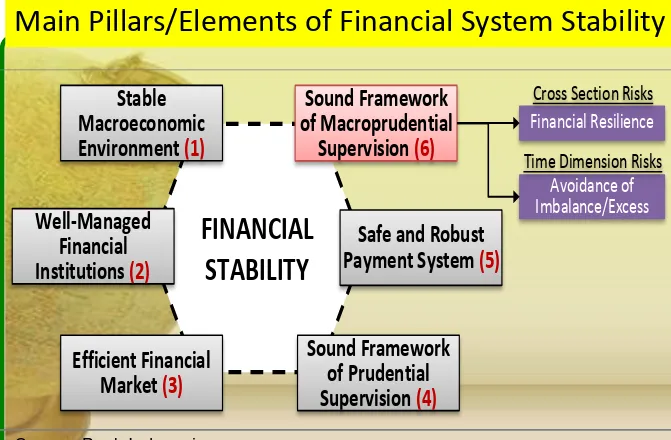
Fig. 2.1
Main Pillars/Elements of Financial System Stability
FINANCIAL
STABILITY
Stable
Macroeconomic
Environment
(1)
Sound Framework
of Macroprudential
Supervision
(6)
Well-Managed
Financial
Institutions
(2)
Sound Framework
of Prudential
Supervision
(4)
Safe and Robust
Payment System
(5)
Efficient Financial
Market
(3)
Financial Resilience
Avoidance of
Imbalance/Excess
Time Dimension Risks
Cross Section Risks
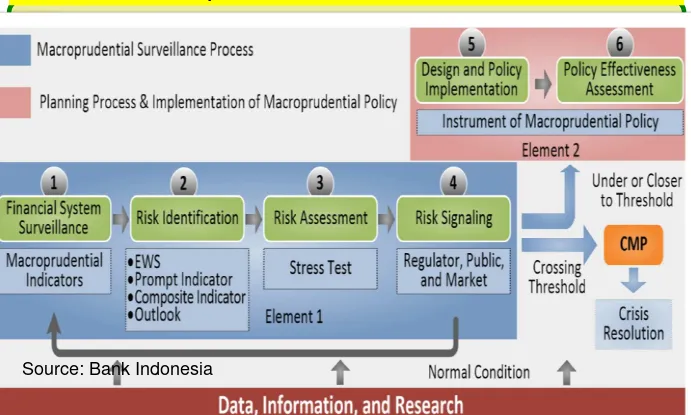
Fig. 2.2
Source: Bank Indonesia
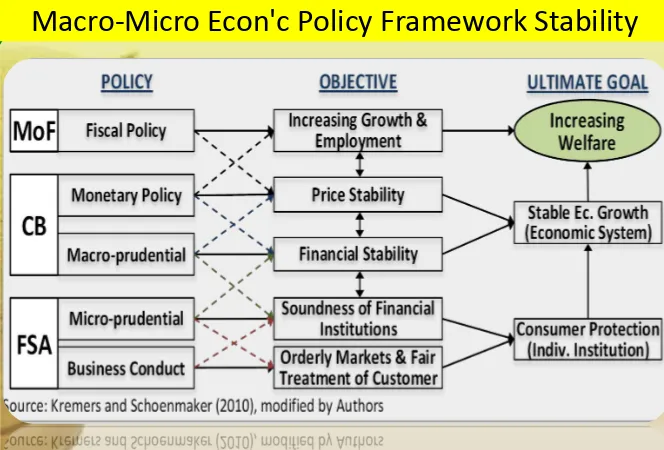
Fig. 3.1
Table 3.1
Macroprudential Policy Instruments
INSTRUMENT
LTV
GWM LDR
Transp’cy
CBRT
NOP
CCB
Capital
Surchg.
OBJECTIVE
Credit-related
Credit, Liq.-
related
Credit, Gov.-
related
Liquidity-
related
Capital-
related
Capital-
related
RULES
Single/Multiple
Single
Multiple
Single
Single
Single
Single
Broad-based/
Targeted
Targeted
Targeted
Broad-based Targeted
Broad-based Targeted
Fixed/
Time-varying
Fixed
Time-varying
Fixed
Fixed
Time-varying
Fixed
Rule/ Discretion
Rule
Rule
Rule
Rule
Discretion
Rule/
Rule
Category of instrument
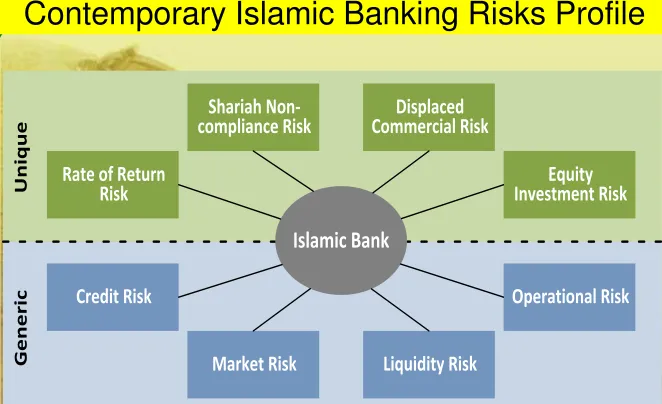
Islamic Bank
Displaced
Commercial Risk
Shariah
Non-compliance Risk
Equity
Investment Risk
Operational Risk
Liquidity Risk
Market Risk
[image:13.720.31.693.67.471.2]Rate of Return
Risk
Credit Risk
U
n
iq
u
e
G
e
n
e
r
ic
Fig. 3.2
Contemporary Islamic Banking Risks Profile
r c
a y
-
[image:14.720.27.713.62.492.2]
c n c
r
p y n
Fig. 3.3
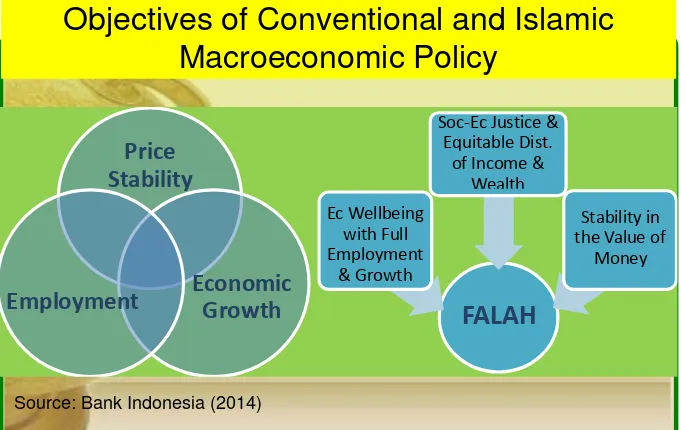
Objectives of Conventional and Islamic
Macroeconomic Policy
Source: Bank Indonesia
THE ROLE OF CENTRAL BANK
Current:
Maintaining Price
Stability
Future:
Maintaining price and
financial stability &
socio-economic welfare and
equitable distribution
Gap:
Has not able to maintain
purchasing power of
money, new role in financial
stability, and new role for
new sector fasilitator
Current:
Monetary and payment
system authority, and
macroprudential
responsibility
Future:
Monetary,
micro¯o-prudential, and payment
system authority; and real
sector facilitator
Gap:
Access to the real sector
Objectives
THE ROLE OF MACROPRUDENTIAL
Current:
Prevent and reduce Systemic Risks, balanced and sustainable intermediation, and efficiency of
financial system and access
Future:
Eliminate and reduce systemic risks and financial crises, balanced sustainable intermediation, and financial system and
access efficiency
Gap:
Structural gap, imbalances both sectoral, spacial, and asset-liability side, absence of
inter-related channels to microfinance sector, and interest rate anomaly.
Objectives
Current:
Financial system surveillance, bank and relevant institution needed
Future:
Financial system surveillance, bank and relevant institution needed
Gap:
Credible leading indicators and Financial Stability Index, Strong and comprehensive
legal foundation.
Current:
Strengthening capital, financial infrastructure, preventing excessive leverage, managing intermediation, improving eficiency and limiting
exposure concentration.
Future:
Instrument affecting financial and real sector, including conventional and islamic
macroprudential
Gap:
Improving financial sector under dual system and Instrument in dual system
affecting the real sector.
Scope
Instrument
Current:
Financial System Stability Forum (FKSSK), chaired by Minister of Finance, and Bank Indonesia as
macroprudential policy
Future:
Financial System Stability Forum, chaired by Governor Bank Indonesia and Bank Indonesia as macro and micro authority
Gap:
Amendment of Regulation on FKSSK and regulation on micro and macroprudential
authority
Authority
POLICY RECOMMENDATIONS
1.
The need to fulfill some precondition towards effective macroprudential
framework under dual financial system, including low economic liquidity
M2/GDP, sector liquidity imbalances, interest rate structure, and
understandinf the root of financial crises
2.
The need to establish new institutional arrangement, including clear
responsibilities within Financial System Stability Coordination Forum
(FKSSK), an enhanced coordination in normal and crisis period among
related parties, and establishing a division on islamic macro and micro
prudential
3.
The need to establish new instrumental arrangement, including developing
instrument affecting real sector, and accurate fnancial stabiloty indicators.
4.
The need to promote some substantial elements in strengtening
E N D OF P R E S E N T A T I O N
THANK YOU FOR YOUR PRECIOUS TIME
MAY ALLAH BLESS US WITH KNOWLEDGE AND WISDOM