Ionome of Soybean Seed A
ff
ected by Previous Cropping with
Mycorrhizal Plant and Manure Application
Zhimin Sha,
†Norikuni Oka,
‡Toshihiro Watanabe,
†Biatna Dulbert Tampubolon,
†Keiki Okazaki,
‡Mitsuru Osaki,
†and Takuro Shinano
*
,‡†
Graduate School of Agriculture, Hokkaido University, Sapporo 062-8555, Japan ‡
National Agriculture and Food Research Organization, Hokkaido Agricultural Research Center, Sapporo 062-8555, Japan
ABSTRACT: Two field experiments were conducted to investigate the effects of previous cultivation of an arbuscular
mycorrhizal (AM) host plant and manure application on the concentration of 19 mineral elements in soybean (Glycine maxL.
Merr. cv. Tsurumusume) seeds. Each experiment ran for two years (experiment 1 took place in 2007−2008, and experiment 2
took place in 2008−2009) with a split plot design. Soybeans were cultivated after growing either an AM host plant (maize,Zea
maysL. cv. New dental) or a non-AM host plant (buckwheat,Fagopyrum esculentumMoench. cv. Kitawase-soba) in thefirst year
in the main plots, with manure application (0 and 20 t/ha) during the soybean season in split plots from both main plots. On the
basis of the two experiments, manure application significantly increased the available potassium (K) and decreased the available
iron (Fe) and cesium (Cs) in the soil. However, higher concentrations of cadmium (Cd) and barium (Ba) and lower concentrations of Cs in the seed were induced by the application of manure. Cd levels in the seed were decreased by prior cultivation with the AM host plant. The present study showed that the identity of the prior crop and manure application changed the mineral contents of the soybean seed and suggests a connection between environmental factors and food safety.
KEYWORDS: ionome, soybean seed, manure, AM fungi
■
INTRODUCTIONThe soybean is one of the most important seed crops in the world and supplies protein, oil, and mineral nutrients for human consumption. The seed ionome represents its mineral nutrient and trace element content and is controlled by multiple processes including mobilization from the soil, uptake by the root, translocation and redistribution within the plant,
and deposition in the seed.1Any alterations in these processes
that transport inorganic ions from the soil to the seed could
affect the seed ionome2 and could eventually influence human
health through the food chain. Of these processes, thefirst step
is the most polygenic and is affected by many environmental
factors that are both nonbiological (e.g., climate, soil condition, and fertilizer application) and biological (e.g., symbiosis and
parasitism).3Plants may accumulate not only essential elements
but also nonessential metals such as cadmium (Cd) and lead
(Pb), when they are present in the environment.4 Increasing
essential elements in the edible parts of crops is an important
method of solving mineral malnutrition in the human diet,5
whereas nonessential metals can cause serious health problems
if they enter the human body.6 For this reason, revealing the
relationship between the ionome and environmental parame-ters may help in developing strategies for better nutrient management in the future. To date, there have been many
ionomic studies on leaves and shoots in various plants7but few
reports of the ionomic response of the seed to different
environmental parameters.
Fertilization and crop rotation are fundamental agronomic measures used to improve yield and avoid disease induced by monoculture in soybean cultivation; as there are two important environmental factors, the ionome of the soybean seed should also respond to their stimuli. Manure is important as a source of
plant nutrients, but the actual supply depends somewhat on the
type of manure.8,9A number of studies have demonstrated that
the application of manure can improve the concentrations of the essential elements zinc (Zn) and iron (Fe) in soybean
plants.10 Moreover, manure has been proposed to reduce the
phytoavailability of radionuclides in soils and decrease the content in plants by binding these minerals to organic
substances.11 It is noteworthy that the colonization of
arbuscular mycorrhizal (AM) fungi improves host plant uptake of the mineral elements nitrogen (N), Zn, sodium (Na), sulfur (S), Cd, selenium (Se), cesium (Cs), Fe, manganese (Mn),
and, especially, phosphorus (P).12,13It is known that growth of
AM fungi can be improved14and restricted15through the use of
organic amendments, but the mechanism remains unclear. No studies have considered the entire network of elements
influenced by the application of manure and AM fungi
colonization infield conditions.
In this paper, the influence of previous cropping with
mycorrhizal plants and manure application on the ionome of the soybean seed was investigated, which is important to improve the knowledge of the environmental control of plant mineral concentrations.
■
MATERIALS AND METHODSTwofield experiments were conducted on a volcanic ash soil, which is
classified as a Melanudands under the Classification of U.S. Soil
Taxonomy, at the National Agricultural Research Center for the
Received: June 6, 2012 Revised: September 1, 2012 Accepted: September 5, 2012 Published: September 5, 2012
Hokkaido Region, Sapporo, Hokkaido. Each experiment ran for two years, with maize (Zea mays L. cv. New dental, AM host crop) and buckwheat (Fagopyrum esculentum Moench. cv. Kitawase-soba, non-AM host crop) being grown in thefields in thefirst year as the main
effects and soybean (Glycine max L. Merr. cv. Tsurumusume) being
cultivated in the samefields in the following year and treated with
manure (0 and 20 t/ha) as split plots. The first experiment was
conducted in site 1 over the course of 2007−2008, with a mean temperature of 15.8 °C and precipitation of 1.8 mm during the soybean growth period (May−October) in 2008. The second experiment was carried out in site 2 over the course of 2008−2009, with a mean temperature of 15.6 °C and precipitation of 2.5 mm during the soybean growth period in 2009. The chemical properties of the soils and manure from samples taken before the experiments began are shown in Tables 1 and 2, respectively. Experiments were arranged in randomized complete blocks in a split-plot arrangement with four replications. Each replication contained previous crop plots and manure plots.
Thefirst-year crop plots consisted of AM host crops and non-AM
host cropsfields. Maize and buckwheat were fertilized at planting with
120−154−103 and 30−120−70 kg/ha of N−P2O5−K2O according to
the Fertilization Guide in Hokkaido.16
For soybean cultivation, eachfirst-year plot had subplots with or
without manure application. Manure (20 t/ha) was applied to thefield
in April, which was 1 month before soybean planting. N and K were applied as ammonium sulfate at a rate of 20 kg N/ha, and potassium sulfate was applied at the rate of 80 kg K2O/ha in late May when the
soybeans were sown. According to the available soil P contents of the
fields (Table 1) and the Fertilization Guide in Hokkaido (Hokkaido
Government Department of Agriculture 2002), the standard P application rate for soybean was 150 kg P2O5/ha. However, to better
examine the significant effect of AM fungi colonization on the change
of ionome, P fertilizer was not applied during the soybean growth season because the increase of soil P after fertilizer application has a negative effect on AM symbiosis. The subplot was 4.2 m×4.2 m, interplant distance was 20 cm, and row width was 60 cm. Thefields
were covered with a nonwoven fabric sheet (Paopao 90, MKV DREAM, Tokyo, Japan) for 3 weeks to retain heat temperature and avoid damage by wildlife.
Plant and Soil Analysis.Four weeks after sowing, the roots of the soybean were collected, and AM colonization was determined according to the method of Oka et al.13 Soybean seeds were
air-dried after 98 days of growth and were ground. Of the seed samples, 0.05 g was digested with 2 mL of 61% HNO3 (EL grade; Kanto
Chemical, Tokyo) in a tube at 110°C in a DigiPREP apparatus (SCP Science, Quebec, Canada) for 3 h, and 0.5 mL of hydrogen peroxide (semiconductor grade; Santoku Chemical, Tokyo) was added and heated at 110 °C until the solution became clear.17 The tube was cooled to room temperature and then diluted to 15 mL with 2% HNO3and analyzed for elements by inductively coupled plasma mass
spectrometry (ICP-MS) (ELAN, DRC-e; Perkin-Elmer, Waltham, MA, USA).
The total mineral elements in soil were analyzed according to the same method as was used for plants, but the solution wasfiltered after
dilution to omit impurities that would damage the machine. To determine the available minerals in the soil, 2 g of air-dried soil was extracted by 40 mL of 1 M ammonium acetate, and 5 mL offiltered
extract was concentrated in the DigiPREP apparatus until it almost disappeared. Next, 2 mL of 61% HNO3was added, and the extract was
digested again using the same procedure as was used for the plant tissue. Finally, the tube wasfilled to 10 mL with 2% HNO3for
ICP-MS analysis.
Statistics. To visualize the differences among the 19 mineral
elements with the four treatments, principal component analysis (PCA) was employed using Minitab 15 (Minitab, State College, PA, USA). The results were subjected to analysis of variance (ANOVA) of a split-plot analysis using SAS 9.1 to reveal significant differences
among treatments.
■
RESULTSMineral Elements in the Soil after Prior Crop Cultivation and Manure Application. Except for available calcium (Ca), which was increased by previous cropping with
maize in experiment 1, there was no effect of the previous crop
on the total and available minerals in the soil in the present experiments, whereas the application of manure changed the
profile of the mineral elements in the soil (Table 3). Compared
with no manure treatment (Table 3a,c), total K and Ba increased to 1.6- and 1.15-fold in experiment 1, but only K was
significantly increased to 1.17-fold in experiment 2. In contrast,
Ca decreased to 0.85- and 0.9-fold in experiments 1 and 2, respectively. However, only certain elements in the soil can be used by plants, that is, the available elements. The availability of minerals depends on their solubility in the growth media and their binding strength to soil particles. With manure application (Table 3b), the available K, Mn, cobalt (Co), and barium (Ba) increased to 2.83-, 1.14-, 1.33-, and 1.32-fold, respectively. In comparison, the available Ca, Fe, Cs, and boron (B) decreased by 0.54-, 0.26-, 0.75-, and 0.57-fold in experiment 1,
respectively. The available K significantly increased by
2.26-fold, but Fe and Cs decreased by 0.84- and 0.73-fold in experiment 2, respectively (Table 3). Thus, manure application
significantly increased the K content in the soil, especially the
available K, and decreased the available Fe and Cs contents in the soil in both experiments.
AM Fungal Colonization of Soybean Roots. Soil microorganisms play a major role in the biogeochemical processes of soil−plant interactions. AM fungi can be intimately
Table 1. Chemical Properties of the Soil in Two Experimental Sites
exchangeable cations (cmolckg−1)
site pH (H2O) available P2O5a(mg kg−1) total N (g kg−1) CECb(cmolckg−1) Ca Mg K BSc(%)
1 5.4 198 4.5 38.25 9.8 1.3 0.4 30.0
2 5.7 315 3.4 35.10 15.5 2.4 0.5 52.6
a
P2O5was determined according to the Truog method; bCEC, cation exchange capacity.cBS, basic saturation.
Table 2. Total Mineral Elements in Manure
g kg−1DMa
mg kg−1DM
P K Mg Ca Mn Fe Cu Zn B Co Na Sr Ba Ni Cd Cr Se Cs
7.72 25.87 10.85 17.55 0.40 3.7 65.6 200.04 13.84 3.76 5700 62.09 62.72 48.31 0.19 9.13 0.71 0.17
a
DM, dry matter.
Journal of Agricultural and Food Chemistry Article
dx.doi.org/10.1021/jf3024744|J. Agric. Food Chem.2012, 60, 9543−9552
Table 3. Mineral Elements in Soil in Experiments 1 and 2a
(a) Total Mineral Elements in Soil in Experiment 1
mg g−1 μg g−1
treatment K Mg Ca Mn Fe Cu Zn B Mo Co Na Sr Ba Ni Cd Cr Se Cs
B +M 1.02 1.51 4.50 1.04 24.69 19.98 58.57 3.40 0.61 8.78 384.75 45.43 293.02 175.24 0.27 13.20 0.56 2.24
−M 0.62 1.51 5.01 1.01 24.64 20.81 54.21 5.14 0.62 8.79 336.97 45.32 246.13 173.09 0.28 12.94 0.67 2.12
M +M 0.98 1.51 4.22 0.86 24.97 19.80 66.30 2.88 0.60 8.26 360.34 42.33 274.58 172.21 0.26 12.76 0.68 2.17
−M 0.64 1.54 5.30 1.24 26.56 21.47 58.95 5.09 0.69 10.51 349.49 47 0.08 245.58 187.12 0.29 13.34 0.78 2.22
previous crop
(A)b NS NS NS NS NS NS NS NS NS NS NS NS NS NS NS NS NS NS
manure (B)b <0.001 NS <0.01 NS NS NS NS 0.05 NS NS NS NS <0.001 NS NS NS NS NS
A×Bb NS NS NS NS NS NS NS NS NS NS NS NS NS NS NS NS NS NS
(b) Available Mineral Elements in Soil in Experiment 1 mg g−1
μg g−1
treatment K Mg Ca Mn Fe Cu Zn B Mo Co Na Sr Ba Ni Cd Cr Se Cs
B +M 0.44 0.17 0.78 51.82 2.00 0.21 0.23 0.29 0.02 0.04 19.05 17.40 81.56 0.043 0.023 nd 0.021 0.130
−M 0.15 0.16 1.58 46.49 5.90 0.14 0.21 0.52 0.02 0.03 20.01 15.84 68.72 0.033 0.023 nd 0.017 0.169
M +M 0.41 0.18 1.02 58.66 1.99 0.10 0.31 0.27 0.02 0.04 27.10 17.25 82.29 0.052 0.024 nd 0.021 0.125
−M 0.15 0.16 1.71 50.62 9.22 0.19 0.16 0.46 0.01 0.03 20.57 15.40 65.20 0.032 0.024 nd 0.014 0.168
previous crop
(A) NS NS <0.001 NS NS NS NS NS NS NS NS NS NS NS NS NS NS
manure (B) <0.001 NS <0.001 <0.001 <0.01 NS <0.05 <0.01 NS <0.001 NS NS 0.001 <0.05 NS NS <0.001
A×B NS NS <0.05 NS NS NS NS NS NS NS NS NS NS NS NS NS NS
(c) Total Mineral Elements in Soil in Experiment 2
mg g−1 μg g−1
treatment K Mg Ca Mn Fe Cu Zn B Mo Co Na Sr Ba Ni Cd Cr Se Cs
B +M 1.25 1.53 4.89 0.90 17.14 17.17 51.99 2.26 2.26 8.05 357.65 56.65 300.84 173.50 0.26 12.76 0.49 2.39
-M 1.09 1.68 5.23 0.92 18.67 17.35 60.10 2.45 2.45 9.06 377.44 58.58 313.11 192.42 0.25 13.99 0.5 2.55
M +M 1.29 1.59 4.69 0.90 20.03 17.14 53.46 2.34 2.34 8.43 337.2 57.51 322.76 195.00 0.26 13.84 0.52 2.58
−M 0.99 1.65 5.40 0.85 17.85 16.63 54.18 4.29 4.29 7.81 369.4 56.73 298.25 184.12 0.27 12.92 0.50 2.48
previous crop
(A) NS NS NS NS NS NS NS NS NS NS NS NS NS NS NS NS NS NS
manure (B) <0.001 NS <0.05 NS NS NS NS NS NS NS NS NS NS NS NS NS NS NS
A×B NS NS NS NS NS NS NS NS NS NS NS NS NS NS NS NS NS NS
(d) Available Mineral Elements in Soil in Experiment 2 mg g−1
μg g−1
treatment K Mg Ca Mn Fe Cu Zn B Mo Co Na Sr Ba Ni Cd Cr Se Cs
B +M 0.35 0.28 2.45 75.48 3.42 0.09 0.58 0.07 0.036 0.042 28.13 23.43 72.57 0.051 0.035 nd 0.014 0.052
−M 0.20 0.35 2.78 86.62 4.46 0.27 0.54 0.11 0.026 0.049 28.06 28.14 86.32 0.052 0.040 nd 0.022 0.078
M +M 0.44 0.32 2.11 91.72 3.36 0.33 0.56 0.16 0.028 0.05 33.23 27.14 85.29 0.051 0.039 nd 0.020 0.056
−M 0.15 0.28 2.27 77.84 3.61 0.20 0.61 0.15 0.068 0.043 23.32 25.24 76.85 0.047 0.038 nd 0.019 0.069
previous crop
(A) NS NS NS NS NS NS NS NS NS NS NS NS NS NS NS NS NS NS
manure (B) <0.001 NS NS NS <0.05 NS NS NS NS NS NS NS NS NS NS NS NS <0.05
of
Agricultural
and
Food
Chemistry
Article
dx.doi.org/10.1021/jf3024744
|
J.
Agric.
Food
Chem.
2012,
60,
9543
−
9552
associated with plant roots and occupy an important position in the soil−root interaction. In this study, previous cropping with
maize (i.e., an AM host plant) significantly increased AM fungal
colonization of soybean roots at 4 weeks after sowing (P< 0.01;
Figure 1) the colonization increased nearly 4-fold in experiment 1 and 2-fold in experiment 2 compared with previous cultivation with buckwheat (non-AM host plant). However,
there were no significant differences in colonization caused by
manure application.
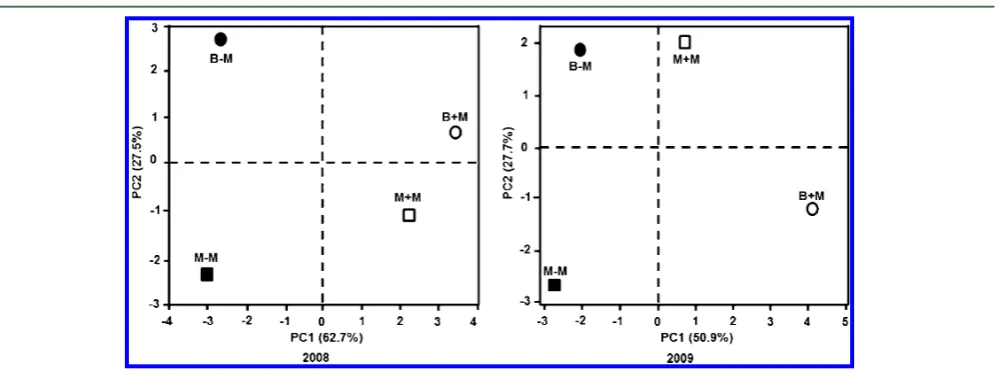
Profiling of the Mineral Elements in Soybean Seeds after Different Treatments. The results of 19 mineral
elements in four different treatments were subjected to PCA
(Figure 2). Plots of thefirst and second principal component
scores (i.e., PC1 and PC2, respectively) revealed differences in
the mineral profiles. In experiment 1, with independent
components that clearly corresponded to differences related
to the manure application and previous crops, PC1 explains 62.7% and discriminated between the treatment with or without manure, whereas PC2 accounted for 27.5% of the total variance and discriminated between the previous crops, maize and buckwheat. Other factors contributed to the remaining 9.8% of variance. In experiment 2, PC1 accounted for 50.9% of the total variation and separated the manure treatments.
Effect of Previous Crop and Manure Application on the Mineral Concentration in Soybean Seeds. An
ANOVA (Table 4a,b) was conducted to clarify the effect of
the previous crop and manure application on the mineral
concentration in the soybean seed. Regardless of the effect of
manure, when the soybean was previously cropped with maize,
there was a significant increase in the concentration of copper
(Cu) (to 1.11-fold), but a significant reduction in Cd (to
0.78-fold) compared to previous cropping with buckwheat in experiment 1. In experiment 2, the concentrations of Cd and Ba decreased to 0.91- and 0.87-fold, respectively, when previously cultivated with maize. With manure application (Table 4a), the essential elements of Fe, Zn, and Co in the soybean seed
significantly increased (1.07-, 1.08-, and 1.26-fold, respectively)
in experiment 1. For the nonessential minerals, manure
application significantly increased Cd (to 1.5-fold) and Ba (to
1.44-fold), but decreased Ni (to 0.76-fold) and Se (to 0.5-fold) concentrations in soybean seeds. For Cs, there was a nearly 0.39-fold decrease due to manure application. However, it is
difficult to detect any combined effect of manure and previous
cultivation. In experiment 2 (Table 4b), the concentrations of three elements were altered by manure application, with Ba and Cd increasing to 1.24- and 1.15-fold, respectively, and Cs decreasing to 0.56-fold; these values were compatible with those of experiment 1.
■
DISCUSSIONEffect of Manure on Ionomic Profile Changes.Manure can supply soil with mineral elements directly and can improve mineral availability indirectly by changing the pH and biological
activity in soil.18 At the same time, manure provides more
stable humic substances with large surface areas and components of long-chain fatty acids, aliphatic alcohols, and
linear hydrocarbons, which account for the fixation of
minerals.19 Heavy metals have been reported to display low
mobility in the soil profile due to adsorption on organic matter,
for example, Cs and Cd.20,21 However, the ability of organic
substances to fix minerals is influenced by the types and
properties of organic amendments.22,23 In the present study,
Table
Journal of Agricultural and Food Chemistry Article
dx.doi.org/10.1021/jf3024744|J. Agric. Food Chem.2012, 60, 9543−9552
the nonessential elements Cs, Ba, and Cd in soybean seeds were the most strikingly divergent ions in both experiments, with manure treatments containing 0.39 and 0.56 times less Cs, 1.44 and 1.24 times more Ba, and 1.5 and 1.15 times more Cd than the treatment without manure in experiments 1 and 2, respectively. It has been suggested that organic matter may modify the capacity of clays to immobilize minerals, and the
affinity of cations to the clays follows the order Cs > NH
4+> K
> Na > Ca.24In soil, available Cs is significantly decreased by
manure application, which might be the main reason for lower
Cs deposition in soybean seeds.25Conversely, it is known that
K and Cs enter the root through the same channel. In the present experiments, total K and available K in soil were
significantly enriched by 2−3-fold with manure application,
leading to a high accumulation of K around the root zone
(Table 3), which may have inhibited root uptake of Cs.26The
behavior of Cd and Ba in soybean seeds was less correlated with their availabilities in soil solution, which had a higher accumulation in the manure treatment, even when the available Cd in soil was stable in both experiments, and only Ba was enhanced in experiment 1 by manure application. It has been extensively reported that Cd enters plants via transport
processes that normally function in Fe uptake,27,28 whereas
Ca2+ channels in the plasma membrane or root cells show
significant discrimination between permeant cations, and Ba2+
is more permeable than either Sr2+or Ca2+.29The decrease of
available Fe and Ca in soil might be possible reasons for the
higher Cd and Ba concentrations in the soybean seed after manure treatments. In the present study, there are no adequate data to clarify the whole metabolic processing of elements, such as translocation, circulation, distribution, and deposition within the plants, and therefore this subject requires further research. The P, K, magnesium (Mg), Ca, Mn, Cu, B, molybdenum (Mo), Na, strontium (Sr), and chromium (Cr) contents in soybean seeds were constant regardless of the manure treatments. It is highly likely that stable Mg, Cu, Na, Sr, and Mo contents in soybean seeds in the treatment with manure application were caused by the pool of available minerals in soil, whereas K, Ca, Mn, Cu, B, Ba, Cd, and Na in the seed were not
affected by differences in available minerals in the soil, which
means the mineral concentration in seed was not only
determined by the mineral’s availability in the soil but also
affected by the dilution effect, plant active absorption, and ion
competition.30,31
In addition to Ba, Cd, and Cs, nearly half of the elements that
were found in the soybean seed were significantly changed by
manure application in experiment 1, including increases for Fe, Zn, and Co and a decrease for nickel (Ni) (Table 4a).
However, these differences did not occur in experiment 2. It is
likely that the alterations in the mineral content of the soybean seed correspond closely with the available minerals in the soil
solution in the two experiments. There may be significant
differences in experiment 1, but not in experiment 2, due to the
higher average rainfall in 2009 of 1.4-fold that in 2008. Drought
Figure 1.Effects of the previous crop and manure application on arbuscular mycorrhizal (AM) colonization. Bars indicate the standard errors (n=
4).∗∗indicates significant differences (P< 0.001) between treatments of different previous crops.
Figure 2.Sample scores for thefirst (PC1) and second (PC2) principal components drawn from the principal component analysis for 19 mineral
Table 4. Mineral Concentrations in Soybean Seed in Experiments 1 and 2
(a) Mineral Concentrations in Soybean Seed in Experiment 1 mg g−1
μg g−1
treatment P K Mg Ca Mn Fe Cu Zn B Mo Co Na Sr Ba Ni Cd Cr Se Cs
B +M 6.85 18.22 2.65 1.64 38.12 91.91 17.09 54.19 25.98 0.31 0.15 7.75 5.61 8.44 2.86 0.047 1.48 0.04 0.016
−M 6.66 17.63 2.57 1.71 36.71 86.40 18.12 49.22 28.68 0.19 0.12 6.84 5.76 5.61 2.93 0.031 1.18 0.08 0.036
M +M 6.75 18.16 2.56 1.75 37.22 95.39 19.49 52.36 26.85 0.31 0.15 7.86 6.04 8.77 2.51 0.036 1.44 0.03 0.014
−M 6.42 17.63 2.41 1.92 38.15 89.15 20.32 48.83 27.88 0.17 0.13 7.53 6.57 6.35 2.87 0.025 1.62 0.06 0.041
previous crop
(A)a NS NS NS NS NS NS <0.01 NS NS NS NS NS NS NS NS <0.05 NS NS NS
manure (B)b NS NS NS NS NS <0.05 NS <0.01 NS NS <0.05 NS NS <0.05 <0.05 <0.01 NS <0.05 <0.001
A×Bc NS NS NS NS NS NS NS 0.548 NS NS NS NS NS NS NS NS NS NS NS
(b) Mineral Concentrations in Soybean Seed in Experiment 2
mg g−1 μg g−1
treatment P K Mg Ca Mn Fe Cu Zn B Mo Co Na Sr Ba Ni Cd Cr Se Cs
B +M 5.91 16.51 2.30 1.68 31.86 76.08 13.25 41.17 24.41 0.36 0.064 10.71 5.64 7.69 1.76 0.058 1.39 0.055 0.005
−M 5.63 17.09 2.35 1.73 32.28 69.36 13.26 40.52 24.23 0.44 0.056 6.90 6.05 6.30 1.60 0.047 0.97 0.052 0.007
M +M 5.81 16.72 2.31 1.60 32.10 66.53 13.65 41.12 24.00 0.47 0.060 7.47 5.24 6.79 1.67 0.049 1.24 0.04 0.004
−M 5.87 17.32 2.36 1.66 32.63 72.12 13.89 40.36 26.09 0.80 0.054 7.64 5.46 5.34 1.70 0.047 1.31 0.08 0.009
previous crop NS NS NS NS NS NS NS NS NS NS NS NS NS <0.05 NS <0.05 NS NS NS
manure (B) NS NS NS NS NS NS NS NS NS NS NS NS NS <0.01 NS <0.05 NS NS <0.05
A×B NS NS NS NS NS NS NS NS NS NS NS NS NS NS NS NS NS NS NS
Journal
of
Agricultural
and
Food
Chemistry
Article
dx.doi.org/10.1021/jf3024744
|
J.
Agric.
Food
Chem.
2012,
60,
9543
−
9552
can affect the release of soluble trace elements into the soil solution via the lysis of bacterial cells and the destruction of soil
aggregates in drying−rewetting events.32 Increases in soil
moisture improve the soil diffusion capacity and increase the
activities of some enzymes, which increase the plant capture
capacity for certain elements. Climatic change can also affect
plant metabolism and the internal distribution of elements, thereby changing mobilization and retranslocation of elements within plant organs. It was reported that drought increased
arsenic (As) and Cd inErica multiflorastems and decreased Cu
in leaves, Ni in stems, and Pb in leaf litter of Globularia
alypum.33 Furthermore, a number of soil chemical, soil
biological, and external factors contribute to the variance of
the soil pool and distribution in plant.34 The extractable
concentrations of Zn, Cu, Cd, and Pb increased with increasing soil pH at the highest rate of addition of a cocomposted material, in contrast to the usual response to increasing soil pH,
which generally reduces the availability of heavy metals in soil.35
Cationic metals can form insoluble complexes with P and
reduce the bioavailability of some heavy metals.36 The
differences of pH and available P in the two sites (Table 1)
may also explain the different results in two years.
Effect of AM Fungi Colonization on Ionomic Profile Changes. AM fungi regulate the host plant ionome by modulating membrane transport proteins that control the
nutrition and ion homeostasis of the host, influencing its ions
and water absorption; in turn, the host plant provides photoassimilates necessary for fungal energy supply, growth,
and reproduction.37Immobilization and mobilization of heavy
metal cations such as Cd, Zn, and Cs by AM fungi have been
studied for many years.12,27,38However, both the increase and
reduction in metal content in the host plant have been observed, depending on the growth conditions as well as on the fungi and plant species involved. It has been shown that legume crops are less tolerant to Cd toxicity compared to cereals and
grasses.39In the present study, previous cropping with the AM
host plant (maize) increased the AM fungi colonization rate in the soybean growth season (Figure 1), but there were lower Cd concentrations in soybean seed (Table 4) when the previous crop was maize (AM host crop) in both experiments. This
finding may be a consequence of the dilution effects caused by
the plant greater growth (the rate of increase was 10% in 2008 and 9% in 2009 compared with previous cropping with buckwheat) or exclusion by precipitation of polyphosphate
granules and compartmentalization into the seed.40−42 In
addition, the Cu and Ba levels in the soybean seed increased in the two experiments, in accordance with the AM infection rate, suggesting that Cu and Ba might be transported by AM fungi to the host plant. Moreover, the same results were recorded for an
experiment in which the soybean seed ionome was affected by
the previous crop and conducted at the same site 1 during
2006−2007: Cu was increased and Cd decreased in the
soybean seed by previous cropping with maize (data not shown). Although there are many papers related to the correlation of mineral translocation and AM fungi infection, direct evidence clarifying the mechanism between AM fungi
infection and element uptake by plants is insufficient and
requires more attention.
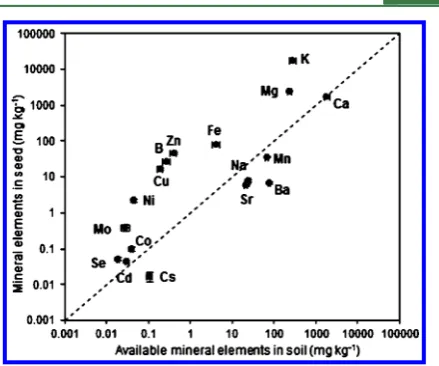
Transportability of Elements from Soil to Seed in Different Treatments.The performance of each element in
soybean seeds and ammonium acetate (NH4-AC) extracted soil
solution is shown in Figure 3, as well as their transportability from soil to seed. Seed element concentrations varied by 8
orders of magnitude from the highest for K to the lowest for Cs, whereas in soil, the highest concentration was for Ca and the lowest was for Se (Figure 3). K, Mg, and Ca were present at relatively high concentrations in both soybean seed and soil
solution, reflecting their natural abundance and their ease of
transport within the plant.43On the basis of this study, Ba, Na,
Cs, and Sr have lower transportability from soil to soybean seed, whereas Zn, B, K, Ni, and Cu have higher transportability. Correlation among Elements. The homeostatic
mecha-nisms that control the levels of different elements are reported
to be interconnected, and certain interconnections are largely
independent of the organ, population, or environment.44,45In
the present study, correlations among elements in the two
experiments were investigated (Table 5). There were significant
positive correlations between K and Mg and between K and P and negative correlations between K and Cs. Additional positive correlations were found between Ca and Sr, Fe and Ba, Co and Cd, Co and Ba, and Na and Cr.
Many surveys have suggested correlations among minerals in
the same group.7,17,46For example, Na, K, and Cs use a similar
translocation mechanism in plants because of their chemical similarities, and increasing K could reduce Cs concentration in
the plant because K is more effectively transported to the shoot
than Na and Cs in Fabaceae,47similarly to the present study’s
results on the relationship between K and Cs (Table 5) in the soybean seed.
Sr can compete with the transporter for Ca when Sr is at a notably high level. In this experiment, which is contrary to the normal results, the Ca and Sr in soybean seed showed a
significant positive correlation (Table 5), suggesting
cotran-sport and cochelation in the soybean. Compared with other
plants,45 growth media (hydroponic or pot experiment), and
different organs of plants,48negative correlations have also been
found, possibly caused by limited availability of transport proteins or chelator molecules causing competition between minerals. It is possible that Ca uptake channels might also be
regulated by other divalent ions, for example, Mg2+, Cu2+, Fe2+,
Cd2+, and Ba2+.29,43 Therefore, an important source of the
toxicity of heavy metal elements is their chemical similarity with essential elements, deregulating the homeostasis of the essential
elements or causing their displacement from proteins.49
Moreover, as Co shares high chemical similarity with Ni, it was thought that the two elements entered cells by the same plasma membrane carriers; however, they were found to be
Table 5. Correlation Coefficients for Seed Composition of Mineral Elements in Two Experimentsa
Mg K Ca Mn Fe Ni Cu Zn Sr Cd Ba Cr Na Co Se Cs P Mo
K 2008 0.6b
2009 0.7c
Ca 2008 −0.0 0.0
2009 0.4 0.4
Mn 2008 0.5b 0.4 0.6b
2009 −0.6b −0.5 −0.0
Fe 2008 0.5b 0.5 0.4 0.4
2009 0.2 0.2 0.4 0.2
Ni 2008 0.2 −0.2 0.2 0.4 −0.2
2009 0.0 −0.2 0.1 0.3 0.7c
Cu 2008 −0.3 −0.4 0.4 0.2 0.2 0.1
2009 0.7c 0.8c 0.3
−0.6b −0.0 −0.3
Zn 2008 0.1 0.4 −0.4 −0.2 0.2 −0.4 −0.7c
2009 0.6b 0.5b 0.5b −0.5 0.1 0.1 0.7c
Sr 2008 −0.2 −0.0 0.8c 0.4 0.3 −0.0 0.5 −0.4
2009 −0.4 −0.2 0.5b 0.7c 0.5 0.3 −0.4 −0.2
Cd 2008 0.3 0.3 −0.7c −0.3 −0.0 −0.3 −0.7c 0.8c −0.6b
2009 0.4 0.5 0.1 −0.1 0.3 0.0 0.3 0.2 0.1
Ba 2008 0.2 0.5 0.2 0.1 0.6b −0.5 −0.2 0.6b 0.4 0.3
2009 0.4 0.4 0.5 −0.1 0.5b 0.4 0.3 0.5 0.4 0.7c
Cr 2008 −0.3 −0.2 0.1 −0.0 0.2 0.1 0.4 0.0 0.2 −0.0 0.2
2009 0.1 −0.4 −0.6 −0.1 0.1 0.5 −0.5 −0.5 −0.3 −0.0 −0.1
Na 2008 0.1 0.3 0.0 0.1 0.3 −0.2 0.0 0.3 0.0 0.3 0.3 0.8c
2009 0.1 −0.3 −0.1 −0.0 0.6b 0.8c −0.4 −0.1 0.0 −0.1 0.1 0.7c
Co 2008 −0.1 0.3 −0.5b −0.3 0.1 −0.5 −0.4 0.8c −0.3 0.8c 0.5b 0.1 0.3
2009 0.6b 0.5 0.1 −0.3 0.4 0.0 0.5 0.3 −0.2 0.7c 0.5b −0.0 −0.0
Se 2008 −0.0 0.1 0.2 0.0 0.0 0.4 −0.3 0.2 −0.1 −0.1 −0.1 −0.1 −0.1 −0.1
2009 −0.3 −0.4 0.2 0.3 0.4 0.4 −0.3 0.1 0.3 −0.5 −0.3 0.1 0.5 −0.5
Cs 2008 −0.4 −0.5b 0.5 0.1 −0.5 0.5 0.3 −0.7c 0.4 −0.7c −0.6b 0.0 −0.2 −0.7c 0.2
2009 0.2 −0.5b 0.4 −0.1 0.4 0.0 0.3 0.1 0.3 0.1 0.1 −0.1 0.1 0.2 0.5
P 2008 0.4 0.5b −0.5 0.2 0.1 −0.1 0.0 0.1 −0.3 0.3 −0.1 −0.3 0.0 0.2 −0.1 −0.5
2009 0.8c 0.7c 0.2
−0.7c 0.2 −0.0 0.8c 0.6b −0.6b 0.4 0.3 0.0 0.0 0.7c −0.2 0.3
Mo 2008 0.1 0.1 −0.1 −0.4 0.4 −0.2 −0.3 0.6c −0.2 0.4 0.5b 0.1 0.1 0.6b 0.4 −0.5b −0.2
2009 −0.1 −0.4 0.1 0.0 0.1 0.4 −0.1 0.3 −0.0 −0.7c −0.2 0.2 0.9c −0.2 0.8c 0.0 0.1
B 2008 0.3 −0.1 0.4 0.4 0.2 0.5b 0.5 −0.8c 0.2 −0.7c −0.6b −0.1 −0.2 −0.7c 0.3 0.5 0.1 −0.4
2009 −0.2 −0.0 −0.1 0.4 0.4 −0.1 −0.1 −0.4 0.2 −0.0 −0.2 −0.1 −0.1 0.3 0.2 0.3 −0.1 −0.1
a
Coefficients are derived from pairwise regression of mineral elements in two years.bSignificant at 0.05 probability level.cSignificant at 0.01 probability level.
Journal
of
Agricultural
and
Food
Chemistry
Article
dx.doi.org/10.1021/jf3024744
|
J.
Agric.
Food
Chem.
2012,
60,
9543
−
9552
coregulated in Lotus japonicas.46 In the present study, there were positive correlations between Co and Ba and between Co and Cd, suggesting coregulation of these elements in the soybean.
In summary, the present study provides evidence of the
effects of previous crop and manure application on the ionome
of the soybean seed and detailed information regarding element
interactions. Thesefindings suggested that manure application
and previous crop should be given high attention in agricultural development and ionomic studies, which is relevant to food safety and the phytoextraction of heavy metal elements.
■
AUTHOR INFORMATIONCorresponding Author
*Phone/fax: +81-011-857-9243. E-mail: shinano@affrc.go.jp.
Funding
This work was financially supported by the Ministry of
Agriculture, Forestry and Fisheries, Japan through a research project entitled "Development of technologies for mitigation and adaptation to climate change in Agriculture, Forestry and Fisheries".
Notes
The authors declare no competingfinancial interest.
■
REFERENCES(1) Grusak, M. A.; DellaPenna, D.; Welch, R. M. Physiologic processes affecting the content and distribution of phytonutrients in plants.Nutr. Rev.1999,57, 26−33.
(2) Baxter, I. R.; Vitek, O.; Lahner, B.; Muthukumar, B.; Borghi, M.; Morrissey, J.; Guerinot, M. L.; Salt, D. E. The leaf ionome as a multivariable system to detect a plant’s physiological status.Proc. Natl. Acad. Sci. U.S.A.2008,105, 12081−12086.
(3) Baxter, I. Ionomics: studying the social network of mineral nutrients.Curr. Opin. Plant Biol.2009,12, 381−386.
(4) Reeves, R. D.; Baker, A. J. M.; Borhidi, A.; Berazain, R. Nickel hyperaccumulation in the serpentine flora of Cuba.Ann. Bot. (Oxford, U.K.)1999,83, 29−38.
(5) Vreugdenhil, D.; Aarts, M. G. M.; Koornneef, M.; Nelissen, H.; Ernst, W. H. O. Natural variation and QTL analysis for cationic mineral content in seeds ofArabidopsis thaliana.Plant, Cell Environ.
2004,27, 828−839.
(6) White, P. J.; Broadley, M. R. Biofortification of crops with seven mineral elements often lacking in human diets−iron, zinc, copper, calcium, magnesium, selenium and iodine.New Phytol.2009,182, 49− 84.
(7) Watanabe, T.; Broadley, M. R.; Jansen, S.; White, P. J.; Takada, J.; Satake, K.; Takamatsu, T.; Tuah, S. J.; Osaki, M. Evolutionary control of leaf element composition in plants.New Phytol. 2007,174, 516− 523.
(8) Citak, S.; Sonmez, S. Influence of organic and conventional growing conditions on the nutrient contents of white head cabbage (Brassica oleraceavar. capitata) during two successive seasons.J. Agric. Food Chem.2010,58, 1788−1793.
(9) Citak, S.; Sonmez, S. Mineral contents of organically and conventionally grown spinach (Spinacea oleracea L.) during two successive seasons.J. Agric. Food Chem.2009,57, 7892−7898.
(10) Mekki, B. B.; Ahmed, A. G. Growth, yield and seed quality of soybean (Glycine maxL.) as affected by organic, biofertilizer and yeast application.Res. J. Agric. Biol. Sci.2005,1, 320−324.
(11) Ehlken, S.; Kirchner, G. Environmental processes affecting plant root uptake of radioactive trace elements and variability of transfer factor data: a review.J. Environ. Radioact.2002,58, 97−112.
(12) Berreck, M.; Haselwandter, M. Effect of the arbuscular mycorrhizal symbiosis upon uptake of cesium and other cations by plants.Mycorrhiza2001,10, 275−280.
(13) Oka, N.; Karasawa, T.; Okazaki, K.; Takebe, M. Maintenance of soybean yield with reduced phosphorus application by previous cropping with mycorrhizal plants.Soil Sci. Plant Nutr. (Abingdon, U.K.)
2010,56, 824−830.
(14) Gryndler, M.; Hrselova, H.; Cajthaml, T.; Havrankova, M.; Rezacova, V.; Gryndlerova, H.; Larsen, J. Influence of soil organic matter decomposition on arbuscular mycorrhizal fungi in terms of asymbiotic hyphal growth and root colonization.Mycorrhiza2009,19, 255−266.
(15) Ravnskov, S.; Jensen, B.; Knudsen, I. M. B.; Bødker, L.; Funck Jensen, D.; Karliński, L.; Larsen, J. Soil inoculation with the biocontrol agent Clonostachys rosea and the mycorrhizal fungus Glomus intraradicesresults in mutual inhibition, plant growth promotion and alteration of soil microbial communities.Soil Biol. Biochem.2006,38, 3453−3462.
(16) Hokkido Government Department of Agriculture. III Crop. In Hokkaido Fertiliser Recommendations, Sapporo, Japan, 2002; pp 54−62. (17) Quadir, Q. F.; Watanabe, T.; Chen, Z.; Osaki, M.; Shinano, T. Ionomic response ofLotus japonicus to different root-zone temper-atures.Soil Sci. Plant Nutr. (Abingdon, U.K.)2011,57, 221−232.
(18) Amiri, M. E.; Fallahi, E. Impact of animal manure on soil chemistry, mineral nutrients, yield and fruit quality in ‘Golden Delicious’apple.J. Plant Nutr.2011,32, 610−617.
(19) Staunton, S.; Roubaud, M. Adsorption of 137Cs on
montmorillonite and illite: effect of charge compensating cation, ionic strength, concentration of Cs, K and fulvic acid.Clays Clay Miner.
1997,45, 251−260.
(20) Ciecko, Z.; Wyszkowski, M.; Krajewski, W.; Zabielska, J. Effect of organic matter and liming on the reduction of cadmium uptake from soil by triticale and spring oilseed rape.Sci. Total Environ.2001, 281, 37−45.
(21) Rautaray, S.; Ghosh, B.; Mittra, B. Effect of fly ash, organic wastes and chemical fertilizers on yield, nutrient uptake, heavy metal content and residual fertility in a rice−mustard cropping sequence under acid lateritic soils.Bioresour. Technol.2003,90, 275−283.
(22) Narwal, R.; Singh, B. Effect of organic materials on partitioning, extractability and plant uptake of metals in an alum shale soil.Water, Air Soil Pollut.1998,103, 405−421.
(23) Singh, R.; Agrawal, M. Effects of sewage sludge amendment on heavy metal accumulation and consequent responses ofBeta vulgaris plants.Chemosphere2007,67, 2229−2240.
(24) Staunton, S.; Roubaud, M. Adsorption of Cs on montmor-illonite and illite: effect of charge compensating cation, ionic strength, concentration of Cs, K and fulvic acid.Clays Clay Miner. 1997,45, 251−260.
(25) Kim, Y.; Kim, K.; Kang, H. D.; Kim, W.; Doh, S. H.; Kim, D. S.; Kim, B. K. The accumulation of radiocesium in coarse marine sediment: effects of mineralogy and organic matter.Mar. Pollut. Bull.
2007,54, 1341−1350.
(26) Zhu, Y. G.; Smolders, E. Plant uptake of radiocaesium: a review of mechanisms, regulation and application. J. Exp. Bot. 2000, 51, 1635−1645.
(27) Clemens, S. Molecular mechanisms of plant metal tolerance and homeostasis.Planta2001,212, 475−486.
(28) Siedlecka, A.; Krupa, Z. Cd/Fe interaction in higher plants−its consequences for the photosynthetic apparatus.Photosynthetica1999, 36, 321−331.
(29) White, P. J. The pathways of calcium movement to the xylem.J. Exp. Bot.2001,52, 891−899.
(30) Beauregard, F.; Côté, B. Test of soil extractants for their suitability in predicting Ca/Sr ratios in leaves and stems of sugar maple seedlings.Biogeochemistry2008,88, 195−203.
(31) Baxter, I. Ionomics: the functional genomics of elements.Brief. Funct. Genomics2010,9, 149−156.
(32) Turner, B. L.; Haygarth, P. M. Phosphorus solubilization in rewetted soils.Nat. Biotechnol.2001,411, 258.
(34) Baghour, M.; Moreno, D. A.; Villora, G. Root-rone tempeture influences the distribution of Cu and Zn in potato-plant organs. J. Agric. Food Chem.2002,50, 140−146.
(35) Smith, S. R. A critical review of the bioavailability and impacts of heavy metals in municipal solid waste composts compared to sewage sludge.Environ. Int.2009,35, 142−156.
(36) Maenpaa, K. A.; Kukkonen, J. V.; Lydy, M. J. Remediation of heavy metal-contaminated soils using phosphorus: evaluation of bioavailability using an earthworm bioassay. Arch. Environ. Contam. Toxicol.2002,43, 389−398.
(37) Sanchez, A. L.; Parekh, N. R.; Dodd, B. A.; Ineson, P. Microbial component of radiocaesium retention in highly organic soils.Soil Biol. Biochem.2000,32, 2091−2094.
(38) Joner, E. J.; Briones, R.; Leyval, C. Metal-binding capacity of arbuscular mycorrhizal mycelium.Plant Soil2000,226, 227−234.
(39) Mazen, M. B. Assessment of heavy metal accumulation and performance of some physiological parameters in Zea mays L. and Vicia fabaL. grown on soil amended by sewage sludge resulting from sewage water treatment in the state of Qatar.Qatar Univ. Sci. J.1995, 15, 353−359.
(40) Garg, N.; Aggarwal, N. Effects of interactions between cadmium and lead on growth, nitrogen fixation, phytochelatin, and glutathione production in mycorrhizalCajanus cajan(L.) Millsp.J. Plant Growth Regul.2011, 1−15.
(41) Azcón, R.; del Carmen Perálvarez, M.; Roldán, A.; Barea, J. M. Arbuscular mycorrhizal fungi,Bacillus cereus, andCandida parapsilosis from a multicontaminated soil alleviate metal toxicity in plants.Microb. Ecol.2010,59, 668−677.
(42) Kruglov, S. V.; Anisimov, V. S.; Lavrent’eva, G. V.; Anisimova, L. N. Parameters of selective sorption of Co, Cu, Zn, and Cd by a soddy-podzolic soil and a chernozem.Eurasian Soil Sci.2009,42, 385−393. (43) Karley, A. J.; White, P. J. Moving cationic minerals to edible tissues: potassium, magnesium, calcium.Curr. Opin. Plant Biol.2009, 12, 291−298.
(44) Eide, D. J.; Clark, S.; Nair, T. M.; Gehl, M.; Gribskov, M.; Guerinot, M. L.; Harper, J. F. Characterization of the yeast ionome: a genome-wide analysis of nutrient mineral and trace element homeostasis in Saccharomyces cerevisiae.Genome Biol.2005,6, R77. (45) Ghandilyan, A.; Ilk, N.; Hanhart, C.; Mbengue, M.; Barboza, L.; Schat, H.; Koornneef, M.; El-Lithy, M.; Vreugdenhil, D.; Reymond, M.; Aarts, M. G. A strong effect of growth medium and organ type on the identification of QTLs for phytate and mineral concentrations in three Arabidopsis thaliana RIL populations. J. Exp. Bot. 2009, 60, 1409−1425.
(46) Chen, Z.; Watanabe, T.; Shinano, T.; Ezawa, T.; Wasaki, J.; Kimura, K.; Osaki, M.; Zhu, Y. G. Element interconnections inLotus japonicus: a systematic study of the effects of element additions on different natural variants.Soil Sci. Plant Nutr. (Abingdon, U.K.)2009, 55, 91−101.
(47) Isaure, M. P.; Fraysse, A.; Deves, G.; Le Lay, P.; Fayard, B.; Susini, J.; Bourguignon, J.; Ortega, R. Micro-chemical imaging of cesium distribution in Arabidopsis thaliana plant and its interaction with potassium and essential trace elements. Biochimie 2006, 88, 1583−1590.
(48) Waters, B. M.; Grusak, M. A. Quantitative trait locus mapping for seed mineral concentrations in two Arabidopsis thaliana recombinant inbred populations.New Phytol.2008,179, 1033−1047. (49) Verbruggen, N.; Hermans, C.; Schat, H. Mechanisms to cope with arsenic or cadmium excess in plants.Curr. Opin. Plant Biol.2009, 12, 364−372.
Journal of Agricultural and Food Chemistry Article
dx.doi.org/10.1021/jf3024744|J. Agric. Food Chem.2012, 60, 9543−9552