Review Article
Extraction, transesterification and process control in biodiesel
production from
Jatropha curcas
Novizar Nazir1, 2, Nazaruddin Ramli2, Djumali Mangunwidjaja3, Erliza Hambali3, Dwi Setyaningsih3, Sri Yuliani4, Mohd. Ambar Yarmo2and Jumat Salimon2
1Faculty of Agricultural Technology, University of Andalas, Padang, Indonesia
2School of Chemical Sciences and Food Technology, Faculty of Science and Technology, Universiti
Kebang-saan Malaysia, Malaysia
3Department of Agroindustrial Technology, Institut Pertanian Bogor, Bogor, Indonesia
4Department of Agriculture, The Indonesian Center for Agricultural Postharvest Research and Development,
Bogor, Indonesia
Biodiesel has gained worldwide popularity as an alternative energy source due to its renewable, non-toxic, biodegradable and non-flammable properties. It also has low emission profiles and is environmentally beneficial. Biodiesel can be used either in pure form or blended with conventional petrodiesel in auto-mobiles without any major engine modifications. Various non-edible and edible oils can be used for the preparation of biodiesel. With no competition with food uses, the use of non-edible oils as alternative source for engine fuel will be important. Among the non-edible oils, such asPongamia,Argemoneand Castor,Jatropha curcas has tremendous potential for biodiesel production.J. curcas, growing mainly in tropical and sub-tropical climates across the developing world, is a multipurpose species with many attributes and considerable potentials. In this article, we review the oil extraction and characterization, the role of different catalysts on transesterification, the current state-of-the-art in biodiesel production, the process control and future potential improvement of biodiesel production fromJ. curcas.
Keywords: Biodiesel production /Jatropha curcas/ Oil extraction / Process control / Transesterification
Received: November 6, 2008; accepted: January 19, 2009
DOI 10.1002/ejlt.200800259
1 Introduction
For many years, the ready availability of inexpensive petro-leum fuels gave little inducement for experimenting with alternative, renewable fuels for diesel engines [1–4]. However, due to the increasing price of petroleum as well as environ-mental concerns over pollution caused by the internal com-bustion gases, alternative fuels have been developed [5, 6]. Biodiesel is considered as one important alternative fuels for diesel engines [7].
Biodiesel is defined as the monoalkyl esters of long-chain fatty acids that are derived from renewable feedstocks such as vegetable oil or animal fats. It is used in the compression
igni-tion engine [3]. It has been found that biodiesel is a clean-burning fuel, biodegradable, non-toxic and has low emission profiles. So, it is environmentally beneficial. The use of bio-diesel has the potential to decrease the level of pollutants and of potential or probable carcinogens [8–10].
Edible oils, such as soybean, rapeseed oil and palm oil, are being used for the production of biodiesel for the compression ignition engine [11]. However, the use of these oils for engine fuel will compete with the food product. Consequently, the use of non-edible oils as alternative source for engine fuel will be important.
There are quite a few non-edible oil seed species that could be used as source for oil production.Jatropha curcas, which mainly grows in tropical and sub-tropical climates across the developing world, is one of them. This multipurpose species with many attributes and potentials [11, 12] can be grown in low- to high-rainfall areas, either on the farms as a commercial crop or on the boundaries as a hedge to protect the fields from Correspondence: Novizar Nazir, Faculty of Agricultural Technology,
Uni-versity of Andalas, Padang, Indonesia 25163. E-mail: [email protected]
grazing animals and to prevent erosion [13]. Its hardness, rapid growth, easy propagation and wide-ranging usefulness have resulted in its spread far beyond its original distribution [14].
There are several technical challenges that need to be addressed to make biodiesel profitable. First, the high cost of virgin vegetable oil as the source of triglycerides plays a large role in process profitability. To reduce the production costs and make it competitive with petroleum diesel, low-cost feed-stocks, such as waste frying oils, and animal fats and edible oils could be used as raw materials. Among the non-edible oils, J. curcas has tremendous potential for biodiesel production. However, the relatively higher amounts of free fatty acids (FFA) and water in this feedstock result in the production of soap in the presence of alkali catalysts. Thus, it is necessary to have additional steps to remove any water and either the FFA or the soap from the reaction mixture.
Although publications of research on biodiesel production fromJatrophaoil are available elsewhere, a systematic review on this topic is very limited. This paper provides comprehen-sive information on biodiesel production from Jatrophaoil, including its oil extraction technique and composition, the role of different catalysts in its transesterification, the current state-of-the-art in biodiesel production, process control and future potential improvement of biodiesel production from J. curcas.
2
Jatropha
oil as feedstock of biodiesel
production
The growing demands for lower-cost, non-food, non-rain-forest-based feedstocks for biodiesel are producing new opportunities and are stimulating fresh investment in the pro-duction of lower-cost, alternative feedstocks such asJatropha. The governments in South Asia and Africa have identified between 20–50 million hectares of suitable land forJatropha cultivation. Indonesia has identified nearly 23 million hectares ofJatrophaland potential. One hectare ofJatrophacan pro-duce between 1.5 and 2.5 t of seed oil. Since the expansion of commercial-scale Jatrophaproduction from India to Africa, Southeast Asia and Latin America, and due to pilot programs and larger-scale ventures in China, Central Asia, South/Cen-tral America, and southern parts of the USA,Jatrophais now becoming one of the prime contenders for biodiesel feedstock supply in the years ahead [15].
It is reported thatJatrophaoil is present in the range of 40– 60 g oil/100 g Jatropha seed kernels [16, 17]. A yield of 43.80% oil was obtained by extracting with hexane for 3 h at room temperature; increasing the extraction time did not affect the extraction efficiency [18]. Shahet al. [19] found that Jatrophaseed kernel gave a yield of 44 g oil/100 g Jatropha seed kernels. The yield of oil obtained from the extraction of J. curcaswith petroleum ether (b.p. 40–607C) in a Soxhlet apparatus was 46–48.6% [20]. According to Su et al. [21],
extraction ofJatrophaseed oil with n-hexane gave a yield of 54.90%, methyl acetate gave 55.92%, and ethyl acetate 56.65%.
2.1 Oil extraction
Various kinds of equipment are available to obtain oil from the seeds. The oil can be extracted mechanically with a press (ram, hydraulic or screw) or chemically with organic solvents or water [22–24], by three-phase partitioning extraction method [25, 26] and supercritical extraction method [27].
2.1.1 Mechanical press
In Indonesia, Jatropha oil is usually extracted by hydraulic press and screw press with 607C heat treatment. The yield of Jatrophaoil using the hydraulic press method at a maximum pressure of 20 t is 47.2% and the oil extraction is done twice [28].
In Tanzania, presently, the Jatrophaoil is obtained only mechanically with a ram press or a screw press, which is a small hand-press [29]. With the ram press method, the seeds are poured by applying pressure to the seeds. The oil is extracted and then dripped into a container. The extraction rate of this press is quite low as the seedcake, which is left after the pressing, still contains part of the oil. To obtain 1 L of oil, about 5 kg of seed is needed and the capacity is about 1.5 L/h. Larger expellers and screw presses that are run by an engine can also be used. The screw, which turns continuously, trans-ports the seeds from one side of the press to the other while squeezing out the oil. The extraction rate of this press is higher because more oil is extracted from the seeds; the cake residue is also much dryer. The capacity of this screw is higher than that of the ram press. For example, the Sayari oil expeller, which is used in Tanzania, has a capacity of about 20 L/h (60 kg/h) and can extract 1 L of oil from 3 kg of seeds. The larger screw expellers, like the Chinese expellers, can extract about 50 L/h (150 kg/h). After the oil is expelled, it is filtered by letting it stand for some time or pouring it through a cloth [29].
2.1.2 Aqueous and solvent extraction
adjusted. The amounts of oil obtained were calculated as per-centages of the total oil present inJ. curcasseed kernels [19].
It has been found that the use of ultrasonication as a pre-treatment before AOE and aqueous enzymatic oil extraction is useful in the case of extraction of oil from the seeds ofJ. curcas L. [19]. The use of ultrasonication for a period of 10 min at pH 9.0 followed by AOE resulted in a yield of 67% of available oil. The maximum yield of 74% was obtained by ultrasonica-tion for 5 min followed by aqueous enzymatic oil extracultrasonica-tion using an alkaline protease at pH 9.0 (44 g oil/100 gJatropha seed kernels was taken as 100% recovery). Use of ultra-sonication can also reduce the process time from 18 to 6 h [19].
Optimized conditions for extraction of Jatropha using microwaves are achieved by using petroleum ether as the sol-vent with a ratio of seed powder to solsol-vent of 1 : 3. It is done at a microwave power of 810 W for a total radiation time of 5 min [27]. The extraction rate was 31.49%, with the oil product having an acid number of 5.22 mg/g and a peroxide value of 8.78 meq/g. For the ultrasonic method, hexane was used as the solvent and the ratio of seed powder to solvent was 1 : 7; the soaking time applied was 18 h and sonication was performed for 0.5 h. The extraction rate was 37.37% with an acid number of 5.91 mg/g and a peroxide value of 8.37 meq/g in the final oil product [27].
Alkyl acetates, especially methyl acetate and ethyl acetate, are important chemicals and suitable solvents for seed oil extractions that are assisted by Novozym 435 [21]. The results were compared to those obtained by extraction withn-hexane. Ground seeds were mixed with methyl acetate or ethyl acetate in screw-capped glass vials. Then, 30 wt-% of Novozym 435 based on theoretical oil content was added. The reactions were carried out at 507C and 180 rpm for 6 h in a shaker fitted with a thermostat. After filtration, the ground seed mixture was mixed with another solvent and then extracted under the same conditions for another 2 h. The two filtrates were pooled and centrifuged at 17,4006g for 10 min; the supernatant was collected in a round-bottom flask and the solvent was evapo-rated using a rotary evaporator. The oil content in g/100 g was 54.90% (n-hexane), 55.92% (methyl acetate) or 56.65% (ethyl acetate) [21].
2.1.3 Three-phase partitioning extraction method
Three-phase partitioning is a method that is carried out by cracking theJatrophaseeds and removing the shells; the ker-nels obtained are used for slurry preparation [25]. The slurry, with the pH adjusted to the desired value with 0.1 N NaOH or 0.1 N HCl, is prepared by grinding the seed kernels in distilled water. Ammonium sulfate in an appropriate amount is added and vortexed gently; an appropriate amount of t-butanol is added. Then, the slurry is incubated at 257C for 1 h for the formation of the three phases. The three phases are then separated by centrifugation at 20006g for 10 min. To obtain the oil, the upper organic layer is collected and evaporated in a
rotary evaporator (under reduced pressure at 507C, for 5 min) [25].
Combining a recently developed technique of three-phase partitioning with enzyme pretreatment and sonication may constitute an economical or efficient procedure for obtaining oil fromJatrophaseed kernels [30]. This method only takes about 2 h. Three-phase partitioning has been evaluated for extraction of oil fromJatrophaseeds. This process consisted of simultaneous addition oft-butanol (1 : 1, vol/vol) and 30% (wt/vol) ammonium sulfate to the slurry prepared from Jatrophaseed kernels. Combination of sonication and enzyme treatment with a commercial preparation of fungal proteases at pH 9 resulted in 97% oil yield within 2 h [30].
2.1.4 Supercritical carbon dioxide extraction method
Supercritical carbon dioxide extraction (SCE) is a process for the production of oil with high yields that does not use organic solvents. In this process, the oil is dissolved in CO2 and extracted from the plant material [31]. The SCE method developed by Yanet al. [27] resulted in an actual extraction rate of 37.45%; the final oil product contained KOH 0.79 mg/ g and peroxide 3.63 meq/g. Here, seeds of Jatropha curcas were collected and powdered. The extraction pressure was 43 MPa, the temperature for the extraction was 457C, the flow rate of CO2was 20 kg/h, and the extraction time was 80 min. Even though the cost of the supercritical extraction method was higher, the oil quality was the best and refining was not needed [27].
2.1.5 Gas-assisted mechanical expression
Figure 1. Principle of (a) conventional mechanical expression and (b) GAME. Adopted from [31].
energy and equipment cost for solvent recycling can be reduced. Compared with SCE, the second advantage of GAME is that the required CO2pressure is low, which is approximately 10 MPa. In contrast, for SCE extraction, pressures of 40– 70 MPa are not unusual [33, 34]. These two effects provide a significant reduction in the energy requirements for recycling and repressurising the CO2. Additionally, some reports in the literature suggest that the use of CO2at 7–20 MPa has a ster-ilizing effect on the substrates [35, 36]; this may be a beneficial side effect of the GAME process. Fig. 2 shows a schematic representation of the hydraulic press used in GAME.
The general applicability of the GAME process to enhance the oil recovery from oilseeds was shown by pressing experi-ments with sesame, linseed, rapeseed,Jatrophaand palm kernel by Willemset al. [31]. It was proven that GAME is capable of reaching yields that are up to 30 wt-% higher than with con-ventional expression under the same conditions. Despite the lower yields for hulled seeds in conventional expression, GAME yields for hulled and dehulled seeds are very similar. The oil yields obtained by GAME increased with increasing effective mechanical pressure; the yields were the highest at a tempera-ture of 1007C. These effects are similar to conventional expression. With CO2pressures up to 10 MPa, the oil yield increased significantly. However, increasing the CO2pressure above 10 MPa did not significantly increase the oil yield.
2.2 Characterization ofJatropha curcasoil
Table 1 shows the fatty acid composition of Jatropha oil. It consists of 23.6% saturated fatty acids containing mainly palmitic, stearic and myristic acids, and 76.4% unsaturated fatty acids comprising mainly oleic, linoleic and palmitoleic acids. Saturated fatty acid methyl esters increase the cloud point and cetane number, and improve the stability, whereas unsaturated fatty acid methyl esters reduce cloud point, cetane number and stability [40]. Variation of type and per-centage of fatty acids in Jatropha oil are influenced by the variety and the growing conditions of the plant. The physi-cochemical properties of Jatropha biodiesel are shown in Table 2. The properties are observed to meet all specifica-tions of the American Society for Testing Materials (ASTM) and the Indian Standard (IS), but fail in the oxidation stabil-ity test.
Figure 2. Schematic representation of the hydraulic press [32].
Table 1.Different fatty acids present inJatropha curcasoil.
Acid, common name
Acid, IUPAC name Structure§ Weight [%]
A$ B C D E Avg.
Capric Decanoic acid C10:0 0.1 0.1 Lauric Dodecanoic acid C12:0
Myristic Tetradecanoic acid C14:0 0.1 0.1 0–0.1 1.4 Palmitic Hexadecanoic acid C16:0 15.1 13.6 14.1–15.3 14.2 15.6 Stearic Octadecanoic acid C18:0 7.1 7.4 3.7–9.8 6.9 9.7 Arachidic Eicosanoic acid C20:0 0.2 0.3 0–0.3 – 0.4 Behenic Docosanoic acid C22:0 0.2 – 0–0.3 – – Palmitoleic Cis-9-hexadecenoic acid C16:1 0.9 0.8 0–1.3 1.4 – Oleic Cis-9-octadecenoic acid C18:1 44.7 34.3 34.3–45.8 43.1 40.8 Linoleic Cis-9,cis-12-octadecadienoic acid C18:2 31.4 43.2 29.0–44.2 34.4 32.1 Linolenic Cis-9,cis-12,cis-15-octadecatrienoic acid C18:3 0.2 – 0–0.3 –
Saturated 22.8 21.7 22.6 23.7 27.1 23.6
Unsaturated 77.2 78.3 77.4 76.3 72.9 76.4
References: A and B [17]; C [37]; D [38]; E [39].
§Number of carbons in chain:number of double bonds. $Variety Caboverde.
3 Production of biodiesel
Table 3 shows a comparison of the different technologies to produce biodiesel. The method commonly used for the pro-duction of biodiesel is the transesterification of vegetable oils with methanol, using alkali, acid, or enzyme catalysts. Trans-esterification, also called alcoholysis, is the reaction of trigly-cerides with alcohols to generate, for example, methyl or ethyl esters, and glycerol as by-product. Usually, a catalyst is used to improve the reaction rate and yield. The reaction requires an excess of alcohols to improve the efficiency of the transester-ification process [3].
The transesterification reaction consists of three reactions, which are equivalent, consecutive and reversible. The trigly-ceride is converted stepwise to diglytrigly-ceride, monoglytrigly-ceride and finally glycerol. At every reaction step, one molecule of methyl or ethyl ester is produced for each molecule of metha-nol or ethametha-nol consumed.
There are important variables that affect the yield of bio-diesel from transesterification; they are: reaction temperature, molar ratio of alcohol and oil, catalyst, reaction time, presence
of moisture and free fatty acids (FFA), and mixing intensity [43–46]. The rate of reaction is strongly determined by the reaction temperature. However, giving enough time will help the reaction proceed to near completion even at room tem-perature. The reaction is commonly conducted close to the boiling point of the alcohol at atmospheric pressure [43].
It is observed that the stoichiometry of the transesterifica-tion reactransesterifica-tion needs 3 mols of alcohol per mol of triglyceride to yield 3 mols of fatty esters and 1 mol of glycerol. To shift the transesterification reaction to the right, it is necessary to use a large excess of alcohol or to continuously remove one of the products from the reaction mixture. Wherever feasible, the second option is preferred because it can drive the reaction toward completion. The reaction rate is at its highest if 100% excess methanol is used. In industrial processes, a molar ratio of 6 : 1 is normally used to obtain methyl ester yields higher than 98% by weight [43].
Catalysts are categorized as alkali, acid, enzyme or het-erogeneous catalysts. Among these, alkali catalysts such as sodium hydroxide, sodium methoxide, potassium hydroxide, or potassium methoxide are more effective [45]. It is found
Table 2.Physicochemical properties ofJatrophabiodiesel [41].
Property ASTM 6751 test method
ASTM 6751 limits
IS 15607 test method
IS 15607 limits
Jatropha
methyl ester
Flash point [7C] D-93 min. 130 IS 1448 P:21 min. 120 163 Vicosity at 407C [cSt] D-445 1.9–6.0 IS 1448 P:25 2.5–6.0 4.40 Sulfated ash [% mass] D-874 max. 0.02 IS 1448 P:4 max. 0.02 0.002 Sulfur [% mass] D-5453 max. 0.05 ASTM D5453 max. 0.05 0.004 Cloud point [7C] D-2500 N.A. IS 1448 P:10 N.A. 4 Copper corrosion D-130 max. 3 IS 1448 P:15 max. 1 1 Cetane number D-613 min. 47 IS 1448 P:9 min. 51 57.1 Water and sediment [vol-%] D-2709 max. 0.05 D-2709 max. 0.05 0.05 CCR 100% [% mass] D-4530 max. 0.05 D-4530 max. 0.05 ,0.01 Neutralization value [mg KOH/g] D-664 max. 0.80 IS 1448 P:1/Sec.1 max. 0.50 0.48 Free glycerin [% mass] D-6584 max. 0.02 D-6584 max. 0.02 0.01 Total glycerin [% mass] D-6584 max. 0.24 D-6584 max. 0.25 0.02 Phosphorus [% mass] D-4951 max. 0.001 D-4951 ,0.001 ,0.001 Distillation temperature D-1160 90% at 3607C Not under spec. 90% 90% Oxidation stability [h] N.A. N.A. EN 14112 min. 6 h 3.23
Table 3.Comparison of different technologies to produce biodiesel [42].
No. Variable Alkali catalyst Lipase catalyst Supercritical alcohol Acid catalyst
1 Reaction temperature [K] 333–343 303–313 512–658 328–353 2 FFA in raw material Saponified products Methyl esters Esters Esters
3 Water in raw material Interference with reaction No influence – Interference with reaction 4 Yield of methyl esters Normal Higher Good Normal
that alkali-catalyzed transesterification is much faster than the acid-catalyzed reaction. However, the acid-catalyzed transes-terification reaction is more suitable if a vegetable oil has a high FFA and water content. Most commercial transester-ification reactions are conducted with alkaline catalysts. This is due partly to the faster esterification and partly to the fact that alkaline catalysts are less corrosive to industrial equip-ment than acidic catalysts. It has been observed that sodium methoxide is more effective than sodium hydroxide. Sodium alkoxides are among the most efficient catalysts used for this purpose. However, due to its low cost, NaOH has been widely used in large-scale transesterification [45].
The effects of FFA and water on transesterification with methanol were examined by Ma et al. [45]. The results showed that in order to get the best conversion, the water content should be kept below 0.06 wt-% and the FFA content should be kept below 0.5 wt-%. In the transesterification, water content was a more critical process variable than FFA content; the presence of water may cause ester saponifica-tion. FFA can react with the alkali catalyst to produce soap and water [45].
In the transeterification reaction, the reactants first form a two-phase liquid system [41]. The reaction is diffusion con-trolled; poor diffusion between the phases results in a slow rate. When methyl esters are formed, they act as a mutual solvent for the reactants and a single-phase system is formed. The mixing effect is most significant during the slow-rate region of the reaction. As the single phase is established, mix-ing becomes insignificant [41].
In base-catalyzed transesterification, the glycerides and alcohol must be substantially anhydrous because water causes the reaction to partially change to saponification, which pro-duces soap. The soap makes the yield of esters low and causes the separation of ester and glycerol and difficult water wash-ing. In addition, the catalyst recovery is slow and expensive; this increases the operational cost [11].
Acid catalysts can be used for transesterification. How-ever, they are generally considered to be too slow for industrial processing. Besides, they have high alcohol/triglycerides requirements (20 : 1 and more). Acid catalysts are more commonly used for the esterification of FFA [47]. Despite its insensitivity to FFA in the feedstock, acid-catalyzed transes-terification has been largely disregarded due to its relatively slow reaction rate [9].
Mittlebach [48] found that transesterification can also be catalyzed by lipases. He found that the lipase from Pseudomo-nas fluorescens was superior to those from Candidasp. and Mucor miehei for sunflower oil alcoholysis. The alcoholysis was carried out both in the presence of solvent (petroleum ether) and under solvent-free conditions using five homolo-gous alcohols with or without the addition of water. Sub-sequent studies have focused on different lipases, different triglyceride feedstocks, different alcohols and different experimental conditions such as temperature, water content, stoichiometric ratio between reagents, enzyme concentration,
solvent useetc.The commercial use of enzymes is limited be-cause of their high cost and slow reaction rate. Besides, yields to methyl esters are usually less than the 99.7% needed for fuel-grade biodiesel [47].
The transesterification reaction can be promoted by using low-frequency ultrasound (40 kHz) [49–51]. The effects of ultrasonic irradiation in the medium are heating, mass trans-fer, and cavitation. The ultrasonic assistant is successfully used in the production of biodiesel using a chemical method. Low-frequency ultrasonic irradiation is a useful tool for the emulsification of immiscible liquids. The collapse of the cavi-tation bubbles disturbs the phase boundary and causes emul-sification by ultrasonic jets that impinge from one liquid to another. The reaction time was shortened and the amount of alkali catalyst was reduced by 2–3 times compared with the conventional method [51, 52].
Microwave heating can also promote the transesterifica-tion reactransesterifica-tion. Different from conventransesterifica-tional heating where large amounts of energy are used to heat the media, micro-wave radiation, on the other hand, delivers energy directly to the reactants. Therefore, the preheating step is elimi-nated. The heat transfer is more effective than for conven-tional heat. Consequently, transesterification with micro-wave radiation can be completed in much shorter time. The results indicated that microwave heating effectively increased the biodiesel yield and decreased the reaction time [53–55].
The supercritical alcohol process is a non-catalyzed transesterification [56]. The transesterification reaction using supercritical methanol can form a single phase, in contrast to the two-phase nature of an oil/methanol mixture under ambi-ent condition. This is due to the decrease in the dielectric constant of methanol in the supercritical state. The reaction was completed in a very short time,i.e.within 2–4 min. Due to the non-catalytic process, pretreatment or post-reaction pro-cesses became much simpler compared with the conventional alkali catalyst process [57–59]. So, since there is no wastewater produced by pretreatment or washing processes, this process is environmentally friendly. However, because of the high temperature and pressure in the supercritical state, high investments and energy costs are probably required. It would be economically more feasible if the usage of methanol could be reduced [60].
3.1 Production of biodiesel fromJatropha curcas
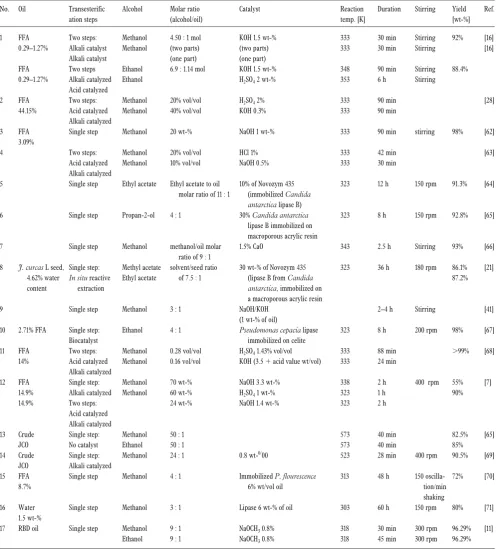
Table 4 shows works onJatrophabiodiesel production under various conditions. Type and amount of variables such as alcohol, FFA, molar ratio, catalyst, reaction temperature, reaction time, rate and mode of stirring affect the yield and conversion ofJatrophabiodiesel. Different processes for the transesterification of vegetable oils for the production of J. curcas biodiesel are currently available. Among them are homogenous catalysis treatment [7, 16, 28, 41, 62, 63, 68], heterogeneous catalyst [57] or enzyme catalysis alcohol treatment [21, 64, 65, 67, 70, 71], supercritical alcohol treatments [65, 69] and lipase-catalyzed in situ reactive extraction [21].
3.1.1 Biodiesel production using homogeneous chemical catalysts
Foidl et al. [16] reported a technical process for processing seed oil and production of methyl esters and ethyl esters from the oil ofJatrophaseeds. The fuel properties were also deter-mined. Production of biodiesel used two-step transesterifica-tion: alkali-alkali transesterification for methyl esters and alkali-acid transesterification for ethyl esters.
Chitraet al. [62] found that a methyl ester yield of 98% was obtained using 20 wt-% methanol and 1.0% NaOH at 607C. The maximum reaction time needed for a maximum ester yield was 90 min. Total biodiesel of 96% was obtained from experimental studies on large-scale production (reactor ca-pacity of 75 kg). An esterification-transesterification reaction forJatrophabiodiesel was done by Sudradjatet al. [27, 63], but the methyl ester yield was not reported.
Tiwari et al. [68] and Berchmans and Hirata [7] have developed a technique to produce biodiesel from Jatropha with high FFA contents (15% FFA). They selected a two-stage transesterification process to improve the methyl ester yield. The first stage involved an acid pretreatment process to reduce the FFA level of crudeJatrophaseed oil to less than 1%. The second stage was the alkali base-catalyzed transester-ification process resulting in 90% methyl ester yield. Tiwariet al. [68] found that the optimum combination to reduce the FFA content of Jatropha oil from 14% to less than 1% was 1.43% vol/vol H2SO4acid catalyst, 0.28 vol/vol methanol-to-oil ratio, and 88 min reaction time at a reaction temperature of 607C. This process produced a yield of biodiesel of more than 99%.
Berchmans and Hirata [7] reduced the high FFA level of Jatrophaoil to less than 1% by a two-step process. The first step was carried out with a 0.60 wt/wt methanol-to-oil ratio in the presence of 1 wt-% H2SO4 as an acid catalyst in 1 h of reaction at 507C. The second step was transesterification using 0.24 wt/wt methanol-to-oil ratio and 1.4 wt-% NaOH to oil as alkaline catalyst to produce biodiesel at 657C. The final yield of methyl esters of fatty acids was ca. 90% in 2 h.
3.1.2 Biodiesel production using a heterogeneous solid super base catalyst
An environmentally friendly process was developed for the production of biodiesel from Jatropha oil using a hetero-geneous solid super base catalyst and calcium oxide. The results revealed that, under the optimum conditions of catalyst calcination, a temperature of 9007C, a reaction temperature of 707C, a reaction time of 2.5 h, a catalyst dosage of 1.5%, and a methanol/oil molar ratio of 9 : 1, the oil conversion was 93% [66].
3.1.3 Biodiesel production using a heterogeneous enzyme catalyst
The interest in using lipases as enzymatic catalysts for the production of alkyl fatty acid esters grows continuously. Some people work on the triglycerides by converting them to methyl esters, while some work on the fatty acids. One of the main obstacles to the bio-catalytic production of biodiesel is the high cost of the enzyme; enzyme recycling might be the solu-tion to this problem.
It was found thatPseudomonas fluorescenslipase immobi-lized on kaolinite lost one third of its activity when it was used for the second time, but no further decrease was observed in successive applications. The initial decrease in activity was put down to enzyme desorption from the solid support that was not observed after repeated (10 times) use [73]. Repeated batch reactions revealed that Mucor miehei lipase had high stability, retaining about 70% of its initial conversion after 8 cycles (24 h each cycle). Meanwhile, under the same experimental conditions, Thermomyces lanuginosa retained only 35% of the initial conversion. This difference was cred-ited to factors such as inactivation of the biocatalyst in the oil phase, the type of carrier that is used for the immobilization, or enzyme sensitivity to long-term methanol exposure [74].
It is observed that various substances can slow down lipase activity (methanol, glycerol, phospholipids); however, a number of ways have been proposed to overcome these prob-lems [75]. Commonly, a biocatalytic process does not produce soaps or other by-products. If the reaction runs to completion, only esters and glycerol are produced. This makes the purifi-cation steps simpler and consequentially lowers the plant costs. Once immobilized, lipases can be used many times or even in continuous processes. This resolves the major dis-advantage related to high cost. In conclusion, if obtained by biocatalysis, biodiesel is an environmentally friendly fuel that will contribute to reducing negative impacts on the environ-ment. Thus, it may be reasonable to rename it ‘bio-biodiesel’ [75].
Table 4. Biodiesel productionJ. curcasfrom various conditions.
Single step Methanol 20 wt-% NaOH 1 wt-% 333 90 min stirring 98% [62]
4 Two steps:
5 Single step Ethyl acetate Ethyl acetate to oil molar ratio of 11 : 1
10% of Novozym 435 (immobilizedCandida antarcticalipase B)
323 12 h 150 rpm 91.3% [64]
6 Single step Propan-2-ol 4 : 1 30%Candida antarctica
lipase B immobilized on macroporous acrylic resin
323 8 h 150 rpm 92.8% [65]
7 Single step Methanol methanol/oil molar ratio of 9 : 1
30 wt-% of Novozym 435 (lipase B fromCandida antarctica, immobilized on a macroporous acrylic resin
323 36 h 180 rpm 86.1% 87.2%
[21]
9 Single step Methanol 3 : 1 NaOH/KOH (1 wt-% of oil)
2–4 h Stirring [41]
10 2.71% FFA Single step: Biocatalyst
Ethanol 4 : 1 Pseudomonas cepacialipase immobilized on celite KOH (3.51acid value wt/vol)
333
Single step Methanol 4 : 1 ImmobilizedP. flourescence
6% wt/vol oil
313 48 h 150 oscilla-tion/min
17 RBD oil Single step Methanol Ethanol reached using propan-2-ol was 92.8% from crudeJatrophaoil. Reusability of the lipase was preserved over 12 repeated cycles with propan-2-ol whereas it reached zero by the 7thcycle when
methanol was utilized as the acyl acceptor, under standard reaction conditions [64].
the crude oil ofJ. curcas. The optimum reaction conditions set for interesterification of the oils with ethyl acetate were 10% of Novozym 435 (immobilized Candida antarctica lipase B) based on oil weight, an ethyl acetate-to-oil molar ratio of 11 : 1, and a reaction period of 12 h at 507C. Under the above optimum conditions, the maximum result of ethyl esters was 91.3%. Reusability of the lipase over repeated cycles in inter-esterification and ethanolysis was also examined under stand-ard reaction conditions. The relative activity of the lipase could be well preserved over 12 repeated cycles with ethyl ac-etate whereas it reached zero by the 6thcycle when ethanol was used as the acyl acceptor.
Shah and Gupta [67] conducted a process of optimization of monoethyl esters of long-chain fatty acids (biodiesel) by alcoholysis ofJatrophaoil using lipase. The process included (a) screening of various commercial lipase preparations, (b) pH tuning, (c) immobilization, (d) varying water content in the reaction media, (e) varying amount of enzyme used, and (f) varying temperature of the reaction. The best yield of 98 wt-% was obtained by using Pseudomonas cepacia lipase immobilized on celite at 507C in the presence of 4–5 wt-% water in 8 h. The yield was not affected if analytical-grade alcohol was replaced by commercial-grade alcohol. This bio-catalyst could be applied four times without loss of any activi-ty.
In order to lower the cost of biodiesel fuel production from Jatropha, Tamalampudi et al. [71] used lipase-producing whole cells of Rhizopus oryzae which were immobilized on biomass support particles. The activity ofRhizopus oryzaewas compared with Novozym 435, the most effective lipase. Methanolysis of Jatropha oil progressed faster than other kinds of alcoholysis, regardless of the lipase used. The max-imum methyl ester content in the reaction mixture reached 80 wt-% after 60 h usingRhizopus oryzae, but 76% after 90 h using Novozym 435. Both lipases could be used for repeated batches. They also exhibited more than 90% of their initial activities after five cycles. Whole-cell immobilized Rhizopus oryzaeis a promising biocatalyst for producing biodiesel from
oil [71].Jatrophabiodiesel production from various sources of lipase and acyl acceptors is shown in Table 5.
3.1.4 Biodiesel production using supercritical alcohols
The synthesis of biodiesel fromJatrophaoil has been investi-gated in supercritical methanol and ethanol without using any catalysts, from 200 to 4007C at 200 bar [67]. It is found that, for the synthesis of biodiesel in supercritical alcohols with an optimum molar ratio of 50 : 1, very high conversions (.80%) were obtained within 10 min and nearly complete conversions within 40 min. The conversion into ethyl esters is higher than that into methyl esters [65].
Tang et al. [69] studied the transesterification of the crude Jatrophaoil catalyzed by micro-NaOH (0.2 to 0.5 to 0.8 wt-0/00) in supercritical methanol. When the catalyst content, reaction temperature and molar ratio of methanol to oil were developed at 0.8 wt-0/
00NaOH, 534 K, 7.0 MPa and 24 : 1, respectively, the methyl ester yield could reach 90.5% within 28 min.
3.1.5 Biodiesel production using lipase-catalyzedin situreactive extraction
According to Su et al. [21], extraction and lipase-catalyzed transesterification with methyl acetate and ethyl acetate can be done under the same conditions. They can be simply com-bined to a two-step one-potin situreactive extraction. First, the alkyl acetates performs as the extraction solvent and after-wards as the transesterification agent. Then, by removing the catalyst, defatted plant material (by filtration) and the solvent (by evaporation), the methyl/ethyl esters are obtained.
The negative effects of glycerol and alcohol on the lipase can be reduced by substituting short-chain alkyl acetates for short-chain alcohols as acyl acceptors for fatty acid ester pro-duction. Short-chain alkyl acetates are also appropriate sol-vents for seed oil extraction. Therefore, Suet al. [21] adopted
Table 5.The use of raw material forJatrophabiodiesel production from various chemical catalysts.
No. Alcohol Ratio Ethanol 6.9 : 1.14 mol 353 0.29–1.27% KOH
H2SO4 3 Methanol 0.28 vol/vol
0.16 vol/vol
424 965 14% H2SO4 KOH
methyl acetate and ethyl acetate as extraction solvents and transesterification reagents at the same time forin situreactive extraction of J. curcasL. seed. Fatty acid methyl esters and ethyl esters were respectively obtained with higher yields than those resulting from conventional two-step extraction/trans-esterification. The improvement varied from 5.3 to 22%. The key parameters such as solvent/seed ratio and water content were further examined to find their effects on thein situ reac-tive extraction. The highest J. curcas L. methyl/ethyl ester yields could achieve 86.1 and 87.2%, respectively, under the optimized conditions [21].
This transesterification method reduces the risk of deacti-vation of the enzyme by short-chain alcohol and glycerol be-cause in the reaction the short-chain alcohol is substituted by short-chain alkyl acetate and no glycerol is produced. Fur-thermore, such a route to fatty acid esters can decrease the expense associated with solvent extraction and oil cleanup. Due to its low-cost production, in situ reactive extraction would be very promising for fatty acid ester production [21].
3.2 Post-reaction processing
Other ester treatments and additization are required in order to fulfill the requirements of biodiesel standards such as ASTM D6751 or EN 14214 post-reaction processes, such as ester/glycerol separation, ester washing, ester drying. Ester washing and ester drying are needed due to the use of alkali catalysts. Ester washing is used to neutralize any residual cat-alyst and remove any soap formed, while ester drying removes the water used for washing [47].
As stated by Gerpenet al. [47], the ester/glycerol separa-tion is usually the first step of product recovery in most bio-diesel processes. This is done due to the fact that fatty acyl alcohol esters and glycerol are hardly mutually soluble. Besides, the ester (0.88 g/cm3) and glycerol (1.05 g/cm3) have a significant difference in density. The glycerol density is de-pendent on the amount of methanol, water, and catalyst in the glycerol. This density difference is sufficient for a simple gravity separation technique for the two phases [47]. The catalyst and unreacted alcohol were removed by hot-water washings [11]. To avoid the formation of an emulsion after the transesterification reaction, 0.1% aqueous citric acid was used as a washing solution to remove the catalyst. At last, the ester was dried in a conventional dryer vessel, under a nitrogen stream, for 1 h at 1307C.
In order to remove any soaps formed during the ester-ification reaction, and to remove residual free glycerol and methanol, ester washing is used to neutralize any residual cat-alyst [47]. Three traditional methods for the refining step in biodiesel production were compared: (1) washing with dis-tilled water, (2) washing with acid, and (3) dissolving and extracting in a solvent (hexane or petroleum ether) and then washing with distilled water. Although all three methods resulted in biodiesel with a high purity (97.5%), serious emulsification occurred during the refining processes, leading
to high refining losses. So, a novel refining method was devel-oped by using hollow-fiber membrane extraction, and poly-sulfone was chosen as the most suitable membrane. This pro-cess was effectively able to avoid emulsification during refin-ing and to reduce the refinrefin-ing loss. The resultrefin-ing purity of the biodiesel was about 99%, and other properties, such as den-sity, kinematic viscoden-sity, water content, and acid value, fulfilled the standards [77].
4 Discussion
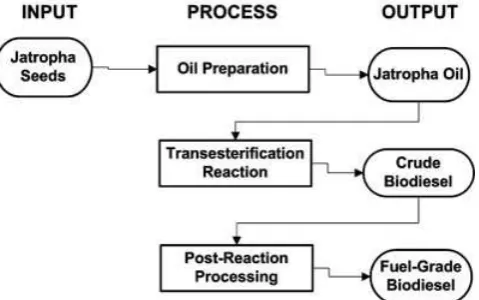
Research on Jatropha biodiesel production has been per-formed extensively since the year 2000. The focus of the re-search has mainly been to find more effective and efficient technological processes for producing fuel-grade biodiesel fromJatrophaoil. There are three important and correlated points of production that have to be considered: (1) oil prep-aration, (2) the transesterification reaction and (3) post-reac-tion processing. Oil preparapost-reac-tion would affect the biodiesel processing, which subsequently affects post-reaction proces-sing. A combination of oil preparation, transesterification reaction and post-reaction processing is engaged in producing a measurable output of fuel-grade biodiesel. A method by which the combination of these three processes can be con-trolled to produce fuel-grade biodiesel with consistent results needs to be developed in process control of biodiesel produc-tion.
4.1 Oil preparation
Table 6.Jatrophabiodiesel production from various sources of lipase and acyl acceptors (solvent free and batch reactor).
No. Alcohols/ acyl acceptor
Lipase source Amount of acyl acceptor§
Amount of enzyme$
Yield Ref.
1 Ethyl acetate Candida antarctica 873 mL 91.3% [63]
2 Propan-2-ol Candida antarctica 92.8% [64]
3 Ethanol Pseudomonas cepacialipase immobilized on celite 10 wt-% oil 233 mL 90 g 98% [66] 4 Methanol ImmobilizedP. flourescence6% wt/vol oil 160 mL 54 g 72% [69] 5 Methyl acetate Candida antarctica 595 mL 86.1% [21]
Ethyl acetate 735 mL 87.2%
6 Methanol Rhizopus oryzaeimmobilized onto biomass support particles 120 mL 54 g 80.2% [70]
7 Ethanol Chromobacterium viscosum 92% [71]
§Based on volume.
$Weight of 1 mol ofJatrophaoil.
4.2 Transesterification reaction
The five biodiesel processing methods developed for produc-ingJatrophaoil are: (a) transesterification using a homogene-ous chemical catalyst, (b) transesterification using a hetero-geneous catalyst, (c) transesterification in supercritical alco-hols, (d) transesterification using an enzyme catalyst, and (e) transesterification using lipase-catalyzed in situ reactive extraction. Lipases from various sources can be used to cata-lyze the transesterification process by immobilizing them on a suitable support. The advantage of immobilization is that the enzyme can be reused without a separation process [79]. The biodiesel yield of these methods is dependent on several fac-tors, such as reaction temperature, molar ratio of alcohol to oil, catalyst, reaction time, presence of moisture and FFA, and mixing intensity [43–46].
Most of the commercial processes to produce biodiesel from plant oils use very effective homogeneous alkali catalysts such as NaOH, KOH or sodium methoxide. These catalysts can provide yields of the transesterification reaction close to 99% [80–83]. However, these alkali compounds have some disadvantages: the necessity of application of refined plant oils, problems related to the recovery of pure glycerol (the main by-product), and formation of soaps, mono- and dia-cylglycerols. Moreover, these compounds have to be neu-tralized, giving rise to wastewaters, and cannot be reutilized. The formation of stable emulsions makes the separation of methyl esters difficult, and the reaction becomes very sensitive to the presence of water and FFA. These problems can be solved by using a heterogeneous transesterification catalyst [84–86]. Heterogeneous catalysts are expected to be effective for producing biodiesel because of their low cost and minimal environmental impact, and their possibility of simplifying the production and purification process under mild conditions [87].
Considerable research on heterogeneous catalyst-enhanced transesterification of vegetable oils shows good performance and seems promising for potential applications
[65, 84, 87–90]. However, the application of heterogeneous catalysts on Jatropha biodiesel production needs specific experiments.
A novel process of biodiesel fuel production has been developed by using non-catalytic [65, 69] and micro-catalytic supercritical alcohols [69]. The supercritical alcohol process involves a much simpler purification of products, has a lower reaction time, requires lower energy use and is more envi-ronmentally friendly. However, the reaction requires higher temperatures of 525–675 K and pressures of 35–65 MPa [56, 60].
Biodiesel can also be obtained from enzymatic or biocata-lytic transesterification methods [56]. The concept of using enzymes for biodiesel production has been well understood in general. On the technical level, enzyme approaches could offer better possibilities and simpler technology for low-qual-ity material (plant, animal or waste oils) compared with chemical methods currently used in biodiesel production [91]. A very recent review discussing both technical and economical considerations for enzymatic biodiesel production concluded a reasonable cost profile, based on results from immobilized lipases such as Novozym 435 (Candida antarticaB) and Lipozym TL IM (Thermomyces lanuginosa). It now seems possible that new immobilization technologies can reduce the enzyme costs to a level comparable to chemical catalyst costs, i.e.25 USD/t biodiesel produced [92].
con-tinuous biodiesel synthesis processes if their operational sta-bility is sufficiently high. At last, biocatalysts are biodegrad-able and non-toxic unlike some chemical catalysts [86]. How-ever, there is still work to be done with respect to the up-scal-ing of the process layout from laboratory or pilot scale to production [92].
The application of ultrasonic irradiation [49–51] and microwave heating [93–95] in order to promote the transes-terification ofJatrophaoil seems to be possible. The results indicated that ultrasonic irradiation and microwave heating effectively increased the biodiesel yield and decreased the reaction time. Detailed information concerning their perfor-mance on Jatropha oil transesterification, however, is not available.
4.3 Post-reaction processing
Post-reaction processes comprise ester/glycerol separation, ester washing, ester drying, alcohol recovery and glycerol refining. These steps are very important in order to produce fuel-grade biodiesel and to decrease biodiesel oil cost through alcohol recovery and glycerol refining. There are not yet any publications dealing with these post-reaction processes.
For best economy and pollution prevention, the alcohol must be fully recycled. Glycerol is an economical co-product that should be fully refined [47]. As by-product, 1 mol of glycerol is produced for every 3 mols of methyl esters, which is equivalent to approximately 10 wt-% of the total product. The glycerol markets have reacted strongly to the increasing availability of glycerol. Although the global production of biodiesel is still limited, the market price of glycerol has drop-ped rapidly [96]. Therefore, new uses for glycerol need to be developed and economical ways to utilize low-grade glycerol should be further explored.
As Jatropha oil possesses a significant amount of fatty acids with double bonds, oxidative stability is a concern, especially when storing biodiesel over an extended period of time. The storage problem is worsened by storage conditions like exposure to air and/or light, temperatures above ambient, and the presence of extraneous materials (contaminants) with catalytic effects on oxidation [97]. The presence of air or oxygen will hydrolyze the oil to alcohol and acid. While the presence of alcohol will lead to a reduction in flash point, the presence of acid will increase the total acid number. All these conditions make methyl esters relatively unstable during stor-age and cause damstor-age to engine parts [98]. That is why oxi-dative stability is an important criterion for biodiesel produc-tion.
The stability ofJatrophabiodiesel is very critical. Various strategies for the improvement of biodiesel fuel quality have been suggested. Biodiesel requires antioxidants to meet the storage requirements and to ensure fuel quality at all points along the distribution chain. In order to meet the EN 14112 specification, a concentration of antioxidant of around 200 ppm is required which needs much higher antioxidant
concentrations than those required for petroleum diesel industry. To minimize the dosage of antioxidant, appropriate blends of Jatropha and palm biodiesel are made. The anti-oxidant dosage could be reduced by 80–90% if palm oil bio-diesel is blended withJatrophabiodiesel at around 20–40% concentration [41]. An alternative strategy would be the addi-tion of fuel additives used in the petrodiesel industry [61].
4.4 Process control of biodiesel processing
There are three critical processes of production and three outputs that have to be considered; they are: (1) oil prepara-tion, (2) the transesterification reacprepara-tion, and (3) post-reaction processing. In process control, we must ensure that both quantitative and qualitative product specifications and eco-nomic performance meet the health, safety and environmental regulations. The tasks of a control system are to ensure the stability of the process, to minimize the influence of dis-turbances and perturbations, and to optimize the overall per-formance [99]. Figure 3 shows a schematic diagram of a pro-cess control approach forJatrophabiodiesel processing.
Figure 3. Schematic diagram of the process control approach for Jatrophabiodiesel processing.
The following is a sequence of steps that could be employed to develop a process control procedure for best performance and cost-effective and environmentally friendly Jatrophabiodiesel production:
(1) Constructing a process flow diagram which identifies the major process operations.
(2) Developing a strategy to improve the quality of Jatro-phaseed input. This strategy involves pre-harvest treatments and post-harvest handling and technology.
(3) Identifying the output characteristics that will be achieved.
(5) Identifying detection methods used to detect produc-tion problems and to prevent causes in the determined pro-cess.
(6) Evaluating and analyzing the cost feasibility of the process while always fulfilling health, safety and environmen-tal regulations.
(7) Reviewing various possible actions for production system improvements.
5 Conclusions
High cost of biodiesel production is the major impediment to its large-scale commercialization. Methods to reduce the production cost of Jatropha biodiesel must be developed. There are still many future potential improvements of bio-diesel production of J. curcas. These include (1) develop-ment of better and cheaper oil extraction and post-reaction processing methods; (2) development of better and cheaper catalysts; (3) improvements in the current technology for producing high-quality biodiesel with lower production costs; (4) development of technologies to use methanol/ ethanol in in situ extraction and transesterification; (5) development of techniques to improve the fuel stability of Jatropha biodiesel; and (6) conversion of by-products, such as glycerol, to useful products, such as methanol and ethanol or glycerol tert-butyl ether (GTBE). For the time being, we have been working on in situ extraction and transesterification, developing heterogeneous catalysts for the esterification/transesterification reaction and developing heterogeneous and ionic liquid catalysts in GTBE synthesis from glycerol, the by-product ofJatrophabiodiesel produc-tion.
Acknowledgments
This work was supported by a Research University Grant from Universiti Kebangsaan Malaysia, (UKM-OUP-NBT-28-145/ 2009) and BPPS-Dikti Republic of Indonesia. The authors wish to express their gratitude to the School of Chemical Sciences and Food Technology, Universiti Kebangsaan Malaysia, for providing the facilities and samples for this study.
Conflict of interest statement
The authors have declared no conflict of interest.
References
[1] G. W. Huber, S. Iborra, A. Corma: Synthesis of transportation fuels from biomass: Chemistry, catalysts, and engineering.
Chem Rev.2006,106, 4044–4098.
[2] M. G. Kulkarni, A. K. Dalai: Waste cooking oils an econom-ical source for biodiesel: A review.Ind Eng Chem Res.2006,45, 2901–2913.
[3] L. C. Meher, V. D. Sagar, S. N. Naik: Technical aspects of biodiesel production by transesterification – a review.J Renew Sustain Energy Rev.2006,10, 248–268.
[4] M. Canakci: The potential of restaurant waste lipids as bio-diesel feedstocks.Bioresour Technol.2007,98, 183–190. [5] M. Fangrui, A. H. Milford: Biodiesel production: A review.
Bioresour Technol.1999,70, 1–15.
[6] J. M. Marchetti, V. U. Miguel, A. F. Errazu: Possible methods for biodiesel production.J Renew Sustain Energy Rev.2007, 11, 1300–1311.
[7] H. J. Berchmans, S. Hirata: Biodiesel production from Jatro-pha curcasL. seed oil with a high content of free fatty acids.
Bioresour Technol.2008,99, 1716–1721.
[8] A. Demirbas¸: Biodiesel from vegetable oilsvia transesterifica-tion in supercritical methanol.Energy Conserv Manag.2002, 43, 2349–2356.
[9] Y. Zhang, M. A. Dubè, D. D. McLean, M. Kates: Biodiesel production from waste cooking oil: 1. Process design and technological assessment.Bioresour Technol.2003,89, 1–16. [10] P. T. Vasudevan, M. Briggs (Eds.): Biodiesel production –
current state of the art and challenges: A review.J Ind Micro-biol Biotechnol.2008,35, 421–430, BioEnergy Special Issue. [11] N. C. O. Tapanes, D. A. G. Aranda, J. W. de Mesquita
Car-neiro, O. A. C. Antunes: Transesterification ofJatropha curcas
oil glycerides: Theoretical and experimental studies of bio-diesel reaction.Fuel.2008,87, 2286–2295.
[12] K. Openshaw: A review of Jatropha curcas: An oil plant of unfulfilled promises.Biomass Bioenergy. 2000,19, 1–15. [13] A. Kumar, S. Sharma: An evaluation of multipurpose oil seed
crop for industrial uses (Jatropha curcas L): A review. Ind Crops Prod.2008,28, 1–10.
[14] K. Pramanik: Properties and use ofJatropha curcas oil and diesel fuel blends in compression ignition engine. Renew Energy.2003,28, 239–248.
[15] W. Thurmond: Feedstock trends: Jatropha.Biofuels Interna-tional2007, http://www.emerging-markets.com/media/. [16] N. Foidl, G. Foidl, M. Sanchez, M. Mittelbach, S. Hackel:
Jatropha curcasL as a source for the production of biofuel in Nicaragua.Bioresour Technol.1996,58, 77–82.
[17] H. P. S. Makkar, K. Becker, F. Sporen, M. Wink: Studies on nutritive potential and toxic constituents of different prove-nances of Jatropha curcasL. J Agric Food Chem.1997, 45, 3152–3157.
[18] P. Chatakanonda, K. Sriroth, L. Vaysse, S. Liangprayoon: Fatty acid composition and properties ofJatrophaseed oil and its methyl ester (abstract).Proceedings of 43rdKasetsart Uni-versity Annual Conference, 1–4 February, Bangkok (Thailand) 2005.
[19] S. Shah, A. Sharma, M. N. Gupta: Extraction of oil from
Jatropha curcas L. seed kernels by combination of ultra-sonication and aqueous enzymatic oil extraction. Bioresour Technol.2005,96, 121–123.
[21] E. Z. Su, W. Q. Xu, K. L. Gao, Y. Z. Zheng, D. Z. Wei: Lipase-catalyzed in situreactive extraction of oilseeds with short-chained alkyl acetates for fatty acid esters production.J Mol Catal B Enzym.2007,48, 28–32.
[22] N. Foidl, P. Eder: Agro-industrial exploitation ofJ. curcas. In:
Biofuels and Industrial Products from Jatropha curcas.Eds. G. M. Gubitz, M. Mittelbach, M. Trabi, DBV, Graz (Austria) 1997, pp. 88–91.
[23] D. Bajpay, V. K. Tyagi: Biodiesel: Source, production, com-position, properties and its benefit.J Oleo Sci.2006,55, 487– 502.
[24] J. A. O. Oyekunle, A. A. Omode, J. O. Akinnifosi: Physical properties of oils from some Nigerian non-conventional oil-seeds.J Appl Sci.2007,7, 835–840.
[25] A. Sharma, S. K. Khare, M. N. Gupta: Three phase parti-tioning for extraction of oil from soybean.Bioresour Technol.
2002,85, 327–329.
[26] A. Sharma, S. K. Khare, M. N. Gupta: Enzyme assisted aqueous extraction of peanut oil.J Am Oil Chem Soc.2002, 79, 215–218.
[27] Z. H. Yan, F. Fang, S. J. Long, L. C. Zhu, J. L. Juan: Tech-nique of extracting oils fromJatropha curcas.Jiangsu J Agric Sci.2005,21, 69–70.
[28] R. Sudradjat, R. I. Jaya, D. Setyawan: Es-Transprocess opti-malization in biodiesel manufacturing fromJatropha curcasL. oil.J Penel Hasil Hutan.2005,23, 239–257.
[29] J. Van Eijck, H. Romijn: Prospects for Jatrophabiofuels in Tanzania: An analysis with strategic niche management.
Energy Policy. 2008,36, 311–325.
[30] S. Shah, A. Sharma, M. N.Gupta: Extraction of oil from
Jatropha curcasL. seed kernels by enzyme assisted three phase partitioning.Ind Crops Prod.2004,20, 275–279.
[31] P. Willems, N. J. M. Kuipers, A. B. de Haan: Gas assisted mechanical expression of oilseeds: Influence of process pa-rameters on oil yield.J Supercrit Fluids. 2008,7, 350–358. [32] M. J. Venter, P. Willems, N. J. M. Kuipers, A. B. de Haan: Gas
assisted mechanical expression of cocoa butter from cocoa nibs and edible oils from oilseeds.J Supercrit Fluids. 2006,37, 350–358.
[33] M. Raventos, S. Duarte, R. Alarcon: Application and possi-bilities of supercritical CO2 extraction in food processing
industry: An overview.Food Sci Technol Int.2002,8, 269–284. [34] P. T. V. Rosa, M. A. A. Meireles: Rapid estimation of the manufacturing cost of extracts obtained by supercritical fluid extraction.J Food Eng.2005,67, 235–240.
[35] S. Spilimbergo, A. Bertucco: Non-thermal bacterial inactiva-tion with dense CO2.Biotechnol Bioeng.2003,84, 627–638.
[36] A. White, D. Burns, T. W. Christensen: Effective terminal sterilization using supercritical carbon dioxide.J Biotechnol.
2006,123, 504–515.
[37] G. M. Gubitz, M. Mittelbach, M. Trabi: Exploitation of the tropical oil seed plant Jatropha curcas L. Bioresour Technol.
1999,67, 73–82.
[38] W. Haas, M. Mittelbach: Detoxification experiment with the seed oil fromJatropha curcasL.Ind Crops Prod.2000,12, 111– 118.
[39] M. M. Azam, A. Waris, N. M. Nahar: Prospect and potential of fatty acid methyl esters of some non-traditional seed oil for use as biodiesel in India.Biomass Bioenergy.2005,29, 293– 302.
[40] A. S. Ramadhas, S. Jayaraj, C. Mureleedharan: Biodiesel pro-duction from high FFA rubber seed oil.Fuel. 2005,84, 335– 340.
[41] R. Sarin, M. Sharma, S. Sinharay, R. K. Malhotra:Jatropha -palm biodiesel blends: An optimum mix for Asia.Fuel. 2007, 86, 1365–1371.
[42] Y. C Sharma, B. Singh, S. N. Upadhyay: Advancement in development and characterization of biodiesel: A review.Fuel. 2008,87, 2355–2373.
[43] A. Srivastava, R. Prasad: Triglycerides-based diesel fuel.
Renew Sust Energy Rev.2000,4, 111–133.
[44] G. Caili, S. Kusefoglu: Increased yields in biodiesel produc-tion from used cooking oils by two step process: Comparison with one step process by using TGA.Fuel Process Technol.
2008,89, 118–122.
[45] F. Ma, L. D. Clement, M. A. Hanna: The effect of mixing on transesterification of beef tallow.Bioresour Technol.1999,69, 289–293.
[46] N. Akgun, E. Iscan: Effects of process variables for biodiesel production by transesterification. Eur J Lipid Sci Technol.
2008,109, 486–492.
[47] J. V. Gerpen, B. Shanks, R. Pruszko, D. Clement, G. Knothe:
Biodiesel Production Technology. NREL/SR-510-36224, National Renewable Energy Laboratory, Colorado (USA) 2004.
[48] M. Mittelbach: Lipase catalyzed alcoholysis of sunflower oil.J Am Oil Chem Soc.1990,67, 168–170.
[49] H. D. Hanh, N. T. Dong, K. Okitsu, R. Nishimura, Y. Maeda: Biodiesel production through transesterification of triolein with various alcohols in an ultrasonic field.Renew Energy. 2009,34, 766–768.
[50] F. F. P. Santos, S. Rodrigues, F. A. N. Fernandes: Optimization of the production of biodiesel from soybean oil by ultrasound assisted methanolysis.Fuel Process Technol.2008, in press. [51] W. Jian-Xun, H. Qing-De, H. Feng-Hong, W. Jiang-Wei, H.
Qin-Jie: Lipase-catalyzed production of biodiesel from high acid value waste oil using ultrasonic assistant.Chin J Bio-technol.2007,23, 1121–1128.
[52] C. Stavarache, M. Vinatoru, R. Nishimura: Fatty acids methyl esters from vegetable oil by means of ultrasonic energy. Ultra-sonic Sonochem.2005,12, 367–372.
[53] V. Lertsathapornsuk, R. Pairintra, K. Aryusuk, K. Krisnang-kura: Microwave assisted in continuous biodiesel production from waste frying palm oil and its performance in a 100 kW diesel generator.Fuel Process Technol.2008,89, 1330–1336. [54] N. Azcan, A. Danisman: Microwave assisted
transesterifica-tion of rapeseed oil.Fuel. 2008,87, 1781–1788.
[55] G. Perin, G. Alvaro, E. Westphal, L. H. Viana, R. G. Jacob, E. J. Lenardo, M. G. M. D’Oca: Transesterification of castor oil assisted by microwave irradiation.Fuel. 2008,87, 2838–2841. [56] A. Demirbas: Progress and recent trends in biodiesel fuels.
Energy Conserv Manag.2009,50, 13–34.
[57] S. Saka, D. Kusdiana: Biodiesel fuel from rapeseed prepared in supercritical methanol.Fuel. 2001,80, 225–231.
[58] D. Kusdiana, S. Saka: Kinetics of transesterification in rape-seed oil to biodiesel fuel as treated in supercritical methanol.
Fuel. 2001,80, 693–698.
[59] D. Kusdiana, S. Saka: Effects of water on biodiesel fuel pro-duction by supercritical methanol treatment.Bioresour Tech-nol.2004,91, 289–295.
[60] E. U. Song, J. W. Lim, H. S. Lee, Y. W. Lee: Transesterifica-tion of RBD palm oil using supercritical methanol.J Supercrit Fluids. 2008,44, 356–363.
[62] P. Chitra, P. Venkatachalam, A. Sampathrajan: Optimimisa-tion of experimental condiOptimimisa-tion for biodiesel producOptimimisa-tion from alkali-catalysed transesterification ofJatropha curcasoil.Energ Sust Dev.2008,9, 13–18.
[63] R. Sudradjat, A. Hendra, W. Iskandar, D. Setyawan: Manu-facture technology of biodiesel from Jarak Pagar plant seed oil.
J Pen Hasil Hut2005,23, 53–68.
[64] M. K. Modi, J. R. C. Reddy, B. V. S. K. Rao, R. B. N. Prasad: Lipase-mediated conversion of vegetable oils into biodiesel using ethyl acetate as acyl acceptor.Biotechnol Lett.2006,28, 1260–1264.
[65] V. Rathore, G. Madras: Synthesis of biodiesel from edible and non-edible oils in supercritical alcohols and enzymatic syn-thesis in supercritical carbon dioxide.Fuel. 2007,86, 2650– 2659.
[66] Z. Huaping, W. U. Zongbin, C. Yuanxiong, Z. Ping, D. Shijie, L. Xiaohua, M. Zongqiang: Preparation of biodiesel catalyzed by solid super base of calcium oxide and its refining process.
Chin J Catal.2006,27, 391–396.
[67] S. Shah, M. N. Gupta: Lipase catalyzed preparation of bio-diesel fromJatrophaoil in a solvent free system.Process Bio-chem.2007,42, 409–414.
[68] A. K. Tiwari, A. Kumar, H. Raheman: Biodiesel production fromJatrophaoil (Jatropha curcas) with high fatty acids: An optimized process.Biomass Bioenergy. 2007,31, 569–575. [69] Z. Tang, L. Wang, J. Yang: Transesterification of the crude
Jatropha curcas L. oil catalyzed by micro-NaOH in super-critical and subsuper-critical methanol.Eur J Lipid Sci Technol.2007, 109, 585–590.
[70] M. G. Devanesan, T. Viruthagiri, N. Sugumar: Transester-ification ofJatrophaoil using immobilizedPseudomonas fluo-rescens.Afr J Biotechnol.2007,6, 2497–2501.
[71] S. Tamalampudi, M. R. R. Talukder, S. Hama, T. Numata, A. Kondo, H. Fukuda: Enzymatic production of biodiesel from
Jatrophaoil: A comparative study of immobilized-whole cell and commercial lipases as a biocatalyst.Biochem Eng J.2008, 39, 185–189.
[72] S. Shah, A. Sharma, M. N. Gupta: Extraction of oil from
Jatropha curcasL. seed kernels by enzyme assisted three phase partitioning.Ind Crops Prod.2004,20, 275–279.
[73] M. Iso, B. Chen, M. Eguchi, T. Kudo, S. Shrestha: Production of biodiesel fuel from triglycerides and alcohol using immobi-lized lipase.J Mol Catal B Enzym.2001,16, 53–58.
[74] M. M. Soumanou, U. T. Bornscheuer: Lipase-catalyzed alco-holysis of vegetable oils.Eur J Lipid Sci Technol.2003,105, 656–660.
[75] A. Salis, M. Monduzzi, V. Solinas: Use of lipase for the pro-duction of biodiesel. In:Industrial Enzymes. Eds. J. Polaina, A. P. MacCabe, Springer, New York, NY (USA) 2007, pp 317– 339.
[76] M. K. Modi, J. R. C. Reddy, B. V. S. K. Rao, R. B. N. Prasad: Lipase-mediated transformation of vegetable oils into biodie-sel using propan-2-ol as acyl acceptor.Biotechnol Lett.2006, 28, 637–640.
[77] H. Y. He, X. Guo, S. L. Zhu: Comparison of membrane extraction with traditional extraction methods for biodiesel production.J Am Oil Chem Soc.2006,83, 457–460.
[78] D. Tapasvi, D. Wiesenborn, C. Gustafson: Process modeling approach for evaluating the economic feasibility of biodiesel production. Paper No. MB04–304. North Central ASAE/ CSAE Conference, September 24–25, Winnipeg, Manitoba (Canada) 2004.
[79] S. V. Ranganathan, S. L. Narasimhan, K. Muthukumar: An overview of enzymatic production of biodiesel: Review. Bio-resour Technol.2008,99, 3975–3981.
[80] H. Fukuda, A. Kondo, H. Noda: Biodiesel fuel production by transesterification of oil.J Biosci Bioeng.2001,92, 405–416. [81] M. Mittelbach: Diesel fuel derived from vegetable oils. VI.
S-pecifications and quality control of biodiesel.Bioresour Tech-nol.1996,27, 435–437.
[82] J. V. Gerpen: Biodiesel processing and production.Fuel Pro-cess Technol.2005,86, 1097–1107.
[83] F. Ma, M. A. Hanna: Biodiesel production: A review.Bioresour Technol.1999,70, 1–15.
[84] G. Arzamendi, I. Campo, E. Arguinarena, M. Sanchez, M. Montes, L. M. Gandia: Synthesis of biodiesel with hetero-geneous NaOH/alumina catalyst: Comparison with homoge-neous NaOH.Chem Eng J.2007,134, 123–130.
[85] J. M. Marchetti, V. U. Miguel, A. F. Errazu: Esterification of free fatty acids using sulfuric acid as catalyst in the presence of triglycerides.Biomass Bioenergy. 2008,32, 892–895.
[86] M. S. Antczak, A. Kubiak, T. Antczak, S. Bielecki: Enzymatic biodiesel synthesis – Key factors affecting efficiency of the process.Renew Energy. 2009, in press.
[87] X. Liu, X. Piao, Y. Wang, S. Zhu, H. He: Calcium methoxide as a solid base catalyst for the transesterification of soybean oil to biodiesel with methanol.Fuel. 2008,87, 1076–1082. [88] A. Kawashima, K. Matsubara, K. Honda: Development of
heterogeneous base catalyst for biodiesel production. Bio-resour Technol.2008,99, 3439–3443.
[89] Y. M. Park, D. W. Lee, D. K. Kim, J. S. Lee, K. Y. Lee: The heterogeneous catalyst system for the continuous conversion of free fatty acids in used vegetable oils for the production of biodiesel.Catal Today. 2008,131, 238–243.
[90] D. E. López, J. G. Goodwin, Jr., D. A. Bruce, S. Furuta: Esterification and transesterification using modified-zirconia catalysts.Appl Catal A Gen.2008,339, 76–83.
[91] X. Xu: Biodiesel using bioprocessing technologies: Time is coming?Eur J Lipid Sci Technol.2008,110, 863–864. [92] P. M. Nielsen, J. Brask, L. Fjerbaek: Enzymatic biodiesel
pro-duction: Technical and economical considerations.Eur J Lipid Sci Technol.2008,110, 692–700.
[93] V. Lertsathapornsuka, R. Pairintra, K. Aryusuk, K. Kris-nangkura: Microwave assisted in continuous biodiesel pro-duction from waste frying palm oil and its performance in a 100 kW diesel generator.Fuel Process Technol.2008,89, 1330– 1336.
[94] N. Azcan, A. Danisman: Microwave assisted transesterifica-tion of rapeseed oil.Fuel. 2008,87, 1781–1788.
[95] G. Perin, G. Alvaro, E. Westphal, L. H. Viana, R. G. Jacob, E. J. Lenard, M. G. M. D’Oca: Transesterification of castor oil assisted by microwave irradiation.Fuel. 2008,87, 2838–2841. [96] R. S. Karinen, A. O. I. Krause: New biocomponents from
glycerol.Appl Catal A Gen.2006,306, 128–133.
[97] D. Y. C. Leung, B. C. P. Koo, Y. Guo: Degradation of biodie-sel under different storage conditions.Bioresour Technol.2006, 97, 250–256.
[98] R. O. Dunn, G. Knothe: Oxidative stability of biodiesel in blends with jet fuel by analysis of oil stability index.J Am Oil Chem Soc.2003,80, 1047–1048.


![Table 3. Comparison of different technologies to produce biodiesel [42].](https://thumb-ap.123doks.com/thumbv2/123dok/3611614.1457474/6.595.40.546.600.704/table-comparison-different-technologies-produce-biodiesel.webp)