A Gentle Guide to
Research Methods
McGraw-Hill House Shoppenhangers Road Maidenhead
Berkshire England SL6 2QL
email: [email protected] world wide web: www.openup.co.uk
and Two Penn Plaza, New York, NY 10121-2289, USA
First published 2007
Copyright © Gordon Rugg and Marian Petre 2007
All rights reserved. Except for the quotation of short passages for the purposes of criticism and review, no part of this publication may be reproduced, stored in a retrieval system, or transmitted, in any form, or by any means, electronic, mechanical, photocopying, recording or otherwise, without the prior written permission of the publisher or a licence from the Copyright Licensing Agency Limited. Details of such licences (for reprographic reproduction) may be obtained from the Copyright Licensing Agency Ltd of 90 Tottenham Court Road, London, W1T 4LP.
A catalogue record of this book is available from the British Library
ISBN-10: 0 335 21927 6 (pb) 0 335 21928 4 (hb)
ISBN-13: 978 0 335 21927 8 (pb) 978 0 335 21928 4 (hb)
Library of Congress Cataloging-in-Publication Data CIP data applied for
Typeset by RefineCatch Limited, Bungay, Suffolk Printed in Poland by OZ Graf. S.A.
List of figures ix
Preamble xi
Acknowledgements xiii
Introduction
1
The structure of this book: research design, data collection and
data analysis 1
Taught degree projects: what they are, things to watch out for,
and practical points 3
PhD second studies: what happens when your first study changes
your plans 8
Strategies and principles: demonstrating excellence, exploring territory rather than trying to prove a hunch, avoiding trouble,
and learning from the wise 10
Choosing a topic, or cups of coffee, easy pickings and blaming
others 15
Departments, systems and supervisors: how to behave like a
professional, get a good reference, and avoid needless trouble 19 ‘How do I get a good mark?’ – things that can send out the wrong
signal, and how to avoid these 22
Academic writing: why it’s different from other writing, and how
to do it well 25
Doing a good project: summary 30
1
About research
31
Research: introduction to the nature of research, and types of
research 31
Research questions, and the nature of evidence: deciding what type of question to ask, and how to handle the various types of
answer 37
Mud pits and how to avoid them: things that go wrong 42 Isms: necessary assumptions, dubious assumptions, and being
caught in crossfire 45
Research in society – agendas, context and the like: things
we take for granted, and things that can cause you trouble 56
2
Research design
60
Types of design: which to use and how to use them 60
Surveys and sampling 67
Field experiments: doing research in the world 70
Controlled experiments: changing things systematically and
seeing what happens 73
Summary and technical terms 78
3
Generic advice
80
Arranging a study: subjects, equipment, procedures, things to
remember, things to beware 80
Location and kit 86
Handling subjects 87
Recording 89
4
Data collection
93
Data collection methods: the methods, and choosing and using
the appropriate method 93
Reports: getting respondents to talk about how things happen 100
Observation: watching what happens 109
Card sorts: getting respondents to categorise things 115 Laddering: unpacking the respondents’ concepts systematically 121 Repertory grids: a systematic representation for respondents’
knowledge 130
Interviews: asking people questions 135
Face-to-face interactions with respondents: the nuts and bolts of
asking questions 137
Questionnaires: when to use, when not to use, which questions
to ask, what format to use 141
5
Data analysis
152
Content analysis: what is said in a text, how it is said, and how
often it’s said 152
Discourse analysis: who says what, about what, to whom, in what
format 159
Knowledge representation: formats, structures and concepts for
making sense of knowledge 161
Descriptive statistics: giving a systematic description of the
numbers you’ve found 171
Measurement theory: types of measurement and their
implications 181
Inferential statistics: what are the odds against your findings
being due to random chance? 186
Conclusion: the end game
199
Writing up: demonstrating your excellence efficiently, and
practical points to remember 199
References and referencing: using and citing the right texts to
demonstrate your excellence 209
What next? thinking forward about what you really want your
life to be 213
Bibliography 219
Glossary 223
Sources of quotations 227
3.1 A partially completed schedule 84
4.1 Types of report 101
4.2 A fictitious timeline sheet 114
4.3 A partially completed repertory grid 131
5.1 Table showing mentions of reasons for career choice 154
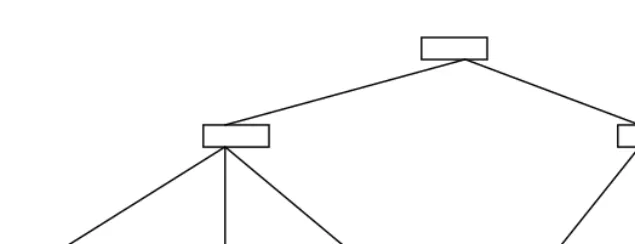
5.2 A small tree 164
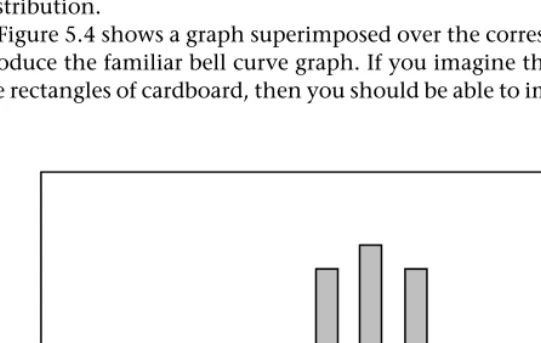
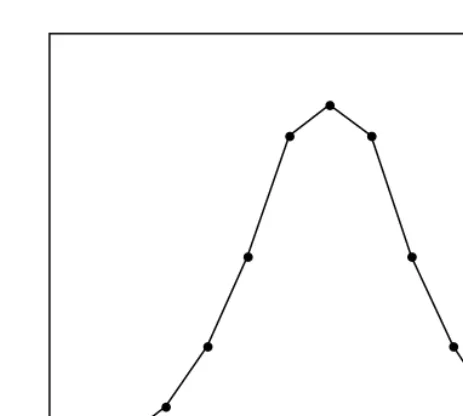
5.3 A normal distribution 178
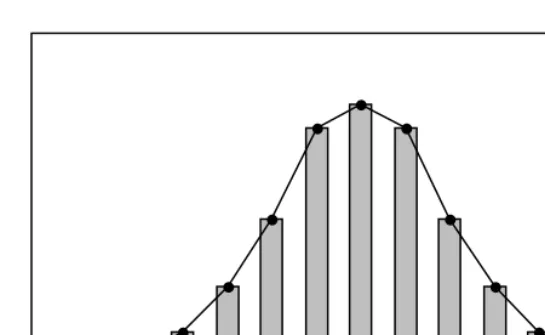
5.4 A normal distribution shown as a graph superimposed
over a histogram 179
5.5 A flat symmetrical distribution 179
5.6 A steep symmetrical distribution 180
5.7 A bimodal distribution 180
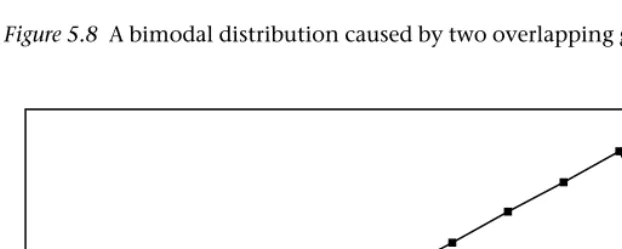
5.8 A bimodal distribution caused by two overlapping groups 181
5.9 A skewed distribution 181
If you scorn to build cities, to sail ships, to settle the wilderness, to master the secrets of prehuman knowledge, then what have you achieved?
(Night Winds, p.68)
So there you are, facing the prospect of doing some research of your own. You’ve read the books about research methods, and have dutifully attended the lectures and training courses on research methods, and you’re still feel-ing lost and confused. You’re not sure of the difference between Popper and postmodernists, or between structuralism and symbolic interactionism (and you’re not sure whether it makes any difference or not); you don’t know how much data you’ll need to collect, but you have a vague belief that more is better than less; you have occasional attacks of panic about what will happen if somebody else discovers the answer first, or if you get something wrong. You’re not sure where to start, and you are resolutely not thinking about what you’ll do after you’ve finished, because you have too much to think about right now. If you’re feeling that way, you’re in good company, because most researchers feel that way when they start their careers. This book is intended to help you out of that feeling, and into a better state of mind.
we’ll be talking about research which involves human beings somewhere in the field of study.
This book does two main things. It outlines the big picture of research – what research is, how it fits into a career, how it fits into the world. It also describes a lot of the nuts-and-bolts details – classic contingency plans; things to remember when tabulating your data; how to treat your informants properly. It illustrates all of this with examples, some of which are real (for realism) and some of which are fictitious (to spare the innocent, and some of the guilty). For the fictitious examples, to spare potential embarrassment we have used people, places and institutions culled from science fiction and history.
We’ve covered topics in varying degrees of depth. Where a topic is well covered by easily located literature, we’ve given a quick overview and moved on. Where a topic is either not well covered by existing literature, or where the relevant literature is difficult to find, we’ve gone into more detail. We’ve also focused more on topics which everyone is likely to encounter, such as data collection methods, and less on topics which will only affect some readers, and which are already well covered in the literature, such as inferential statistics. There’s also the issue of length: covering everything in the same level of detail would have doubled the size of the book, so we’ve reluctantly had to say much less about statistics than we would have liked.
Amid such a mass of small letters, it will not seem surprising that an occasional error of the press should have occurred. I trust, however, that the number of such errors is small; and I am confident that the generous, the learned, and the experi-enced (and it is their good opinion, and theirs only, I am anxious to obtain) will not deny me their kind indulgence.
(Forbes’s Hindustani Dictionary, p.iv) We’re grateful to the people who helped with this book, and to the students and colleagues who have, whether advertently or inadvertently, introduced us to many new learning experiences.
Introduction
The structure of this book: research design, data collection and data
analysis • Taught degree projects: what they are, things to watch out for,
and practical points • PhD second studies: what happens when your first
study changes your plans • Strategies and principles: demonstrating
excellence, exploring territory rather than trying to prove a hunch, avoiding
trouble, and learning from the wise • Choosing a topic, or cups of coffee,
easy pickings and blaming others • Departments, systems and supervisors:
how to behave like a professional, get a good reference, and avoid needless
trouble • ‘How do I get a good mark?’ – things that can send out the wrong
signal, and how to avoid these • Academic writing: why it’s different from
other writing, and how to do it well
. . . certain subtle points which may or may not lend a hideous and incredible kind of rationale to the apparent chaos.
(At the Mountains of Madness, p.53)
The structure of this book: research design, data
collection and data analysis
If you’re already familiar with these topics, or they don’t apply to you, then you can cheerfully skip that section.
The rest of the book is divided conceptually into three main bits. The way that these three fit together is that the research design determines the overall structure of your research; the data collection methods are for gathering the data within that structure, and then the statistical analysis is for making sense of that data. Research design and statistical analysis are both fields which have well-established frameworks. Data collection has previously been something of a Cinderella in comparison. Everyone has agreed that it’s important, and there’s a lot of published material about the individual methods used for data collection, but there’s previously been a significant lack of a systematic frame-work to guide researchers in their choice and use of the appropriate method for their needs. We’ve tackled this by introducing a framework, and by including a set of chapters systematically covering a range of techniques, which you can use independently of the framework if you wish.
That’s simple enough in principle, but in reality, if you have any sense, you’ll bear the statistical analysis in mind when choosing the research design, and will also bear the data collection methods in mind when choosing the statistical analysis and the research design, so that you don’t waste time col-lecting bad, pointless data. For instance, you might discover that using a par-ticular statistical test to analyse your data will mean that you only have to use two-thirds as many subjects as the test you originally intended, but you’ll need to collect the data using a particular type of scale in order to use that test. To use another example, you might realise that your best strategy is to do a demonstration of concept with a single case study as your design, with a little-known data collection technique to demonstrate your point, and with only qualitative analysis. In both cases, you gather less data, and you also do a better job of the research. As usual, it’s wise to do some homework, stop when you hit diminishing returns (i.e. the point where you’re not finding much that you haven’t already found) or start feeling lost, and then take advice from someone knowledgeable about this area.
Closing remarks
The style of this book bears various similarities to that of our previous book, The Unwritten Rules of PhD Research. We’ve deliberately used informal language for clarity and readability. We use a completely different style when writing academic papers, so you shouldn’t even momentarily consider writing up your own work in the same style as this book.
We’ve assumed that you will also read more specialist texts where appropri-ate – our aim is to give you a solid overall grasp of the big picture and some important nuts and bolts, not to give you specialist knowledge of, for instance, how to do analysis of variance. We’ve pointed towards further reading, rather than trying to produce a prescriptive bibliography.
however improbable, are true unless otherwise stated (even the episode with the mole on the dual carriageway). We’ve changed the names of sinners, but retained the names of the virtuous (though giving first names only, so they can deny any involvement if they’re feeling embarrassed or modest). We have also started each section with a quotation, to brighten what might otherwise be a solidly worthy chunk of morally improving prose.
Taught degree projects: what they are, things to watch
out for, and practical points
The outside world, of course, knew of our program.
(At the Mountains of Madness, p.21)
The next few sections are intended for students who are reading this book because they’re about to do a taught degree project, with one tangential section for PhD students. If this doesn’t apply to you, then you might prefer to skip ahead. If it does apply to you, then it’s highly advisable to understand the background context to projects before you start planning your research.
The System, in its infinite wisdom, requires most students to do a piece of original independent research at some point; for PhD students, this is the main purpose of the PhD, whereas for students on taught courses, it’s just one more bit of the course. If you’re an undergraduate, it usually happens in your final year; if you’re a Master’s student, then it usually happens after the taught modules. There are many similarities between the issues involved in undergraduate and Master’s projects; there are also some significant differ-ences, which is why we’ve written this section, to reduce the risk of your running into problems inadvertently.
A surprising number of students don’t know the big picture, so here it is. It’s pretty simple, though the details vary between departments:
• You choose a topic for your project. • You are equipped with a supervisor.
• You research your topic, taking advice regularly from your supervisor. • At the end of the project, you write it up as a dissertation.
If your project is boring and/or badly done, everyone involved tries to forget about it as quickly as possible. If your project is interesting and well done, you can use it as a stepping stone to your goals – for instance, if you want a career in academia, your project could be a route to a PhD. It can also get your foot in the door of an organisation where you want to work.
means that it involves a reasonable amount of primary research, as opposed to just secondary research. There’s more about these concepts elsewhere in this book, but in brief, primary research involves your finding out something which nobody knew before; secondary research involves your finding out what other people have already discovered about the topic. As usual, each university, faculty and department tends to have its own view of how all this should be interpreted, which is why we use words such as ‘usually’ a lot. Your primary research isn’t expected to result in an earth-shattering discovery; it’s just intended to demonstrate that you know how to carry out an adequate piece of primary research.
The administrative procedures, general concepts and project topics in your department may be almost identical between undergraduate and Master’s projects. However, this does not mean that the resulting projects are expected to be much the same, and this can lead to problems if you go from a first degree to a Master’s degree in the same topic, and fail to realise that you’re now playing a different game with different expectations. Quite what the expect-ations are, however, is an interesting question, and can lead to considerable debate when course teams meet. In brief, the further through the academic system you go, the less you are expected simply to quote The Truth from the textbooks, and the more you are expected to show capable independent thought. There’s the further complication that historically there’s been a ten-sion between Master’s degrees viewed as an advanced verten-sion of the corres-ponding undergraduate degree, and Master’s degrees viewed as something different from an undergraduate degree: a common example in the past was ‘conversion’ Master’s courses.
All very well, you might think, but why should I care? You might care because these past debates have influenced the form of present-day projects, and because you might inadvertently stray into unpleasant territory if you’re not careful, like some innocent ramblers wandering on to a battlefield from long ago, whose flowered meadows still harbour the deadly relics of those distant conflicts, waiting to spike you on their sharp bits.
One common example of this is different marking criteria for undergraduate projects and for Master’s projects in the same field. The Master’s projects will be expected to show more ‘masterliness’ than the undergraduate ones, and there can be extensive debate about what is meant by ‘masterliness’. It is inadvisable to involve yourself in that debate. It is much more advisable to find some things that would definitely be construed as showing ‘masterliness’, include them, and let everyone including yourself get on with their lives without needless hassle. As a rough rule of thumb, anything showing more theoretical sophistication, or a mature understanding of the field as a whole, or reading of advanced literature on the topic, is likely to help show ‘master-liness’. Conversely, a tattily presented bit of work whose bibliography consists of a textbook and three internet URLs is unlikely to impress anyone with its maturity and sophistication.
gives some advice about your enemies on an undergraduate or a Master’s pro-ject. It’s important to know about these because if you don’t you can blunder into trouble unwittingly, regardless of how clear your conscience is and how hard you work.
Knowing your enemies
Typically, supervisors are not impressed if they think that you are doing the minimum possible amount of work on a topic. If you give the impression of harbouring such thoughts, then your supervisor will become less sympathetic towards you. It’s a cliché, but a true one, that you get out of your project what you put into it, and it’s your job, not anybody else’s job, to put that in. There is also often the belief that there’s one right answer to every question, with all the other answers being wrong. If you give the impression of thinking this on your project, then it won’t stand you in good stead – you need to show that you’re capable of handling at least some areas where your chosen discipline hasn’t yet reached consensus.
If you’re a Master’s student, then one of your main enemies is the final year undergraduate student. Undergraduates who have come straight to university from school have had only limited experience of the world, and are therefore typically not strong on thoughtful, insightful, mature analysis of a problem, its context and its significance. If you’re doing a Master’s project, then it’s a good idea to include something which allows you to demonstrate that you can think like a sophisticated grown-up.
The topic of grown-ups brings us on to another enemy, namely the practi-cal person from the outside world. There is much to be said for the outside world, but the thing to remember is that if you’re doing a degree, then you are being examined on how much you know about the topic of the degree, not how much you know about the outside world. A classic version of this in computing-related disciplines is the project that tackles a problem which is important to someone in the real world, but which fails to demonstrate any evidence of learning anything on the course. There are related problems, such as claiming that academic writing is a load of nonsense, and that business English is much better. This betrays severe cluelessness about the nature and purpose of academic writing, and usually leads to an unhappy outcome. If you’ve entered academia from the outside world, and you don’t know why the academic world does something the way it does, then the wise thing to do is to find out by asking someone knowledgeable at a suitable time (as opposed to asking angry rhetorical questions about it in a lecture, and ignoring the answer). There are usually sound reasons, but they sometimes take time to explain; if you ignore sound reasons in any field, then you are simply asking for trouble.
much any topic, from websites that they’ve found via a Google search. There are various problems with this approach to secondary research (apart from the age-old problem of plagiarism, which is likely to be detected, and to result in a humiliating fail). One of the main problems is that this approach is typic-ally devoid of any critical assessment of the quality of evidence, particularly in relation to hotly debated topics. A related problem is that it frequently produces a hideously oversimplified account, through missing or ignoring the grown-up texts which tackle the realities of the problem. A classic extreme example of this is the number of people who believe there’s a serious case that the Egyptian pyramids were built by aliens; there are a lot of websites promoting that argument, and very few which explain the much less glamor-ous, but much more solidly based, reality. At degree level, you need to demon-strate that you’re capable of sophisticated analysis of the appropriate evidence. Naive Google searches are not a good way of demonstrating this.
The next subsections describe some problems that are particularly likely to happen specifically to undergraduate or specifically to Master’s projects.
Common problems for undergraduate projects
Undergraduate projects typically run through your final year. So what? So the hand-in date then typically comes near the end of your final year. This may not seem terribly significant until you consider the relative dates of Easter and of the hand-in deadline. You could discover that your supervisor (and potential respondents, if you’ve left your data collection too late) will be taking some well-earned holidays just at the time when you need them most. Unfair? If you can think of a fairer solution, then the world would be grateful. Claiming that lecturing staff should not have holidays at Easter is not a strong argument.
Common problems for Master’s projects
Another common problem for Master’s students occurs when the depart-ment has lingering disagreedepart-ments about the nature and purpose of your Master’s degree. There are often disagreements about the relative balance of vocational and academic components in the project, and also about the type of vocation for which the project is intended to prepare you. So, for instance, one member of computer science staff might think that a com-puter science MSc should prepare students for a job as a programmer (and should therefore require all MSc projects to contain some programming); others might think that it should prepare them for a job in some area of computing, including areas which do not require programming (and should not, therefore, require all MSc projects to contain some programming).
A similar problem occurs when a discipline overlaps with other disciplines – so, for instance, both computer science and marketing departments might teach e-commerce. If your project appears to be at the edge of your chosen discipline, then it can run into arguments about whether or not it demon-strates the relevant skills – for instance, a computer science project which focused on the marketing aspects of e-commerce might run into problems, whereas a computer science project which focused on the software aspects of e-commerce probably wouldn’t. This is unfortunate, because cross-fertilisation between disciplines often leads to very interesting results. One simple way of reducing this risk is as follows. You can begin the introduction of your disserta-tion with an opening line which is a paraphrase of: ‘An important problem in X is Y’, where X is your discipline, and Y is a problem which is clearly part of your discipline and not of another discipline. This clearly locates your project within your discipline, not in debatable territory at the edge of it. You can then talk about how a possible solution comes from discipline Z. That makes it clear that you’re based in your own discipline, and are simply seeing whether something from another field can help that discipline. This strategy is not guaranteed to work, but it does reduce the risks. In case you’re wondering, the reason we advise using a paraphrase is that if you use the precise words that we used, then cynical markers who have read this book will immediately wonder whether you’re using those words because you’re a problem case and a possible heretic from some other discipline who has also read this book, and who is trying to conceal their aberrant tendencies.
Sordid practicalia
might be a good idea. Similarly, if you know your supervisor’s going to be away for the first two weeks of April, you can work around that by using those weeks to get something else done. It’s particularly useful if you think about the end product of your project from someone else’s point of view, such as a potential employer. Anyway, that’s about it for this topic – on to the next.
The next section is intended for PhD students who have just finished one study, and have realised that they might need to change their original plans for their second study. It’s also relevant if you’re a new PhD student wondering what to do for your first study. If you’re doing a taught course, then you don’t need to read the next section.
The section after that explains the key principles underlying research; it uses some extended metaphors which we return to repeatedly throughout this book. Once you’ve grasped those principles, everything else should make much more sense.
PhD second studies: what happens when your first study
changes your plans
He had had a terrible experience and had made a terrible discovery which he dared not reveal to his sceptical colleagues.
(The Case of Charles Dexter Ward, p.144)
So there you are, well into a neatly planned PhD, undertaking your first study, having carefully remembered all of the things that lesser mortals might have overlooked, and well on track (or at least somewhere near there). What hap-pens next? What haphap-pens for many students is that their first study produces interesting and unexpected results which suggest that the original research plan needs to be changed. What do you do? One obvious answer is to talk to your supervisor. That’s true and sensible, but it still leaves the underlying ques-tion: do you plough ahead with your original, neatly planned design, or do you change your plans? Sometimes the first option is right; sometimes, the second. If you and your supervisor decide to change course, then that gets you into some interesting problems, which is why we’ve written this chapter. Some of the problems are administrative. The System is not keen on radical changes of direction in a PhD, so some elegant wording may be needed. Other problems are to do with the research itself.
second planned study was asking the wrong question altogether. That’s a much more profound change. For instance, you might have started off tack-ling something which looked like a purely technical problem, and then real-ised that it was in fact a social or a political problem, not a technical one. A classic example of this comes from the earliest days of statistics, when the Prussian cavalry were investigating why some units suffered more deaths through kicks from horses than others, which looked like a problem with different horse management practices between units. However, the analysis showed that the distribution of fatalities across units was just what would be expected if the fatalities were random events distributed across units in a purely random manner – i.e. a proper explanation of this problem depended on understanding statistics, not on understanding horse management.
As this example suggests, the change of focus may be a pretty drastic one. This is good news if you get things right – you might produce a major break-through. It can, however, be correspondingly bad news if you get things wrong; you can end up looking like a half-baked idiot. What sometimes hap-pens is that a PhD student who has spent their formative years immersed in one approach suddenly discovers another, and becomes an embarrassingly enthusiastic convert to the new approach. True believers of this sort are often unaware of the underlying complexities of their new faith, and go round ped-dling a naive version of it (since the very fact of their being new converts means that they have not had time to master the full intricacies involved). If the student persists in this approach till the end of the PhD, then there’s a fair chance that the department will appoint an external examiner who is an authority on the relevant approach, and there’s also a fair chance that they’ll not look kindly on vapid outpourings.
If your first study suggests that a radical change of direction is needed, then how can you tell the best route? In practice, your supervisor is likely to give you safe advice along the lines of ‘let’s just get through this PhD without too many changes, and then follow that idea up properly afterwards’. You can always plant a flag on the idea via a conference paper or equivalent, and you then have the rest of your life to follow up that idea, without the risk of screwing up your PhD.
That should make it clear that we’re not advocating sudden, drastic changes in the direction of your PhD. Conversely, though, it would clearly be silly to persist with an original plan which has been superseded by events, so if this has happened to you, then you might want to think about ways of changing some aspect of your original plan to make it a better fit with reality. You might, for example, decide to use a field study rather than a controlled experiment, or you might decide to use card sorts rather than a questionnaire, or you might want to use an argumentation-based representation rather than tables to show the results of your content analysis. This book is intended to give you enough information to identify some sensible options, which you can then investigate in more detail.
Strategies and principles: demonstrating excellence,
exploring territory rather than trying to prove a hunch,
avoiding trouble, and learning from the wise
We profited by the excellent example of our many recent and exceptionally brilliant predecessors.
(At the Mountains of Madness, p.14)
The normal student’s reaction to an impending project is to adopt the ostrich position and hope that the whole business will go away. This is an understandable reaction, but not very helpful.
A more productive approach is to work backwards from where you want to be. Do you want fame, or fortune, or a virtuous life of worthy achievement, or what? Once you know this, you can start working backwards from your goal, and figuring out how to use your project as a stepping stone to move you in that direction. If, for instance, you’re doing media studies and you have decided that you really want to work for Porsche, then you might consider doing a project looking at media depictions of Porsche. You will then be able to approach Porsche, telling them what you are about to do, and ask them whether they would be interested in seeing your results. Since this is in essence free market research for them, there’s a sporting chance that they’ll express an interest, which then gets you a foot in that door. (This particular example will probably stop working about a week after this book is published, since unimaginative Porsche-loving students will probably follow this spe-cific recipe in large numbers and alienate Porsche forever, but the underlying principle remains sound.)
Much the same principle applies if you want to go on to a high-flying career. If your project produces findings that are accepted and used in your field (for instance, if they’re written up as a journal article), then that’s an indicator that you are capable of significantly good things. Most students aim too low and underachieve, usually because they don’t know what they’re capable of and because they don’t know how to achieve that potential. This book is intended to help with that problem.
to this. It’s highly advisable to seek, and listen carefully to, advice from know-ledgeable people at each stage. You may have some idea where you want to go, but you probably won’t know the best way of getting there. Anyway, on to the principles of cabinetmaking, cartography and cockroaches, as well as the invaluable cups of coffee.
Cabinetmaking
Back in The Past, apprentices learned their craft for several years, and were then examined to see whether or not they were ready to become fully qualified master craftsmen. If you were an apprentice cabinetmaker, you would be required to produce a cabinet, which would then be examined by a group of master cabinetmakers to see whether you could do all the things required of a master. If you had any sense, you would make sure that your cabinet included every sophisticated feature that you could think of, so that there was no doubt about your ability. If you didn’t demonstrate your ability adequately, then you were cast into outer darkness. It’s much the same with projects: your project is your cabinet, and it’s your responsibility to make sure that you include evi-dence of relevant skills in it. If you produce the equivalent of an MFI flatpack, then the judges will have no way of knowing whether or not you can make cabinets, and will give you a mark which reflects that absence of evidence (i.e. somewhere between a borderline fail and zero, depending on just how clueless you have been).
Another handy concept which relates to this principle is the concept of the toolkit. If you’re an expert cabinetmaker, you’ll probably have a large set of cabinetmaking tools, each of them useful for different purposes. Some of them will allow you to do things easily which would be difficult or impossible with-out them. Part of your expertise as a cabinetmaker consists of knowing abwith-out lots of different kinds of tool, so that if you’re called upon to do some particu-larly tricky task, you know what tools will let you do it efficiently and bril-liantly; part of your credibility as a cabinetmaker involves having those tools ready for use. If you can demonstrate your knowledge of several different types of fretsaw, for instance, you’ll have a lot more credibility than if you appear to know how to use only one type of saw.
Cartography
Another classic error is to set out to prove something rather than to investigate something. Imagine that you’re a sixteenth-century explorer trying to raise funding for a journey of exploration. Imagine further that you tell your pro-spective sponsor that you will find Eldorado; that you receive the funding; and that you then find nothing but swamps and jungle without a hint of gold. You might at this point find yourself thinking about what happened to Sir Walter Raleigh, who reported a similar lack of promised findings to his sponsor, and who was executed for his failure. He had the excuse that his objectives were actually set for him by a capricious monarch, rather than being ones he would have chosen if he had any option; you have the advantage of not starting off out of favour with a capricious absolute monarch (though some readers will probably have unworthy thoughts about their supervisors at this point). Anyway, returning to the main plot, Raleigh would have been in a much happier position if his objective was simply to map an agreed area, and to report on what he found there. That was what Cook did for much of his career, and nobody complained when he produced detailed maps showing that vast expanses of southern ocean were utterly devoid of features: for a sailor, know-ing where there is no land for miles is an important bit of information, and in academia, knowing that a topic is a dead end is very useful as a way of avoiding wasted time.
Why, you might wonder, don’t people start with controlled experiments and cut out the preliminaries? For the same reason that you don’t begin exploration with theodolites and measuring chains: these are comparatively slow, and you need to decide whether it’s worth investing time and effort in getting so much detail about a small part of the terrain when you don’t even know what’s over the next hill. The machete and notebook may be imprecise, but they give you a pretty good overall idea of the big picture fairly fast, which then allows you to decide which places merit more detailed investigation.
So, that’s cabinets and cartography; you might by now be wondering whether the bit about cockroaches will be unpleasant, but don’t worry, it isn’t. It’s about staying out of trouble, which cockroaches mastered long ago.
The cockroach principle
Some topics and some areas are just asking for trouble. Sometimes the trouble is equivalent to a conflict-ravaged land waiting for someone heroic to step in and sort things out, whatever the cost to the heroic person. More often, the trouble is equivalent to a deep and glutinous mud pit, waiting to swallow would-be heroic types weighted down with shiny, very heavy armour. Before you get too keen on tackling something that looks virtuous and necessary, it’s a good idea to ask yourself what a cockroach would do in this situation. The answer is that cockroaches didn’t out-survive the dinosaurs by looking for trouble. Normally a cockroach would leave the rescuing of ravaged lands to someone who has already rescued at least one small to medium-sized pro-vince and who knows what they are doing. At this stage of your career, you should concentrate on developing your skills, so that when the day comes to ride into that conflict-ravaged land, you know what you are doing, and don’t end up in a mud pit instead.
At any given moment the world of research intersects the human world in a way that provides enough mud pits to satisfy a legion of wetland eco-logists. Anything involving politics, religion or sex is usually a good way of getting much further into the limelight than any sane cockroach would con-template for an instant. Each age has its moral panics and folk demons, which usually relate to religion, sex and politics; often the moral crusades of one generation appear naive and painfully bigoted to the generation which fol-lows. Pointing out such regularities, or pointing out split standards and rank hypocrisy in your society, may well be an exposition of truth, but these truths are already well known in the relevant research communities, and having them as your research topic runs the risk of you featuring in a tabloid news-paper headline and being publicly vilified before you’re ready to take on that role. Topics like this need to be researched by someone, but you need to be careful about just what topic you’re tackling in what way at this point in your career.
other reasons. One perennial favourite involves the scope of your intended work. Undergraduates normally design projects that would tax a good Master’s student; Master’s students in turn favour projects which would scarcely fit into a three-year PhD; while PhD students incline towards research goals which would fill the rest of their working life. Something like ‘discovering why stu-dents make mistakes, and finding a solution to this’ is probably a bit too ambitious, for example. A closely related Bad Idea is to tackle something which has already been shown to be impossible (for instance, setting out to devise a perpetual motion machine). There is a school of thought which argues that they laughed at Galileo and Columbus; that’s true, but on the same principle, they also laughed at a large number of jesters and clowns. Received wisdom is quite often wrong, but if the error was obvious enough for a student to find easily, then you need to ask yourself whether it’s significant that none of your many predecessors was able to find it before you.
That gives you some idea of how to view research topics from the cockroach point of view, but there are also other factors which need to be considered from this viewpoint, such as choice of supervisor, which leads on to the next important issue, namely coffee as a means of learning from the wise.
Cups of coffee
Cups of coffee are so important that we used them as the cover illustration for our previous book. Why? Readers familiar with life will know that there are things which it is very useful to know, but which nobody in their senses will admit to in writing. Information of this sort is passed on informally, by word of mouth, often over a cup of coffee away from prying ears. An informal chat, off the record, with a suitable member of staff, is something that can be enor-mously helpful. It can clarify organisational politics, or give you useful leads, or help you make sense of career planning. This needs to be done with tact and discretion, since nobody in their senses is going to tell you the full, sor-did, unvarnished truth about their department or their colleagues, but they may well give you some useful hints in what they say and in what they signifi-cantly fail to say. If you pick the brains of a suitable member of staff well before you choose your project topic, then this can make all the difference in terms of how your project will turn out. Who is a suitable member of staff? If you’re not sure, start with an approachable one, and ask them who would be suitable for what you have in mind. You’ll need to have different conver-sations at different stages of your project; sometimes they’ll be with your supervisor, and sometimes they won’t, but the principle remains sound. It also remains sound in later life, where good communication networks can make all the difference.
Choosing a topic, or cups of coffee, easy pickings and
blaming others
So it’s true that you plan to supplement Nentali’s ‘Interpretation of Elder Glyphics’?
(Night Winds, p.273)
Once you have some idea where you want to go, and what sort of project will help you move in that direction, you will need to choose a topic for your project. This section describes some ways of identifying good topics, explains what constitutes a ‘good’ topic, and also describes some pitfalls to beware.
Departments vary widely in their approach to projects. Some departments produce a list of projects which have the blessing of the department’s System, and expect you to choose one of these; others leave you to choose your own; still others use a combination of the first two methods. If you’re confronted by the Approved List, and none of them really suit you, then you may choose to use some low cunning; if there’s an element of choice, then the situation is more straightforward. We’ll deal with the straightforward case first, and come back to low cunning later.
Before that, though, some words of hope and warning. Some projects have the potential to be turned into commercial products which will make the worthy student rich. This might sound like a glittering prospect, and it is. However, this takes you into the realm of Intellectual Property, patents and copyright. The law in these areas is complex, and is still changing. If you’re thinking of going down this route, then there are two things you need to do:
1 Check with the projects co-ordinator about your institution’s policy on this 2 Don’t mention it to anyone else, since that might count as putting your brilliant idea in the public domain, and therefore make it impossible for you to patent the idea.
It’s an important topic, but because the situation is so fast-changing, and because most cases are unique, we won’t say more about it in this book.
Cups of coffee again
with your life, then there’s a good chance that they’ll suggest something helpful. It’s worth remembering that you know what you want from your life (well, to some extent at least), and that they know about ways of getting there; they’ve been in the profession for longer than you, so they’ll know all sorts of ways that you’d never have thought of. It’s a good idea, from the viewpoint of tact and diplomacy, to have done some homework first. The homework shows that you aren’t simply expecting someone else to do all the thinking for you. How do you do this? One sensible way is to find one sensible starting place in the literature.
Easy pickings
There’s a literature on most subjects imaginable, and this can be used to find a good project topic quickly and easily. (Identifying which topics are good, and for what reasons, is another matter, but more on that later.) Clueless students work almost completely from the internet. Students with a clue are aware that there are academic journals, which clueless students usually don’t bother to read. Suppose that you’re interested in people’s attitudes to computer-based crime. It’s a popular topic, so you’ll need to differentiate yourself from hordes of uninspired individuals. A good way of doing this would be to look up a recent journal article on the topic, read it, and re-read in detail its ‘conclusion and further work’ section. This will, as you might expect, include some sug-gestions for further work that needs doing in this area. You are now in a position to approach a suitable member of staff, to tell them that you’ve just read Young & Green’s article on cybercrime in the International Journal of Criminology, and to ask whether Young and Green’s suggestions about attribution theory in perceptions of cybercrime would be a suitable starting point for a project. This is a much stronger position than telling the same member of staff that you’ve looked at some websites about computer crime and decided that this would be a really cool topic. With any sort of luck, you can now have a productive chat with that staff member about suit-able topics. They might make it clear that they disagree with Young & Green’s approach, but that isn’t a problem for you: reading that article is your ticket into the conversation which can steer you towards a better topic, so it’s not been a waste of your time.
out whether or not the author has done that further work yet, or plans to do it in the foreseeable future.
What happens if there isn’t a suitable member of staff to advise you about your possible project? That’s a worrying sign, because in that case, who would be able to supervise you? If there isn’t a suitable supervisor around, then it may be worth rethinking your topic, to see if there’s another topic which would suit you reasonably well, and for which you could find a suitable supervisor.
Anyway, back to doing the homework before you speak to someone suitable. Doing homework is an invaluable skill and will stand you in excellent stead in later life. There’s also the consideration that you’ll need to learn the relevant skills anyway sooner or later while doing your project – you can’t build your entire career on cups of coffee with other people. Doing your homework involves identifying a suitable topic on the basis of intelligent information gathering, without substantial input from other people. For this, you’ll need to have a good idea about what’s happened in a given field, what’s happening there now, and what’s likely to happen next. A good way of getting an over-view of what has happened already is to find a reover-view paper and wade through that. What is a review paper? It’s a paper reviewing significant developments in the field since the last review paper (usually about 10 to 15 years). Review papers are typically written by major authorities in the area (so they know what they’re talking about) and typically mention all the most significant papers in the area, so you know what the main reading is. They’re very useful for identifying gaps, i.e. topics within that field which haven’t been researched adequately so far (a good starting point for a project). They’re an invaluable resource, and surprisingly few students have ever heard of them. How do you know that something is a review paper? Usually the title begins with something like ‘Review article’ or ‘Review paper’ followed by a colon and the subtitle; sometimes it begins with something like ‘A review of . . .’.
Blaming others
you get a set of brownie points for doing a proper replication or extension to the original work, and you’re also covered against accusations that the design or methods had faults.
Suitability and sanity
Whatever the method you use to get to the choice of topic, you need to assess the suitability of your intended project. This includes questions such as the following:
• Is it the right project to act as a stepping stone to your life goals? • Does it let you display the right cabinetmaking skills?
• Would a self-respecting cockroach tackle this topic? • Is it feasible with the resources and skills that you have? • Is there a disastrous risk lurking beneath its placid surface?
It’s very tempting to choose a topic because it looks easy. The risk is that it would actually be easy for anyone to do, in which case it’s hardly likely to impress anyone when you’ve finished it. A wiser strategy is either to do a topic which is easy for you because of your prior knowledge, but which would be difficult for anyone else, or to do a topic which is difficult for anyone including you. Both these strategies leave you with a set of demonstrable skills which can help you move on towards your goals.
You will probably be able to say what you want to do with your life (though you may not: the final section of this book, about planning your later life, may be useful in that case). For the other questions, your best strategy is to read the relevant bits of this and other books, and then, once you’ve done a respectable amount of homework, have a cup of coffee with the right person and take advice from them.
Low cunning
sound, and to have been thought through by someone who knows what they’re doing, which is not always the case with the projects that students generate on their own. There are two main ways of tackling things within this framework. One is to have a quiet, tactful word with an appropriate member of staff well before the annual list is published, and see whether a project fitting your interests can be put on to the list. This will require some careful thought to make sure that your lovingly crafted project isn’t then brutishly allocated to someone else; we leave the handling of this as a further oppor-tunity for you to practise tact and diplomacy skills. The other way is to see whether an existing project topic can be modified in the direction that you want. This has obvious advantages if a suitable project exists, but is trickier if one doesn’t; it’s also not always clear which projects can be modified in a suitable direction and which can’t.
Whatever approach you use, it’s worth considering things from the depart-ment’s point of view, and the supervisors’. Many things make more sense from that perspective, which is the topic of the next section.
Departments, systems and supervisors: how to behave
like a professional, get a good reference, and avoid
needless trouble
. . . for they knew the tendency of kindred eccentrics and monomaniacs to band together . . .
(The Case of Charles Dexter Ward, p.253)
The process of doing your research will bring you into contact with The System in its various forms. As a PhD student, you have to deal with entities such as the Postgraduate Degree Research Board, or whatever it’s called in your institu-tion. Whatever your level in the academic food chain, you will have to deal with your department, its procedures and your supervisor. Often these deal-ings are straightforward and have a happy ending. Often they are apparently straightforward and have an unremarkable ending which is not actively bad, but which is passively bad – you achieve something which is okay, but which is short of what it could have been. This is a particularly pernicious problem because it tends by definition to go unnoticed. Most students underachieve for various reasons, and we hope that this book will help at least some students to improve on that situation.
and turned you into collateral damage. More often, however, problems arise either because the student has done something really silly, or because the stu-dent has not adopted suitable strategies for dealing with an imperfect world. Many of these problems make more sense if you view things from the point of view of the department and the supervisor, which is what we will describe next. It’s important to remember that universities are different from schools. The core function of a school is to educate children. A university, in contrast, does not have a single core function; it has several core functions, some of which are complementary to each other, and others of which are conflicting. One obvious example is research: departments are assessed on the quality of their research, with high research ratings being rewarded by increased income. High research ratings also bring other advantages, such as being more attractive to high-calibre staff looking for a new job. Degree courses are just one of the things that departments do, and if you’re a high calibre researcher, then every hour you spend lecturing is an hour away from your research (and is also accompanied by several hours of preparation time, exam time, etcetera, mak-ing the cost to you much higher than it might look to an innocent student). The higher the status of your department, the more the staff will be pulled in several directions because of factors such as these.
Departments also change through time. For example, a department might decide to structure one of its courses so that graduates from that course are eligible for accreditation with some prestigious outside professional body. This has obvious advantages, but can also bring disadvantages – for instance, it might mean that student projects have to fit prescribed criteria. That’s an example of proactive change; at least equally common is reactive change, where the department changes in reaction to some hideous episode in the past which should never be allowed to happen again, such as the time that Dr West encouraged all those projects on barnacle reproduction. After such episodes, departments will be understandably twitchy if a student unaware of the past happens to suggest a project topic which stirs dark memories. Departments also often change in a mixture of proactive and reactive behaviour – typically by minor tweaks to procedures from year to year, to build on things that went well last year, and to improve things that didn’t go so well.
in public, so such an appeal would be doomed to failure from the start. If, on the other hand, you have a discreet word with the projects officer early in the project, and provide them with a reasonable-sounding argument for changing supervisor with no loss of face to anyone involved, then the chances of success are much better. In an ideal world, you’d never be in this position in the first place, but it isn’t an ideal world, and an important principle in life is learning what battles to fight, what battles to refuse, and how to tell which category a given battle falls into.
There are similar issues from the viewpoint of your supervisor. Supervisors were not put on this earth for the sole purpose of getting you a good mark for your project. Supervising you is a pretty minor part of their life, which might account for perhaps half an hour per week of their time. At a practical level, they have a lot of more important things to be getting on with. At an ethical level, your project is your responsibility, not theirs – their role is to give you supervision, and it’s up to you whether you make good use of it or not.
One important thing about supervisors is that your project supervisor will often be one of your referees when you go job hunting. Most references these days are pretty anodyne, because of the legal problems associated with any other sort of references. A reference saying: ‘This student gained an Upper Second Bachelor’s Degree’ and nothing more is of no real use to you – the subtext to the potential employer is that you’re so unremarkable that the ref-eree couldn’t think of anything actively good to say about you. It’s worth thinking about what raw material you can give your supervisor to help them write a glowing, non-anodyne reference for you. For instance, have you paid attention to common professionalism, such as always turning up to super-vision meetings at the agreed time, and giving advance warning if you’re unexpectedly unable to attend a meeting? Most potential employers specific-ally ask referees about your punctuality and attendance, but few students real-ise this. At a higher level, have you shown initiative and good sense in your work, or have you done the minimum possible, and grudgingly? At a still higher level, have you done anything remarkable, such as getting a publica-tion out of your project, or doing your project in collaborapublica-tion with a major player in the field? All of these are things where working well with your supervisor can make life a lot better for both of you.
To end on an encouraging note, it’s worth remembering that departments and supervisors like seeing students do well: even the most misanthropic of staff are aware that student successes reflect well on the supervisor and department as well as the student. If you use some initiative and sense, then you can improve your chances of pairing up with the right supervisor for you, and of doing something that will benefit you both.
The next section is a brief digression about various common ways in which students send out unintended wrong signals, and how to avoid these.
‘How do I get a good mark?’ – things that can send out
the wrong signal, and how to avoid these
The macabre direction of his interests had earned Opyros a shadowed reputation among the intellectuals and academics of his audiences. Thus literary fame escaped him – though notoriety did not.
(Night Winds, p.99)
You get a good mark by doing a good project. That raises the obvious question of what counts as a good project in the first place, which is what this book is about. A point worth remembering, while we’re on the topic, is that asking academics about how to get a good mark is usually not a wise move, since it implies that all you’re interested in is the mark in itself, rather than in under-standing the discipline that you’re supposed to be learning. Next time you’re on a fly-by-wire aircraft, you might want to consider whether you would feel happier knowing that the software was written by someone whose student life was focused on getting a good mark, or one whose student life was focused on learning all there was to know about writing software well. If you do good work, and make sure it’s visibly good via appropriate cabinetmaking, then a good mark will normally follow.
On the subject of cabinetmaking, there are some ways of gratuitously losing marks which are worth mentioning. One classic is simply to forget that you’re making a cabinet, and to omit any visible indicators of excellence from your assessed work. Another classic is to ignore the guidelines about presentation format, which will lose marks, needlessly antagonise the marker, and send out a signal that if you’re clueless in this respect, then you’ll probably have done something clueless elsewhere as well. A third classic is to pour needless blood into the water, i.e. to make silly, classic mistakes which have the same effect on markers as the scent of blood does on sharks. If you’re not sure what consti-tutes blood in the water for your discipline, then it’s advisable to find out as soon as possible.
could cause you unnecessary grief and woe. Usually this happens because you inadvertently do something that makes you look like one of these enemies, and which then smears you by association. The rest of this section contains some remarks about potential enemies and about how to differentiate yourself from them.
Your enemies
As usual, those who share the same belief that downloading a batch of dubious articles off the internet and then doing a questionnaire survey will constitute a hot piece of research. We’ll discuss the methodological flaws in this belief later. For the time being, you might want to try envisaging an interview panel deep in deliberation about the candidates: more specifically, you might want to imagine one of the panel saying: ‘Wow, did you notice that one of them did a Google search for previous work, and then did a questionnaire survey? That’s impressive.’ You might then like to think about the implications from the viewpoint of cabinetmaking.
A useful tip, when planning a piece of research (or an interview strategy, come to that) is to write down a sensible, obvious plan on a sheet of paper, and then draw a line through it with a thick red pen. The initial sensible, obvious plan is a starting point for planning, not the end point. Everyone else will probably think of the same obvious starting point, particularly if it looks easy, so it’s a good idea to re-examine this plan and to ask yourself how you could do it visibly better. For instance, anyone can hack together a tatty questionnaire or do a Google search. Not many stop to ask whether a questionnaire is the appropriate method of data collection for what they want to do, and equally few stop to ask whether there is more to literature searches than Google.
A very different enemy is the True Believer bearing witness among the ungodly. They may be an evangelical postmodernist in a resolutely empirical department, or a resolute empiricist in a postmodernist department; the essen-tial point is that they are convinced that they are right, and that anyone who disagrees with them is wrong, and needs to be converted. This position has all sorts of psychological benefits; for instance, if everyone tells you that your research is a pile of garbage, then you can tell yourself that they’re only saying that because they’re foolish persons, which is a lot more comforting than confronting the possibility that your research really is a pile of garbage. Some-times the True Believer is even right. There is, however, a time for all things: a time to be born and a time to die, a time to be right, and a time to be sensible so that you can get through this stage of your education and emerge with a bit more credibility when you start to nail your thesis to the department door. (There’s also sometimes a time to realise that you were worshipping at the temple of a false god, in which case you’re likely to end up feeling rather glad that you showed some sense in your choice of research design and didn’t get into a needless wrangle about it.)
clear from other sections of this book, we believe that ethics and principles are deeply important in research. There’s a difference, though, between stick-ing up for your principles and gostick-ing round askstick-ing for trouble regardless of the circumstances. Returning to knowing your enemies, you may not consider yourself a True Believer, but you need to beware of inadvertently looking like one. This is something where you need to understand the ideology, politics, and so forth of your department – some bristle at any mention of surveys, others at any mention of case studies, others again at any mention of inferen-tial statistics. There will also probably be feuds within your department, with some staff members locked in a decades-long bitter wrangle about some topic or other. As usual, your best bet is to do a bit of homework, look at what sort of work has been well received in your department in the last couple of years, and then tactfully pick the brains of someone approachable and knowledge-able. There’s a time to stand and fight for your beliefs, but there’s no point in standing and fighting for them before you’ve learned how to use your weapons or put your armour on.
The last enemy that we’ll mention here is the no-nonsense person from industry. These often have considerable experience of doing what they con-sider to be research, and insist on applying the same approach to their research in academia. Somewhere along the way, their view will come into collision with reality, though whether or not they will learn anything from the collision is another question. The problem here is that the term ‘research’ is used in at least two quite different senses. One sense is primary research, which is highly valued in academia; the other is secondary research, which is also highly valued in academia, but is different. Failure to understand this distinc-tion often leads to a project which consists of a poor literature report (as opposed to a literature review, described elsewhere in this book) and/or a sur-vey. Surveys are sometimes an appropriate research approach, but they’re only one approach among many, and if they’re the only one you know about, you’re heading for trouble.
If you’re from industry and are tackling a degree, then it can be hard going, since it’s unlikely that anyone will explain to you just why academia does things the way it does. This can be intensely frustrating – for instance, you might write a report in what you consider good, clear plain English and then receive a dreadful mark with some incisive comments about your writing. There are a lot of areas where academia and industry can learn a lot from each other, but the rich rewards are hidden in a particularly noxious swamp, and that’s a different story. If this problem rings bells with you, then you might find it useful to pay particular attention to the sections of this book that relate to cabinetmaking, so you can at least avoid sending out the wrong signals, even if some of the reasons remain obscure. On that encouraging note, we’ll end this section, and proceed to the next.
We explain the underlying principles of academic writing, and how to send out the right signals in your writing.
Academic writing: why it’s different from other writing,
and how to do it well
But since the scoutie-allen, the partan, the clokie-doo and the gowk seemed not to convey any precise idea, he followed them with the Linnaean names; Stephen did the same . . . and from this it was not great way to Latin descriptions of their more interesting processes.
(The Fortune of War, p.61)
In most of the world, good writing is defined in pretty much the same way: clear, simple, focusing on the essentials, in plain English, and interesting. Not so in academia. Why does academia have a different perspective? There are various reasons, some rooted in scandals of the past, some in simple practi-calia, some in systems and selection pressures. We’ll start with ‘clear and simple’.
Clear and simple language
Academic writing varies between disciplines, but whatever the discipline, there is little risk of its preferred writing style being described as ‘simple’. There are various features which bring complexity, such as the use of cit-ations in the text, the use of technical terms and the use of grammatical constructions rarely encountered in the outside world. Many students take the understandable view that if they produce text which is not cluttered with these apparent obscurities, they will produce text which is clear and simple and therefore good. This is a particularly common view among trainee teachers, who are trained (among other things) to produce simplified descrip-tions of topics for teaching to schoolchildren. It’s also common among people from a business background, who are used to producing clear, concise reports. Academia, however, proceeds from a different viewpoint, for two reasons.
heard of before, and have worked till late at night getting to grips with the topic. They know what proportion of males are red-green colour blind; they know about several types of visual impairment, and several scales for assess-ing readability of text. You are expectassess-ing to see coursework which reflects this hard-won knowledge, and you have a neatly tabulated marking scheme which allocates marks to each topic which they mention. You pick up the first coursework, and you are confronted with a page of clear, simple English, tell-ing you true and relevant thtell-ings that any intelligent person on the street would know, but failing utterly to mention any of the specialist knowledge that is the whole point of the module. What evidence do you have that this person has learned anything at all on the module? Following on from that, what evidence do you have that this person, if asked to do the same task as part of their first job after graduation, would produce something that followed legal guidelines and that would be fit for purpose? The answer to both questions is not one that will improve anyone’s day.
The conclusion is pretty simple: if you’re writing academic text for assess-ment, you use it to demonstrate your detailed knowledge of what you are supposed to know. How do you do that? Technical terms and references to key relevant texts are a good way to start, which takes you back to the sort of language that we started from – academic language with lots of technical terms and references in it.
There’s a second reason for academia taking its own perspective on whether ‘clear and simple’ should be favoured. Imagine that you’re a researcher, doing some background reading to find out what’s already known about a topic. You find a paper describing some highly relevant work, with surprising findings which would have far-reaching implications for your own research if they were correct. However, the paper fails to give you some crucial bits of information about how that work was carried out. You write repeatedly to the author, who is snowed under with teaching, and after several months you get a reply, with an apology that the article didn’t contain that information, but explaining that the author left it out, because they wanted to keep the article clear and simple. Would you come away from this interaction impressed by the profes-sionalism of that author? Probably not, and rightly so. In practice, this particu-lar scenario is pretty rare, since few sane academics would use the excuse of ‘wanting to keep the language clear and simple’. You do quite often, however, encounter articles which don’t give you all the information that you need, and the experience is not much fun.