1 | P a g e
Synopsis of the project
MATHAMATICAL TIME ESTIMATION OF VARIOUS
PARTS IN 3D PRINTER
to be submitted in partial fulfillment of the requirements for the Project of
MEE2016
NAME
REG.No
2 | P a g e
BONAFIDE CERTIFICATE
This is to certify that the following students have successfully completed the project as a part of their CAL J-Project Component for the subject,
RAPID MANUFACTURING AND TECHNOLOGY (MEE2016)
The students worked under the guidance of their Faculty, Prof.
M.Sugavaneswaran and were supported by the School Of Mechanical (SMEC, VIT University).
Name of the student:
MANIK CHAUHAN (15BEM0096)
3 | P a g e
INDEX
S.No
Title
Page No.
1.
Acknowledgement
4
2.
Introduction
5
3.
Top 5 3D Printing Factors
That Affect Printing Time.
6,7
4.
Analysis
8
5.
Parts
9
6.
Calculation
10,11
7.
Result
12
4 | P a g e
ACKNOWLEDGEMENT
A project provides you with deeper understanding of the theoretical
topics that is learnt in the class. On this occasion, I would like to express our
heartfelt gratitude to our faculty, Prof. M.SUGAVANESWARAN for his
relentless guidance and encouragement throughout the completion of this
project.
We would like to thank everyone who abetted us during the course of our
work. Specially the lab-assistant of TT – 014 Lab for providing us all facilities
and guidance wherever required.
Last but not the least, we would like to thank VIT University for providing us
with an opportunity to work on such projects to enhance our practical
knowledge and exemplifying the process of making an Engineer.
Thank you
Manik Chauhan
5 | P a g e
INTRODUCTION
Time estimation is essential for production scheduling, machine selection, and cost estimation. Acquisition of the accurate result requires an understanding of the factors that influence the printing time.
One of the main objectives of this research is to statistically illustrate the relation between the geometric attributes and build time of the parts. Hence, the effect of the most important geometric parameters is analyzed. The final model that will be developed in this work cannot be applied to all parts and processes. The scope of this research is limited to the parts that can fit in a bounding box that is less than 10 inches in all dimensions.
In this project we are going to find the approximate time estimation of a simple part in 3D Printing mathematically. Afterwards we will compare our estimated time with the machine estimated time,
6 | P a g e
Top 5 3D Printing Factors That Affect Printing
Time
1. Resolution and Layer Thickness :- The biggest factor to
consider is resolution or layer thickness. The 3D printers have the capability of building from .005 to .013 (layer resolution). This resolution is represented by the thickness of the tool path.
Printing at .005 is going to produce some very sharp details; it’s
also going to reduce any stepping that might occur when building curves. The recommendation is to use this resolution when files have fine details. There is one drawback to printing in .005, and that is the amount of time needed to complete the part. It can take up to 3 times longer than a standard .010 build.
7 | P a g e
3. Print Orientation :- The next specification to think about is the part positioning on a build tray. The difference between a vertical or horizontal positioning before it is sliced is going to affect the strength and quality of the part. For example, if the part is in the shape of a dowel or rod, the software is going to slice along the X-axis. If the rod is horizontal along the X-axis it will be a fairly strong part but the curves might show some stepping. If the same part is to be printed vertically the tool path is still going to be along to X-axis. However, there will be a nice round edge but a weaker part due to the slice layers required. This will also affect the time needed to build, ultimately affecting the costs.
4. Support Material :- The support style selected is also important to the cost and time. Choices for Fused Deposition Modelling (FDM) 3D printers include basic, break-away, SMART, and surround, can have an impact on how much support estimation for 3d printing.
8 | P a g e
ANALYSIS
The mathematical formula to calculate the time estimation of a 3D printer is given by.
Print Time=0.005390527+(0.064608959*SA)+(0.102169623*V)-(0.011981463*XY)- (0.001236407*ZSA)
Attributes
X Basic Geometry, length
Y Basic Geometry, width
Z Basic Geometry, height
V Basic Geometry, volume
SA Surface Area
ZSA Product of the part height and surface area
XY Projected area of part to the working plane
In order to calculate the time estimation and for comparison we took 4 parts with a particular simple shape (mainly cube and cuboid).
9 | P a g e
PARTS
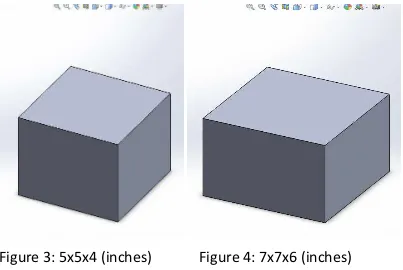
Figure 1: 6x6x6 (inches) Figure 2: 6x9x6 (inches)
10 | P a g e
CALCULATION
Input: (5X5X4)
Experimental time taken(Total time– Support structure and heating time):
19 : 28 – 1 : 30 = 17hours 58minutes
Now,
Print Time=0.005390527+(0.064608959*SA)+(0.102169623*V)-(0.011981463*XY) - (0.001236407*ZSA)
So print time is : 17.72 hour = 17 hour 43 min
Input: (6X6X6)
Experimental time taken(Total time– Support structure and heating time):
36 : 08 – 1 : 30 = 34hours 38minutes
Now,
Print Time=0.005390527+(0.064608959*SA)+(0.102169623*V)-(0.011981463*XY) - (0.001236407*ZSA)
11 | P a g e
Input: (7X7X6)
Experimental time taken(Total time– support structure time):
48 : 51 – 1 : 30 = 47hours 21minutes
Now,
Print Time=0.005390527+(0.064608959*SA)+(0.102169623*V)-(0.011981463*XY) - (0.001236407*ZSA)
So print time is : 44.76 hour = 44 hour 46 min
Input: (6X9X6)
Experimental time taken(Total time– Support structure and heating time):
53 : 29 – 1:30 = 51hours 59minutes Now,
Print Time=0.005390527+(0.064608959*SA)+(0.102169623*V)-(0.011981463*XY) - (0.001236407*ZSA)
12 | P a g e
RESULT
After all the mathematical calculation we get the following result:
S.NO PARTS MATERIAL
USED(cm^3)
ESTIMATED TIME
ACTUAL TIME
DIFFERENCE (hour)
ERROR %
1 5x5x4 1659.595 17hr 43min 17hr 58min 0.24 1.33%
2 6x6x6 3580.505 34hr 03min 34hr 38min 0.596 1.72%
3 7x7x6 4871.414 44hr 46min 47hr 21min 2.59 5.46%
13 | P a g e
CONCLUSION
From this experiment and research I got to know about mathematical formula to calculate time estimation.
There is still no accurate formula to calculate time estimation accurately.
But by this formula we can easily calculate approximate value for simple 3D printing. But we can get approximate time to calculate the print time of the given simple part. Complex structure time estimation is tough to calculate.
From the given result we can calculate parts of less volume more accurately than the parts with greater volume as can be concluded with the % error increase. So greater the volume, greater will be the error and lesser be the accuracy (for this formula).
And also when the dimensions exceed 10 inches this formula can’t be used as it shows inaccurate value with greater error.
This time estimation is very useful as it gives us the time before hand and through this we can further estimate the price of that particular part.