Headquarters and
Subsidiaries in
Multinational Corporations
Strategies, Tasks and Coordination
Headquarters and
Subsidiaries in Multinational
Corporations
Strategies, Tasks and Coordination
All rights reserved. No reproduction, copy or transmission of this publication may be made without written permission.
No paragraph of this publication may be reproduced, copied or transmitted save with written permission or in accordance with the provisions of the Copyright, Designs and Patents Act 1988, or under the terms of any licence permitting limited copying issued by the Copyright Licensing Agency, 90 Tottenham Court Road, London W1T 4LP.
Any person who does any unauthorized act in relation to this publication may be liable to criminal prosecution and civil claims for damages.
The author has asserted his right to be identified as the author of this work in accordance with the Copyright, Designs and Patents Act 1988.
First published 2005 by PALGRAVE MACMILLAN
Houndmills, Basingstoke, Hampshire RG21 6XS and 175 Fifth Avenue, New York, N.Y. 10010
Companies and representatives throughout the world PALGRAVE MACMILLAN is the global academic imprint of the Palgrave Macmillan division of St. Martin’s Press, LLC and of Palgrave Macmillan Ltd. Macmillan® is a registered trademark in the United States, United Kingdom and other countries. Palgrave is a registered trademark in the European Union and other countries. ISBN-13: 978–1–4039–3624–0 hardback
ISBN-10: 1–4039–3624–2 hardback
This book is printed on paper suitable for recycling and made from fully managed and sustained forest sources.
A catalogue record for this book is available from the British Library.
Library of Congress Cataloging-in-Publication Data Johnston, Stewart, 1944–
Headquarters and subsidiaries in multinational corporations : strategies, tasks and coordination / Stewart Johnston.
p. cm.
Based on the author’s doctoral dissertation. Includes bibliographical references and index. ISBN 1–4039–3624–2
1. International business enterprises–Management. 2. Foreign subsidiaries–Management. 3. Strategic alliances (Business) 4. International business enterprises–Australia–Management. 5. Foreign subsidiaries–Australia–Management. 6. Strategic alliances (Business)–Australia. I. Title.
HD62.4.J64 2005
658′.049–dc22 2005042904
10 9 8 7 6 5 4 3 2 1
14 13 12 11 10 09 08 07 06 05
Printed and bound in Great Britain by
Contents
List of Tables vi
List of Figures viii
Preface ix
Part I: Conceptual Background and Model
Chapter 1: Introduction 3
Chapter 2: The Strategies of the Developing MNC 16
Chapter 3: The Strategies of the Modern MNC 33
Chapter 4: Subsidiary Tasks 56
Chapter 5: A New Model of the Headquarters-subsidiary
Relationship 65
Part II: Empirical Investigations
Chapter 6: MNC Strategies and Subsidiary Tasks 83
Chapter 7: Subsidiary Task and Subsidiary Autonomy 97
Chapter 8: Subsidiary Size and Subsidiary Autonomy 113
Chapter 9: Control and Coordination 123
Chapter 10: Knowledge Management and Innovation 148
Chapter 11: Conclusions, Limitations and Future Directions 173
Chapter 12: Methodological Appendix 185
References 209
Index 230
List of Tables
Table 2.1 Employee Control Modes Used in Firms 25 Table 2.2 Subunit Control Modes Used in Firms 25 Table 6.1 Descriptive Statistics for Subsidiary Role
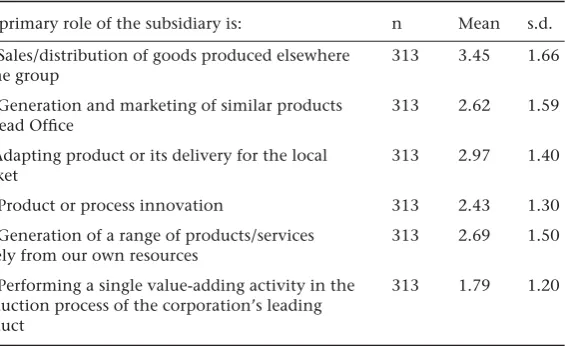
Statements 85
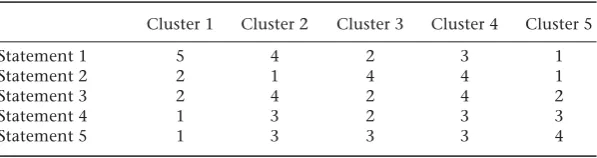
Table 6.2 Initial Cluster Solution 88
Table 6.3 Expanded Cluster Solution – Statement Means
for the Five Clusters Solution 89
Table 6.4 Comparison of Present Classifications with
Previous Studies 92
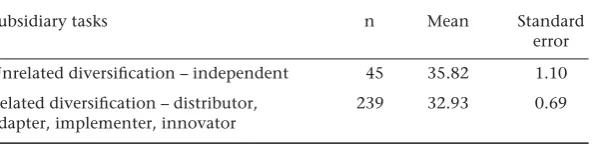
Table 7.1 Uncontrolled Subsidiary Autonomy Means for Unrelated and Related Diversification Subsidiary
Tasks 105
Table 7.2 Uncontrolled Subsidiary Autonomy Means for
Related Diversification Subsidiary Tasks 105 Table 7.3 Descriptive Statistics and Intercorrelations for
Control Variables 106
Table 7.4 Analysis of Covariance Summary – Unrelated Diversification vs Related Diversification
Subsidiary Tasks 107
Table 7.5 Estimates of Subsidiary Autonomy Marginal Means for Subsidiary Tasks of Related and
Unrelated Diversification Strategies 108 Table 7.6 Estimates of Subsidiary Autonomy Marginal
Means for Parent Nationality 108
Table 7.7 Analysis of Covariance Summary – Four Related
Diversification Subsidiary Tasks 109
Table 7.8 Estimates of Subsidiary Autonomy Marginal Means for Subsidiaries of Related Diversification
Strategy 109
Table 8.1 Descriptive Statistics and Intercorrelations 117 Table 8.2 Linear, Quadratic and Trigonometric Effects of
Subsidiary Size on Subsidiary Autonomy 119 Table 9.1 The Baliga/Jaeger Typology of Control
Mechanisms 128
Table 9.2 Descriptive Statistics for Dependent Variables 135
Table 9.3 Descriptive Statistics and Intercorrelations for
Control Variables 138
Table 9.4 Uncontrolled Means and Standard Deviations
for Control Mechanisms for Each Subsidiary Task 140 Table 9.5. Analysis of Covariance Summary for all Control
Mechanisms 141
Table 9.6 Estimated Marginal Means and Significant Pairwise Comparison for All Subsidiary Tasks
and Control Mechanisms 142
Table 9.7 Logistic Regression Results for the Two
Dichotomous Dependent Variables 144
Table 9.8 Estimated Marginal Means and Significant Pairwise Comparisons for Parent Nationality and
Significantly Associated Control Mechanisms 146 Table 10.1 Descriptive Statistics and Intercorrelations for
Predictor and Control Variables 164
Table 10.2 Uncontrolled Means for the Three Dependent
Variables and Five Subsidiary Tasks 165 Table 10.3 Analysis of Covariance Summary for the Three
Dependent Variables 166
Table 10.4 Estimated Marginal Means for Subsidiary Task and Parent Nationality for Each Dependent
Variable 167
Table 10.5 Analysis of Covariance Summary for Use of Knowledge Management Techniques Including
the Two Innovation Variables 171
Table 11.1 Autonomy and Contact Data for Five Subsidiary
Tasks 180
Table 11.2 HQ’s Rationale for Managing the Subsidiary 182 Table 12.1 Comparison of MNC Home Countries between
AWIRS 95 and the Present Study 194
Table 12.2 Rotated Factor Matrix for Aggregated Variables
Used in Study 199
Table 12.3 Descriptive Statistics for Variables Derived from
Factor Analysis 199
List of Figures
Figure 3.1 Bartlett and Ghoshal’s Interpretation of the
I-R grid (adapted) 35
Figure 3.2 Peteraf’s Model of Competitive Advantage 51 Figure 5.1 An Integrated Model of the HQ-subsidiary
Relationship 79
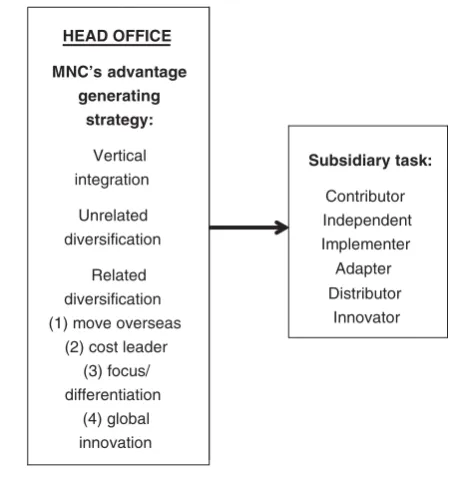
Figure 6.1 Advantage Generating Strategies and Subsidiary
Tasks 83
Figure 8.1 Hedlund’s (1981) Proposed Relationship
between Size and Autonomy 115
Figure 9.1 Ouchi’s (1977) Model of Control Mechanisms 127 Figure 9.2 Types of Interdependence (after Thompson,
1967) 130
Figure 11.1 Subsidiary-HQ and Subsidiary-other unit
Relationships 178
Figure 11.2 A Suggested Autonomy vs. Embeddedness
Matrix 179
Preface
This book is a development of my doctoral dissertation. Parts of the material here have appeared in various locations but I have decided to present the results of the research in a classic monograph form in order to facilitate their further dissemination. There are three major reasons for this decision. First, the book presents a more general conceptualiza-tion of the headquarters-subsidiary relaconceptualiza-tionship in multinaconceptualiza-tional corporations than any previous model. Second, it adds considerably to the empirical literatures on subsidiary autonomy, control mechanisms and knowledge management and innovation in multinational corpora-tions. Third, from a more parochial perspective, there is a paucity of recent research on multinational corporations in Australia and this book offers, I hope, a baseline and guide for future firm level studies of this topic. The work should be of interest to scholars, practitioners and students alike.
To complete a task of this order required advice, assistance and encouragement and many people made contributions both great and small to this venture. Tim Bartram, Simon Bell, Michelle Brown, Richard Hoffman, Rick Iverson, Angie Knox, Carol Kulik, Ros Makris, Lynn McAlevey, David Merrett and Lea Waters came to my aid in moments of need. Tatiana Zalan and Shey Newitt kindly read and com-mented upon earlier versions. I owe particular gratitude for the huge contributions of Bulent Menguc to Chapter 8 and Angela Paladino to Chapter 10. Overall, however, the two crutches that I leaned upon most heavily were Christina Cregan and my doctoral supervisor Stephen Nicholas. My grateful thanks to you both.
From Palgrave Macmillan my thanks go to Jacky Kippenberger and, as an ex-subeditor myself, I greatly appreciate the excellent work put in by Shirley Tan at EXPO Holdings.
In addition, I wish to acknowledge the early career researcher and faculty grants I received from the Faculty of Economics and Commerce at Melbourne University and the facilities provided during study leave at the Department of Finance and Quantitative Studies, Otago University, Dunedin, New Zealand and the School of Business, University of Northumbria, Newcastle upon Tyne, UK.
Finally, and of utmost importance, I wish to express my gratitude to the 313 executives whose contributions made the research possible.
Part I
1
Introduction
This research is concerned with the relationship between headquarters (HQ) and subsidiaries in multinational corporations (MNCs). This will always be an important theme because the HQ-subsidiary connection is the primary conduit through which HQ is able to manage the corpo-ration. The relationship enables the transfer of the MNC’s ownership advantage and the design and implementation of more efficacious and suitable corporate and subsidiary structures, control mechanisms, and knowledge and innovation coordination systems. All of these facilitate inter-unit product, personnel, factor and knowledge flows of every kind.
There has been a tendency in much of the recent literature to eschew what might be perceived as more mundane topics, such as the HQ-sub-sidiary relationship, in favor of alliances, unit interdependence, knowl-edge clusters, trust networks and other more academically fashionable concerns in the network capitalism domain. Nevertheless, interest does remains in the HQ-subsidiary relationship and the subsidiary task (see for example Roth and Nigh, 1992; Nohria and Ghoshal, 1994; Gupta, Govindarajan and Malhotra, 1999; Peterson, Napier and Shul-Shim, 2000; Asakawa, 2001a; Shaw, 2001; Kim, 2002; Benito, Grogaard and Narula, 2003; Hewett, Roth and Roth, 2003). The array of more novel alternative topics notwithstanding, in most MNCs the HQ-subsidiary relationship and the consequent tasks performed by the subsidiary remain central to our understanding of MNC functioning.
While Birkinshaw and Hood (1998) suggested that the traditional HQ-subsidiary relationship research stream had come to an end in the mid-1980s, they were circumspect enough to warn against throwing the baby out with the bathwater, ‘the subsidiary’s most critical rela-tionship was, and still is, with its corporate headquarters’ (Birkinshaw
and Hood, 1998: 6). The available statistics tend to support Birkinshaw and Hood’s prudence. An Organisation for Economic Co-operation and Development (OECD) report (OECD, 2002) indicated that over 79,000 strategic alliances, JVs, R&D and sales/marketing agreements and other forms of international partnerships typical of network capitalism were instituted between 1990 and 2000. This is approaching a mean of 8000 such ventures per year and the database probably underestimates the number. It is an impressive figure and justifies the interest in these phenomena. It must, however, be seen in the context of a global economy containing perhaps 63,000 MNCs with some 700,000 sub-sidiaries (United Nations Conference on Trade and Development, UNCTAD, 2000).
Despite its obvious importance, only limited progress has been made in understanding the HQ-subsidiary link. The current and previous lit-eratures have begun the process of mapping the detailed inner work-ings of MNCs but, with only very few exceptions, the HQ-subsidiary link still remains a ‘black box’. Consequently, a major aim of this research is to make a contribution to ‘mapping’ and understanding this important but relatively neglected area.
To facilitate this end, the book develops a new, integrated model of the HQ-subsidiary relationship in the MNC. The model draws on estab-lished theories and themes in the International Management (IM) and International Business (IB) literatures and upon recent developments in the knowledge-based perspective on the theory of the firm. The model hypothesizes the existence of six different subsidiary tasks. It is then tested and validated using a large sample of Australian subsidiaries of foreign-owned MNCs. The nature of the HQ-subsidiary relationship associated with five of the six subsidiary tasks is then examined empir-ically by testing a series of hypotheses concerning several key issues in the HQ-subsidiary relationship: namely subsidiary autonomy, control mechanisms, the use of knowledge management techniques and the embeddedness of the subsidiary in the innovation networks of the MNC. Thus, this book performs three important research tasks. First, a new theory of the HQ-subsidiary relationship is developed and vali-dated empirically. Second, previously presented and accepted theory is examined and extended. Third, new areas of research in the HQ-subsidiary relationship are explored and mapped using a range of investigative methodologies and hypothesis testing techniques.
from the sample of Australian subsidiaries. The relationship of each subsidiary task with its HQ is analyzed within a setting of knowledge asymmetries and the differential policies and initiatives elaborated by HQ to control and coordinate knowledge flows within the MNC and between the MNC and its environment.
The research focuses upon the Australian subsidiaries of US, European and Japanese MNCs. An additional aim of the work is thus to study, for the first time, MNC strategy and structure in the Australian context. In the process of the research, the first large-scale, broadly-based, inquiry into the internal operation of the subsidiaries of foreign-owned MNCs operating in Australia is conducted. As such, it presents the baseline data and understanding for future studies of this topic and a starting point for similar studies in other host countries. Despite its relatively small population of 20 millions, Australia is, in Gross Domestic Product (GDP) terms, the 11thlargest economy in the world
and the third largest, after Japan and China, in the Asian region. Australia’s GDP is larger than the combined GDPs of Indonesia, Singapore, Malaysia and the Philippines. Its political stability, Asian location and favorable business climate have made it a location of choice for many MNCs for manufacturing, distribution or regional ser-vices (Anon, 2001). The result of these influences is an unusually strong foreign presence in the Australian economy. Foreign-controlled companies operating in Australia account for 17.9 per cent of the national revenue, a percentage only exceeded by Canada among the major economies. These figures notwithstanding, a Department of Industry, Science and Tourism report stated ‘Despite a relatively long history of foreign investment, there are limited detailed data available on the nature and extent of foreign investment … in Australia’ (DIST, 1998: 7). Over the last 30 years, the majority of the Australian litera-ture on MNCs has taken a skeptical and sometimes hostile stance as to the outcomes that MNCs might bring. A more detailed analysis of the place of the present study in the Australian literature on MNCs is pre-sented later in this chapter.
asked, the context and consequently the answers have probably changed substantially.
In line with the query above, this book addresses the question ‘How and why do MNCs manage their Australian subsidiaries in the manner they do?’ This is a very broad question and might be interpreted in many ways. To understand why particular topics were chosen as the subjects of this study, it is necessary to first ask the question ‘What is meant by management?’ There are many definitions of the managerial task but they all converge, explicitly or implicitly, around the means by which firms achieve, sustain and renew competitive advantage. Traditionally management has focused upon creating and sustaining competitive advantage by (1) designing an effective strategy and (2) implementing that strategy efficiently via the control and coordination of the firm’s human, financial and knowledge resources. The tenor of the management literature of the last two decades has been to suggest that these two steps are no longer enough to ensure survival and growth. Increasingly, any competitive advantage gained is ephemeral and must be constantly renewed. Continuing corporate success requires innovation and the primary source of successful innovation lies in learning new capabilities and the development of the firm’s knowledge resources. The three central tasks of management are now conceived as (1) strategy, (2) administrative control and coordination and (3) knowledge management. These three tasks are interwoven into all of the investigations of the HQ-subsidiary relationship in this research. They are, to some extent, examined separately although, as will be demonstrated, they are theoretically and empirically intermin-gled. Understanding each issue separately contributes to understanding of the vital and central task of managing HQ-subsidiary relations in the MNC.
In this study, Otterbeck’s questions are addressed again. All research designs are constrained in some way and while the Australian perspec-tive here may be considered a constraint in that it encroaches upon the universality of the results, the single host country design has a major advantage. It creates a consistent baseline against which to measure effects. With a single host country it becomes easier to make valid comparisons between MNCs from differing home countries, industries and utilizing different strategies and structures.
Outline of the book
The text is divided into two distinct parts – conceptual and empirical. The next three chapters examine the literatures both practical and con-ceptual that have informed MNC strategy, the HQ-subsidiary relation-ship and subsidiary tasks. These analyses conclude with a fourth chapter that develops a new model of the relationship and a series of research propositions derived from it. The following five chapters describe the series of empirical studies conducted to investigate this relationship.
A number of streams of research can usefully be applied to the HQ-subsidiary relationship. First, many of the seminal studies in IM focus upon the genesis and growth of the MNC and these have important implications for the nature of the relationship. Second, there is a body of work focusing upon classifications of subsidiaries, based upon their task within the overall corporation. Third, there is a considerable amount of literature concerned with control and coordination of sub-sidiaries within MNCs. Fourth, the focus in this book on knowledge and innovation requires consideration of recent work in the field of the knowledge management and organizational learning.
agency. In the context of this research, multinationality is essentially the existence of overseas subsidiaries and the market imperfections par-adigm provides the most widely accepted explanation of foreign direct investment (FDI) and its corollary the MNC. Most importantly it also provides a framework within which to analyze information and knowl-edge asymmetries and subsequent autonomy and control issues between HQ and subsidiaries. Third, the knowledge-based view of the firm acts as a lens with which to illuminate the increasingly important knowledge management and innovation processes, especially as they are related to HQ-subsidiary relations.
The conceptual origins of the study lie in Chandler’s (1962, 1977, 1990) historical analysis of the development of the modern multi-ivisional organization. In large firms, growth and diversification eventually led to the ascendancy of the multidivisional structure (M-form) over the functional structure (U-(M-form). When the growth and diversification was overseas, this led to the development of MNCs that were, initially, either U-form or M-form. Theoretically and empirically two key issues were generated by this sequence of events. First, diversification could be related or unrelated and subsequent geographic and product line diversification led, in both cases, to a series of poten-tial strategies that the MNC could pursue. Each of these corporate level MNC strategies gave rise to a distinct and compatible subsidiary task. Second, the development of multinationalism, via internalization of the firm’s particular specific advantage, led to agency problems espe-cially related to information and knowledge asymmetries between HQ and subsidiaries. These asymmetries have major implications for issues of level of subsidiary autonomy and control and coordination mecha-nisms and some of these implications are investigated in this study.
competitive strategies that arose in order to deal with the evolving business environment.
Chapter 2 deals with the strategies that brought about the MNC as an organizational form. In the first section, the highly influential works of Chandler (1962, 1977, 1990) are examined. Chandler expounded the fundamental argument that designing an effective strategy is based upon the attainment of a fit with a given business context and technological imperative. That strategy then triggers the need for a particular corporate structure. The firm is thus conceived as an open system responding to its environment. The environment-strategy-structure theme provides the foundation for the IM approach to the MNC, especially the many studies that came out of the Harvard Business School of researchers. While Chandler’s work is the wellspring of the strategic contingency perspective (Donaldson, 1995) and that view can be usefully brought to bear upon every phase of MNC development, the move overseas and the need to protect the firm’s ownership advantage have major implications for the HQ-subsidiary relationship and present an additional theoretical problem. Inter-nalization theory is the basic theory of FDI and the MNC. This theory portrays the MNC as a nexus of contracts (Aoki, Gustafsson and Williamson, 1990) that are made immensely more complicated by the international dimension of firm activities. The IB stream of research can be conceived as generally based within this view. Importantly, the process of internalization of the MNC’s ownership advantage brings about knowledge asymmetries that have powerful influences upon the issues of autonomy, control, knowledge management and innovation that are the concerns of this study.
The second phase of MNC development is then analyzed. This is concerned with the more established MNC, how it evolved and the strategies of cost minimization and product differentiation that were the result of an increasingly competitive environment. Again these strategies have important consequences for the subsidiary task and the HQ-subsidiary bond. The central studies are Vernon’s (1966) product cycle thesis and Stopford and Wells’ (1972) stages model. Theoretically this phase is driven by the ideas of Porter on competitive advantage as well as the contingency approach
Integration-Responsiveness (I-R) grid (Prahaled and Doz, 1987) and Hedlund’s (1986) extension of Perlmutter’s (1965, 1969) work. Strategies of innovation and their manifestation in the rise of the modern network MNC are examined. Chapter 3 also examines several literatures that provide new conceptual underpinnings for the sub-sidiary task and HQ-subsub-sidiary relationship. A major distinction is made between subsidiary characteristics in hierarchical MNCs and the laterally/horizontally oriented MNCs that Hedlund (1986) labeled heterarchies. Elaborating this distinction requires the integration into the HQ-subsidiary model of insights from several other literatures especially those concerned with organizational knowledge. First, the tacit-explicit distinction is examined. Next, a description of the major theories of organizational learning and subsequent debates and empir-ical work are presented. Understanding how an organization learns is vital to the process of effectively creating, disseminating and leveraging a firm’s knowledge resources. Nonaka (1991, 1994, Nonaka and Takeuchi, 1995; Von Krogh, Ichijo and Nonaka, 2000) set up a model of organizational learning in this area. The chapter then reviews and integrates the organizational memory literature. There are close links between organizational learning and the knowledge-based view of the firm and the next section reviews the knowledge-based view of the firm. The knowledge-based approach sees the firm as a collection of capabilities that must be deployed in a manner that brings about com-petitive advantage. Sustaining comcom-petitive advantage depends upon effective knowledge management – the process of extending old and developing new competences and capabilities. In the MNC the sub-sidiary’s role in this process is vital. This section examines the basic characteristics of knowledge such as tacitness, codifiability, stickiness and imitability. Then an assessment is made of the emerging links between the knowledge-based view, strategic management and transac-tion cost approaches.
Chapter 4 first reviews the literature on classification of subsidiary tasks focusing upon the major conceptual and empirical studies and the few attempted syntheses. The various subsidiary task classifications that have arisen from all of this work are examined. The work is sum-marized, outlining the consistencies and drawing attention to the gaps in the developing frameworks.
sidiary task, the knowledge asymmetries between HQ and the sub-sidiary and whether the MNC takes a hierarchic or heterarchic form. These, in their turn, influence subsidiary autonomy, the types and strength of control and coordination mechanisms used by HQ, the use of knowledge management techniques and the subsidiary’s embedded-ness in innovation networks of the MNC. The logic that underpins the HQ-subsidiary relationship is presented and the genesis of the sub-sidiary tasks explained. The new conceptual HQ-subsub-sidiary model sug-gests several broad research propositions that are examined in the empirical investigations.
The data collection process is described in the methodological appendix in Chapter 12 and Chapter 6 analyzes the data obtained using k-means cluster analysis to demonstrate the existence of distinct subsidiary tasks. The characteristics of these tasks are then shown to be congruent with the characteristics hypothesized by the model.
Chapter 7 explores the question of whether the levels of subsidiary autonomy for each subsidiary task accord with predictions that can be derived from the model. A series of hypotheses are generated regarding the likely levels of autonomy for each of the subsidiary tasks. These predictions are then investigated using ANCOVA (analysis of variance with covariates to control for other potentially predictive variables) with pairwise comparisons of estimated marginal mean scores of sub-sidiary autonomy for the various subsub-sidiary tasks.
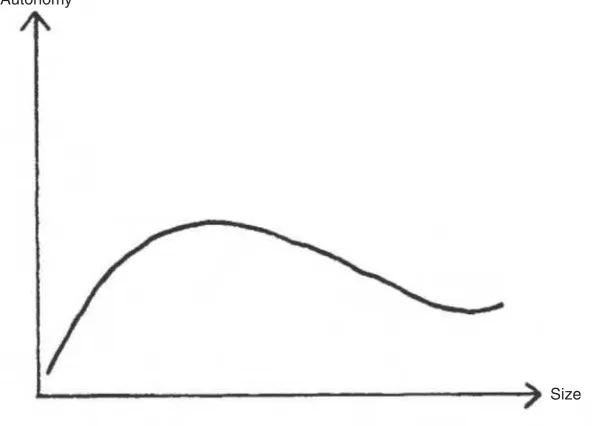
Chapter 8 continues the inquiry into autonomy. Subsidiary size was found to be insignificant as a predictor of subsidiary autonomy and this suggested a further investigation, in which Hedlund’s (1981) hypothesis regarding the curvilinear nature of the subsidiary auton-omy-subsidiary size relationship is tested.
Chapter 9 examines HQ’s use of different mechanisms to control subsidiary activities. From the perspective of the subsidiary tasks, this investigation tests the Ouchi (1979) and Baliga and Jaeger (1984) char-acterization of the use of mechanisms of control by MNCs.
In Chapter 10 the subsidiary’s use of knowledge management tech-niques and involvement in the innovations network of the MNC are scrutinized. In an investigation that assists in mapping this relatively new empirical domain, the predictors and associates of these variables are examined.
new model and some lack of support for previously well-accepted theory, it is argued that the present book is only the beginning of a potentially very fruitful research stream.
The book concludes with a methodological appendix in Chapter 12. This contains a detailed description of the collection and ordering of the data. The data are based upon a survey of foreign-owned Australian subsidiaries of US, UK, European and Japanese MNCs. The survey was carried out in 1999 and 2000. The processes covered include the sample selection procedure, design of the survey instrument, the mail-out and follow-up process, response rates and patterns, data entry and coding procedures and representativeness of the data. This is followed by details of the factor analysis procedure used to establish variables from the data, some validation information regarding the cluster analysis and a copy of the survey instrument.
Previous research investigating MNCs in Australia
The Australian context is distinctive in several ways. As a market it is relatively small and of limited importance but the overall economy is sophisticated and well-developed. The country is physically close and politically and economically linked to many of the South East Asian economies while being distant from the HQs of many of the MNCs in this study. In terms of Australia’s historical relationships with the home countries of the MNCs in the study, there is a diversity of influences. The early historical antecedents of Australia have left a UK bias in its social and political institutions although intuitively this appears to be changing. More recent population changes caused by immigration from Europe and, even more recently, Asia, are producing a distinctly multicultural society. The Australian lifestyle and multicul-tural population suggest some similarities with the US. Ryan, Chan, Ployhart and Slade (1999) examined cultural and linguistic equivalence and their measure found Australia and the US to be very similar. This conclusion was largely consistent with earlier research by Jenner (1982). Australia is somewhat more dissimilar from the major European countries and very different from Japan. These issues of size, economic development and cultural similarity and difference are important since, as will be demonstrated, they may be significant determinants of the nature of the HQ-subsidiary relationship.
Australian business environment. Beginning in the late 1970s and con-tinuing periodically through the 1980s and 1990s, a series of studies (Bambrick, 1974; Crough, 1982; Crough, Wheelwright and Wilshire, 1980; Drysdale and Farrell, 1999; Fox, 1981; MacDonald, 1994; Ramsey, 1986; Renwick, 1988; Skully, 1976; Teo and Rodwell, 1998) investigated many of these concerns. Vernon (1971) first raised the general issue of MNC influence on host countries, analyzing the effects of US MNCs on issues such as growth, income distribution or technol-ogy transfer in host countries. He concluded that contextual issues, especially the value system of the foreign country, were the prime determinants of whether the tensions that inevitably arose produced positive or negative effects. In much of the Australian literature, MNCs were portrayed as predatory monolithic empire-builders, intent upon imposing their hegemony upon the industries of smaller nations. While the most pessimistic forecasts have not eventuated or have even-tuated in more subtle ways, MNC influence on the Australian economy remains very strong. Fears remain that Australia will be reduced to a branch economy. Recent studies have been concerned with MNC effects upon the stability of the Australian industrial and employment infrastructure. This stream of research will not be examined in detail since, although it clearly examines important issues, it has only limited value for understanding the concerns of the present study. It does, however, indicate that within the academic community there was a noticeable hostility towards or, at least, a suspicion of, the motives and effects of MNC penetration of the Australian economy.
A second domain of concern has been a continuing interest in Japanese business activity in Australia. The Australia-Japan Economic Institute (Anon, 1989, 1992) has surveyed and directoried this activity and Edgington (1988) argued that the Japanese expatriate manager is both control tool and disseminator of tacit knowledge. Until recently, the Australian research in IM and IB has lacked a point of convergence but many of the studies above have arisen as a direct consequence of the recent development of two institutions – the Australian Centre for International Business (ACIB) and the Australia-New Zealand International Business Academy (ANZIBA).
on the motivation for FDI, the nature of the competitive advantage and the reasons behind the FDI decisions. Other studies from this research stream included Hutchinson and Nicholas (1994) that also focused on the rationale behind the FDI decision, Nicholas and Purcell (1998) on subcontracting relations, Nicholas, Gray, Purcell and Zimmerman (1999) on government incentives and Purcell, Nicholas, Merrett and Whitwell (1998) on transference of HR practices. Dedoussis (1995) also examined the perennial ‘can Japanese management prac-tices be transferred’ debate in the Australian context and concluded that relatively low-cost practices were transferred but more costly welfare/tenure practices were not. Of somewhat more interest to this thesis, Merrett, Nicholas and Purcell (1999) followed up on Edgington (1988) and examined the duality of the expatriate manager role in Japanese MNCs. A notable feature of Australian industry is that, like Canada, it has an unusually high level of foreign ownership. An overall figure of greater than 33 per cent was quoted by Ratnayake (1993) and studies demonstrated figures of greater than 50 per cent in some indus-tries. Parry (1974) found that, in manufacturing, MNCs with greater foreign operations and research intensity tended towards greater sub-sidiary size and greater concentration of foreign ownership. Ratnayake (1993) found foreign ownership higher in the skill and technology-intensive industries. Parry (1988) later demonstrated that foreign-owned firms had greater access to overseas technology.
It is clear that, while there is a reasonably strong research tradition on MNC activity in Australia, it has largely been at the aggregate national or industrial level, although some of the output from the Australia-Japan Institute, ACIB and ANZIBA studies mentioned earlier was at the level of the firm. This study took up the important opportu-nity that existed to extend our firm-level knowledge of MNC opera-tions in Australia.
Terminology and semantics
term multinational to refer to another of their MNC strategy types in the I-R grid. Each author, however, is referring to essentially the same phenomenon – the MNC’s need, in some instances, to focus on local responsiveness.
Second, there are many commonalities of meaning in the labels heterarchy, transnational, and differentiated network. For example, Bartlett and Ghoshal (1989: 17) stated: ‘The transnational is not a specific strategic posture or a particular organizational form. In essence, the transnational is a new management mentality’. In general, this study will follow Bartlett and Ghoshal’s (1987) framework (see the section on the modern MNC in Chapter 3 below) but use the term multidomestic to replace their multinational, since this latter word has more general application in the literature.
Further, it has been common practice to use the expressions sub-sidiary strategy and subsub-sidiary role almost interchangeably and this misunderstanding has recently been further complicated by the advent of subsidiary mandates, charters, initiatives and other terms. Clearly, there are semantic differences with a charter more likely to be en-shrined in a document, a strategy is usually the implementation of a policy and a role is a collection of behaviors and so on. The usage of these terms in the literature has usually been to indicate the tasks that the subsidiary performs on behalf of the MNC. Role would seem a more appropriate term when the subsidiary is relatively tightly con-trolled by HQ and strategy is more applicable for a more autonomous subsidiary. Since both situations are being examined here this presents a problem. Hereafter, the term subsidiary task will be used to cover both instances.
2
The Strategies of the Developing MNC
The next two chapters examine the strategies and theoretical under-pinnings of the developing and modern MNC. They provide the conceptual base of the study in that these strategies are the prime determinants of the subsidiary task and the characteristics of the HQ-subsidiary relationship.
The early years
The first part of this chapter examines the strategies that created the earliest form of the MNC. The material is presented and analyzed in the following way. First, the contextual explanation of the develop-ment of the early MNC and the links with many of the issues of this research is presented. As Chandler (1962: 42) explained, ‘In those industries most affected … growth came by going overseas and … by diversification’. Chandler’s focus upon strategies of geographical expansion and diversification is central to the analysis. Second, the rig-orous theoretical underpinning of the ‘market failure’ approach of internalization theory is applied (Buckley and Casson, 1976; Caves, 1996) to the Chandler explanation, giving that approach more predict-ive capability especially with regard to knowledge asymmetries and their effects on the HQ-subsidiary relationship. Internalization is a central concept to this research because it is the driving force leading to the creation of subsidiaries. The value of this theoretical perspective is shown by the concluding analysis in this section where Hennart’s application of the transaction costs approach is applied to controls in the HQ-subsidiary relationship.
Related diversification and the link between strategy and structure
The crucial importance of Chandler’s work is that it linked corporate strategy to the decentralized hierarchical organizational structure via a cost and coordination argument. The strategy-structure link is funda-mental to an understanding of HQ-subsidiary relations. Chandler’s expressed goal was ‘to study the complex interconnections in a modern industrial enterprise between strategy and structure and an ever-changing external environment’ (Chandler, 1991: 35). In this respect, his major contribution was to investigate and explain the change in operational structure from what he termed the multifunc-tional or U-form to the multidivisional or M-form organization. This is the prime source of understanding of the initial process of develop-ment of large firm structure. Although not directed specifically at the MNC, Chandler’s work was a clear forerunner of many of the concep-tualizations that have developed to date. His main theses were fully developed and extensively documented in Chandler (1962, 1964, 1977, 1990 and 1991). Briefly, the coming of the second industrial revolution in transport and communications generated the U-form’s first compet-itive advantage by enabling the coordination and control of moves to new advantageous locations, such as new or large markets, where less or no competition existed. This geographical expansion relied upon the production and distribution of previously inconceivable volumes of product that resulted in mass production in food, drink, tobacco, electrical and mechanical engines, non-ferrous metals and chemicals. The challenge for management in both production and distribution was organizational rather than technological and, in the US, this gave rise to salaried managers and the managerial capitalism that replaced the owner-managers of the earlier era. Geographical and product diversification in the 1920s meant that the multifunctional or U-form organization, that had proved more than adequate up to that time, was unable to deal with the huge increases in information flows and ensuing expansion in volume and complexity of decision-making. The M-form or multidivisional form was developed at Du Pont, General Motors (GM) and other firms to deal with their planned expansion and diversification (see Chandler, 1962, esp. chapters 2–5) and this organ-izational innovation spread rapidly (Chandler, 1962, chapter 7).
economies of scale were achieved. However, in the M-form, adminis-trative efficiency was greatly superior. Hence, divisionalization in the M-form brought a superior overallcost structure than the U-form. At the time of Chandler’s analysis, both the U-form and the M-form were hierarchical but the M-form was clearly more decentralized. It can be argued that decentralization was simply a response to the problems of the increasing volume of decision-making. For example, Chandler (1990: 43) stated ‘senior managers realized that they had neither the time nor the necessary information to coordinate and monitor day-to-day operations and at the same time devise and implement long-term plans … The administrative overload had simply become too great’. Too many decisions were being presented to top management for them to cope effectively. This single explanation is appealing but Chandler realized that the case for the M-form was more complex and there was contradictory evidence. For example, Ford was roughly equivalent in size to General Motors but it did not suffer from the same top manage-ment decision-making overload (Chandler, 1962: 301). The explana-tion lay in the dissimilar product lines of the two companies. Ford was producing only a single black Model T product while GM had many product lines. GM produced and sold cars, trucks, parts and accessories of many types. Chandler (1962) suggested that decentralization took place not simply because of the volume of decision-making but because of the diversity and complexity of the decisions that top man-agement had to make. Decentralization arose due to limitations on top management’s cognitive and information/knowledge processing capa-bilities i.e. it was a bounded rationality problem (Simon, 1957, 1976) based, to a considerable extent, upon the knowledge asymmetries between HQ and subsidiaries.
already multinational, it was now administratively more easily accomplished.
With regard to the link between strategy and structure, Chandler perceived administrative coordination to be the central advantage of the M-form structure. His first general proposition in The Visible Hand (Chandler, 1977: 6) stated ‘administrative coordination permitted greater productivity, lower costs, and higher profits’. There were also, however, control implications because the shift from U-form to M-form demanded a fundamental shift in management style. In a typical U-form corporation the senior manager had direct, often hands-on, control in a single plant over all the functional areas of R&D, production, marketing and so on (Chandler, 1977). With the change to the M-form structure and the consequent multiple plants and sites, the newly freed up management was required to concede some important operational decision-making autonomy to the divi-sions. The direct result was that it became necessary to design new mechanisms to retain control over key variables and design and imple-ment new methods to allocate the resources of the organization in line with corporate strategy. However, although Chandler’s work convinc-ingly ties context to strategy and demonstrates how the strategy of growth led to a new organizational structure, it does not examine the nature of the increasing knowledge asymmetries within that structure. Such a focus is central to an understanding of the HQ-subsidiary relationship.
In summary, therefore, for Chandler the firm’s move overseas was just a further stage of the geographical expansion and internal divi-sional hierarchy that delivered the same cost effective method of coor-dination and control apparent in the domestic firm. While he outlined the importance of scale and scope economies and transaction costs, it was left to later theorists to build a more rigorous formulation to his essentially contingent approach to the strategy and structure of firm growth. In particular the links between HQ and the subsidiary divi-sions and firms were not developed.
Unrelated diversification
of new but related products based upon the firm’s extant technology, skills and know-how (or competences and capabilities in today’s ter-minology). He later commented that ‘managers occasionally purchased or merged with a company that provided a new or complementary product. Much more often such expansion resulted from internal growth’ (Chandler, 1977: 474). Chandler was, however, aware of the rise in the 1960s of the financial conglomerate form of the multidivi-sional enterprise. In this corporate form ‘The conglomerate expanded … entirely by the acquisition of existing enterprises, and not by direct investment into its own plant and personnel, and it often did so in totally unrelated fields’ (emphasis added) (Chandler, 1977: 481). The form remains relatively common today and, in some instances, has important implications for the nature of HQ-subsidiary relations.
While the potential for sustained competitive advantage via unre-lated diversification remains questionable, Caves (1996) investigated international financial diversification behavior of MNCs and con-cluded that in both short and long-term markets it was possible for MNCs to ‘enjoy opportunities for international arbitrage of funds and that investors recognize the value of international diversification built into the MNE’s liabilities’ (Caves, 1996: 144–146).
The financial conglomerates could ‘concentrate more single-mindedly on making investments in new industries and markets and withdraw more easily from existing ones … (but) on the other hand, … were far less effective in monitoring and evaluating their divisions’ (Chandler, 1977: 481). The last point clearly implies greater knowledge asymmetries than those found in the related diversification form and, hence, the subsidiary divisions and firms in this type of MNC will have a greater amount of decision-making independence.
The related vs unrelated diversification has not been satisfactorily resolved either on the basis of performance outcomes (see for example Rumelt, 1974; Bettis, 1981) or how easy it is in practice to make this analytical distinction in modern MNCs. For some recent contributions to the debate and the state of play see Capar and Kotabe (2003), Park (2003), Robins and Wiersema (2003), Helfat and Eisenhardt (2004), Li and Greenwood (2004) and Miller (2004).
Internalization, transaction costs and the principal-agent dyad
Chandler’s contingency explanation of firm growth and make it gener-alizable to the current organization of MNCs. The following analysis is based upon the works of Buckley and Casson (1976), Hood and Young (1979), Calvet (1981), Dunning (1988), Caves (1996) and Rugman (1996) that provide the theoretical underpinning for firm growth and internal organizational design. This section also introduces the key notion of the firm’s, often knowledge-based, ownership advantage.
Market failure and internalization provide the theoretical core of the MNC and the subsequent HQ-subsidiary relationships. These explana-tions focus upon the results of markets failing to clear. Orthodox neo-classical economic theory had not successfully explained FDI or why firms engaged in overseas operations. However, when the underlying assumptions of perfect goods and factor markets did not hold, free trade was eliminated as a solution and replaced by second best solu-tions such as the MNC (Buckley and Casson, 1976; Rugman, 1996).
The modern understanding of FDI theory can be traced back to Coase (1937). His insight was that FDI and MNCs arose because there are circumstances when the market was a more costly and inefficient way to undertake certain types of transactions than the firm. When this logic was applied to the international arena, situations in which it was less costly to allocate resources internally within the firm than to use the market explained FDI and the MNC. The existence of an own-ership advantage in the form of what Caves (1996: 3) labeled a propri-etary asset (sometimes termed firm-specific asset or firm – specific advantage – FSA) and the internalization of this advantage within the firm but across borders, provided the MNC with its distinctiveness.
foreign operation viable, a MNC had to have its own, more than coun-tervailing, advantage in relation to the local firm. This ownership advantage which was usually in the form of knowledge, know-how, techniques or technology, needed to be at least in part, firm-specific and able to be transferred within the firm to subsidiaries across distance (Caves, 1996: 4).
The early internalization theorists, notably Kindleberger (1969), Johnson (1970) Caves (1971) McManus (1972) and Hymer (1976, 1990), suggested many types of potential ownership advantage. These were mainly technological in nature although this label can be widely interpreted to include explicit and tacit knowledge (Johnson, 1970) concerning products, production processes, marketing expertise, organ-izational skills and management techniques. Ownership advantages may vary in terms of tangibility or specificity. They could take the form of a patented design or process or simply lie in the know-how shared by employees of the firm, embedded in the repertoire of skills and routines possessed by the firm’s teams of human and other inputs (Nelson and Winter, 1982).
In summary, while the literature has suggested that many factors might contribute to the FDI decision, the most commonly accepted theoretical stance is that market imperfections are the major explana-tion of why firms prefer FDI. This approach derives from Hymer’s 1960 ‘seminal dissertation’ (Dunning and Rugman, 1985: 228) and is espoused by most leading scholars (Casson, 1995, 1997; Hennart, 1982; Hymer; 1976; Rugman, 1981 and Teece, 1983). It is usually known as internalization theory. Because of imperfections in the market, firms elect to internalize their critical ownership advantages or firm-specific assets (FSA). All transactions in intermediate factors/products and knowledge related to the FSA are kept within firm boundaries by estab-lishing proprietary production facilities in the target location. A sub-sidiary is born and while it may have many tasks, a primary role is always the protection of the FSA.
Transaction costs.The internalization decision and the creation of a subsidiary is based upon a cost-benefit analysis that is particularly con-cerned with transaction costs. Furthermore, transaction costs analysis is associated with the risks involved in various knowledge asymmetries. These formed the basis of many situations of market failure that led to internalization. While Chandler pointed to the general importance of transaction costs in the internalization decision (see for example, Chandler, 1990: 17), he did not develop this approach. The emergence of this specialized field of analysis, however, enabled the development of a transaction cost based interpretation of the Chandlerian link between strategy and organizational structure. First, the tenets of the theory are expounded. Second, literature is introduced that links trans-action costs to the structure and functions of the MNC and the HQ-subsidiary relationship (Hennart, 1991, 1993).
rationality and opportunism) and two dimensions of transactions (asset specificity and environmental uncertainty).
Bounded rationality is the term coined by Simon (1976) to describe the cognitive constraints and limited information processing ability of decision-makers. Their intended rationality is circumscribed by these deficiencies and in uncertain environments this leads to problems. The primary result of environmental uncertainty is an adaptation problem. If future circumstances cannot be specified ex antethen it leads to the need to modify agreements when external circumstances change. Another consequence of bounded rationality is that performance in accordance with the agreement cannot be easily verified ex post. Opportunism is the assumption that at least some decision-makers will unscrupulously seek to serve their own self-interests and that it is difficult to know a prioriwho is trustworthy and who is not (Barney, 1990; Hennart, 1991; Rindfleisch and Heide, 1997). Williamson defined opportunism as ‘self-seeking with guile’ (1985: 47) and suggested that cheating, lying and contract violation are typical opportunistic behav-iors. In particular, if the transaction is supported by a specific asset that has less value outside the transaction than within it, then opportunism creates a problem in safeguarding the value of that asset. Transaction cost theory proposes that if adaptation, performance evaluation and safeguarding costs are relatively low or absent then economic actors will favor the market as governance mechanism. If these costs are high enough to exceed the production costs advantages of the market then organizations will favor internal (firm) or some intermediate form of organization. Firms, however, have three major advantages over the other available arrangements. First, because usually they can measure and reward behavior as well as output, firms are more powerful con-trollers of behavior than markets. Hence they can facilitate any neces-sary adaptation and detect opportunism more easily via the use of internal organizational structures. Second, by providing rewards that are more long-term, firms can reduce the payoff to opportunistic behavior. Third, firms can use corporate culture and socialization processes to create superordinate goals that reduce opportunism ex ante.
control mechanisms are typically prescribed reporting systems and strict behavioral controls in the form of manuals, procedures and pol-icies (Ouchi, 1977; Baliga and Jaeger, 1984). Hennart used the transac-tion cost approach to derive the mechanisms that the HQs of MNCs employed to control their subsidiaries by demonstrating that these were closely analogous to the processes that firms employed to impose controls over their employees. In doing so, he established the central role played by knowledge.
Within the firm, the extent to which management had knowledge of the employee’s production function, together with information on the relative levels of shirking and cheating costs were used to categorize the available control mechanisms. The argument is summarized in Table 2.1 below. The logic for control of subsidiaries was exactly analo-gous (see Table 2.2). Hierarchy was used when HQ had a greater know-ledge of the unit production function (usually this meant when the
Table 2.1 Employee control modes used in firms
Management knowledge of the worker’s production function
Cheating costs/
shirking costs Higher than Lower than
workers workers
High cheating, low 1. Hierarchy 2. Selection and/or
shirking socialization
Low cheating, high 4. No interaction 3. Price control
shirking within the firm (e.g. piece work)
Source: Hennart (1991: 84); adapted from Ouchi (1979).
Table 2.2 Subunit control modes used in firms
Headquarters’ knowledge of the unit production function Cheating costs/
shirking costs Higher than Lower than
local management local management High cheating, low 1. Hierarchy 2. Selection and/or
shirking ‘centralization’ socialization
Low shirking, high 4. No interaction 3. Profit centers
cheating within the firm
subsidiary was simply implementing the FSA) and the subsidiary’s per-formance was difficult to measure. Alternatively, when subsidiary output was easily measurable and the subsidiary had greater knowledge of the production function, then setting up a profit centre, with suit-able transfer pricing arrangements, elicited the required behavior as long as subsidiary management remuneration and incentives were a function of profit. In both cases there was a mix of market and hier-archy. In the event of subsidiary management having greater knowl-edge of the production function and performance being difficult to evaluate, it became necessary to design more complex mechanisms to ensure the internalization of HQ goals by subsidiary management via selection and socialization processes.
Hennart’s analysis was a crucially important extension of the strategy-structure and transaction cost approaches because it demonstrated the necessity of ‘opening the black box’ of the firm’s internal functions. He demonstrated the need for a set of additional systems and structures, internal to the firm, that were congruent with the demands of the exter-nal environment and the consequent strategy and overall structure. These systems and structures had to be designed in a manner that made allowance for the existing knowledge asymmetries between HQ and the subsidiary. In the MNC, the knowledge asymmetries were even more problematic because the HQ-subsidiary relationship crossed national and cultural borders and was often accentuated by communications problems arising from language, multilocation and time differences.
Thus the transaction cost approach offers an explanation of the hier-archical organizational form (and the nature of the HQ-subsidiary rela-tionship) that gives central place to the need for managers to institute structures to control employees possessing different and better knowl-edge than HQ. This is the basis of transaction cost theory in relation to the structure of the MNC.
man-agement may opportunistically use their superior local knowledge to serve their own interests at the expense of owners. This asymmetry of interests resulted in ‘residual loss’ for the owners. Curbing of this loss required the use of several devices. If the owners’ prime control device, the board of directors of the firm, was considered to be analogous to the HQ in a MNC, the monitoring and control devices available were directly analogous to those in Hennart’s opportunism and bounded rationality schema described above. Mechanisms such as monitoring and sanctions for non-compliance were hierarchical and fit into Hennart’s cell 1. Profit-based incentives were market oriented and fit into cell 3. Cell 2 contained the selection or socialization (that is heter-archically-focused) mechanisms.
These market imperfection approaches have been used to increase understanding of several aspects of MNC management: foreign owner-ship decisions (Hennart and Park, 1994); foreign market entry deci-sions (Tihanyi, Ellstrand, Daily and Dalton, 2000); and subsidiary compensation strategies (Roth and O’Donnell, 1996). However, it is in the area of subsidiary control, that they are most illuminating and this is a point that allies the IB approach with the IM literature. O’Donnell (2000) demonstrated that agency theory acted as a good foundation for understanding monitoring mechanisms and incentive compensation in MNCs. She concluded, however, that to fully explain the phenome-non of subsidiary control in modern global interdependent firms, there was a need to include explanations of social control mechanisms including the heterarchic control mechanisms of the present study.
Summary
A transaction cost explanation was provided by Chandler but in con-tingency form. The development of transaction cost and principal-agent analysis was used to theoretically ground Chandler’s empirical work and apply it in a more predictive way to different contexts. Further, it allowed the use of knowledge asymmetries and the imper-ative of the authority of the stewardship function to explain the hier-archical nature of the new M-form organizational structure. To date, however, this approach has been confined to the market-hierarchy choice (Hennart, 1991).
The established MNC
Vernon’s product cycle theory
Vernon’s product cycle theory (Vernon, 1966) is the link between the strategies of the early MNC and those of the established MNC. Vernon proposed that as geographic diversification takes place the products of a MNC pass through a series of production and distribution phases. First, products are manufactured and sold domestically. Second, output is produced domestically and then exported. Third, output is both pro-duced and sold abroad. Fourth, products are manufactured abroad and re-exported to the domestic market. The third phase is congruent with the overseas diversification growth strategy as described in the earlier part of this chapter. The fourth phase is tied to the cost minimization and differentiation strategies of the established MNC that are exam-ined shortly.
Vernon’s (1966) analysis identified the central role played by cost factors, particularly labor (although transaction costs are also relevant), at home and in the host country and how these factors brought about shifts in the task of the subsidiary. Specifically, cost factors drove the change from export sales office to local producer and later to return exporter to the home country. Vernon did not analyze the types of organization that his internationalization model brought about but his work can be understood as part of the process of setting the scene for consideration of subsidiary tasks and characteristics of the HQ-subsidiary relationship.
In the context of this study the central importance of Vernon’s work was to demonstrate how an initial growth strategy based upon moving to a new geographic location transformed into a different strategy based upon growth via low cost and scale economies.
The Uppsala model of internationalization
however, accentuate the importance of two types of knowledge in the HQ-subsidiary relationship. Increasing experience of operations in a host market brought increasing knowledge concerning the many social, cultural, legal and other characteristics of that market. The importance of individuals in the acquisition of that knowledge often resulted in that knowledge not being readily available to HQ. Headquarters did, however, on its part, develop knowledge of and competences in the management of the overall internationalization process.
Porter’s generic strategies
Porter (1985, 1987) demonstrated that the multidivisional organization implemented strategy at two levels. At the corporate level, strategy concerned issues such as the type of business the firm should engage in and, importantly for this research, ‘how to manage the array of units’ (Porter, 1987: 47) to create advantage. Business level strategy (generic strategy) was concerned with how to create competitive advantage at the level of the individual business. The strategies Porter proposed were cost leadership (cost minimization) and product differentiation with the added strategic option that each strategy could focus on particular market segments or niches. Cost minimization is usually attained via volume production of a small range of standard products and brings a minimized selling price. The differentiation strategy is accomplished by selling an expanded range of products that have been adapted to suit a particular market segment. Strategies at both the corporate and business levels have repercussions for the tasks that are set for the sub-sidiaries and two of Porter’s generic strategies are implicit in the two dimensions of the Stopford and Wells model that follows.
Stopford and Wells’ stages model
integra-tion and coordinaintegra-tion problems with the internaintegra-tional division struc-ture. While these difficulties may be attenuated via various mechan-isms, as exemplified by the longevity of the international division in many Japanese MNCs (Bartlett and Ghoshal, 1989; Negandhi and Baliga, 1981a; Negandhi and Welge, 1984), continued overseas expan-sion often brought unsustainable strains to this structure. Stopford and Wells (1972) hypothesized that when the continued expansion was on the basis of greater volumes of a little-changing line of products, then the MNC tended to abandon the single international division and adopt a company wide area divisions structure. This structure facilit-ated the firm’s much needed local responsiveness and consequently expanded extant location advantages. When the expansion was based upon increasing product diversity, the international division was aban-doned and the MNC tended to restructure on the basis of product divi-sions. The advantages of this type of structure lay in its ability to consolidate value-creation in key locations and hence realize both loca-tion and scale/experience economies. They further proposed that if expansion took place on the basis of both strategies then a global matrix structure was necessary.
Stopford and Wells’ formal matrix structure was based upon the two dimensions of product and geographic area and the configuration has been implemented in several high profile ‘experiments’. In practice it appeared to be bureaucratic and clumsy with problems of accountabil-ity, creating greater problems than it solved (Bartlett and Ghoshal, 1986; Dwyer and Dawley, 1995). The decades since Stopford and Wells’ analysis have seen the rise of other strategy-influencing factors of equal or more importance than geographic area or product line. The modern MNC must also consider innovation, critical interdependencies, know-ledge flows, skill accessibility and many other factors (Nohria and Ghoshal, 1997; Ghoshal and Bartlett, 1997). It is possible that the fre-quent failures of matrix structure applications were a product of attempting to use hierarchically developed procedures for what was essentially a heterarchical organizational form.
The theoretical grounding of the Stopford and Wells model lay in structural contingency theory in the Chandler tradition. In conse-quence, Stopford and Wells were fully aware of the contingent nature of the control and coordination process.
As the international strategies of MNCs evolved, it became increasingly important and difficult to select and implement the most efficacious structure to complement those strategies.
3
The Strategies of the Modern MNC
This chapter shifts the analysis to the modern MNC and strategies based upon innovation and knowledge management. First, the central place of these issues in the transnational strategy and the organiza-tional form of heterarchy are explained. Then, because the subsidiary’s task, autonomy, control and contribution are intertwined with all aspects of knowledge, the remainder of this chapter examines the issues of organizational knowledge, learning and memory and the resource-based view of the firm to provide the conceptual base for understanding knowledge in the HQ-subsidiary relationship.
The transnational strategy and heterarchy
In recent work on MNC structure, the two strategies of cost minimiza-tion and differentiaminimiza-tion are augmented or even replaced by an increased emphasis on innovation and the creation of new products and services. New product and innovation strategies have always been important to the MNC but the process of their generation was usually either centralized at HQ (or at a centre of excellence) or localized at the subsidiary level. Hedlund (1986) and Bartlett and Ghoshal (1987, 1989) have argued that a new strategy has emerged that stands in contrast to the highly structured command and control paradigm, focusing on efficient ‘fit’, that acts as the underpinning for cost minimization and differentiation. This strategy extends the MNC’s innovative and entre-preneurial skills via the development of a multidimensional, distrib-uted, integrated, flexible, interdependent, learning organization that generates locally leveraged and globally linked innovations (Bartlett and Ghoshal, 1989). The strategy stands as a major discontinuity in the evolution of the organizational form of the MNC that is as significant
as the shift from U- to M-form examined by Chandler. The new organ-ization is still emerging but there are some companies that excel at cre-ating innovativeness and are very good at linking and leveraging pockets of resources and expertise and embedding organizational learn-ing (Bartlett, interviewed in Stonham, 1992). The first study to examine this strategy and its congruent structure in the modern context was Bartlett and Ghoshal (1989).
Bartlett and Ghoshal’s framework
Earlier studies had offered evidence that the type of divisional struc-ture instituted by the MNC was linked to the need for global integra-tion or the need for local responsiveness. Prahalad and Doz (1987) established the centrality of these two competing dimensions to an understanding of MNC strategy. The model they developed has become known universally as the I-R (Integration-Responsiveness) grid. They argued that firms competing in the global marketplace faced two types of competitive pressures, each of which placed differ-ing demands upon the management of the resources of the firm. The need for integration is driven by the response to pressures to reduce costs that arose from sources such as technology and change in the external environment. This impelled the firm towards a strategy based upon factors such as scale economies, product standardization and low cost locations. Pressures for local responsiveness to suit unique local tastes, infrastructure or host government requirements had an antithetical effect. These pressures demanded product differentiation via local production, control of marketing, R&D and so on. The rela-tive influence of these two factors has led a number of authors to con-sider the implications therein.
As the product of one of the few very distinct streams of research in the field (Bartlett and Ghoshal, 1986, 1987, 1989), Bartlett and Ghoshal (1989) shifted the focus from type of division to overall MNC strategy (see Figure 3.1). The framework used low and high levels of two pressures, global integration and local responsiveness, to hypothe-size four possible MNC strategies, each with implications for organiza-tional structure, resource allocation and HQ-subsidiary relations.
formal planning systems was kept over marketing and product strat-egy. Subsidiaries tended to become overseas appendages to HQ as units in a coordinated federation.
When pressure for local responsiveness was high and integration pressures relatively low, firms were likely to elect to follow the multina-tional strategy. In a manner similar to the internamultina-tional strategy, home developed skills and products were transferred to foreign markets but marketing and product development strategies were then extensively customized to fit local demand. Subsidiaries were relatively independ-ent independ-entities whose objectives were primarily local. There was a tend-ency to establish the full range of value-creation activities in each major market and headquarters only retained control of key financial indices and, in some instances, there was a distinct predisposition for the MNC to develop into a decentralized federation of firms with little more than a holding company at its centre. This strategy correlates with Porter’s (1985) multidomestic industry.
Firms that pursued a global strategy were intent upon cost reduction via experience effects and location advantages. Primary activities – production, marketing and R&D – were centered in one or a small number of subsidiaries in beneficial locations and the standardized products produced there were then distributed and marketed through a
Global Transnational
International Multinational HIGH
LOW Pressures for global integration
LOW HIGH
[image:46.357.49.308.51.252.2]Pressures for local responsiveness
worldwide subsidiary network. HQ maintained tight control of deci-sion-making and significant knowledge.
Bartlett and Ghoshal finally argued that, for some MNCs, compet-itive pressures required that they simultaneously respond to both integration an