Sveriges lantbruksuniversitet
Fakulteten för veterinärmedicin och husdjursvetenskap Swedish University of Agricultural Sciences
Faculty of Veterinary Medicine and Animal Science
Ensiling Wet Brewer’s Waste in peri-urban areas of
Kampala, Uganda
Stephanie Kindbom
Examensarbete / SLU, Institutionen för husdjurens utfodring och vård, 386 Uppsala 2012
Degree project / Swedish University of Agricultural Sciences,
Department of Animal Nutrition and Management, 386
Examensarbete, 15 hp Kandidatarbete
Husdjursvetenskap Degree project, 15 hp Bachelor thesis Minor Field Study Animal Science
Trench silo containing wet brewer’s waste Photo: LinnFrendberg
Sveriges lantbruksuniversitet
Fakulteten för veterinärmedicin och husdjursvetenskap Institutionen för husdjurens utfodring och vård
Swedish University of Agricultural Sciences Faculty of Veterinary Medicine and Animal Science Department of Animal Nutrition and Management
Ensiling Wet Brewer’s Waste in peri-urban areas of
Kampala, Uganda
Stephanie Kindbom
Handledare:
Supervisor: Emma Ivarsson, SLU, Department of Animal Nutrition and Management
Bitr. handledare:
Assistant supervisor: Constantine Bakyusa Katongole, Makerere University, Kampala, Uganda
Examinator:
Examiner: Jan Erik Lindberg, SLU, Department of Animal Nutrition and Management
Omfattning:
Extent: 15 hp
Kurstitel:
Course title: Degree project
Kurskod:
Course code: EX0550
Program:
Programme: Animal Science, Bachelor thesis, Minor Field Study
Nivå:
Level: Basic G2E
Utgivningsort:
Place of publication: Uppsala
Utgivningsår:
Year of publication: 2012
Serienamn, delnr:
Series name, part No: Degree project / SLU, Department of Animal Nutrition and Management, 386
On-line publicering:
On-line published: http://epsilon.slu.se
Nyckelord:
Sammanfattning
Ett av de vanligaste fodermedlen hos jordbrukare i Kampala är drav, en biprodukt vid ölframställning. Hög efterfrågan, dyr transport samt dålig lagringskapacitet leder till att tillgången på drav begränsas. Ett sätt att lagra drav och således förbättra tillgängligheten är genom ensilering. Denna studie genomfördes som en Minor Field Study, och var en del i ett projekt mellan SLU och Makerere University, ”feed for livestock in urban/peri-urban areas of Kampala”. Studien utfördes hos fyra stadsnära jordbrukare i Kampala. Drav ensilerades under en månad på respektive gård. Två prover togs för analys av flyktiga fettsyror (VFA). Därutöver togs två prover för analys av mängden neutral detergent fibre (NDF) och mängden acid detergent lignin (ADL). Slutligen togs ett prov från varje silo som exponerades för syre under sex dagar. Temperatur och pH mättes dagligen för att granska ensilagets stabilitet. Temperaturen höjdes inte signifikant förrän den fjärde dagen medan pH låg mellan 4.0-4.5 fram till den sista dagen, vilket indikerar att ensilaget var stabilt. pH för gård A var emellertid 4.7 vid den första mätningen, men sjönk sedan till 4.4 och därefter 4.0. Detta kan ha berott på lokala variationer i ensilaget eller att pH endast mättes en gång per dag. Eftersom pH sedan sjönk under 4.5 ansågs draven vara lagringsstabil. Med avseende på värden för NDF och ADL var ensileringen lyckad, då dessa värden inte ändrades nämnvärt under ensileringen. Analys av VFA visade att samtliga hade önskade nivåer av mjölksyra, vilket tyder på att draven var väl ensilerad. Tre gårdar hade för höga värden för ättiksyra, vilket kan ha berott på en utdragen aerob fas i början av ensileringsprocessen. Slutsatsen av denna studie är att drav med fördel kan ensileras i stadsnära områden i Kampala. Dock måste hänsyn tas till packningen av drav vid ensilering för att minimera den aeroba fasen och således få ett ensilage av bättre kvalitet.
Introduction
UgandaUganda is a developing country in East Africa, situated at the northern shores of Lake Victoria and landlocked between the Democratic Republic of Congo, Sudan, Kenya, Tanzania and Rwanda. Uganda has a population of 33.8 million people, spread over a land area of 241 038 km2.
35 % of the population is living below the poverty line and the average income of 280 USD per capita makes Uganda one of the poorest countries in the world (CIA, 2012; FAO, 2012a). The life expectancy rate of Uganda is 43 years and only 2.1 % of the population reach above the age of 65 (CIA, 2012). Among Uganda’s greatest challenges are poor infrastructure and a high degree of corruption, which undermine the country’s economic development (SIDA 2012).
In a period of 20 years, between 1986 and 2006, Uganda suffered from severe internal conflicts, destabilising the country and eroding its socioeconomic position. The long-lasting civil conflict between the government and the Lord’s resistance army severely hit the northern regions of the country, resulting in large numbers of refugees and internally displaced persons (FAO, 2012b; FAO, 2012c). Although the security situation since 2006 has improved, the northern part still remains gravely underdeveloped with widespread poverty and malnutrition, which has been further emphasized by massive disease outbreaks in the livestock sector and consecutive years of drought and crop failures. Uganda also face high child and maternal mortality rates, due to lack of improved hygiene together with high prevalence of infectious diseases, such as malaria (FAO, 2012d).
Another obstacle to Uganda’s development is the prevalence of HIV/AIDS. According to the CIA (2012), 6.5 % of the population is infected by HIV/AIDS, positioning Uganda as country number 8 out of 153 on the list of the most HIV/AIDS affected countries in the world. Although the prevalence of the disease has been reduced over the last years, it still undermines Uganda’s agricultural and economic productivity. Households affected by the disease experience a major setback in resources and struggle to meet their need for food security (FAO, 2012e).
Agriculture is the most important sector in the Ugandan economy, employing about 80% of the work force (CIA, 2012). Even though the contribution of agriculture to the Gross Domestic Product (GDP) has been lowered over the last years, it still forms the backbone of Uganda’s economy. Currently, agriculture embodies 21.8 % of the national GDP (FAO, 2012f). The agricultural population of Uganda is young and predominantly rural, most of it engaged in subsistence rain-fed farming (FAO, 2012d). Subsistence rain-fed farming implies practicing farming, without use of irrigation, with the target of producing enough food to support the own household (FAO, 2012g). However, this type of farming leads to environmental degradation and declined soil productivity, ruining the country’s natural resources (FAO, 2012h). Consequently, farming in the rural areas is not successful and yields are seldom enough to support the household until the following harvest. In addition, farming techniques are underdeveloped as many farmers remain conservative in their methods. This, in combination with recurrent droughts, pests and diseases, results in widespread undernourishment with 6.1 million people being categorized as undernourished (FAO, 2012f; FAO 2012g). Meanwhile, the population is growing rapidly at an annual rate of 3.4 %. As
opportunities to employment are few, the increasing population inevitably results in a high rate of unemployment (FAO, 2012g).
Widespread food insecurity and poverty in the rural parts of Uganda, a fast-growing population and the prevalence of HIV/AIDS, brings about a rapid rural-urban migration. Commonly, people abandon the rural areas for the city of Kampala, with hopes of improving their livelihood (Katongole et al. 2011).
Kampala
Kampala, the capital of Uganda, is the only district in Uganda to be considered a city. It is located north of Lake Victoria with an area of approximately 195 km2.In 2002, the population reached 3.0 million; however, with a rapid annual growth of 3.7 %, the population was in 2007 estimated to 3.7 million, and is currently growing faster than the rest of Uganda (Atukunda et al., 2012). The life expectancy in Kampala is 59 years and thus several years above the life expectancy of the country (CIA, 2012). Kampala city is divided into five divisions: Central, Kawempe, Rubaga, Makindye and Nakawa. These are subsequently divided into 99 parishes and 802 villages (Atukunda et al.,2012).
Urban farming
The worldwide urban population is expected to double in 30 years and the urban poverty is expected to increase at an even greater rate (FAO, 2012i). Due to the rapid growth of cities worldwide, urban farming is becoming increasingly important when it comes to secure food for the city populations. A neglected infrastructure in many developing countries leads to a high degree of food spoilage during transportation. This, in combination with a soaring poverty and rapid urbanisation, restrains access to food and emphasises the importance of being able to produce food within the city boundaries (FAO, 2012j).
Agriculture within the city of Kampala dates back to the rule of Idi Amin (1971-1979). This was as a response to the declining of the formal economy, which was severely damaged by “the war of economic independence” of the regime. The civil unrest, which lasted throughout the reign of Milton Obote until 1985, was followed by implementations of the structural adjustment policies. These resulted in high unemployment and the fall of real incomes, with welfare services declining and prices rising. The poor population of Kampala was hit hard, and had to diversify in order to make a living. Hence, agriculture and urban farming came to increase. Although the crisis is since long averted, urban farming is continuing to increase, mainly due to the rapid urbanization which brings about a high demand for food (Atukunda et al. 2005). According to Cofie et al. (2003), up to 60% of the food consumed by low-income groups in Kampala is self-produced. Urban faming for food production is on the increase in Kampala and over a period of approximately 10 years, between the early 1990s and 2003, the proportion of households engaged in urban/peri-urban farming rose from 25-36% to 49.2%. The main purpose of urban agriculture is food production for home consumption and/or sale for an income (Atukunda et al. 2005).
Urban agriculture has proved to be a significant contributor to the food basket of the city and livestock keeping is widely practiced (Bareeba et al. 2011). Urban farming may be divided into four categories, namely: commercial farmers, food self-sufficiency farmers, food security farmers and self survival farmers. Commercial famers represent the small number of farmers who produce solely for the urban market. The food self-sufficiency farmers produce food for
the own household, while the food security farmers are diversified and depend on several other sources of income. The self survival farmers represent a rather big part of the farmers who practices agriculture in order to avoid starvation (Lee-Smith, 2008). Further on, according to the Kampala City Council (2003), now Kampala Capital City Authority (KCCA), urban farming can be divided into four different farming-styles, including peri-urban, peri-urban to transition, urban old and urban new. This division is largely based upon area of land available for agriculture, with peri-urban having the greatest access to land and urban old having the least. Also, peri-urban have the least population density while the urban old category displays the highest (KCC, 2003).
One of the challenges to urban agriculture is the rapid urbanization, which brings about a high population density: KCCA (2007) estimated this to 7 338 people per km2 (Atukunda et al., 2012). This limits the possibilities to own adequate land for cultivation of crops. Furthermore, land scarcity rules out the practice of grazing, leaving most urban farmers to adapt the system of stall feeding or zero grazing.
Consequently, feed scarcity is prevalent, severely affecting the animals’ production capacity. To overcome the issue of feed scarcity, the use of market crop wastes and agro-industrial by-products have become increasingly important. This implies buying waste from surrounding markets, for instance banana peels, as well as the use of by-products from local industries (Bareeba et al. 2011).
Wet Brewer’s Waste
The main sources of feed in stall feeding systems are crop wastes and agro-industrial by-products, such as wet brewer’s waste (WBW; FAO, 2012k). WBW is the remaining material following fermentation of grains during the beer making process (AFRIS, 2012). During the fermentation and mashing of the grains, starch is converted into dextrins, maltose and small amounts of other sugars. Following mashing, the sugary liquid is drained off, which leaves WBW as a residue (Edwards et al., 2011). WBW is a good source of un-degradable protein and may be fed to ruminants as well as to monogastric animals. The nutritional value of the WBW may vary in accordance with the substrate used during the beer making process, as well as the fermentative process used (AFRIS, 2012). Yet, WBW belongs to the category of high moisture by-products, which are often high in nutritional value. With its high values of energy and protein, it is very suitable for dairy cows and has a reputation for stimulating milk production. Production has been seen to increase rapidly as lactating cows are given WBW as supplement (FAO, 2012l). However, due to the low dry matter (DM), WBW is bulky and put high demands on means of transport. Consequently, it is limited to smallholders in urban and peri-urban areas, close to agro-industries (FAO, 2012m).
As animals are prohibited from grazing, a continuous supply of feed is necessary to maintain production. Transport is time consuming and as the farmers themselves rarely have the appropriate means, transportation becomes expensive, restricting the access to feed (Bareeba
et al., 2011). Moreover, climate changes decrease the access to forage, such as elephant grass, which inevitably leads to a higher demand for other feed resources (Katongole, personal communication, 2012). Livestock keepers in proximity to industries may then use agro-industrial by-products, such as WBW. However, the low dry matter together with high values for energy and protein also makes this feed particularly susceptible to spoilage due to microbial growth. The storage ability of WBW is thus poor (Aliyu and Bala, 2011).
A means to overcome the issue of limited and uneven access to feed is to store feed through ensiling. WBW may be stored up to two weeks; however, for prolonged storage ensiling is very useful (FAO, 2012l).
Ensiling
Ensiling is a preservation method based on the spontaneous lactic acid fermentation under anaerobic conditions (FAO, 2012n). The lactic acid bacteria (LAB) present in the ensiling material convert water soluble carbohydrates (WSC) to lactic acid and acetic acid. As these acids lower the pH-value, spoilage micro-organisms are inhibited. The ensiling process may be divided into four phases. Firstly, the aerobic phase, where the present oxygen is reduced by respiration of micro-organisms. This phase lasts only a few hours. Secondly, the fermentation phase, which commences as the silage becomes anaerobic. This phase may continue for weeks, depending on the ensiling conditions and the ensiling properties of the material. In a successful fermentation process, the LAB become predominant, producing acids which reduce the pH to 3.8-5.0. Subsequently follows phase 3, the stable phase, where, as long as the environment stays anaerobic, very little occurs. Thereafter follows the fourth phase, termed the feed-out phase or aerobic spoilage phase. This last stage is initiated as the silage is exposed to air and leads to spoilage of the silage due to rise in pH and activity of damaging micro-organisms (FAO, 2012l). The quality of the ensiled product depends on the feeding value of the material ensiled and on the fermentation products present: butyric acid, acetic acid, lactic acid and the amount of ammonia (FAO, 2012l).
Purpose
With WBW being the main source of feed in stall feeding systems, it is of interest to investigate its ensiling characteristics.
This study was connected to a major project, “feed for livestock in urban/peri-urban areas of Kampala”, conducted by the Department of Animal Nutrition and Management at SLU, in collaboration with the Department of Agricultural Production at Makarere University, Kampala, Uganda. The aim of the major project is to identify, quantify and nutritionally classify available feed resources in urban/ peri-urban areas of Kampala city.
In the specific area of Kampala where this study was conducted, farmers had expressed the lack of knowledge being the major restraint to why ensiling is not practiced. This is commonly the motivation to why smallholders in tropical and subtropical animal production systems do not apply the method of silage making (FAO, 2012m). Thus, the purpose of this study was to investigate the ensiling characteristics of WBW, which is one of the most commonly used feed resources. Investigating the ensiling characteristics of WBW on-farm would greatly enhance the livestock keepers understanding for the role of ensiling when it comes to reducing the problem of feed unavailability. Furthermore, ensiling would provide the possibility of ordering greater amounts of WBW at one time, lowering the transportation costs and reducing the work load.
Material and method
This study was carried out in the division of Rubaga, during April and May 2012. Rubaga is one of the two divisions of Kampala in which urban farming plays a pivotal role. The population of Rubaga is estimated to 427 700 inhabitants spread on 13 parishes, according to the Kampala District Development Plan (2003). It has a population density of 8 938 persons per km2 and an area of 33.8 km2 (KCC, 2003). The specific parish where this study took place was Busega.
Four farmers were included in this study: Rose (Farm A); Betty (Farm B); Kiweddemu (Farm C); Godfrey (Farm D). The farmers share fundamental similarities concerning their farming methods, although their prerequisites differ somewhat. The major study “feed for livestock in urban/peri-urban areas of Kampala”, to which this study is connected, carried out a questionnaire study. The answers of the four livestock keepers included in this study are presented in the result section and provide an overview of their different prerequisites.
Before the actual study started, the farmers were visited with the purpose to introduce of the study and establish a good working relationship. The farmers were given dates for the study and the general method was explained in order to facilitate cooperation and make the study run as smoothly as possible.
The study started with that trenches of a total volume of 1 cubic metre were dug, one trench for each farmer, resulting in four trenches. Five days later, during which polythene plastic was bought and WBW was ordered from a local beer factory, the trenches were covered with polythene sheets. The total amount of polythene sheets for each trench was 12 square metres. Subsequently, WBW of approximately 750 kg per trench was placed upon the polythene sheets in the trenches, compacted and then covered, as to provide an air-tight atmosphere. Soil was put upon the top layer of plastic to protect the sheets from birds and to prevent air from entering the trench. Then, the brewer’s waste was ensiled for 28 days. After this period, the trenches were opened and totally 5 samples were immediately taken from each trench. The samples were taken from the side and middle of the trenches, in order to avoid local variations interfering with the results. Furthermore, the samples were taken approximately 15 cm below surface in order to ensure that the silage samples were representative for the different trenches and had not been exposed to air. Two samples of approximately 500 ml each were taken for the analysis of the content of volatile fatty acids (VFA), being butyric acid, acetic acid and lactic acid. In addition, the amount of ammonia in these samples was analysed. Another two samples of approximately 500 ml each were taken for analysis of neutral detergent fibre (NDF) and acid detergent lignin (ADL). Finally, one sample, of approximately 3000 ml, from each trench was taken and put in a plastic basin, thereafter exposed to air for six days. Temperature and pH-value were monitored once daily, to assess the stability of the silage. After the six days of air exposure, another sample from each basin was taken and run for analysed for NDF and ADL. This was done in order to examine the maintenance of the nutritional value in the silage following air exposure.
The samples for the VFA analysis were put in a portable ice box to ascertain the preservation of acids in the silage sample. For measurement of the pH-value, pH-indicator strips (Merck, Germany) with an accuracy of 0.1 units were used. The pH-indicator strips were tested before use by applying solutions of known pH (4 and 7) to the strips and observing the change in colour. The thermometer used had an accuracy of 0.1 ° C.
The samples for NDF and ADL were oven-dried in 60° C for 48 hours and ground before analyses. Subsequently, the samples were analysed in duplicates at the university laboratory for NDF and ADL by the method of Van Soest and Robertson (1985).
The lab analysis for VFA was done according to a method by Gloppe and Hvidsten (1955).
Results
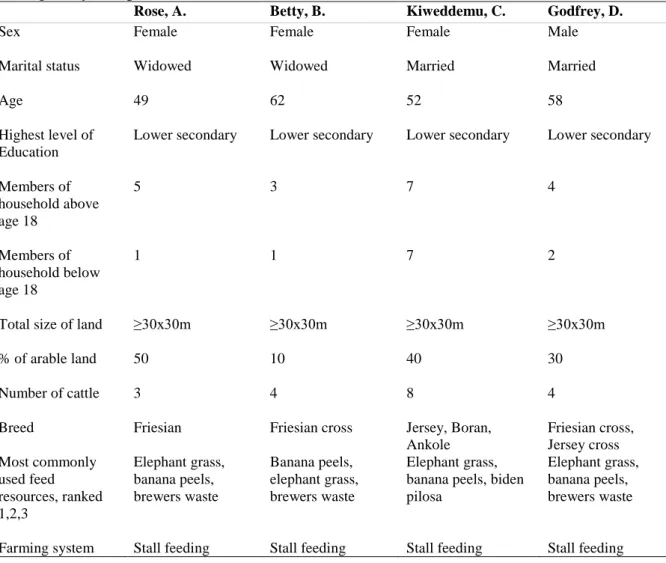
Table 1.Answers from the questionnaire study from the four farmers (A,B,C, D) where the ensiling study was performed
Rose, A. Betty, B. Kiweddemu, C. Godfrey, D.
Sex Female Female Female Male
Marital status Widowed Widowed Married Married
Age 49 62 52 58
Highest level of Education
Lower secondary Lower secondary Lower secondary Lower secondary
Members of household above age 18 5 3 7 4 Members of household below age 18 1 1 7 2
Total size of land ≥30x30m ≥30x30m ≥30x30m ≥30x30m
% of arable land 50 10 40 30
Number of cattle 3 4 8 4
Breed Friesian Friesian cross Jersey, Boran, Ankole Friesian cross, Jersey cross Most commonly used feed resources, ranked 1,2,3 Elephant grass, banana peels, brewers waste Banana peels, elephant grass, brewers waste Elephant grass, banana peels, biden pilosa
Elephant grass, banana peels, brewers waste
Farming system Stall feeding Stall feeding Stall feeding Stall feeding Questionnaire study
The answers from the four farmers (Table 1) show that they share the same level of education and that they all keep dairy cattle. Furthermore, they all have WBW as one of the most commonly used feed resources, except for Kiweddemu who uses biden pilosa. Except for Kiweddemu, the farmers keep Friesian or crosses of it. Stall feeding is the common farming system for all four.
Temperature and pH
The effect of ensiling on pH and temperature on Farm A, B, C and D, as well as the storage ability during 6 days of aerobic exposure of the silage is shown in Figure 1-4. Upon opening
the trenches, visual and sensory evaluation of the silage indicated a good fermentation process. The pH had been lowered to 4.0 for all samples, except for Farm B, where the pH merely had been reduced to 4.7. However, the pH fell to 4.4 the second day, and subsequently to 4.0 on the third day of air exposure. Similarly, the sample from Farm C shows an inconsistent pH, increasing to 4.4 and then dropping to 4.0 the third day.
Figure 1. Effects of 6 days of aerobic exposure on pH and temperature of wet brewers waste silage on farm A.
Figure 2. Effects of 6 days of aerobic exposure on pH and temperature of wet brewers waste silage on farm B.
Figure 3. Effects of 6 days of aerobic exposure on pH and temperature of wet brewers waste silage on farm C.
Figure 4. Effects of 6 days of aerobic exposure on pH and temperature of wet brewers waste silage on farm D.
DM, NDF and ADL
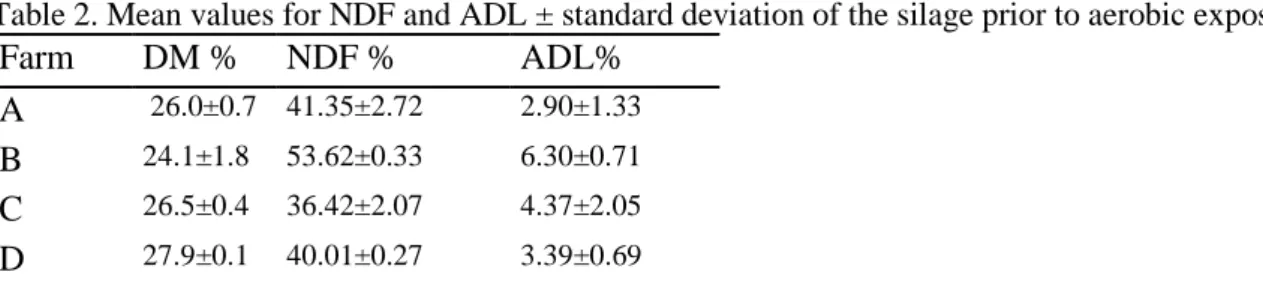
The results for the DM content, NDF and ADL (Table 2) show that Farm B has the lowest DM of 24.1% and Farm D has the highest DM of 27.9%. The samples are close to each other concerning the DM content. The NDF percentage is lowest for Farm C at 36.42 %. Both Farm A and Farm D are close to 40% while Farm C has the highest value of 53.62 %. Regarding ADL, the values range from 2.90 % for Farm A up to 6.30 % for Farm B. After 6 days of air exposure, the values for DM, NDF and ADL increased for all, except for Farm B where the value for ADL decreased slightly (Table 3). DM content ranges between 27.3 % - 28.8 % with Farm B having the highest increase in DM. Values for NDF range from 52.10 % to 61.65 %
with Farm D displaying the greatest increase. ADL proportions ranged between 5.59 % -7.35 % with Farm A showing the highest increase.
Table 2. Mean values for NDF and ADL ± standard deviation of the silage prior to aerobic exposure
Farm DM % NDF % ADL%
A 26.0±0.7 41.35±2.72 2.90±1.33 B 24.1±1.8 53.62±0.33 6.30±0.71 C 26.5±0.4 36.42±2.07 4.37±2.05 D 27.9±0.1 40.01±0.27 3.39±0.69
Table 3. Mean values for DM, NDF and ADL ± standard deviation as percentage of total weight of the sample following aerobic exposure for 6 days
Farm DM % NDF % ADL %
A 28.3±0.4 60.32±5.80 6.07±1.28 B 27.3±0.5 61.65±0.69 6.00±0.96 C 28.8±0.4 52.1±19.27 7.35±0.52 D 28.7±0.1 60.38±2.20 5.59±1.81 VFA and ammonia
Values for acetic acid range from 0.31 % to 0.84 %, with Farm A having the clearly lowest value as the others all have values above 0.70 % (Table 4). Values for butyric acid were low, even undetectable for Farms B and C. Farm D have the highest value of 0.23 %. Content of lactic acid is similar for Farms A, B and C as it range between 1.10 % to 1. 25 %. However, Farm D has the distinctly lowest value of 0. 67 %. Ammonia is overall low with Farms C and D showing the lowest content at 0.008 % and Farm A the highest content at 0.031 %.
Table 4.Mean proportions of VFA and ammonia ± standard deviation as percentage of total weight of the sample prior to aerobic exposure
Farm Acetic % Butyric % Lactic % Ammonia % A 0.31±0.09 0.01±0.01 1.11±0.22 0.031±0.003 B 0.72±0.07 0.00 1.25±0.23 0.010±0.004 C 0.84±0.03 0.00 1.10±0.20 0.008±0.000 D 0.77±0.16 0.23±0.05 0.67±0.36 0.008±0.003
Discussion
The quality of the fermentation process during ensiling is directly linked to the nutritional value of the ensiled product. An efficient fermentation leads to a more palatable and digestible feed, which increases the animal’s intake of DM, hence improving production and performance (North Dakota State University, 2012). Thus, the quality of the silage and the progress of the fermentation process are of very high importance.
Table 1 displays the answers from the different farmers. Answers were received from an extensive questionnaire study performed by the major project “feed for livestock in urban/peri-urban areas of Kampala”. As appears in the table, none of the farmers own any extensive area of arable land. Hence, stall feeding is the dominant production system and there is not adequate land to cultivate feed for the animals. Thus, the farmers have to
complement with market crop wastes, commonly banana peels, and WBW. The farmers also expressed that feed scarcity, together with unstable costs of feed and theft being the greatest challenges to livestock keeping in the peri-urban areas of Kampala. In order to cope with the feed scarcity, the farmers use different strategies such as the reduction of herd size, changing of feed resources depending on availability and search for naturally grown pastures.
Temperature and pH-value
According to recommendations, a pH reduced to approximately 4.0-4.5 is optimum for a good preservation (Kung and Shavers, 2001). Since none of the samples rose above the critical value of 4.5 until the last day of measurement, the silage was aerobically stable. To improve the monitoring of pH, a meter could have been used instead of indicator strips, since a pH-meter has a higher degree of accuracy. The inconsistent pH seen in some farms may be due to local variations in the samples.
As high temperatures enhance mould and yeast activities, the stability of the temperature is of considerable importance (FAO, 2012l). The temperature remained stable throughout the first 4 days. However, during the last two days there was a rise of temperature in samples from Farm A and Farm D. This can indicate bacterial growth, as the oxidation process of bacteria is followed by production of heat (Borreani and Tabacco, 2010). Yet, the increase in temperature may also be a consequence of the respiration of yeast and mould. Nevertheless, the low pH and the constant temperature during the first days of air exposure indicate that the silage had undergone an accurate fermentation process. Several factors may have affected the results, such as the size of the samples, the room temperature and the frequency of the measurements. Also, the thermometer should have been calibrated before use. Finally, if the farmers should wish to continue ensiling, several smaller trench silos could be used so that the length of time that one silo is exposed to aerobic spoilage is minimised. Avoiding spoilage is of paramount importance to the quality of the silage.
Chemical analysis of DM, NDF and ADL
After 6 days of air exposure, the DM increased slightly for all samples. Following aerobic deterioration, the silage is subject to aerobic microbial growth. As a consequence, DM content generally decreases due to degradation of nutrients (Benno et al., 1999). As the DM did not decrease for the silage samples, it appears that there has not been any significant degradation of nutrients, hence indicating good storage ability.
According to NRC (2001), value of NDF for WBW is 47.1% and for ADL 4.7%. Following ensiling, the NDF values for the different silages range between 36%-54% while the values for ADL in the samples range between 1.9 %- 5.6%. As these values are close to the NRC’s values, it appears that the nutritional value of the WBW was not significantly altered, which indicates a good preservation.
According to the NRC (2001), for cows fed diets based on barley the feed should contain about 34% NDF. As WBW is a product of barley, one may draw a parallel to the desired NDF value. If so, this study implies that ensiling favours NDF concentration in WBW, fed to dairy cows in peri-urban areas of Kampala. According to Canibe and Jensen (2011), liquid feed needs to be adequately fermented in order to achieve microbial stability. With regard to the low DM, the same might be applied for WBW, emphasising the advantages of ensiling.
The results from the chemical analysis show that the proportion of NDF and ADL in the silage samples increased during the 6 days of air exposure. Since pH rises when silage is exposed to air, opportunistic microorganisms become metabolically active and consume nutrients (Kung and Ranjit, 2000). The increased values for NDF and ADL indicate the presence of undesired microbial activity, as soluble nutrients have been degraded, increasing the proportion of fibre. Even so, measurements of pH and temperature indicate that the silage was aerobically stable. The growth of undesired microorganisms is likely to have occurred during the last two days as temperature and pH rose, resulting in an increased percentage of NDF.
Chemical analysis of VFA
According to recommendations on high moisture silage, a well fermented product shall contain at least 0.5-2.0% lactic acid, <0.5% acetic acid, 0 % butyric acid and <10% ammonia/total crude protein (Kung and Shavers, 2001). With respect to this, levels for acetic acid were slightly elevated with values of 0.72-0.84% for Farm B, C and D. Only the samples taken from Farm A are, at an average of 0.31 %, below the maximum value. Elevated levels for acetic acid may be due to the presence of heterofermentative LAB or a prolonged aerobic phase. The aerobic phase may be extended if the silage is too dry, or have been packed too slowly and/or not covered adequately (Kung and Shavers, 2001). As WBW have a very low DM, it is more likely that the ensiling procedure is the source of the high acetic acid production. The method used for ensiling was very simple and as it was being performed for the first time in this area, one might expect some practical errors. The ensiling process was successful; still, to further improve the aerobic stability, the feed should be more tightly compressed to rapidly exclude air from the trench. However, there was a lack of proper equipment for compressing, an error that may be easily corrected if the farmers want to continue ensiling WBW. In addition, one reason for an extended aerobic phase could be that the pH was not lowered rapidly enough. This may have been due to the low content of sugar in WBW, as starch is degraded and sugars drained off during the beer making process (Edwards et al., 2011). Hence, in order to reduce the content of acetic acid, WBW could be ensiled with a feed richer in sugar, such as whole or chopped bananas, which are present in plentiful quantities in Kampala. Yet, high levels of acetic acid are not negative for the silage per se, as silage stability increases exponentially with acetic acid concentration (Braun et al., 2003). The negative aspect of the high contents of acetic acid is however that it has been seen to reduce DM intake, due to impaired palatability (Kristensen et al., 2010).
The results for lactic acid were rather diversified, ranging from 0.67 to 1.25%. High levels of lactic acid generally indicate a good fermentation process, as this acid is stronger than the other acids and thus responsible for lowering the silage pH (Kung and Shavers, 2001). The silage samples are all within the desired range for lactic acid, indicating a successful preservation process.
The concentrations of butyric acid in the samples were low, even undetectable for some samples, except the samples from Farm D, which display an undesired amount of butyric acid. High concentrations of butyric acid, >0.5% of DM, indicates that the silage has undergone clostridial fermentation, which is one of the poorest fermentations. This is common in silages with high moisture content; the low DM for WBW may thus be one of the reasons for the elevated levels. Excessive amounts of butyric acid in the silage also reduce the palatability of the feed, inhibiting DM intake. However, even though results from Farm D display high
levels of butyric acid, other parameters such as pH, NDF/ADL and lactic acid were not affected, indicating a successful preservation process.
Concentrations of ammonia in the silage samples were overall low. Subsequent to proteolysis in silage, the proportion of degradable protein decreases, while undegradable protein remains unchanged. As elevated levels of ammonia in silage imply extensive proteolysis, a low content of ammonia is preferable, indicating that the nutritional value for protein has not been significantly altered. A reason for this may be the low pH-values in the silage, as low pH inhibits growth of the microbes which are responsible for proteolysis(Edwards et al., 2011). General ensiling characteristics of Wet Brewer’s Waste
Upon ensiling by-products, the moisture content should be above 50 %, as this enables the material to be well compressed and compacted. However, moisture content above 75% may be harmful as undesirable fermentation may occur in later stages of the ensiling procedure, resulting in sour silage, hence reducing palatability (FAO, 2012o). The moisture content of WBW according to NCR is 78.2%, suggesting that WBW might be too moist to ensile successfully. In order to reduce the moisture content, WBW may be ensiled with drainage or mixed with drier feeds (FAO, 2012o). LAB inoculants are commonly used to improve the preservation process (Muck and Weinberg, 1996). This method would presumably favour ensiling of WBW. Nevertheless, due to the low income of the farmers and the fact that ensiling has not been practiced before in this area, the method should be kept as simple and accessible as possible. The method used in this study is in accordance with the means of the farmers involved, and provides a good platform for continued silage making.
The length of the chop also affects the silage quality. Finer chop inevitably leads to better silage, as the feed can be further compacted with a finer structure (FAO, 2012o). The fine structure of WBW gives it a high potential for silage making, and is probably one of the reasons to why the WBW was well fermented.
The presence of easily fermentable energy is another factor which determines the silage ability of the feed. Feeds which are rich in energy are easier to ensile as this sparks the fermentation process required for the presence of LAB (FAO, 2012o). As easily accessible sugars are drained off during the beer making process, leaving fibre behind, a source of easily fermentable energy, such as whole or chopped bananas or molasses may need to be added to WBW for the fermentation process (Edwards et al., 2011).
Conclusion
In conclusion, after having chemically analysed the silage and monitored the aerobic stability, it appears that WBW may be successfully ensiled using trench silos, in the peri-urban areas of Kampala. However, it is of high importance to carefully compress and cover the trenches to minimise the aerobic phase. Finally, there are several factors affecting the quality of silage. The fine chop of WBW makes it suitable for ensiling as it enables the feed to be properly compacted. In order to reduce the moisture content, it may be ensiled with drier feeds, such as banana peels, which is present in abundant quantities and one of the most commonly used feed resources in Kampala. To spark the fermentation process, a source of readily fermentable energy may be added to the WBW, such as whole or chopped bananas.
References
AFRIS. Animal Feed Resources Information System. FAO’s homepage. 2012. http://www.fao.org/ag/AGa/AGAP/FRG/afris/default.htm
Aliyu, S., Bala, M. 2011. Brewer’s spent grain: A review of its potentials and Applications. African Journal of Biotechnology, 10(3), 324-331.
Sabiiti, E.N., Katongole, C.B., Katuromunda, S., Sengendo, H., Basalirwa, C.P.K., Atukunda, G., Kimeze, S. 2012. Knowledge assessments on climate change and urban/peri-urban agriculture in Kampala city, Uganda. Working document, The System for Analysis, Research, and Training (START), Washington. DC, USA.
Atukunda, G. F., Baseke, S., David, J., Jagwe, M., Kalyebara, M., Kaweesa, R., Miiro, P., Musoke, G., Nabulo, A., Namagembe, C., Niringiye, R., Nyapendi, B., Odongo, C., Owori, M., Azuba-Ssemwanga and Tumwegamire, S, 2003. Farming in the city: Participatory appraisal of urban and peri-urban agriculture in Kampala, Uganda. CIAT Africa Occasional Publications Series 42. CIAT, Kampala, Uganda.
Bareeba, F., Ledin, I., Katongole, C. B., Sabiiti, E. 2011. Utilization of Market Crop Wastes as Animal Feed in Urban and Peri-Urban Livestock Production in Uganda. Journal of Sustainable Agriculture 35:3, 329-342.
Benno, Y., Cai, Y., Kumai, S., Ogawa, M. 1999. Effect of applying lactic acid bacteria isolated from forage crops on fermentation characteristics and aerobic deterioration of silage. Journal of Dairy Science, 82, 520-526.
Borreani, G.., Tabacco, E. 2010. The relationship of silage temperature with the microbiological status of the face of corn silage bunkers. Journal of Dairy Science, 93:6, 2620-2629.
Botermans, J., Mattson, B. 2009. Fermentering av foder eller foderråvaror till grisar. Svenska Pig, 44, 1-8.
Canibe N., Jensen, B. B. 2011.Fermented liquid feed - Microbial and nutritional aspects and impact on enteric diseases in pigs. Animal Feed Science and Technology, 173, 17-40.
CIA. The World Fact Book.May 2012. www.cia.gov/library/publications/the-world-factbook/geos/ug.html
Cofie, O.O., van Veenhuizen, R. and Drechsel P. 2003. Contribution of urban and peri-urban agriculture to food security in Sub-Saharan Africa. African Session of 3rd WWF, Kyoto, 17th March 2003.
Edwards, R. A., Greenhalgh, J. F. D., McDonald, P., Morgan, C. A., Sinclair, L. A., Wilkinson, R. G. 2011. Animal Nutrition, Seventh Edition, 501-513. Ashford Colour Press Ltd., Gosport.
FAO. Food and Agriculture Organisation, May 2012a. www.fao.org/docrep/010/ah878e/ah878e00htm FAO. Food and Agriculture Organisation. May 2012b.
FAO. Food and Agriculture Organisation. May 2012c. Uganda. ftp://ftp.fao.org/docrep/fao/009/a0819e/a0819e08.pdf
FAO. Food and Agriculture Organisation. May 2012d. Nutrition Country Profiles: Uganda. http://www.fao.org/ag/agn/nutrition/uga_en.stm
FAO. Food and Agriculture Organisation. May 2012e. Uganda: The modernization of agriculture: are HIV/AIDS households being left behind?
http://www.fao.org/DOCREP/006/Y5145E/y5145e08.htm#bm08.1. FAO. Food and Agriculture Organisation. May 2012f. Countries: Uganda. http://www.fao.org/countries/55528/en/uga/
FAO. Food and Agriculture Organisation. May 2012g. Uganda – Improving the food security, income and livelihoods of rural farmers. http://www.fao.org/docrep/013/am036e/am036e08.pdf
FAO. Food and Agriculture Organisation. May 2012h. Uganda: Conservation Agriculture for Improved Land Management and Livelihoods of Smallholder Farmers.
http://www.fao.org/tc/tcp/uganda_en.asp
FAO. Food and Agriculture Organisation. 2012i. Urban and peri-urban agriculture. http://www.fao.org/unfao/bodies/COag/cOAG15/X0076e.htm
FAO. Food and Agriculture Organisation. 2012j. Farming in urban areas can boost food security. http://www.fao.org/newsroom/en/news/2005/102877/index.html
FAO. Food and Agriculture Organisation. 2012k. Country Pasture/ Forage Resource profile Uganda. http://www.fao.org/ag/AGP/AGPC/doc/Counprof/uganda/uganda.htm
FAO. Food and Agriculture Organisation. June 2012l. Silage Making in the Tropics with Particular Emphasis on Smallholders. http://www.fao.org/DOCREP/005/X8486E/x8486e01htm FAO. Food and Agriculture Organisation. 2012m. Intensive animal feeding practices for optimum feed utilization. http://www.fao.org/wairdocs/ILRI/x5485E/x5485e05.htm
FAO. Food and Agriculture Organisation. 2012n. Silage making in the tropics with particular emphasis on smallholders. http://www.fao.org/docrep/005/x8486e/x8486e09.htm FAO. Food and Agriculture Organisation. 2012o. Silage making in the tropics with particular emphasis on smallholders. http://www.fao.org/DOCREP/005/X8486E/x8486e0l.htm
Gloppe, K., E. Hvidsten, H. 1955. Determination of volatile fatty acids in silage by distillation and by chromatographic methods. Journal of Animal Physiology and Animal
Nutrition.10, 129–134.
Katongole, C. B. May 2012. Personal Communication. PhD, Makerere University.
KCC. 2003. City Development Strategy, Kampala Development Plan. 2003/2004. Kampala City Council.
2010. Effects of microbial inoculants on corn silage fermentation,microbial contents, aerobic stability, and milk production under field conditions. Journal of Dairy Science, 93, 3764–3774.
Kung, Jr., L. Ranjit, N., K. 2000. The Effect of Lactobacillus buchneri, Lactobacillus plantarum,or a chemical preservative on the fermentation and aerobic stability of corn silage. Journal of Dairy Science. 83, 526.
Kung, L., Shavers, R. 2001. Interpretation and use of silage fermentation analysis report. Focus on Forage, 3, 1-5.
Lee-Smith, D. 2008. Urban food production in Kampala: community perceptions of health impacts and how to manage them. In: Cole, D., Lee-Smith, D, Nasinyama, G. (Eds.), Healthy city harvests: Generating evidence to guide policy on urban agriculture. International Potato Center (CIP) and Makerere University Press.
Muck, R. E., Weinberg, Z. G. 1996. New trends and opportunities in the development and use of inoculants for silage. FEMS Microbiology reviews. 19, 53-68.
National Research Council. Nutrients Requirements of Dairy Cattle. 2001. 7th ed. National Academy Press, Washington D.C., USA.
North Dakota State University homepage. 2012.
http://www.ag.ndsu.edu/pubs/ansci/dairy/as1254w.htm
SIDA, May 2012. http://www.sida.se/Svenska/Lander--regioner/Afrika/Uganda/Utvecklingen-i-Uganda/
Van Soest, P.J., Robertson, J.B., 1985. Analysis of forage and fibrous foods. A laboratory Manual for Animal Science 613. Cornell University Press, Ithaca,New York, USA.
I denna serie publiceras examensarbeten (motsvarande 15, 30, 45 eller 60 högskole- poäng) vid Institutionen för husdjurens utfodring och vård, Sveriges lantbruks-
universitet. Institutionens examensarbeten finns publicerade på SLUs hemsida
www.slu.se.
In this series Degree projects (corresponding 15, 30, 45 or 60 credits) at the Depart- ment of Animal Nutrition and Management, Swedish University of Agricultural Sciences, are published. The department's degree projects are published on the SLU website www.slu.se.
Sveriges lantbruksuniversitet Fakulteten för veterinärmedicin och husdjursvetenskap
Institutionen för husdjurens utfodring och vård Box 7024
750 07 Uppsala Tel. 018/67 10 00
Hemsida: www.slu.se/husdjur-utfodring-vard
Swedish University of Agricultural Sciences Faculty of Veterinary Medicine and Animal Science
Department of Animal Nutrition and Management PO Box 7024
SE-750 07 Uppsala Phone +46 (0) 18 67 10 00
Homepage: www.slu.se/animal-nutrition-management