
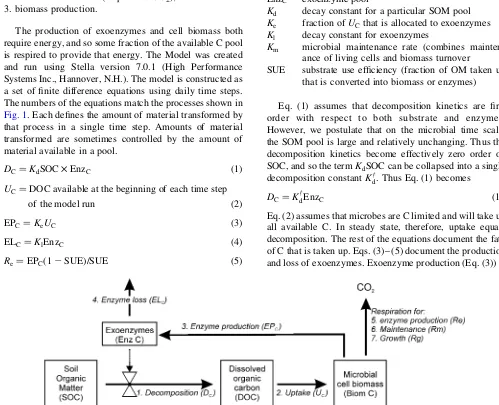
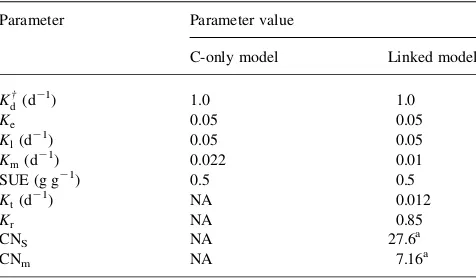
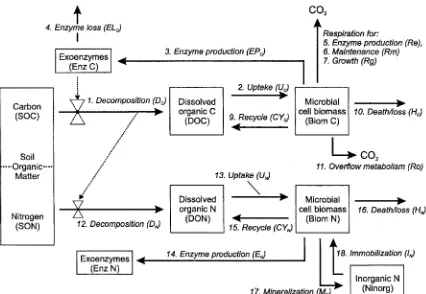
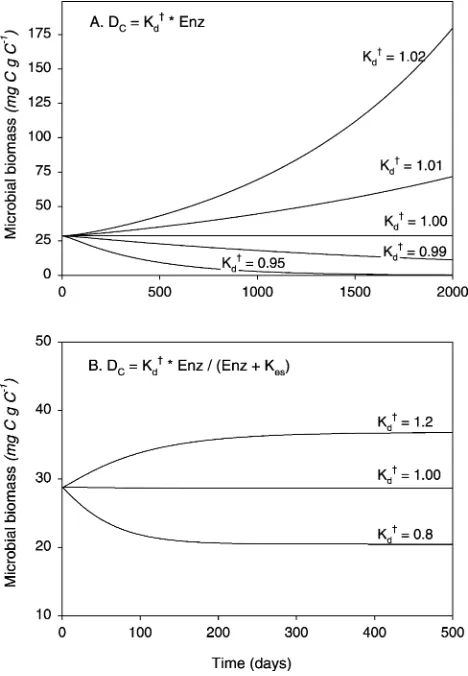
The implications of exoenzyme activity o (1)
Teks penuh
Gambar
Garis besar
Dokumen terkait
Based on information of physical characteristic in the form of soil depth, texture, mineral soil ripeness, decomposition stage of organic soil, soil drainage, water table depth,
The eciency for the decomposition of the rye was dierent when simulating the dynamics of C between the plots when we used an eciency of 40% for the soil organic matter
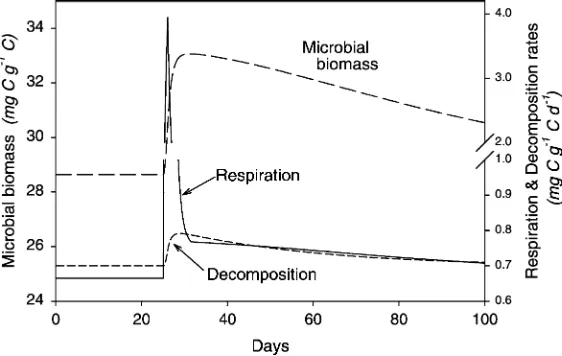
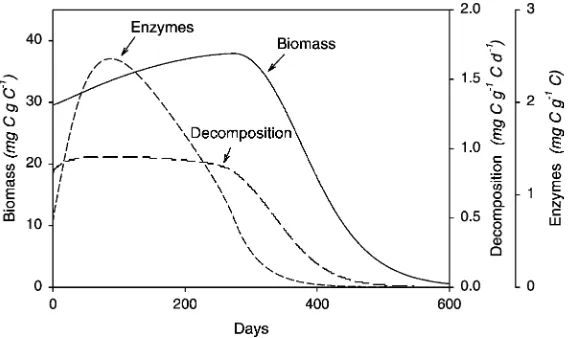
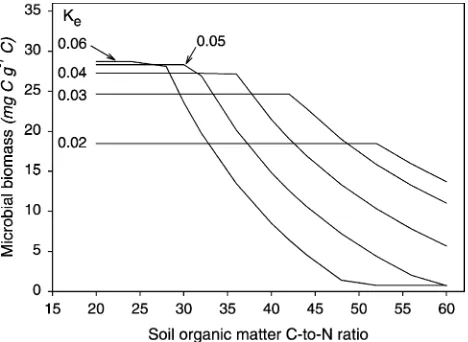
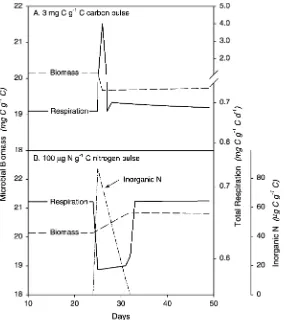
In addition, for soil decompo- sition models that explicitly represent microbial physiology, enzymatic activity, the direct effects of temperature and soil moisture on
Overall variability is generated by: (a) soil spa- tial variability (in particular for hydrological parameters and the type and quantity of organic matter); (b) climatic
Kinetics of organic matter removal and humification progress during sewage sludge composting..
Soil organic matter content under oil palm plantation increased as the slope position became lower, except at the middle slope.. The highest SOM content was determined at the
Soil organic matter, Bulk Density, and Total pore space The content of soil organic matter is seen in Figure 4a, indicating conservation tillage treatment (R1, R2, and R3) is
In spite of evidence for local disturbance in a few areas along the outcrop, the soil underlying the BCR tuff generally is rooted and has high levels of dispersed organic matter or a
