Synthesis of Polyurethane/Silica Modified Epoxy Polymer
Based on 1,3-Propanediol for Coating Application
Lutviasari Nuraini
1,*, Evi Triwulandari
2, Muhammad Ghozali
2, Muhammad Hanafi
2, and Jumina
31Research Center for Metallurgy and Material, Indonesian Institute of Sciences,
Kawasan Puspiptek Serpong, Tangerang Selatan 15314, Banten Indonesia
2Research Center for Chemistry, Indonesian Institute of Sciences,
Kawasan Puspiptek Serpong, Tangerang Selatan 15314, Banten Indonesia
3Department of Chemistry, Faculty of Mathematics and Natural Sciences, Universitas Gadjah Mada,
Sekip Utara, Yogyakarta 55281, Indonesia
Received February 23, 2017; Accepted July 19, 2017
ABSTRACT
Synthesis of polyurethane/silica modified epoxy polymer using 1,3-propanediol has been studied. The polymers was synthesized by reaction of tolonate and 1,3-propanediol (weight ratio of NCO/OH = 2.5/1) as the building blocks of polyurethane and diglycidyl ether bisphenol A (DGEBA) epoxy using a catalyst of dibutyltin dilaurate (DBTL). The total weight percentage of the polyurethane used was 20% (w/w) of the total epoxy. Based on Fourier Transform Infrared (FTIR) and1H-Nuclear Magnetic Resonance (1H-NMR) spectra indicated the existence of
a new bond formed from the reaction of isocyanate group and hydroxyl group, where the hydroxyl groups were derived from epoxy and 1,3-propanediol. The addition of silica (5, 10, and 15% w/w to epoxy) into the epoxy-modified polyurethane has been carried out through sol-gel reaction of tetraethyl orthosilicate (TEOS). The isocyanate conversion increase for the addition of silica 5, 10, and 15% was 95.69; 100; and 100%, respectively. The morphology and elemental analysis with Scanning Electron Microscopy/Energy Dispersive X-Ray Analysis (SEM/EDX), showed that silica has been successfully added in the polymer. From the tensile strength and elongation analysis, also thermal stability analysis using Thermal Gravimetric Analyzer (TGA), the increase of silica amount into the polyurethane modified epoxy did not significantly affect thermal properties, but decreased the tensile strength of the polymer.
Keywords:epoxy; polyurethane; silica; 1,3-propanediol
ABSTRAK
Polimer epoksi termodifikasi poliuretan/silica telah disintesis dengan menggunakan bahan dasar 1,3-propanadiol. Sintesis dilakukan dengan mereaksikan senyawa tolonat dan 1,3-propanadiol (rasio berat NCO/OH = 2,5/1) sebagai bahan penyusun poliuretan dengan epoksi diglisidil eter bisfenol A (DGEBA) disertai penambahan katalis dibutiltin dilaurat (DBTL), dimana penambahan poliuretan sebesar 20% (b/b) terhadap berat epoksi. Berdasarkan spektra dari Fourier Transform Infrared (FTIR) dan 1H-Nuclear Magnetic Resonance (1HNMR)
ditunjukkan adanya ikatan baru yang terbentuk dari hasil reaksi gugus isosianat dan gugus hidroksi, yang mana gugus hidroksi ini berasal dari epoksi dan 1,3-propanadiol. Penambahan silika (5, 10, dan 15% b/b terhadap berat epoksi) ke dalam epoksi termodifikasi poliuretan dilakukan melalui reaksi sol gel tetraetil ortosilikat (TEOS). Hasil analisis peningkatan konversi isosianat (NCO) untuk penambahan silika 5, 10, dan 15% secara berturut-turut sebesar 95,69; 100; dan 100%. Dari hasil analisis morfologi dan analisis unsur dengan Scanning Electron Microscopy/Energy Dispersive X-Ray Analysis (SEM/EDX) teridentifikasi keberhasilan silika termodifikasi dalam polimer. Hasil analisis kuat tarik dan elongasi serta analisis stabilitas termal dengan Thermal Gravimetric Analyzer (TGA) menunjukkan bahwa kenaikan penambahan persentase silika ke dalam polimer epoksi termodifikasi poliuretan ternyata tidak berdampak signifikan terhadap sifat termal polimer, tetapi menurunkan sifat kuat tariknya.
Kata Kunci:epoksi; poliuretan; silika; gliserol; 1,3-propanadiol
INTRODUCTION
Prevention of a structure from corrosion is a great concern in nowadays. Corrosion may be defined as a
studied through decreasing the impurities to below their tolerance limits; developing alloys by new elements, phases, and microstructure distributions; or providing several protective films and coatings via surface treatment (e.g. chemical treatments, anodizing, organic coatings, and electroplating) [2]. Coatings are the most widely applied method for corrosion protection of metallic materials.
Epoxy resin is a kind of organic compound based polymers commonly used as coating materials. Epoxy resins are widely used as heavy-duty anticorrosion coatings because of their exceptional properties, such as easy processing, high safety, excellent solvent and chemical resistance, toughness, low shrinkage on cure, mechanical and corrosion resistance, and excellent adhesion to many substrates [3]. However, their shortcomings are low fracture energy, low thermal stability, low pigment holding ability, poor hydrophobicity, weathering and impact strength, which restrict their wide application in the field of coatings and paints. Therefore, epoxies were modified with various polymer systems like polyaniline [4-5] or polyurethanes [6] to obtain balance of properties. Urethane linkages provide excellent abrasion resistance, hardness and adhesion to the system with improved corrosion resistance [7]. Polyurethane is one of organic coatings or paints on a substrate give aesthetic appearance as well as protection from corrosion. Polyurethane are featured by excellent abrasion resistance, chemical etching resistance, and flexibility as well as fabrication versatility. However, polyurethane are limited in engineering application by some disadvantage especially its poor resistance to high temperature and medium mechanical performance [8].
Another way to modify the limited properties of epoxy is by an addition of reactive silanes [9]. This modification of epoxy resin with siloxane via organic-inorganic hybrid coating has been studied [10-13]. Organic-inorganic hybrid materials are the new generation of surface treatment to prevent the corrosion in metals [14]. Organic/inorganic hybrid materials prepared by the sol-gel approach have rapidly become a fascinating new field of research in materials science [15]. Careful selection of a hybrid coating allows combining the desirable properties of organic part of system, i.e., toughness and elasticity with those of inorganic phase that is characteristic of good hardness, chemical resistance and adhesion to the metal substrate via formation of covalent bonds [16]. They offer an excellent adhesion to metal as well as to the subsequent coat via strong covalent bond and a three dimensional network of –Si–O–Si– linkages which helps to retard the penetration of corrosive medium through the coating [17]. Hybrid coating increase the thermal, UV resistance and the mechanical properties [18].
In this research, the coating system of polyurethane modified epoxy by using 1,3-propanediol and tolonate as building block of polyurethane has been produced. The 1,3-propanediol is a valuable chemical used in the synthesis of polyurethanes when reacted with isocyanate group [19]. It has been reported by Triwulandari and Ghozali that modification of epoxy using polyurethane improves the thermal resistant and mechanical properties [20]. Different kind of monomer affects the properties and characteristic of polyurethane resin, so it needs further studies especially by using other monomer of polyurethane to study the effect of thermal and mechanical properties. As explained before, that modification with silica also improves the physico-chemical properties of coating. Furthermore, this study not only examines the synthesis of polyurethane epoxy coating, but also introduces the silica particles into the polymer matrix. The thermal and mechanic properties of the polymer also have been studied.
EXPERIMENTAL SECTION
Materials
The materials used in this research were epoxy diglycidyl ether bisphenol A (DGEBA) (epoxy YD 128 with Epoxy Equivalent Weight (EEW) = 180-190) and hardener versamid 140. Other reagents were purchased from E. Merck: 1,3-propanediol, tolonate (% NCO = 19.75%), aminopropyltriethoxysilane (APTES), tetraethyl orthosilicate (TEOS), dibutyltin dilaurate (DBTL), toluene, dibutylamine, 2-propanol, hydrogen chloride (HCl) and bromothymol blue indicator.
Instrumentation
The hybrid polymer produced was characterized with Fourier Transform Infrared (FTIR, Shimadzu, Prestige 21),1H-NMR and13C-NMR (JEOL, 500 MHz). Characterization of the modified polymer was conducted by isocyanate conversion level test following ASTM D2572-97, morphology and element identification by Scanning Electron Microscopy/Energy Dispersive X-Ray Analysis (SEM Hitachi, SU3500/EDX Horiba), the tensile strength and elongation analysis by Universal Testing Machine (UTM, Ray-Ran M500-50CT) and thermal stability analysis using Thermal Gravimetric Analyzer (TGA, Linseis, STA 1600).
Procedure
Synthesis of epoxy-polyurethane (ETP)
diglycidyl ether bisphenol A (DGEBA) with 1,3-propanediol and tolonate as building block of polyurethane. The weight ratio of NCO/OH between tolonate and 1,3-propanediol used in this research was 2.5 [22], in which the total weight percentage of polyurethane was 20% (w/w) of the total epoxy. Therefore the weight of tolonate, 1,3-propanediol and epoxy added were 4, 2.11, and 30.56 g, respectively. The reaction was conducted at 50 °C for 30 min by dibutyltin dilaurate (DBTL) as catalyst (0.03 g).
Synthesis of epoxy-polyurethane/silica (ETP-Si)
The sol hybrid was prepared by sol gel reaction of tetraethyl orthosilicate (TEOS) precursor. The precursor consisting of TEOS (Mr = 208.33 g mol-1; ρ = 0.94 kg L-1) : water (Mr = 18.00 g mol-1) : ethanol (Mr = 46.07 g mol-1;
ρ = 0.79 kg L-1) with the mole ratio 1:4:4. Consequently,
the precursor added were 208.33 g, 72.00 g and 184.28 g, respectively. This materials were hydrolyzed with HCl solution as the catalyst. The mixture was vigorously stirred for 1 h at room temperature. After the transparent sol solution was formed, the excess solvent was removal by evaporation [23]. The next step, the epoxy-polyurethane was reacted with a crosslinker agent, aminopropyltriethoxysilane (APTES) with ratio 1% (w/w) of the total epoxy (3.05 g). The reaction was conducted at 50 °C for 30 min. An appropriate amount of sol TEOS was then added in the reaction mixture. The silica content in the hybrid film varied from 5, 10, and 15% (w/w) of the total epoxy. After through mixing for 2 h, the
mixture was cooled and an amount of hardener versamid 140 (2:1) was added to completely cure the mixture.
RESULT AND DISCUSSION
Chemical Structure of Epoxy-Polyurethane/Silica
This research studies a chemical modification between epoxy diglycidyl ether bisphenol A which has
Fig 1. FTIR spectra of tolonate (a), unmodified epoxy (b) and polyurethane modified epoxy(c)
O
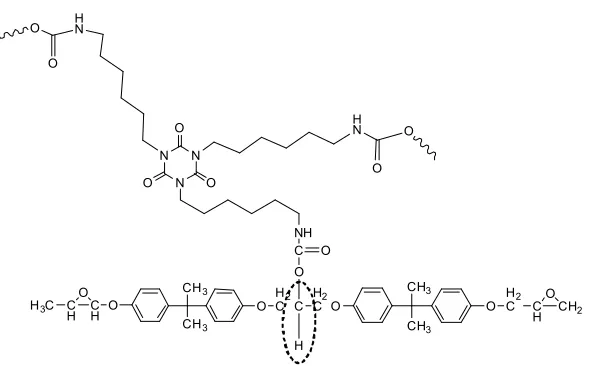
Fig 3.Chemical bond formed from epoxy and polyurethane reaction
Fig 4.Structure modification of epoxy-polyurethane/silica
a hydroxyl group in the structure with polyurethane. The hydroxyl group of epoxy was reacted with isocyanates group (N=C=O) of tolonate forming urethane bond (-NH-(C=O)-O-). The hydroxyl group of 1,3-propanediol also reacted with N=C=O group of tolonate forming urethane bond. Reaction mechanism for the NCO/OH reaction due to dibutyltin dilaurate catalyst proposed by Britain and Gemeinhardt [24].
Spectrum FTIR of polyurethane modified epoxy (ETP) product (Fig. 1) showed a new absorption peak at 1713 cm-1 from C=O stretching of urethane bond (-NH-(C=O)-O-), as a result of isocyanate reaction with a hydroxyl group of epoxy and 1,3-propanediol has been existed. In addition, the analysis data showed that an absorption intensity at 2276 cm-1 of isocyanate group has been reduced. The both analysis findings, referred to FTIR spectrum, had strengthened each other that the product was absolutely produced. The FTIR spectra of unmodified epoxy has wide absorption peak at 3516 cm -1 represented existence from –OH group. After the modification process, the –OH absorption appearance at 3397 cm-1, and this peak gave similar absorption of –NH peak at epoxy-polyurethane (ETP), so it is indicate the –
NH peak cannot be identified clearly because of the absorption overlap. The another overlap absorption was showed by the peaks of epoxy group at region 3000 cm-1assigned to symmetric stretching of C-H of the oxirane ring. The C-O oxirane ring absorption was showed at 915 cm-1, and according to Nikolic et al. [25] and Cholake et al. [26] the peaks of epoxy group will decrease during the crosslinking process as shown in the FTIR spectra.
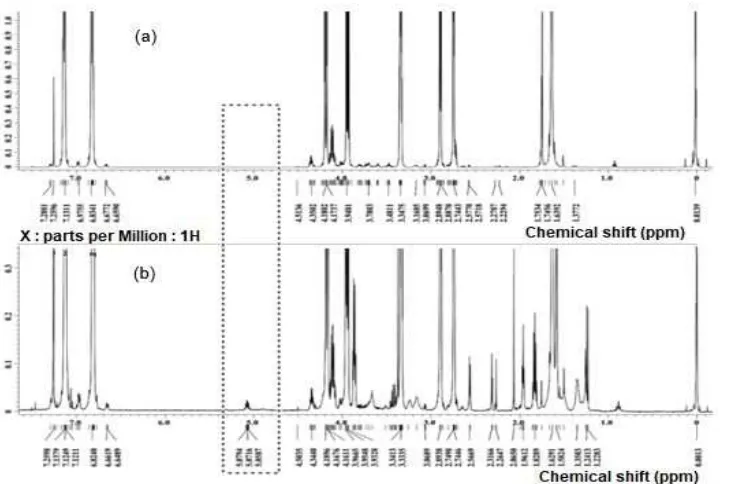
Further analysis with 1H-NMR to the epoxy-polyurethane (ETP) showed the identical proton groups appearance in chemical environment between unmodified epoxy and epoxy-polyurethane product. The differences was there new weak signal presence, that indicate from protons after the epoxy modified by polyurethane. This can be explained because the total weight of polyurethane added was 20% (w/w) of the total epoxy, so partly the system consists of epoxy polymer. The most important evidence indicated from 1H-NMR analysis (Fig. 2) was the presence a new
signal on chemical shifting region at δ = 5.0 ppm from –
chemical bond as a result of the reaction from OH group of epoxy and NCO group of polyurethane.
Modification of epoxy-polyurethane with siloxane has been conducted by using sol gel reaction of tetraethyl orthosilicate (TEOS) in acid catalyst. This reaction consists of hydrolysis and condensation reaction. Hydrolysis occurs when TEOS and water are mixed in ethanol solvent. The intermediates that exist as a result of partial hydrolysis include Si-OH group, which are called silanols. The condensation process may occur between either two silanols or silanol and ethoxy group to form bridging oxygen or a siloxane group Si-O-Si. The relative rates and the extent of hydrolysis and condensation reactions are governed by many factors like organosilane of interest, solvent, water, silane concentration and solution pH [27].
The FTIR spectrum of the sol gel product showed decreasing the intensity of absorption peak from CH3 and CH2group at 2970 and 2743 cm-1from -SiOCH2CH3 group of TEOS (Fig. 5). The increase of intensity at 3439 cm-1 indicates OH stretching vibrations from Si-OH, which is strengthen by absorption at 1640 cm-1 which comes from bending vibration of OH. This evidence clearly indicating SiOCH2CH3 group becomes Si-OH. The peak appearing at 1060 cm-1is associated with Si-O-Si bond. The analysis referred to FTIR spectrum, had strengthen each other that the sol gel product was absolutely produced. To investigate the effect of silica content to the epoxy-polyurethane, an appropriate amount of sol gel product was added in the epoxy-polyurethane varied from 5, 10, and 15% (w/w) of the total epoxy. Structure modification of epoxy-polyurethane/silica was presented at Fig. 5.
Isocyanate (NCO) Conversion Level
The isocyanate group of tolonate reacts with OH group of epoxy and 1,3-propanediol, so the NCO group can be used as control to determine the isocyanate conversion rate by calculating the residual isocyanates in the polymer product. The residual of isocyanates
Fig 5.FTIR spectra of TEOS (a) and sol gel product (b)
Table 1.Isocyanate (NCO) conversion level
Materials The residual of NCO (%)
α (%)
1 ETP 6.86 65.26
2 ETP-Si 5% 1.89 95.69
3 ETP-Si 10% 0 100
4 ETP-Si 15% 0 100
Fig 7.Point analysis EDX from ETP-Si 5% (a); spectrum analysis 1 (b) and 5 (c)
Table 2. Mechanical properties of unmodified and modified epoxy
Film Tensile Strength (kgF/cm2) Elongation (%)
Epoxy 69.61 1.88
ETP 194.73 5.71
ETP-Si 5% 239.03 6.18
ETP-Si 10% 166.46 6.63
ETP-Si 15% 108.20 7.14
indicate the number of isocyanate does not react with the OH group of epoxy and 1,3-propanediol. The degree
of conversion isocyanate (α) is the percentage of
isocyanate groups which react to form urethane bonds with other constituent elements. When the degree of conversion isocyanate equal to 100% indicates the isocyanate groups was reacted perfectly. This analysis was presented in Table1. The results show that the isocyanate conversion rate of epoxy-polyurethane (ETP) is 65.26%. This indicate not all of the isocyanate was reacted with hydroxyl groups of epoxy and 1,3-propanediol. Meanwhile, the addition of silica increased the conversion rate up to 100%. This maybe explained that the silanol group which formed from the hydrolysis and condensation of TEOS also react with NCO group of tolonate.
Morphology and Composition of Epoxy-Polyurethane/Silica
SEM images show the surface morphology of unmodified epoxy, epoxy-polyurethane (ETP), and epoxy-polyurethane/silica (ETP-Si 5%, ETP-Si 10%, ETP-Si 15%) (Fig. 6). It can be seen the “white” image from the morphology of epoxy-polyurethane/silica. Investigation using Energy Dispersive X-Ray Analysis
(EDX) by point analysis method show that the white image indicates the presence of silica as shown in Fig. 7. In case of investigation at ETP-Si 5% by five point analysis, proved from spectrum 1 that silica was embedded in black epoxy-polyurethane matrix, while the point analysis taken outside the white images shows the absence of silica (spectrum 5). The EDX analysis at ETP-Si 10% and ETP-Si 15% gave similarly result. This indicated that the epoxy-polyurethane was successfully modified by silica. The EDX analysis showed that the epoxy-polyurethane/silica was successfully produced through the sol gel tetraethylorthosilicate (TEOS) to incorporate the silica element, although this analysis cannot prove the quantitative accuracy percentage of silica added to the polymer.
Mechanical Properties
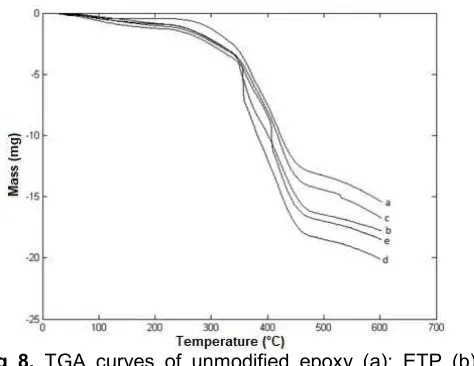
Fig 8. TGA curves of unmodified epoxy (a); ETP (b); ETP-Si 5% (c); ETP-Si 10% (d) and ETP-Si 15% (e)
the rigid 3D crosslinking the polymer so the polymer film will be easily broken. As a result the lowest tensile strength values showed from an epoxy-polyurethane/silica 15% and the highest tensile strength values from an epoxy-polyurethane/silica 5%.
Thermal Properties
The thermal stability of the crosslinked networks plays an important role and is greatly influenced by the structure, chemical composition, cohesive energy between molecular chains, molecular chain rigidity, different interaction parameters and other chemical structural factors like steric strain, conformational arrangements of groups, etc. [29] The thermal stability of unmodified and modified epoxy has shown in Fig. 8, for all polymer samples almost have similar degradation thermogram. All thermogram showed significant mass reduction from temperature about 350 °C. The mass reduction of epoxy-polyurethane was higher than unmodified epoxy. This may be attributed to the presence of thermally weak urethane linkage in the polyurethane modified epoxy network [28]. The addition of silica into epoxy-polyurethane was not significantly affecting the thermal properties, as shown at Fig. 8 the mass reduction of ETP-Si 5%, ETP-Si 10% and ETP-Si 15% were higher than the mass reduction of unmodified epoxy until the temperature reach 600 °C. It is difference from the result reported by Triwulandari and Ghozali [20], which showed that the addition siloxane to the modified epoxy increases the thermal properties of the unmodified epoxy. The siloxane has ability to delay the thermal degradation process because of its high bond energy and thermal stability of Si-O-Si linkage [30]. This may be explained because Si-O-Si has not modified perfectly in the polymer systems in this research or the
influence of the differences the building block materials of polyurethane.
CONCLUSION
The organic-inorganic hybrid coating from polyurethane/silica modified based on 1,3-propanediol and tolonate in the presence of catalyst dibutyltin dilaurate (DBTL) was successfully synthesized, proved by the result of Fourier Transform Infrared (FTIR) and 1H-Nuclear Magnetic Resonance (1H-NMR) analysis that indicated a new bond is formed from the reaction of isocyanate group and hydroxyl group of epoxy and 1,3-propanediol. Data of SEM/EDX analysis showed that the silica of 5, 10, and 15% w/w to epoxy was successfully added into the epoxy-modified polyurethane by sol-gel method of tetraethyl orthosilicate (TEOS). The analysis using Thermal Gravimetric Analyzer (TGA) showed that the increase of silica amount into the polyurethane modified epoxy did not significantly affect thermal properties of polymer. From the mechanical analysis it is showed that the increase of silica amount added into the polymer decreases the tensile strength of the modified polymer. As a result the highest tensile strength was obtained at the silica addition of 5%.
ACKNOWLEDGEMENT
The authors would like to acknowledge the Research Center for Chemistry–LIPI and Ministry of Research, Technology and Higher Education Republic of Indonesia for financial support in this research under LIPI Priority and Advanced Research Projects year 2015, sub program Material, Energy and Manufacturing Engineering Development Program.
REFERENCES
[1] Dodiuk, H. and Kenig, S., 1994, Low temperature curing epoxies for structural repair, Prog. Polym. Sci., 19 (3), 439–467.
[2] Song, G., and Atrens, A., 1999, Corrosion mechanisms of magnesium alloys, Adv. Eng. Mater., 1(1), 11–33.
[3] Jin, F.L., Li, X., and Park, S.J., 2015, Synthesis and application of epoxy resins: A review, J. Ind. Eng. Chem., 29, 1–11.
[4] Navarchian, A.H., Joulazadeh, M., and Karimi, F., 2014, Investigation of corrosion protection performance of epoxy coatings modified by polyaniline/clay nanocomposites on steel surfaces, Prog. Org. Coat., 77 (2), 347–353.
and corrosion protection performance of conducting paints,Prog. Org. Coat., 77 (1), 146–159.
[6] Wua, G.M., Kong, Z.W., Chen, J., Huo, S.P., and Liu, G.F., 2014, Preparation and properties of waterborne polyurethane/epoxy resin composite coating from anionic terpene-based polyol dispersion, Prog. Org. Coat., 77 (2), 315–321.
[7] Wazarkar, K., Kathalewar, M., and Sabnis, A., 2016, Development of epoxy-urethane hybrid coatings via non-isocyanate route,Eur. Polym. J., 84, 812–827. [8] Lin, J., Wu, X., Zheng, C., Zhang, P., Huang, B., Guo,
N., and Jin, L.Y., 2014, Synthesis and properties of epoxy-polyurethane/silica nanocomposites by a novel sol method and in-situ solution polymerization route, Appl. Surf. Sci., 303, 67–75.
[9] Chrusciel, J.J., and Lesniak, E., 2015, Modification of epoxy resins with functional silanes, polysiloxanes, silsesquioxanes, silica and silicates, Prog. Polym. Sci., 41, 67–121.
[10] Zandi-zand, R., Ershad-langroudi, A., and Rahimi, A., 2005, Silica based organic–inorganic hybrid nanocomposite coatings for corrosion protection, Prog. Org. Coat., 53 (4), 286–291.
[11] Tavandashti, N.P., Sanjabi, S., and Shahrabi, T., 2009, Corrosion protection evaluation of silica/epoxy hybrid nanocomposite coatings to AA2024, Prog. Org. Coat., 65 (2), 182–186.
[12] Corcione, C.E., Striani, R., and Frigione, M., 2014, Organic–inorganic UV-cured methacrylic-based hybrids as protective coatings for different substrates, Prog. Org. Coat., 77 (6), 1117–1125.
[13] Ahmad, Z., and Al-Sagheer, F., 2015, Novel epoxy– silica nano-composites using epoxy-modified silica hyper-branched structure, Prog. Org. Coat., 80, 65– 70.
[14] Figueira, R.B., Silva, C.J.R., and Pereira, E.V., 2015, Organic–inorganic hybrid sol–gel coatings for metal corrosion protection: A review of recent progress,J. Coat. Technol. Res., 12 (1), 1–35.
[15] Wang, D., and Bierwagen, G.P., 2009, Sol–gel coatings on metals for corrosion protection, Prog. Org. Coat., 64 (4), 327–338.
[16] Chattopadhyay, D.K., Muehlberg, A.J., and Webster, D.C., 2008, Organic–inorganic hybrid coatings prepared from glycidyl carbamate resins and amino-functional silanes,Prog. Org. Coat., 63 (4), 405–415. [17] Balgude, D., and Sabnis, A., 2012, Sol–gel derived
hybrid coatings as an environment friendly surface treatment for corrosion protection of metals and their alloys,J. Sol-Gel Sci. Technol., 64 (1), 124–134. [18] Zheng, S.X., and Li, J.H., 2010, Inorganic–organic
sol gel hybrid coatings for corrosion protection of metals,J. Sol-Gel Sci. Technol., 54 (2), 174–187. [19] Petrovic, Z.S., and Ferguson, J., 1991, Polyurethane
elastomers,Prog. Polym. Sci., 16 (5), 695–836.
[20] Triwulandari, E., and Ghozali, M., 2013, Pembuatan epoksi termodifikasi poliuretan dari poliol akrilik dengan variasi suhu dan komposisi poliuretan, Jurnal Sains Materi Indonesia, 14 (2), 120–124. [21] Ghozali, M., Saputra, A.H., Triwulandari, E., and
Haryono, A., 2014, Modifikasi epoksi dengan poliuretan tanpa melalui tahap prepolimer poliuretan, Jurnal Sains Materi Indonesia, 15 (4), 208–213.
[22] Ghozali, M., Triwulandari, E., and Haryono, A., 2015, Preparation and characterization of polyurethane-modified epoxy with various types of polyol,Macromol. Symp., 353 (1), 154–160.
[23] Bakhshandeh, E., Jannesari, A., Ranjbar, Z., Sobhani, S., and Saeb, M.R., 2014, Anti-corrosion hybrid coatings based on epoxy–silica nanocomposites: Toward relationship between the morphology and EIS data, Prog. Org. Coat., 77, 1169–1183.
[24] Chattopadhyay, D.K., and Raju, K.V.S.N., 2007, Structural engineering of polyurethane coatings for high performance applications, Prog. Polym. Sci., 32 (3), 352–418.
[25] Nikolic, G., Zlatkovic, S., Cakic, M., Cakic, S., Lacnjevac, C., and Rajic, Z., 2010, Fast Fourier transform IR characterization of epoxy GY systems crosslinked with aliphatic and cycloaliphatic EH polyamine adducts,Sensors, 10 (1), 684–696. [26] Cholake, S.T., Mada, M.R., Raman, R.K.S., Bai, Y.,
Zhao, X.L., Rizkalla, S., and Bandyopadhyay, S., 2014, Quantitative analysis of curing mechanisms of epoxy resin by mid- and near-Fourier Transform Infra Red Spectroscopy, Def. Sci. J., 64 (3), 314– 321.
[27] Milea, C.A., Bogatu, C., and Duţă, A., 2011, The
Influence of Parameters in Silica Sol-Gel Process, Bull. Transilv. Univ. Braşov Ser. I, 4 (53), 59–66. [28] Prabu, A.A., and Alagar, M., 2004, Mechanical and
thermal studies of intercross-linked networks based on siliconized polyurethane-epoxy/unsaturated polyester coatings, Prog. Org. Coat., 49 (3), 236– 243.
[29] Gireesh, K.B., Jena, K.K., Allauddin, S., Radhika, K.R., Narayan, R., and Raju, K.V.S.N., 2010, Structure and Thermo-mechanical Properties study of polyurethane-urea/glycidoxypropyltrimethoxy silane hybrid coatings, Prog. Org. Coat., 68 (3), 165–172.