Corresponding author: [email protected]
The efficacy of intense pulsed light and
heat energy therapy compared to benzoyl
peroxide gel 2.5% in the treatment of mild
and moderate acne vulgaris
Triasari Oktavriana1*, Agnes Sri Siswati2, Kristiana Etnawati2
1Department of Dermatology and Venereology, Faculty of Medicine, Universitas Negeri
Sebelas Maret/UNS Hospital, Surakarta, 2Department of Dermatology and Venereology
Faculty of Medicine, Universitas Gadjah Mada/Dr. Sardjito General Hospital, Yogyakarta
DOI: http://dx.doi.org/10.19106/JMedSci004801201602
ABSTRACT
The use of technology-based light therapies such as intense pulsed light and heat energy (IPL) provides an alternative therapy for patients with acne. However, clinical evidence
is required to evaluate the eficacy and safety of the IPL. This study aimed to evaluate the eficacy of IPL compared to benzoyl peroxide (BP) as standard therapies in patients with acne vulgaris. The study was conducted with randomized controlled trial parallel design
involving patients with mild and moderate acne vulgaris. Acne severity was determined by
the method of Combined Acne Severity Classiication (CASC). Statistical analysis using
repeated measurement analysis of variance was conducted to assess the reduction in lesions and number of P. acnes in each group followed by independent t-test to compare
of both groups. A p value <0.05 was considered signiicant. Sixty-two patients with mild and moderate acne vulgaris were enrolled in this study and treated with IPL (32
patients) and with BP gel 2.5% (30 patients). Two patients from the IPL were dropped out. All subjects showed improvement in acne lesions. Reduction of the number of
non-inlammatory lesions at IPL therapy group was not signiicantly different than the BP gel 2.5% at week 2 (p=0.705) and 4 (p=0.186). Reduction in the number
of inlammatory lesions in the IPL treatment group was not signiicantly different than BP gel 2.5% at week 2 (p=0.604) but signiicantly higher at week 4 (p=0.003). The
reduction of P. acnes colonization in the IPL group was signiicantly higher than BP gel 2.5% group at week 2 (p=0.000) and 4 (p=0.000). In conclusion, the eficacy of IPL in the reduction of the number of inlammatory lesions and the P. acnes colonization is better than BP on patients with acne vulgaris.
ABSTRAK
Penggunaan terapi berbasis teknologi sinar seperti intense pulsed light (IPL) dan energy panas memberikan alternative pada pasien akne. Namun demikian, diperlukan penelitian untuk
mengkaji eikasi dan keamanan IPL dibandingkan dengan pengobatan standard dengan BP
analisis variansi pengukuran berulang digunakan untuk menilai penurunan jumlah lesi dan jumlah P. acnes pada tiap kelompok dilanjutkan dengan uji-t untuk membandingkan kedua kelompok. Nilai p <0,05 digunakan untuk menyatakan perbedaan secara berrmakna. Enam puluh dua pasien subyek dengan tipe kulit IV dan V diikutkan dalam penelitian ini
dan 32 pasien mendapatkan terapi IPL dan 30 pasien mendapat gel BP 2,5 %. Dua pasien
kelompok IPK keluar dari penelitian karena efek samping. Hasil penelitian menunjukkan
semua subyek mengalami perbaikan lesi akne. Penurunan jumlah lesi non-inlamasi pada kelompok IPL tidak berbeda bermakna dengan delompok BP 2,5 % pada minggu ke 2 (p =0,705) dan ke 4 (p=0,186). Jumlah lesi inlamasi kelompok IPL tidak berbeda pada minggu ke 2 (p=0.604) tetapi lebih baik pada minggu ke 4 dibandingkan kelompok BP (p=0,003). Penurunan jumlah koloni P. acnes menunjukkan perbaikan
nyata pada kelompok IPL dibanding kelompok BP baik pada minggu ke 2 (p=0,00) maupun minggu ke 4 (p=0,00). Disimpulkan, eikai IPL dalam menurunkan jumlah lesi inlamasi dan koloni P. acnes lebih baik dibandingkkan BP pada pasien dengan acne
vulgaris.
Keywords: acne vulgaris – P. acnes – blackhead -intense pulsed light and heat energy
benzoyl peroxide
-INTRODUCTION
Acne vulgaris is a common skin disease that affects almost all teenagers and adult
population.1,2 In outpatients clinic of the
Division of Cosmetic, Department of Dermatology and Venereology Dr. Sardjito General Hospital Yogyakarta, acne vulgaris is one of the three major diseases that are often found with a prevalence of approximately 71% of total visits during the period of 2006-2011. The prevalence of acne vulgaris in Hong Kong amounted to 91.3%, with ages ranging from 15-25 years and 26.6% of respondents
suffered from psychological disorders.3
Psychological effects caused by acne induce the loss of self-esteem and depression which affect their quality of life.4,5 The negative effects of acne need to be anticipated by providing education, as well as the effective
and eficient acne treatment.6
Various modalities for acne therapy
are available.7 The involvement of various
factors related to the pathogenesis of acne vulgaris leads to the emergence of variety
of acne therapy modalities.8-10 Factors
involved include follicular epidermal
hyperproliferation, increased production of excessive sebum, Propioni bacterium
acnes hypercolonization and inlammatory.11 Moreover, it is also needed to consider other factors, such as the duration of disease, response to prior therapy,
predisposing to post-inlammatory scars and
hyperpigmentation. Patients preference and cost of acne treatment regimens should also be considered to treat acne. . In addition, the late onset of therapeutic action often leads to patients’ non-compliance in running acne therapy.12,13 Another problem is the resistance of P.acnes due to long-term use of antibiotics that may cause refractory to therapy and the increasing rate of disease recurrency.13,14
Benzoylperoxide (BP) is one of the standard therapy of mild and moderate acne that is widely used with a concentration of 2.5% to 10% with the goal of reducing P. acnes.15 Therapeutic effectiveness is equivalent between BP gel 2.5%, 5% and 10%. The irritation effect may be lower by using the
concentration of BP gel 2.5%.16 Moreover,
Utilization-based light therapy techno-logy either as mono therapy or in combination with standard therapy provides an alternative treatment option for acne patients.13,20 Light therapy target is P. acnes or damage to the pilosebasea unit.21 Intense pulsed light technology (IPL) as a light-based therapy was developed as an alternative therapy for
acne because of its eficacy in accelerating the photochemical reaction of porphyrin, faster onset of action and ability to reduce the risk
of bacteria resistance.22 IPL technology
was developed and combined with thermal energy, known as pulsed intense light and heat energy based on thermal shock mechanism.11
Research on the effectiveness of the IPL treatment for acne vulgaris has been conducted in many countries with various results.7 Based on the results of systematic review by Hamilton et al.21 clinical trials with light therapy has been done with several methods; i.e. comparing with placebo as a control, topical therapy as a control, comparing light therapy with different wavelength, or combined with microdermabrasion as a control. According to identiication of the review, they obtained 3 clinical trials on the comparative use of light therapy with topical therapy as a control. The Global Alliance to Improve Outcomes in Acne Group stated that the existing research, in particular light therapy, has varying qualities, but it still rare that light-based therapy is compared
with validated pharmacological therapy.23
Currently, there is not enough clinical data to support the recommendation of using light-based systemtherapy24, that it still needs more evidence-based research to explain the clinical
eficacy and safety of light therapy with
different degrees of acne as well as a greater number of subjects and longer follow-up
period.25 To date, no reported comparative
data on the effectiveness of intense pulsed light heat energy therapy with BP gel 2.5% for mild and moderate acne vulgaris.
MATERIALS AND METHODS
This study was a randomized controlled trials with parallel design. Subjects were patients with mild and moderate acne vulgaris, had a skin type IV and V. Sample was determined by consecutive sampling. Acne severity was determined by the method
of combined acne severity classiication
(CASC). The study was done in October 2012-January 2013. Patients had provided informed consent and agreed not to change their skin care during this trial. All patients in IPL group were instructed to come to the study twice weekly for 4 weeks and those in BP 2.5% group were instructed to apply the topical twice daily after washing the facial skin. The condition of acne and side-effects were monitored before and at week 2 and 4.
The independent variables were the treatment using intense pulsed light and heat energy (IPL) and topical benzoyl peroxide gel 2.5% (BP 2.5%). Dependent variable was the result of the effectiveness of such therapy as assessed by a reduction in
non-inlammatory and non-inlammatory lesion
count number, and decrease number of P. acnes. Statistical analysis using repeated measurement analysis of variance to assess the reduction in lesions and P. acnes in each group. Comparison of the difference in the mean reduction in lesion and P. acnes between the two treatment groups were statistically analyzed by independent t-test
with a signiicance value of p <0.05.
RESULTS
A total of 62 patients with mild and moderate acne vulgaris with skin types IV and V were enrolled in this study and then randomized into two groups. Thirty-two patients included in the test group received the IPL, 30 patients were included in the
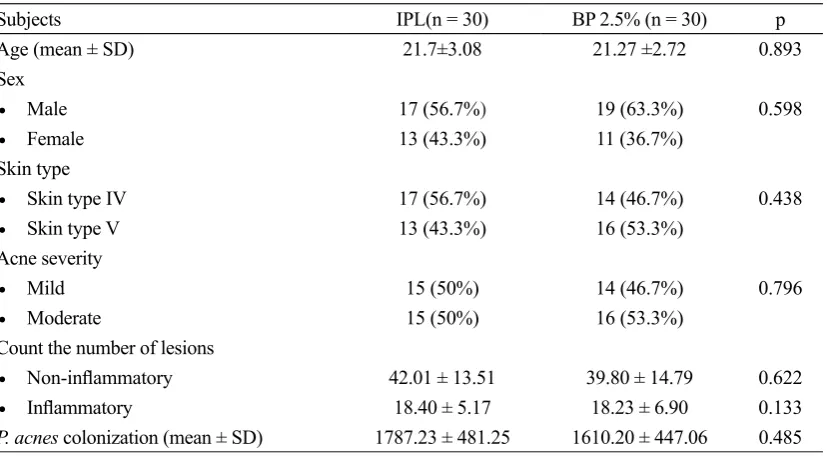
control group and treated with BP gel 2.5%. Two patients from the IPL otherwise dropped out due to could not meet the requirements to come routinely to the study. Comparison of characteristics of subjects between two groups is presented in TABLE 1. There
was no signiicant difference between the two
groups (p> 0.05).
Subjects IPL(n = 30) BP 2.5% (n = 30) p
Age (mean ± SD) 21.7±3.08 21.27 ±2.72 0.893
Sex
• Male 17 (56.7%) 19 (63.3%) 0.598
• Female 13 (43.3%) 11 (36.7%)
Skin type
• Skin type IV 17 (56.7%) 14 (46.7%) 0.438
• Skin type V 13 (43.3%) 16 (53.3%)
Acne severity
• Mild 15 (50%) 14 (46.7%) 0.796
• Moderate 15 (50%) 16 (53.3%)
Count the number of lesions
• Non-inlammatory 42.01 ± 13.51 39.80 ± 14.79 0.622
• Inlammatory 18.40 ± 5.17 18.23 ± 6.90 0.133
P. acnes colonization (mean ± SD) 1787.23 ± 481.25 1610.20 ± 447.06 0.485
TABLE 1. Baseline demographic and clinical characteristics of subjects
In each study group, the mean
non-inlammatory, inlammatory lesions and the number of P. acnes were signiicantly decreased. FIGURE 1 shows the signiicantly
decrease in the average number of
non-inlammatory lesions after 2 weeks and 4 weeks of treatment (p<0.05). The mean percentage reduction in non-inlammatory lesions in
the IPL group based on the observations of week 2 and week 4 of treatment were 31.8% (p=0.000) and 85.69% (p=0.000) respectively, while in BP 2.5% group, the mean percentage
reduction in non-inlammatory lesions
FIGURE 1. Comparison of mean decline in the number of non-inlammatory lesions in both study groups
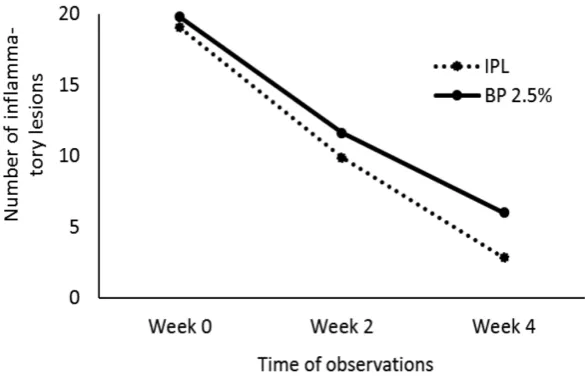
The mean number of inlammatory lesions in both study groups showed a signiicantly different (p<0.05) after 2 weeks and 4 weeks
of treatment (FIGURE 2). In the IPL group, the
mean percentage reduction in inlammatory
lesions based on the observations of week 2 and week 4 compared to week 0 were
48.47% (p=0.000) and 85.02% (p=0.000) respectively. In BP 2.5% group, the mean
percentage reduction in inlammatory lesions
based on the observation of week 2 and week 4 compared to week 0 were 41.17% (p=0.000) and 69.65% (p=0.000) respectively.
FIGURE 2. Comparison of mean decline in the number of inlammatory lesions in both
The mean colonization of P. acnes showed reduction in both groups. However, IPL group
showed more signiicant reduction (p=0.000)
based on the observation week 0, 2 and 4 compared to week 0, as shown in FIGURE 3.
FIGURE 3. Comparison of mean reduction of P. acnes colonization in both study groups
The IPL therapy improved reduction of P. acnes higher than BP 2.5% group. Mean percentage of P. acnes reduction in IPL group showed 39% (p=0.000) after 2 weeks of treatment and 50.78% (p=0.000) after 4 weeks of treatment. BP 2.5% group showed that reduction of P. acnes after 2 weeks and 4 weeks of treatment were 6.8% (p= 0.000) and 13.19% (p=0.000) respectively.
The treatment eficacy was determined
by the percentage of reduction of
non-inlammatory lesions, inlammatory
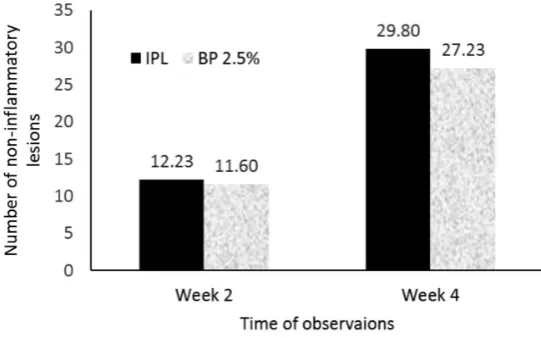
lesions and the number of P. acnes on the observation of week 2 and week 4 compared to week 0 between the two groups. There
was no signiicantly difference between non-inlammatory lesions at week 2 (p=0.705) and
week 4 (p=0.186) of treatment in both groups (FIGURE 4).
FIGURE 4. Comparison of difference in number of non-inlammatory
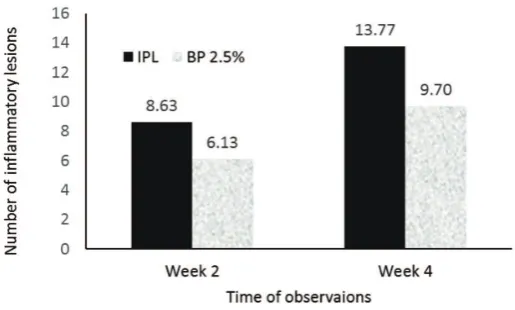
FIGURE 5. Comparison of difference in number of inlammatory
lesions in both groups
According to the comparison of mean
difference in the number of inlammatory
lesions, it was found that the IPL was more
effective in reducing inlammatory lesions
at week 4 compared to BP 2.5% (p=0.003).
The effectiveness of these two therapies in
inlammatory lesions observation on week 2 was not signiicantly different (p=0.604), as
shown in FIGURE 5.
FIGURE 6. Comparison of difference in P. acnes colonization
Based on the treatment eficacy by
comparing the mean difference in the number of P. acnes on the evaluation of 2 weeks and 4 weeks of treatment, it was found that the IPL was more effective in reducing the colonies of P. acnes compared with BP 2.5% therapy (p=0.000), as shown in FIGURE 6.
Based on the subjects assessment of therapeutic results observed between the two
groups at 4 weeks of treatment, no signiicantly
TABLE 2. Subjects assessment of IPL and BP 2.5% groups at week 4
Subjects assessment IPL (n=30) BP 2.5% (n=30)
Getting worse 0 0
No improvement 0 0
Mild improvement 1 (3.33%) 3 (10%)
Moderate improvement 3 (10%) 5 (16.67%) Overall improvement 26 (86.67%) 22 (73.33%)
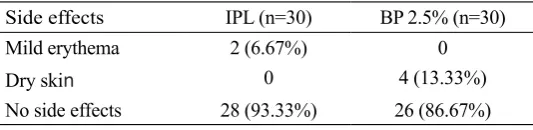
All the subjects were monitored for the side effects of therapy. Mild erythema was earned by 2 patients (6.67%) in IPL therapy, while dry skin was earned by 4 patients
(13.3%) in BP 2.5% therapy. In the subjects assessment of side effects in both groups,
there was no statistically signiicant difference
(p=0.334) as shown in TABLE 3.
Side effects IPL (n=30) BP 2.5% (n=30)
Mild erythema 2 (6.67%) 0
Dry skin 0 4 (13.33%)
No side effects 28 (93.33%) 26 (86.67%) TABLE 3. Side effects in IPL dan BP 2.5% groups
DISCUSSION
Acne vulgaris is known not only as a follicular infection but also as a chronic
inlammatory disease of the pilosebaceous
unit. Pathogenesis of acne includes increased sebum production, hypercolonization of P. acnes, follicular hyperkeratinization
and release of inlammatory mediators.
Propionibacterium acnes stimulates T cells, macrophages and keratinocytes to produce
inlammatory cytokines through innate and
acquired immunity.26 By considering factors
involved in the pathogenesis of acne, a variety of treatment options has emerged.
This study was conducted to compare
the eficacy and safety of two different kinds
of therapy, intense pulsed light and heat energy therapy and BP gel 2.5%, during the period of 4 weeks in patients with mild and moderat acne vulgaris. The effectiveness of BP15 and IPL7 therapies in mild and moderate
acne has been studied in numerous researches with varying results, but only few studies have compared the two kinds of therapy directly.23
In this study, the comparison of treatments of acne with intense pulsed light and heat energy and BP gel 2.5% demonstrated an effective result for acne treatment on
non-inlammatory and non-inlammatory lesions. In
this study, the eficacy of the therapy based
on the assessment of mean reduction in
non-inlammatory lesions, non-inlammatory lesions
and colonization of P. acnes were assessed at week 0, 2 and 4. Moreover, subjects assessment of treatment outcomes and its side effects were also observed. In the assessment of week 2 and 4, the IPL showed that mean improvement of non-inlammatory lesions decreased by 85.69% and
inlammatory lesions by 85.02% whereas, in
BP 2.5% group, the mean reduction in
non-inlammatory lesions and non-inlammatory lesions
resuls of this study was slightly higher than the study by Papageorgiou et al. (2000) with
improved non-inlammatory lesions of 75% and inlammatory lesions of 60%.
Benzoyl peroxide is a potent antimicrobial agent, because of its lipophilic ability that enables BP to penetrate into the pilosebaceous
duct and has proven its eficacy in supericial inlammatory lesions. When applied to
the skin, BP decomposes in order to release oxygen free radicals, which has a strong bactericidal activity of sebaceous
follicles as well as an anti-inlammatory
agent. Benzoyl peroxide has an effect on
non-inlammatory lesions by reducing
follicular hyperkeratosis.7,27 Treatment of
acne with both IPL and BP has the same target in the pathogenesis of acne, such as P. acnes, sebaceous follicles and inlammation. Technology intense pulsed light (IPL) was developed as an alternative therapy for acne
because of its eficacy in accelerating the
photochemical reaction of porphyrin, faster onset of action and ability to reduce the risk of bacterial resistance.22 The IPL technology
was developed and combined with thermal energy, known as intense pulsed light and heat energy based on the thermal shock mechanism.11 Overall, the provision of
therapy in both groups were equally able to reduce colonization of P.acnes, and in this study, IPL therapy was able to reduce the colonization of P.acnes higher (50.78%) compared to BP 2.5% treatment (13.19%). In this study, the colonization of P. acnes was
determined by luorescence follicular
red-orange that is directly proportional to the levels of sebum, which is in accordance with the study of Dobrev28 which states
that the porphyrin will appear as a point
of red-orange luorescence in the follicle,
which indicates the presence of P. acnes bacteria that live in or on the surface of
the decline in the number of follicles. The reduction of P. acnes accompanied by reduction of porphyrin concentrations will lead to the clinical improvement. Therefore, the determination of porphyrin luorescence can assist in the evaluation of the degree of acne severity.29
The eficacy of therapy was investigated
by comparing the mean number of
non-inlammatory lesions and non-inlammatory
lesions at 2 and 4 weeks of treatment compared with the baseline values. This study demonstrated effective results
at 4 weeks of treatment on the inlammatory lesions (p<0.05) and was not effective on
non-inlammatory lesions. Hamilton et al.21
stated that light-based therapy would provide
improved lesion especially in inlammatory
lesions such as papules and pustul, while
non-inlammatory lesions such as comedo and
cysts are generally resistant to therapy. This result indicates that decreased colonization of P. acnes was higher in IPL compared to BP 2.5%, both on the evaluation of week 2 and
week 4 of treatment (p<0.05). This result is
suitable with the theory that P.acnes produce porphyrins as part of its normal life cycle.
When porphyrins are exposed to visible
light or IPL, then the chemistry will be activated, leading to induce a photodynamic reaction that causes destruction of P. acnes and sebaceous gland.30 Benzoyl peroxide
showed its bactericidal activity through oxidation, causing the release of reactive oxygen that will oxidize a high-protein on the cell membrane of bacteria resulting in the destruction of P. acnes.31 The results of
this study indicate that the destruction of P. acnes with photodynamic reaction is more effective than oxidation by benzoyl peroxide.
subjects who complained about the dryness of skin. Side effects that occurred in the use of IPL was generally relatively minimal. By modifying the parameter variations in therapy including the outgoing energy, pulse duration and pulse delay, it is possible to minimize the severity of side effects.31 Mild erythema
was observed on 2 (6.67%) subjects in the IPL group. Otherwise, there was no signiicant difference in the two groups. Comparison of price therapy for IPL was higher than BP 2.5%. It can be concluded that there was
no signiicant difference between the IPL and
the BP 2.5% groups according to the subjects assessment of therapeutic results (p>0.05). Overall, all patients of the two groups were
satisied with the results of therapy.
CONCLUSION
In conclusion, the eficacy of IPL in the reduction of the number of inlammatory
lesions and the P. acnes colonization is better than BP on patients with acne vulgaris, therefore the IPL can be used as standard therapy of acne vulgaris.
ACKNOWLEDGEMENTS
We would like to thank all sujects who
have participated in this study.
REFERENCES
1. Dréno F, Poli F. Epidemiology of acne. Dermatol. 2003; 206: 7-10.
2. Strauss JS, Krowchuk DP, Leyden JJ, Lucky AW, Shalita AR, Siegfried EC, et al. Guidelines of care for acne vulgaris management. J Am Acad Dermatol. 2007; 56(4):651-63.
3. Jeong EG, Park HJ, Lee JY. The study of post-adolescent acne in nurses. Korean J Dermatol. 2004; 42:1255-63.
4. Thomas DR. Psychosocial effects of acne. J Cutan Med Surg. 2004; 8(4):3-5.
5. Kokandi A. Evaluation of acne quality of life and clinical severity in acne female, adults. Dermatol Res Pract. 2010; 4:1-3.
6. Gupta MA, Gupta AK. Depression and suicidal ideation in dermatology patients, with acne, alopecia areata, atopic dermatitis and psoriasis. Br J Dermatol. 1998; 139: 846-50.
7. Savage LJ, Layton AM. Treating acne vulgaris : systemic, local and combination therapy. Expert Rev Clin Pharmacol. 2010; 13(4):563-80.
8. Ross EV. Optical treatments for acne. Dermatol Ther. 2005; 18(3):253-66.
9. Smith EV, Grindlay DJC, Williams HC. What’s new in acne? an analysis of systematic reviews published in 2009-2010. Clin Exp Dermatol. 2010; 36:119-123.
10. Rathi KS. Acne vulgaris treatment: the current scenario. Indian J Dermatol. 2011; 56(1):7-13.
11. Joo Y, Kang H, Choi EH, Nelson JS, Jung B. Characterization of a new acne vulgaris treatment combining light and thermal treatment methods. Skin Res Technol. 2011; 18(1):15-21.
12. Nouri K, Villafradez-Diaz LM. Light/laser therapy in the treatment of acne vulgaris. J Cosmet Dermatol. 2005; 4(4):318-20.
13. Fernandes NF, Zeichner JA. Laser and light-based treatments for acne vulgaris. J Cosmet Dermatol. 2010; 23:356-62.
14. Oh SH, Ryu DJ, Han EC, Lee KH, Lee JH. A comparative study of topical 5-aminolevulinic acid incubation times in photodynamic therapy with intense pulsed light for the treatment of inlammatory acne. Dermatol Surg. 2009; 35(12):1918-26.
16. Webster GF. Antimikrobial therapy in acne. In: Webster GF, Rawlings AV. Acne and its therapy. Basic and Clinical Dermatology. New York: Informa Healthcare. 2007; 97-102.
17. Warner GT, Plosker GL. Clindamycin/ benzoyl peroxide gel: a review of its use in the management of acne. Am J Clin Dermatol. 2002; 3(5):349-60.
18. Haider A, Shaw JC. Treatment of acne vulgaris. JAMA. 2004; 292(6):726-35.
19. Ramanathan S, Hebert AA. Management of acne vulgaris. J Pediatr Health Care. 2011; 25(5):332-7.
20. Railan D, Alster TS. Laser treatment of acne, psoriasis, leukoderma and scars. Semin Cutan Med Surg. 2008; 27(4):285-91.
21. Hamilton FL, Car J, Lyons C, Car M, Layton A, Majeed A. Laser and other light therapies for the treatment of acne vulgaris: systematic review. Br J Dermatol. 2009; 160(6):1273-85. 22. Rotunda AM, Bhupathy AR, Rohrer TE. The new age of acne therapy: light, lasers, and radiofrequency. J Cosmet Laser Ther. 2004; 6(4):191-200.
23. Shear NH. Newest guidelines for the treatment of acne. Suppl Dermatol Times. 2011; 6-11. 24. Thiboutot D, Gollnick H, Betolli V, Dréno
B, Kang S, Leyden JJ, et al. New insight into the management of acne: an update from the global alliance to improve outcomes in acne
group. J Am Acad Dermatol. 2009; 60(5):1-50.
25. Elman M, Lask G. The role of pulsed light and heat energy (LHE) in acne clearance. J Cosmet Laser Ther. 2004; 6(2):91-5.
26. Kim J, Ochoa MT, Krutzik SR, Takeuchi O, Uematsu S, Legaspi AJ, et al. Activation of toll-like receptor 2 in acne triggers inlammatory cytokine responses. J Imunol. 2002; 169(3):1535-41.
27. Bojar RA, Cunliffe WJ, Holland KT. The short-term treatment of acne vulgaris with benzoyl peroxide: effects on the surface and follicular cutaneous microlora. Br J Dermatol. 1995; 132(2):204-8.
28. Dobrev H. Fluoresence diagnostic imaging in patients with acne. Photodermatol Photoimunol Photomed. 2010; 26(6):285-9. 29. Borelli C, Merk K, Schaller M, Jacob K,
Vogeser M, Weindl G, et al. In vivo porphyrin production by P. acnes inuntreated acne patients and its modulation by acne treatment. Acta Derm Venereol. 2006; 86(4):316-9. 30. Kligman AM. Acne vulgaris: tricks and
treatments. Part II: The benzoyl peroxide saga. Cutis. 1995; 56(5):260-1.