Monograph
Smokescreen Genotyping Array (GTA)
Indonesia
2
Monograph
Smokescreen Genotyping Array (GTA) Indonesia
©2018 Universitas Bina Nusantara
Author : Bens Pardamean
Copy Editor : Imanuel Didimus Manulang Layout & Cover: Anindito
Shinta Purnamasari
ISBN: 978-602-99817-9-7
Universitas Bina Nusantara
Research & Technology Transfer Office Jl. Kebon Jeruk Raya No. 27
Kebon Jeruk
Jakarta Barat 11530
i
PREFACE
Smoking is a huge problem in Indonesia and throughout the world. Smoking negatively impacts every system in the human body causes many types of cancer. Even when smokers want to quit, only 4-7% are successful. Researchers are developing approaches to improve success rates, including using genetics to guide treatment. Sponsored by the USA National Institutes of Health (NIH), Dr. Baurley and colleagues developed the most advanced screening technology available for understanding the genetics of addiction. This technology is being used by scientists to discover the optimal smoking cessation program for smoker’s genetics.
iii
TABLE OF CONTENT
Preface i
Table of Content iii
Synopsis 1
Chapter 1 Study Collaborators 3
Chapter 2 Smokescreen Genotyping Array (GTA) 5 Chapter 3 Market Research: Physicians
3.1 Introduction
3.2 Materials and Methods 3.3 Results Chapter 5 Indonesian Smokescreen Genotyping Study
5.1 Introduction 5.3.1 Phenotypes and Exposures
5.3.2 DNA Samples
5.3.3 Build Capacity for Genomics Research 5.3.4 Physical Infrastructure
5.3.5 Database and Web-based Application 5.3.6 Tables, Figures, and Listings (TFLs) 5.3.7 Sample Genotyping and Quality Control 5.3.8 Genomic Association Analysis
5.3.9 Future Work 5.6 Study Sustainability 5.7 Innovative Approaches
37 39 40 41
Chapter 6 Commercialization Roadmap 43
Chapter 7 Key Accomplishments 45
1
Synopsis
Genetics influence nicotine metabolism, smoking behavior, smoking-related diseases, and response to treatment differently by population. As such, Indonesian smokers will have unique characteristics that influence these phenotypes. Bina Nusantara (BINUS) University invested in two critical areas of research to help Indonesian smokers and victims of tobacco-related diseases.
The first aim was to assess the awareness of physicians and smokers to smoking cessation treatment approaches and the possible benefits of genetic testing.
3
Chapter 1
Study Collaborators
Bina Nusantara University contributed one plate of Smokescreen arrays (96 DNA samples), supported the BDSRC team, and provided high performance computing resources. Dr. Bens Pardamean and Dr. James Baurley were co-investigators at this site and focused on project management, data management and analysis aspects of the study.
Hasanuddin University contributed one plate of Smokescreen arrays (96 DNA samples), and supported participant recruitment, data, and DNA sample collection and storage. Co-investigators included dr. Upik Miskad, Prof. Dr. Irawan Yusuf, dr. Ronald Lusikooy, and Prof. Dr. Andi Fachruddin.
BioRealm contributed the Smokescreen toolkit and provided biostatistics and statistical genetics support. The BioRealm team consisted of Dr. James Baurley, Dr. Carolyn Ervin, Dr. Andrew Bergen, Chris Edlund, Stephen McGee, and Carissa Pardamean.
NVIDIA provided GPGPUs and training to the BDSRC for the analysis of the genomic data. Dr. Ettikan Karuppiah was a key person in providing these resources to the study.
RUCDR Infinite Biologics handled the sample processing and genotyping for the DNA samples sent to the USA. Dr. Andy Brooks, Dr. Jay Tischfield, and Dana Witt-Garbolino provided support to ensure high quality data production.
The University of Southern California (Dr. Jane Figueiredo) was our academic partner on the topics of epidemiology and global health.
5
Chapter 2
Smokescreen Genotyping Array (GTA)
7
Chapter 3
Market Research: Physicians
3.1 Introduction
The act of smoking is deeply ingrained in the Indonesian people’s daily lives and social culture. Indonesia is the fourth highest cigarette consumer in the world after China, Russia, and USA1. As of 2011, approximately 60 million people in Indonesia smoke cigarettes on a daily basis with an average daily cigarette consumption of 12-13 sticks[2]. Indonesia is one of the few countries in the world with much higher rates of smoking in males (57%) than females (under 4%)[1]. Smoking initiation typically begins around the ages of 17-18 with almost 13% of smokers beginning before the age of 15[2].
Smoking cessation remains to be the most effective way to reduce the impacts of tobacco consumption. The effects of smoking cessation materialize much more rapidly than the damaging effects of smoking. Additionally, individuals who began smoking at an early age yet stopped smoking before the age of 40 has a 90% higher likelihood of avoiding tobacco-attributed diseases[3]. A recent survey of Indonesian smokers discovered relatively low interest in quitting (only 48% compared to 70% for countries such as United States and United Kingdom)[4, 5]. The small percentage of Indonesian smokers who did quit, achieved it through no aid whatsoever, which further contributes to the difficulty of smoking cessation in the nation2.
8
dependence and metabolism have been found to be essential in determining the efficacy of different pharmacotherapy methods as well as in predicting risk of smoking relapse[9].
Genetic screening and notification have the potential to advance patient treatment[10]. Since genetic variation impacts nicotine metabolism, smoking behavior, and a cessation method’s efficacy, it becomes a significant puzzle in research and for physicians to recommend the best approach for a patient wanting to quit. Within the context of smoking cessation, genetic screening information has been shown to increase cessation success rate and improve cessation interest through heightened patient health awareness[11]. Several FDA-approved drugs in the United States are available for smoking cessation such as varenicline and bupropion. However, physicians are cautious about prescribing them due to potential adverse, psychiatric side effects. The nicotine metabolite ratio (NMR), which is heavily influenced by CYP2A6 gene variants, has shown promise as a biomarker to optimize pharmacotherapy assignments by improving efficacy and reducing side effects. From a medical practice standpoint, this means that physicians could be assigning nicotine dependence treatments to their patients based on a blood test to assess their NMR profile in the near future11. While these findings are particularly encouraging, there are barriers to using the NMR in practice. Physicians may still misunderstand available treatment approaches, genetic screening’s role and limitation, and proper ways to interpret and deliver results to patients[12].
9 genetics, which ties in strongly with pharmacotherapy and its selection to improve efficacy through physician advise.
The appropriate pharmacotherapy cessation aid can significantly impact an individual’s success at quitting smoking, thereby placing a vital role on physicians. Due to the lack of official reports on genetic screening interest for smoking cessation in Indonesia, this study first investigates physicians’ interest in using genetic-based screening within the context of smoking cessation consultation. The study also looks at the Indonesian health care providers’ interest in information on smoking-related diseases as well as physicians’ current access to medical genetics for their medical practices.
3.2 Materials and Methods
This study was funded by Bina Nusantara University to evaluate physician interest in genetic technologies and screening programs. Questionnaires were the primary data collection instrument. The physician questionnaire consisted of 12 questions, surveying participants on: medical specialty, health care facility affiliation, patient population profile, medical research interest, opinion on genetic screening technology, and medical genetics tools accessibility.
10
3.3 Results
113 surveys were collected and Table 1 summarizes the physician survey’s results. Most of the physicians surveyed were affiliated with a clinic (56%). 63% of the physicians were general practitioners, reflecting the predominant affiliation to clinics. The most dominant research interests were respiratory diseases (35%) and nicotine addiction (28%).
Overall, 81% (n = 89) of total respondents indicated that genetic screening information for smoking cessation would be useful. Institutional affiliation and usefulness have a statistically significant association (p = 0.018). Individual categories for research interest were tested only independently against usefulness since a physician could select more than one research interest. The usefulness rating was significantly associated for interest in cancer pathology (p = 0.005) and in other research fields (grouping among 13 categories written-in by the physicians; p = 0.003). Usefulness was not significantly associated with interest
Table 1. Profile of surveyed physicians - Genetic Screening Usefulness for Smoking Cessation
Category Total N
(%) Useful Very Somewhat Not p-value
Institutional Affiliation 0.018
Hospital 48 (44) 21 (45) 22 (48) 3 (7) 0.043 respectively). Medical specialty was not significantly associated with usefulness ratings (p = 0.222).
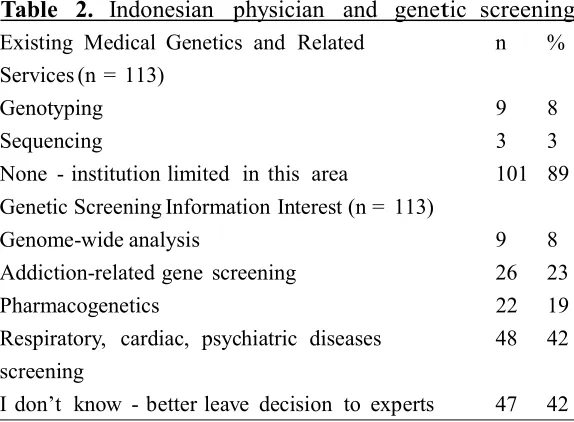
11 physicians believed that they did not have enough knowledge to decide what type of information from genetic screening would be useful. Nonetheless, 70% of those who deemed themselves to lack knowledge stated that genetic screening information would be useful at some level for smoking cessation. 89% of physicians stated that their affiliated institutions were limited in medical genetics services and facilities.
The survey also included a question that asked physicians to report the percentage proportion of their patients who are current smokers. 27% (N = 30) of the surveyed physicians could not provide a response to this question. Based on the physicians who did respond to the question (N = 83; 73%), it was found that smokers, on average, comprise 45% of a Genetic Screening Information Interest (n = 113)
Genome-wide analysis 9 8
Addiction-related gene screening 26 23
Pharmacogenetics 22 19
Respiratory, cardiac, psychiatric diseases 48 42 screening
I don’t know - better leave decision to experts 47 42
3.4 Discussion
12
It is also important for physicians to understand how to interpret genetic screening results and effectively relay the findings to patients[18]. This is especially true given major concerns that primary care physicians and general practitioners have over the sensitivity and complexity of medical genetics information[19].
Despite the relatively low interest in patient smoking status and limited resources for genetic screening available to Indonesian physicians, we found a positive response towards medical genetics for smoking cessation. Even 70% of those who did not know what type of information they would like from genetic screening stated that having it as a medical practice tool would be useful for at least smoking cessation. This is promising because 56% of the physicians surveyed were based in clinics. Compulsory community clinics remain the most affordable and most widely-visited form of health care for the Indonesian population, making these clinics the most far-reaching source of information on smoking cessation and smoking-related diseases[20].
One setback in the survey collection was the oversight of not interviewing the physicians in-person. The logic to this was to respect the privacy of the physicians by having them complete the questionnaires at their own time. However, this led to some missing values to the questionnaires. The survey also did not have a direct question to gauge how comfortable physicians would be in implementing or incorporating genetic screening information into their daily medical practices if the tools became available to them, taking upon the role of a provider and interpreter of medical genetics information.
Physician opinion is one side of the story when it comes to smoking cessation efforts on a public health scale. Opinions and attitudes of patients are also crucial pieces of the puzzle. Therefore, the next step to our research is to survey smokers’ opinion on genetic screening for smoking cessation.
13
REFERENCES
[1] Wipfli H, The Tobacco Atlas: Fourth Edition, Am J Epidemiol, 176(12), 2012, 1193–1193.
[2] Kosen S, Global Adult Tobacco Survey: 2011 GATS Indonesia, World Health Organization, 2012.
[3] Jha P, Peto R, Global effects of smoking, of quitting, and of taxing tobacco,N Engl J Med, 370(1), 2014, 60–8.
[4] McEwen A, West R, Hajek P, McRobbie H, Manual of Smoking Cessation: A Guide For Counsellors and Practitioners, 2008, 1–151.
[5] Centers for Disease Control and Prevention (CDC), Quitting smoking among adults–United States, 2001-2010, 60(44), 2011, 1513–9.
[6] Stead LF, Perera R, Bullen C, Mant D, Hartmann-Boyce J, Cahill K et al, Nicotine replacement therapy for smoking cessation, 2012.
[7] Hartz SM, Short SE, Saccone NL, Culverhouse R, Chen L, Increased genetic vulnerability to smoking at CHRNA5 in early-onset smokers, Arch Gen Psychiatry, 69(8), 2012, 854–60.
[8] Verde Z, Santiago C, Rodr´ıguez Gonzalez-Moro JM, de Lucas Ramos P, Lopez Mart´ın S, Bandr´es F, et al, Smoking genes: a genetic association study, PLoS One, 6(10), 2011, e26668.
[9] Chen L-S, Bloom AJ, Baker TB, Smith SS, Piper ME, Martinez M, et al, Pharmacotherapy effects on smoking cessation vary with nicotine metabolism gene (CYP2A6), Addiction, 109(1), 2014, 128–37.
[10] Collins FS, Varmus H, A new initiative on precision medicine, N Engl J Med, 372(9), 2015, 793–5.
14
double-blind placebo-controlled trial, Lancet Respir Med, 3(2), 2015, 131–8.
[12] Hickner J, Thompson PJ, Wilkinson T, Epner P, Sheehan M, Pollock AM, et al, Primary care physicians’ challenges in ordering clinical laboratory tests and interpreting results, J Am Board Fam Med, 27(2), 2014, 268–74.
[13] Barber S, Adioetomo SM, Ahsan A, Setyonaluri D, Tobacco economics in Indonesia. Paris: International Union Against,
2008;Available from:
http://www.worldlungfoundation.org/ht/a/GetDocumentAction/i/656 7. [Accessed on: 10 June 2015].
[14] Nichter M, Project Quit Tobacco International Group. Introducing tobacco cessation in developing countries: an overview of Project Quit Tobacco International, Tob Control, 15 Suppl 1, 2006, i12–7.
[15] Widenius M, Axmark D, Mysql Reference Manual, 1st ed, O’Reilly & Associates, Inc., Sebastopol, CA, USA, 2002.
[16] R Core Team, R: A language and environment for statistical computing, R Foundation for Statistical Computing, Vienna, Austria, 2014.
[17] Kruger J, Shaw L, Kahende J, Frank E, Health care providers’ advice to quit smoking, National Health Interview Survey, 2000, 2005, and 2010, Prev Chronic Dis., 9, 2012, E130.
[18] Lerman C, Shields PG, Wileyto EP, Audrain J, Pinto A, Hawk L, et al, Pharmacogenetic investigation of smoking cessation treatment, Pharmacogenetics, 12(8), 2002, 627–34.
[19] Park ER, Kleimann S, Pelan JA, Shields AE, Anticipating clinical integration of genetically tailored tobacco dependence treatment: perspectives of primary care physicians, Nicotine Tob Res, 9(2), 2007, 271–9.
15
Chapter 4
Market Research: Smokers
4.1 Introduction
Smoking is a leading cause of preventable death in Indonesia and around the world. Yet, 1 in 3 males in Indonesia smoke because of the highly addictive properties of nicotine and complex behavioral and social factors. Genetic factors play a very significant role in how a smoker metabolizes nicotine, how dependent they are, and how they respond to treatment. Given the number of treatments available, both pharmacotherapies and behavioral, the best smoking cessation path varies from individual to individual. Optimizing the path for smokers wanting to quit will reduce smoking rates and reduce the expenses related to healthcare and lost productivity due to smoking. Research on which genetic factors are important to smoking cessation success and how best to translate these findings into real-world applications is ongoing.
Recognizing the need for improving the understanding of the genomics of addiction and developing screening for personalized smoking cessation approaches, we developed a state-of-the-art genetic screening platform called Smokescreen (Baurley, et al., 2016). The technology captures genetic markers of nicotine dependence and treatment approaches, and to addiction in general. The technology includes hardware for capturing raw data and software for analyzing and interpreting the data. The platform works by a DNA sample (extracted from saliva or blood of smokers) being sent to a lab set up to use the technology. The sample is processed on a custom assay. The genomic data is then cleaning and analyzing and then results are returned. The Smokescreen process is being heavily used in nicotine and tobacco research in the United States and is beginning to be used in research within Indonesia.
16
government regulation for diagnostic testing as well as acceptance of new pharmacotherapies and genetic screening by smokers and physicians. The smoker must want to quit and embrace the provided plan and the physician must accept the technology and support its guidance.
There is interest in the marketability of genetic screening technologies in Indonesia, a country highly impacted by smoking and attributable disease. For an initial assessment of the market, we surveyed the end-user of new technologies for smoking cessation – current smokers in Jakarta, Indonesia. With this initial assessment, we can naturally extend it to physicians that assist smokers in quitting, and more largely the pharmaceutical companies and health-care networks that would significantly benefit from improved smoking cessation treatment and reduced smoking rates in Indonesia.
In this report, we present results from a market survey designed to characterize smokers, assess availability of cessation treatments and screening methods, and identify barriers and opportunities for genetic screening technologies. Motivated by the health impact of smoking, the questions were designed to help characterize smokers in Indonesia, particularly in their experiences towards smoking cessation attempts and methods, as well as in their opinions towards factors influencing smoking cessation and medical genetics. This will provide an initial market assessment for genetic screening for optimal smoking cessation treatment in Jakarta. Additionally, this work will help capture the requirements for developing and customizing products and services related to Smokescreen technology used in the U.S. for Indonesian populations.
17 total monthly spending) [17]. According to a joint WHO and World Bank study in 2011, 5% of GDP per capita is spent on buying an average of 100 packs of cigarettes.
As of 2011, approximately 60 million people in Indonesia smoke cigarettes on a daily basis with an average cigarette consumption of 12-13 sticks per day [17, 15]. Smoking initiation typically begins around the ages of 17-18 with almost 13% of smokers beginning before the age of 15 [17]. Gender-wise, more male Indonesians smoke (57%) than females (4%). However, all population sub-groups, particularly children, are affected by the serious and negative impact of second hand smoking (SHS) exposure. Close to 134 million non-smokers in Indonesia are exposed to SHS regularly, which is not surprising given that over 70% of Indonesians live in a household with at least one smoker [3, 17].
Additionally, the lack of smoking bans in public places exposes many individuals to SHS at their place of work and most social and public places. Tobacco-attributed death is estimated to be over 200,000 annually in Indonesia. One in five male deaths and one in ten female deaths are traced back to regular smoking consumption and/or exposure [34]. The main causes of tobacco mortality in Indonesia are cardiovascular diseases, malignant cancers (particularly lung), and chronic, obstructive respiratory illnesses [3]. Approximately, 11 trillion Indonesian rupiah (1.2 billion USD) per year is spent on medical care related to tobacco-attributed diseases [3]. Non-smoking women exposed to SHS at home have an estimated 25% increased risk for lung cancer and an estimated 23% to 25% increased risk for cardiovascular diseases [3].
With nicotine addiction being tied closely to brain chemistry, pharmacotherapy is the most effective method to alleviate withdrawal symptoms, especially for moderate smokers [29]. Several pharmacotherapies for smoking cessation, such as nicotine replacement therapies, varenicline, and bupropion, have been shown to be effective treatments, especially when used in combination [19, 16]. Their availability vary considerably throughout the world [27]. Behavioral therapies are common aids for smoking cessation as well, such as medical counseling (in-person or remote counseling) and support group meetings [13]. Using behavioral therapy in combination with a form of pharmacotherapy protocol has a small but significant impact, increasing success rate by 10-25% compared to pharmacotherapy approaches alone [30].
18
most effective treatment protocol for individual smokers is becoming possible [7]. For example, assigning treatment by an individual’s nicotine metabolism, has been shown to improve effectiveness of varenicline and nicotine patch [18]. In addition, genetic variants in the CHRNA5 nicotinic receptor has been shown to influence the efficacy of various nicotine replacement therapies [10]. The refinements of treatment protocols based on medical genetics information may improve the likelihood of cessation and minimize side effects [26]. With rapid advancements in technology and decreasing cost in DNA sample collection and processing, many facets of smoking cessation therapy can be improved through genetic-based screening [6].
4.2 Methodology
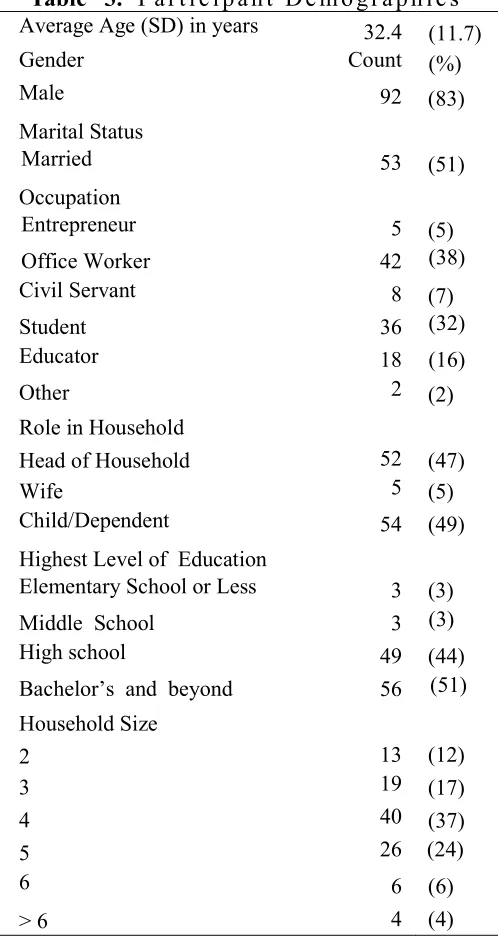
This market survey was funded by Bina Nusantara University to gather opinions on smoking cessation ability, as well as beliefs on factors that influence cessation success. The 31-question survey was developed to capture information on smokers in three areas: demographics, smoking behavior, and smoking cessation. Current smokers were recruited in 2015 from the greater Jakarta metropolitan area due to its proximity to the Bina Nusantara University campus. Occupations were categorized based on Indonesia’s official government identification card; the categories are: civil servant, entrepreneur, educator, and, student. None of the occupations were targeted specifically. There were 111 participants. Preliminary question asking smokers on their willingness to participate in the survey were administered. Upon agreement, a hard-copy of the questionnaire was used as a data collection instrument. The questionnaire was self-administered and completed primarily at the workplace and campuses (for students) with a few completed at public places such as restaurants and food courts. To reduce incompleteness in survey responses, trained interviewers verified missing responses with participants. The data were entered from hard-copy questionnaires into a database that was maintained with mySQL [33]. The descriptive statistics were generated with [R] [23].
4.3 Results
19 Table 4 summarizes the smoking habits of the participants. 47% smoked between 10 and 20 cigarettes per day while 19% were heavy smokers (over 20 cigarettes per day). We found that 75% of the surveyed participants have attempted to quit smoking at least once. However, less than 20% of those who had attempted were successful in maintaining their
20
cessation for over six months; even then, these participants had relapsed and had continued smoking since all participants in the survey were current smokers. 26% of the survey participants reported to have had an illness due to smoking and 19% reported to have seeked medical care related to smoking.
Table 5 further divides the participants based on whether they had attempted smoking cessation or not. For those who had attempted cessation, social environment (36%) and withdrawal symptoms (41%) were the most frequently selected responses for why they believed that their attempts failed. Most quit attempts were unaided (74%) and no participant used pharmacotherapy to attempt quitting. While only 3 (4%) smokers attended a smoking cessation clinic, 11 (14%) received consultation from a doctor, indicating the need of increasing the involvement of primary care providers in smoking cessation. Nearly four-fifths of those who never attempted cessation stated that they wished to quit smoking in the future. 39% felt they could quit with no aid, while 44% admitted that their addiction is the primary reason they have not attempted to quit. Few smokers were aware of screening using medical genetics for cessation in both groups.
21
Table 4. Smoking-Related Characteristics Smoking Initiated (Years Ago) Counts (%)
< 5 24 (22)
5 - 10 28 (26)
11 - 20 31 (28)
21 - 30 14 (13)
> 30 12 (11)
Cigarettes per Day
< 10 36 (33)
10 - 19 51 (47)
20 - 29 18 (17)
≥ 30 3 (3)
Monthly Cigarette Expense
< Rp. 100,000 23 (22)
Rp. 100,000 - 300,000 38 (36)
Rp. 300,000 - 500,000 30 (28)
> Rp. 500,000 16 (15)
Illness Due to Smoking
Has occurred 29 (26)
Have not occurred 82 (74)
Medical care seeked related to smoking
Yes 21 (19)
No 90 (81)
Cessation Attempted
Yes 82 (75)
No 28 (25)
22
Table 5. Questions on Smoking Cessation Attempts
Have attempted to quit (N = 82) Have not attempted to quit (N = 28)
Reason for Quit Attempt Count (%) Reason for No Quit Attempt Count (%) Social or family urging
to stop 18 (22) Feel in control/no need 15 (56) Health reasons/want
to be healthier 52 (63)
Addiction/need to
smoke 12 (44)
Financial Reasons 12 (15) Quit in the Future
First Quit Attempt (Years) Yes 22 (79)
< 5 60 (74) No 6 (21)
6-10 8 (10) Method if quitting in the future
> 10 13 (16) Rehabilitation 0 (0) Quitting Method Smoking Cessation Clinic 4 (14) Rehabilitation 4 (5) Pharmacotherapy 2 (7) Smoking Cessation Clinic 3 (4) Doctor Consultation 7 (25) Pharmacotherapy 0 (0) Hypnotherapy 4 (14) Doctor Consultation 11 (14) No aid 11 (39) Hypnotherapy 3 (4) Involve Medical Treatment
No aid 59 (74) Yes 10 (36)
Attempt Outcome No 18 (64)
Successful 13 (16) Aware of medical genetics for cessation
Not Successful 69 (84) Yes 5 (18)
Reason for Non-Success No 23 (82)
Social pressure 22 (36) Cannot overcome
withdrawal symptom 25 (41) Relapse for other reason 14 (23) Aware of medical
genetics for cessation
Yes 9 (11)
23
4.4 Discussion
This market survey has characterized current smokers within an urban city in Indonesia, namely Jakarta. The questions of the survey encompassed participants’ cessation attempts and opinions on factors influencing cessation abilities. As is often the caveat with surveys, there were some notable limitations. The sample was generally small due to the labor-intensive process to recruit and minimize missing information from each participant. The survey was also conducted in only in Jakarta due to the location of Bina Nusantara University and convenience. Therefore, generalizability of findings to other areas of Indonesia is limited. In general, participants tended to give more general responses until asked to be more specific. For instance, when responding to how many years ago smoking was initiated, many participants responded with a range rather than a specific number of years.
24
Table 6. Opinions and Attitudes towards Factors that Potentially Influence Smoking Addiction
Information on Cessation Difficulty Agree (%) Disagree (%) No hope of ever quitting 14 (13) 92 (87) Determine if offspring has same risk 79 (74) 28 (26) Advice other family not to smoke 99 (92) 9 (8) Feel that a genetics test was useful 90 (83) 18 (17) Consult a doctor for quitting method 90 (83) 18 (17) Conditions of Interest for Genetic
Report Yes (%) No (%)
Relative high risk for lung cancer,
diabetes, cardiac arrest 60 (57) 46 (43) The best method for smoking
cessation 70 (64) 39 (36)
Have lower risk for lung cancer
despite smoking 64 (59) 44 (41) Effect of Knowing Higher Cardiac
25 The use of pharmacotherapy is an effective way to assist smokers during the onset of withdrawal symptoms, especially given that cravings were reported as the main reason for a non-successful cessation attempt and as the reason for never attempting to quit. Therefore, pharmacotherapy can be beneficial for Indonesian smokers, helping them overcome nicotine withdrawal symptoms. In addition to genetics, cessation ability is heavily influenced by environment, lifestyle, and psychological factors [12]. Based on the market survey, Indonesians are more aware of psychosocial and lifestyle factors but not the biological factors that influence smoking cessation. They believed that social environment, exercise, and stress were the most important factors influencing cessation success. As a result, medical consultation and support groups could benefit Indonesian smokers attempting cessation as well.
Several questions were included in the questionnaire to evaluate the reaction towards good and bad news from a genetic test. Based on the survey, Indonesians would reap more benefit than harm from the results of genetic screening stating that they would have difficulties with smoking cessation. Additionally, the majority of respondents stated that they would not feel hopeless upon finding out that they had higher risk for smoking-related diseases. Gauging how smokers believe they could benefit from medical genetics is important [31]. The market survey found that the information that interests Indonesian smokers the most is to determine the best cessation method for them. There was also interest in determining their level of risks for smoking-related diseases.
Beyond benefits for themselves, most of the participants stated that they would like to know if their children had the same predispositions and would encourage their families and friends to quit smoking. Previous studies have shown that smokers having more concern over whom they affect than themselves; particularly when their children are involved [24]. Children as a motivation for cessation could be particularly useful since many Indonesian smokers are heads of households living in homes with 3-5 members.
26
therapies, such as patches and gums, are not available in Indonesia but are available in neighboring countries, such as Singapore [11] while varenicline is available in Indonesia but at a steep price [9].
27
REFERENCES
[1] Austin, J. (2015). The effect of genetic test-based risk information on behavioral outcomes: A critical examination of failed trials and a call to action. Am J Med Genet A. doi:10.1002/ajmg.a.37289.
[2] Baurley, J. W, Edlund C.K., Pardamean C.I., Conti D.V., Bergen A.W. (2016). Smokescreen: a targeted genotyping array for addiction research. BMC Genomics, 17:145. doi: 10.1186/s12864-016-2495-7.
[3] Barber, S., Adioetomo, S. M., Ahsan, A., & Setyonaluri, D. (2008). Tobacco economics in Indonesia. Paris: International Union Against.
[4] Benowitz, N. L. (2010). Nicotine addiction. N Engl J Med, 362, 2295– 303. doi:10.1056/NEJMra0809890.
[5] Bethea, J., Murtagh, B., & Wallace, S. E. (2015). “I don’t mind damaging my own body” a qualitative study of the factors that motivate smokers to quit. BMC Public Health, 15(4). doi:10.1186/1471-2458-15-4.
[6] Bierut, L., & Cesarini, D. (2015). How genetic and other biological factors interact with smoking decisions. Big Data, 3, 198–202. doi:10.1089/big.2015.0013.
[7] Bough, K. J, Lerman, C., Rose, J. E., McClernon, F. J., Kenny, P. J., & Tyndale, R. F. (2013). Biomarkers for smoking cessation. Clin Pharmacol Ther, 93, 526–38. doi:10.1038/clpt.2013.57.
[8] Chang, P-H., Chiang, C-H., Ho, W-C., Wu, P-Z., Tsai, J-S., & Guo, F-R. (2015). Combination therapy of varenicline with nicotine replacement therapy is better than varenicline alone: a systematic review and meta-analysis of randomized controlled trials. BMC Public Health, 15, 689. doi:10.1186/s12889-015-2055-0.
28
[10] Chen, L-S., Baker, T. B., Jorenby, D., Piper, M., Saccone, N., & Johnson, E. (2015). Genetic variation (CHRNA5), medication (combination nicotine replacement therapy vs. varenicline), and smoking cessation. Drug Alcohol Depend, 154, 278–82. doi:10.1016/j.drugalcdep.2015.06.022.
[11] Denton, J. (2014). Smoking catch-22: Time to kick the habit? The Jakarta Post, 19 February.
[12] de Viron, S., Malats, N., Van der Heyden, J., Van Oyen, H., & Brand, A. (2013). Environmental and genomic factors as well as interventions influencing smoking cessation: a systematic review of reviews and a proposed working model. Public Health Genomics, 16, 159–73. doi:10.1159/000351453.
[13] Fiore, M. C. (2000). US public health service clinical practice guideline: treating tobacco use and dependence. Respir Care, 45, 1200–62.
[14] Heikkinen, H., Patja, K., & Jallinoja, P. (2010). Smokers’ accounts on the health risks of smoking: why is smoking not dangerous for me? Soc Sci Med, 71, 877–83. doi:10.1016/j.socscimed.2010.05.036.
[15] Jha, P., & Peto, R. (2014). Global effects of smoking, of quitting, and of taxing tobacco. N Engl J Med, 370, 60–8. doi:10.1056/NEJMra1308383.
[16] Jiloha, R. C. (2014). Pharmacotherapy of smoking cessation. Indian J Psychiatry, 56, 87–95. doi:10.4103/0019-5545.124726.
[17] Kosen, S. (2012). Global Adult Tobacco Survey: 2011 GATS, Indonesia. World Health Organization.
29 [19] Loh, W-Y., Piper, M. E., Schlam, T. R., Fiore, M. C., Smith, S. S., Jorenby, D. E., et al. (2012). Should all smokers use combination smoking cessation pharmacotherapy? Using novel analytic methods to detect differential treatment effects over 8 weeks of pharmacotherapy. Nicotine Tob Res, 14, 131–41. doi:10.1093/ntr/ntr147.
[20] McClure, J. B., Swan, G. E., St John, J., Fauver, R., Javitz, H. S., Bergen, A. W., et al. (2013). Pharmacogenetic smoking cessation intervention in a health care setting: a pilot feasibility study. Nicotine Tob Res, 15, 518–26. doi:10.1093/ntr/nts173.
[21] Morphett, K., Lucke, J., Gartner, C., Carter, A., Meurk, C., & Hall, W. (2013). Public attitudes toward the treatment of nicotine addiction. Nicotine Tob Res, 15, 1617–22. doi:10.1093/ntr/ntt037.
[22] Perkins, K. A. (2014). Improving efficiency of initial tests for efficacy in smoking cessation drug discovery. Expert Opin Drug Discov, 9, 1259–64. doi:10.1517/17460441.2014.951632.
[23] R Core Team. (2014). R: A language and environment for statistical computing. Vienna, Austria: R Foundation for Statistical Computing.
[24] Rosen, L.J., Noach, M. B., Winickoff, J. P., & Hovell. M. F. (2012). Parental smoking cessation to protect young children: a systematic review and meta-analysis. Pediatrics, 129, 141–52. doi:10.1542/peds.2010-3209.
[25] Silla, K., Beard, E., & Shahab, L. (2014). Nicotine replacement therapy use among smokers and ex-smokers: associated attitudes and beliefs: a qualitative study. BMC Public Health, 14, 1311. doi:10.1186/1471-2458-14-1311.
[26] Smerecnik, C., Grispen, J. E. J., & Quaak, M. (2012). Effectiveness of testing for genetic susceptibility to smoking-related diseases on smoking cessation outcomes: a systematic review and meta-analysis. Tob Control, 21, 347–54. doi:10.1136/tc.2011.042739.
30
[28] Song, A. V., Morrell, H. E. R., Cornell, J. L., Ramos, M. E., Biehl, M., Kropp, R. Y., et al. (2009). Perceptions of smoking-related risks and benefits as predictors of adolescent smoking initiation. Am J Public Health, 99, 487–92. doi:10.2105/AJPH.2008.137679.
[29] Stead, L. F., Perera, R., Bullen, C., Mant, D., Hartmann-Boyce, J., Cahill, K., et al. (2012). Nicotine replacement therapy for smoking cessation. Cochrane Database Syst Rev 11, CD000146. doi:10.1002/14651858.CD000146.pub4.
[30] Stead, L. F., Koilpillai, P., & Lancaster T. (2015). Additional behavioural support as an adjunct to pharmacotherapy for smoking cessation. Cochrane Database Syst Rev 10, CD009670. doi:10.1002/14651858.CD009670.pub3.
[31] Waters, E. A., Ball, L., Carter, K., & Gehlert S. (2014). Smokers’ beliefs about the tobacco control potential of “a gene for smoking”: a focus group study. BMC Public Health, 14, 1218. doi:10.1186/1471-2458-14-1218.
[32] Weinstein, N. D., Marcus, S. E., & Moser R. P. (2004). Smokers’ unrealistic optimism about their risk. Tob Control, 14, 55–9. doi:10.1136/tc.2004.008375.
[33] Widenius, M., & Axmark, D. (2002). Mysql Reference Manual. 1st ed Sebastopol, CA, USA: O’Reilly & Associates, Inc.
[34] Wipfli, H. (2012). The Tobacco Atlas, Fourth Edition. Am J Epidemiol, 176, 1193–1193. doi:10.1093/aje/kws389.
31
Chapter 5
Indonesian Smokescreen Genotyping Study
5.1 Introduction
Smoking is deeply ingrained in the social culture of a significant portion of the Indonesian population, comprising the fourth highest cigarette consumer in the world [1]. According to a 2011 World Health Organization estimate, 5% of GDP per capita of Indonesia is spent on buying an average of 100 packs of cigarettes and takes precedence over many essential expenditures such as healthcare, education, and housing [2]. On top of the financial cost, it is common knowledge that long-term and second-hand smoking are associated with many complex, terminal diseases [3, 4]. Fortunately, the effects of smoking cessation materialize much more rapidly than the damaging effects of smoking. Additionally, individuals who began smoking at an early age yet stopped smoking before the age of 40 has a 90% higher likelihood of avoiding tobacco-attributed diseases [5]. Therefore, smoking cessation remains to be the most effective way to reduce the impacts of tobacco consumption.
32
smoking cessation therapy can be improved through genetic-based screening [21]. Given the complex biological basis of nicotine addiction, the next logical step would be to begin an initiative dedicated towards resolving issues tied to smoking cessation among the Indonesian population. However, a strategy of this kind has not been introduced in Indonesia.
The United States is attempting to solve these complex, biomedical questions through the Precision Medicine Initiative (PMI) [22]. Early in 2015, President Obama and the National Institutes of Health announced the Precision Medicine Initiative that aims to build a research cohort of one million to use the diversity present within a population as the foundation in designing disease treatment and prevention [23, 24, 25]. Smoking cessation and diseases attributable to smoking were listed among public health issues to be addressed through the PMI approach of curating uniform data from a diverse population [26].
A methodology and tool we have developed, the Smokescreen Genotyping Array is a comprehensive DNA variant assessment tool, with focused content for addiction and pharmacogenetic analysis [27]. We have prototyped the Smokescreen technologies in pilot studies of smokers in the United States [28]. Following our current work in the United States and the nation’s PMI initiative, we have applied the same methods to studies of Indonesian smokers. We have designed and piloted a survey for Indonesian smokers and physicians in order to determine the opinions of both groups on medical genetics and smoking cessation treatment. With these existing components and experiences, we are ready to design, build, and implement the Indonesian Biobank that holds clinical and genetic data from Indonesians within the context of nicotine addiction, smoking cessation, and preventable disease (e.g., cancer). This project has established the first biobank in Indonesia focused on major health issues. This project has laid the groundwork for sustainable capabilities in genotyping and computational technologies, databases and sample processing for the Indonesian Biobank, and collaborations with researchers worldwide.
5.2 Study Objectives
33 tools and treatment protocols tailored towards Indonesian smokers. In the future, this project will act as a template for precision medicine initiatives focused at understanding and treating other complex health issues facing Indonesians. Specifically, we implemented prototypes of the following:
Collect DNA samples, phenotypes, and exposure variables on Indonesians based on a cohort selected from epidemiological studies of colorectal cancer that are currently underway at Hasanuddin University.
Develop capabilities to process DNA and organize clinical and genetic data from multiple studies on nicotine addiction, smoking cessation, and attributable diseases for statistical analyses.
Perform genome-wide genotyping using the Smokescreen Genotyping Array on collected DNA samples.
Perform association analyses of known factors that influence nicotine addiction, smoking cessation, and attributable disease (i.e. colorectal cancer).
Identify domestic and international partners to build and sustain a consortium for genomic research in Indonesia; thereby, allowing for the project to continue to provide value.
5.3 Methodology
34
5.3.1 Phenotypes and Exposures
Previous questionnaires, experts in the field, and the PhenX toolkit was used for standardized measures on phenotypes and exposures [32, 33]. PhenX has suggested collection forms, protocols, and data dictionaries for substance abuse and addiction, including tobacco use and quit attempts. As needed, forms were translated to the Indonesian language by clinical and research staff from both Hasanuddin University and Bina Nusantara University to ensure proper and accurate translations. Measures were nominated by our scientific advisors to increase the number of comparable measures with related studies using the PhenX toolkit [34]. For cancer patients, the questionnaire was expanded with questions from the Cancer Patient Tobacco Use Questionnaire Core and Extension [35].
5.3.2 DNA Samples
DNA samples from blood were collected from cases and controls, both groups included smokers. These samples were stored at UNHAS. In the future, DNA Genotek Oragene (Ottawa, Canada) brand collection may be used to collect salivary samples for DNA extraction [36, 37, 39]. For blood samples, standard protocols for collection and storage were used by UNHAS researchers.
5.3.3 Build Capacity for Genomics Research
Developing tobacco research capacity in Indonesia requires an international team with expertise in clinical research, epidemiology, biostatistics, genetics, and computer science. We have developed prototype IT tools for collection and analysis of genomic research data - both clinical and genetic - in Indonesia.
5.3.4 Physical Infrastructure
Uniform collection and extraction of DNA from blood samples were performed by UNHAS and MRIN clinical staff. The Indonesian Biobank was located in a physically secure area at UNHAS with back-up power and temperature controls. Samples were tracked using their Laboratory Information Management System (LIMS).
5.3.5 Database and Web-based Application
35 interface was created for this application, enabling user interactions with the system to generate queries and to produce necessary reports and analysis datasets.
5.3.6 Tables, Figures, and Listings (TFLs)
Template TFLs were created to report and summarize the data for measures, DNA samples, and genotyping results. A specification document was created and will serve as a template for additional collections. The document, when finalized, briefly summarize general programming instructions for variables definitions, subgroup definitions, and genotyping classifications. The document contains template outputs categorized by: demographic and study characteristics, DNA, genotyping and quality control, and analysis for smoking and cancer outcomes. Each templates includes the analysis population used, definitions for column variables and totals, analysis variables used, statistics and calculation methods, numeric precision and formatting, and patient subsetting. TFL outputs and reporting were implemented in [R] and can be run on demand.
5.3.7 Sample Genotyping and Quality Control
Extracted DNA from study samples were genotyped on the Smokescreen Genotyping Array [27]. This array is a custom, genome-wide array for research on smoking behavior, addiction, pharmacological treatment, and related disease. It contains 646,247 SNPs and indels for discovery and characterization studies. 1,014 genes relevant to addiction and smoking-related phenotypes were identified by literature search, expert nomination, and biological knowledge-bases. The array contains nearly complete coverage of the chr19q13.2 nicotine-metabolizing enzyme genes, CYP2A6 (612 markers) and CYP2B6 (1,628 markers).
Genotypes and sample-level quality statistics were generated from raw CEL files using the Affymetrix Power Tools software suite and Smokescreen library and annotation files (r2). In brief, samples with a Dish QC value under 0.82, stage I genotyping call rate under 97%, scan failures, positive controls added by the genotyping lab, samples with discordant genotyped vs. reported sex, monozygotic twins, siblings, and replicate samples with the lowest call rate were removed. The Affymetrix SNPolisher software was used to determine the best probeset for each marker and categorize markers based on quality.
36
5.3.8 Genomic Association Analysis
The tables, figures, and listings designed and programmed were performed for each measure. Chi-square tests (for categorical variables) and F-tests (for continuous variables) were used to test for differences in groups. A significance level of 0.05 will be used for these tests.
Generalized linear models were used to evaluate the relationships between smoking and cancer outcomes and genetic and clinical variables. The evaluation includes adjustments for potential confounders, such as age, ancestry, gender, and body mass index. Ancestry was estimated using the principal components analysis of 5,545 ancestry informative markers. Genotypes were coded additively by the number of copies of the reference allele. Given the modest sample size and the large number of variables, the focus is on replicating genetic association cataloged in recent literature and knowledge-bases. These databases include the NHGRI Catalog of Published Genome-Wide Association Studies [39], Gene Ontology [40], and KEGG: Kyoto Encyclopedia of Genes and Genomes [41]. With additional data, we will attempt to extend well fitting statistical models will additional variables to explore associations that may be novel using likelihood ratio tests and penalized regression techniques. Genetic association analyses will be performed in [R] [42].
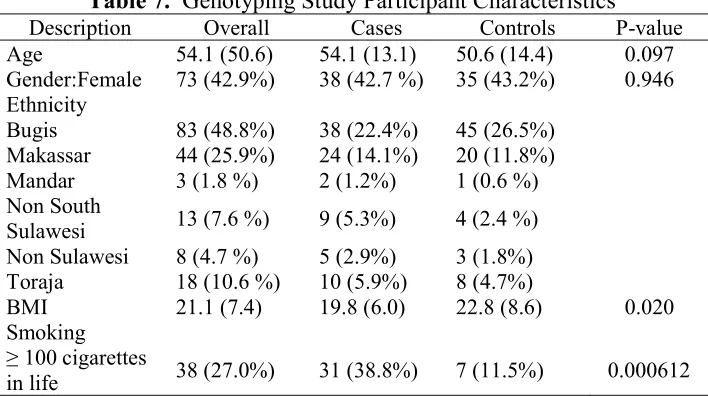
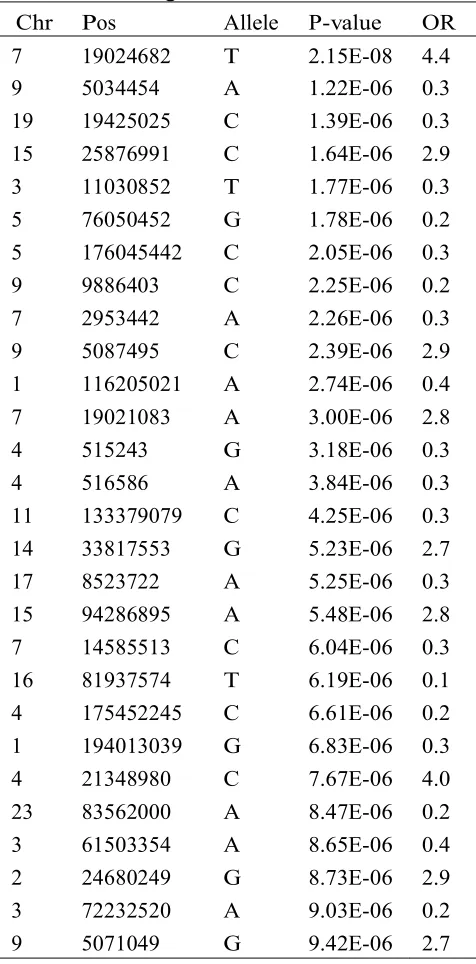
Preliminary descriptive analyses are reported in Tables 7 and 8 below. Smoking has a huge impact on risk of colorectal cancer in this sample (p=0.000612). The risk of this cancer is increased five fold. There are several genetic variants implicated in colorectal cancer.
5.3.9 Future Work
37
Table 7. Genotyping Study Participant Characteristics Description Overall Cases Controls P-value Age 54.1 (50.6) 54.1 (13.1) 50.6 (14.4) 0.097 formalize how data and results will be summarized across studies in the consortium and how evidence will be translated to precision medicine. The SAP will summarize the background, study design, study conduct and subject characteristics, and statistical methods. A standardized research consent form will be developed and made available to partner studies as part of the SAP.
Additionally, we will pursue the linking of this project to international projects, such as those supported by National Institute on Drug Abuse (NIDA) of the United States, World Health Organization of the United Nations, the Psychiatric Genetics Consortium, and the Precision Medicine Initiative. Results from the study will be presented at an international conference, such as the annual conference held by the Society for Research on Nicotine and Tobacco.
5.4 Scientific Relevance
38
39 data for their national biobanks through universities, hospital networks, and commercial institutions [45, 48]. In Asia, South Korea have begun their biobank establishment [49] while China has multiple biobanking initiatives [50]. Malaysia, India, Singapore, and Thailand have their initiatives as well [51]. With some nations already performing research based on their national biobank and many others in the process of biospecimen curation, it is essential for Indonesia to build its own biobank.
Through the work done in this study, our team will be able to begin identifying and replicating clinical and genetic factors important in an Indonesian population with tobacco related phenotypes. In order to do so, this study ad- dressed another scientific gap that often hampers big-data, biomedical research: the lack of uniform data. Support for standardized data collection of biospecimens and measures across studies [34], including demographics, substance use behaviors, history, and related risk factors, will permit meta-analyses of tests of association with tobacco use dependence and abstinence phenotypes. This biobank design will in turn serve as a template for future biobanking efforts in Indonesia for understanding and treating various complex diseases.
Another gap this study addressed was a lack of collaborative research and data sharing among cancer researchers. The consortium established enables tobacco researchers to share methods and data, increasing sample sizes available to detect important factors. Support for an Indonesian biobank will provide the infrastructure and methods to encourage collaboration among multiple clinical researchers, each of whom will benefit from the availability and cost savings of standardized consents, measures, protocols, and biobanking.
5.5 Broader Impacts
This study impacts biomedicine and the Indonesian population by taking the step towards applying pharmacogenetics to assist treatment-response optimization for smokers and cancer patients. The use of pharmacogenetics is virtually non-existent in Indonesia, including for smoking cessation [52]. Commencing a biobank is a daunting task; thus, a smaller-scale start with a clear and systematic approach based on a major public health issue (e.g. smoking, cancer) proved to be practical. Samples collected from this study achieved our goal to establish the first Indonesian Biobank, supported by refined strategies to manage and maintain it.
40
expansion is through Hasanuddin University’s study of colorectal cancer, a disease moderately but significantly associated with smoking [53]. With this study, we can share data and collaborate to design innovative studies.
We have developed an extensive, international network to expand and utilize the Indonesian Biobank.
5.6 Study Sustainability
Uniform and detailed data on clinical and genetic factors related to tobacco use, treatment, and diseases based on a diverse population is extremely valuable to future research, facilitating the study of many facets of biomedicine based on the biodiversity and heterogeneity of the Indonesian population. Additionally, the resources developed in this grant can be used for future investigations of addiction beyond nicotine and colorectal cancer, and potential links to related diseases, such as lung cancer and cardiovascular diseases. The foundation of this study was gathering data using best practices based on our previous research and recommendations from our collaborators and literature. This represents the first biobank in Indonesia with data that can be used for multiple studies.
41
5.7 Innovative Approaches
It is estimated that an annual spending of 11 trillion Indonesian rupiah (an equivalent of 1.2 billion USD) originate from medical care related to tobacco- attributed diseases of the Indonesian population [1, 58]. An typical low-income household is found to spend financially 15 times more on tobacco products than on healthcare and 9 times more than on education [2]. It was also reported that for a significant portion of the low-income household, purchases of tobacco (12% of total monthly spending) often takes precedence over utility bills (water, electricity, phone bills), housing rent, and protein food sources; on average, many household ranks cigarette spending second to only the purchase of rice (22% of total monthly spending) [2].
Big-data medicine is the next big step in biomedical research efforts to solve issues stemming from complex diseases and disorders, such as nicotine addiction. Therefore, it is crucial that Indonesia begins to establish biobanks of clinical data and biospecimens that can serve as the foundation upon which future biomedical projects can be designed and studied. This study begins with colorectal cancer cases and controls, a subset of which are smokers. However, data collection, software design, and statistical methodologies were established with future precision medicine studies in mind. The study was also the first of its kind to layout the platform upon which medical genetics and pharmacogenetics can be utilized, eventually, to select effective treatments and prevention strategies for segments of the Indonesian population.
43
Chapter 6
Commercialization Roadmap
1. Continue to innovate and educate in high performance computing, genomics, and data science.
Through the surveys of physicians and smokers, we learned that there is great interest in medical genetics in Jakarta. However, there is a gap in knowledge on how to use genomic information and the avail- ability of treatments available for smokers wanting to quit. Thus education of physicians and smokers on new medications and screening technologies is needed for commercialization.
In the genotyping study we learned that extracting and shipping DNA samples internationally for genotyping is costly and inefficient. Thus the capacity to genotype or sequence DNA samples using high- throughput approaches in Indonesia is very much needed for all human genomic studies throughout the country. This represents a companion commercialization opportunity for BINUS, as there are not yet service providers in Indonesia.
Motivated by this research, BINUS has prepared for the data management and analysis requirements for genomic data, by investing in high performance computing and building partnerships with HPC partners such as NVIDIA and AWS. Continuing these activities and training are important for the analysis of genomic data. This represents another companion commercialization opportunity for BINUS, offering HPC and bioinformatics services for other studies.
44
could become an extremely valuable asset, it which pharmaceutical and health care networks may license access to high quality data.
45
Chapter 7
Key Accomplishments
Through the contributions of BINUS University and their collaborators, we have established the first biobank in Indonesia. While the initial biobank focuses on colorectal cancer and smoking behavior, the requirements for scaling are now known.
We have developed the IT infrastructure for data collection, management, and analysis of study data. This is composed of a secure relational database, web-based application, and statistical computing support form BINUS, NVIDIA and Amazon Web Services. This system is available for future studies.
The results of this research has been presented at international meetings and in scientific journals, including:
– Pardamean B, Budiarto A, Caraka, RE. Indonesian Colorectal Cancer Consortium Data Science System, in preparation. – Pardamean CI, Baurley JW, Pardamean B. Pharmacotherapy
and medical genetics for smoking cessation in Jakarta. International Journal of Business and Society, under review. – Pardamean CI, Baurley JW, Kacamarga MF, Pardamean B,
Genetic screening for nicotine dependence and treatment approaches among physicians in Indonesia. International Journal of Pharmaceutical Sciences Review and Research, 43(1), 2017.
– Pardamean B, Baurley JW, Pardamean CI, Figueiredo JC. Changing colorectal cancer trends in Asians. Int J Colorectal Dis. 2016 Mar 29.
– Baurley JW, et al. Smokescreen – a unified platform for addiction research. Society for Research on Nicotine and Tobacco Annual meeting. 2016.
46
– Baurley JW. et. al. Smokescreen: A Targeted Genotyping Array and Software Application for Nicotine Research. Society for Research on Nicotine and Tobacco Annual meeting. 2014.
NIDA Genetics Consortium members are aware of the study. There are opportunities for sharing of data and results as the biobank in Indonesia grows.
We have build strong international collaborations with industry (NVIDIA, Amazon Web Services, AVNET, and Affymetrix); Research institutions (USC, BioRealm, UNHAS, UCLA, Clemson, NTU); and sample processing labs (MRIN, RUCDR).
We have built BINUS’s high performance computing (HPC) capacity for data analysis of genomic data. This includes establishment of the NVIDIA GPU Education Center in 2015, its renewal in 2016, and expansion to an AI R&D Center to be launched summer 2017. In addition, ongoing education and research grants from Amazon Web Services have been awarded for cloud resources.
The first in Indonesia, an official material transfer agreement (MTA) for DNA transfer to the USA for genotyping was established.
47
REFERENCES
[1] Wipfli H. The Tobacco Atlas, Fourth Edition. Am J Epidemiol. 2012;176: 1193–1193. doi:10.1093/aje/kws389
[2] Kosen S, editor. Global Adult Tobacco Survey: 2011 GATS, Indonesia [Internet]. World Health Organization; 2012. Available: http://www.who.int/tobacco/surveillance/survey/gats/indonesia_rep ort.pdf
[3] Kristina SA, Endarti D, Prabandari YS, Ahsan A, Thavorncharoensap M. Burden of Cancers Related to Smoking among the Indonesian Population: Premature Mortality Costs and Years of Potential Life Lost. Asian Pac J Cancer Prev. 2015;16: 6903–6908. Available: http://www.ncbi.nlm.nih.gov/pubmed/ 26514465
[4] ASPA. The Health Consequences of Smoking—50 Years of Progress: A Report of the Surgeon General, 2014. Available: http://www.surgeongeneral.gov/library/reports/50-years-of-progress /#execsumm
[5] Jha P, Peto R. Global effects of smoking, of quitting, and of taxing tobacco. N Engl J Med. 2014;370: 60–68. doi:10.1056/NEJMra1 308383
[6] Maes HH, Sullivan PF, Bulik CM, Neale MC, Prescott CA, Eaves LJ, et al. A twin study of genetic and environmental influences on tobacco initiation, regular tobacco use and nicotine dependence. Psychol Med. 2004;34: 1251–1261.
[7] Benowitz NL, Hukkanen J, Jacob P 3rd. Nicotine chemistry, metabolism, kinetics and biomarkers. Handb Exp Pharmacol. 2009; 29–60. doi:10.1007/978-3-540-69248-5
48
[9] Nakajima M, Yamamoto T, Nunoya K, Yokoi T, Nagashima K, Inoue K, et al. Characterization of CYP2A6 involved in 3’-hydroxylation of cotinine in human liver microsomes. J Pharmacol Exp Ther. 1996;277: 1010–1015.
[10] Tyndale RF, Sellers EM. Variable CYP2A6-mediated nicotine metabolism alters smoking behavior and risk. Drug Metab Dispos. 2001;29: 548–552. Available: http://www.ncbi.nlm.nih.gov/pubmed /11259349
[11] Jarvik ME, Madsen DC, Olmstead RE, Iwamoto-Schaap PN, Elins JL, Benowitz NL. Nicotine blood levels and subjective craving for cigarettes. Pharmacol Biochem Behav. 2000;66: 553–558. Available: http://www. ncbi.nlm.nih.gov/pubmed/10899369
[12] Benowitz NL. Nicotine addiction. N Engl J Med. 2010;362: 2295– 2303. doi:10.1056/NEJMra0809890
[13] Jiloha RC. Pharmacotherapy of smoking cessation. Indian J Psychiatry. 2014;56: 87–95. doi:10.4103/0019-5545.124726
[14] Perkins KA. Improving efficiency of initial tests for efficacy in smoking cessation drug discovery. Expert Opin Drug Discov. 2014;9: 1259–1264. doi:10.1517/17460441.2014.951632
[15] Stead LF, Perera R, Bullen C, Mant D, Hartmann-Boyce J, Cahill K, et al. Nicotine replacement therapy for smoking cessation. Cochrane Database Syst Rev. 2012;11: CD000146. doi:10.1002/14651858. CD000146.pub4
[16] Chang P-H, Chiang C-H, Ho W-C, Wu P-Z, Tsai J-S, Guo F-R. Combination therapy of varenicline with nicotine replacement therapy is better than varenicline alone: a systematic review and meta-analysis of randomized controlled trials. BMC Public Health. 2015;15: 689. doi:10.1186/s12889-015-2055-0
49 [18] Lerman C, Schnoll RA, Hawk LW Jr, Cinciripini P, George TP, Wileyto EP, et al. Use of the nicotine metabolite ratio as a genetically informed biomarker of response to nicotine patch or varenicline for smoking cessation: a randomised, double-blind placebo-controlled trial. Lancet Respir Med. 2015;3: 131–138. doi:10.1016/S2213-2600(14)70294-2
[19] Chen L-S, Baker TB, Jorenby D, Piper M, Saccone N, Johnson E, et al. Genetic variation (CHRNA5), medication (combination nicotine replacement therapy vs. varenicline), and smoking cessation. Drug Alcohol Depend. 2015;154: 278–282. doi:10.1016/j.drugalcdep. 2015.06.022
[20] Smerecnik C, Grispen JEJ, Quaak M. Effectiveness of testing for genetic susceptibility to smoking-related diseases on smoking cessation outcomes: a systematic review and meta-analysis. Tob Control. 2012;21: 347–354. doi:10.1136/tc.2011.042739
[21] Bierut L, Cesarini D. How Genetic and Other Biological Factors Interact with Smoking Decisions. Big Data. 2015;3: 198–202. doi:10.1089/big.2015.0013
[22] Collins FS, Varmus H. A New Initiative on Precision Medicine. N Engl J Med. 2015;372: 793–795. doi:10.1056/NEJMp1500523
[23] Fact Sheet: Precision Medicine Initiative. In: whitehouse.gov [Internet]. 30 Jan 2015 [cited 26 Jul 2016]. Available: https://www.whitehouse.gov/the-press-office/2015/01/30/fact-sheet-president-obama-s-precision-medicine-initiative
[24] Precision Medicine Initiative. In: National Institutes of Health (NIH) [Internet]. [cited 26 Jul 2016]. Available: https://www.nih.gov/ precision-medicine-initiative-cohort-program
50
[26] Allenby CE, Boylan KA, Lerman C, Falcone M. Precision Medicine for Tobacco Dependence: Development and Validation of the Nicotine Metabolite Ratio. J Neuroimmune Pharmacol. 2016; doi:10.1007/s11481-016-9656-y
[27] Baurley JW, Edlund CK, Pardamean CI, Conti DV, Bergen AW. Smoke- screen: a targeted genotyping array for addiction research. BMC Genomics. 2016;17: 145. doi:10.1186/s12864-016-2495-7
[28] Baurley JW, Edlund CK, Pardamean CI, Conti DV, Krasnow R, Javitz HS, et al. Genome-Wide Association of the Laboratory-Based Nicotine Metabolite Ratio in Three Ancestries. Nicotine Tob Res. 2016; doi:10.1093/ntr/ntw117
[29] Amiruddin R. Health Risks Assessment and the Epidemiology Study of Lead Exposure among Communities along Youtefa Gulf in Jayapu. Asia Pacific Conference for Public Health. 2014;2: 165–174. Available: http://dx.doi.org/
[30] Amiruddin R, Darmawangsa D, Jumriani J, Awaluddin A, Azizah N. Smoking Behaviors of Street Children in Makassar 2013. Makara Journal of Health Research. 2015;19. doi:10.7454/mjhr.v19i2.5176
[31] Holford TR, Meza R, Warner KE, Meernik C, Jeon J, Moolgavkar SH, et al. Tobacco control and the reduction in smoking-related premature deaths in the United States, 1964-2012. JAMA. 2014;311: 164–171. doi:10.1001/jama.2013.285112
[32] Measures from the PhenX Toolkit version June 30 2010, Ver 3.3 were included in this analysis. PhenX (consensus measures of Phenotypes and eXposures) is supported by NHGRI award No. U01 HG004597 [Internet]. Available: www.phenxtoolkit.org
[33] Hamilton CM, Strader LC, Pratt JG, Maiese D, Hendershot T, Kwok RK, et al. The PhenX Toolkit: get the most from your measures. Am J Epidemiol. 2011;174: 253–260. doi:10.1093/aje/kwr193
51 [35] Land SR, Toll BA, Moinpour CM, Mitchell SA, Ostroff JS, Hatsukami DK, et al. Research Priorities, Measures, and Recommendations for Assessment of Tobacco Use in Clinical Cancer Research. Clin Cancer Res. 2016;22: 1907–1913. doi:10.1158/1078-0432.CCR-16-0104
[36] DNA Genotek — Oragene DISCOVER DNA — DNA Saliva Collection — OGR-500 Tube Format [Internet]. [cited 28 Jul 2016]. Available: http://www.dnagenotek.com/US/products/OGR500.html
[37] DNA Genotek — Clinical Diagnostics — Oragene Dx — DNA Saliva [Internet]. [cited 28 Jul 2016]. Available: http://www.dnagenotek.com/US/ products/OGR250.html
[38] Nishita DM, Jack LM, McElroy M, McClure JB, Richards J, Swan GE, et al. Clinical trial participant characteristics and saliva and DNA metrics. BMC Med Res Methodol. 2009;9: 71. doi:10.1186/1471-2288-9-71
[39] Welter D, MacArthur J, Morales J, Burdett T, Hall P, Junkins H, et al. The NHGRI GWAS Catalog, a curated resource of SNP-trait associations. Nucleic Acids Res. 2014;42: D1001–6. doi:10.1093/nar/gkt1229
[40] Ashburner M, Ball CA, Blake JA, Botstein D, Butler H, Michael Cherry J, et al. Gene Ontology: tool for the unification of biology. Nat Genet. Nature Publishing Group; 2000;25: 25–29. doi:10.1038/75556
[41] Kanehisa M, Goto S. KEGG: kyoto encyclopedia of genes and genomes. Nucleic Acids Res. 2000;28: 27–30. Available: http://www.ncbi.nlm.nih. gov/pubmed/10592173