PROCEEDINGS
2
ndInternational Conference on the Sources, Effects and
Risks of Ionizing Radiation (SERIR 2016)
in conjunction with
14
thBiennial Conference of the South Pacific Environmental
Radioactivity Association (SPERA 2016)
Sanur Paradise Plaza Hotel
Bali, 5-9 September 2016
Organized and hosted by
National Nuclear Energy Agency (BATAN) in cooperation with
South Pacific Environmental Radioactivity Association
Published by
Organized and hosted by the
National Nuclear Energy Agency (BATAN)
in cooperation with
South Pacific Environmental Radioactivity Association
Supported by :
Kementerian Riset, Teknologi dan Pendidikan Tinggi
Australian Radiation Protection and Nuclear Safety Agency
Australian Institute of Nuclear Science and Engineering
COMMITTEE
President of The Conference
Dr. Ferhat Aziz, Deputy Chairman of BATAN, Indonesia
Scientific Committee : Susetyo Trijoko, M.App.Sc. – BATAN, Indonesia
Editors :
1. Prof. Dr. Yoshiyuki Suzuki, MD
- University of Fukushima,Japan
2. Prof. Dr. Ross Antoni Jeffry
- University of Technology Sydney, Australia
3. Dr. Heny Suseno
- BATAN
4. Dr. Rer.nat. Budiawan
- Universitas Indonesia
5. Dr. Freddy Haryanto
- Institut Teknologi Bandung
6. Dr. Johannes R. Dumais
- BATAN
7. Dr. Azhar Masiatullah
- Pakistan Institute of Science and Technology
(PINSTECH), Pakistan
Local Committee :
Chair
: Dr. Mukh Syaifudin
- BATAN
Vice
: Dr. Heny Suseno, M.Si.
- BATAN
Secretary
: 1. Drs. Nazar Wijaya Iskandarmouda
- BATAN
2. Setyo Rini, SE
- BATAN
Treasure
: Irwan Nursal, SE
- BATAN
Sections
:
a. Scientific Boards
: 1. Dr. Dadong Iskandar, M.Eng.
- BATAN
2. Dr. Iin Kurnia, M. Biomed.
- BATAN
3. Drs. Mukhlis Akhadi, APU
- BATAN
4. Dra. C. Tuti Budiantari
- BATAN
b. Publication, Documentation :
1. Hasnel Sofyan, M.Eng.
- BATAN
and Proceeding
2. Toni Prihatna
- BATAN
3. Suratman, ST.
- BATAN
c. Protocol-Accommodation : 1. Budi Kurnia
- BATAN
2. Nunuk Sunaryati
- BATAN
d. Logistics
: 1. Ir. Ismanto Djumadi
- BATAN
2. Sandya Eko Restadhi, SH
- BATAN
3. Teja Kisnanto, A.Md.
- BATAN
4. Tisna Priatna
- BATAN
5. Achmad Chabib
- BATAN
e. Security
: 1. Prasetyo, S.Sos.
- BATAN
PREFACE
For the second time the Center for Technology of Radiation Safety and Metrology, National Nuclear Energy Agency of Indonesia (BATAN) was held the 2nd International Conference on the Sources, Effects and Risks of Ionizing Radiation (SERIR2) in Sanur Paradise Plaza Hotel, Sanur, Bali, Indonesia, which was the continued event that already held in last 2013. Similar as previously, Conference dealed with the efforts to enhance data collection and disseminate scientific findings related to the issues of sources, effects and risks of the ionizing radiation, as well as to seek the way of communication among stakeholders (scientific communities, regulatory authorities, and general public) on those issues. This conference was in conjunction with the 14th biennial conference of the South Pacific Environmental Radioactivity Association (SPERA2016) that provides a platform for discussion among scientists on the occurrence, behaviour, impact and measurement of radioactive species present in the environment through natural processes, or resulting from human activities. This international conference also facilitated knowledge sharing on environmental radioactivity and related topics of local and global significance.
In the SERIR2 there were three keynote speakers presented their own expertise : Dr. Stephen Solomon (Principal Scientific Adviser to the CEO, Australian Radiation Protection and Nuclear Safety Agency (ARPANSA), Prof. Yoshiyuki Suzuki (Department of Radiation Oncology, Fukushima Medical University), and Dr. Ferhat Aziz (National Nuclear Energy Agency of Indonesia (BATAN)).
In this conference there was a press conference that was attended by local and national journalists. This event was handled by Bureau of Legal, Public Relation and Cooperation (BHHK), BATAN. The speakers were : Dr. Andreas Bollhöfer (President of SPERA), Dr. Justin Lee (Deputy Head of Mission, Department of Foreign Affairs and Trade of Australian Embassy for Indonesia), Dr. Gillian Hirth (ARPANSA), Prof. Dr. Djarot Sulistio Wisnubroto (Chairman of BATAN), and Prof. Dr. Mohammad Nasir (Directorate General of Minister of Research, Technology and Higher Education (Menristekdikti).
In this conference, of 38 papers submitted by authors from three countries (Indonesia, India and Japan), 35 papers were presented as oral and poster presentation. For oral, there were 20 papers presented into two groups of paper (group A, Radiation Exposures and Instrumentation and group B, Occupational Exposures and Health Effects), and for poster there were 15 papers. Totally there were 35 papers that consists of 32 papers from BATAN, one paper from Pachhunga University College-India, one paper from University of Udayana, and one paper from Siloam Hospital.
We would like to thank all those who participated in the conference for the lively discussions as well as the director of the Center for Radiation Safety and Metrology, BATAN upon the opportunity to organize this event as well as the SPERA which was agree to conduct the events in the same venue. In addition, we are also grateful to all the authors for their valuable time and contributions to the conference. Last but not least, the conference would not have been possible without the great help of the staff of the Center and Australian Nuclear Science and Technology Organization (ANSTO), South Pacific Environmental Radioactivity Association (SPERA), Australian Radiation Protection and Nuclear Safety Agency (ARPANSA). We would like to thank all of them for their assistance.
WELCOME ADDRESS BY PRESIDENT OF THE CONFERENCE
His Excellency,
Dr. Muhammad Dimyati, Director General Research and Development, Representing Minister Science, Technology and Higher Education, The Republic of Indonesia;
Prof. Dr. Djarot SulistioWisnubroto, Chairman of National Nuclear Energy Agency (BATAN); Dr. Andreas Bollhöfer, President of South Pacific Environmental Radioactivity Association (SPERA);
Dr. Justin Lee, Deputy Head of Mission, Department of Foreign Affairs and Trade of Australian Mission for Indonesia; and
Dr. HendigWinarno, Deputy Chairman of BATAN;
Distinguished keynote speakers, Chairman of the organizing committee, Participants, Ladies and Gentlemen,
Good Morning and Assalamu-Alaikum Wr.Wb.
On behalf of the National Nuclear Energy Agency (BATAN) of Indonesia, it is my great pleasure to welcome you to the “2ndInternational Conference on the Sources, Effects and Risks of Ionizing Radiation (SERIR) and 14th Biennial International Conference of SPERA”, jointly organized by South Pacific Environmental Radioactivity Association (SPERA) and National Nuclear Energy Agency (BATAN), particularly The Center for Radiation Safety Technology and Metrology. I wish to welcome you to be in a beautiful Bali Island here.
This second International Conference on the SERIR is a continued of the first scientific meeting that had been done here in the same place three years ago. As in the first SERIR, this Conference is held under an urgent need to give contribution to the works of the United Nations Scientific Committee on the Effects of Atomic Radiation (UNSCEAR). The 2nd International Conference on the SERIR will be a 1-day conference (5 September). This conference is aimed to disseminate scientific findings related to the issues of sources, effects and risks of ionizing radiation, and to communicate with stakeholders (scientific communities, regulatory authorities and general public).
Ladies and Gentlemen,
Ionizing radiation is generated in a range of medical, commercial and industrial activities. The most familiar and the largest of these sources of exposure is medical X-rays. Natural radiation contributes about 88% of the annual dose to the population, and medical procedures contribute most of the remaining 12%. Natural and artificial radiation are not different in kind of effect. Ionizing radiation has always been present in the environment and in our bodies. However, we can and should minimise unnecessary exposure to significant levels of artificial radiation. Ionizing radiation is also very easily detected. There is a range of simple, sensitive instruments capable of detecting minute amounts of radiation from natural and anthropogenic sources.
This Conference has attracted more than 80 participants from 6 countries. About 39 scientific papers will be presented by their authors orally or as posters. This event will offer you plenty of opportunities for extensive discussions, making of new contacts and strengthening the existing relationships after the oral presentations, during the poster sessions, while visiting the exhibition by SPERA or at the other events.
For the SPERA 2016, the 14thBiennial Conference of the SPERA, to be held 6-9 September, will provides a platform for discussion and debate among scientists on the occurrence, behaviour, impact and measurement of radioactive species present in the environment through natural processes, or resulting from human activities.
The joint conference will include a one-day workshop on Trends in Environmental Sample Preparation on the 6th September, facilitated by The Radiochemistry Division of the Royal Australian Chemical Institute (RACI). The workshop will present an overview of the fundamentals, procedures, and applications of both historical and the most recently developed sample preparation techniques for the extraction, clean up, and concentration of radionuclides from environmental samples
Participants, Ladies and Gentlemen.
In this opportunity, I would like to thank to honorable three invited speakers who have been able to be here, Dr. Stephen Solomon, from Australian Radiation Protection and Nuclear Safety Agency (ARPANSA)-Australia, Prof. Dr. Yoshiyuki Suzuki, MD, from Fukushima University-Japan; and Dr. Ferhat Azis, from BATAN-Indonesia. All of them are the prominent scientists in their own field and will providea comprehensive overview of the current status of the global sources, effects and risks of ionizing radiation.
I look very much forward to this Conference and hope there will be warm discussion, because this Conference is open for everybody to give a view, and certainly we will do our best to make sure that the floor is really life. So, please be prepared to give comments and questions for the topics to be delivered by the speakers and presenters.
In this occasion, I would also like to thank the organizer and resource persons who have made this event possible, and who I am sure will be working tirelessly to ensure the success of the conference and workshop over the next few days.
Finally, I wish all of you will enjoy being in Bali, which is one of 16 Most Beautiful Islands in the World. Bali is a feast for the senses. Bali’s spirit will wash over you like a warm, tropical wave.
Thank you and Wassalamu-Alaikum WrWb. President of the Conference
OPENING REMARKS
MINISTER OF RESEARCH, TECHNOLOGY AND HIGHER EDUCATION
(Represent by Director General Research and Development)
Honorable;
1. Dr. Andreas Bollhofer (President of SPERA)
2. Deputy Head of Mission, Department of Foreign Affairs and Trade of Australian Embassy for Indonesia
3. Prof. Dr. Djarot Sulistio Wisnubroto, Chairman of Batan 4. All Experts, Participants
5. Distinguish Guest, Ladies and Gentlements
First of all, let us thanks Allah SWT for His blessings; we can be here to attend this International Conference. On behalf of Ministry of Research, Technology and Higher Education, I would like to express my gratitude to all of you, for participating 2th International Conference on the Sources, Effects and Risk of Ionizing Radiation (SERIR) and 14th Biennial International Conference on SPERA in the beautiful island of Indonesia…called BALI.
Delighted Ladies and Gentlemen,
The development of science and technology in the field of health, food, and energy is very progressive. Many researchers doing very sportive competitions to express their knowledge to support the human being. In the other hand, there are many obstacles should be break it out by the researchers to reach the research goals. This forum can be use as an arena to prove that we are capable of doing it. But we need to keep our awareness that whatever the level of research we present now; we should not merely stop at research paper or conceptual design. We must continue and create research outputs that are ready to be commercialized and giving positive impact to the people. Therefore, the benefit of research can be optimized for the good and prosperity of Indonesian people and the world. And with this spirit, the Ministry of Research, Technology and Higher Education support the mutually-benefit linkage between researchers and industries, in order to minimize their mismatch.
To move further, the Ministry of Research, Technology and Higher Education has had and will continue to push and facilitate research outputs that are ready to be used by the people, to be synergized with other research outputs, to give greater benefits and multiplier effects to the community. For example, Indonesian Institute of Science (LIPI) has invented fertilizer that can make paddy stands out of many pests, while Bogor Agricultural Institute has invented new paddy variety that can yield more than 10 ton per hectare. Research and Development of Ministry of Agriculture had invented paddy field management with Jarwo-system that can improve paddy field productivity. Each of the inventions is directly benefiting the user, but synergizing them through government support, will create much greater benefits, and direct impact for the people, mainly local people.
Delighted Ladies and Gentlemen,
Once again, I hope that the conference output will provide positive impact through science and technology development, that is benefiting the community.
To all overseas participants, I welcome you in Bali, a beautiful and peaceful island. Enjoy your stay and hope that the serenity of the island inspires you to create changes for a better future.
Finally, by saying BISMILLAH…. I open 2nd International Conference on the Sources, Effects and Risk of Ionizing Radiation (SERIR2) and 14th Biennial International Conference on SPERA2016.
May Allah SWT, the God Almighty give us His Blessing. Wabilahi Taufiq Walhidayah, Wassalamualaikum Wr. Wb.
Bali, 5 September 2016
Press Conference (organized by BHHK)
Dr. Andreas Bollhöfer(President of SPERA)
Dr. Justin Lee(Deputy Head of Mission,
Department of Foreign Affairs and Trade of Australian Mission for Indonesia)
Dr. Gillian Hirts (ARPANSA)
Prof. Dr. Djarot Sulistio Wisnubroto (Chairman of BATAN)
TABLE OF CONTENT
Organized and hosted i
Committee ii
Preface iii
Wellcoming Address by President of the Conference iv
Opening Remarks Minister of Research, Technology and Higher Education vi
Press Conference viii
Table of Content ix
Keynote Speakers xii
Keynote Speaker I
Dr. Stephen Solomon(Principal Scientific Adviser to CEO ARPANSA)
“An ARPANSA Perspective on Radiation Protection of The Environment”
Keynote Speaker I
Prof. Dr. Yoshiyuki Suzuki, MD(Fukushima Medical University, Japan)
“Cutting Edge Radiotherapy” (Including Combination Therapy with Immunotherapy)
Keynote Speaker III
Dr. Ferhat Aziz (National Nuclear Energy Agency of Indonesia)
“Environment Radioactivity Monitoring Activities in Indonesia and Its Public Concerning”
1 Dose Rate of Natural Radionuclides and137Cs in Marine Biota of Bangka Sea
Erwansyah Lubis, Heny Suseno, Wahyu Retno Prihatiningsih and M. Nur Yahya
1
2 Indoor Radon : Inhalation Dose Assessment in North-Eastern Part of India
Lalmuanpuia Vanchhawng, P.C. Rohmingliana, B. Zoliana, R. Mishra and B.K. Sahoo
7
3 Environmental Radioactivity and Hazardous Index Around Nuclear Research Reactor Yogyakarta
Gede Sutresna Wijaya and Susilo Widodo
12
4 Groundwater Drainage and Soil Formation Effect on High Natural Radiation Exposure in Biak, Papua
Heri Syaeful, Kurnia Setiawan Widana and I Gde Sukadana
18
5 Dose Rates Assessment of137Cs forChanos chanosusing ERICA Tool
Wahyu Retno Prihatiningsih, Dedi Soedharma, Heny Suseno, Neviaty P. Zamani
25
6 Concentration of Selected Radionuclides in Sediment and Surface Seawater in Belitung Island, Indonesia
Murdahayu Makmur, Mohamad Nur Yahya and Deddy Irawan Permana Putra
29
7 Mapping of Indoor Radon Concentration in Houses Located in South Sulawesi Province
Wahyudi, Kusdiana and Dadong Iskandar
35
8 Prospective Polycarbonate from CDs/DVDs as a Radon/Thoron Detector in Indonesia
Eka Djatnika Nugraha and Wahyudi
39
9 Radiation Metrology for Environmental in Indonesia
Gatot Wurdiyanto
45
10 Radioactivity Concentrations in Soil Surrounding Experimental Power Reactor Development Plan in Serpong of Indonesia
Makhsun, Dadong Iskandar and Wahyudi
vol
with DSCT Scan 64 Slice
Arif Jauhari, R. Gilang Gumilar and Nina I.S.H Supit
62
13 Study on High Natural Radiation Impacts to Peripheral Blood Cells in Population Living in Botteng Village, Mamuju, West Sulawesi
Tur Rahardjo, Siti Nurhayati, Darlina, Teja Kisnanto and Mukh Syaifudin
69
14 A Preliminary Study on DNA Damage in Peripheral Blood of Medical Personnel Occupationally Exposed to Ionizing Radiation Using Comet Assay
Darlina, Tur Rahardjo, Teja Kisnanto and Yanti Lusiyanti
75
15 Cytogenetic Evaluation in Peripheral Blood Lymphocytes of Individuals living in high natural background radiation of Botteng Village, Mamuju
Siti Nurhayati, Sofiati Purnami and Mukh Syaifudin
80
16 Evaluation of Mitotic and Nuclear Division Indexes in Peripheral Blood Lymphocytes of Botteng Village, Mamuju Inhabitants
Masnelli Lubis, Sri Sardini and Dwi Ramadhani
85
17 Preliminary Investigation on The Patient and Occupational Doses in Interventional Procedures in Indonesia
Eri Hiswara, Nunung Nuraeni, Kri Yudi Pati Sandy, Helfi Yuliati and Dyah D. Kusumawati
90
18 Absolute Standardization of134Cs by 4πβ(LS)-γ Coincidence Counting System in PTKMR BATAN
Hermawan Candra, Gatot Wurdiyanto and Holnisar
97
19 Study of Differences in Measurement Results of Radiation Dose Rate From Cirus Teletherapy with60Co Source System in Off Condition Using 4 Different Surveymeters
Wijono and Gatot Wurdiyanto
101
20 Calibration of a Small Volume Ionization Chmaber for 60CO Gamma Beams with Low and High Activity Sources
Assef Firnando F., Sri Inang Sunaryati, Nurman R. and Gatot Wurdiyanto
106
21 Compliance Test for Portable Industrial Gamma Radiography Devices Based On National Standard of Indonesia
B.Y. Eko Budi Jumpeno and Bunawas
112
22 Study on The Characteristics of TLD-700H (LiF:Mg, Cu,P) For Eye-Lens Dosimeter
Nazaroh, C. Tuti Budiantari, Pardi and Irma Dwi Rahayu
117
23 The Calibration Control of Capintec Dose Calibrator CRC-7BT Using137Cs Method
Holnisar, Gatot Wurdiyanto and Hermawan Candra
125
24 High Sensitivity of LiF:Mg,Cu,P Thermoluminescent Dosimeter and Its Application for Low Dose Measurement In Medical Field
Hasnel Sofyan and Sri Inang Sunaryati
129
25 Health Status and Physical Condition of Community Living in Takandeang Village, an Area With High Natural Radiation in Mamuju
Nastiti Rahajeng, Iin Kurnia, Tur Rahardjo, Viria Agesti Sufivan and Mukh Syaifudin
133
26 Environmental Radiation and Radioactivity levels around the Coal-fired Power Plants in Banten Province
Muji Wiyono, Dadong Iskandar, Wahyudi, Kusdiana and Syarbaini
139
27 The Quantity of Leukocyte of Mice (Mus musculus l.) in The Lowest and Highest Points after60Co Gamma Radiation Exposure
Gusti Ngurah Sutapa, Ni Nyoman Ratini, Antha Kasmawan, Made Yuliara
28 Radiation Monitoring at RT Chamber of PT. Gunanusa Utama Fabricator’s Work Area in Cilegon–Banten
Farida Tusafariah
148
29 137Cesium Concentration of Seawater and Sediment in Medan, North Sumatra
Deddy Irawan Permana Putra and Wahyu Retno Prihatingsih
154
30 Relationship Between Polymorphisms of DNA Repair Gene XPD 23 With Frequency of Micronuclei in Cervical Cancer Patients
Wiwin Mailana, Yanti Lusiyanti and Sofiati Purnami
158
31 Determination of Window Analysis and Full Spectrum Analysis Method of Gamma Spectrometry Measurements in Low Level Activity
Mohamad Nur Yahya, Murdahayu Makmur and Deddy Irawan PP
162
32 Preliminary Study of Cytogenetic Effect of Medical Radiation Workers
Yanti Lusiyanti, Siti Nurhayati, Sofiati Purnami and Nastiti Rahajeng
171
33 Determination of Individual Radiosensitivity in Lymphocytes of Botteng Inhabitants Using Single Color FISH
Sofiati Purnami and Dwi Ramadhani
175
34 Assessment of Natural Radioactivity Levels in Soil of Bali Island, Indonesia
Kusdiana, Muji Wiyono and Syarbaini
180
35 Measurement of Indoor Radon-Thoron Concentration in Dwellings of Bali Island, Indonesia
Eko Pudjadi, Wahyudi, Asep Warsona and Syarbaini
186
36 Comparative Analysis of I-131 Concentration Measurement Methods By Direct and Indirect From The Radioisotopes Production Stack to Outdoor
Gatot Suhariyono and Bunawas
193
KEYNOTE SPEAKERS
Keynote Speaker I
Dr. Stephen Solomon(Principal Scientific Adviser to CEO ARPANSA)
“An ARPANSA Perspective on Radiation Protection of The Environment”
Keynote Speaker II
Prof. Dr. Yoshiyuki Suzuki, MD.(Fukushima Medical University, Japan) “Cutting Edge Radiotherapy” Including Combination Therapy
with Immunotherapy)
Keynote Speaker III
Dr. Ferhat Aziz (National Nuclear Energy Agency of Indonesia)
Mapping of Indoor Radon Concentration in Houses Located
in South Sulawesi Province
Wahyudi, Kusdiana and Dadong Iskandar
Center for Technology of Radiation Safety and Metrology,National Nuclear Energy Agency of Indonesia Jl. Lebak Bulus Raya No. 49 Jakarta Selatan, 12440 Indonesia, E-mail : [email protected]
Abstract. Mapping indoor radon concentrations in South Sulawesi Province by using a passive method had been
conducted. In this research, the area under study was divided into several sections (grid). Each grid represents a 40km x 40km area that there will be installed passive radon monitoring at 6-10 population dependent response. Of 144 indoor passive radon monitor that had been installed for 3-4 months there were 140 pieces (97.22%) were taken back and further analyzed for radon in the lab for processing, read the track and then the radon concentrations were calculated. Furthermore, data concentration of radon in the home and GPS location as an input in the manufacture of radon concentration map using MapInfo Software v.10.5. The results of the analysis of the concentration of radon in houses in South Sulawesi were in the range of 3.430.24 Bq/m3and 69.384.91 Bq/m3. These results were lower than those of the reference level radon set by UNSCEAR (300 Bq/m3). This data is useful in the development plans and regional development, as well as the basis for health policy analysis due to radon in Indonesia. Furthermore, these data will be userd for the contribution of Indonesia in the international world through UNSCEAR, IAEA and WHO.
Keywords : concentration, radon indoor, South Sulawesi
Introduction
Radiation and radioactivity in the environment are described in the map of the natural radioactivity including dose rate of gamma radiation exposure in
the environment and the concentration of 226Ra,
232
Th and 40K on the ground surface, excluding
radon and thoron. Based on the UNSCEAR (United Nations Scientific Committee on the Effects of Atomic Radiation) report radiation exposure to radon in houses is the largest contributor to the
natural radiation exposure that reaches 50%
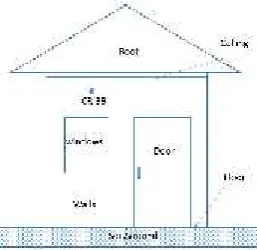
(UNSCEAR 2010). Exposure to natural radiation is the largest contributor (up to 85 %) of the total radiation exposure received by the world's population (Anonymous 2004). In an effort to elaborate natural radiation sources in Indonesia to be characterized its natural sources of radiation it is necessary to measure the concentration of indoor radon (222Rn) thoron (220Rn). Radon and thoron are natural radioactive substances in the form of gas that can cause significant radiological problems. Radon is a short-lived radionuclide that emits alpha particle and can be attached to small particles in the air and can be inhaled and can expose lung tissue so that it can raise the risk of lung cancer. Another isotope of radon is radon-220 (thoron) that has the same properties but with a smaller degree of radiation exposure in the lung. Figure 1 shows the scheme of radon gas that filled spaces within a building.
Lung cancer due to radon exposure is caused by inhalation of short-lived radon particulate such as 218
Po, 214Pb, 214Bi or 214Po. Inhaled radon decay products in the room has a particle with diameter of about 50-200 nm. While the percentage of
radio-activity of 218Po as super fine particles with
nanometer diameter varies between a few percent up
data of 400 cases of lung cancer and 400 cases as a control in New Jersey, it was concluded that the environmental consequences of radon exposure was associated with the occurrence of lung cancer (Lippmann, 2008). Meanwhile, the US National Research Council (NRC) reported that 10-14% of deaths or around 10000-14000 people/year was due to cancer cases that came from exposure to radon in the environment. Lung cancer due to radon exposure is caused by inhalation of short-lived radon particulate such as218Po,214Pb,214Bi or214Po. Inhaled radon decay products in the room has a particle with diameter of about 50-200 nm. While the percentage of radioactivity of218Po as super fine particles with nanometer diameter varies between a few percent up to 50% (Lippmann 2008). In a study that analyzed data of 400 cases of lung cancer and 400 cases as a control in New Jersey, it was concluded that the environmental consequences of radon exposure was associated with the occurrence of lung cancer (Lippmann 2008). Meanwhile, the US National Research Council (NRC) reported that 10-14% of deaths or around 10000-14000 people/year was due to cancer cases that came from exposure to radon in the environment.
Figure 2. Graph of the relationship between the Relative Risk (RR) with a concentration of radon to 8 cases of lung cancer (Lippmann 2008).
Radon and thoron are the highest trigger of lung cancer in the United States based on the report of the WHO (Anonymous, 2004). Radiological impact on the society and the environment can be either external or internal radiation exposure. Potential radiation hazard can be taken into the body through multiple pathways:
Gamma radiation will give a risk of external
radiation exposure.
Particles/dust are suspended and carried into the body through the respiratory tract (inhalation), and have the potential hazards to provide an internal radiation exposure risk.
Radon Gas (222Rn) and thoron (220Rn) with their decay are carried into the body through the respiratory tract (inhalation) and potentially provide an internal radiation exposure risk.
Due to the potential hazards of exposure from radon, it is necessary to do the mapping of radon concentration levels in the South Sulawesi Province that is a part of the mapping of radon concentration levels in Indonesia. Research on the indoor radon concentration was done according to UNSCEAR stating that more than 90% of the doses were derived from the natural doses radiation exposure (UNSCEAR 2010). This is the first study in Indonesia so that the radon concentration data will give the contribution to the international world through UNSCEAR, IAEA and WHO. For local government, this data can be used as a consideration in the regional development planning.
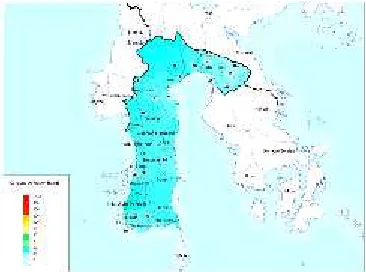
Figure 3. Map of South Sulawesi with a grid of 40 km x 40 km
Equipment and materials used were GPS (Global Positioning System), CR-39 detectors which has been mounted, aluminum ladder, rope, nail and hammer. Meanwhile, as the supporting materials were a leaflet and a digital map of the South Sulawesi with several sections or grids in which 40 km x 40 km per grid.
In this research, the area was divided into several sections or grids. Each grid represented a 40km x 40km area that was installed a passive radon monitor at 6-10 population dependent response. Tracking a passive radon monitors will be installed based on the grid. The passive radon monitor has been hung under the roof or ceiling in the room for 3-4 months. Then the detectors were taken and etched using 6.25 N of NaOH at the temperature of 702 °C in the Memmert oven for 7 hours. These CR-39 detectors were washed with distilled water in a Branson ultrasonic vibrator machine for 5 minutes and then dried in the electric desiccator. After that the CR-39 detector was placed in a glass object and then was read the number of alpha particles tracts using a Nikon microscope with a magnification of 400 times and it was done as many as 25 times reading the viewpoint.
Figure 4. Foto of track radon read by using a microscope.
The value of the indoor radon concentration (CRn) depends on the exposure time (T, days) and the number of track readings (NB and NT) as well as the calibration factor. Calibration factor depends on the magnification of observation with the microscope, and the number of readout standpoints. To make it easier in calculating the indoor radon concentration can be used the following equation (Sutarman et al. 2005; Bunawas & Warsona 2001). background tracks (tracks / 5.0625mm2)
Fk is radon calibration factors (0.00241)
Figure 5. The etching process detectors CR-39 by using 6.25 N NaOH at 702 °C in oven for 7 hours. Sulawesi was installed in 24 groups of attached detector mounting locations with 144 pieces in which 140 (97.22%) pieces were taken back and 4 pieces were not taken or failed. Monitors that could not be taken back (failed) were due to the house occupants were not in place at the time of collecting or other reasons such as breakage detectors due to fall and lost.
Based on data from the number of tracks in CR-39 detector at 25 times reading, it can be determined the value of the indoor radon concentration. Map of the radon concentration was made using MapInfo, based on the indoor radon concentration that were integrated with the measurement location using GPS coordinates. The indoor radon concentration in the South Sulawesi is in the ranged from (3.43±0.24) Bq/m3to (69.38±4.91) Bq/m3with a mean of (32.69±16.22) Bq/m3. These results are almost the same as the measurement results performed at the BATAN Complex in Pasar Jumat, Pasar Minggu and Serpong that are in the ranged from 5.5 Bq/m3 to 55.5 Bq/m3(Affandi et al. 1996).
The research were done in the another location have the results that the indoor radon concentration in Rio de Janeiro City-Brazil were in the range from 5 Bq/m3to 200
Bq/m3(Al-Saleh 2007) and in Riyadh City-Saudi Arabia in
the ranged from 2 Bq/m3to 69 Bg/m3with the average 18.4 Bq/m3(Magalhães et al. 2003). Based on the indoor radon concentration in Rio and Riyadh City that the concentra-tions were not much different in the value of the indoor
Figure 7. Map of the mounting location of passive radon monitors in South Sulawesi.
Figure 8. Map of the concentration of radon in South Sulawesi region.
are still lower even if the doors and the windows of these simple houses are closed. This is because in the simple houses the air exchange can still run well or good air exchange.
These measurement data resulted from the survey are then integrated with the GPS to obtain the map of the radon concentration in the South Sulawesi region that was part of the map of the radon concentration through Indonesia archipelago. The result is presented in Figure 8.
In general the indoor radon concentration data in the South Sulawesi can be seen in Figure 8 where the values of about 50 Bq/m3 except for Makassar which has relatively higher radon concentrations. This may be caused by the fact that the house in Makassar is permanent type and often relatively closed. The highest indoor radon measurement data obtained in the South Sulawesi with the highest population was (69.38 ± 4.91) Bq/m3. This concentration is below the reference
level of radon of 300 Bq/m3 as stated by the
International Commission on Radiation Protection (ICRP) and the International Atomic Energy Agency (IAEA) (Anony-mous, 2004), so that the results of these measurements are still below the values recommended by UNSCEAR (UNSCEAR 2010).
Conclusion
From indoor radon concentration measurement results in the South Sulawesi that is in the range from
(3.43±0.24) Bq/m3to (69.38±4.91) Bq/m3with a mean
value of 32.69 Bq/m3, it can be concluded that this data is still below from the value recommended by UNSCEAR and ICRP. Data obtained will be used as an input in making a map of radon concentration in the South Sulawesi, which is part of the map of radon concentration in all houses in Indonesia.
Suggestion
The radon research needs to be done because according to UNSCEAR that more than 90% acceptance doses of the world's population coming from exposure to natural radiation. The main cause of the magnitude of this contribution is the amount of exposure to radon gas which reaches more than 50%.
Acknowledgements
We thank to the residents living in the selected houses who helped during the installed and the collection of the dosimeters and to the Head of the Centre for Technology of Radiation Safety and Metrology, the National Nuclear Energy Agency for
Indonesian who has sponsored this research project in 2015.
References
Affandi, M., Iskandar, D. & Bunawas, 1996. Radon in
houses in BATAN Complex. In Proceedings of
Scientific Presentations Radiation and Environ-mental Safety.
Al-Saleh, F.S., 2007. Measurements of indoor gamma radiation and radon concentrations in dwellings of
Riyadh City, Saudi Arabia. Applied Radiation and
Isotopes, 65(7), pp. 843–848.
Anonymous, 2004.Radiation, People and the
Environ-ment, Vienna: International Atomic Energy Agency.
Bunawas & Warsona, A., 2001. Distribution of radon concentration in the room and the risk of lung
cancer. In Proceedings of National Seminar on
Occupational Safety, Health and Environment.
Lippmann, M., 2008. Environmental Toxicants: Human
Exposures and Their Health Effects: Third Edition.
Magalhães, M.H. et al., 2003. Radon-222 in Brazil: an outline of indoor and outdoor measurements.Journal of Environmental Radioactivity, 67(2), pp.131–143.
Sutarman et al., 2005. The Determination of the concentrations of radon and thoron using LR-115 detector in DKI Jakarta and surroundings. In
Proceeding of PPI -PDIPTN.