Editorial board Abstracting & indexing Announcements Conferences
Policies and Guidelines
Aims and scope
Case Studies in Thermal Engineering is an open access journal. If articles are accepted for publication, authors are requested to pay an Article Processing Fee. Following payment of this fee, the article is made freely available to all on www.sciencedirect.com.
Case Studies in Thermal Engineering provides a forum for the rapid publication of short, structured Case Studies in Thermal Engineering and related Short Communications. It provides an essential compendium of case studies for researchers and practitioners in the field of thermal engineering and others who are interested in aspects of thermal engineering cases that could affect other engineering processes. The journal not only publishes new and novel case studies, but also provides a forum for the publication of high quality descriptions of classic thermal engineering problems. The scope of the journal includes case studies of thermal engineering problems in components, devices and systems using existing experimental and numerical techniques in the areas of mechanical, aerospace, chemical, medical, thermal management for electronics, heat exchangers, regeneration, solar thermal energy, thermal storage, building energy conservation, and power
generation. Case studies of thermal problems in other areas will also be considered.
Aims and scope
Menu Search in this journal
Case Studies in Thermal Engineering
Open access
5.2
CiteScore
6.268
Impact Factor
Submit your article Guide for authors
Fundamental thermal science and engineering studies are generally not included in the scope of the journal.
Manuscript length should not exceed five journal pages.
Copyright © 2022 Elsevier B.V. or its licensors or contributors.
ScienceDirect® is a registered trademark of Elsevier B.V.
Aims and scope
Abstracting & indexing Announcements Conferences
Policies and Guidelines
Gender diversity of editors
Based on 87.50% responding editors
86% man 14% woman
0% non-binary or gender diverse 0% prefer not to disclose
Editorial board by country Editorial board
Menu Search in this journal
Case Studies in Thermal Engineering
Open access
5.2
CiteScore
6.268
Impact Factor
Submit your article Guide for authors
Huihe Qiu, PhD
View full biography Email this editor
Kian Jon Chua, PhD
View full biography Email this editor
Fangjun Hong, PhD
Email this editor
18 editors and editorial board members in 11 countries/regions 1 China (5)
2 Germany (2) 3 United Kingdom (2)
See more editors by country
Editorial board
Editor-in-Chief
Associate Editors
The Hong Kong University of Science and Technology (Guangzhou), Guangzhou, China
National University of Singapore Department of Mechanical Engineering, Singapore, Singapore
Shanghai Jiao Tong University - MinHang Campus, Shanghai, China
Petr A Nikrityuk, PhD
Email this editor
Atul Srivastava, PhD
Email this editor
Yan Su
Email this editor
Yuying Yan, PhD
View full biography Email this editor
Ying Wang
Email this editor
Daniel Attinger, PhD
Bai Bofeng, PhD
Norbert Huber, PhD Managing Editor
Editorial Board Members
University of Alberta Department of Chemical and Materials Engineering, Edmonton, Alberta, Canada
Indian Institute of Technology Bombay, Mumbai, India
University of Macau - Department of Electromechanical Engineering, Macau, Macao
University of Nottingham, Nottingham, United Kingdom
University of Shanghai for Science and Technology School of Energy and Power Engineering, Shanghai, China
Iowa State University, Ames, Iowa, United States of America
Xi'an Jiaotong University School of Energy and Power Engineering, Xian, China
Weihenstephan-Triesdorf University of Applied Sciences, Freising, Germany
James Klausner, PhD
Gangolf Kohnen, PhD
Antonio Ferreira Miguel, PhD
David Reay, MSc
An-Bang Wang, Dr.-Ing.
Xishi Wang, PhD
Jesús Xaman†, PhD
Copyright © 2022 Elsevier B.V. or its licensors or contributors.
ScienceDirect® is a registered trademark of Elsevier B.V.
University of Florida, Gainesville, Florida, United States of America
Baden-Wurttemberg Cooperative State University Mosbach, Mosbach, Germany
University of Évora, Evora, Portugal
David Reay and Associates, Whitley Bay, United Kingdom
National Taiwan University, Taipei, Taiwan
University of Science and Technology of China, Hefei, Anhui, China
National Center for Research and Technological Development Department of Mechanical Engineering, Cuernavaca, Morelos, Mexico
All members of the Editorial Board have identified their affiliated institutions or organizations, along with the
corresponding country or geographic region. Elsevier remains neutral with regard to any jurisdictional claims.
Aims and scope Editorial board
Announcements Conferences
Policies and Guidelines
Abstracting & indexing
Science Citation Index Expanded Web of Science
Directory of Open Access Journals (DOAJ) INSPEC
Copyright © 2022 Elsevier B.V. or its licensors or contributors.
ScienceDirect® is a registered trademark of Elsevier B.V.
Abstracting & indexing
Menu Search in this journal
Case Studies in Thermal Engineering
Open access
5.2
CiteScore
6.268
Impact Factor
Submit your article Guide for authors
Case Studies in Thermal Engineering
https://www.scimagojr.com/journalsearch.php?q=21100262580&tip=sid&clean=0 1/7
also developed by scimago: SCIMAGO INSTITUTIONS RANKINGS Scimago Journal & Country Rank
Home Journal Rankings Country Rankings Viz Tools Help About Us
Case Studies in Thermal Engineering
COUNTRY United Kingdom
SUBJECT AREA AND CATEGORY
Chemical Engineering Engineering
PUBLISHER
Elsevier BV
PUBLICATION TYPE Journals
ISSN 2214157X
COVERAGE
2013- 2020 Enter Journal Title, ISSN or Publisher Name
Universities and research institutions in United Kingdom
Fluid Flow and Transfer Processes Engineering (miscellaneous)
vivo X70 Pro
Daftar vivo VISION+ Photography & Short Film Awards! Dapatkan hadiah total ratusan juta.
vivo Indonesia
Open
Ads by
Stop seeing this ad Why this ad?
Ads by
St i thi d
Case Studies in Thermal Engineering
https://www.scimagojr.com/journalsearch.php?q=21100262580&tip=sid&clean=0 2/7
SCOPE
Case Studies in Thermal Engineering provides a forum for the rapid publication of short, structured Case Studies in Thermal Engin Short Communications. It provides an essential compendium of case studies for researchers and practitioners in the eld of therm others who are interested in aspects of thermal engineering cases that could affect other engineering processes. The journal not o and novel case studies, but also provides a forum for the publication of high quality descriptions of classic thermal engineering pro of the journal includes case studies of thermal engineering problems in components, devices and systems using existing experime techniques in the areas of mechanical, aerospace, chemical, medical, thermal management for electronics, heat exchangers, regen thermal energy, thermal storage, building energy conservation, and power generation. Case studies of thermal problems in other ar considered.
Join the conversation about this journal
vivo X70 Pro
Dapatkan hadiah ratusan juta! Ikuti vivo VISION+ Photography & Short Film Awards 2021.
vivo Indonesia
Open Stop seeing this ad
Case Studies in Thermal Engineering
https://www.scimagojr.com/journalsearch.php?q=21100262580&tip=sid&clean=0 3/7
vivo X70 Pro
Daftar vivo VISION+ Photography & Short Film Awards! Dapatkan hadia total ratusan juta.
vivo Indonesia Open
Ads by
Stop seeing this ad Why this ad?
We'll try not to show that ad againAd closed by
1
Thermal Science and Engineering Progress GBR
82%
similarity
2
Isi Bilimi Ve Teknigi Dergisi/
Journal of Thermal Science TUR
68%
similarity
3
Journal of Thermal Engineering TUR
68%
similarity
4
Internationa and Technol ITA
6
s
SJR
The SJR is a size-independent prestige indicator that ranks journals by their 'average prestige per article'. It is based on the idea that 'all citations are not created equal'. SJR is a measure of scienti c in uence of journals that accounts for both the number of citations received by a journal and the importance or prestige of the journals where such citations come from It measures the scienti c in uence of the average article in a journal it expresses how central to the global
Total Documents
Evolution of the number of published documents. All types of documents are considered, including citable and non citable documents.
Year Documents 2013 8
2014 47 2015 43 2016 51
Citations per document
This indicator counts the number of citations received by documents from a journal and divides them by the total number of documents published in that journal. The chart shows the evolution of the average number of times documents published in a journal in the past two, three and four years have been cited in the current year.
The two years line is equivalent to journal impact factor
™ (Thomson Reuters) metric.
Cites per document Year Value Cites / Doc. (4 years) 2013 0.000 Cites / Doc. (4 years) 2014 1.000 Cites / Doc. (4 years) 2015 2.836 Cites / Doc. (4 years) 2016 3.418 Cites / Doc. (4 years) 2017 3.550 Cites / Doc. (4 years) 2018 4.005 Cites / Doc. (4 years) 2019 4.870 Cites / Doc. (4 years) 2020 4.933 Cites / Doc. (3 years) 2013 0.000 Cites / Doc. (3 years) 2014 1.000 Total Cites Self-Cites
Evolution of the total number of citations and journal's self-citations received by a journal's published documents during the three previous years.
Journal Self-citation is de ned as the number of citation from a journal citing article to articles published by the same journal.
Cites Year Value f
External Cites per Doc Cites per Doc
Evolution of the number of total citation per document and external citation per document (i.e. journal self- citations removed) received by a journal's published documents during the three previous years. External citations are calculated by subtracting the number of self-citations from the total number of citations received by the journal’s documents.
Cit Y V l
Case Studies in Thermal Engineering
https://www.scimagojr.com/journalsearch.php?q=21100262580&tip=sid&clean=0 4/7
Metrics based on Scopus® data as of April 2021
Vedat Keskin 4 months ago Hi,
I am wondering the abstracting/indexing of the journal, is it 'Sciences Citation Index' OR 'Social Sciences Citation Index'?
Looking forward for your answer.
reply
documents signed by researchers from more than one country; that is including more than one country address.
Year International Collaboration
three year windows vs. those documents other than research articles, reviews and conference papers.
Documents Year Value
Cited documents Uncited documents
Ratio of a journal's items, grouped in three years windows, that have been cited at least once vs. those not cited during the following year.
Documents Year Value
Uncited documents 2013 0 Uncited documents 2014 5 Uncited documents 2015 11
U it d d t 2016 21
←Show this widget in your own website Just copy the code below and paste within your html code:
<a href="https://www.scimag
SCImago GraphicaSCImago GraphicaSCImago Graphica Explore, visuallyExplore, visuallyExplore, visually
communicate and makecommunicate and makecommunicate and make sense of data with our sense of data with our sense of data with our newnewnew free toolfree toolfree tool...
Get it
CiteScore
.
=Calculated on May,
CiteScoreTracker
.
=Last updated on January, • Updated monthly
Source details
Open Access
Case Studies in Thermal Engineering
Scopus coverage years: from to Present Publisher: Elsevier
ISSN: - X
Subject area:
Chemical Engineering: Fluid Flow and Transfer Processes Engineering: Engineering (miscellaneous)Source type: Journal
View all documents
▻
Set document alert
Save to source list Source HomepageCiteScore
.
SJR
.
SNIP
.
CiteScore CiteScore rank & trend Scopus content coverage
i Improved CiteScore methodology
CiteScore counts the citations received in - to articles, reviews, conference papers, book chapters and data papers published in - , and divides this by the number of publications published in - . Learn more
▻
×
, Citations - Documents -
, Citations to date , Documents to date
CiteScore rank
Category Rank Percentile
Chemical Engineering
/ th
Engineering
/ th
Fluid Flow and Transfer Processes
Engineering (miscellaneous)
View CiteScore methodology
▻
CiteScore FAQ▻
Add CiteScore to your site🔗
About Scopus
What is Scopus Content coverage Scopus blog Scopus API Privacy matters
Language
⽇本語に切り替える 切换到简体中文 切換到繁體中文 Русскийязык
Customer Service
Help Contact us
Terms and conditions ↗ Privacy policy ↗
Author search Sources Create account Sign in
Source details
Open Access
Case Studies in Thermal Engineering
Scopus coverage years: from to Present Publisher: Elsevier
ISSN: - X
Subject area:
Chemical Engineering: Fluid Flow and Transfer Processes Engineering: Engineering (miscellaneous)Source type: Journal
View all documents
▻
Set document alert
Save to source list Source HomepageCiteScore
.
SJR
.
SNIP
.
CiteScore CiteScore rank & trend Scopus content coverage
Export content for categoryCase Studies in Thermal Engineering .
⋆
CiteScore rank
In category:th percentile
⋆
Rank Source title CiteScore Percentile⋆
. th percentile⋆
. th percentile⋆
. th percentile⋆
. th percentile⋆
. th percentile⋆
. rd percentile⋆
. nd percentile⋆
. th percentile⋆
. th percentile⋆
. th percentile⋆
. th percentile⋆
. th percentile⋆
. th percentile⋆
. rd percentile⋆
. nd percentile
Fluid Flow and Transfer Proces… ACS Sensors
International Journal of Heat and Mass Transfer Advances in Nano Research
Engineering Science and Technology, an International Journal
Journal of King Saud University, Engineering Sciences
Experimental Thermal and Fluid Science South African Journal of Chemical Engineering Journal of Aerosol Science
Case Studies in Thermal Engineering International Journal of Multiphase Flow Thermal Science and Engineering Progress Reaction Chemistry and Engineering Propulsion and Power Research Journal of Flow Chemistry Physics of Fluids
CiteScore trend
CiteScore value Percentile in category
CiteScore value Percentile in category
Author search Sources Create account Sign in
1/13/22, 10:58 AM Web of Science Master Journal List - Journal Profile
https://mjl.clarivate.com/journal-profile 1/7
Master Journal List Welcome
Search Journals Match Manuscript Downloads Help Center
Se
Check out our new metric to help you evaluate
journals! Dismiss Learn More
CASE STUDIES IN THERMAL ENGINEERING
ISSN / eISSN 2214-157X
Publisher ELSEVIER, RADARWEG 29, AMSTERDAM, NETHERLANDS, 1043 NX
Share This Journal
About
Case Studies in Thermal Engineering provides a forum for the rapid publication of short, structured Case Studies in Thermal Engineering and related Short Communications. It provides an essential compendium of case studies for researchers and practitioners in the field of thermal engineering and others who are interested in aspects of thermal engineering cases that could affect other engineering processes. The journal not only publishes new and novel case studies, but also provides a forum for the publication of high quality descriptions of classic thermal engineering problems. The scope of the journal includes case studies of thermal engineering problems in components, devices and systems using existing experimental and numerical
techniques in the areas of mechanical, aerospace, chemical, medical, thermal management for electronics, heat exchangers, regeneration, solar thermal energy, thermal storage, building energy conservation, and power generation. Case studies of thermal problems in other areas will also be considered.
General Information
Journal Website Publisher Website
1st Year Published 2013
Visit Site
Visit Site About
General Information Web of Science Coverage Journal Citation Report Open Access Information Preprint Information Peer Review Information
Return to Search Results
5
Volume 22
December 2020 Download full issue
Previous vol/issue Next vol/issue
Receive an update when the latest issues in this journal are published Sign in to set up alerts
Short communication Open access
Effect of geometry of tank on the thermal characteristics of waxy crude oil during its static cooling Jian Zhao, Junyang Liu, Dongjie Qu, Hang Dong, Weiqiang Zhao
Article 100737
Download PDF Article preview
Short communication Open access
Optimal cascade phase change regenerator for waste heat recovery in a batch industrial dryer Gianluca Valenti, Camilla Nicol Bonacina, Abdullah Bamoshmoosh
Article 100734
Download PDF Article preview
Short communication Open access
Menu Search in this journal
Case Studies in Thermal Engineering
Open access
5.2
CiteScore
6.268
Impact Factor
Submit your article Guide for authors
Visualization and heat transfer in a closed loop thermosyphon with a check valve S. Thongdaeng, N. Pipatpaiboon, A. Donmuang
Article 100758
Download PDF Article preview
Short communication Open access
Analysis on feasibility of a novel cryogenic heat exchange network with liquid nitrogen regeneration process for onboard liquefied natural gas reliquefaction
Zhe Wang, Fenghui Han, Yulong Ji, Wenhua Li Article 100760
Download PDF Article preview
Short communication Open access
Effect of twisted turbulator perforated ratio on thermal and hydraulic performance of magnetic nanofluids in a novel thermal exchanger system
Fan Fan, Cong Qi, Qi Liu, Mohsen Sheikholeslami Article 100761
Download PDF Article preview
Short communication Open access
Numerical study on turbulent heat transfer performance of twisted oval tube with different cross sectioned wire coil
Chulin Yu, Haiqing Zhang, Youqiang Wang, Min Zeng, Bingjun Gao Article 100759
Download PDF Article preview
Short communication Open access
Peak indoor air temperature reduction for buildings in hot-humid climate using phase change materials Zeyad Amin Al-Absi, Mohd Isa Mohd Hafizal, Mazran Ismail, Ahmad Mardiana, Azhar Ghazali
Article 100762
Download PDF Article preview
Short communication Open access
Utilization of rice husk biomass in the conventional corn dryer based on the heat exchanger pipes diameter
Ida Bagus Alit, I. Gede Bawa Susana, I. Made Mara Article 100764
Download PDF Article preview
Short communication Open access
Limitations of EnergyPlus in analyzing energy performance of semi-transparent photovoltaic modules Sun-Hye Mun, Jeonga Kang, Younghoon Kwak, Young-Sun Jeong, ... Jung-Ho Huh
Article 100765
Download PDF Article preview
Short communication Open access
Computational evaluation of thermal behavior of a wickless heat pipe under various conditions Ayad M. Al Jubori, Qusay A. Jawad
Article 100767
Download PDF Article preview
Short communication Open access
Design and thermo-economic comparisons of large scale solar absorption air conditioning cycles Adil Al-Falahi, Falah Alobaid, Bernd Epple
Article 100763
Download PDF Article preview
Short communication Open access
Solar cooking in Ethiopia: Experimental testing and performance evaluation of SK14 solar cooker Bassazin Ayalew Mekonnen, Kassa Wudineh Liyew, Muluken Temsgen Tigabu
Article 100766
Download PDF Article preview
Short communication Open access
Study on the flow and heat dissipation of water-based alumina nanofluids in microchannels Chunquan Li, Jian Huang, Yuling Shang, Hongyan Huang
Article 100746
Download PDF Article preview
Short communication Open access
Solar process heat integration in lead mining process Shahjadi Hisan Farjana, M.A.Parvez Mahmud, Nazmul Huda Article 100768
Download PDF Article preview
Short communication Open access
Case Studies in Thermal Engineering 22 (2020) 100764
Available online 17 October 2020
2214-157X/© 2020 The Author(s). Published by Elsevier Ltd. This is an open access article under the CC BY license
(http://creativecommons.org/licenses/by/4.0/).
Utilization of rice husk biomass in the conventional corn dryer based on the heat exchanger pipes diameter
Ida Bagus Alit , I. Gede Bawa Susana
*, I. Made Mara
Department of Mechanical Engineering, Faculty of Engineering, University of Mataram, Jl. Majapahit No. 62, Mataram, Nusa Tenggara Barat, 83125, Indonesia
A R T I C L E I N F O Keywords:
Heat exchanger Conventional dryer Biomass Rice husk
A B S T R A C T
Utilizing rice husk biomass for drying corn is an alternative solution for drying corn in direct sunlight. This is done through the conversion of thermal energy with heat-exchanging furnaces.
This model provides opportunity that the drying process is independently of the weather con- dition and gain more hygienic products. In addition, it creates energy independence through the use of waste that has an energy value is quite high. Utilization of rice husks by optimizing the performance of heat exchangers through the application of stainless-steel pipes. The diameter of the pipes varies, namely 1 inch, ¾ inch, and ½ inch. The conventional dryer design has di- mensions of drying chamber (600 ×536 x 536) mm3 and furnace (800 ×500 x 500) mm3. Nine of heat exchanger pipes are arranged in parallel to one air flow path. The results show the utilization of rice husk biomass provides satisfactory performance on drying 4 kg of corn. The average temperature of the drying chamber, which is based on the outlet temperature of the heat exchanger pipes diameter of 1 inch, ¾ inch, and ½ inch are 91.20 ±0.70 ◦C, 73.95 ±0.65 ◦C, and 58.27 ±0.48 ◦C, respectively.
1. Introduction
Corn is an important food ingredient besides wheat and rice. In Indonesia, the corn is also used as animal feed ingredients, seeds and processed industrial materials. In order to maintain the quality of the corn, post-harvest handling is prioritized in the drying process.
Drying of corn is needed to reduce the moisture content to reach the equilibrium moisture content. Some advantages of the drying process are reducing packaging costs and cooling requirements; reducing product spoilage and damage; cheaper in terms of trans- portation and storage costs; and guarantee the availability of seasonal products [1]. As animal feed, the corn quality must guarantee the health and peace of the community, with a maximum moisture content of 14% for the first quality and 16% for second quality [2].
To reduce the corn moisture content from 29% to 14% and to avoid damage, drying using direct sunlight is carried out from 08.00 to 11.30. When the weather is sunny, it takes about three days, and it will be seven days during the rainy season, it is done by fumigation as well [3].
The process of drying corn is carried out on a household scale by drying in the direct sunlight. It has an impact on dry products that it requires large areas, susceptible to animal interference, unhygienic, experiencing obstacles cloudy or rainy weather, time and the temperature less than optimal. The application of drying chamber is a solution by utilizing renewable energy sources. The energy source used is easily obtained in the vicinity of the community’s residence. One of them is rice husk biomass. Rice husk produced from
* Corresponding author.
E-mail address: [email protected] (I.G.B. Susana).
Contents lists available at ScienceDirect
Case Studies in Thermal Engineering
journal homepage: http://www.elsevier.com/locate/csite
https://doi.org/10.1016/j.csite.2020.100764
Received 10 June 2020; Received in revised form 28 September 2020; Accepted 10 October 2020
Case Studies in Thermal Engineering 22 (2020) 100764
2
the rice milling process by 20–30%, if it is not utilized, it can cause problems to the environment. The conventional dryer is used to dry corn through conversion of rice husk biomass to thermal energy. This is an effort to anticipate cloudy or rainy weather.
Biomass is organic materials derived from living bodies in the form of plant, animal and agricultural waste. Biomass can be used as an alternative energy to replace fossil energy. Indonesia has huge potential of biomass as a renewable energy. One of them is rice husk.
Rice husk is a waste from rice production. Rice is the main foodstuff for most of Indonesia’s population. Hope for the fulfillment of electricity, especially in rural areas can be done through the process of energy conversion. Energy conversion with gasification technology of 30% can produce 49.5 MW h of electrical energy [4]. Rice husk is an important energy source and it has a good potential energy to be converted into electricity by gasification methods [5]. Based on data from 2001 to 2012 in Indonesia, the potential energy of rice husk to become electrical energy is around 39.07 GW h and electrical power around 4.46 MW [6]. The potential of electrical energy that can be generated from bioenergy, especially rice husks, is estimated to reach 9.8 GW, and it is estimated that only 22% of this potential energy can be realized in 2030 [7].
Experiments using rice husks as fuel were carried out on rectangular fluidized bed combustors. The results showed a stable flame, low emissions, and high combustion efficiency of 99.2% [8]. Rice husk had a fairly high heating value which was equivalent to a half of the coal heat value of 11–15.3 MJ/kg [9] and 12.3 MJ/kg [10]. Biomass was used as fuel in the drying process through an energy conversion process. Rice husk was a secondary crop that refers to a byproduct. This product was used for energy production with a net calorific value of 12–16 MJ/kg [11]. Especially in rural areas, rice husk was considered as waste and pollutants for the environment.
Households used rice husk for both drying and cooking. Rice husk can be used as a renewable energy source if the properties and logistics factors are improved [12]. However, the process of drying food to be efficient and effective should use a furnace with a heat exchanger.
A heat exchanger was applied to the furnace for the conversion of rice husk to thermal energy. To implement heat transfer between two fluids which have different temperatures and are separated by a wall was using a heat exchanger [13]. The application of heat exchangers and biomass can be carried out for the process of drying palm fibers. This study used a gas to gas heat exchanger model which was placed above the biomass combustion chamber with flue gas area and cold air flow at the top position [14]. Shell and tube type of heat exchangers with aligned arrangement of pipe were placed separately from the furnace that were used for anchovy dryers.
This study used coconut fiber biomass and produces an average temperature for the process of drying anchovies in the drying chamber of 41.30 ◦C [15]. Rice husk was used to dry paddy through the development of downdraft furnaces to overcome uneven temperatures with HHV and LHV rice husks respectively 14.8 MJ/kg and 13.3 kcal/kg [16]. The 1 kg of rice husk used directly to boil 2 L of water and it required 15 min rather than 21 min by using 1.2 kg of firewood [17].
To increase the drying temperature is obtained by utilizing the rice husk biomass energy source. This is achieved by using a dryer with the addition of a heat exchanger in the furnace. Average temperature and the highest temperature in the drying chamber were 72.79 ◦C and 109.20 ◦C, respectively. This temperature is obtained in a dryer with a furnace equipped with a heat exchanger. The heat exchanger is made of black steel pipes [18]. This research was carried out with no-load drying room. The pipes are arranged in parallel with one-pass fluid flow. The dryer with heat exchangers furnaces is very suitable for the utilization of rice husk biomass. Heat ex- changers by arranging pipes triangularly are used as standard agricultural techniques in the Philippines. This model is used in furnaces with rice husk fuel indirectly [19]. This aims to prevent the exhaust gases from burning rice husk entering the drying chamber along with the air. Research [20] was carried out to optimize the transfer of heat from the heat exchanger into the drying chamber. The research was carried out by varying the number of holes in the rice husk burning stove. The results show that the time needed to dry 4 kg of corn from 19% to 12% moisture content in the drying chamber is 58 min. The study of dryer using variations in the diameter of the heat exchanger pipes for the utilization of rice husk biomass still needs to be optimized.
2. Materials and methods
This study aims to examine the effect of the diameter of the heat exchanger pipes on the conversion energy process of rice husk
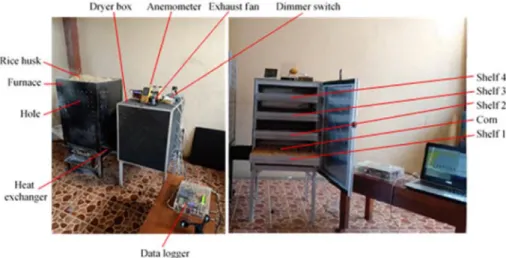
Fig. 1.Conventional dryer design with heat exchanger.
I.B. Alit et al.
Case Studies in Thermal Engineering 22 (2020) 100764
3
biomass. The heat exchanger is placed at the bottom of the furnace. The furnace and drying chamber are in separate position. This dryer model adopts the results of the previous study of Susana et al. [18,20]. The furnace has dimensions of 800 mm ×500 mm ×500 mm, the stand is 400 mm high and it is made of steel sheet plates. The furnace wall consists of 468 holes. The diameter and the distance between the holes are 1 cm and 5 cm, respectively. Furthermore, the diameter of the furnace ash hole is 12 mm and the heat exchanger pipes are stainless steel pipe.
The weight of burned rice husk biomass in the furnace is the same for all variations in the diameter of the heat exchanger pipes. The process of burning rice husks produces heat. This heat will be transferred to the air flowing in the pipes. Furthermore, this hot air flows into the drying chamber. The design of the dryer for this study is presented in Fig. 1.
Drying chamber is made of aluminum with 4 shelves. Drying chamber insulation is made of rubber with a thickness of 3 mm. The dimensions of the drying chamber are 600 mm ×536 mm x 536 mm, with 400 mm footrest. Drying chamber load is constant with 4 kg of corn with distribution on each shelf is 1 kg. The initial moisture content of corn is set at 19%. The hot air is circulating with forced convection system by mean of an exhaust-fan. Exhaust-fan is placed in the chimney of the drying chamber with a constant air velocity of 2 m/s. The heat exchangers are varied based on the pipe diameter such as 1 inch, ¾ inch, and ½ inch. Drying performance is measured based on drying temperature and moisture content of the dried corn. Drying time lasts for 240 min. This study uses measuring devices such as data loggers, K type thermocouples, digital scales, anemometers, and moisture meters. Fig. 2 shows a) the furnace with heat exchanger pipe, and b) rice husk.
Rice husk is a biomass made of lignocellulose. Rice husk is produced around 20% of the weight of paddy. Rice husk consists of silica (15%–20%), cellulose (50%), lignin (25%–30%), moisture (10%–15%), and bulk density of 90–150 kg/m3 [21,22]. The silica con- tained in rice husks has amorphous properties. Amorphous silica in rice husks can undergo transformation into crystalline silica at a thermal process >700 ◦C [23]. Burning rice husks in an open area will produce ash containing crystalline silica. The effect of crystalline silica is that it can be harmful to health and is carcinogenic. In addition, the inhaled amorphous silica for 12–18 months at a level of 6.9–9.9 mg/m can cause respiratory irritation [24].
Rice husk which has high cellulose produces an even and a stable combustion. So, the rice husk is good to use as an energy source.
Ultimate and proximate analysis of rice husk contains Carbon (36.74%), Hydrogen (5.51%), Oxygen (42.55%), Nitrogen (0.28%), and Sulfur (0.55%) [25]. The CO2 emission of rice husk is relatively the same compared to fossil fuels [26]. The testing method in this study is shown in Fig. 3.
The measurement of research data was carried out for 240 min drying time with corn moisture content measurements carried out every 60 min. The mass of rice husk biomass is constant, without adding any amount of biomass during the test. The observed data are ambient temperature, heat exchanger pipes temperature, drying chamber temperature, initial mass and dried mass of corn. The initial mass of corn, mt (kg) and dried mass of corn, mk (kg) are used to calculate moisture content, Ka (%) [27–29].
Ka= mt− mk
mt
x100% (1)
The dried mass of corn, mk is obtained by heating the corn at a temperature of 105–110 ◦C for 3 h or until there is no weight loss anymore. The mass of water lost due to the drying process is the mass of water that is evaporated, mw (kg). This is influenced by the initial mass of corn, mt and corn mass after drying, mp (kg).
mw =mt – mp (2)
The heat used for drying, Q (kJ) [30].
Q =Q1 +Q2 (3)
Q1 is the amount of heat used to heat the material and raise the temperature of the water in the material or the sensible heat of corn (kJ). Q2 is the amount of heat that is used to evaporate moisture content of material or the latent heat of water evaporation (kJ) [29, 31].
Fig. 2. a) The furnace with heat exchanger pipe, b) rice husk.
I.B. Alit et al.
Case Studies in Thermal Engineering 22 (2020) 100764
4
Q1=mt.Cpb(Tb− Ta) (4)
Q2=mwx hfg (5)
Cpb is specific heat of corn (kJ/oC). Tb is the temperature of corn (oC). Ta is the ambient temperature (oC). hfg is latent heat of water evaporation (kJ/kg).
q is energy conversion of air to the dried corn (kJ) [13].
q= ρu.Vu.Cpu(Tin− Tout) (6)
ρu is density of drying air (kg/m3), Cpu is specific heat of air (kJ/kgoC). Tin and Tout is the temperature of inlet air and the temperature of outlet air/flue gas.
The ratio of Q with q is the drying efficiency as presented in equation (7) [32,33].
Fig. 3. Testing of corn samples in conventional dryers based on the diameter of the heat exchanger pipe.
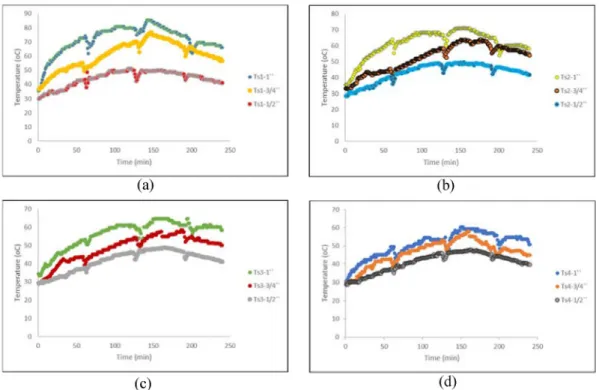
Fig. 4.Distribution of drying temperature on each shelf (Ts) for each variation of the diameter of the heat exchanger pipe on a) shelf 1 (Ts1); b) shelf 2 (Ts2); c) shelf 3 (Ts3); and d) shelf 4 (Ts4).
I.B. Alit et al.
Case Studies in Thermal Engineering 22 (2020) 100764
5
η= Q
q x100% (7)
Drying rate, m˙p (kg/s) is the ratio between the mass of evaporated water, mw (kg) and the drying time, t (seconds) [34,35].
m˙p = mw
t (8)
Error analysis is done to analyze the uncertainty of experiment. Error analysis is an uncertainty to indicate the measurement deviation of the true value. Test results are stated along with uncertainties x=x+Δx units in the form of absolute error. x is the average value of physical of a number of repeated measurements or the best single measurement results. Δx is the measurement uncertainty describing the deviation of measurement results from true value. The physical quantity obtained through the calculation of equations using the error propagation methods.
3. Results and discussions
The test was carried out by drying the corn from an initial moisture content of 19% in each of the heat exchanger pipes diameter.
The drying temperature data has a similar trend both in 1 inch, ¾ inch, and ½ inch pipe diameter as presented in Fig. 4.
Fig. 4 shows the temperature distribution on a) shelf 1 (Ts1), b) shelf 2 (Ts2), c) shelf 3 (Ts3), d) shelf 4 (Ts4). This temperature distribution is for each variation of 1 inch, ¾ inch, and ½ inch heat exchanger pipes diameter. On shelf 1, the 1-inch diameter pipe produces the highest temperature (Ts1-1′′) compared to ¾ inch diameter (Ts1-3/4′′) and ½ inch (Ts1-1/2′′). This result is in line with [36] which illustrates that increasing the diameter of the pipe increases the heat transfer area of the heat exchanger. Increasing the heat transfer area will increase the rate of heat transfer. The drying temperature on the diameter of 1-inch heat exchanger pipes reaches 85.18 ±0.29 ◦C on shelf 1 (Ts1), 71.07 ±0.12 ◦C on shelf 2 (Ts2), 64.69 ±0.11 ◦C on shelf 3 (Ts3), and 60.31 ±0.42 ◦C on shelf 4 (Ts4). Shelf 1 is closest to the output temperature of the heat exchanger pipes or the drying chamber input temperature. This gives the highest temperature distribution effect compared to shelf 2, shelf 3, and shelf 4. The smallest temperature distribution in the drying chamber occurs in shelf 4. This is due to the heat is absorbed beforehand by the corn on the shelf below. In addition, the position of shelf 4 is far from the heat source. The same condition also occurs in the diameter of the heat exchanger pipes ¾ inch and ½ inch. This is in line with the research [37], which states that the heating source which is close to the shelf will directly contact the dried product.
This gives the effect of the highest drying temperature.
The increasing of drying temperature as a result of increasing inlet temperature (Tin) as presented in Fig. 5.
The inlet temperature is the hot air that comes out of the heat exchanger pipes. This hot air flows into the drying chamber. The hot air is produced by the heat transfer process of burning rice husk biomass in the furnace to the air which flows in the heat exchanger pipes. The test results show that the ambient temperature (Ta) has no significant changes. The average ambient temperature at 1 inch,
¾ inch, and ½ inch diameter pipes is 29.21 ±0.05 ◦C, 29.81 ±0.05 ◦C, and 29.79 ±0.02 ◦C, respectively. The highest inlet tem- perature occurs in the diameter of 1-inch (Tin-1′ ′) heat exchanger pipe. The highest drying temperature of corn occurs in this condition.
The drying chamber inlet temperature is based on the outlet temperature of the heat exchanger pipe. The average inlet temperature at diameters of 1 inch, ¾ inch, and ½ inch is 91.20 ±0.70 ◦C, 73.95 ±0.65 ◦C, and 58.27 ±0.48 ◦C, respectively. While, the average drying temperature (Tad) in the drying chamber are 58.71 ±0.50 ◦C, 51.11 ±0.51 ◦C, and 42.65 ±0.36 ◦C, respectively. The pattern of temperature distribution is shown in Fig. 5 follows the phenomenon of burning of rice husk biomass in the furnace. At the beginning of the combustion process, there is evaporation of rice husk moisture content so that, the temperature has not significantly increase.
Fig. 5. The phenomenon of temperature distribution on variations in the diameter of the heat exchanger pipes.
I.B. Alit et al.
Case Studies in Thermal Engineering 22 (2020) 100764
6
The temperature increases significantly as the rice husks begin to turn into charcoal. The highest temperature occurs when the rice husk is in the form of charcoal. Because there is no additional biomass in the furnace, so, the temperature will decrease. This happens because the rice husk burns to ashes. Biomass undergoes a drying process to reduce moisture content before further burning [38] and the moisture content of rice husk is 10% [39]. The process of drying 4 kg of corn for 240 min in the diameter of heat exchanger pipes of 1 inch (Tout-1′′), ¾ inch (Tout-3/4′′), ½ inch (Tout-1/2′′) and produces an average temperature of 50.76 ±0.48 ◦C, 46.03 ±0.43 ◦C, and 40.26 ±0.35 ◦C, respectively. Estimate uncertainty component calculated from repeated measurement. Error analysis on the results of temperature measurements using the method in Bevington and Robinson [40].
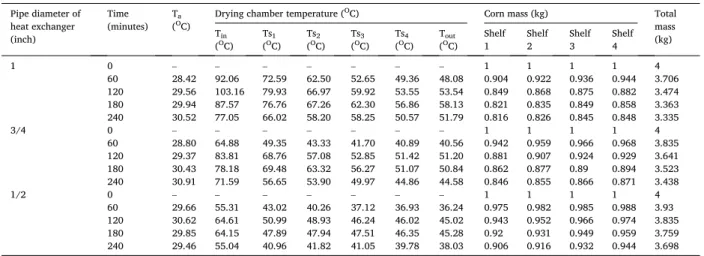
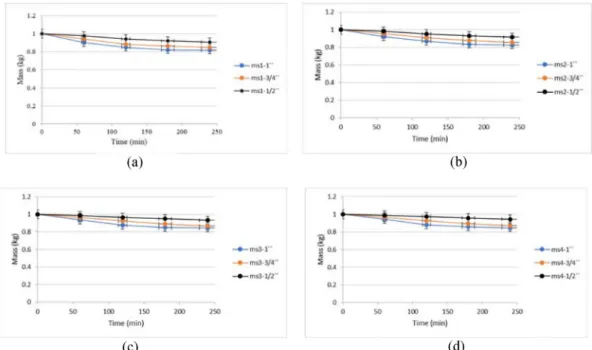
The changes in corn mass due to the drying process respect to the influence of the diameter of the heat exchanger pipes as presented in Table 1.
Measurement data in Table 1 are measured every 60 min. This is to reduce the process of opening and closing the drying chamber.
The process of opening and closing affects the drying temperature. This effect can be seen in Figs. 4 and 5. Every 60 min, shows that the temperature distribution is decreased. This follows the pattern of the corn mass measurements performed every 60 min. The corn experiences a different mass reduction on each shelf in the drying chamber. The reduction in mass of corn follows the drying tem- perature distribution pattern. The highest mass reduction of corn occurs on shelf-1. This is because the position of shelf-1 is very close to the outlet temperature of the heat exchanger pipes. The further the shelves position from the heat source, the lower the mass reduction of corn.
Fig. 6 clearly illustrates the changes in mass of corn on each shelf for the variation of the diameter of the heat exchanger pipes, as presented in Table 1. The highest reduction in corn mass occurs at a diameter of 1 inch (ms-1′) compared to ¾ inch (ms-3/4 ′′), and ½ inch (ms-1/2′′). The greater the diameter of the heat exchanger pipes has implications for the higher outlet temperature of the heat exchanger pipes. This condition reflects the difference between the two temperatures, which causes the greater heat absorbed by corn.
Based on the initial mass as shown in Table 1 and Fig. 6, the ratio of corn moisture content obtained respect to the variation of the diameter of the heat exchanger pipes 1 inch, ¾ inch, and ½ inch, as shown in Fig. 7. The initial moisture content of corn is 19%. Based on the test results in the diameter of 1 inch, ¾ inch, and ½ inch obtained that the final moisture content of corn is 2.85 ±0.030%, 5.8 ± 0.029%, and 12.39 ±0.027%, respectively. The calculation used the standard uncertainty of sample moisture content [41]. The heat exchanger with a 1-inch diameter pipe produces the highest reduction in corn moisture content. The percentage reduction in moisture content in the 1-inch pipe diameter by 85% is much higher than the diameter of the ¾ inch pipe by 70% and ½ inch by 35%. Reducing the drying temperature causes a slower reduction in moisture content.
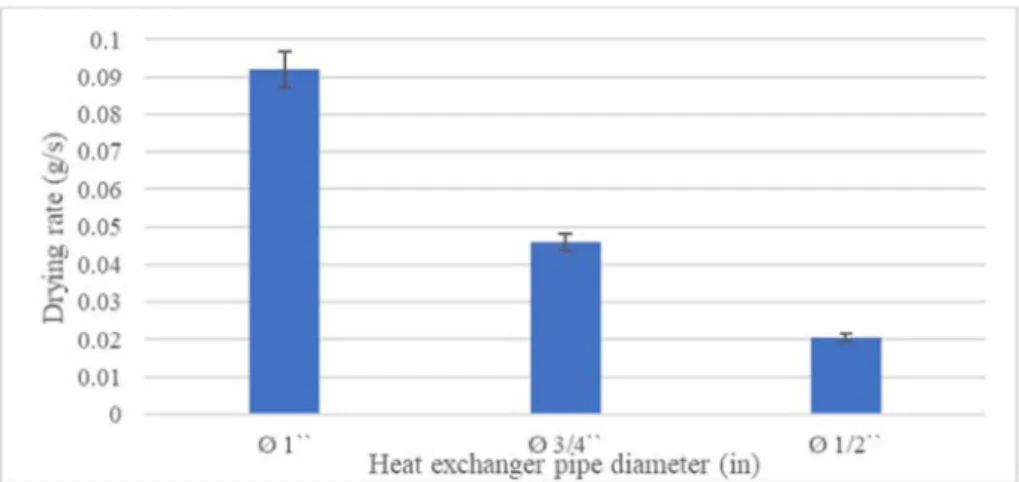
To reach the corn moisture content of 12% [20] from the initial 19% moisture content requires the shortest time, 58 min on the conventional corn dryer with 1-inch diameter of heat exchanger pipes. However, if the diameter of the heat exchanger pipes is ¾ inch and ½ inch, it requires 100 min and 258 min, respectively. This is influenced by the drying temperature. The lower drying temperature causes a longer drying time. Drying at a lower temperature requires a longer operating time [42]. The drying efficiency on the use of 1 inch, ¾ inch, and ½ inch heat exchanger pipes, are 28.8 ±0.7%, 24.7 ±0.6%, and 13.9 ±0.4%, respectively. Error analysis is evaluated in percentage uncertainty using method in Sansaniwal and Kumar [43]. Drying rate is presented in Fig. 8.
Fig. 8 shows that the drying rate at 1-inch heat exchanger pipes diameter is faster than ¾ inch and ½ inch. The drying rate decreases as decreasing of drying temperature. This is due to the smaller diameter of the heat exchanger pipe. The drying temperature and drying rate increase, while drying time decreases. The increasing drying rate implies a decrease in corn moisture content. Based on the results of this study, the rice husk biomass can be used as a source of drying energy. This is in line with [44] that biomass is a reliable source of energy because it can be recycled. In addition, it is also beneficial to reduce agricultural waste related to rice production which is the main food ingredient in many countries, especially in Asia. In contrast to the research [45] which utilizes gasification of rice husk to drying process. To avoid gas exposure in the process of drying food in research [45], a heat exchanger must be added. Whereas in this study, the dryer is compact in which the drying process utilizes ambient air heated in a heat exchanger. Heat transfer occurs from the
Table 1
The corn mass and temperature in the variation of the heat exchanger pipes.
Pipe diameter of heat exchanger (inch)
Time
(minutes) Ta
(OC) Drying chamber temperature (OC) Corn mass (kg) Total
mass (kg) Tin
(OC) Ts1
(OC) Ts2
(OC) Ts3
(OC) Ts4
(OC) Tout
(OC) Shelf
1 Shelf
2 Shelf
3 Shelf
4
1 0 – – – – – – – 1 1 1 1 4
60 28.42 92.06 72.59 62.50 52.65 49.36 48.08 0.904 0.922 0.936 0.944 3.706 120 29.56 103.16 79.93 66.97 59.92 53.55 53.54 0.849 0.868 0.875 0.882 3.474 180 29.94 87.57 76.76 67.26 62.30 56.86 58.13 0.821 0.835 0.849 0.858 3.363 240 30.52 77.05 66.02 58.20 58.25 50.57 51.79 0.816 0.826 0.845 0.848 3.335
3/4 0 – – – – – – – 1 1 1 1 4
60 28.80 64.88 49.35 43.33 41.70 40.89 40.56 0.942 0.959 0.966 0.968 3.835 120 29.37 83.81 68.76 57.08 52.85 51.42 51.20 0.881 0.907 0.924 0.929 3.641 180 30.43 78.18 69.48 63.32 56.27 51.07 50.84 0.862 0.877 0.89 0.894 3.523 240 30.91 71.59 56.65 53.90 49.97 44.86 44.58 0.846 0.855 0.866 0.871 3.438
1/2 0 – – – – – – – 1 1 1 1 4
60 29.66 55.31 43.02 40.26 37.12 36.93 36.24 0.975 0.982 0.985 0.988 3.93 120 30.62 64.61 50.99 48.93 46.24 46.02 45.02 0.943 0.952 0.966 0.974 3.835 180 29.85 64.15 47.89 47.94 47.51 46.35 45.28 0.92 0.931 0.949 0.959 3.759 240 29.46 55.04 40.96 41.82 41.05 39.78 38.03 0.906 0.916 0.932 0.944 3.698 I.B. Alit et al.
Case Studies in Thermal Engineering 22 (2020) 100764
7
Fig. 6.The corn mass distribution for each heat exchanger pipes diameter on a) shelf 1 (ms1), b) shelf 2 (ms2), c) shelf 3 (ms3), and d) shelf 4 (ms4).
Fig. 7.The ratio of corn moisture content on the heat exchanger pipes diameter 1 inch (Ø 1′ ′), ¾ inch (Ø 3/4′ ′), and ½ inch (Ø 1/2′ ′).
Fig. 8. The comparison of the drying rate in the diameter of the heat exchanger pipes 1 inch (Ø 1′′), ¾ inch (Ø 3/4′′), and ½ in (Ø 1/2′′).
I.B. Alit et al.
Case Studies in Thermal Engineering 22 (2020) 100764
8
burning of rice husks to the ambient air flowing in the heat exchanger pipes. Food that is dried has good quality and hygiene because it is not exposed to smoke or gas from burning rice husks. So that the results of this study are strongly needed by people in villages who are majority farmers and need applied technology that is cheap, easy to apply, and hygienic products.
4. Conclusions
Utilization of rice husk biomass creates energy independence for small businesses and households. The utilization is carried out through the conversion of biomass energy into thermal energy. The use of 1 inch, ¾ inch, and ½ inch heat exchanger pipes diameter in the furnace gives optimal temperature results, based on the results of testing 4 kg of corn samples. The average outlet temperature of the heat exchanger pipes is 91.20 ±0.70 ◦C, 73.95 ±0.65 ◦C, and 58.27 ±0.48 ◦C, respectively. The application of this heat exchanger pipes in the drying process can be adjusted to the standard temperature of the food to be dried. This dryer model is technically easy to make, repair, and operate by the community. Moreover, the rice husk is easily found because it is a by-product of rice production.
CRediT authorship contribution statement
Ida Bagus Alit: Data curation, Formal analysis, Investigation. I. Gede Bawa Susana: Methodology, Writing - original draft. I.
Made Mara: Writing - review & editing.
Declaration of competing interest
The authors declare that they have no known competing financial interests or personal relationships that could have appeared to influence the work reported in this paper.
Acknowledgements
The authors wish to acknowledge DRPM for funding through the 2020 PTUPT research scheme with contract number 1746/UN18.
L1/PP/2020 for the second year of research. The author also wishes to thank the Department of Mechanical Engineering, University of Mataram for facilitating the implementation of this research.
References
[1] C.P. Arora, Refrigeration and Air Conditioning, second ed., McGraw Hill, Singapore, 2001.
[2] BSN (Badan Standardisasi Nasional), Jagung-bahan pakan ternak, Curr. Awareness Serv. Bull. 1 (3) (2013) 1–36.
[3] D. Sunarti, A. Turang, Penanganan panen dan pasca panen jagung untuk tingkat mutu jagung, Balai Pengkajian Teknologi Pertanian Sulawesi Utara, 2017.
[4] I. Pujotomo, Potensi pemanfaatan biomassa sekam padi untuk pembangkit listrik melalui teknologi gasifikasi, Jurnal Ilmiah Energi & Kelistrikan 9 (2) (2017) 126–135, https://doi.org/10.33322/energi.v9i2.
[5] O.S. Ejiofor, O. Prince, U. Ogbuefi, O. Chinedu, A. Stephen, Rice husk as an alternative source of energy for green electricity generation in Nigeria, Technol. Rep.
Kansai University (TRKU) 62 (2020) 45–60, 02.
[6] M. Anshar, F.N. Ani, AbS. Kader, Electrical energy potential of rice husk as fuel for power generation in Indonesia, ARPN J. Eng. Appl. Sci. 11 (6) (2016) 3616–3624.
[7] International Renewable Energy Agency, Renewable Energy Prospects: Indonesia, 2017. March.
[8] S. Chokphoemphun, S. Eiamsa-ard, P. Promvonge, Rice husk combustion characteristics in a rectangular fluidized-bed combustor with triple pairs of chevron- shaped discrete ribbed walls, Case Studies Therm. Eng. 14 (2019) 1–7, https://doi.org/10.1016/j.csite.2019.100511.
[9] I. Quispe, R. Navia, R. Kahhat, Energy potential from rice husk through direct combustion and fast pyrolysis: a review, Waste Manag. 59 (2017) 200–210, https://doi.org/10.1016/j.wasman.2016.10.001.
[10] J.O. Awulu, P.A. Omale, J.A. Ameh, Comparative analysis of calorific values of selected agricultural wastes, Nigerian J. Technol. (NIJOTECH) 37 (4) (2018) 1141–1146, https://doi.org/10.4314/njt.v37i4.38.
[11]International Finance Corporation, Converting Biomass to Energy: A Guide for Developers and Investors, 2017. Pennsylvania Avenue, N.W. Washington, D.C., June.
[12] M. Mofijur, T.M.I. Mahlia, J. Logeswaran, M. Anwar, A.S. Silitonga, S.M. Ashrafur Rahman, A.H. Shamsuddin, Potential of rice industry biomass as a renewable energy source, Energies 12 (21) (2019) 1–21, https://doi.org/10.3390/en12214116.
[13]F.P. Incropera, D.P. DeWitt, T. Bergman, A. Lavine, Fundamental of Heat and Mass Transfer, sixth ed., John Wiley & Sons, New York, 2006.
[14]Y.M. Yunus, H.H. Al-Kayiem, K.A.K. Albaharin, Design of a biomass burner/gas-to-gas heat exchanger for thermal backup of a solar dryer, J. Appl. Sci. 11 (11) (2011) 1929–1936.
[15]I.G.B. Susana, Improve of worker performance and quality of anchovy with ergonomic hybrid solar dryer, ARPN J. Eng. Appl. Sci. 13 (5) (2018) 1662–1667.
[16] N.V. Hung, R. Quilloy, M. Gummert, Improving energy efficiency and developing an air-cooled grate for the downdraft rice husk furnace, Renew. Energy 115 (2018) 969–977, https://doi.org/10.1016/j.renene.2017.09.012.
[17]D.B. Yahaya, T.G. Ibrahim, Development of rice husk briquettes for use as fuel, Res. J. Eng. Appl. Sci. 1 (2) (2012) 130–133.
[18]I.G.B. Susana, I.M. Mara, I.D.K. Okariawan, I.B. Alit, I.G.A.K.C.A.W. Aryadi, Ash hole variation in rice husk biomass furnace with parallel flow heat exchanger to drying box temperature, ARPN J. Eng. Appl. Sci. 14 (2) (2019) 583–586.
[19]Philippine National Standard, Agricultural machinery-rice husk fed heating system-specifications, PNS/PAES 264 (2015).
[20] I.G.B. Susana, I.B. Alit, I.M. Mara, Optimization of corn drying with rice husk biomass energy conversion through heat exchange drying devices, Int. J. Mech.
Prod. Eng. Res. Dev. 9 (5) (2019) 1023–1032, https://doi.org/10.24247/ijmperdoct201991.
[21] L. Burhenne, J. Messmer, T. Aicher, M.P. Laborie, The effect of the biomass components lignin, cellulose and hemicellulose on TGA and fixed bed pyrolysis, J. Anal. Appl. Pyrol. 101 (2013) 177–184, https://doi.org/10.1016/j.jaap.2013.01.012.
[22] B. Singh, Rice husk ash, Waste and Supplementary Cementitious Materials in Concrete (2018) 417–460, https://doi.org/10.1016/B978-0-08-102156-9.00013- [23] S. Chandrasekhar, K.G. Satyanarayana, P.N. Pramada, P. Raghavan, T.N. Gupta, Review processing, properties and applications of reactive silica from rice husk- 4.
an overview, J. Mater. Sci. 38 (2003) 3159–3168, https://doi.org/10.1023/A:1025157114800.
[24]R.E. Kirk, Othmer, Encyclopedia of Chemical Technology, fourth ed., John Wiley and Sons Inc., New York, 1984, p. 21.
I.B. Alit et al.
Case Studies in Thermal Engineering 22 (2020) 100764
9
[25] X.L. Yin, C.Z. Wu, S.P. Zheng, Y. Chen, Design and operation of a CFB gasification and power generation system for rice husk, Biomass Bioenergy 23 (3) (2002) 181–187, https://doi.org/10.1016/S0961-9534(02)00042-9.
[26] O. Mohiuddin, A. Mohiuddin, M. Obaidullah, H. Ahmed, S. Asumadu-Sarkodie, Electricity production potential and social benefits from rice husk, a case study in Pakistan, Cogent Eng. 3 (2016) 1–13, https://doi.org/10.1080/23311916.2016.1177156.
[27]S.M. Henderson, R.L. Perry, Agricultural Process Engineering, The AVI Pub. Co., Inc., Westport, Connecticut, 1976.
[28] L. Fridh, S. Volpe, L. Eliasson, An accurate and fast method for moisture content determination, Int. J. For. Eng. 25 (3) (2014) 222–228, https://doi.org/
10.1080/14942119.2014.974882.
[29] T.A. Rizal Hamdani, Z. Muhammad, Fabrication and testing of hybrid solar-biomass dryer for drying fish, Case Studies Therm. Eng. 12 (2018) 489–496, https://
doi.org/10.1016/j.csite.2018.06.008.
[30] S. Syahrul, I. Dincer, F. Hamdullahpur, Thermodynamic modeling of fluidized bed drying of moist particles, Int. J. Therm. Sci. 42 (7) (2003) 691–701, https://
doi.org/10.1016/S1290-0729(03)00035-8.
[31]Y.A. Çengel, M.A. Boles, Thermodynamics An Engineering Approach, fifth ed., McGraw-Hill, 2006.
[32]Y.A. Çengel, R.H. Turner, Fundamental of Thermal-fluid Sciences, second ed., McGraw-Hill Companies, 2004.
[33] S. Syahrul, M. Mirmanto, Y. Hartawan, S. Sukmawaty, Effect of air intake temperature on drying time of unhulled rice using a fluidized bed dryer, Heat Mass Tran. 55 (2019) 293–298, https://doi.org/10.1007/s00231-018-2414-3.
[34]D.B. Brooker, F.W. Bakker-Arkema, C.W. Hall, Drying and Storage of Grain and Oilseeds, fourth ed., Van Nostrad, 1992.
[35] T. Nazghelichi, M.H. Kianmehr, M. Aghbashlo, Thermodynamic analysis of fluidized bed drying of carrot cubes, Energy 35 (12) (2010) 4679–4684, https://doi.
org/10.1016/j.energy.2010.09.036.
[36]S.H. Abdulmalek, M.K. Assadi, H.H. Al-Kayiem, A.A. Gitan, Effect of tube diameter on the design of heat exchanger in solar drying system, IOP Conf. Ser. Mater.
Sci. Eng. 328 (2018) 1–6.
[37] D. Risdianti, G.M.D. Putra Murad, Kajian pengeringan jahe (zingiber officinale rosc) berdasarkan perubahan geometrik dan warna menggunakan metode image analysis, Jurnal Ilmiah Rekayasa Pertanian dan Biosistem 4 (2) (2016) 275–284, https://doi.org/10.29303/jrpb.v4i2.
[38] F. Mufid, S. Anis, Pengaruh jenis dan ukuran biomassa terhadap proses gasifikasi menggunakan downdraft gasifier, Rekayasa Mesin 10 (3) (2019) 217–226, https://doi.org/10.21776/ub.jrm.2019.010.03.
[39]S. Herodian, Peluang dan tantangan industri berbasis hasil samping pengolahan padi, Jurnal Pangan 16 (1) (2007) 38–49.
[40]P.R. Bevington, D.K. Robinson, Data Reduction and Error Analysis for the Physical Science, third ed., McGraw-Hill Companies, 2003.
[41] C. Elishian, W.C. Nugraha, Y.S. Ridwan, Estimasi ketidakpastian pada pengujian Kadmium dalam produk perikanan menggunakan graphite furnace atomic absorption spectrometry, Jurnal Kimia Terapan Indonesia 14 (2) (2012) 47–52, https://doi.org/10.14203/jkti.v14i2.330.
[42] B.G. Silva, A.M.F. Fileti, M.A. Foglio, P.D.T.V. Rosa, O.P. Taranto, Effects of different drying conditions on key quality parameters of pink peppercorns (schinus terebinthifolius raddi), J. Food Qual. (2017) 1–12, https://doi.org/10.1155/2017/3152797.
[43] S.K. Sansaniwal, M. Kumar, Analysis of ginger drying inside a natural convection indirect solar dryer: an experimental study, J. Mech. Eng. Sci. 9 (2015) 1671–1685, https://doi.org/10.15282/jmes.9.2015.13.0161.
[44] J. Logeswaran, A.H. Shamsuddin, A.S. Silitonga, T.M.I. Mahlia, Prospect of using rice straw for power generation: a review, Environ. Sci. Pollut. Control Ser. 27 (2020) 25956–25969, https://doi.org/10.1007/s11356-020-09102-7.
[45]A.A. Mirani, M. Ahmad, S.A. Kalwar, T. Ahmad, A rice husk gasifier for paddy drying, Sci. Technol. Dev. 32 (2) (2013) 120–125.
I.B. Alit et al.
This author pro le is generated by Scopus
Alit, I. B.
, Lombok Strait, Indonesia
Edit pro le Set alert Potential author matches Export to SciVal Learn more
University of Mataram
https://orcid.org/ - - -
Is this you? Connect to Mendeley account
Metrics overview
Documents by author
Citations by documents
h-index: View h-graph
Document & citation trends
Documents Citations
Documents Citations
Most contributed Topics –
Solar Heaters; Drying; Exergy documents
Electric Generators; Thermoelectric Cooling; Module documents
Rotor; Solidity; Hydromechanics document
View all Topics
Note:
Scopus Preview users can only view an author’s last documents, while most other features are disabled. Do you have access through your institution? Check your institution’s access to view all documents and features.
View list in search results format View references
Set document alert
Export all Add all to list Sort by Date (…
Thermal characteristics of the dryer with rice husk double furnace - heat exchanger for smallholder scale drying
Alit, I.B., Susana, I.G.B., Mara, I.M.
, , , Show abstract Related documents Article • Open access
Case Studies in Thermal Engineering
Citations
Conference Paper
Documents Cited by Documents Preprints Co-Authors Topics
Awarded Grants
BetaThermoelectric cooler box using a mini pin fin as a heat removal unit:
Effect of using radiator on coefficient of performance Mirmanto, M., Syahrul, S., Wirawan, M., Alit, I.B., Saputra, Z.
, , , Show abstract Related documents AIP Conference Proceedings
Citations
DRYING PERFORMANCE OF JACKFRUIT DODOL USING RICE HUSK ENERGY ON HOUSEHOLD IN LOMBOK, INDONESIA
Alit, I.B., Susana, I.G.B.
, , , Show abstract Related documents Article • Open access
Frontiers in Heat and Mass Transfer
Citations
Utilization of rice husk biomass in the conventional corn dryer based on the heat exchanger pipes diameter
Alit, I.B., Susana, I.G.B., Mara, I.M.
, , , Show abstract Related documents Article • Open access
Case Studies in Thermal Engineering
Citations
Optimization of corn drying with rice husk biomass energy conversion through heat exchange drying devices
Gede Bawa Susana, I., Alit, I.B., Made Mara, I.
International Journal of Mechanical and Production Engineering Research and Development, , ( ), pp. – , IJMPERDOCT
Show abstract Related documents Article
Citations
Ash hole variation in rice husk biomass furnace with parallel flow heat exchanger to drying box temperature
Gede Bawa Susana, I., Made Mara, I., Dewa Ketut Okariawan, I., Alit, I.B., Chatur Adhi Wirya Aryadi, I.G.A.K.
, , ( ), pp. – Show abstract Related documents
Article
ARPN Journal of Engineering and Applied Sciences
Citations
Experimental performance of a modified savonius turbine for small scale portable wind power generation
Alit, I.B., Mirmanto, Adnyani, I.A.S., Mulyanto, A., Gede Bawa Susana, I.
International Journal of Mechanical Engineering and Technology, , ( ), pp. – Show abstract Related documents
Article
Citations
Experimental cooler box performance using two different heat removal units: A heat sink fin-fan, and a double fan heat pipe Mirmanto, Alit, I.B., Sayoga, I.M.A., ...Nurchayati, Mulyanto, A.
, , , Show abstract Related documents Article • Open access
Frontiers in Heat and Mass Transfer
Citations
Effect of hole spacing and number of pipe on dryer box temperature Susana, I.G.B., Yudhyadi, I.G.N.K., Alit, I.B., Mirmanto, M., Okariawan, I.D.K.
International Journal of Mechanical Engineering and Technology, , ( ), pp. – Show abstract Related documents
Article
Citations
Back to top
About Scopus
What is Scopus Content coverage Scopus blog Scopus API Privacy matters
Language
⽇本語版を表⽰する 查看简体中文版本 查看繁體中文版本
Просмотр версии на русском языке
Customer Service
Help Tutorials Contact us
Ter