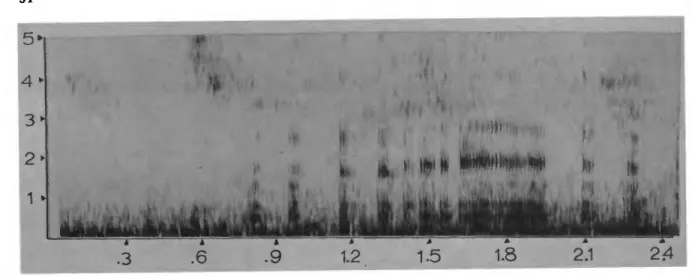
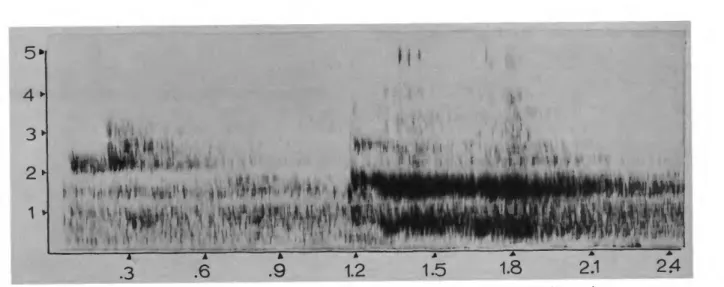
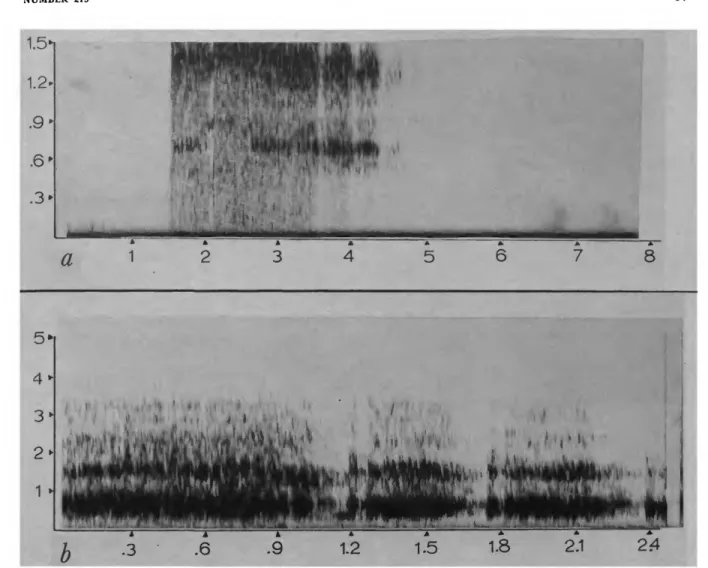
Data concerning the history of the Barro Colorado Island spider monkeys were from Mr. These may be true harmonics or may be artifacts inherent in the functioning of the Kay Missilyzer (Watkins, 1967). Despite the uncertainties, there is agreement on the following points: (1) The home range of an Ateles troop is much larger than a comparably sized troop of howler monkeys (Alouatta) in a comparable habitat.
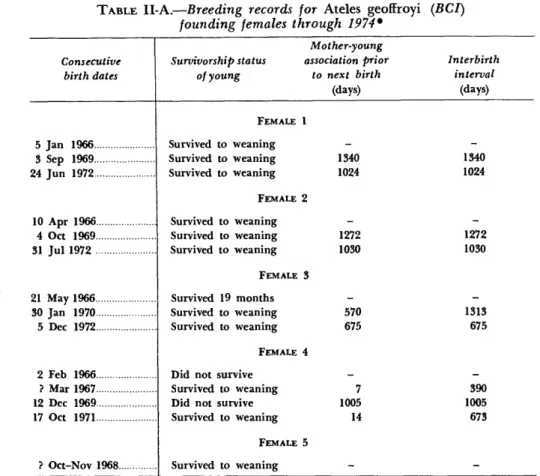
In the captive Ateles fusciceps group, the interval between births is a function of the duration of lactation. A previously reported encounter (Eisenberg and Kuehn, 1966:19) involved assuming the copulatory position on two occasions. Since the clients started feeding, the female came to the front of the cage and followed the male after a brief inspection of his genitals.
Behavior on the part of the adult male directed at an observer or custodian often took on a threatening aspect. An embrace will follow, after which the initiator buries his face in the neck or chest region of the adult. When new visitors approach, it is the adult male that takes note of the fact and increases his brachiation rate.
In addition, the male can often touch the clitoris of the female and smell it.

JvkuoiiiM 1.2
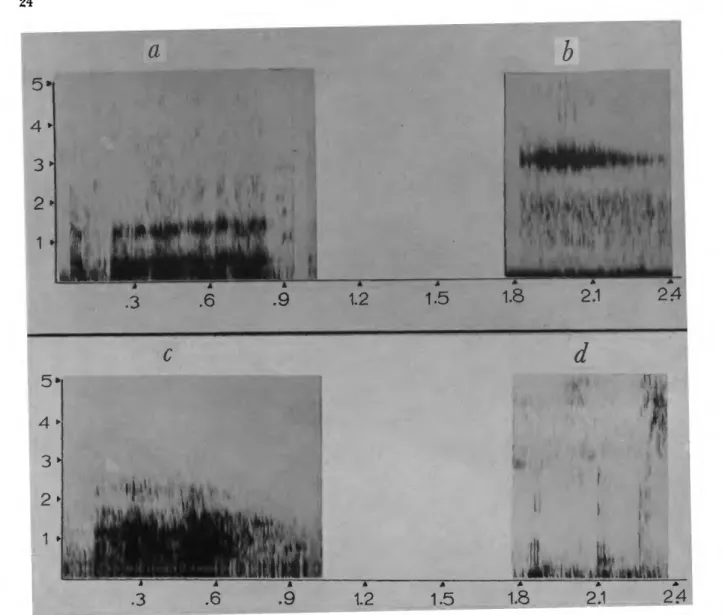
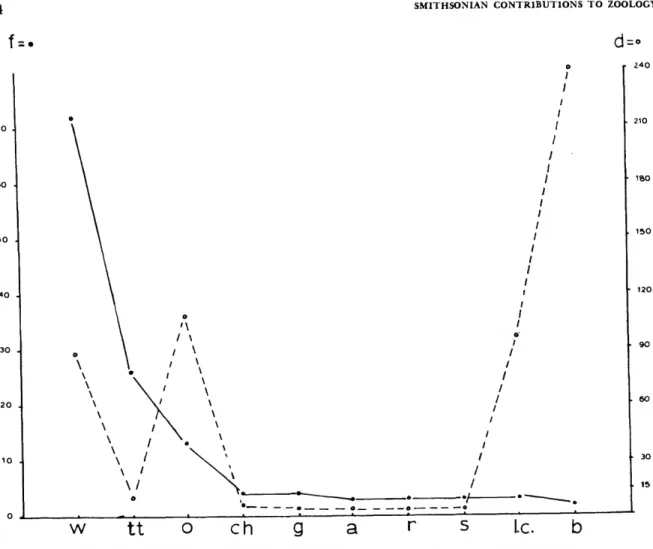
This analysis of the cortex well illustrates the importance of temporal pattern as an indicator of arousal level. Some call forms, such as the squeak, are relatively distinct to the human ear, but the other call forms are more or less intergrade. HIGH-FREQUENCY CALL EQUIPPED WITH APPROXIMATE FREQUENCY MODULATION.—The tee-tee call is short and nonrepetitive, generally <0.9 seconds in duration.
The whine is related to the slow whine or chirp sequence and appears to be formed from syllabic fusion (Figure 13). These calls are rhythmic and their frequency is modulated from one syllable to the next. The unifying feature for this class of syllables appears to be the rhythmic shift of pitch from one syllable to the next; the classification of low, scented whinnies (Key II.B.l.a(2)) with the chirp range (Key II.A.2.a (1)) may in fact be artificial as two moods may be confused (see "Voice" ". p. 46).
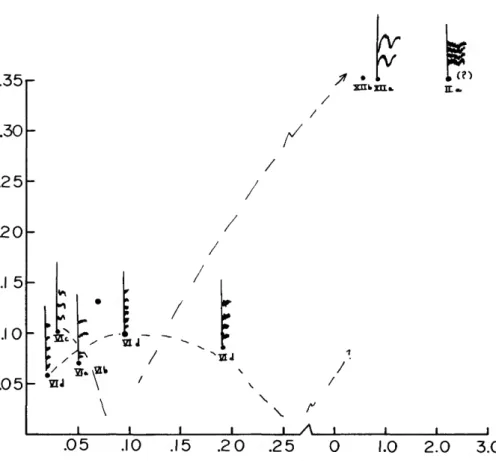
Some types appear to be transitions to long, loud calls, others appear to be high-intensity variants of other call types. Ten minutes and thirty-five seconds of continuous recording showed the calling man emitting sentences for 53 percent of the total time. Compound calls and their origins Until now, the discussion has mainly concerned calls that appear to be derived from a single syllable type, which is transformed by changes in the rate of utterance (fusion) or a rhythmic shift. of pitch (the neighing series).
In the case of long calls, the inclusion of final syllables which seem to vary in syl-. If the notes on the terminal convey information about the exact location of the sender, then we must assume that the selection was in favor of this call form as an entity. Nevertheless, the inescapable conclusion is that most expressive movements and vocalizations of Ateles do not require imitative learning for their initial performance.
It is also evident that the use of vocalizations and expressive movements on the part of Atele may be specific to certain situations and presumably influence the activities of some of the supposed recipients. If the signal in question is to carry information from sender to receiver, we must derive the information content from a context analysis. One of the signal's primary functions is, of course, to convey information about the sender's mood.

AAkg
An awk syllable can be incorporated at the end of the metal grain to make it approximate an eee awk. Throughout the recording session, the adult male called 50 percent of the time and the juvenile 58 percent. Slow chirping calls can be turned into real chirps by merging syllables to form a continuous pronunciation.
In the case of the loud, long calls of A-tele, the frequencies strongly agree with the model proposed by Morton. A rhythmic grunt or precursor to the adult oook-too with head shakes may be demonstrated. Most of the expressive movements and vocalizations are currently employed in social interactions.
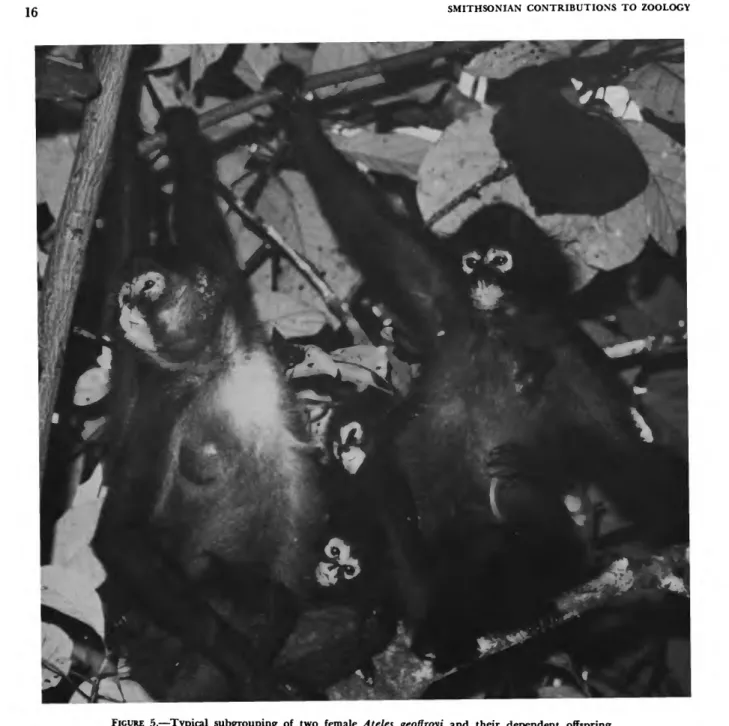
Juvenile still returns to female for nursing, tends to ride on the back of the female. At the end of the 3-year period, the animal can be three-quarters of the weight of the adult. The young now ride on the mother's back and only go to her venter to nurse.
The vocal repertoires of the experimental animals were virtually identical to the normal subjects. Moynihan (1967) and Oppenheimer (1975) drew attention to the fundamental unity of the New World primates in relation to certain communication mechanisms. It is clear that some of these similarities may indicate homologous neuromuscular mechanisms in the production of the sound itself.
The reason that some of the published summaries of data seem to indicate that females are larger may be attributes. Indeed, this attention on the part of adult males probably contributes in no small measure to the formation of the unisexual subgroupings characteristic of Ateles. These groups may eventually lead to a differential use of the home range on the part of the two sexes.
Of course, a lot depends on the structure of the cage and the history of the group itself. Sample sizes are variable as only the best quality footage was used in the tables.
JL-.JJL.Jfcr^fcS.
Breeding returned to normal in 1974, along with changes in the diet and treatment of females. Although lead-free paint has been used in the primate house for over twenty years, sure. death in our primate collection is dr. The samples may have ingested lead-containing material from old layers of paint that were covered with new coatings. SPOUSAL VIOLENCE.—The body is turned to expose the chest, and one or both hands are extended to touch the partner.
CHEST RUB.—The animal drags its chest across a flat surface for anywhere from 1 to 175 seconds. BACK ROLL.—The animal lying on its back does a series of side to side rolls for about 5 seconds. Contact and contact-promoting patterns LEAVE.—The act of extending an arm, leg, or the tail to touch another animal.
This expression can be classified as a complete "bite" with the corners of the mouth drawn on the side of the juvenile male. This sequence involves sexual behavior by the adult male towards the subadult female. The male thrusts briefly and shallowly, but is interrupted by the activities of the juvenile male.
D 4 Tf = total number of times displayed for all observation periods; Pd = proportion of the total duration of all displays for all observation periods; D = average duration of seconds of display. Marking behavior was shown by both the adult male and the adult female and consisted of anal dragging or rubbing, and chest rubbing. D Tf = total number of times displayed for all observation periods; Pd = proportion of the total duration of all displays for all observation periods; D = average duration of seconds of display.
These results show a cohesive bond between mother and baby, despite the baby being almost weaned. Collision accounted for 2.16 percent of total observation time and was most frequently observed between the infant and the adult male. BACKWARD ROLL.—The animal, lying on its back, makes a series of sideways rolls for an average duration of 10.2 seconds.
BITE. A rapid blow to any part of the body, delivered by the canines or incisors. FILLFALL TONGUE FLICK. The male approaches the female from behind and taps her vulva with his tongue.