i
THE EFFECTIVENESS OF FACEBOOK WALL AS MEDIA TO IMPROVE STUDENTS’ ABILITY IN WRITING RECOUNT TEXT
(A Quasi Experimental Research at the Eleventh Grade of SMA N 1 Sungguminasa)
A THESIS
Submitted to the Faculty of Teacher Training and Education Makassar Muhammadiyah University in Partial Fulfillment of the Requirement for the
Degree of Sarjana Pendidikan
RISNAWATI HM 105355639 13
ENGLISH DEPARTMENT
FACULTY OF TEACHER TRAINING AND EDUCATION MAKASSAR MUHAMMADIYAH UNIVERSITY
2018
ii
iii
iv
U UNIVERSITAS MUHAMMADIYAH MAKASSAR FAKULTAS KEGURUAN DAN ILMU PENDIDIKAN
PRODI PENDIDIKAN BAHASA INGGRIS
مــــيحرلا نمـحرلا هـللا مــــــسب
SURAT PERNYATAAN
Saya yang bertanda tangan di bawah ini:
Nama : RISNAWATI HM
NIM : 10535 5639 13
Jurusan : Pendidikan Bahasa Inggris
JudulSkripsi :The Effectiveness of Facebook Wall as Media to Improve Students’ Ability in Writing Recount Text (A Quasi Experimental Research at the Eleventh Grade of SMA N 1 Sungguminasa)
Dengan ini menyatakan:
Skripsi yang saya ajukan di depan tim penguji adalah hasil karya saya sendiri bukan hasil ciplakan dan tidak dibuatkan oleh siapapun.
Demikian pernyataan ini saya buat dengan sebenar-benarnya dan bersedia menerima sanksi apabila pernyataan saya tidak benar.
Makassar, 17 Oktober 2017 Yang Membuat Pernyataan
Risnawati HM 10535563913
Jalan Sultan Alauddin No. 259Makassar Telp : 0411-860837/860132 (Fax) Email : [email protected] Web : www.fkip.unismuh.ac.id
v
UNIVERSITAS MUHAMMADIYAH MAKASSAR FAKULTAS KEGURUAN DAN ILMU PENDIDIKAN PRODI PENDIDIKAN BAHASA INGGRIS
مــــيحرلا نمـحرلا هـللا مــــــسب
SURAT PERJANJIAN Saya yang bertanda tangan di bawah ini:
Nama : RISNAWATI HM
NIM : 10535 5639 13
Jurusan : Pendidikan Bahasa Inggris
JudulSkripsi :The Effectiveness of Facebook Wall as Media to Improve Students’ Ability in Writing Recount Text (A Quasi Experimental Research at the Eleventh Grade of SMA N 1 Sungguminasa)
Dengan ini menyatakan perjanjian sebagai berikut:
1. Mulai dari penyusunan proposal sampai dengan selesainya skripsi saya, saya akan menyusun sendiri skripsi saya, tidak dibuatkan oleh siapapun.
2. Dalam menyusun skripsi, saya akan selalu melakukan konsultasi dengan pembimbing.
3. Saya tidak akan melakukan penjiplakan (plagiat) dalam menyusun skripsi ini.
4. Apabila saya melanggar perjanjian saya seperti yang tertera pada butir 1,2dan 3 maka saya bersedia menerima sanksi sesuai dengan aturan yang berlaku.
Demikian perjanjian ini saya buat dengan penuh kesadaran.
Makassar, 17Oktober 2017 Yang Membuat Perjanjian
Risnawati HM
10535563913
Jalan Sultan Alauddin No. 259Makassar Telp : 0411-860837/860132 (Fax) Email : [email protected] Web : www.fkip.unismuh.ac.id
vi
vii
MOTTO DAN PERSEMBAHAN
Thanks for the dedication of my dear parents and my sister who have given sincere, passionate, moral, material and spiritual affection
Libatkan allah dalam segala sesuatu
Barang Siapa Mengandalkan ALLAH Niscaya Hidupnya Terjamin &
Mustahil Kecewa
Janganlah membanggakan dan menyombongkan diri dari apa-apa yang diperoleh, ikutilah ilmu padi makin berisi maki tunduk.
Makin bersyukur kepada sang pencipta
“HIDUP MULIA ATAU MATI SYAHID “ Bersikap Jujur Walau Nyawa Taruhannya
ِرْسُعْلا َعَم َّنِإ اًرْسُي
O
Karena sesungguhnya sesudah kesulitan itu ada kemudahan,. (Q.S. Al-Insyirah ayat 5-6)
Kebahagiaan yang hakiki adalah takala seseorang hamba mengenal rabb-nya, merasakan nikmatnya keimanan,cinta dan kasih sayang baik berupa cobaan terlebih nikmat dijalan DIN ini
Never give up with condition, just keep istiqomah, patient and do the best
viii ABSTRACT
Risnawati HM,2017 This final project is about The Effectiveness of Facebook Wall to Improve Students’ Ability in Writing Recount Text. Thesis.
English Departement the Faculty of Teachers Training and Education, Makassar Muhammadiyah University Guided By Syamsiarna Nappu and Nunung Anugrawati
This research aimed at finding out the effectiveness of Facebook wall to improve students’ ability in writing recount text at IPS 2 in SMA N 1 Sungguminasa
The research applied Quasi Experimental Design model nonequivalent. The sample of the research were two classes with the experimental class 20 and the control class 20 students with using purposive sampling technique. The instrument of the research was writing English test.
The population of the research was the eleventh grade student of SMA N 1 Sungguminasa and the number of sample was 20 students.
The result of reserach in in writing recount text in terms of content and mechanics in eleventh grade IPS 2 and IPS 3 showed that in experimental class interm content was 79.39 % improving from post test 59.2, pre test 33, range pre test to post test 26.2 % and 70.80 % improving in mechanics from post test 69.6, pre test 40.75 range pre test and post test 28.85 %. The percentage in control class in term of content was 66.31 % from post test 54.05, pre test 32.5, range pre test to post test 21.55 % and in mechanics was 58.28 % in post test 60.7, pre test 38.35, range pre test to post test was 38.35%.Statistics hypothesis T-test value was 36.53 and T- table 1.78 which mean (H1) significant improve. Based on the result findings, it was concluded that the students by using Facebook wall ability was improve in writing recount text.
Key words : Facebook wall, Recount text, Writing
ix
ACKNOWLEDGEMENTS
Alhamdulillah the greatest gratitude is to Almighty Allah Subhanahu Wa’ala and Prophet Muhammad Sallallahu ‘Alaihim Wasallam For The guidance, blessing so that the researcher is finally able to write thesis entitled “The Effectiveness of Facebook Wall in Improving Students’
Ability on Writing Recount Text”. Without blessing and guidance from Allah, it is impossible for the researcher to complete this thesis. This thesis is submitted in partial fulfillment of the requirement for the education degree in English. However, without the assistance of the following number of people who have a great contribution and influences on the writing of this thesis, it seems it is very difficult for the researcher to finish her work.
Especially for the researchers to thank the parents and her sister who love to give love, prayer, spirit, with unconditional sincerity. as well as the highest appreciation and acceptance of love is delivered with respect to:
1. Dr H Abd Rahman Rahim SE.,MM Rector of Makassar Muhammadiyah University
2. Erwin Akib S.Pd., M. Pd., Ph,D as The Dean of Faculty of Teacher Training and Education (FKIP) Makassar Muhammadiyah University 3. Mom Ummi Khaerati Syam, the Head of the English Department
x
4. Mom Dr Syamsiarna Nappu M. Pd., the first advisor who had given her guidance, advice, suggestion, and encouragement for the completion of this thesis.
5. Mom Nunung Anugrawati S.Pd., M.Pd, the second advisor who had given her guidance,adviceand encouragement for the completion of this thesis.
6. Mom Awalia Azis S.Pd., M.Pd Academic Advisor 7. All lecturers, staff Makassar Muhammadiyah University
8. Mom Hasna S.Pd as an academic teacher, head master and all teachers and staff at SMA N 1 Sungguminasa and Student of SMA N 1 Sungguminasa especially IPS2 and IPS 3 who have helped and good cooperation in learning
9. All Akhwatifillah specially are sister Fitriani and Emi Yuliana, for his help my education and GLORY 013 Makassar Muhammadiyah University 10. All parties who have been provided no particular assistance mentioned one
person quick god is always reply
The research realized that there still some lacking in this thesis, because of limitation knowledge and ability. So that, the researcher receives criticism and some suggestions from whoever for the improvement of it. Researcher expected that the thesis might be useful for the researcher particularly, especially for those who are involved in English teaching profession.
Makassar October 2017
Researcher
xi
LIST OF TABLES
Table page
Table 3.1 Design Quasi Experimental Class ……… 23
Table3.2 Rubric of Content ……… 32
Table 3.3 Rubric of Mechanics ……… 32
Table 3.4 Rubric of Students Score ……… 33
Table 4.1 Percentage of Content ……… 36
Table 4.2Rubric of Mechanics ……… 37
Table 4. 3 Percentage of Content and Mechanics ……… 38
Table 4.4 Rubric of Content (Control Class)……… 39
Table 4.5Rubric of Mechanics ……… 40
Table 4.6 Percentage of Content and Mechanics ……… 42
xii
LIST OF CHARTS
Chart page
Chart 4.1 Percentage Pre test and Post test in Experimental Class………39 Chart 4.2 Percentage Pre test and Post test in Control Class……… 42
xiii
LIST OFAPPENDICES Appendix A
A.1 Lesson Plan A.2 List of Attendees Appendix B
B.1 Score Writing in Term of Content and Mechanic (Experimental class) B.2 Score Writing in Term of Content Mechanics (Control Class)
Appendix C
C.1 Teaching Using Facebook Wall C.2 Teaching Using Discussion Method C.3 Process Learning using Facebook wall C.4 Process Learning Using Discussion Method Appendix D
D.1 Pre test D.2 Post test
D.3 Students Answer Sheet (Experimental Class) D.4 Students Answer Sheet (Control class) Appendix E
E.1 Analysis Data
CHAPTER 1 INTRODUCTION A. Background
Writing can be considered as one of the fundamental skills rather than the other skills. It is because that writing is one of the basic skills of learners who want to learn English. Meanwhile, in the learning process there are some difficulties of students who learn English as a foreign language. They have some difficulties even though English is not their first language. However, writing already becomes an enjoyable, meaningful and essential subject in the foreign language learning.
Writing enhances the ability of the students to generate their ideas, to communicate one word to another, sentence to sentence, paragraph to paragraph and to increase the awareness of using grammar and to use words.
Vocabulary has an important role at this point. The students who are good at vocabulary will not face the difficulty in generating ideas.
There are some factors that make students’ writing ability low. It can be categorized into students’ side and the teacher’s side. Students do not write well because they do not practice much. Other reasons why the students lack in writing is that they receive a limited amount of instruction in writing and they do not write much. If students write more, they can know more their mistakes and improve them.
SMA N 1 Sungguminasa is the middle level of education in formal education in Indonesia, equivalent to high school, but the learning process for
1
students was not always going well. Based on the results of a survey to one of the teachers of English language conducted on juny 16, 2017 at SMA 1 Sungguminasa which suggests some obstacles experienced by students in English learning process is implemented. This is low motivation or lack interest in writing so that students feel bored on the learning of English that impact on the results of learning is not maximal.
The students’ low ability in writing can be caused by technical problem. The teacher does not provide the chance for the students to practice writing. Students may not write very much because the teacher does not give enough writing tasks. The teacher sometimes does not ask the students to do writing tasks because assigning students’ writing needs much time. In order that students can understand their mistakes, the teacher should correct their paper one by one, word by word. If the teacher gives the students homework to make writings, she gets the work to check the students’ writing (Marza : 684).
Facebook can be a positive influence to improve students’ writing skill on recount text. When the students can comment to each other, they can take a good response and feel more open to be a better. There are some solutions of this problem to help students, it needs another technique in teaching writing to be more interesting for the students. In this case, the use Facebook as a media of instruction. The research explained previously that there are many advantages in using Facebook for the students, researcher hoped that Facebook can improve their writing skill.
On Facebook, the students can share their ideas about something.
Their friends can also take a look and give some arguments to each other.
Their vocabulary items improve if they write it in English. By using Facebook wall, the students learn how to correct their friend’s work. Some researchers describe that avoiding face-to-face interaction can lower down students’ anxiety.
One of research in year 2015 about Facebook is Putri Aisyah Ningsih Found Facebook was an effective media in teaching writing recount text. It was really helpful in increasing students’ ability and achievement of writing recount text
Based on the background mentioned, the researcher was interested to conduct a research on The Effectiveness of Facebook Wall as Media to Improve Students’ Ability in Writing Recount Text at Eleventh Grade SStudents of SMA 1 Sungguminasa
B. Problem Statements
Based on the background, researcher puts forward the problem in this research are :
1. Does Writing Recount Text on Facebook Wall Media Improve Students’
Writing Ability in term of Content at The Eleventh Grade of SMA N 1 Sungguminasa?
2. Does Writing Recount Text on Facebook Wall Media Improve Students’
Writing Ability in term of Mechanics at The Eleventh Grade of SMA N 1 Sungguminasa?
C. Objective of The Research
The goal to be achieved in this research are to find out whether or not:
1. Writing Recount Text on Facebook Wall Media Improves Students’
Writing Ability in term of Content at The Eleventh Grade of SMA N 1 Sungguminasa
2. Writing Recount Text on Facebook Wall Media Improves Students’
Writing Ability in term of Mechanics at The Eleventh Grade of SMA N 1 Sungguminasa
D. Significance of The Research
Theoretically is the student can improve ability in writing recount text by using Facebook. Practically, that the result of the research can be used as a reference for the development of science in the field of education, and as a reference for students who conduct study of Facebook wall media and as a way of practicing science in college doing research in order to complete education
E. Scope Research
This research focused on Facebook wall media to improve students’
Ability on writing recount text of Eleventh grade students of SMA N 1 Sungguminasa in 2016-2017 Academic year. Writing here means the students proficiency to understand a recount text in terms of content and mechanics.
Students are able to write well by using generic structure in writing in terms in recount text in content and mechanics.
CHAPTER II LITERATURE REVIEW A. Previous Related Research
Ningsih (2015) in her thesis on the effectiveness of teaching writing recount text by using Facebook (A quasi – experimental study at tenth grade students of smanegeri 4 kotatangerang selatan). Found Facebook is an effective media in teaching writing recount text. It is really helpful in increasing students’ ability and achievement of writing recount text.
Marza (2013) in her journal teaching writing recount text to junior high- school students by using facebook peer- comment. Found teaching writing in junior high-school is not easy. The teacher has to teach how to write many kinds of text and make students improve their writing. Students’
writing ability is low because they lack in writing practice. They do not writing much due to motivation and media factors.
Giyanto (2011) in his thesis on improving students’ writing skill on recount using questing technique and Facebook Media (A Classroom Action Research at Grade VIIIA SMPN 2 Sumberlawang in 2010/2011 Academic Year).Foundthat questioning technique and Facebook increased students’
motivation, gave ideas, improved vocabulary mastery, improved their cooperative with their friends and Facebook creativity. This improvement can be seen on students’ pre-test and post-test. The average score of students in pre-test was 64, cycle 1 is 69 and cycle 2 is 79.
5
The similarities of previous research with this research is research using the same Facebook media to improve learning result of English both from junior high school and senior high school. Differences in this research is the type of research, the focus of research variable studied, place, time, population, sample and years of research.
B. Writing
1. Definition of Writing
Harmer (2004: 3) states writing is one of the skills to be taught in junior high schools. Writing (as one of the four skills of listening, speaking, reading, and writing) has always formed part of the syllabus in the teaching of English”. “The students need to master these skills especially the writing skill
Boardam (2008 : 18- 25) states there are some characteristics of a good writing. A text or paragraph may these for to be understood as a visible division of the subject method. There are three characteristics in writing a good text or paragraph, namely:
a. Coherence
A paragraph has coherence when the supporting sentences are ordered follow to a principle. The sentences are put in order so that the reader can understand ideas easily. The principles for ordering depend on the types of paragraph writing. Coherence means stick together, coherence is basically a matter of having the part of a piece of writing in the right with the clear process.
b. Cohesion
Another characteristic of a good paragraph is cohesion. When a paragraph has cohesion, all the supporting sentences connect to each other in support of the topic sentence.
c. Unity
The final characteristic of a well-written paragraph is unity. All the supporting sentences should relate to the topic sentence. Order in text or paragraph is like organization easy, but is smaller in space so it may be simpler to consider order as direction. Thus order chronological steps to express the idea the written form.
Based on the explanation of experts can be concluded that, writing is one of the important skills to master by the students. Use it to communicate to each other, as means of ideas and emotional expression because the word choice in writing is strictly chosen to make the writer’s idea make sense.
2. The Components of Writing
Heaton (1975:135) divides component writing into five main areas. They are grammar/Language Use, mechanics, vocabulary, content and the last is organization.
a. Content
The writing content has to be clear for the readers to be able to understand the message and information from it. There are two parts of content in
writing, they are unity and completeness. This contents become characteristic of good writing.
b. Organization
Organization in writing concerned with coherence. It means that the writer has to arrange and organize the ideas. The paragraph can be coherence if the ideas are put in the right order.
c. Language Use/ Grammar
Language use in writing consists of correct language and point of grammar.
Grammar in writing description involved the use of verb, adjective, adverb and use simple present tense. A good grammar helped the reader understand the meaning of the text.
d. Vocabulary
Vocabulary in writing involved the use of right words (selection words). The writer has to know the exact word to put in the sentence. This is important to forms a writing, but particularly in personal description more effective than those mainly transmit information.
It indicated that we cannot write or express our ideas if we did not have vocabulary. Therefore, we cannot understand the writing passage without have a lot of vocabulary.
e. Mechanics
Parts of mechanics in writing are capitalization, punctuation, and spelling.
Incorrect spelling and punctuation will make the loss or different meaning
in the text, so, the use of this aspect in writing have the big effect in understanding the meaning in written text.
Based on the explanation of experts can be concluded that, divides component writing into five main areas. They are grammar/Language Use, mechanics, vocabulary, content and the last is organization
C. Recount Text
1. The Definition of Recount Text
Knapp(2005: 224) states recount text, basically it is written out to make a report about an experience of a series of related event. A recount is written out to inform an event or to entertain people. Recount Text is text function as for telling an incident in the past.
Anderson (1997: 29) states recount text is a text that retells the past event. Its purpose is to provide a description and when it occurred with sequence of events. There are some features of a recount. Describes the generic structure of a recount text. The explanation is presented below:
2. Constructing a recount
A recount text has three main sections. The first is orientation. It consists of what, where and when the story are happened. The second is sequence of events.
It retells the events in the order in which other happened and the last is reorientation. It consists of a conclusion.
a. Grammatical features of a recount
A recount usually includes the following grammatical features:
1) Proper nouns to identify those involved in the text.
2) Descriptive words to give details about who, what, when, where, and how.
3) The use of the past tense to retell the events.
4) Words that show the order of the events.
Based on the explanation of experts can be concluded that, retells the past event, there are some features of a recount such as constructing and grammatical.
3. The Kinds of Recount Text
The Kinds of Recount Text According to UC High School Kaleen Writing Handbook 2011: 26 recount text is classified into three; they are personal recount, factual recount, and imaginative recount.
a. Personal Recount
A personal recount is where the writer is recounting the personal event that they were involved directly. It means that the writer is actively involved in the activity of the event. The purposes of personal recount are to inform and to entertain the reader. The example of this text as follows:
Please Send Me a Card.
Postcard always spoil my holidays. Last summer, I went to Italy. I visited museums and sat in public gardens. A friendly waiter taught me a few words of Italian. Then he lent me a book. I read a few lines, but I did not understand a word. Every day I thought about postcards. My holidays passed quickly, but I did not sand any cards to my friends. On the last day I made a big decision. I got up early and bought thirty-seven cards. I spent the whole day in my room, but I did not write a single card!.
b. Factual Recount
A factual recount is a list of record of a certain event. It can be used to retell the particular incident or event, such as an accident report, eyewitness, science experience, historical events, and newspaper report. Its purpose is just to inform the reader about what was going on in the past. The example of this text as follows:
The X Files
The X Files is one of television’s most popular shows watched each week by millions of people in over sixty countries.
The show was created by Chris Carter a former magazine editor, who always wanted to make a cool and scary television series. His idea for The X Files came after he saw the result of a survey that said three of every hundreds Americans believed that aliens had captured them.
Carter’s next step was to produce a pilot episode, which was to be the beginning of the series. When it was shown on American television, it received poor reviews.
After a while the audience grew and The X Files became popular with both adults and teenagers. By this time carter was able to spend more on production. The X Files has been nominated for many awards and continues to attract a growing audience.
c. Imaginative Recount
An imaginative recount retells an imaginative story through the eyes of a fiction character. It means, the event that happened in the text do not occur in the real life. Its purpose is usually to entertain, and it usually can be found in textbook. From those three kind of recount text, it can be seen that there is one typical characteristic that is the text is retell the event in the past chronologically. The example of this text as follows:
As It happened
One very spooky encounter with UFO (unidentified flying object) occurred in May 1974 involving a couple driving from Zimbabwe to South America.
As they carefully drove throughout the night they saw a flashing blue-white light that was going on an off in a slow, steady rhythm.
Shortly after noticing this, the car was covered in a bright circle of light.
Inside the car it suddenly became very cold. The couple wrapped themselves in thick blankets and turned on the heater but they still shivered.
Then their car began to act very strangely. Suddenly the headlights went off, the brakes failed, the steering wheel locked and the fuel gauge showed empty. Next the car began speeding up and raced along the road at 190 kilometers an hour. To one side of the car, the UFO continued to follow. The drier and his passenger lost consciousness. When they awoke they were near the small town of Fort Victoria. The car’s odometer showed that only 12 kilometers had been traveled, yet the distance from where they first saw the UFO to Fort Victoria was 290 kilometers.
Although the couple’s description of what happened contained plenty of details, many people find it hard to believe that UFOs do exist.
Based on the explanation of expert can be concluded that, there are many kinds of recount text such as personal recount text and etc.
4. Constructing in Written Recount Text
Boardman (2008: 287) states the steps for constructing of written recount text are:
a. The first paragraph that give background information about who, what, where and when. It is called on orientation.
b. A record of events usually recounted in chronological order, named; event 1, event 2, event 3.
c. A personal comment and or evaluative remarks, which are interspersed throughout the record of events named evaluation.
d. A reorientation which “rounds off “the sequences of events or retell about what happened in the end.
Based on the explanation of experts can be concluded that, there are four the steps for constructing of written recount text namely, orientation, event, a personal comment and a reorientation.
5. The language features usually found in a recount:
Boardman (2008: 287) states the language features usually found in a recount :
a. Use of nouns and pronouns to identify people, animals or things involved.
b. Use of past action verbs to refer the events.
c. Use of past tense to located events in relation to speaker`s or researcher`s time.
d. Use conjunctions and time connectives to sequence the event.
e. Use of adverb and adverbial phrases to indicate place and time.
f. Use of adjectives to describe nouns.
In making of functional grammar, the significant common grammatical patterns of recount include:
a. Focus on specific participant.
b. Use of material process or action verb c. Circumstance of time and place.
d. Use past tense and focus on temporal sequences
Based on the explanation of experts can be concluded that, the language features usually found in a recount and in making of functional grammar, the significant common grammatical patterns of recount.
D. Media
Heinich (1993: 2) argue that technology or learning media as a scientific application of the learning process in humans in the practical task of teaching and learning.
Arif S. Sadirman (1984) argue that Media is any physical tool that can present the message and stimulate students to learn such as Films, books, and tapes learning component of teaching,
Karti Hari Sukarsih (2002: 17) that is everything that can be used to achieve the purpose of teaching. The setting of instructional media and classroom furniture should be such that it supports the teaching and learning atmosphere, it is expected that the child becomes:
a. Discipline and neat b. Embedding good habits c. Easy if used
d. Easy to use by anyone e. Focus child's attention
a. Types of Instructional Media.
Heinich and Molenda (2002) namely:
1. Text is a basic element in conveying an information that has various types and forms of writing that seeks to provide attractiveness in the delivery of information.
2. Audio media to convey informations with more impressive and improve the attraction of something an offering. The type of audio includes background sound, music, or sound recording, and more.
3. Visual media provide visual stimuli such as pictures / photos, sketches, diagrams, charts, graphics, cartoons, posters, bulletin boards, and more.
4. Motion projection media. Includes motion pictures, bracelets, TV programs, video cassettes (CD, VCD, or DVD)
5. Artificial / miniature objects. It includes three-dimensional objects that can be touched and touched by students. This media is made to overcome the limitations of both the object and the situation so that the learning process still running well.
6. Human includes teachers, students, or experts / experts in certain fields / materials.
b. The Main Function of Learning Media are Kempt & Dayton (1985) 1. Motivating interests and actions, realized by drama or entertainment
techniques.
2. Presenting information, used in order to present information in the presence of a group of students.
3. Giving instruction, information contained in the media should involve students.
E. Facebook Wall
1. The Definition of Facebook
Facebook is one of social networking media. Social networking is that the use of a website to connect each other similar interest, hobby, school, etc. In term of writing. Facebook has become a media for students to write, but it is different from the writing that has been done in school. The students usually use informal language in Facebook, and unable to consider writing as an engaging activity, also cannot recognize that Facebook can be medium for improving writing to become a better writer. As a result, write on Facebook with no purpose of improving writing skill.
Based on the explanation experts can be concluded that. Facebook one of social applications that can be used as a medium of learning in the process of learning in school.
2. Facebook Wall
A Facebook wall is the area on a profile or page where friends and
“fans” can post thoughts, views, or criticisms for everyone to see. Walls have three viewing settings: user + others, just the user, and just others.
These settings can be changed by clicking the "filters" option at the top of the wall. Most walls automatically display the "user + others" option,
showing posts, links, tagged material, and other information posted by both the page's operator and other friends or fans. Walls also incorporate the news feed, displaying updates made by the user such as statuses, links, pictures, and other recent activity.
Alba and stay (2008 :8 ) states wall is a way to connect to with friends. This is the page that gives some information about the user’s activity. The user can share status, so status can be seen by other users and can be commented. The wall section is wildly popular item in Facebook, can not only leave messages, but can also leave links or videos for others.
3. The Features of Facebook
Alba and Stay (2008 : 8) states Facebook provides many interesting features for its user such as, teenagers and adult. Like to use Facebook because Facebook make easy with the features that Facebook has. The features are Wall, Profile, Inbox, Photo, Video, Group, Event, Games, Chat, and Blog.
a. Wall is a way to connect to with friends.This is the page that gives some information about the user’s activity. The user can share status, so status can be seen by other users and can be commented.
b. Profile is the general information of the user. Steven Holzner stated that the profile is public face on Facebook. In the profile section, it includes homepage, status, network, and birthday.
c. Inbox or Message is the section where the user can find all of the messages that people send through Facebook.
d. Photo is a section the photo of the user is appeared. In this section the user can upload as many photos, and can create photos into an album.
Each album consists on sixty photos as maximum.
e. Group is a Facebook page where members can interact with each other and start discussions.
f. Event is a place to invite friends into some interesting events g. Game is another interesting feature on Facebook.
h. Chatting on Facebook is a real time activity among Facebook users. Chat is known as instant messaging.
i. Blog in Facebook is a feature where the user can share other users’ quote or status. This Blog is very useful to share some information that other users have not known before.
Based on the explanation of experts can be concluded that, many interesting features for its user such as, teenagers and adult because the teenagers fell to enjoy and fun can be access.
F. Facebook as a Media of Language Learning
Blattner, & Fiori, M (2009: 17-28) There are many websites that demonstrate and guide teachers on how to use Facebook for classroom teaching and learning process. Facebook with its many unique features such as online games and chat room can encourage people to engage and interact with anyone
all over the world. However, since most of features are in English, the users have to understand in order to be active in using all of the features.
Using media such as Facebook, students can read and listen to a story before writing and recording their own version of similar story. This media provides the multiple modalities needed to meet the needs of students with different learning styles and strategies. The aural, visual, tactile, and kinesthetic learners have access to a variety of computer-based activities that are well suited to their preferred learning style.
Many researchers found out how Facebook can be useful in improving students’ language learning. In a conceptual paper, Blattner and Fiori examine how Facebook can provide opportunities to enhance the “development of socio-pragmatic competence in language learners” and “the sense of community in language classroom”. In addition, Alhomod and Shafi also point out that Facebook can be utilized for improving students’ team based learning.
One of the important benefits of team based learning is that it helps students with developing skill such as possessing excellent
Teamwork in organizing the problems and finding a solution for the problems. From those explanations, it can be concluded that Facebook has many usefulness for language learning. Facebook can be a medium for improving students’ language skill. By using a good methodology, Facebook can be appropriate and have a good impact for language learning.
F. Conceptual Framework
This chapter presents and discusses theory that is connected with the study. The discussion focuses on writing and Facebook, in writing, it will discuss about definition of writing, the writing process, and the purpose of writing, will discuss about definition of text, the definition of recount text, the kind of recount text and the schematic structures of recount text, Then, the last is about teaching class using Facebook.
Experimental Control
(Facebook Wall Media)
Discussion Method
Post test Output
Improvement on students’ Ability in Writing Recount Text
Pre Test
3.1 Scheme Conceptual Framework
E. Research Hypothesis
Based on problem statements that presented by the researcher, the researcher hypothesis is stated as follow :
a. Alternative Hypothesis(H1) : There is significant improvement in writing recount text in terms of content and mechanics using Facebook Wall media in IPS 2
b. Null Hypothesis (Ho) : There is not significant improvement writing recount text in terms of content and mechanics using discussion method in IPS 3
CHAPTER III RESEARCH METHOD A. Research Design
Sugiyono (2015: 114) Quasi Experimental Design there are two form of time series design and nonequivalent control group design. Design which is used in this research is quasi experimental design and using nonequivalent control group design model. Before being given treatment, both the experimental group and the control group are given the test is pretest, with a view to know the condition of the group before treatment. Then after treatment, experimental group and group control is given a posttest test, to know the state of the group after
Table 3.1 Quasi Experimental Design Model Nonequivalent :
Group Pre – test Treatment Post-test
Control 01 X 02
Experimental 03 X 04
(Sugiyono, 2015: 116) Control group : is subject not getting treatment.
Experimental group : is subjects that do get the treatment.
Information
01 : Experiment group before treatment
02 : Experimental group after treatment
03 : Control group before treatment 04 : Unattended control group X : Treatment
23
B. Population and Sample a. Population
Population in this research were all eleventh grade inSMA N 1 Sungguminasa, so the population research were 384 students.
b. Sample
Sampling in this study using purposive sampling because researcher descend directly to a specific place that has a population of randomized research by choosing two classes, one class has been given treatment by teaching Facebook wall media and one class as control class. They were X12 as experimental class that consisted of 20students and XI 3as control class that consisted of students. The reason choosing class XI 2and XI3 because samples that have been selected appropriate to the requirements or research objectives (obtaining accurate data). Total sample were 40 student from two class.
C. Variable of The Research
a. Variable independent in this research were Facebook wall media as a media in process learning to improve students’ Ability on writing recount text.
b. Variable dependent were teaching writing recount text by using Facebook wall media as a media in process learning.
c. Indicators
After students were trained to write recount test by using Facebook Wall media , the students gave a good quality on content and mechanics. Beside that the students’ score higher than before.
D. Research Instrument
The instruments that have been used test:
Test (Pre-test Post-test)
a. The first test that has been given (Pre test) with the aim to know the early ability of learners either, of the control class as well as the experimental class.
b. The second test has been given (Post test) the aim to know the early ability of learning after given treatment. Gave to see learning progress or improvement understood in both classes. Study result test were developed based on indicator on the subject. Discussions that have been set by the curriculum used in school concerned.
E. The Technique of Data Collection
Data Collecting the data was the most important activity in the research in collecting data.
Some steps that have been given by the researcher as follow:
a. The researcher gave pre test to students between experimental and control class. Pre-test for the students in the first meeting in order to know the capacity of the students’ competence between the experimental class and
the control class. In the pre-test, the research gave the students a topic which was “My Holiday”.
b. Treatment
The researcher explains how to make a writing recount text
Experimental class was the research explains how to make a writing recount text in Facebook wall media as a media in process learning a. Experimental class
1). The first meeting
a. Giving simulation (pre test) and motivation before the process of teaching
b. Introducing Facebook wall media as a media in learning process and process learning using Facebook wall media
c. Make a Facebook group and invite all students in class.
d. Teacher answers the students’ questions process learning by Facebook .
e. Teacher explains all about material recount text and past test 2). Second meeting
a. Teacher repeat again the material all about recount text so the students’ more understand
b. Given treatment by using Facebook wall with the material recount text based on the events students and implements by writing students on the Facebook wall media of each student
c. Teacher answers the students’ questions process learning by Facebook .
d. Students are taught to comment on each other’s status for learning writing
3). Third meeting
a. Teacher evaluation given treatment the yesterday
b. Teacher print out the result writing on Facebook wall and check writing errors in recount text in terms of content and mechanics c. Teacher share to result students work who has notes repair
d. Teacher explain repeat again the material all about recount text so the students’ more understand
e. Given treatment by using Facebook wall media with the material recount text based on the events students and implements by writing students on the Facebook wall media of each student f. Teacher answers the students’ questions process learning by
Facebook .
g. Students were taught to comment on each other’s status for learning writing
h. Teacher gave rewards to students who write recount text on Facebook well
4) Fourth meeting
a. Teacher evaluation given treatment the yesterday
b. Teacher print out the result writing on Facebook wall media and check writing errors in recount text in terms of content and mechanics
c. Teacher share to result students work who has notes repair
d. Teacher explain repeat again the material all about recount text so the students’ more understand
e. Given treatment by using Facebook wall media with the material recount text based on the events students and implements by writing students on the Facebook wall media of each student f. Teacher answers the students’ questions process learning by
Facebook .
g. Students were taught to comment on each other’s status for learning writing
h. Teacher gave rewards to students who write recount text on Facebook well
5) Fifth meeting
a. Teacher evaluation given treatment the yesterday
b. Teacher print out the result writing on Facebook wall media and check writing errors in recount text in terms of content and mechanics
c. Teacher share to result students work who has notes repair
d. Teacher explain repeat again the material all about recount text so the students’ more understand
e. Given treatment by using Facebook wall media with the material recount text based on the events students and implements by writing students on the Facebook wall media of each student f. Teacher answers the students’ questions process learning by
Facebook .
g. Students were taught to comment on each other’s status for learning writing
h. Teacher gave rewards to students who write recount text on Facebook well
6) Sixth meeting
a. Teacher evaluation given treatment the yesterday
b. Teacher print out the result writing on Facebook wall media and check writing errors in recount text in terms of content and mechanics
c. Teacher share to result students work who has notes repair
d. Teacher explain repeat again the material all about recount text so the students’ more understand
e. Given treatment by using Facebook wall media with the material recount text based on the events students and implements by writing students on the Facebook wall media of each student f. Teacher answers the students’ questions process learning by
Facebook.
g. Students were taught to comment on each other’s status for learning writing
h. Teacher gave rewards to students who write recount text on Facebook well
7). Eighth meeting
a. Teacher print out the result writing on Facebook wall and check writing errors in recount text in terms of content and mechanics b. Teacher share to result students work who has notes repair
c. Teacher explain repeat again the material all about recount text so the students’ more understand
d. Teacher post test to student between experimental and control group. The post-test given to know the change of understood material about recount text after the treatment by using Facebook.
This post-test used to know the significant difference between the experimental class which were used Facebook for the treatment and controlled class which were not used any treatment. In the post-test, the research gave the students a topic which were “My School Experience”.
b. Control Class
1) . The first meeting
a. Giving simulation (pre test) and motivation before the process of teaching
b. Teacher explains all about material recount text and past test c. Make a group discussion and explain the group in class for 1one
month
2). Second, third, fourth, fifth, sixth, seventh meeting a. Make a group discussion.
b. Students cooperate with the friends in one title . c. Students’ presentation in front of class.
d. Teacher asks the questions about their difficulties in recount text.
3). Eight meeting : post test c. post test
Teacher post test to student between experimental and control group.
The post-test given to know the change of understood material about recount text after the treatment by using Facebook. This post-test used to know the significant difference between the experimental class which were used Facebook for the treatment and controlled class which were not used any treatment. In the post-test, the research gave the students a topic which were “My School Experience”.
d. Analyzing the result of test.
F. Data Analysis Technique
Test data were analyzed based on the following steps :
1. Calculating score pre test and post test of students follow : Total score
Maximum score x 100 =
(Nurgiyantoro, 2012 :393)
2. Classifying the score of the students’ answer into the following measure.
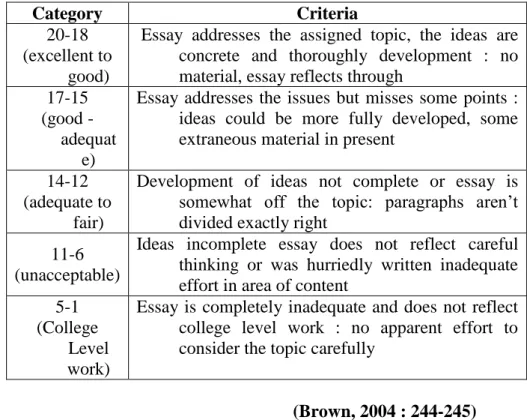
Table 3.2 Rubric of content assessment in writing.
Category Criteria
20-18 (excellent to
good)
Essay addresses the assigned topic, the ideas are concrete and thoroughly development : no material, essay reflects through
17-15 (good -
adequat e)
Essay addresses the issues but misses some points : ideas could be more fully developed, some extraneous material in present
14-12 (adequate to
fair)
Development of ideas not complete or essay is somewhat off the topic: paragraphs aren’t divided exactly right
11-6 (unacceptable)
Ideas incomplete essay does not reflect careful thinking or was hurriedly written inadequate effort in area of content
5-1 (College
Level work)
Essay is completely inadequate and does not reflect college level work : no apparent effort to consider the topic carefully
(Brown, 2004 : 244-245)
Table 3.3 Rubric assessment in mechanical
Category Criteria
20-18 (excellent to good)
Correct use of English writing conventions : left and right margins, all needed capitals, paragraphs indented punctuation and spelling very neat 17-15
(good - adequate)
Some problems with writing conventions or punctuation : occasional spelling errors :
left margin correct : paper is neat and legible
14-12 (adequate to fair)
Uses general writing conventions but has errors:
spelling problems distract reader:
punctuation errors interfere with ideas 11-6
(unacceptable)
Serious problems with format of paper: parts of essay not legible errors in sentence punctuation and final punctuation:
unacceptable to educated readers 5-1
(College Level work)
Complete disregard for English writing conventions: paper illegible : obvious capitals missing, no margins, severe spelling problems
(Brown, 2004 : 244-245) Table 3.4 Rubric of students score classifications
No Score Score Classifications
1 85-100 Very Good
2 65-84 Good
3 55-64 Fair
4 35-54 Poor
5 0-34 Very poor
(Depdikbud, 2006 : 29) 3. The average score of post-test of content and mechanic of experiment
class : Mx: ∑x
N1
(Gay, 2006: 334) Where:
MX : Mean of experimental class
∑Y : Total of deviation of experimental class N1 : number students of experiment class
4. The average score of post-test of content and mechanic of control class:
The formula is as follow;
(Sugiono, 2012: 315) Where:
MY : Mean of control class
∑y : Total of deviation of control class N2 : Number students of experiment class
5. Find the number of deviation values deviated to theexperimental class.
The formula is as follow;
∑ = ∑ ∑
(Arikunto,2010:355)
Where:
∑ : Deviation of each post test score from pre test of experimental class
N : Number students of experiment class
6. Find the number of deviation values deviated to the control class. The formula is as follow;
∑ = ∑ ∑
(Arikunto,2010:355)
∑
Where:
∑ : Deviation of each pust test score from pre test of control class N : Number students of experiment class
7. Calculates the difference of the mean value of the initial test (y) with the average value of the final test (x) using “ t test” by the formula used in this research is as follows;
(Sugiono, 2012: 324) Where:
Mx : Mean deviation of experimental class My : Mean deviation of control class
∑ : Deviation of each post test score from pre test of experimental class
∑ : Deviation of each pust test score from pre test of control class 8. Calculation of learning outcomes through treatment
P = P : Percentage X2 : Score post test X1 : Score pre test
(Gay, 1981 : 32 )
√[∑ ∑ ]
CHAPTER IV
RESEARCH FINDINGS AND DISCUSSIONS A. Research Findings
The research was aimed to describe to use of Facebook wall in improving students’ ability in writing recount test of SMA N 1 Sungguminasa.
Based on pre test and post test in experimental class and control class in writing recount text in terms of content and mechanics in eleventh grade IPS 2 and IPS 3. The researcher can concluded that :
a. Students` Writing Ability in Terms of Content Using Facebook Wall as Media
a). Experimental Class
1. The Result Writing Ability in Term of Content.
The following is the score of the result of learning English student IPS 2 in writing recount text in term of content through learning Facebook wall media before being given treatment and after given treatment:
Table 4.1 Statistics of Content in Writing Recount Text IPS 2
Content Pre test Post test Range
33 59. 2 26. 2
Table 4.1 shows that there were pre test 100 % students do not mastered on writing recount text in term of content, in pre test mean 33 in writing recount text in term of content from 20 students.
The result of post test showed mean 59. 2 from 33 value pre test. The range between pre test and post was 26. 2.
36
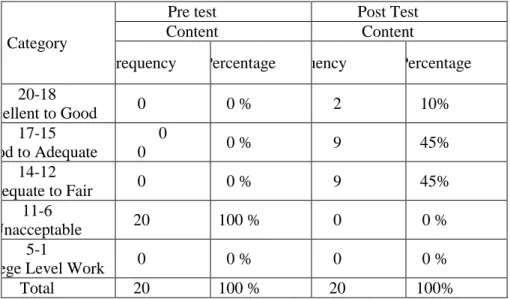
Table 4.2 The Percentage of Students’ Writing Result in term of Content
Category
Pre test Post Test
Content Content
Frequency Percentage Frequency Percentage 20-18
Excellent to Good 0 0 % 2 10%
17-15 Good to Adequate
0
0 0 % 9 45%
14-12
Adequate to Fair 0 0 % 9 45%
11-6
Unacceptable 20 100 % 0 0 %
5-1
College Level Work 0 0 % 0 0 %
Total 20 100 % 20 100%
Table 4.2 showed there was 1 student got category excellent to good, 6 students got good to adequate, 4 students got adequate to fair, 9 students got unacceptable, 0 student college level work in post test . Total percentage 100 % from 20 students. The result of pre test 100 % students don’t mastered on writing recount text in terms of content 2. The Result Writing Ability in Term of Mechanic
The following is the score of the result of learning English student IPS 2 in writing recount text in term of mechanics through learning Facebook wall media before being given treatment and after given treatment:
Table 4.3 Statistics of Mechanic in Writing Recount Text IPS 2
Mechanic Pre test Post test Range
40.75 69.6 28. 85
Table 4.3 shows that there were pre test 100 % students do not mastered on writing recount text in terms of mechanic. In pre test mean 40.75 in writing in term of mechanic from 20 students. The result of post test showed in mean 69. 6. The range between pre test and post test was 28.85.
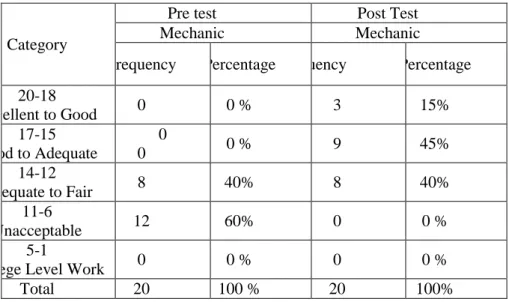
Table 4.4 The Percentage of Students’ Writing Result in term of Mechanic
Category
Pre test Post Test
Mechanic Mechanic
Frequency Percentage Frequency Percentage 20-18
Excellent to Good 0 0 % 3 15%
17-15 Good to Adequate
0
0 0 % 9 45%
14-12
Adequate to Fair 8 40% 8 40%
11-6
Unacceptable 12 60% 0 0 %
5-1
College Level Work 0 0 % 0 0 %
Total 20 100 % 20 100%
Table 4.4 showed there was 3 students got category excellent to good, 9 students got good to adequate, 8 students got adequate to fair, 0 student got unacceptable, 0 student college level work. Total percentage 100 % from 20 students and pre test, 8 students got adequate to fair, 12 students got unacceptable.
Table 4.5 Statistics Percentage of Content and Mechanic in Writing Recount Text IPS 2
Indicator Pre test Post test Percentage improving
Content 33 59.2 79.39
Mechanics 40.75 69.6 70.80
Data Descriptive Statistics percentage of content and mechanic in writing recount textshowed in content was 79.39 % improve from the post test score 59.2 and pre test was 33. The data in recount text interm of mechanics was 70.80 improve from the post test score was 69.6. Can concluded that learning by using Facebook wall to improve students ability in writing recount text in term of content and mechanics is significant improve.
Chart 4.1 Percentage Pre Test and Post Test in Experimental Class Based on Chart 4.1 in pre test mean 33 in term of content, 59.2 in post test from 20 students. Pre test mean 40.75 in term of mechanics, 69.6 in post test from 20 students. The percentage in content 79.39 % and mechanics 70.80
%.
0 10 20 30 40 50 60 70
pre test post test
content Mechanics
b. Students` Writing Ability in Terms of Content Using Discussion Method
b). Control Class
1. The Result Writing Ability in Term of Content
The following is the score of the result of learning English student IPS 3 in writing recount text in term of content from data pre test and post test through learning to use discussion method through learning to use discussion method before and after learning through discussion method showed that:
Table 4.6 Statistics of Content in Writing Recount Text IPS 3
Content Pre test Post test Range
32.5 54.05 21.55
Based on Table 4.6 shows that there were pre test 100 % students do not mastered on writing recount text in terms of content.
In pre test mean 32.5 which mean low category. Data post test showed mean 54. 05 which mean fair. The range between pre test and post test was 21.55.
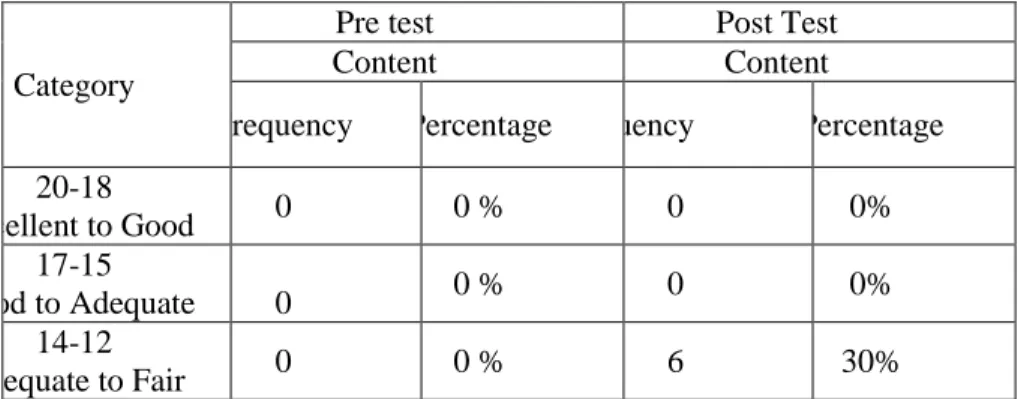
Table 4.7 The Percentage of Students’ Writing Result in term of Content
Category
Pre test Post Test
Content Content
Frequency Percentage Frequency Percentage 20-18
Excellent to Good 0 0 % 0 0%
17-15
Good to Adequate 0 0 % 0 0%
14-12
Adequate to Fair 0 0 % 6 30%
11-6
Unacceptable 19 95% 13 65%
5-1
College Level Work 1 5 % 1 5 %
Total 20 100 % 20 100%
Table 4.7 showed there was 0 student got category excellent to good, 0 students got good to adequate, 6 students got adequate to fair, 13 students got unacceptable, 1 student college level work. Total percentage 100 % from 20 students. The result of pre test 100 % students don’t mastered on writing recount text in terms of content.
2. The Result Writing Ability in Term of Mechanic.
The following is the score of the result of learning English student IPS 3 in writing recount text in term of content from data pre test and post test through learning to use discussion method before and after learning through discussion method showed that:
Table 4.8 Statistics of Mechanic in Writing Recount Text IPS 3
Mechanic Pre test Post test Range
38.35 60.7 22.35
Based on Table 4.8 shows that there were pre test 100 % students do not mastered on writing recount text in terms of mechanic. The pre test mean 38.35which mean low category. Data post test showed in mean 60.7 which mean low fair. The range between pre test and post test was 22. 35.
Table 4.9 The Percentage of Students’ Writing Result in term of Mechanic
Category
Pre test Post Test
Mechanic Mechanic
Frequency Percentage Frequency Percentage 20-18
Excellent to Good 0 0 % 2 10%
17-15 Good to Adequate
0
0 0 % 3 15%
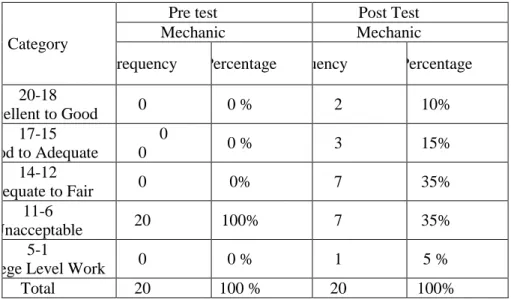
14-12
Adequate to Fair 0 0% 7 35%
11-6
Unacceptable 20 100% 7 35%
5-1
College Level Work 0 0 % 1 5 %
Total 20 100 % 20 100%
Table 4.9 showed there was 2 students got category excellent to good, 3 students got good to adequate, 7 students got adequate to fair, 7 students got unacceptable, 0 student college level work in post test.
Total percentage 100 % from 20 students and pre test and pre test. The result of pre test 100 % students don’t mastered on writing recount text in terms of content.
Table 4.10 Statistics Percentage of Content and Mechanic in Writing Recount Text IPS 3.
Indicator Pre test Post test Percentage improving
Content 32.5 54. 05 66.31 %
Mechanics 38.35 60.7 58.28 %
Data Descriptive Statistics percentage of content and mechanic in writing recount textshowed in content was 66.31 % improving with the post test was 54. 05 and pre test was 33. The data in recount text
interm of mechanics was 58.28 % in percentage improving with the post test was 60.7
Based on the results of data percentage improving, it can be concluded that the experimental classes taught through facebook wall improve compared to control classes that teach through the method of discussion. this shows that significant improvisation by using Facebook wall different teaching by discussion method.
Chart 4.2 Percentage Pre Test and Post Test in Experimental Class Based on Chart 4.2 in pre test mean 32.5 in term of content, 54.05 in post test from 20 students. Pre test mean 38. 35 in term of mechanics, 60.7 in post test from 20 students. The percentage in content 66. 31
%and mechanics 58.28 %.
c). Hyphothesis Testing
Variabel T-test Value T-table Value
. 36. 53 1. 73
After calculation the t test value, then it is compared with the value of t- table with the level of significance p = 0.05 with the degree of freeedom (df
0 20 40 60 80
Pre Test Post Test
Content mechanics