Assess the impact of payer systems on access, availability, and affordability of health care for older adults. Ensuring the quality of care is commensurate with the vulnerability of older adults and the frequency and intensity of care needs.
LEARNING OBJECTIVES
KEY TERMS
Introduction to
Gerontological Nursing
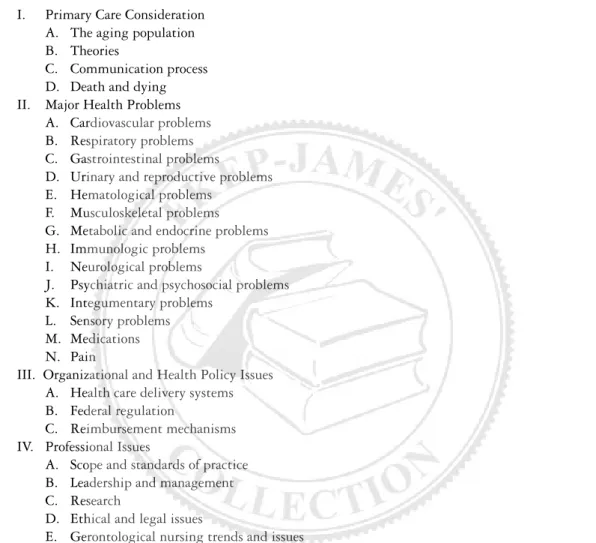
The purpose of this book is to provide the essential information gerontological nursing students need to provide quality care to older adults. As you study this text, you will be provided with knowledge and insights from experienced professionals with expertise in various areas of geriatrics.
Definitions
Is there anything the instructor of the course can do to help Rose deal with the feelings she is having as she completes the required coursework. As Rose shares her feelings and surprising emotional discomfort with the course instructor, Rose is helped to identify that she is afraid of growing older and unable to care for her sick mother and herself.
Case Study 1-1
Rose is a 52-year-old nursing student who returned to school for her BSN after raising a family. As a single woman, she is unsure if she can handle what awaits her as she begins to feel the effects of aging herself.
Roles of the
Cutler (2004) defines financial gerontology as “the intellectual intersection of two fields, gerontology and finance, each of which has practitioner and academic components” (p. 29). The scope of practice for gerontological nursing includes all older adults from "old age" to death.
Gerontological Nurse
Gerontological nurses act as leaders in day-to-day care as they balance the concerns of the patient, family, nursing and the rest of the interdisciplinary team. She has identified that there is a lack of understanding of the aging process and some negative attitudes towards the residents on the part of some of the employees.
Case Study 1-2
As Dad B.'s condition worsens as Alzheimer's disease progresses, the other services discussed in this chapter may be needed at different times. The Brokowskis are a close-knit family of five. The grandfather, Papa B., has lived with them since he was widowed ten years earlier.
Case Study 1-3
Both parents work in the family, and three children are high school students during the day. However, many BSN nurses assist research teams in collecting data and providing research ideas based on problems encountered in the clinical setting.
Basic Certification
Expanded roles of the gerontological nurse may also include counselor, case manager, coordinator of services, associate, geriatric care manager, and others.
Roles of the Advanced Practice Nurse (APN)
Part of the BNP role may be to make regular visits to nursing homes where patients in his or her collaborative practice live. This may include mentoring other nurses; act as an intermediary for patients, family members and other team members; or be politically active by working to change laws to promote aged care.
Advanced Certification
APNs and doctoral-prepared faculty collaborate to obtain grant funding to conduct important research. This is often done with an interdisciplinary team when investigating topics in gerontology because many researchable problems cross multiple disciplines.
Standards of Practice
APNs should also stay abreast of the latest research in order to serve as a resource to other staff on best practices in gerontology.
Core Competencies
The purpose of this document, specific to gerontological nursing, was to use AACN's The Essentials of Baccalaureate Education for Professional Nursing Practice (1998) as a framework to assist nurse educators in incorporating specific nursing content into their programs. The geriatric competencies in Table 1-2 correlate with and are derived from the suggestions in the more general AACN document in Table 1-3.
Settings of Care
Independent living for older adults is often in the community, but as previously stated, may be available in many LTCFs. Core moral and ethical values appeared in their descriptions of the meaning of caring for older adults.
Summary
Critical Thinking Exercises
Gerontological nursing for the elderly, where rehabilitation is emphasized; care for people with rehabilitation problems such as stroke, brain injury, neurological disorders or orthopedic operations. Which of the gerontological nursing practice settings appeals to you most at this point in your professional career.
Glossary
Core Competencies: The essential skills and knowledge needed to provide quality care to older adults. Skilled care: Environment in which patients require less nursing care than the acute hospital, but more than other long-term settings; generally for those with.
Subacute care: For complex patients who require more intensive nursing care than traditional nursing care.
The Numbers
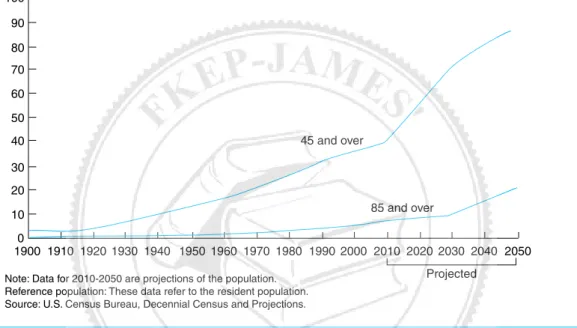
In the 85 and over age group, women constituted 69% of the population (Federal Interinstitutional Forum, 2004). In 1950, 17% of adults in the United States had completed high school and 3% had at least a bachelor's degree.
Case Study 2-1
S. Veterans
An often forgotten segment of the elderly population in the United States is prisoners. There are more than 55,000 prisoners over the age of 55 in the United States, and more are aging.
Case Study 2-2
Because of the stress of prison life and the earlier onset of age-related problems, "elderly" begins at age 50 or even earlier for those in prison (Schreiber, 1999). Prisoners have been called the only population in the United States with a legal right to health care.
Mortality and Morbidity
And some, recognizing the likelihood that inmates will not only age in prison but also die of chronic disease while incarcerated, have implemented hospice programs for their dying, elderly inmates.
Case Study 2-3
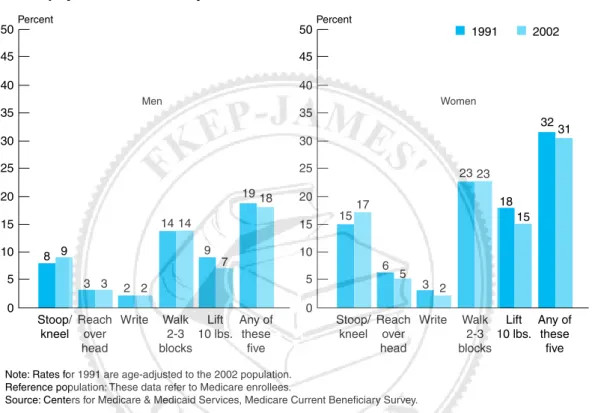
The age-adjusted share of people aged 65 and over with chronic disabilities actually fell between 1984 and 1999. Seventeen percent of non-Hispanic white men were unable to perform at least one physical activity, compared to 26% of white men. non-Hispanic blacks and 22% of Hispanics.
Aging in the United States
The stated age in the census was falling because people did not want to admit their actual age. Physical abuse, lack of waste disposal facilities, rats and bad food made almshouses dangerous places for the elderly, yet the poor elderly often ended up receiving community support and being placed in an almshouse.
Successful Aging
With emphasis on youth and passage of Social Security and Medicare/. You will be one of the nurses who will take care of the baby boomers as they get older.

Psychosocial
In addition, a good theory must be holistic and take into account all that affects a person throughout a lifetime of aging” (Haight, Barba, Tesh, & Courts, 2002, p. 14). The CINAHL, National Library of Medicine, Web of Science, PsycINFO, and Sociological Abstracts databases were reviewed to assess support for and clinical application of the theories of aging.
Theories of Aging
The complex needs of older adults include declining health and functioning that may require moving to more supportive environments. In nursing, Wadensten (2002) used the theory of gerotranscendence to develop guidelines for the care of older adults in a nursing home.

Biological
Animal studies reflect that 35% of the effects of aging are due to genetics and 65% are environmentally induced (Finch & Tanzi, 1997). So it supports the fact that there is a combination of factors that influence the prevention or in some cases the promotion of aging.
Implications for Nursing
Further testing is needed to determine the utility of the functional consequence theory in other settings. Functional Consequences Theory Functional Consequences Theory (Table 3-3) was developed to provide a guiding framework that would address older adults with physical impairment and disability (Miller, 1990).
Case Study 3-1
Would you recommend that he sell his house and move out of the city he has lived in for so many years. He has not changed anything in his bedroom since his wife died, and he has not removed any of his wife's belongings from the home.
Conclusion
Critical Thinking Questions
Stochastic theories of aging: random events that occur in an individual's life and cause damage that accumulates with aging. Mitochondrial-lysosomal axis theory of aging - accumulation of damaged mitochondria as a result of incomplete autophagocytosis.
Sensory
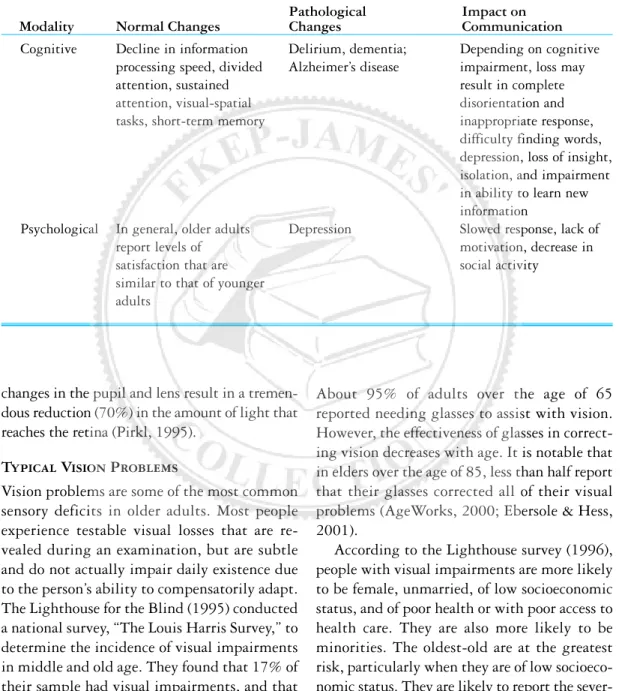
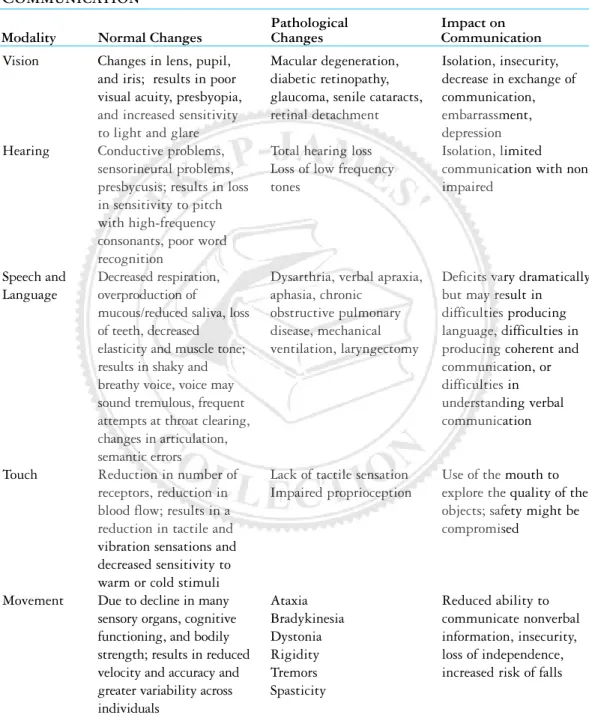
Through our ability to communicate, we express our needs and wishes, understand others'. needs and wants, negotiate adversity and communicate our feelings to others. This example emphasizes the importance of communication and how changes in the ability to communicate can require special adaptation and can be anxiety provoking.
Modalities Involved in Communication
Orienting ourselves to the source of communication is yet another way that exercise improves our ability to receive information from our environment. Finally, a disability (physical disability) may not have a direct effect on our ability to communicate and may not result in a sensory deficit.
The Role of the
When other sensory modalities are lacking, the senses of smell and taste can take on a greater role in our lives because they can serve as key communication mechanisms. However, it could lead other people to change their communication styles toward older adults with disabilities. This will therefore be briefly discussed in this chapter.
Brain in Communication
From the sensory cortex, information is sent to higher-order parts of the brain, such as the forebrain. Similarly, older adults may turn to alternative forms of communication in the case of neurodegenerative diseases such as dementia, when the brain's ability to understand information and communicate verbally deteriorates.
Normal and
For example, the tongue is very sensitive and thus takes up a large part of the sensory cortex despite its relatively small size. These areas integrate and interpret sensory information based on past experiences, overall arousal level, and the range of sensory information already available to us (Atrens & Curthoys, 1978; Howard Hughes Medical Institute, 2005).
Pathological Age-Related Changes That Affect
Although the brain is more adaptable at such a young age, even older adults can use one modality to replace other modalities that are functioning inadequately. For example, an older adult who has lost the ability to see may be able to learn how to use touch to "read" books written in Braille.
Communication
Hearing loss is a commonly observed phenomenon in older adults and is one of the most common disorders in the United States. Damage to the central nervous system from a head injury (most likely from falls) can cause hearing loss.
Case Study 4-1
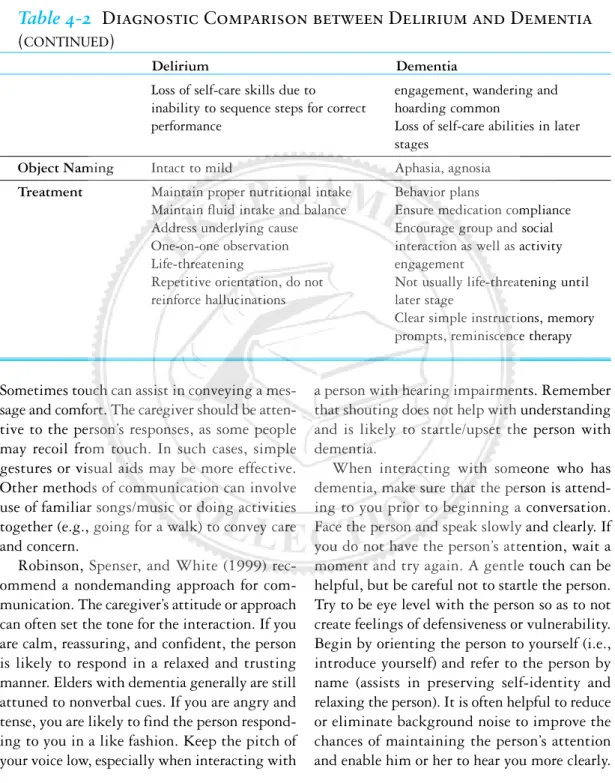
Apraxia: Impaired motor activities due to damage to the motor cortex (eg, the person cannot use a switch). Help with steps that may be more difficult for the person to complete on their own.
Concluding Comments
Aphasia: An inability to express or understand the meaning of words due to damage in the language areas of the brain. Factors associated with functional decline in physical functioning in the elderly: a six-year prospective study.
Hearing-Assistive Devices
Cortical centers located in the parietal lobe of the dominant hemisphere, often referred to as the speech center, are the primary area for language development and speech production. Important speech structures are the diaphragm, intercostal muscles, larynx, vocal cords, tongue and muscles of the mouth and face.
Nonverbal
All nursing staff and health care professionals working with the patient should learn to use the device and allow time for the patient to use the device to communicate. Nonverbal communication on the part of the patient is also an important factor in therapeutic communication in a health care setting.
Case Study 5-1
Nonverbal nonvocal communication refers to the use of facial gestures, body posture, eye contact, and touch as a means of communication. The receiver should be open to the sender's ideas and show respect during the conversation.
Communication in Health Care
There is a greater degree of vulnerability for the healthcare provider in affective or psychosocial communication to develop an emotional or personal relationship with the patient. From the patient's perspective, the nurse showed interest in caring for him rather than caring for him.
Communicating with the Older Adult
The second type of communication from the patient's perspective is affective communication, which focuses on how the healthcare provider cares about the patient and his or her feelings and emotions. By choosing to spend time with the patient and giving him time to talk about his life and emotions, the nurse conveyed her interest in knowing him as a person.
Case Study 5-2
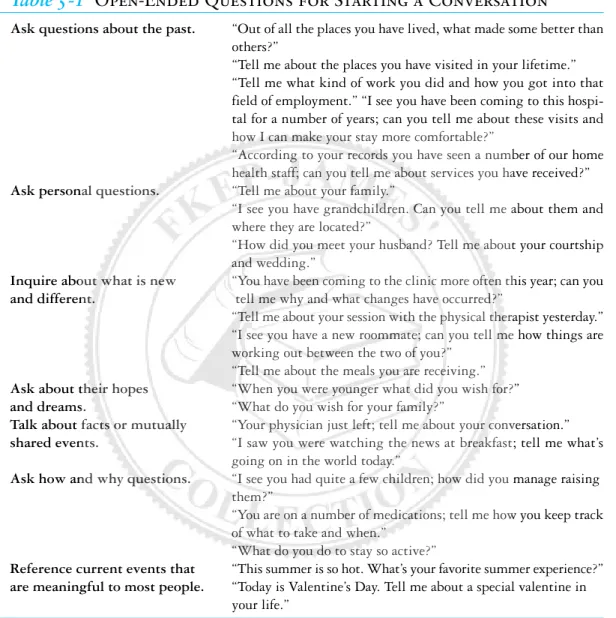
Healthcare providers can make a number of gestures that show respect and interest in the patient as a person. According to your records, you have seen a number of our home health professionals; can you tell me about benefits you have received?”.
Challenges in
To maximize understanding, ask the individual to repeat what you said or tell you what it means to them in their own life. We must be open-minded and provide opportunities for the individual to share his thoughts with us.
Communicating with Older Adults
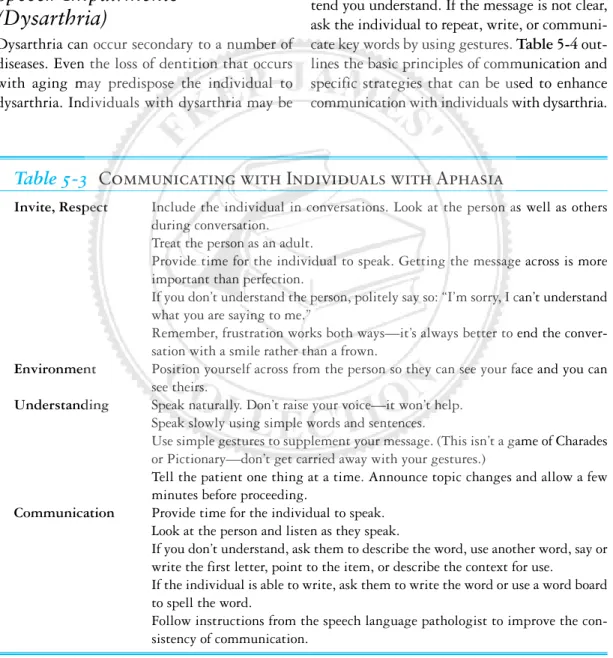
Communication Allow the individual to be involved in making decisions – don't assume it takes too much time to ask. Give the individual time to return to communication and keep your focus on the person.
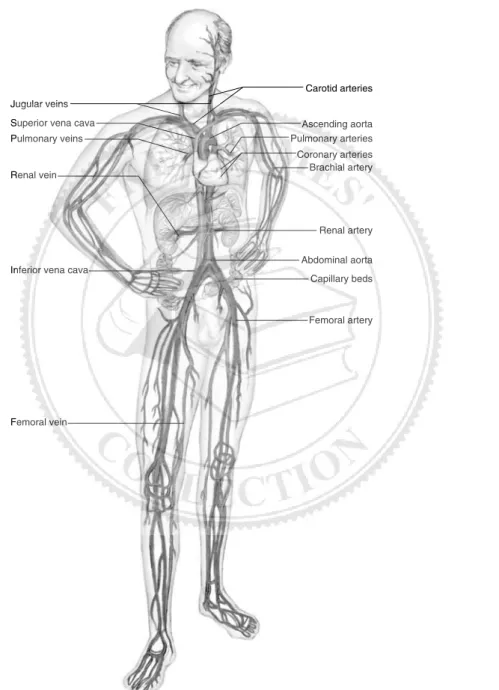
The Cardiovascular System
In addition, there is a decrease in the number of myocardial cells and subsequent enlargement of the remaining cells (Ferrari et al., Figure 6-3 The circulatory system. Some of the age-related changes in the cardiovascular system occur in the autonomic nervous system.
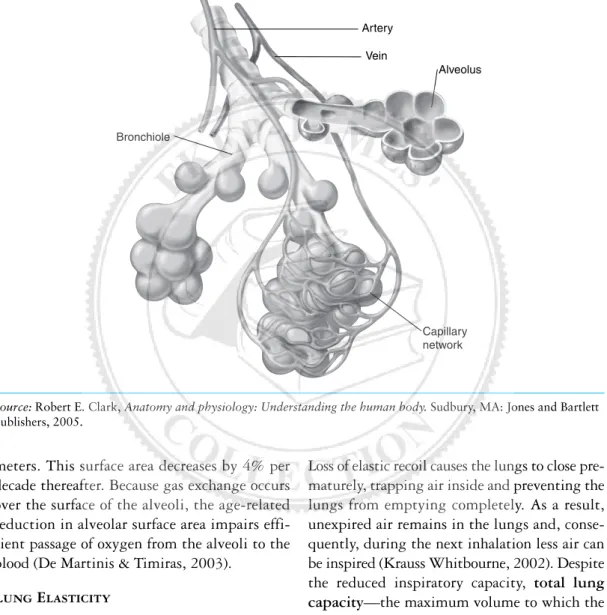
The Respiratory System
Due to the effects of gravity, more blood flows through the lower than the upper part of the lungs. The pathology of COPD is characterized by a reduced ability of the lungs to breathe properly.
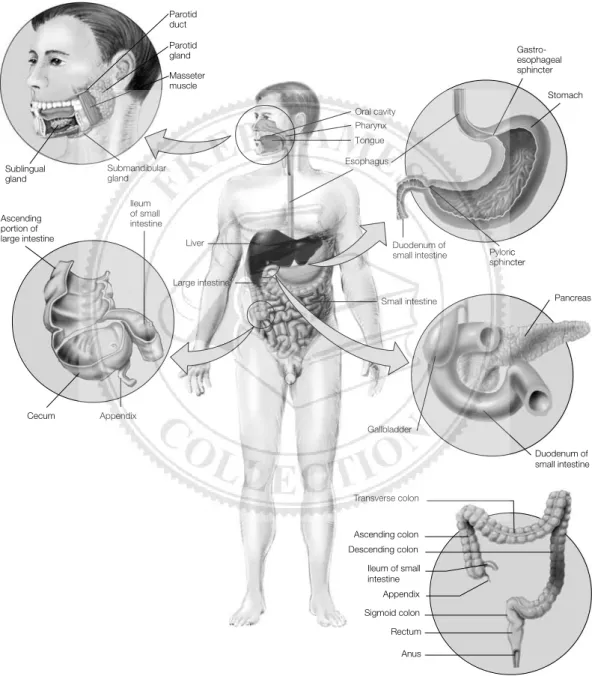
The Gastrointestinal System
However, there appear to be no clinically significant motility changes in the small intestine with age. As people get relatively old, no changes occur in the secretions of the liver, pancreas and gall bladder.
The Genitourinary System
In the male, the sphincter arises from the prostate covering the urethra (Strasser et al., 1996). Due to the decline in renal metabolism of vitamin D, vitamin D supplementation is usually recommended in the elderly population (Vieth et al., 2003).
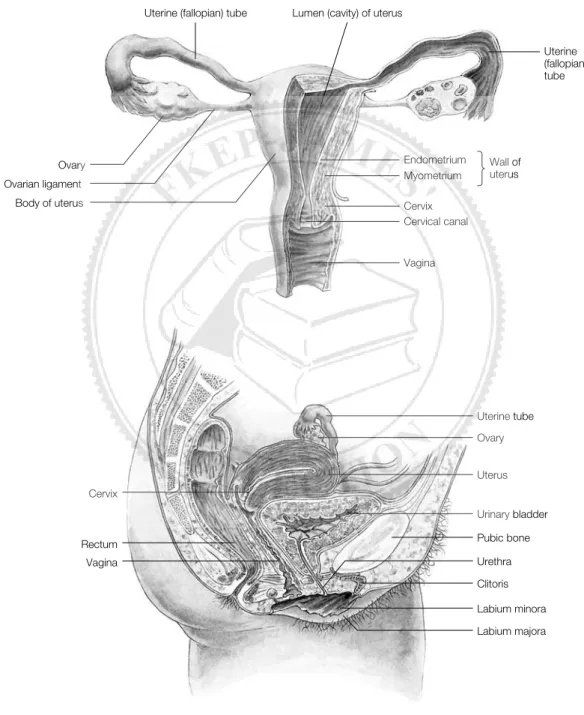
The Reproductive System
Finally, there are age-related changes in estrogen and progestin receptors in the brain. This decrease in inhibin B together with an increase in FSH establishes the earliest age-related changes in the ovaries (Hall, 2004).
Case Study 6-1
As testosterone levels decline in older men, the amount of estrogen remains stable, leading to a decrease in the testosterone-to-estrogen ratio (Kandeel et al., 2001). A decline in the functional ability of the entire reproductive axis causes decreased production of testosterone in aging men (Yialamas & . Hayes, 2003).

The Nervous System