
1.2 "The truly happy man has a mouth full of beer": from prehistory to the end of the Roman Empire 2. 1.5 "For a quarter of beer is a dish for a king": John Bull and the industrialization of brewing 21. Oliver Franz, Martina Gastl and Werner Back 11.1 The development of mixed drinks on base of beer 258 11.2 Ingredients and mixing formulations Constituent part of beer 260.
DIN EN ISO 22000 492
BRC 494
Beer involves conviviality and communication, contributes to the joy of life and – above all – has a unique taste. The keyword “Beer” is the most requested article in Wiley's Ullmann's Encyclopedia of Industrial Chemistry - VCH. Let this book introduce you to the world of beer: from the complex markets of purchasing and retailing to the many types of production of the natural and healthy cultural product beer.
A Comprehensive History of Beer Brewing
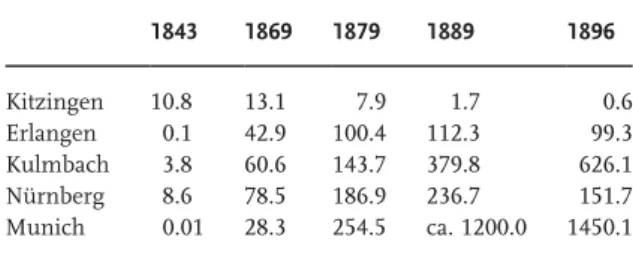
Evidence of the use of hops for brewing in the ninth and tenth centuries also comes from archaeobotanical evidence. In cities, the presence of brewers ( brassatores ) is already recorded in the eleventh and twelfth centuries (Aachen, Bamberg, Huy), which most likely indicates a specialist in the service of the overlord. This was illustrated by the drawings in the books of the Mendel and Landauer charities in Nuremberg [73].
In terms of capacity, the urban boilers mainly exceeded those of the monasteries - the city's largest competitors. The history of grains in the region of the former Netherlands of Swabia (Herzogtum Swabia) from the Roman to the post-medieval period.
Starchy Raw Materials
The germination conditions are similar to those of barley; however, the germs are looser due to the voluptuous peels. A large number of millets are included in this group; However, the following paragraphs only cover the most important ones for beer production. With a cultivated area of 26 million hectares, it is the economically most important short-grain millet variety.
Its name in Amharic, the official language of Ethiopia, means 'to lose' and is derived from the short size seeds g thousand maize weight. Apart from the malted grain, raw teff and unleavened teff bread are used for the production of opaque beer [202, 203]. According to these studies, some types of finger millet can reach levels of β-amylase activities that match those of barley malt.
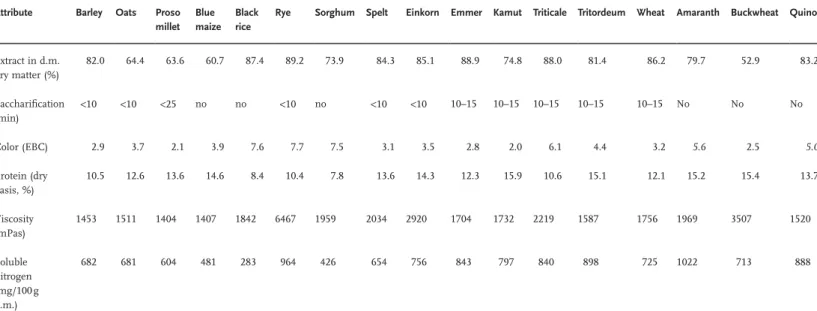
In the Middle Ages, Proso millet spread to Central and Western Europe, where it lost its importance only after the introduction of the potato [205]. Proso millet has a very small seed diameter, so the endosperm content is quickly consumed when germination is initiated. Proso millet malt showed complete drying as well as an acceptable final attenuation, even under standard malting conditions (see Table 2.5.
The beer has been evaluated as a special top fermentation specialty that is clearly different from the known beers.
Maize for brewing needs a temperature of around 28 °C and, compared to barley, an extended vegetation period of up to 2 days. In addition to the reduction of diastatic power and consequently the yield of the extract, the extended vegetation period also causes greater malt losses and an increased risk of mold growth.
As a result, sorghum beers were firmly established in the markets even after malt imports resumed. In the Middle Ages it was cultivated in Switzerland, Tyrol, Baden-Württemberg and Middle Franconia. The germination power according to Schönfeld also showed satisfactory values in the case of shelled grains.
The slightly sour, spicy note of this pleasant top-fermented beer was praised in the sensory evaluation. Among the varieties cultivated, the mature grains remain shelled only in the case of bucket, all others are classified as durum. Therefore, the extract value is low as well as the degree of modification, color and α - amino nitrogen, although the protein content in the unmalted.
2.3.2.8.5 Sorghum ( × T . riticosecale Wittmack) Sorghum is a new cereal variety that was bred in the last century. Wheat can be traced back to the beginning of agriculture, as findings in the Near East and Central Asia (around 7800 BC) show. While in the past this additive served mainly as a flavor enhancer, today it is applied to increase wort extract [245].
Malt contains sufficient soluble protein and FAN (see Table 2.5) but has no detectable amylolytic activity and consequently exhibits the lowest final attenuation of any recorded.
1971) Fractionation of the enzymes of the aleurone layer of barley:. evidence for a soluble mode of enzyme release. The structural organization of the gene encoding class II starch synthase of wheat and barley and the evolution of the genes encoding starch synthases in plants. 1993) Carbohydrates of the barley grain, in Barley: Chemistry and Technology, American Association of Cereal Chemists, St Paul, MN, pp.
2004) Storage protein accumulation in the absence of the vacuolar processing enzyme family of cysteine proteases. Modulation of gene expression by DNA - protein and protein - protein interactions in the promoter region of the zein multigene family. 2002) Molecular dissection of the gibberellin/abscisic acid signaling pathways by transiently expressed RNA interference in barley aleurone cells.
Proceedings of the National Academy of Sciences of the United States of America Evolution of the polysaccharide hydrolase substrate specification. Master Brewers Association of the Americas Technical Quarterly Nutzpflanzen in Deutschland, Nikol Verlagsgesellschaft, Hamburg. Master Brewers Association of the Americas Technical Quarterly Effect of Sorghum Endosperm Type on the Quality of Brewery Industry Adjuvants.
Proceedings of the International Symposium on New Approaches to Functional Grains and Oils, Bejing, pp.
Hops
The composition of hops [10] depends on the variety, vintage, origin, time of harvesting, drying and storage [11] (Figure 3.1. The main feature of hop products is the reduced volume compared to raw hops. Purpose of adding hops is the manipulation of beer aroma and taste.
The hop dosage must be adjusted to the taste profile of the respective beer. The taste and aroma of the hops must be harmoniously integrated into the beer matrix. Aroma hops can be added after the addition of the bitter resins to obtain a mild bitterness [50].
Depending on the variety, there are different influences on the flavor and aroma of the beer. The intensity and the quality of the hop flavor can be individually optimized with the point of addition. The taste stability of the beer can be positively influenced by late aroma addition.
Similar to foam, the increased hydration of iso-α-acids has a positive effect on the microbiological stability of beer.

Brew Water
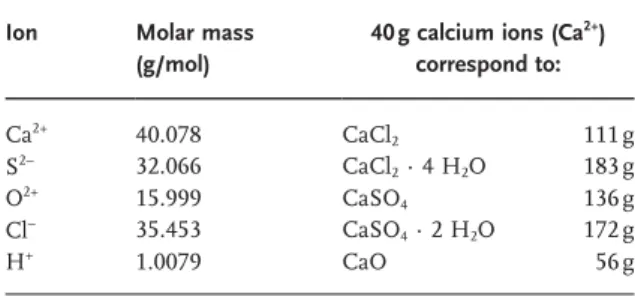
Calcium (Ca 2+ ) and magnesium (Mg 2+ ) ions support acidity and lead to a decrease in mash pH. A residual alkalinity of zero means that the acid-supporting and acid-reducing properties of the beer water ions cancel each other out. This water acts like distilled water, as it does not affect the pH of the mash.
The pH value of the mash/wort therefore depends exclusively on the malt used. An increase in residual alkalinity by 10° dH results in an increase in mash pH by 0.3 units. The composition of the brewing water is of great importance for both the quality and character of the beers.
This has no effect on the pH of the mash because the buffering capacity of the water is low. Agents that form water hardness (calcium, magnesium, sodium) can be removed using weak and/or strongly acidic ion exchange resins. Permeate is the purified membrane process solution (ie, the portion of the feedwater that migrates through the membrane).
An optimum between the quality of the permeate and the yield of the permeate must be established for each application.
Yeast
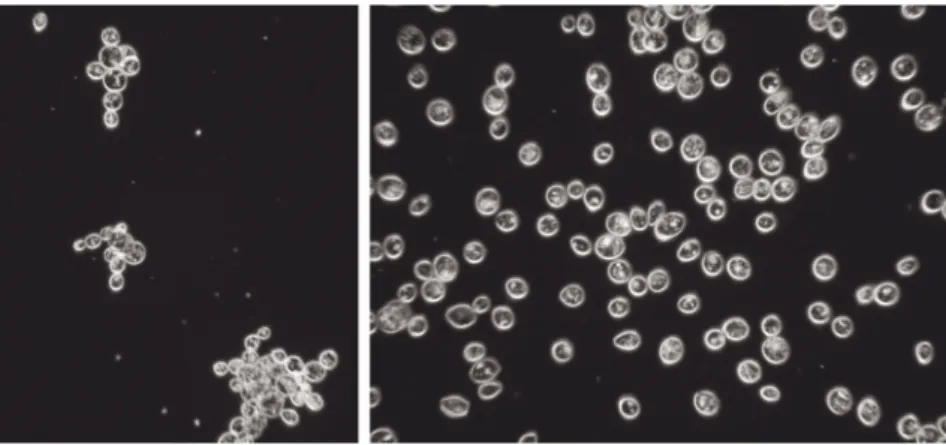
In addition, the hydrophilic properties of the cell wall are achieved by phosphorylation of mannoproteins. As is evident, all substrate transport systems of the cell are located in the membrane. Their number and structure undergo extensive changes according to changes in the life cycle and physiological state of the yeast.
Specifically, oxygen is required for the cyclization of squalene to lanosterol, ultimately resulting in ergosterol—the major yeast sterol. Phosphorus is essential for phospholipids, in the phosphorus bonds of nucleic acids and for many phosphorylations in yeast metabolism [44]. The availability of the required amounts at the right time in the right physiological state is the main goal of yeast management.
So if only part of the yeast is removed for pitching, the rest remains aerated in the tank. There are mainly two ways to use a separator - the whole yeast is separated at once or the yeast is separated after an initial partial harvest. An additional degassing of the CO 2 is achieved and the yeast can be supplied with air through air equipment in the sieve.
1995) Sugar absorption and metabolism in wort - influence of genetic and environmental factors, in Proceedings of the 25th European Brewing Convention, Brussels, Belgium, Oxford University Press, Oxford, p.
Malting
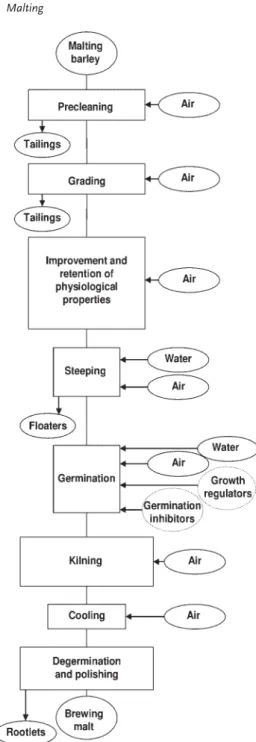
Water intake depends mainly on the water gradient and the duration of wet periods. The process can be managed by fresh air temperature and fan performance. They have a major impact on the color and aroma, as well as the pH and flavor stability of the beer.
They are built from hordene (a phenolic alkaloid) fractions of the green malt and nitric oxide from the air;. Malt quality has a fundamental influence on beer production and on the quality of the final beer. Low homogeneity values and a strong increase of viscosity as well as of β - glucan of.
Thus, a balanced composition of the soluble protein in the high molecular area (head retention) as well as in the low molecular area (yeast nutrition) must be guaranteed despite the raw protein content of malt. Furnace temperature and period allow the most effective control of the amount of DMS precursor. Based on the boiled wort, color can be conditionally predicted with the color of the finished beer.
Adjustment of the desired color can be done using various special paints.
Wort Production
![Table 1.4 World beer production around 1900 and 2003 [113, 124, 125] .](https://thumb-ap.123doks.com/thumbv2/123dok/10477864.0/67.722.150.630.112.824/table-world-beer-production-1900-2003-113-124.webp)
![Figure 2.1 Simple diagram of the dry wheat grain showing its principle parts (from [8] )](https://thumb-ap.123doks.com/thumbv2/123dok/10477864.0/78.722.97.460.94.266/figure-simple-diagram-wheat-grain-showing-principle-parts.webp)
![Table 2.2 Physiologically important nutrients in the wheat kernel (from [42] )](https://thumb-ap.123doks.com/thumbv2/123dok/10477864.0/80.722.92.576.128.310/table-2-physiologically-important-nutrients-wheat-kernel-42.webp)
![Table 2.3 Properties of starch granules [59] .](https://thumb-ap.123doks.com/thumbv2/123dok/10477864.0/83.722.154.624.114.450/table-2-3-properties-starch-granules-59.webp)
![Table 2.4 Content of important amino acid in different grains (% of total; values from [86] )](https://thumb-ap.123doks.com/thumbv2/123dok/10477864.0/84.722.93.578.684.893/table-content-important-amino-different-grains-total-values.webp)
![Figure 3.2 Classifi cation of hop products [33] .](https://thumb-ap.123doks.com/thumbv2/123dok/10477864.0/123.722.150.616.525.871/figure-3-2-classifi-cation-hop-products-33.webp)
![Table 3.1 Methods for analyzing hop and hop products [33] .](https://thumb-ap.123doks.com/thumbv2/123dok/10477864.0/125.722.152.629.112.762/table-3-methods-analyzing-hop-hop-products-33.webp)
![Figure 3.3 Infl uence of the addition of hops on the character of beer [33] .](https://thumb-ap.123doks.com/thumbv2/123dok/10477864.0/127.722.163.516.716.893/figure-infl-uence-addition-hops-character-beer-33.webp)
