
Fish Vaccines
This book is a timely reference text that highlights the role of vaccination in the fast- growing aquaculture industry. It discusses topics such as vaccine formulation, vaccine delivery, and enhancing the immune response of fish using nanoparticles. Information related to vaccine safety, ethical approval, and regulations is also discussed, together with dissemination of vaccines to fish farms across the globe. This cutting-edge book presents novel strategies to meet the growing demand for vaccines in finfish aquaculture. This book is useful to students, academics, clinicians, and professionals in the field of fisheries sciences, aquaculture, and veterinary sciences.
Fish Vaccines
Health Management for Sustainable Aquaculture
Edited by
Preetham Elumalai
Kim Thompson
Sreeja Lakshmi
First edition published 2023 by CRC Press
2385 Executive Center Drive, Suite 320, Boca Raton, Florida 33431-8530 and by CRC Press
4 Park Square, Milton Park, Abingdon, Oxon, OX14 4RN CRC Press is an imprint of Taylor & Francis Group, LLC
© 2023 selection and editorial matter, Preetham Elumalai, Kim Thompson, Sreeja Lakshmi; individual chapters, the contributors
Reasonable efforts have been made to publish reliable data and information, but the author and publisher cannot assume responsibility for the validity of all materials or the consequences of their use. The authors and publishers have attempted to trace the copyright holders of all material reproduced in this publication and apologize to copyright holders if permission to publish in this form has not been obtained. If any copyright material has not been acknowledged please write and let us know so we may rectify in any future reprint.
Except as permitted under U.S. Copyright Law, no part of this book may be reprinted, reproduced, transmitted, or utilized in any form by any electronic, mechanical, or other means, now known or hereafter invented, including photocopying, microfilming, and recording, or in any information storage or retrieval system, without written permission from the publishers.
For permission to photocopy or use material electronically from this work, access www.copyright.com or contact the Copyright Clearance Center, Inc. (CCC), 222 Rosewood Drive, Danvers, MA 01923, 978-750-8400. For works that are not available on CCC please contact [email protected]
Trademark notice: Product or corporate names may be trademarks or registered trademarks and are used only for identification and explanation without intent to infringe.
ISBN: 978-1-032-48341-2 (hbk) ISBN: 978-1-032-48344-3 (pbk) ISBN: 978-1-003-38854-8 (ebk) DOI: 10.1201/9781003388548 Typeset in Times
by codeMantra
v
Contents
Acknowledgements ...vii
Foreword by Shri. Pinarayi Vijayan ...ix
Foreword by Prof Chris Secombes ...xi
Foreword by Dr. Tim Connelley ... xiii
Editors ...xv
Contributors ...xvii
Section i Vaccines in Aquaculture: A Preface
Chapter 1 Understanding Vaccine Development in Aquaculture ...3Nayomi John, Anu Joseph, Aparna Sasi, Bismi Mujeeb, Joyal Elisabeth Baiju, Eleeswa Celin Syrus, and Nivya Mariam Paul Chapter 2 Antigens and Immune Responses in Fishes: An Overview ... 17
Nivya Mariam Paul, Aruna Babu, Amrutha Rajesh, Neema, Alanta Maria Binu, Anu Jose, Aneena Mariya Abraham, and Nayomi John Chapter 3 Aquaculture: Facing an Array of Pathogens ... 33
Wanna Sirimanapong, Prawporn Thaijongrak, Chiranan Sudpraseart, and Boonsirm Withyachumnarnkul
Section ii Vaccination in Fishes: types and Methods
Chapter 4 Concepts and Types of Vaccines ... 49Subramaniam Sivakumar, Panneerselvam Punniyakotti, Kuppuswamy Kavitha, and Panneerselvam Saravanan Chapter 5 Antigen Discovery ...65
Nhat HM Truong, Nam Tri Vo, Phuong Hong Vo, and Hoang Duc Nguyen Chapter 6 Novel Advancements in Vaccine Delivery and Methods of Vaccination: Experimental Strategies ... 75 Abdullah Bin Abdul Nazar, Muhammed Salih Salim, Aswathi Ashok,
Anuj Sharma, Sanchu Prakash, Malavika Biju Reni, Meril Mary Mathew, Muzammil Siddiqui, Subramaniam Sivakumar, Sreeja Lakshmi, and Preetham Elumalai
vi Contents
Section iii Adjuvants in Vaccination: An Underpinning
Chapter 7 Role of Adjuvants in Vaccination Studies ... 101 Md Yasin Ina-Salwany, Tilusha Manchanayake, Aslah Mohamad,
Md. Shirajum Monir, Mohammad Noor Amal Azmai, Salleh Annas, and Mohd Zamri-Saad
Chapter 8 Development of Mucosal Adjutants for Fish Vaccination ... 113 Ina Salwany Md Yasin, Aslah Mohamad, Mohammad Noor Amal Azmai,
Annas Salleh, and Mohd Zamri Saad
Section iV technological Advancements and efficacy of Fish Vaccination
Chapter 9 Biotechnological Approaches to Vaccines ... 127 Thavasimuthu Citarasu, Ganapathi Uma, Ramamoorthy Sathish Kumar,
Sugumar Vimal, and Mariavincent Michael Babu
Chapter 10 Safety and Efficacy of Vaccines in Aquaculture ... 155 Eakapol Wangkahart, Po-Tsang Lee, Chou-Min Chong, and
Fernando Yamamoto
Chapter 11 Mass Vaccination in Aquaculture: Possibilities and Limitations ... 169 Hethesh Chellapandian, Sivakamavalli Jeyachandran, Joseph Selvin,
Kiyun Park, and Ihn-sil Kwak
Section V Vaccines in Aquaculture:
challenges and Perspectives
Chapter 12 Fish Vaccination: How Close Are the Fish Farmers? ... 189 Saurabh Dubey, Kizito K. Mugimba, Jitendra Kumar, and
Hetron M. Munang’andu
Chapter 13 Development of Fish Vaccines: Challenges and Future Perspectives ...209 A. P. Desbois and S. J. Monaghan
Chapter 14 Fish Vaccine: From Field to Development ... 229 R. Cascione, Adrian Astier, Philippe Mahl, and Øystein Evensen
Index ... 237
vii
Acknowledgements
The editors cordially acknowledge ‘International Veterinary Vaccinology Network’ (IVVN) and
‘BactiVac – The Bacterial Vaccines Network’ for their excellent support for the successful produc- tion of the book. The authors are sincerely appreciated and acknowledged for their skillfull presen- tations of their respective chapters in articulating this book. I would like to thank Dr. Subramaniam Sivakumar, Associate Professor, Sri Sankara Arts and Science College, Enathur, Kancheepuram for offering his handful assistance and for technical support throughout the publishing process. The editors also greatfully acknowledge CRC Press/Taylor & Francis Group, especially Madhurima Kahali, Neha Bhatt and Vijay Shanker, for their patience and timely support towards the commend- able task of organizing and integrating this compendium.
ix
Foreword by Shri. Pinarayi Vijayan
As part of the Cochin University of Science and Technology’s international project with the UK and Norway, on aquatic vac- cination, this book has been jointly edited by Dr. Punnadath Preetham Elumalai, Dr. Kim Thomson, and Dr Sreeja Lakshmi. Fish Vaccines: Health Management for Sustainable Aquaculture, published by the CRC Press, USA, incorporates various chapters authored by experts from countries in which aquaculture is a prominent economic activity. Therefore, it will not merely be an academic document, but will also serve as a useful reference material for Kerala, especially as we are under- taking several measures to modernize and improve our fisheries sector.
Kerala’s international collaborations in the fisheries sector date back to almost seven decades. Back in the early 1950s, we had collaborated with Norway to develop the capture fisheries sector in the State. Subsequently, the Neendakara Fishing Harbour was established under the Indo Norwegian Fisheries project, in 1953. Modern fishing techniques like trawling were learnt by our traditional fishing communities from the Norwegians. It is to further strengthen such col- laboration, that an official delegation from Kerala recently visited Finland, Norway, and the UK.
Throughout the discussions and deliberations held by Kerala’s delegation in these countries, the fisheries and aquaculture sector was featured prominently. Agreements were also made, with regard to co-operation in the sector. The Norwegian Institute of Marine Research has assured their support for research in fish nutrition, fish feed, and fish health management.
The NORD University that focusses on blue and green growth, and has a prominent Faculty of Biosciences and Aquaculture, has expressed its willingness to provide research orientation to students and teachers in Kerala. We have also decided to ensure more cooperation in student and faculty exchanges and research aimed at employment generation through offshore aquaculture, cage farming, and sustainable fish farming.
Fisheries and aquaculture play a significant role in the overall development of the world in terms of poverty alleviation, employment creation, and protein security. Unfortunately, owing to various reasons like climate change, over exploitation, marine pollution etc. our marine fish stocks are getting depleted and the production from the capture sector is showing dwindling trends for a few decades now. So, aquaculture has emerged as a sunrise sector to compensate this gap between pro- duction and demand.
The world has advanced significantly in aquaculture with varying production protocols and strate- gies, making this health food available in all the markets at a nominal price. Kerala’s aquaculture production is low compared to countries like Norway and Vietnam and a few Indian States too. We aim to correct this situation through joint action and collaboration. In fact, both Finland and Norway have expressed interest in collaborating with the Maritime Cluster with a Sustainable Maritime Technology Hub, which is coming up in Kochi. It is in this larger backdrop of Kerala’s focussed inter- ventions toward emerging as a prominent maritime hub that this book assumes greater significance.
Apart from providing an introduction to vaccines in aquaculture, this book discusses various aspects of fish vaccines including their types and methods, technological advancements and chal- lenges in the field, and so on. Certainly, it can serve as a much useful reference material for those who are engaged in improving the productivity of fisheries in general, and aquaculture in par- ticular. Its contents would also go a long way in promoting cutting edge scientific and sustainable
x Foreword by Shri. Pinarayi Vijayan aquaculture. In that regard, this book benefits not only academia but also the general public who are keen to learn about and earn from aquaculture.
Kerala has the potential to emerge from a follower of aquaculture techniques developed around the world, to a creator of cutting edge technologies and techniques that can be followed around the world.
In order to ensure that academic works such as this that balance research with experience are essential.
I congratulate the authors and wish the readers an enriching experience.
Shri. Pinarayi Vijayan The Hon’ble Chief Minister of Kerala
xi
Foreword by Prof Chris Secombes
Over the last couple of years, the importance of vaccination as a means of infectious disease con- trol has been apparent to everyone. During the Covid pandemic, modern vaccination approaches were adopted and proven to be highly efficient in the fight against this disease. Such advances are likely to enable novel vaccine development in many areas of clinical and veterinary science, on a scale not previously seen. The need for vaccines to con- trol diseases of fish in aquaculture is also readily apparent and crucial for the expansion of aquacul- ture in many developing countries, where fish are an important source of animal protein. Vaccination of fish is already highly successful in controlling many of the diseases of concern in the salmonid fish farm- ing industry. Indeed, in Atlantic salmon culture, it is common for all fish to be vaccinated before transfer to seawater. This book, edited by Preetham Elumalai, Kim Thompson, and Sreeja Lakshmi, contains a number of review articles pertaining to the demand and ways in which vaccination can be used in aquaculture to improve fish health. There is an initial overview of the need for vaccination of fish, and the pathogens commonly encountered.
It then describes the approaches taken to develop new and improved vaccines for aquaculture, using modern approaches and methodologies, including the requirement to ensure the safety as well as efficacy of those that are commercialized. The use of adjuvants to maximize (fish) vaccine efficacy is well known. For example, the benefit of incorporating adjuvants into salmonid vaccines against furunculosis (caused by the bacterium Aeromonas salmonicida) was realized at an early stage of their development. However, better adjuvants are needed, especially those that aid mucosal vaccina- tion of fish, and their role and the advances on the horizon are covered in some of the later chapters.
Such progress bodes well for the future. The challenges of vaccine commercialization, in terms of taking successful vaccines to market and increasing their use by fish farmers, is the final topic cov- ered in this book. That there is an economic benefit as well as improved fish welfare is key to their uptake and should not be overlooked during the enthusiastic hunt for novel, highly effective vaccines to fish pathogens. Overall, this book highlights the vital role that vaccination can play in fish health management and the advances being made currently, which will help to ensure a robust and sustain- able future for aquaculture.
Prof Chris Secombes University of Aberdeen, Aberdeen, Scotland, UK
xiii
Foreword by Dr. Tim Connelley
The rapid growth of aquaculture as a primary source of providing the increasing needs for animal-derived protein in large parts of the world has been matched by a highly dynamic and progressive development in the science and application of vaccines. This has been achieved, in large part, by scientists from around the globe working collaboratively together. It has been a privilege to be able to support small-scale collaborations between some of these scientists as part of the portfolio of activities conducted by the International Veterinary Vaccinology Network (IVVN).
This book covers the broad spectrum of perspectives of vaccin- ology—from the foundational sciences such as immunology and microbiology, through the translational aspects of vaccine produc- tion and manufacture and onto the delivery of vaccines to farmers. As such it represents a useful text which considers and summarizes the current successes as well as the future challenges and opportunities in a comprehensive and holistic manner.
In India, aquaculture continues to increase as a source of both income and food security - growing at an annual rate of 8%, generating >USD6 billion in revenue and supporting the livelihoods of
~28 million fishermen and others involved in the aquaculture economy. With the expansion of the aquaculture sector comes increasing risks of disease outbreaks from a number of viral, bacterial, parasitic and fungal pathogens with the potential to lead to substantial morbidity and mortality for the farmed fish and economic loss to farmers. Vaccination is, and will continue to be, a principal method to mitigate and minimize the losses incurred from such diseases. As such it gives me great pleasure to provide a foreword to Fish Vaccines: Health Management for Sustainable Aquaculture edited by Dr. Preetham Elumalai, Dr. Kim D Thompson and Dr. Sreeja Lakshmi. I am certain the readers will find this book a useful reference by which a better understanding of the current status of fish vaccine development and deployment can be gained.
Dr. Timothy Connelley Director of the International Veterinary Vaccinology Network, The Roslin Institute, University of Edinburgh, United Kingdom
xv
Editors
Preetham Elumalai, PhD, is an Associate Professor at the Department of Marine Biology, Cochin University of Science and Technology, Kochi, Kerala, India. He earned a Master’s degree from the University of Madras and a PhD in biochemistry and molecular immunology from the Institute for Immunology, University of Regensburg, Germany. His research practice includes bioassay-guided identification of novel marine compounds, unveiling fish lectins in innate immune defense, aquatic vaccine development, evaluation of cost-effective feed additives and nutrigenomics, and effects of environmental pollutants on marine ecosystems. He has been a partner in numerous EU-, Indian-, and UK-funded projects (e.g., IVVN, BactiVac). He has written more than 70 peer-reviewed articles and has 2 patents in his name apart from editing 5 books (Springer, CRC Press) and has presented his work at more than 60 national and international conferences. He has been awarded the presti- gious INSA fellowship (2018); MASTS, Fellowship (2019); IVVN award, UK (2020); FRSB, UK (2021); and BactiVac award, UK (2022).
Kim Thompson, PhD, is a Principal Investigator at Moredun Research Institute, where she heads the Aquaculture Research Group. She earned a BSc in biochemistry from the University of Stirling, an MSc in immunology from the University of Aberdeen, and a PhD in fish immunology from the University of Stirling. She has published over 160 articles in international journals relating to her work on fish health. Her research interests include vaccine development for fish pathogens (viral, bacterial, and parasitic), examining the immune response of fish to these pathogens and understanding the factors that influence this response. She is interested in developing alternative therapies for disease control in fish (e.g., functional feeds, immunostimulants, and probiotics).
Sreeja Lakshmi, PhD, is a Postdoctoral Research Scientist in collaboration with Moredun Research Institute (MRI), UK. She graduated from Calicut University and earned a PhD in biochemistry and functional genomics from the Institute for Molecular Biology, University of Regensburg, Germany.
She has published research articles in peer-reviewed international journals and authored books and book chapters. She has been awarded prestigious research grants from the Bavarian Research Foundation (Bayerische Forschungsstiftung), Government of Bavaria, Germany; an HRD-Fellowship for Women Scientists from the Department of Health Research, Government of India; and a MASTS (Marine Alliance Science and Technology, Scotland) Award for Postdoctoral and Early Career Research Exchanges (PECRE), visited the University of Aberdeen, Scotland, and received IVVN Fellowship grant from the International Veterinary Vaccinology Network (IVVN), UK.
xvii
Contributors
Aneena Mariya Abraham Department of Microbiology
Mar Athanasius College (Autonomous) Kerala, India
Mohammad Noor Amal Azmai Department of Biology
Faculty of Science, Universiti Putra Malaysia Serdang, Selangor, Malaysia
Salleh Annas
Department of Veterinary Pathology and Microbiology
Faculty of Veterinary Medicine Universiti Putra Malaysia Serdang, Selangor, Malaysia Aswathi Ashok
Department of Marine Biology, Microbiology and Biochemistry
School of Marine Sciences
Cochin University of Science and Technology (CUSAT)
Kochi, India Adrian Astier Aquaculture division Virbac Asia Pacific Co. Ltd.
Bangkok, Thailand Aruna Babu
Department of Microbiology
Mar Athanasius College (Autonomous) Kerala, India
Joyal Elisabeth Baiju Department of Microbiology
Mar Athanasius College (Autonomous) Kerala, India
Alanta Maria Binu
Department of Microbiology
Mar Athanasius College (Autonomous) Kerala, India
R. Cascione
Virbac Asia Pacific Co. Ltd.
Bangkok, Thailand Hethesh Chellapandian
Department of Biotechnology and Microbiology
National College (Autonomous) Tiruchirappalli, Tamil Nadu, India Chou-Min Chong
Aquatic Animal Health and Therapeutics Laboratory (AquaHealth)
Institute of Bioscience Universiti Putra Malaysia Serdang, Selangor, Malaysia Saurabh Dubey
Department of Production Medicine Norwegian University of Life Sciences Ås, Norway
A. P. Desbois
Institute of Aquaculture, University of Stirling Stirling, Scotland, United Kingdom
Preetham Elumalai Faculty of Fisheries
Kerala University of Fisheries and Ocean Studies
and
Department of Marine Biology, Microbiology and Biochemistry
School of Marine Sciences
Cochin University of Science and Technology Kochi, India
Øystein Evensen
Norwegian University of Life Sciences Ås, Norway
Uma Ganapathi
Aquatic Animal Health Laboratory, Centre for Marine Science and Technology (CMST) Manonmaniam Sundaranar University Tirunelveli, Tamil Nadu, India
xviii Contributors
Md Yasin Ina-Salwany
Aquatic Animal Health and Therapeutics Laboratory
Institute of Bioscience Universiti Putra Malaysia Serdang, Selangor, Malaysia Sivakamavalli Jeyachandran Department of Biotechnology and
Microbiology
National College (Autonomous) Tiruchirappalli, Tamil Nadu, India Nayomi John
Department of Microbiology
Mar Athanasius College (Autonomous) Kerala, India
Anu Joseph
Department of Microbiology
Mar Athanasius College (Autonomous) Kerala, India
Jitendra Kumar College of Fisheries
Acharya Narendra Deva University of Agriculture and Technology Uttar, Pradesh, India
Kavitha Kuppuswamy Department of Microbiology
Sri Sankara Arts and Science College Kanchipuram, Tamil Nadu, India Ihn-sil Kwak
Department of Fisheries Chonnam National University Yesou, South Korea
Sreeja Lakshmi
Aquaculture Research Group Moredun Research Institute Penicuik, United Kingdom Po-Tsang Lee
Department of Aquaculture National Taiwan Ocean University Keelung, Taiwan
Philippe Mahl
Virbac Asia Pacific Co. Ltd.
Bangkok, Thailand Tilusha Manchanayake
Department of Veterinary Pathology and Microbiology
Faculty of Veterinary Medicine Universiti Putra Malaysia Serdang, Selangor, Malaysia Meril Mary Mathew Faculty of Fisheries
Kerala University of Fisheries and Ocean Studies
Kochi, India
Mariavincent Michael Babu Aquatic Animal Health Laboratory Centre for Marine Science and Technology
(CMST)
Manonmaniam Sundaranar University Tirunelveli, Tamil Nadu, India Aslah Mohamad
Aquatic Animal Health and Therapeutics Laboratory
Institute of Bioscience Universiti Putra Malaysia Serdang, Selangor, Malaysia S. J. Monaghan
Institute of Aquaculture University of Stirling
Stirling, Scotland, United Kingdom Md. Shirajum Monir
Bangladesh Fisheries Research Institute Freshwater Station
Mymensingh, Bangladesh Kizito K. Mugimba
Department of Biotechnical and Diagnostic Sciences
College of Veterinary Medicine Animal Resources and Biosecurity Makerere University
Kampala, Uganda
Contributors xix
Bismi Mujeeb
Department of Microbiology
Mar Athanasius College (Autonomous) Kerala, India
Hetron M. Munang’andu
Faculty of Biosciences and Aquaculture Nord University
Bodø, Norway
Abdullah Bin Abdul Nazar Faculty of Fisheries
Kerala University of Fisheries and Ocean Studies Kochi, India
Neema
Department of Microbiology
Mar Athanasius College (Autonomous) Kerala, India
Hoang Duc Nguyen
Center for Bioscience and Biotechnology University of Science
and
Vietnam National University Ho Chi Minh City, Vietnam Kiyun Park
Department of Fisheries Chonnam National University Yeosu, South Korea
Nivya Mariam Paul Department of Microbiology
Mar Athanasius College (Autonomous) Kerala, India
Sanchu Prakash Faculty of Fisheries
Kerala University of Fisheries and Ocean Studies
Kochi, India
Panneerselvam Punniyakotti Department of Biochemistry
Kanchi Shri Krishna College of Arts and Science Tamil Nadu, India
Amrutha Rajesh
Department of Microbiology
Mar Athanasius College (Autonomous) Kerala, India
Sathish Kumar Ramamoorthy Aquatic Animal Health Laboratory Centre for Marine Science and Technology
(CMST)
Manonmaniam Sundaranar University Tirunelveli, Tamil Nadu, India Malavika Biju Reni
Faculty of Fisheries
Kerala University of Fisheries and Ocean Studies
Kochi, India
Muhammed Salih Salim Department of Biology
Norwegian University of Science and Technology (NTNU)
Trondheim, Norway Panneerselvam Saravanan Department of Biotechnology Sri Sankara Arts and Science College Kanchipuram, Tamil Nadu, India Aparna Sasi
Department of Microbiology
Mar Athanasius College (Autonomous) Kerala, India
Joseph Selvin
Department of Microbiology Pondicherry University Puducherry, India Anuj Sharma Faculty of Fisheries
Kerala University of Fisheries and Ocean Studies
Kochi, India Muzammil Siddiqui Faculty of Fisheries
Kerala University of Fisheries and Ocean Studies
Kochi, India
xx Contributors
Wanna Sirimanapong Faculty of Veterinary Science Mahidol University
Nakhon Pathom, Thailand Subramaniam Sivakumar Department of Biochemistry
Sri Sankara Arts and Science College Enathur, India
Chiranan Sudpraseart Faculty of Veterinary Science Mahidol University
Nakhon Pathom, Thailand Vimal Sugumar
Aquatic Animal Health Laboratory Centre for Marine Science and Technology
(CMST)
Manonmaniam Sundaranar University Tirunelveli, Tamil Nadu, India Eleeswa Celin Syrus
Department of Microbiology
Mar Athanasius College (Autonomous) Kerala, India
Prawporn Thaijongrak Faculty of Veterinary Science Mahidol University
Nakhon Pathom, Thailand Citarasu Thavasimuthu
Aquatic Animal Health Laboratory Centre for Marine Science and Technology
(CMST)
Manonmaniam Sundaranar University Tirunelveli, Tamil Nadu, India Nam Tri
Center for Bioscience and Biotechnology and Laboratory of Molecular Biotechnology University of Science
and
Vietnam National University Ho Chi Minh City, Vietnam
Nhat HM Truong
Center for Bioscience and Biotechnology University of Science
and
Vietnam National University Ho Chi Minh City, Vietnam Phuong Hong Vo
Center for Bioscience and Biotechnology University of Science
Vietnam National University and
Research Institute for Aquaculture Ho Chi Minh City, Vietnam Nam Tri Vo
Center for Bioscience and Biotechnology and Laboratory of Molecular Biotechnology University of Science
and
Vietnam National University Ho Chi Minh City, Vietnam Eakapol Wangkahart
Laboratory of Fish Immunology and Nutrigenomics
Mahasarakham University Kham Riang, Thailand
Boonsirm Withyachumnarnkul Prince of Songkla University Surat Thani Campus Surat Thani, Thailand Fernando Yamamoto
Mississippi Agriculture and Forestry Experiment Station
and
Department of Wildlife and Fisheries Sciences Mississippi State University
Stoneville, Mississippi Mohd Zamri-Saad
Department of Veterinary Pathology and Microbiology
Faculty of Veterinary Medicine Universiti Putra Malaysia Serdang, Selangor, Malaysia
Section I
Vaccines in Aquaculture
A Preface
3
Understanding Vaccine
Development in Aquaculture
Nayomi John, Anu Joseph, Aparna Sasi, Bismi Mujeeb, Joyal Elisabeth Baiju, Eleeswa Celin Syrus, and
Nivya Mariam Paul
Mar Athanasius College
1.1 INTRODUCTION
Aquaculture is the breeding, rearing, and harvesting of fish, shellfish, algae, and different organ- isms in all forms of water environments. As the demand for seafood has multiplied, it has become feasible to develop foods in coastal marine waters and the open ocean. Aquaculture is a means to supply food and different industrial products, repair habitat and replenish wild shares, and rebuild populations of threatened and endangered species.
Fish farming has achieved an exponential growth over the last decades. The fast development of fish aquaculture has brought about a parallel growth in pathological situations affecting fish.
Numerous pathogens, including microorganisms, viruses, parasites, and fungi, have had a nega- tive effect on the popularity of farmed fish, inflicting critical financial losses. One of the most important challenges in sustainable aquaculture is the proper management of infectious diseases in fishes. Vaccination plays an important role in the community, environmental, and economic
1
DOI: 10.1201/9781003388548-2
CONTENTS
1.1 Introduction ...3 1.2 Vaccine ...4 1.2.1 Ideal Vaccine ...4 1.2.2 History ...4 1.2.3 Requirement of Vaccine in Aquaculture ...5 1.2.4 Conventional and Modern Methods in Vaccine Development ...6 1.2.4.1 Conventional Methods ...6 1.2.4.2 Modern Methods ...7 1.2.5 Development of Vaccine for Specific Disease ...7 1.2.5.1 Bacterial Fish Vaccines ...7 1.2.5.2 Viral Fish Vaccines ...8 1.2.5.3 Fish Vaccines against Parasite ...8 1.2.6 Challenges in the Prevention and Control of Fish Diseases ...9 1.2.7 Progress in Fish Vaccine Development ...9 1.2.8 Challenges in Fish Vaccine Development ... 10 1.2.9 Opportunities in Fish Vaccine Development ... 11 1.2.10 Effects and Benefits of Vaccine in Aquaculture ... 11 1.3 Limitations ... 12 1.4 Future Prospects ... 12 1.5 Conclusion ... 13 References ... 13
4 Fish Vaccines sustainability in the global aquaculture fields. Although numerous commercial vaccines are pres- ently available for extreme fish sicknesses, some of the fish are deprived of an efficient vaccination strategy. Despite various approaches to innovative therapy, fish diseases remain a major economic issue in commercial aquaculture worldwide. Due to the increasing demands in the discipline of fish vaccinology, this special review welcomes papers on latest vaccines and vaccination protocols for aquaculture.
Aquaculture has the ability to improve the environment on our planet and the fitness of our popu- lation, so long as it’s carried out in a manner this is environmentally pleasant, socially responsible, and considers food protection and animal welfare. Not only is aquaculture necessary, but it is also a sustainable option for purchasers, especially in comparison to other farmed proteins. Seafood is particularly resource-efficient—it has the highest protein retention as compared to fowl, beef, and red meat. Aquaculture has lower greenhouse fuel emissions compared to other types of farming.
Aquaculture is the major tool to fulfill the gap of seafood supply. Farming fish responsibly and sus- tainably has been the solution to provide healthy and environmentally pleasant protein alternatives to generations.
1.2 VACCINE
Vaccine is a biological technique that improves immunity against a particular ailment. Vaccines are used to reinforce the frame’s immune system and prevent critical lifestyles-threatening disease.
Vaccines were used almost solely to prevent or control infectious diseases with the intention of long- lasting immunity. The management of vaccines is referred to as vaccination. It is the direct method of preventing infectious diseases. The effect of vaccines is large and a long reaching, though not consistently quantifiable, analyzed, or communicated. Historically, the perceived benefits of vac- cination had been to lessen morbidity and mortality from infections, and people were the drivers for the innovation of new vaccines, particularly during outbreaks of infections that afflict the most deprived in the society.
1.2.1 Ideal VaccIne
Certain features are to be looked for in a vaccine to qualify it as a “perfect” vaccine.
Foremost features include:
• Safety: The most critical characteristic that needs scrutiny in any vaccine is its safety.
• Efficacy: An excellent vaccine should be relatively efficacious in particular situations with 100% vaccine uptake.
Other features:
• Cost
• Ease of management
• Stability
• Multivalency
• Long-term immunity
• Economics of vaccination
1.2.2 HIstory
Sickness prevention and management are crucial factors that allow for sustainable aquaculture, both economically and environmentally. Prophylactic measures based totally on stimulation of the immune system of the fish had been a powerful measure for attaining this aim. Immunoprophylaxis
Understanding Vaccine Development in Aquaculture 5
has become a vital part of the successful development of the fish-farming industry. When illnesses set in aquaculture operations involving fish, antibiotics or chemotherapeutics were used for sickness remedy, or even for disease prevention. The vaccine for aquaculture, a vaccine for the prevention of yersiniosis in salmonid fish, was licensed in the United States of America in 1976. Expanded use of vaccines in more locations and countries enhances the growth and development of aquaculture industries. At some stage in the first 20–30 years after World War II, there were a wide variety of reports about disease prevention in aquaculture by means of vaccination. The most vital reason for the disinterest in immunoprophylaxis in those years was possibly the provision of antimicrobial compounds. Snieszko and Friddle (1) concluded that chemotherapy with sulfamerazine turned into advanced oral administration of a vaccine to manipulate furunculosis. It was not till the seventies that vaccines were applied in business aquaculture.
Different fish species, which include carp and salmonid fish, had been included for immunologi- cal research, and elements of significance in vaccinology, like temperature and other environmental elements, had been additionally studied (2,3). The function of adjuvants in fish is important for the progress in immunology and vaccinology. Ambrosius and Lehman (4) discovered that adjuvants like aluminum hydroxide and Freund’s adjuvant improved the amount of immunoglobulins—the previous slightly and the latter significantly.
The technique of management was additionally studied. Trout provided a terrific immune response while injected with antigens from Aeromonas salmonicida (5). The method of vaccine administration plays an important role in successful vaccination process. Oral immunization was considered as an important way for practical disease prevention (6). Based on immuniza- tion research, they concluded that injection of a concentrated vaccine might be a beneficial prophylactic way to manage vibriosis in rainbow trout. Three hundred and sixty-five days later, Ross and Klontz confirmed that enteric redmouth ailment (yersiniosis) can be prevented in fingerling rainbow trout fed pelleted food containing bacterial cells of the redmouth bacterium (Yersinia ruckeri) (7).
All through the 1970s, immunoprophylaxis was identified as a technique for the prevention of infection as a result of fish pathogenic species of Vibrio and Yersinia in aquaculture. In 1988, the maximum numbers of Atlantic salmon and rainbow trout in Norway were vaccinated, initially through immersion, but later on via injection, against this disorder, which was given the name cold water vibriosis. Antigen suspensions from Vibrio anguillarum, V. salmonicida, and A. salmonicida made in mineral oil adjuvants act as a powerful control over various fish diseases.
During the early years of aquaculture, major viral illnesses blanketed infectious pancreatic necrosis (IPN), viral hemorrhagic septicemia, and infectious hematopoietic necrosis (IHN). The first successful experiments on vaccination in opposition to those sicknesses were blanketed by vac- cines, both avirulent and attenuated strains (8,9).
The history of fish vaccination is normally a tale of achievement. But, there have been additional barriers in the use of the fish immune system for ailment prevention. The history of fish vaccinol- ogy is a documentation of how the immune system of fish may be stimulated by way of vaccines to prevent unintended consequences of pathogenic microorganisms. Fish vaccinology has proven to be a brilliant improvement in recent years. Maximum vaccines are first-technology vaccines. Reliable scientific findings are very important to make environmental, social, and competitively priced sus- tainability in international aquaculture.
1.2.3 requIrementof VaccIneIn aquaculture
Aquaculture is currently the world’s fastest growing agricultural sector producing food (10,11). It contributes to a great extent to food security and socioeconomic development in many countries.
Global aquaculture practices have shifted from large-scale aquaculture systems to semi-intensive and intensive aquaculture systems, where high-value fish species are bred at higher breeding densities
6 Fish Vaccines using commercial feed (12,13). But, there are many issues regarding the sustainable development of the aquaculture sector. Diseases are the most devastating threats to semi-intensive and intensive aquaculture systems. Bacterial infectious diseases are the most common illnesses or challenges in aquaculture while viral diseases are more difficult challenges due to lack of antiviral drugs and disease resistance mechanism in fish (14). The unavailability of controlled and efficient treatment modules to viral and bacterial diseases increased prerequisites for developing and implementing an effective prevention and management approach to these illnesses. In addition, the negative effects of infectious diseases have also prompted the strategic development of vaccines designed for the indiscriminate use of antibiotics in aquaculture, which may cause problems in developing bacterial resistance, food safety risks, and environmental issues (15). Treatment of many bacterial infections in fish with only antimicrobial agents is impossible.
Vaccination of fish has become very important in this situation—a simple and effective approach to prevent and fight against infections and illness of fish. Vaccination is a protective process by which the immune response is induced in the animal receiving the drug antigen derived from patho- gens and made nonpathogenic by heat or other means. Vaccines stimulate the fish’s immune system and strengthen protection against illness. Several important developments have been made in fish vaccines. However, so far, very few vaccines are on the market against infectious viral and bacterial diseases for aquaculture companies (10), Vaccines are currently available to economically impor- tant individual fish species used to treat bacterial and viral diseases.
1.2.4 conVentIonaland modern metHodsIn VaccIne deVelopment
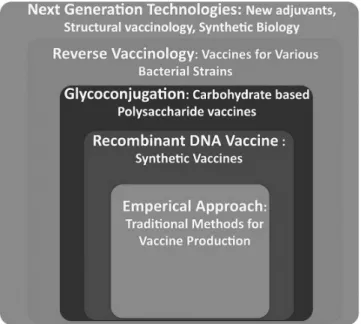
Over the last 50 years, fish vaccination has been a crucial disease control tool that has contrib- uted substantially to international aquaculture production. Nowadays, most licensed fish vaccines employed in aquaculture are developed with the use of traditional procedures, which primarily consist of inactivated whole microorganisms formulated with adjuvants and also live vaccines.
Contemporary vaccine production involves targeting particular pathogen components and vaccines developed using such methods including subunits as well as nucleic acid vaccines.
1.2.4.1 Conventional Methods 1.2.4.1.1 Killed Vaccines/Inactivated
Presently, killed vaccines or inactivated vaccines are the principal vaccine types that are used com- mercially. The vaccines are prepared by killing the virulent agent and employing it as an antigen to stimulate the humoral antibody–related system of the immune response. In addition, the vaccine is found to be safe as it is incapable of replication when administered to the host (16). Killed vaccines usually generate short-range immunity because they do not survive in the vaccinated fish for a long time (17). As an alternative, the immunogenicity of these vaccines could be enhanced by the use of adjuvants or booster immunization doses (18,19). To cite an example, inactivated vaccines have been used for IPN in Atlantic salmon and grass carp hemorrhagic disease.
1.2.4.1.2 Live Vaccine
Live vaccines are developed by attenuating the pathogens using physical as well as chemical treat- ments and are prepared in the laboratory itself by the serial passages in cell cultures (20). These vaccines manipulate greater stimulation of both cellular and humoral immune responses due to their ability to proliferate inside the host (21). This will ensure a long-term immunity unlike killed vaccines. Since the vaccine itself is quite effective, the use of adjuvants is not typically required to boost the activity. A live vaccine containing Arthrobacter sp. has also been successfully dem- onstrated to cross protect against Renibacterium salmoninarum, a pathogen that causes bacterial kidney disease in salmonids (19,22).
Understanding Vaccine Development in Aquaculture 7
1.2.4.2 Modern Methods 1.2.4.2.1 Subunit Vaccines
A subunit vaccine doesn’t embody the whole pathogen but contains only the antigenic components that are needed to induce an immune response (23). Since they are found to have poor immunoge- nicity when compared to the killed or live vaccines, incorporation of adjuvants is necessary for a good response (10). Subunit vaccines can be prepared in several ways, which include direct extrac- tion and purification of immunogenic proteins from the pathogens or by the use of recombinant vectors (24,25). Vaccine for IPN is an ideal successful subunit vaccine (26).
1.2.4.2.2 Nucleic Acid–Based Vaccines
Nucleic acid vaccines consist of DNA and RNA structures, which encode the antigen of interest.
They are considered safe since reversion to their virulent state is prevented (27).
1.2.4.2.3 DNA-Based Vaccines
These vaccines are developed based on the advancement in molecular biology. It is a mode of vaccination that does not make use of antigens; instead, it consists of a plasmid that contains genes that code for the antigenic protein, which when expressed in the host produces a dominant immune response (28). DNA vaccines actively stimulate cellular and humoral immunity. Moreover, DNA vaccines do not comprise any impurities commonly found in other whole-cell vaccines (29).
Although numerous DNA vaccines have been developed, only a few of these have been commer- cialized. An example is the salmonid alphavirus subtype 3 DNA vaccine against the pancreas dis- ease virus in the trade name, Clynav (30).
1.2.4.2.4 Recombinant Vector Vaccine
The preparation of this vaccine involves the insertion and expression of the immunogenic part of the organism in the carriers. The resultant proteins can be purified and used as vaccines. Infectious salmon anemia and infective hematopoietic necrosis disease virus are expressed in carriers, and they serve as the best examples of this procedure (10).
1.2.5 deVelopmentof VaccInefor specIfIc dIsease
Nowadays, many aquaculture systems, across the globe, face new challenges due to the emergence of new infectious diseases. Accordingly, the formulation of a promising vaccine that ensures long- term protection from disease outbreaks in the fisheries and aquaculture is inevitable. Several vac- cines have been developed in aquaculture to fight against bacterial, viral and, parasitic infections.
1.2.5.1 Bacterial Fish Vaccines
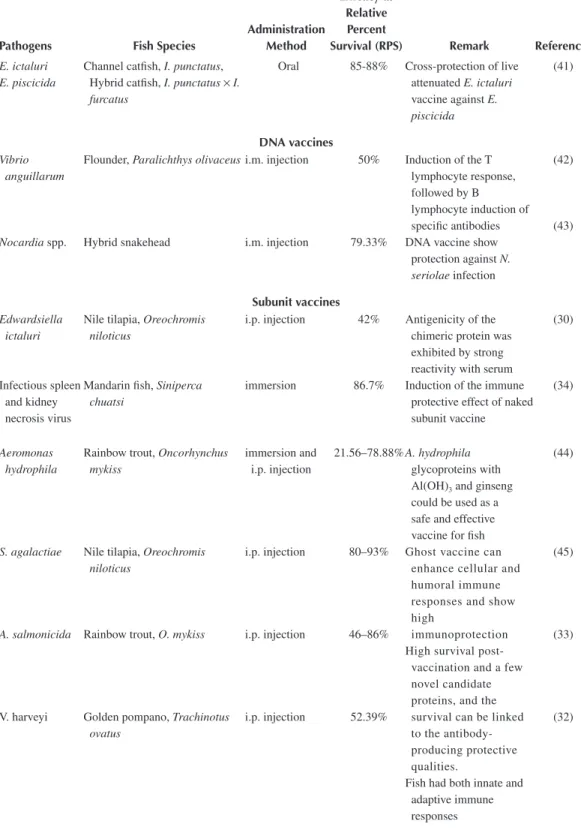
The very first developed vaccines in aquaculture were bacterial whole-cell immersion vaccines that were introduced against red mouth disease and vibriosis (19). The advent of modern biological tech- nologies enabled the discovery and commercialization of abundant vaccines like DNA vaccines, subunit vaccines, etc. (10). At present, some new approaches have been put forward for developing vaccines against significant bacterial infections that seriously affect the fish-farming industry (22).
Mostly, these vaccines are based on inactivated whole-cell formulations that aid in preventing infec- tions. For example, a simple inactivated bacterin vaccine has been found to be effective against vib- riosis. The production is cost-effective making it an ideal method, but the existence of specifications such as the use of the right serotypes as well as starting vaccination in the larvae stage is very chal- lenging (31). Another promising approach found to be more efficient is the use of live- attenuated isolates (32,33). In addition, further research in the development of recombinant protein-based
8 Fish Vaccines vaccines is ongoing. For example, Piscirickettsia salmonis bacterins have to be replaced by recom- binant vaccine as the former offer only a low efficacy (34).
1.2.5.2 Viral Fish Vaccines
Due to the presence of real challenges in regulating viral infections such as lack of information on the fish resistance mechanism, it is more difficult to control viral diseases in fish (10,35). Presently, most of the commercially available viral vaccines in aquaculture are inactivated pathogens or recombinant subunit proteins. In contrast, eco-safety aspects of live vaccines hinder their use as marketable vaccines. An example of an available vaccine is a koi herpes virus vaccine based on the attenuated strain of interstitial carp nephritis and gill necrosis virus (36). Disease outbreaks caused by IPN are a major threat to the salmonid industry partly due to the complex nature of this disease (26). Another challenge is the betanodavirus attack, which results in infectious outbreaks in marine fish farming (37). Although recombinant protein vaccines are available, administration of this vac- cine in the early stage of life is required to prevent the illness. The inadequacy of viral vaccines is the prominent crisis dealing with fish vaccinology (19).
1.2.5.3 Fish Vaccines against Parasite
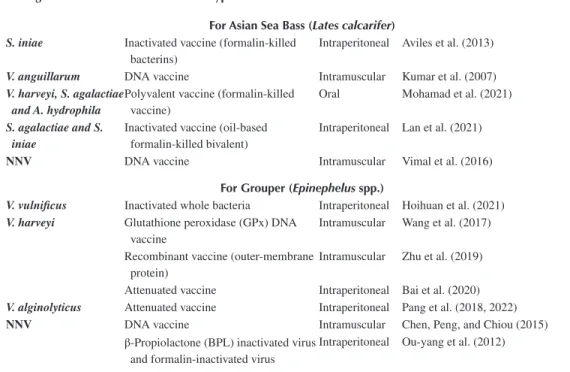
Fish farming is also affected by parasitic infections as well. However, no parasitic vaccines are made commercially available. Apart from that, various research and experiments found that live vaccines are more promising than dead vaccines (38). However, vaccine production is not feasible due to huge expenses and biosafety elements. Despite all of these problems, a success- ful vaccine against cattle tick (Boophilus microplus) has been developed after a lot of hardships (39) (Table 1.1).
TABLE 1.1
Overview of Fish Vaccines Used against Specific Diseases
Vaccine Species of Administration Illness Averted
1. Yersinia Ruckeri Bacterin Salmonids Yersiniosis
2. Vibrio Anguillarum-Ordalii Salmonids Vibriosis
3. Aeromonas Salmonicida Bacterin Salmonids Furunculosis
4. Vibrio Salmonicida Bacterin Salmonids Vibriosis
5. Edwardsiella Ictaluri Bacterin Catfish Enteric Septicemia
6. Flavobacterium Columnar Vaccine Catfish Columnaris Disease
7. Pasteurella Vaccine Salmonids Pasteurellosis
8. Streptococcus agalactiae Vaccine Tilapia Streptococcosis
9. Infectious Salmon Anemia Vaccine Salmonids Infectious Salmon Anemia
10. Arthrobacter Vaccine Salmonids Columnaris Disease
11. Nodavirus Vaccine Seabass Viral Nervous Necrosis
12. Pancreas Disease Virus Vaccine Salmonids Pancreas Disease
13. Betanodavirus Grouper Betanoda Virus Disease
14. Koi Herpes Virus Koi carp Koi Herpes Virus Disease
15. Carp Erythrodermatitis Carp Erythrodermatitis
16. Gaffkemia Vaccine Lobsters Gaffkemia
17. Piscirickettsia Salmonis Vaccine Salmonids Piscirickettsiosis
18. Inactivated Tenacibaculum Turbot Tenacibaculosis
19. Inactivated Yersinia Ruckeri Salmonids Enteric Red Mouth Disease
20. Inactivated L. graviae Rainbow trout Lactococciosis
Understanding Vaccine Development in Aquaculture 9
1.2.6 cHallengesIntHe preVentIonand controlof fIsH dIseases
In relative phrases, it is truthful to say that infectious sickness management in aquaculture is more complicated than terrestrial animal disorder control, because of the surroundings wherein the fish lives, and the character of the fish. Fish cannot be located near enough like we do in the case of terrestrial animals. Control of infectious diseases in aquaculture is much more compli- cated than terrestrial forms due to the environment where fish lives, the features of fish variety, etc., thus aquaculture diseases are often difficult to detect and characterize (40). The other important challenge is in diagnosing the disease of fish; in terrestrial animal disease diagnosis, the individual animal is the unit of interest. The scenario is not the same in aquaculture disease investigation because of the nature of the water where fish lives. A disease can transmit quickly and the whole tank may be the source of disease to healthy stock. In this case, the unit of inter- est is not a single fish rather the whole tank needs to be investigated and diagnosed. Samples should be collected not only of fish but also of water to measure important characteristics like pH, soil bottom conditions, and turbidity, which make aquatic diagnosis more complicated and challenging (41).
Advancing vaccination is the most crucial strategy to prevent and manage infectious ailments in fish. It is impossible to treat the various bacterial infections in aquatic animals with only antimicro- bials (10). There are upgrades in fish vaccination lately. A number of the upgrades include immu- nization of massive stock at a time and the improvement of multivalent vaccines (11). Vaccination is broadly in use in almost all meals-producing animals. In aquaculture, it reduces the use of anti- biotics and protects fish from infectious sicknesses. It also avoids the threat of drug resistance.
Protection at stock degree due to herd immunity may be achieved and the need for licensing and registration of recent vaccine is an awful lot simpler than antibiotics (11).
The following are the few important issues or concerns that should be considered earlier than software of vaccination in fish: fish species to be vaccinated, immune status of fish, production cycle, existence history of the aquaculture machine, the illnesses to be screened in aquaculture, when do those illnesses occur (seasonal distribution of diseases in the aquarium), farming tech- nology (coping with and mechanization), surroundings (temperature and salinity), strain factors, nutrients, and cost benefit (16).
1.2.7 progressIn fIsH VaccIne deVelopment
There has, however, been remarkable development in fish vaccine during the last four decades with 24 licensed fish vaccines now commercially available for use in a variety of fish species.
These comprise killed, live-attenuated, peptide subunit, recombinant, DNA/RNA particle vaccines.
Vaccination has emerged as a critical method for the prevention of infectious disorders in farmed fish, specifically salmonid species. Bacterial infections as a result of gram-poor microorganisms, which encompass Vibrio sp., Aeromonas sp., and Yersinia sp., have been correctly controlled for the usage of vaccination. With furunculosis, the success is attributed to the usage of injectable vaccines containing adjuvants. Vaccines against virus infections, together with IPN, have also been utilized in commercial fish farming. Vaccines against several bacterial and viral infections have been stud- ied and determined to be technically possible. The overall positive effect of vaccination in farmed fish reduced mortality, but the future of the fish-farming industry is also important that vaccination contributes to sustainable biological production with the negligible intake of antibiotics.
Atlantic salmon and rainbow trout aquaculture in the United Kingdom, Norway, and the United States increased within the 1980s, accompanied by speedy growth in disease, especially with bac- terial pathogens such are Vibrio sp., Y. ruckeri, and A. salmonicida. As a result, big quantities of antibiotics have been used and concerns grew about antibiotic resistance. This inspired the improve- ment of fish vaccines and led to the primary commercially available fish vaccines in opposition
10 Fish Vaccines to Vibriosis, Enteric Red Mouth (ERM), and Furunculosis. Presently, 19 important corporations market fish vaccines globally and lots of small companies also exist (42).
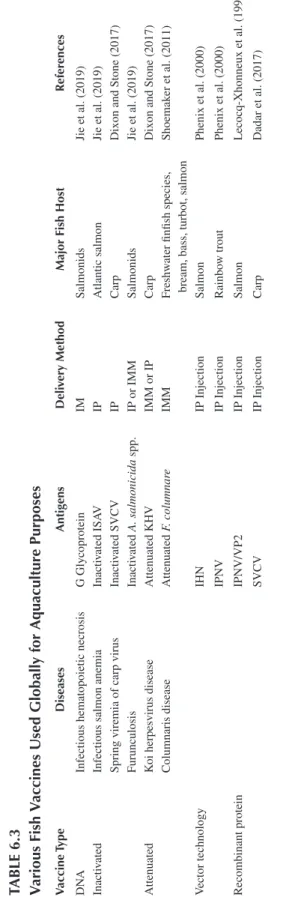
The number of commercial vaccines for fish has expanded, from 2 in 1980 to 24 currently (43) with 1 vaccine additionally for lobsters (44). Fish vaccines are available for a wide variety of species (13,44,45) consisting of Atlantic salmon, Rainbow trout, sea bass (Dicentrarchus labrax), sea bream (Sparus aurata), tilapia (Oreochromis niloticus/mossambicus), amberjack (Seriola dumerili), and yellowtail (Seriola quinqueradiata) in Japan, and catfish (Ictalurus punctatus) and Vietnamese cat- fish (Pangasianodon hypophthalmus). Most are formalin killed whole-cell vaccines even though live-attenuated vaccines are certified in the United States of America to be used in catfish (46). A DNA vaccine against infectious IHN is licensed in Canada to be used in the Atlantic salmon (47), a subunit vaccine (peptide; VP2) is used in Norway (against infectious pancreatic necrosis virus, IPNV), and a recombinant vaccine toward infectious salmon anemia virus, ISAV, is used in Chile.
1.2.8 cHallengesIn fIsH VaccIne deVelopment
Even though there has been great development in the field of fish vaccinology, diverse demanding situations still are an obstacle for the development of fish vaccine. The most important issue that restricted the vaccine development system is the identification of protective antigens. Identifying protective antigens isn’t easy and requires a variety of tactics, viz., pathogen type, fish species, administration method, antigen manufacturing method, and availability of challenge model for checking out the efficacy of the vaccine candidates (48).
1. Pathogen type: Piscine pathogens are heterogeneous in nature and have a variety of anti- genic epitopes. Even though the majority of successful commercial fish vaccines are killed whole-cell bacteria preparations with intraperitoneal injection modalities, the applicability of this approach seems to be limited to other fish pathogens, mainly for intracellular or complicated pathogens (e.g., viruses and parasites); those are difficult or high priced to culture.
2. Fish species: The variety of fish species itself poses a challenge in vaccine development.
As most fish pathogens have a wide variety of susceptible hosts and every fish species behaves differently to elucidate host–pathogen interactions, there aren’t any regularly occurring formulae of developing a vaccine against a pathogen to be equally effective in each of its susceptible hosts.
3. Administrative methods: The technique of vaccine administration is the most challenging and needs to be determined. It’s so far observed that a few novel vaccines being advanced are protective. However, recent administration methods and vaccination strategies are not suitable for the most fulfilling efficacy (e.g., may need high/booster vaccination). Even though the injection method is generally used for Atlantic salmon, administration of vac- cines through the mucosal path is also practically possible for lower-valued fish species, for example, tilapia and Pangasius. However, various demanding situations have hampered the growth of mucosal vaccines, along with a lack of correlates of protection, lack of optimiza- tion of protective doses required, the possibility of oral tolerance, potential denaturation of oral vaccines in the stomach, and the capability of antigens to cross mucosal barriers to gain access to antigen-presenting cells (APCs) (49).
4. Antigen production technique: For developing an effective vaccine, the choice of protec- tive antigen is of utmost importance. In addition to selection, the cost of manufacturing the antigen is also equally important as developed vaccines can be less affordable to low- to middle-income fish farmers.
5. Challenge models: Evaluation of vaccines’ efficacy needs to be standardized in vivo disease challenge models that closely simulate the natural infection route. The bath and cohabitation challenge best fulfill the requirement of natural exposure, but they may be
Understanding Vaccine Development in Aquaculture 11
more difficult to govern and standardize than the injection challenge methods. In addition, injection challenge isn’t always an appropriate approach to test a mucosal vaccine (e.g., dip immersion) administered. Furthermore, a few pathogens are incapable of producing disease in experimental challenge models until some scarification or pressure is used (50).
Within the absence of an experimental disease challenge model, the determination of vac- cine efficacy taken into consideration is a problematic area, which needs to be sorted out in future.
1.2.9 opportunItIesIn fIsH VaccIne deVelopment
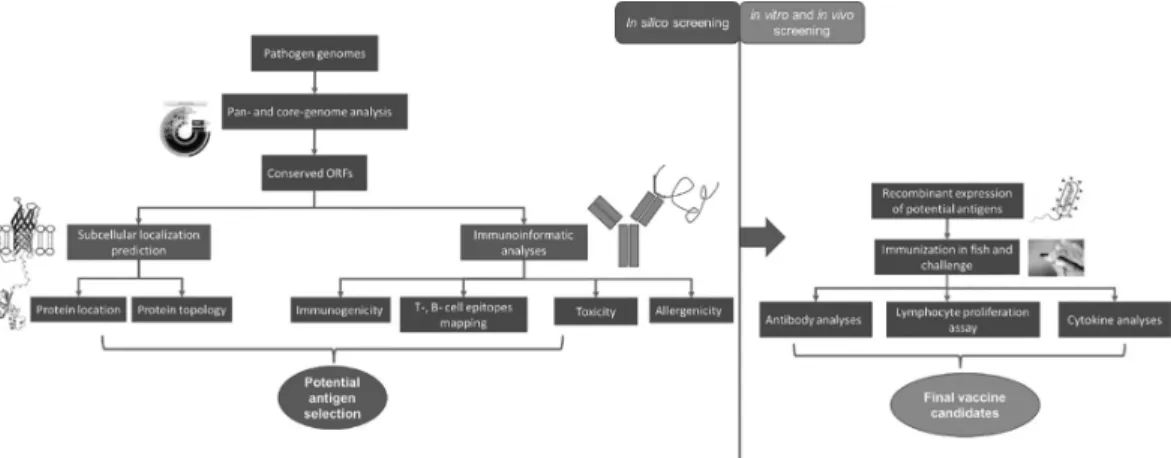
Regardless of the difficulties that hindered the improvement of the fish vaccine, opportunities also present for fish vaccinologists to apply novel technologies and vaccination techniques that may help in overcoming the demanding situations. With the advancement in the subject of bioinfor- matics, the cost of entire-genome sequencing of pathogens has decreased significantly, enabling targeted vaccine design for heterogeneous sp. The United Kingdom lately characterized more than 300 Flavobacterium psychrophilum sp. and developed an effective trivalent whole-cell vaccine, wherein undesirable immunosuppressive epitopes are removed, and only specific protective anti- gens are included thereby enhancing the efficacy of the vaccine. Likewise, in reverse vaccinology, the latest software programs are getting used nowadays to pick out highly immunogenic vaccine candidates for the development of protein subunit vaccines or DNA vaccines. After long pending legalization technique and substantial safety research, DNA vaccines are accredited to be used in Europe, consequently developing a huge opportunity for their growth in the future. Other alterna- tives to DNA vaccines, consisting of mRNA vaccination or safe to eat vaccine technologies, which have been confirmed to be enormously efficient and secure for different animals, can be used for prophylactic and therapeutic applications in fish also. In the case of live-attenuated vaccines, con- ventional attenuation techniques are being replaced by molecular methods, wherein genetically modified pathogens may be produced which permit higher control and protection than random mutations in live vaccines, but their classification as GMOs has restricted their use in aquaculture.
However, with further safety measures, their use may be permitted in the future.
Vaccine administration strategies also provide huge scope for future research. Improved nano- materials (<1000 nm), including virus-like particles (VLPs), liposomes, ISCOMs, polymeric, and nondegradable nanospheres, showed potential as antigen delivery vehicles, allowing the sustained release of antigens and additionally act as immune enhancer adjuvants (51). These delivery sys- tems are being experimentally used for mucosal delivery of fish vaccines and are considered to be the immediate focus area for development in fish vaccinology. Furthermore, regarding vaccination strategies, prime booster vaccination with early immersion vaccination then IP booster vaccination or IP booster vaccination followed with the aid of oral booster vaccination has reported the stimula- tion of both mucosal and systemic immunity.
1.2.10 effectsand BenefItsof VaccIneIn aquaculture
Over the last 2 decades, vaccination has become an important method for preventing infections in farmed fish, primarily salmon. To date, most commercial vaccines have been inactivated vaccines given by injection or immersion. Bacterial infections caused by Vibrio sp., Aeromonas Sp., and Yersinia sp. were triggered and effectively controlled by vaccination. In the case of boil, success is due to the use of an adjuvant and an injectable vaccine. Vaccines against viral infections, including IPN, have also been used in commercial aquaculture. Vaccines against several other bacterial and viral infections have been studied and have proven to be technically feasible. The overall positive effect of vaccination of farmed fish is a reduction in mortality. However, it is also important for the future of aquaculture that vaccination ignores antibiotic consumption and contributes to sustainable organic production (52).
12 Fish Vaccines Since the 1990s, vaccines have contributed significantly to improving fish health, well-being, and productivity. They are important factors in the prevention of various diseases. Fish develop immunity when exposed to infection and survive. So, they are usually fully or partially immune or resistant to other attacks by the same organism. Fish can get sick with the first infection and need to be treated. Vaccination mimics infection and provides immunity to the fish without giving in to the disease. Therefore, fish are resistant to disease before infection, and when fish are later exposed to infection, there is usually little or no evidence of disease. This makes the fish healthier and requires less processing. Fish, breeders, and consumers will now benefit. All fish are naturally immune to some diseases, and there is no risk of consuming food from previously vaccinated healthy fish to produce similar immunity.
1.3 LIMITATIONS
The predominant intention of vaccination is to set off a specific long-time period protection toward a certain sickness. It’s been debated whether or not the effective long-term protection of oil-adjuvant injection vaccines is because of immunologic memory in the fish or steady stimulation from the antigen depot. Existing immersion vaccines are safely for a variety of aqua-cultured fish to protect against infectious diseases caused by bacteria and viruses. In evolutionary terms, fish are the first group of animals with simple elements of the immune system of higher vertebrates. Despite the fact that fish immune systems are primitive compared with mammals, there seem to be more similarities than differences (53,54).
In the restrained quantity of fish species studied, the primary type of antibody is an immuno- globulin Ig(M)-like isotope that usually exists as a tetramer in its secreted shape (55). Isotypes cor- responding to mammalian IgG, IgA, or IgE have been diagnosed in fish and the secondary humoral immune reaction in fish is, if at present all, less outstanding than in mammals. Because of the ease of measurement, the presence and titer of specific antibodies is an often used immunologic assay.
Assays to detect particular T-cell responses are still in their infancy; however, cellular responses from cloned fish showed prominent effects (56). For the commercial farming process of fish, an understanding of the immune response is important as it is for improved husbandry and health management of the species. The range of fish species is much more than the wide variety of mam- malian species and the evolutionary distance between specific teleost (bony fish) households are significantly larger than between mammals.
Lack of precise expertise of the immune systems in distinctive fish species limits the opportuni- ties to study each pathogen and vaccine-precipitated immunity. As with every veterinary vaccine, value effectiveness within the field is a critical hindrance to commercial vaccine development. Fish generally need a large antigen dose compared with terrestrial animals and cost-effective inactivated viral vaccines have proven difficult to develop. In a few species, all sorts of injection vaccines (or even immersion vaccines) are too steeply priced. Other species are too vulnerable to take care of the pressure prompted during the vaccination or may develop severe side effects after vaccina- tion. Massive powerful vaccination strategies are essential for the aquaculture fields from the larval stages that have made an enormous contribution for the economic cultivation. The plain loss of maternal immunity in fish additionally limits the possibilities of shielding offspring through paren- tal vaccination (57).
1.4 FUTURE PROSPECTS
There may be a tremendous ability for brand new achievements in fish vaccinology. Initially, there are several illnesses that are probably managed by means of vaccination. Bacterial kidney ailment infections as a result of motile aeromonads and piscirickettsiosis are examples of bacterial sickness.
There also are several viral and parasitic diseases. So, to develop fish vaccinology, cooperation between the immunologist and the vaccinologist has to be developed. Better knowledge on the
Understanding Vaccine Development in Aquaculture 13
immune status of fishes greatly promotes the development of the aquaculture industry and many aquatic vaccine developments are in the clinical trial stage, and it is believed that there will be many commercial vaccines available in the coming years. The promising results of DNA vaccines imply that better fish vaccines can be produced in the future. Subsequently, immunopharmacology, a discipline covering adjuvants, immunostimulants, and antigen carriers, is fundamental for the fulfillment of fish vaccinology.
1.5 CONCLUSION
A perfect fish vaccine is one that is safe for the animal and environment, incurs a low cost for large- scale production, clean to manage, capable of inducing robust immunity all through durations of finest susceptibility, and demonstrates minimum facet effects. New and alternative fish vaccines are adapting advanced technologies often developed based on needs in animal or human medi- cines. Those who meet the standards for a powerful aquaculture vaccine will provide the maximum advantage and have the finest capacity for commercialization. New fish vaccines using opportunity technologies (beyond just cellular preparations) can be expensive to expand. However, given the limited success of conventional methods for brand new illnesses issues, it is crucial to discover such approaches. As aquaculture keeps to grow globally, there will be a need for new vaccines long into the future, and the application of all available biotechnology toward solving emerging disease issues will be critical.
REFERENCES
1. Snieszko, S. F., & Friddle, S. B. (1949). Prophylaxis of furunculosis in brook trout (Salvelinus fontinalis) by oral immunization and sulfamerazine. The Progressive Fish-Culturist, 11(3), 161–168. https://doi.
org/10.1577/1548-8640(1949)11[161:POFIBT]2.0.CO;2
2. Snieszko, S. F. (1974). The effects of environmental stress on outbreaks of infectious diseases of fishes.
Journal of Fish Biology, 6(2), 197–208. https://doi.org/10.1111/j.1095-8649.1974.tb04537.x
3. Avtalion, R. R., & Clem, L. W. (1981). Environmental control of the immune response in fish.
Critical Reviews in Environmental Science and Technology, 11(2), 163–188. https://doi.org/10.1080/
10643388109381687
4. Ambrosius, H., & Lehmann, R. (1965). Beitrage Zur Immunbiologie Poikilothermer Wirbeltiere.
3. Der Einfluss Von Adjuvantien Auf Die Antikorperproduktion Von Knochenfischen (Teleostei).
Acta Biologica et Medica Germanica, 14(6), 830–944.
5. Krantz, G. E., Reddecliff, J. M., & Heist, C. E. (1963). Development of antibodies against Aeromonas salmonicida in trout. The Journal of Immunology, 91(6), 757–760.
6. Snieszko, S. F. (1970). Immunization of fishes: A review. Journal of Wildlife Diseases, 6(1), 24–30.
https://doi.org/10.7589/0090-3558-6.1.24
7. Ross, A. J., & Klontz, G. W. (1965). Oral immunization of rainbow trout (Salmo gairdneri) against an etiologic agent of “Redmouth disease”. Journal of the Fisheries Board of Canada, 22(3), 713–719.
https://doi.org/10.1139/f65-063
8. Fryer, J. L., Rohovec, J. S., Tebbit, G. L., McMichael, J. S., & Pilcher, K. S. (1976). Vaccination for



![FIGURE 11.1 Defense mechanism in aquatic organisms. [Created by www.biorender.com.]](https://thumb-ap.123doks.com/thumbv2/123dok/11984606.0/192.756.99.647.232.974/figure-defense-mechanism-aquatic-organisms-created-www-biorender.webp)
