This internship report has been prepared and submitted by Ivena Noviany Kurnia as partial fulfillment of the requirements for the bachelor's degree at the Faculty of Technology has been reviewed and found to have met the requirements for a report that is suitable to be examined. XY from 18 March to 31 August 2019, as partial fulfillment of the requirements for a bachelor's degree at the Faculty of Technology. XY Indonesia must be able to meet the demand without degrading the quality of the product.
All processes must be efficient to reduce production costs and meet the target or demand. The PDCA method is implemented in this research to find the right solution to the root problems. Jesus Christ, the most merciful, to give all the mercy, love and joy until I can finish this report.
This will give you the total value of finished goods at the end of the year. HDP : HDP stands for head and decoration process, such as: create lips, eye, nose and teeth. Painting : A painting is an image (artwork) created using pigments (color) on a surface (ground) such as resin for a doll.
Pigment can be in wet form, such as paint, or in dry form, such as pastels.
INTRODUCTION
- Problem background
- Problem Statement
- Objectives
- Scopes
- Assumptions
- Research Outline
This chapter consists of the problem background of the project, the problem statement, the objectives of the project, the scopes, assumptions and the research lines.
LITERATURE STUDY
Cost Engineering
Cost engineering is a combination of costing and engineering, with the main purpose of this department being to establish standard costs of each material and labor hours used to develop toys. In addition to the main goal, this department also has their own goal, which is to create standard costs that are the same as the budgeted one, or even lower than the budgeted one. Labor means how much time (hours) is needed to do the process of developing or manufacturing toys.
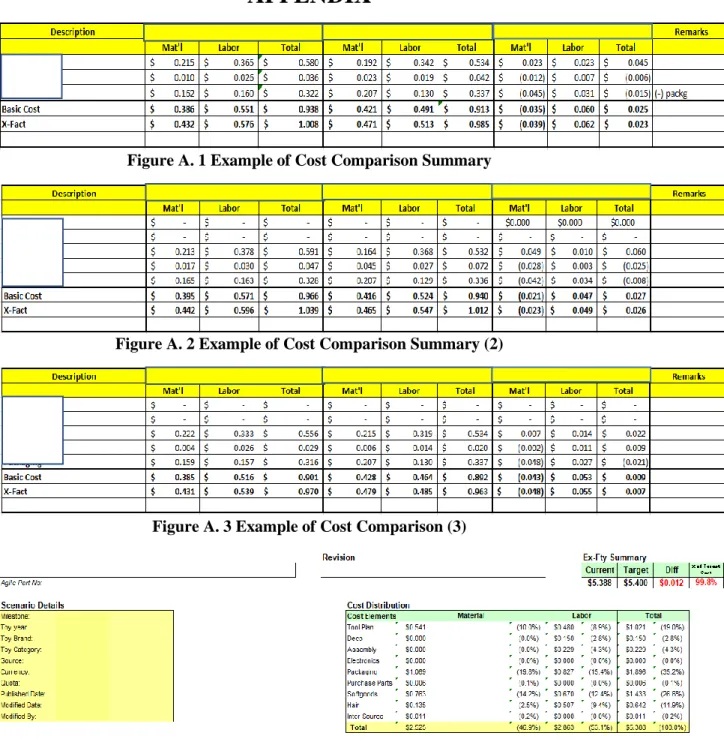
From the above data, manufacturing will result in four types of costs which are: Base Cost, Ex-Factory Cost, Hard Cost and Product Cost. So, the first cost is the first step, which is the preparation of the budget and it is in this stage.
PDCA Method
- Plan
- Do
- Check
- Act
Furthermore, the entire objective must also be reassessed and refined as you move through the planning phase. While numerous causes will emerge when examining the opportunity for quality improvement, it is critical to delve into and carefully identify the underlying or root cause of the problem to ensure that an improvement or intervention with the highest chance of success is selected. Once the improvement is determined, carefully consider any unintended consequences that may arise from the implementation improvement.
This step provides an opportunity to modify the enhancement and/or develop countermeasures as needed to address any potential unintended consequences. The revision of the objective and the revision of the measurable improvement objectives are important steps at this point. An improvement theory is a statement that articulates the effect you expect the improvement to have on the problem.
Writing an improvement theory crystallizes what you expect to achieve as a result of your intervention and documents the relationship between the improvement you plan to test and the measurable improvement goal. The details of this plan should include all aspects of the methodology for testing the improvements – what data will be collected, how often data will be collected, who will collect the data, how it will be documented, the timeline, and how the results will be analyzed. Compare the new data with the baseline data to determine if an improvement has been achieved and if the objectives of the objective were met.
This phase marks the culmination of planning, testing, and analysis regarding whether the desired improvement has been achieved, as expressed in the objective, and the goal is to act on what is learned. Adopt: Standardize the improvement when the measurable objective in the goal statement has been achieved. This can happen, for example, if sufficient data cannot be collected, if conditions have changed (e.g. personnel, resources, policies, environment, etc.), or if test results fall slightly short of the measurable improvement goal.
At this point, the team can review possible solutions that were not initially selected or dig back into a root cause analysis to see if additional underlying causes can be uncovered, or even reconsider the objective to see if it is realistic. Whatever the starting point, the team will then need to engage in the Plan cycle to develop a new action plan and move through the remaining phases. This simple yet powerful format drives continuous and ongoing efforts to achieve measurable improvements in efficiency, effectiveness, performance, accountability, outcomes and other indicators of quality in services or processes that achieve equity and improve the manufacturing industry.
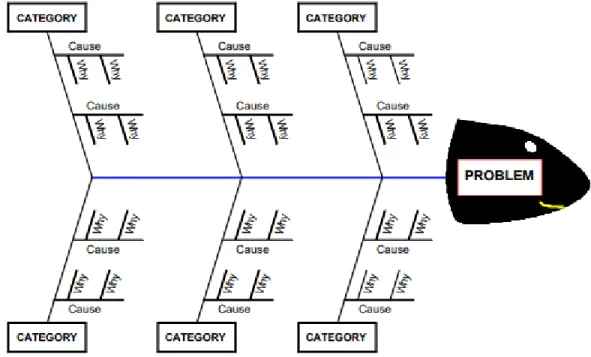
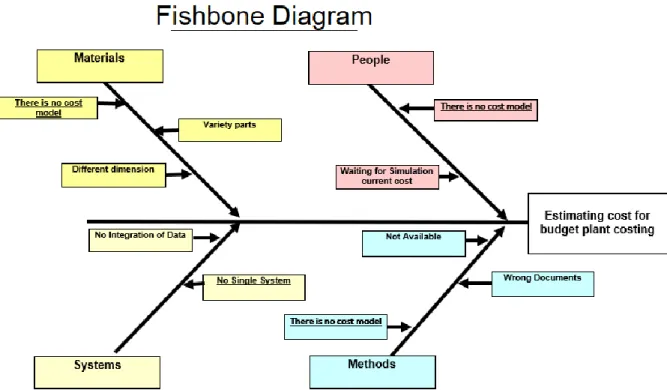
Fishbone Diagram
RESEARCH METHODOLOGY
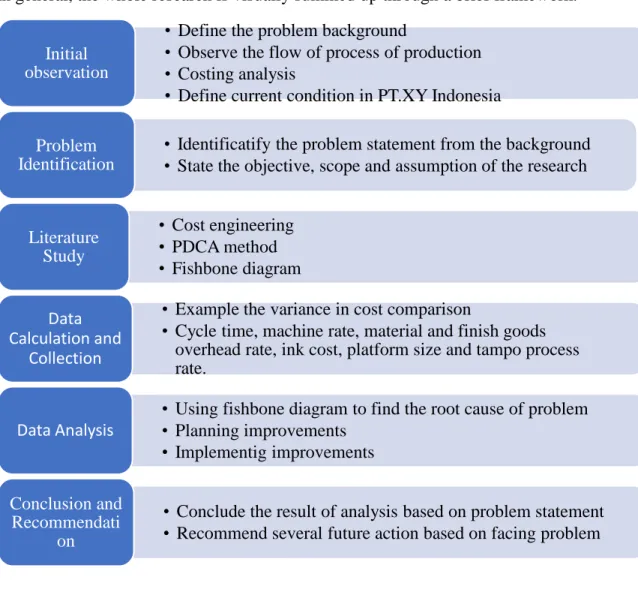
Research Framework
Theoretical Framework
- Initial Observation
- Problem Identification
- Literature Study
- Data Collection Analysis
- Conclusion and Recommendation
COMPANY PROFILE AND PROJECT
Company Profile
- History
- Business Operations of PT. XY Indonesia
- Company Vision and Mission
- Organizational structure
XY Indonesia is doll fashion, especially care for B-pop and the doll will be distributed all over the world. XY has two factories at Jababeka Industrial Estate, Cikarang, Bekasi, and employs workers approximately every year. XY Inc is a privately held company in the United States that is a pioneer in the field of children's toys.
The company was founded in 1945 by EH and HM with headquarters in El Segundo, California. With little experience and capital in the business, a virtual toy shortage after World War II presented them with a unique opportunity, and the company got off to a winning start in their first year, netting $30,000 in profits. A miniature plastic ukulele is the first hit product by XY Creation in 1947, followed by an all-plastic piano with raised black keys in 1948.
At the same time, the company began to develop a music box using a unique mechanism and beat their Swiss competition. In 1955 the company introduced another hit called BG and decided to sponsor a 15-minute segment of Walt Disney's Mickey Mouse Club and started a marketing revolution in the toy industry. Throughout the 1960s, the company continued to introduce popular toys such as the first standing dolls and live action dolls.
In 1980, EH and RH ended their involvement with the company due to financial issues and misleading financial reports at the time. West plant is the first plant built in Indonesia and it started the production activity in June 1992. East Plant is the second plant was built in September 1996 and it started the production activity in October 1997.
Er zijn Fashion Dolls Manufacturing, Die Cast Manufacturing, Finance & IT, Human Resources, Materials & Lean, Quality, Engineering, EHS & Compliance Assurance.
Production System
- Production Process
In this process of forming the head of toys using a process called Rotocast and LOR. The difference between these two processes is only the way light is out Rotocast used automation more than Rotocast process. Basically, this process heats the plastisol to a specific temperature and turns it into liquid form.
Before the liquid plastisol is fed to the mold head, the mold must first be cleaned up by shooting with the air gun. When the head is shaped and the temperature becomes normal, the head is taken with forceps. Because the care process is to manage the hair, starting from combing the hair to the bride's hair if necessary.
The dye is added in this process to determine the color of the toy itself. The material will be heated until it changes to liquid and then injected into the mold. Once all parts of the torso are completed, assemble the torso using glue and connector.
Projects
DATA COLLECTION AND ANALYSIS
Data Collection
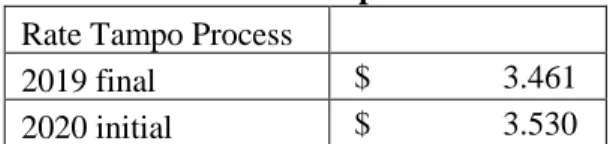
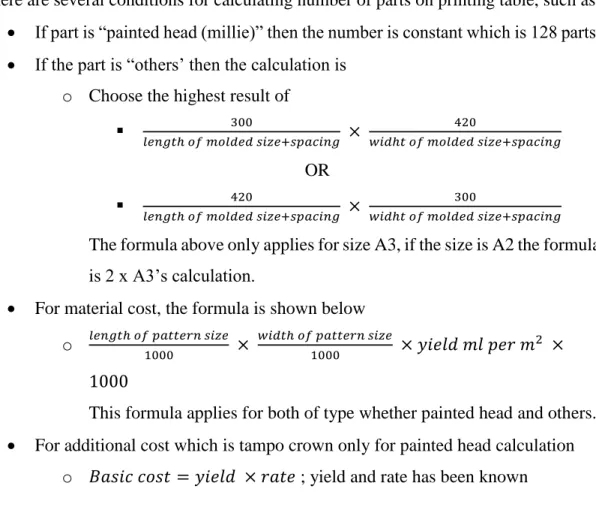
In the DIJ process, 3 (three) types of parts are used in painting, such as: other/accessories, painted head and painted head millie. The machines used for this process are A3 and A2 trays with 2 types of passes such as 8 and 16 passes. Various data is collected such as: machine speed, ink costs, overhead costs, etc.
Data Analysis and Improvement
- Plan
- Do
- Check
- Act
Conclusion
The PDCA method is used in this research and each step is following the root cause guide. The main problem in the cost engineering department in determining the cost of product development is that it is difficult to make the cost estimate quickly and accurately. For example, if the remaining base material can be reused for several parts.
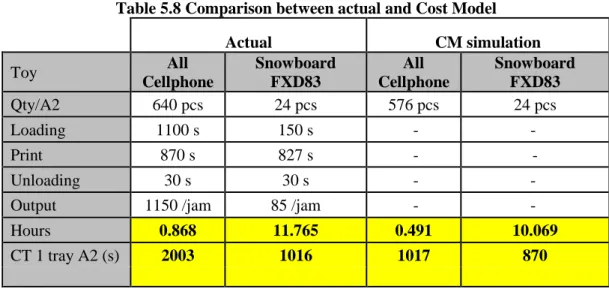
On the other hand, if there is scrap, the total production will be lower than expected. So that the total cost from the cost model will be marked with an amount of 20% to cover it. In conclusion, based on the comparison result of the total output of item number, it is obviously approximate to the actual output.
The difference may be caused by some actual conditions that cannot be applied to the cost model.
Recommendation
Application of Quantitative Fishbone Diagram to Investigate Erosion Defects in CI Casting Made by Sand Casting Process. Retrieved August 29, 2019, from https://www.researchgate.net/publication/331386736_Using_Excel_and_Excel_VBA _for_Preliminary_Analysis_in_Big_Data_Research. Improving efficiency by applying PDCA Cycle or Kaizen: An experimental study of engineering students.
Applying the Plan-Do-Check-Act (PDCA) cycle to reduce defects in the manufacturing industry. Retrieved August 24, 2019, from Emerald Group website: https://www.mindtools.com/pages/article/newPPM_89.htm.