Jacob Muse: Observations of Home Ownership in the United States from World War II to the Present Day. Therefore, studying home ownership rates will give me a better chance to understand how the residential real estate market works. Going back to World War II, wherever I observed a significant increase or decrease in homeownership, I wanted to explain what caused the increase or decrease.
In conclusion, I observed four factors that appeared to have the most significant effect on home ownership: the economy, interest rate/mortgage dynamics, government action, and demographics. These factors did not always seem to work in expected ways, and the changing needs or wants of Americans seemed to affect home ownership the most.
Introduction
Increase in Homeownership from World War II to the 1980s Crash
President Truman, after signing the law, made a statement informing the nation of its purpose; he said: “It opens up the prospect of decent homes in a healthy environment for low-income families living in the world today. Housing was more affordable in the suburbs due to high land prices in urban areas resulting from the expansion of cities in previous years (Freeman, 1999). According to Freeman and the National Real Estate Investor, in the 1950s, suburban population grew 45% and suburban housing construction accounted for 75%.
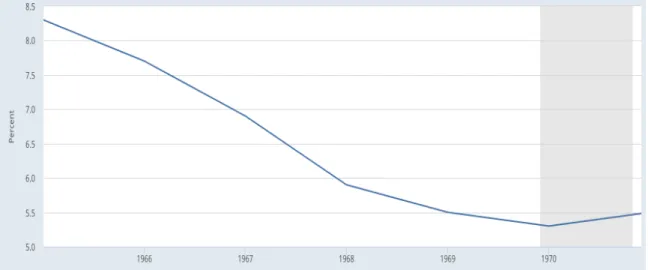
The cost of borrowing was higher due to an increase in the Federal Funds rate. Baby boomers also helped increase homeownership beyond simply occupying housing in college towns. Despite rising house prices and unemployment, home ownership was still relatively as affordable as it had been in recent decades.
It was only in the second half of the decade that he discovered that house prices had risen faster than household income. This suggests that affordability was not a problem from 1970 to 1975, but that housing affordability quickly became a problem in the late 1970s through the 1980s.
Homeownership During the 1980s and Until the Formation of Our Most
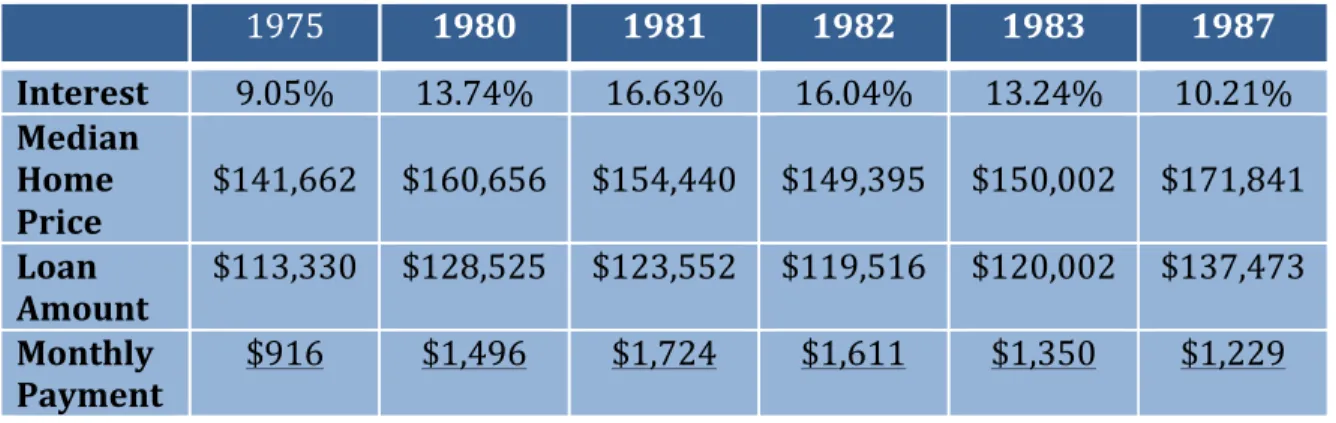
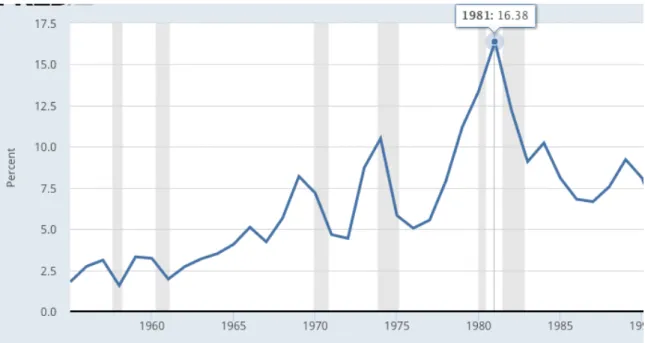
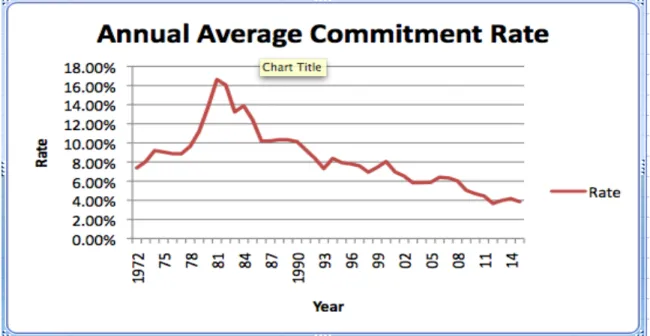
As a result, “high interest rates put pressure on debt-dependent sectors of the economy” (Sablik, 2013). Using real median home prices from the S&P Case-Shiller Home Price Index and Freddie Mac mortgage rates, I can calculate the monthly payments for a 20% down payment. Although average mortgage payments started to become more affordable, they were still high due to extremely high interest rates.
We can also get a fresh look at how unaffordable housing was for most of the 1980s. The stability of house prices suggests that house prices were not one of the key variables affecting affordability. In a fixed rate mortgage situation, if interest rates rose, the lenders would lose money.
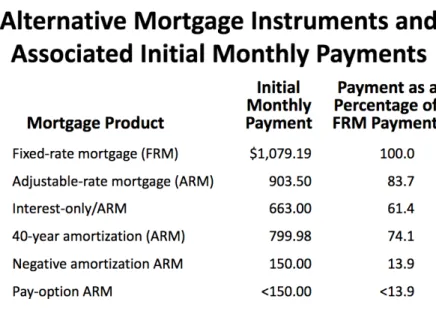
During periods of rising interest rates, such as in the 1980s, an adjustable-rate mortgage makes your initial monthly mortgage payment more affordable. Conversely, if interest rates go down, then mortgage rates adjust downward and payments can become more affordable, which is why some borrowers like ARMs. Basically ARMs helped Savings and Loan Institutions reduce their interest rate risk at a time of volatile interest rates and allowed borrowers an alternative to conventional fixed rate mortgages.
These alternative mortgages seemed to increase homeownership because many borrowers appeared to be able to afford the mortgages even though they could not in the long run. Borrowers took advantage of these ARMs in the 1980s and ARMs became viable options for borrowers (Peek, 1990). I believe that the use of ARMs, along with a lot of help from lower interest rates, helped end the decline in home ownership in the 1980s because mortgages became more affordable.
Introducing ARMs seemed like a good decision in the 1980s, but it turned out to have negative effects in later years when interest rates were much lower. After the sharp decline in the homeownership rate in the early 1980s, growth was fairly stagnant from 1986 to 1994. In the latter half of the 1990s, the stagnant growth ended and a housing bubble began to form.
The Housing Bubble of the 21 st Century
The resulting short-term interest rates due to the FFR made it more attractive for potential homebuyers to get an adjustable-rate mortgage (ARM). An ARM was more attractive than a fixed rate mortgage (FRM) because of the rapid rise in home prices and the structure of interest rates. ARMs' initial monthly payments are tied to short-term interest rates, while FRM's initial monthly payments are tied to longer-term interest rates.
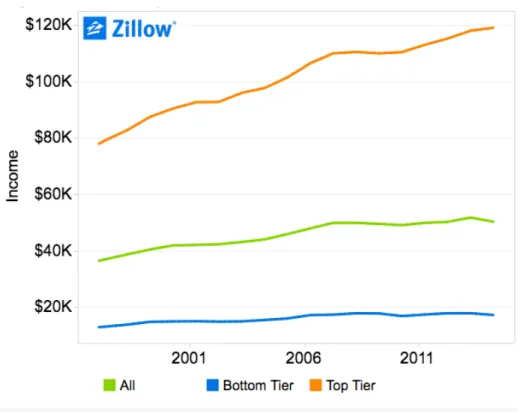
Home prices rose faster than household incomes, so many homebuyers could not afford mortgage payments under an FRM, but an ARM could provide a buyer with a lower initial monthly payment since short-term interest rates were lower than long-term interest rates (Holt, 2009). In every year from 1995 until the crash, the rate for initial payments on ARMs was significantly lower, but there was a problem: "when the interest rate on the mortgage adjusted upward (typically after two years), the higher mortgage payments became unmanageable for many home buyers" (Holt, 2009). Again, like the 1980s, ARMs allowed more people to get mortgages, increasing demand and driving up home prices; but ARMs also led to an increase in
The availability of these alternative bonds proved to be very important; and as many have acknowledged, the alternative. Again, these different types of mortgages widened the pool of borrowers who could afford these initial monthly payments, but there was the possibility that these borrowers would struggle with payments once the payment was adjusted later in the loan term. Another factor, relaxed mortgage lending standards, also increased the number of potential home buyers who could get a mortgage.
According to Peter Wallison (2009), "regulators, in both the Clinton and Bush administrations, were enforcers of the reduced lending standards that were critical to home ownership growth and the housing bubble." Fannie Mae and Freddie Mac, a. In 1999, the New York Times explained this new change: "Fannie Mae, the nation's largest mortgage insurer, has been under increasing pressure from the Clinton administration to expand mortgage lending among low- and moderate-income people." There seemed to be no problem with the reduced lending standards because everyone, lenders and borrowers, believed that house prices would continue to rise. Borrowers got mortgages approved by regulators under Clinton and Bush that they would never be able to pay over the life of the loan, but they got these loans in the expectation that accumulating equity would allow them to refinance into more suitable mortgages.
Therefore, people continued to buy homes, regardless of whether they could actually afford them or not, because they believed that the value of these homes would continue to increase. If these homeowners couldn't make their payments, then they believed they would be able to sell the home for more than they paid for it. A lot of people had a lot of faith in house prices going up, and when house prices fell, the United States was not prepared for a house price crash.

The Bursting of the Housing Bubble
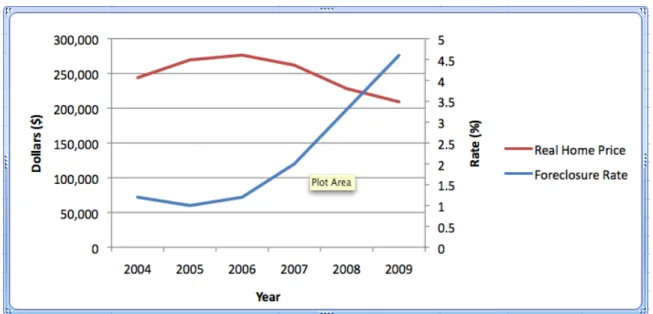
It appears that in 2006, when real home prices begin to decline, foreclosure rates begin to rise at the same time. This loss of home equity eliminated the ability for homeowners to borrow against their equity when they could not meet their monthly mortgage payments (Baker, 2008). Also, many of these homeowners realized that they owed more than the value of their homes now that prices had fallen, so they walked away from their mortgages (Baker, 2008).
So not only did banks have trouble selling these houses, they also had to sell at difficult prices. Tightened lending standards and larger down payments apply to both first-time home buyers and existing home buyers (Baker, 2009).
Post-Housing Crash
Another factor that has affected home ownership rates in the past is mortgage dynamics, specifically mortgage qualifications. Despite efforts to increase home ownership, there does not appear to be an increase in home ownership in the roughly eight years since these programs were introduced. So far, no government policies have appeared to result in an increase in home ownership rates.
The changing dynamics of America's younger generation may be contributing to the current decline in home ownership. Many think that housing affordability is a contributing issue to our current decline in home ownership rates, but that is not the case. Low-income families struggling to afford mortgages may be contributing to the current decline in home ownership rates in the US.
In 2013, the Joint Center for Housing Studies at Harvard University (JCHS) conducted research into the current rental market in the United States. The rise in home ownership lasted right up until the great economic downturn that occurred in the early 1980s. The decline in home ownership was the result of a struggling economy and high interest rates resulting in unaffordable housing.
The early 1980s saw a steep decline in home ownership rates, but not to the extent of our current decline. The current decline is attributed to changing demographics, which have also been observed in the last century. And second, baby boomers entering the housing market in the 1980s resulted in an increase in home ownership.
A Summary of the Primary Causes of the Housing Bubble and the Resulting Credit Crisis: A Non-Technical Paper.
Conclusion