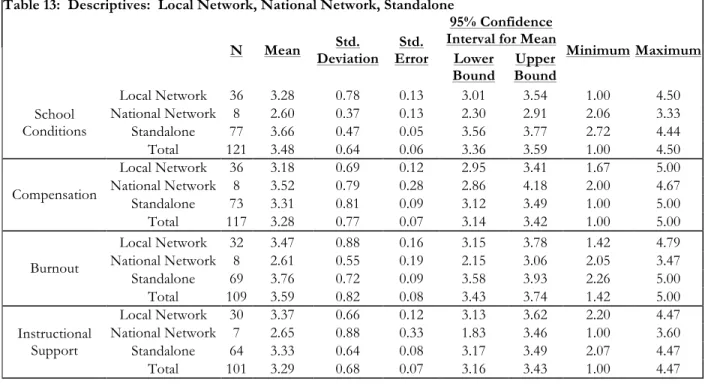
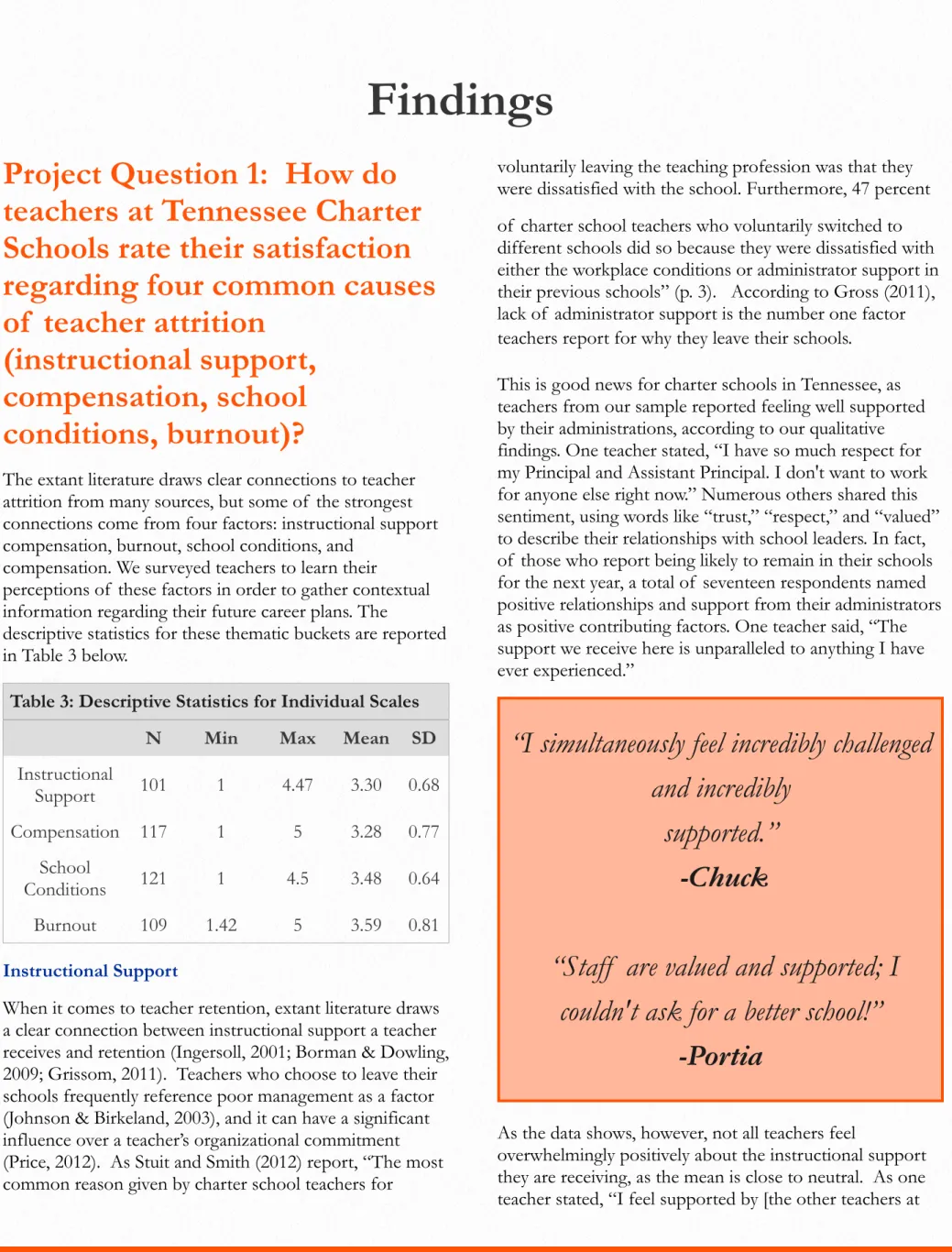
How do Tennessee Charter Schools teachers rate their satisfaction with four common causes of teacher turnover (teaching support, compensation, school conditions, burnout). With this in mind, our study seeks to provide a descriptive portrait of teacher turnover in charter schools in Memphis.
Metropolitan Nashville Public Schools
However, the student demographics of MNPS charter schools are more racially balanced than Shelby County charters. Achievement School District operates schools in the bottom 5% in the nation based on calculated metrics.
The Achievement School District
This is representative of the distribution of charter schools between the two cities, as 72% (73 schools) are located in Memphis, while 28% (29 schools) are located in Nashville. All quantitative data were viewed through a lens that was informed by both existing and new literature.
Project Question 1: How do teachers at Tennessee Charter
Findings
Allen (2005) found that although increasing compensation is linked to increased retention rates, working conditions can trump salary as a factor. This may indicate that compensation is not a major consideration for teachers when thinking about job satisfaction, which is consistent with trends in the literature related to teacher compensation.
Yolunda
According to Gross (2011), compensation is one of the top five factors that affect charter school performance. Longer work hours coupled with increased teacher decision-making that often comes with working in a charter school can lead to burnout. In general, charter school teachers report significantly greater workloads than their peers in traditional public schools (Ni, 2012).
Overall, it is clear that hours worked, an increased role in school decision-making, and an increased workload can lead to charter school teachers feeling burned out. However, as Torres (2014) notes, it is not necessarily the amounts of these factors that lead to burnout, but rather the ways in which teachers do so. Regarding burnout, one teacher said, “The school I work at requires us to work long hours that make it difficult to cultivate a life outside of school.” However, our.
The days are tiring and exhausting, but I find teaching rewarding and this is what I feel called to do.” If teachers at charter schools in Tennessee feel like their work has an impact, like this teacher, they may be able to avoid feelings of burnout, despite structural factors that may predict it.
Project Question 2: How do
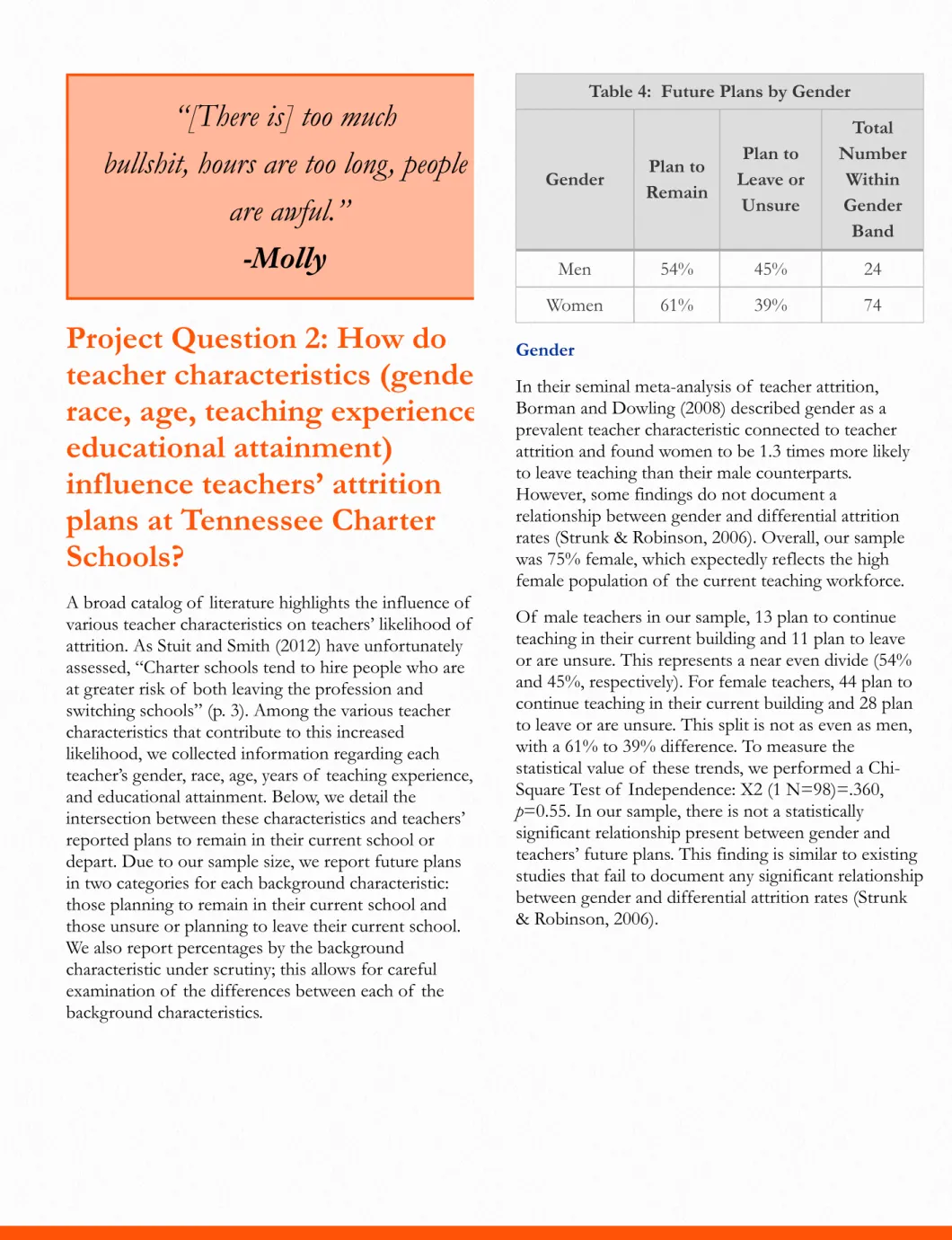
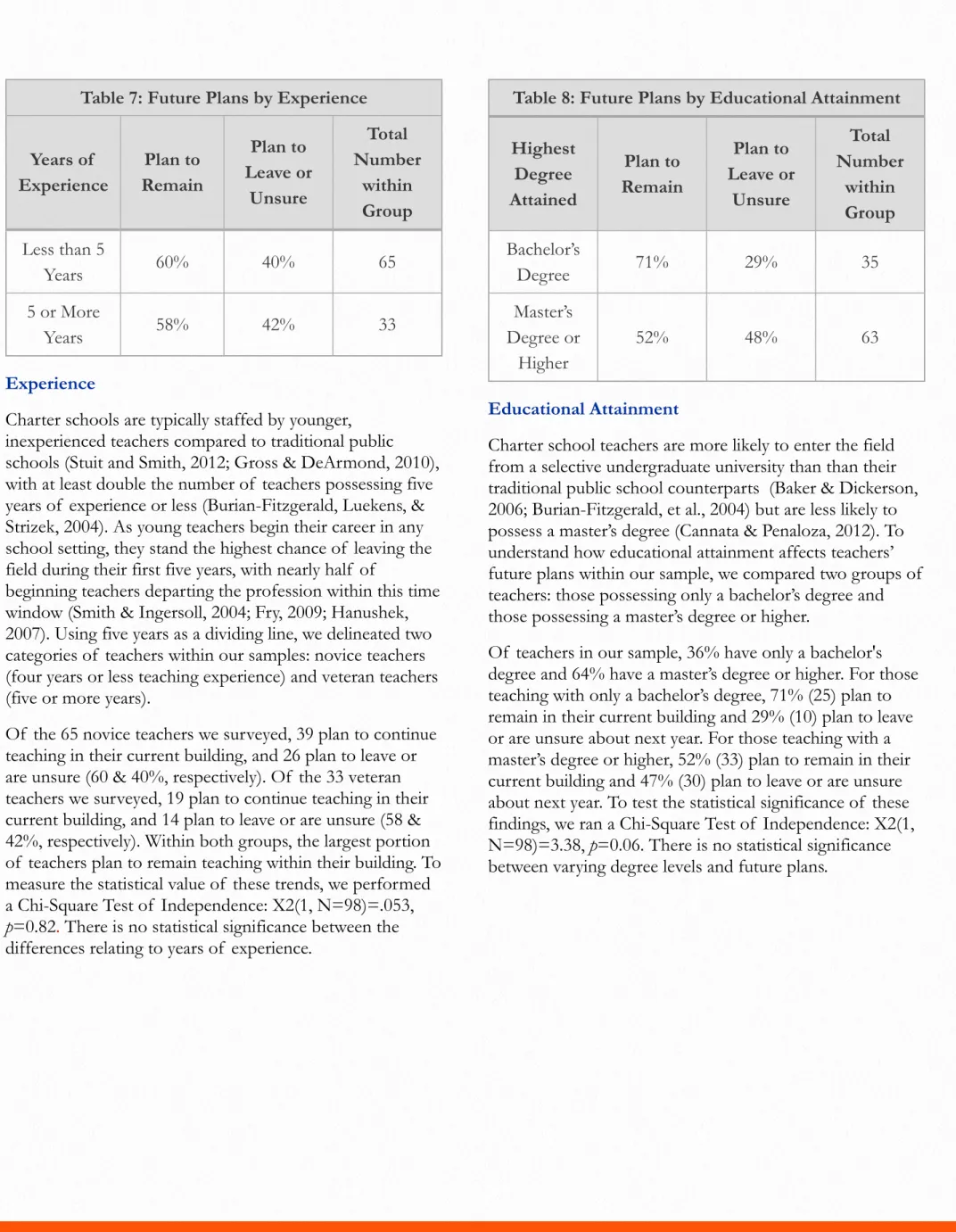
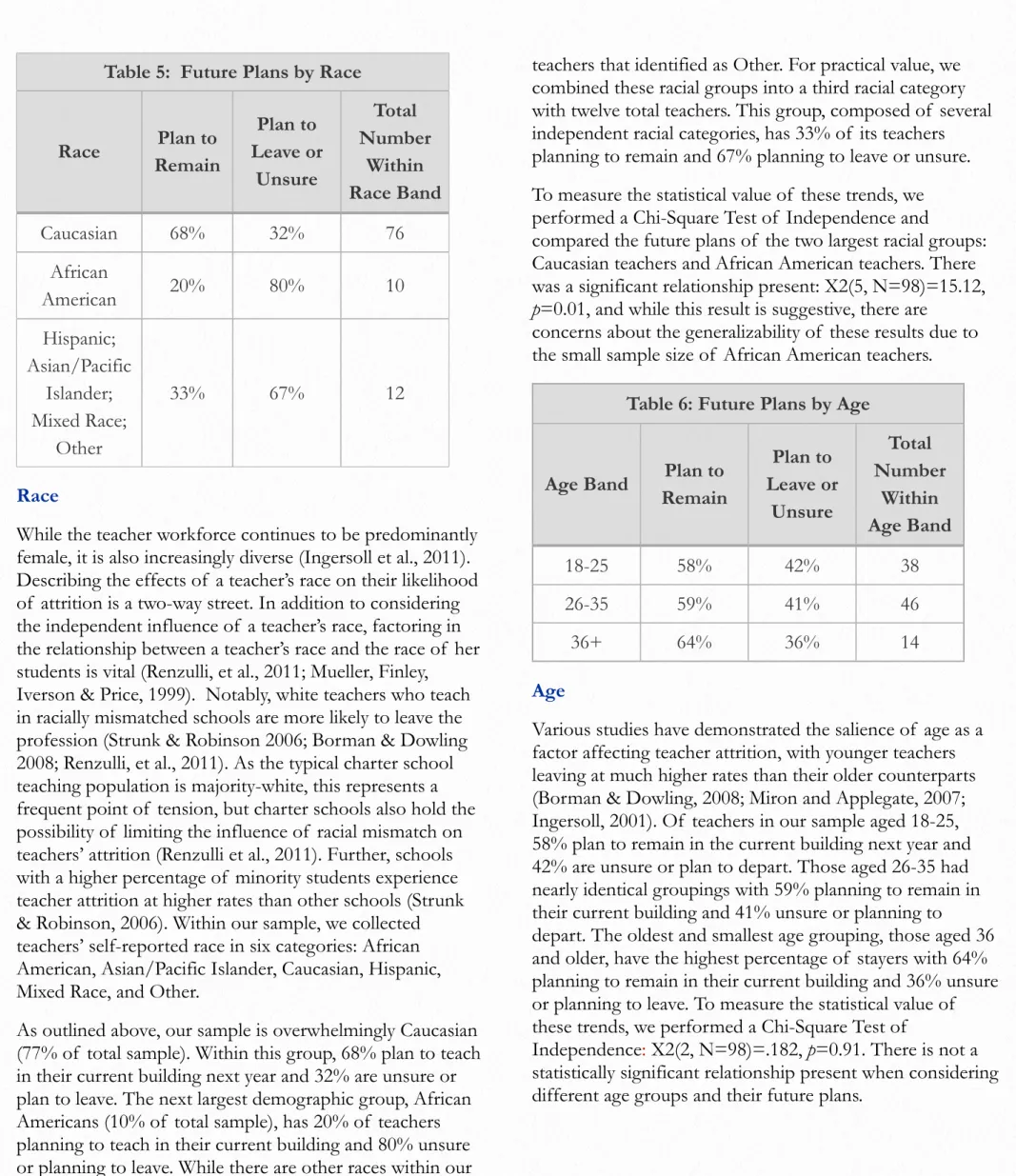
Within this group, 68% plan to teach in their current building next year and 32% are unsure or plan to leave. Of the teachers in our sample, the elderly plan to stay in the current building next year and 42% are unsure or plan to leave. There is no statistically significant relationship present when different age groups and their future plans are considered.
Of the 65 beginning teachers we surveyed, 39 plan to continue teaching in their current building, and 26 plan to leave or are unsure (60 and 40%, respectively). Within both groups, the majority of teachers plan to continue teaching in their building. Of those teaching with only a bachelor's degree, 71% (25) plan to stay in their current building and 29% (10) plan to leave or are unsure about next year.
Among those teaching with a master's degree or higher, 52% (33) plan to stay in their current building, and 47% (30) plan to leave or are unsure about the next year.
Project Question 3: How do variations in charter school
Carrie
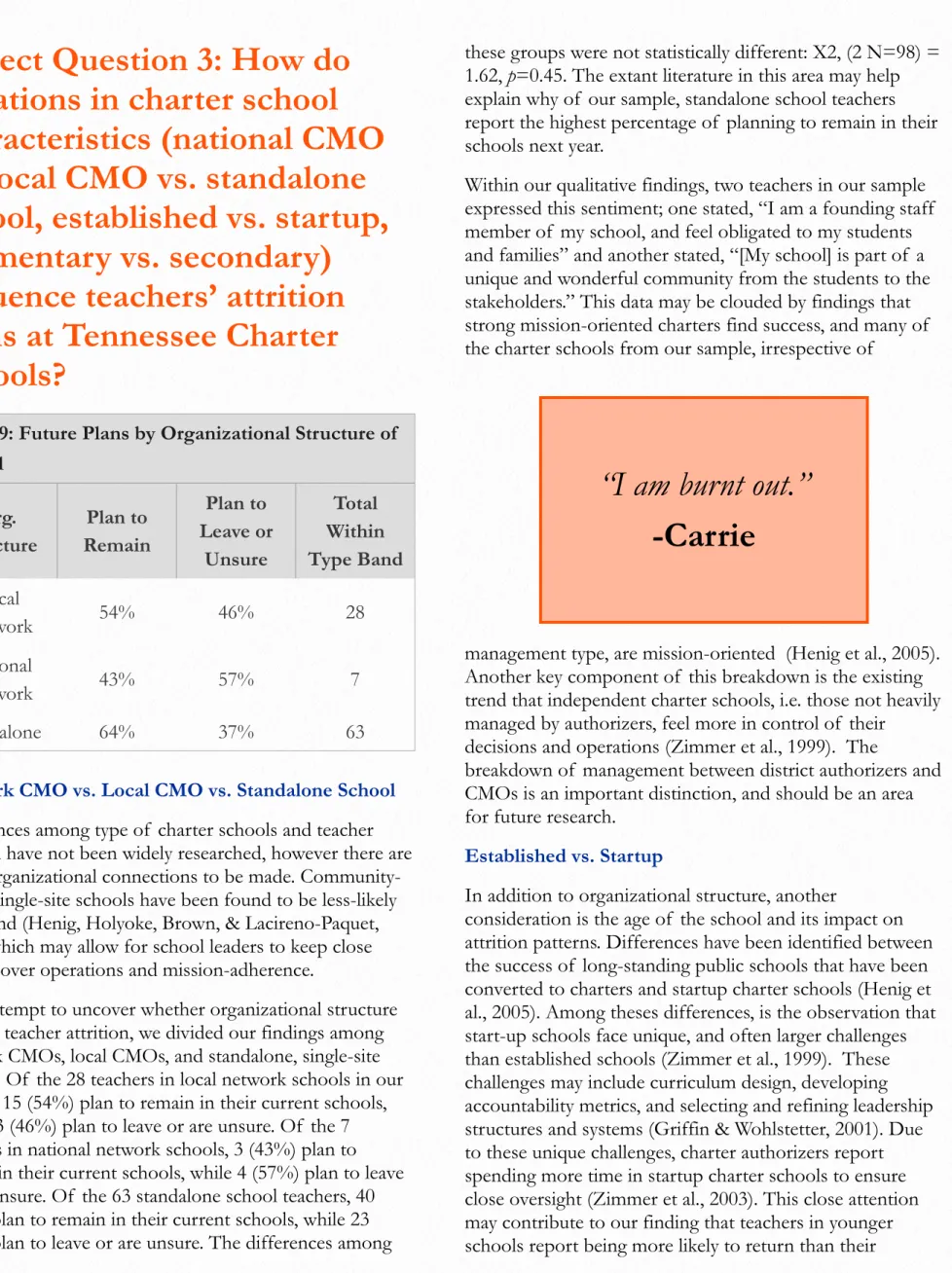
According to our quantitative findings, of the twelve teachers in schools under three years old in our sample, eight (67%) plan to stay at their current school, while four (33%) plan to do so. In general, it is difficult to explain exactly what factors, if any, teachers consider, related to the organizational structure or age of the school, because of the general finding in the existing literature that charter schools, even those with a comparable organization. However, from the literature it seems that teachers feel less satisfied due to the 'new school effect'. It may therefore be the case that school leaders at the starting schools in our sample have found ways to mitigate this for their teachers.
Again, this may be an area for further study to identify these unique differences between Tennessee charter schools. Our sample indicates that there is no significant difference in the plans between primary school teachers and secondary school teachers, which is not in accordance with the existing. There were neither practically nor statistically significant differences in the plans to return or leave grades among teachers in our sample: X2 (1 N p=0.91.
Project Question 4: Within our framework, what factors predict
Stephanie
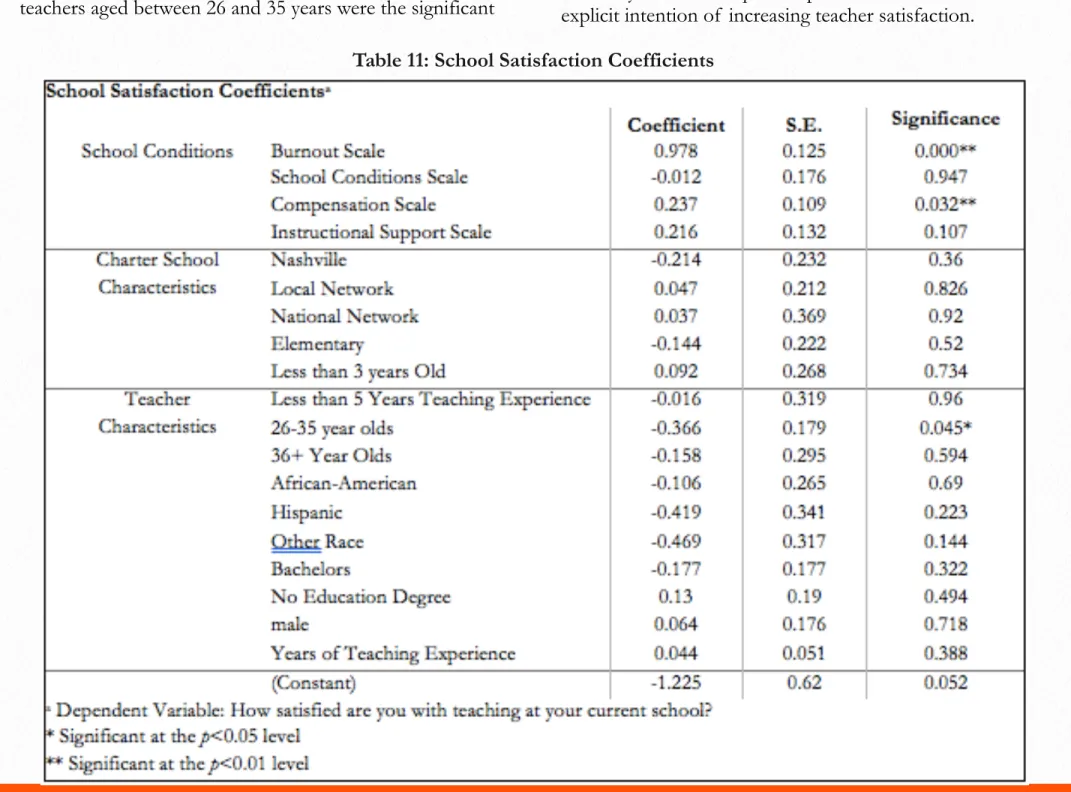
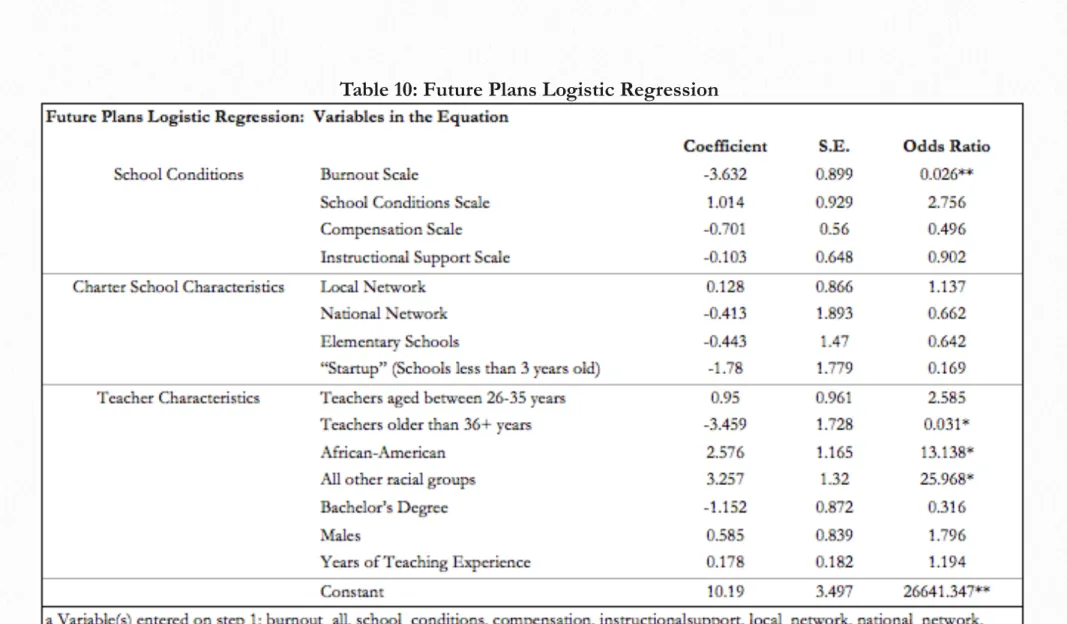
A one-unit improvement in the burnout scale (indicating that teachers are less likely to burn out) is expected to result in a 97% greater likelihood that teachers choose to stay in the profession. Although many factors likely influence the decisions teachers make regarding their future professional plans, according to our model, limiting teachers' perceptions of burnout will help increase the likelihood that teachers will remain in the profession. Put differently, teachers younger than 36 are 97% more likely to leave the profession or be uncertain about their future in the profession.
Regression Analysis of Teachers' School Satisfaction To better approximate teachers' plans for attrition in the absence of express school-level data, we combined regression analysis of prospective plans with separate models to determine teacher satisfaction. teachers with both their schools and their networks (only for those teachers who teach in local or national charter networks). Multivariate linear regression of teachers' satisfaction with their school resulted in a model that explained 73% of the variance and yielded significant findings for some of the variables in the model. As teachers older than 36 have a much higher probability of wanting to stay in the profession and teachers between 26-35 are less satisfied, creating the conditions for these "second-stage" teachers to being more satisfied will result in teachers wanting to stay in the Profession.
This other significant finding sheds an even brighter light on the impact that burnout has on teachers' satisfaction with their schools and the likelihood that they will remain in the profession.
Limitations
Our first recommendation is based on our findings from project question one, specifically in school relationships. Since we find that mission-fit is an important contributor to teachers' desire to do their jobs despite other perceived difficulties, it would be beneficial to make this a larger part of the initial hiring process. In fact, recent studies have found that many successful CMOs consider “fit” to be an important factor in recruiting and hiring efforts (DeArmond, Gross, Bowen, Demeritt, & . Lake, 2012).
Our second recommendation is also based on our findings from project question one, this time in the area of instructional support. Workplace relationships are an important factor in teacher retention, and mentoring programs are an important part of combating the isolation that teachers may feel in their daily work (Heider, 2005). These support systems already operate in an unofficial capacity in many schools, so formalizing some of these processes is an important step in reaping the benefits that many teachers are already experiencing.
TCSC should encourage network principals to tap into teachers' passions and interests outside the box.
Recommendations
TCSC should first work to identify the schools with the highest teacher retention rates in the country. Using existing data from the Tennessee Education Research Alliance, TCSC should be able to spot these schools easily. Given the impact of teacher-reported burnout, the potential added value of new second-level teacher compensation models, and the proven value of learning support in teacher retention efforts, TCSC should increase its effectiveness in these areas.
To ensure this happens, the Center must unite principals across the state using the power of network improvement. It would be a mistake for the center to simply study high-performing schools and hand out a list of what. Schools in the TCSC network should try new compensation models that take advantage of this flexibility.
By allowing second-stage teachers to continue developing skills while remaining in the classroom, network schools can enjoy the student achievement benefits of their most seasoned teachers staying put while reaping the added reward of increased instructional support.
Conclusion & Next Steps
Factors influencing novice teacher job satisfaction and retention (Doctoral dissertation, Virginia Polytechnic Institute and State University). The impact of induction and mentoring programs for beginning teachers: A critical review of the research. How context matters in high-needs schools: The effects of teachers' working conditions on their professional satisfaction and their students' achievement.
The effects of group racial composition on job satisfaction, organizational commitment, and career commitment in teachers. Successful School Restructuring: A Report to the Public and Educators from the Center for School Organization and Restructuring. Racial mismatch and school type: Teacher satisfaction and retention in charter and traditional public schools.
Appendices
Purpose: The purpose of this study is to measure the impact of various factors that influence teacher retention in charter schools in Tennessee. By examining teacher turnover in Tennessee charter schools, we can better understand industry dynamics, city trends, and recruitment/retention challenges. Q13 How satisfied are you with the larger network/CMO to which your school is affiliated?
My name is Rachel Moquin and I am writing to you today on behalf of the Tennessee Charter School Center and Vanderbilt University. On behalf of the Tennessee Charter School Center, my team is studying teacher attrition in charter schools in Memphis and Nashville. I am writing to invite you to participate in a teacher retention study for a project at Vanderbilt University's Peabody College in conjunction with the Tennessee Charter School Center.
The purpose of this survey is to assess the impact of various factors affecting teacher retention in Tennessee charter schools. By answering these questions, you will provide valuable information about the specific importance of these factors to charter school teachers in Tennessee. The information you provide will be combined with information provided by others in statistical reports.