Research backgrounds for the supercapacitor and micro-supercapacitor
Introduction
For example, most of the electricity storage that compensates for the demand discrepancy relies on hydropower storage facilities, in which the potential is converted into electricity energy. While more charges can obviously be stored in the electrode, kinetic limitations arise from the slow diffusion of the ions.
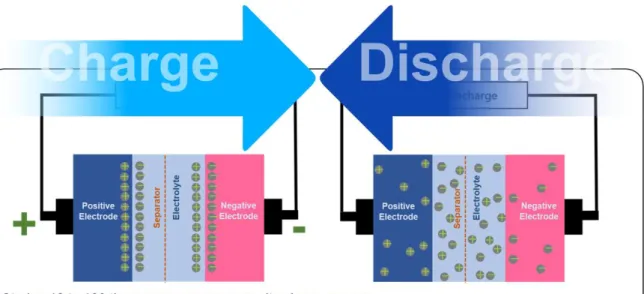
Definition of supercapacitors and its charge storage mechanism
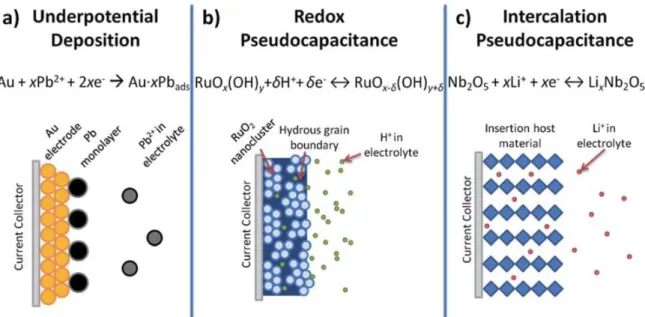
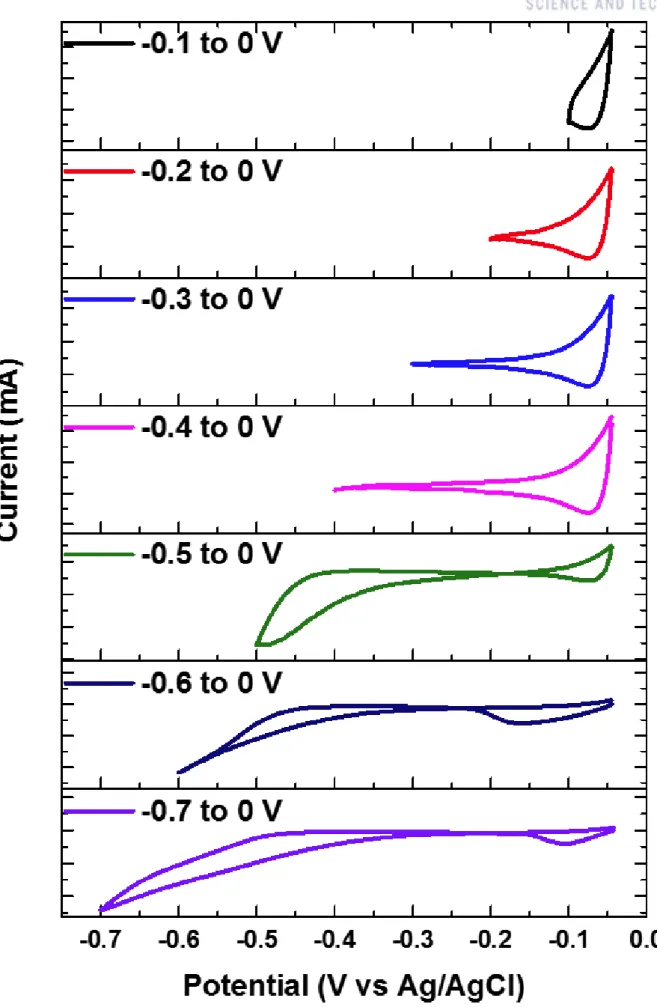
Many researchers have been reported for nickel hydroxide in recent decades, but unfortunately their importance has been mitigated by a misuse of nomenclature brought in by the scientific community, whereby the nickel hydroxide electrode was defined as "pseudocapacitive" rather than faradaic (battery-like material). 22This misrepresentation of the charge storage mechanism has spread throughout the literature on nickel hydroxide materials proposed for EU applications. For the nickel hydroxide electrode, a stable cyclic voltammogram is not drawn over the entire available potential range.
Strategy for enhanced performances
Conventional current collector
SEM images of (a,e,b) Ni foil and (c,e,f) porous Ni film at different magnifications.30 Reprinted with permission from Wang, T.; Guo, Y.; Lu, D.; Fu, X.-Z.; Sun, R.; Wong, C.-P., NiCo2O4 nanosheets in-situ grown on three-dimensional porous Ni film current collectors as integrated electrodes for high-performance supercapacitors. a–b) SEM images of the NiO nanofiber blanket.
Micro-supercapacitor system
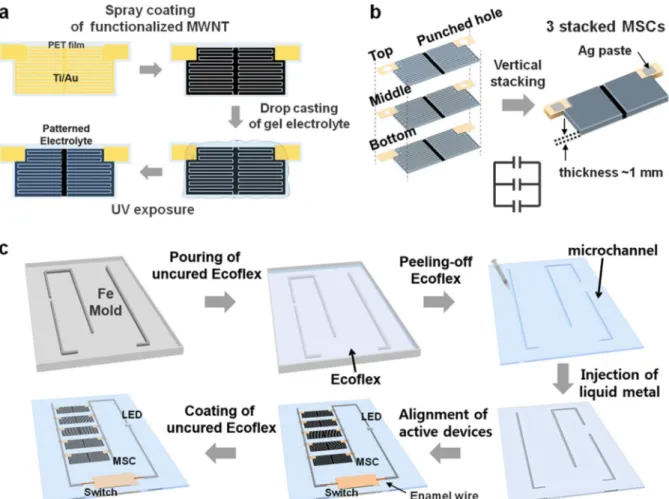
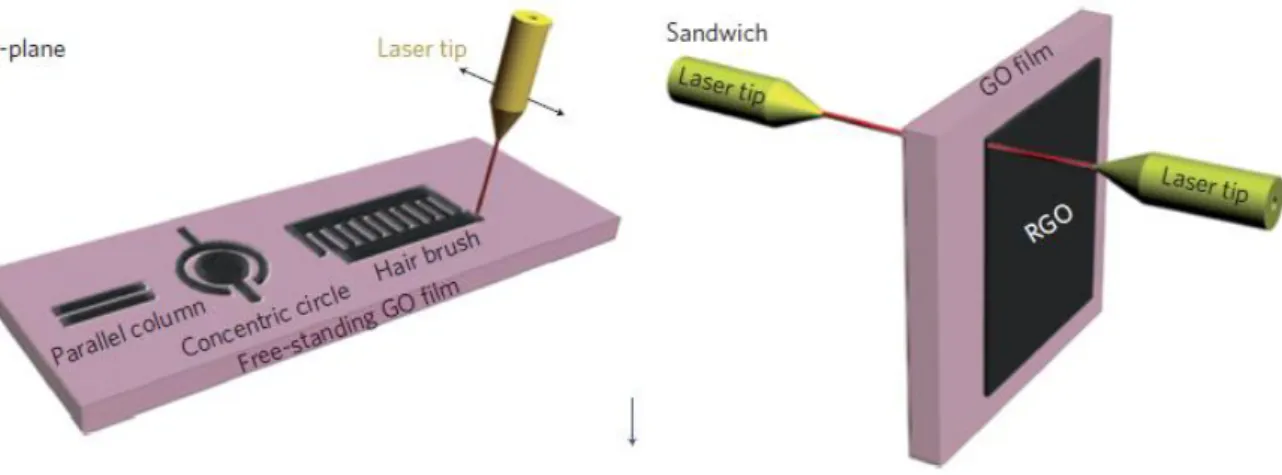
Schematics of CO2 laser patterning of free-standing hydrated GO films to fabricate RGO. GO-RGO devices with in-plane and sandwich geometries.38Reprinted with permission from Gao, W., Singh, N., Song, L.et al., Direct laser writing of micro-supercapacitors on hydrated graphite oxide films. Schematics of (a) fabricating the planar patterned MSC on a PET film, (b) vertically stacking three MSCs with parallel connection, and (c) fabricating the stretchable MSC array on Ecoflex substrate with embedded liquid metal compounds.40 Reprinted with permission from Kim, H.; Yoon, J.; Empty.; Paik, S.
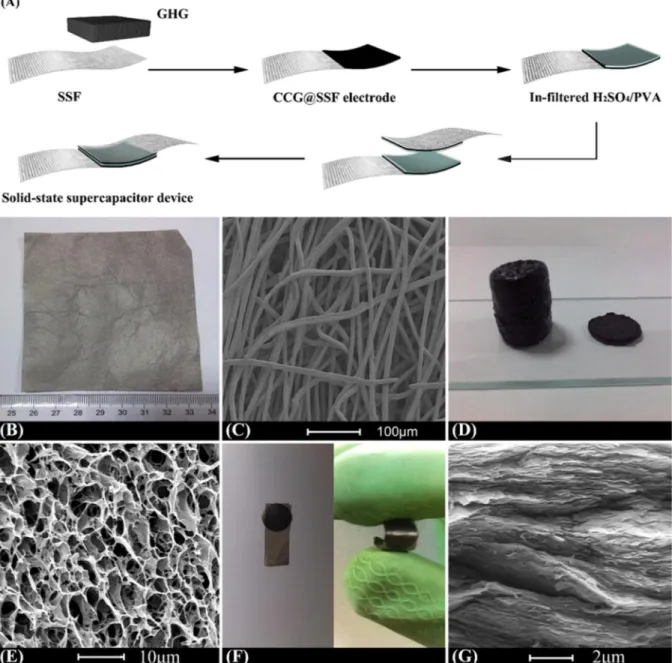
Yu, J.; Wu, J.; Wang, H.; Zhou, A.; Huang, C.; Bai, H.; Li, L., Metallic Fabrics as Current Collector for High-Performance Graphene-Based Flexible Solid-State Supercapacitor. Bad luck, D.; Brunet, M.; Taberna, P.-L.; Simon, P.; Fabre, N.; Mesnilgrente, F.; Conedéra, V.; Durou, H., Elaboration of a microstructured inkjet printed electrochemical carbon capacitor.
Nickel Hydroxide Supercapacitor with a Theoretical Capacitance and High Rate
Introduction
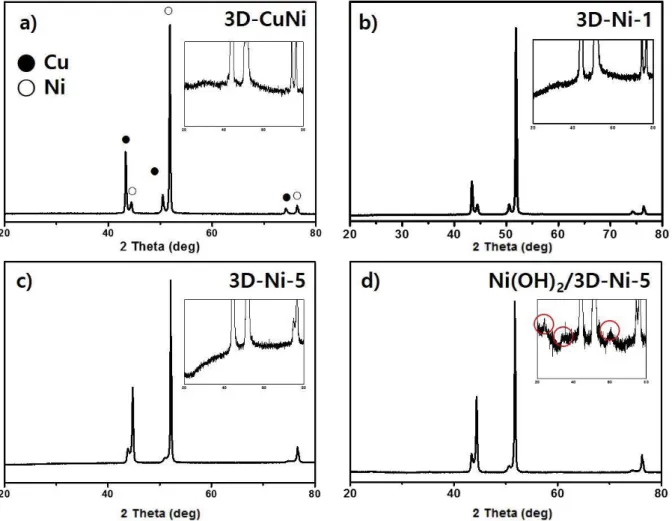
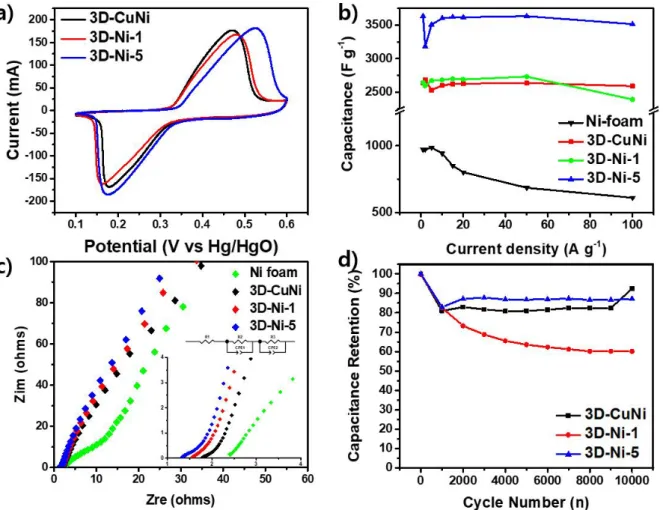
As a substitute, we propose a one-word scaled-down dendritic 3D-Ni network for use as a current sink in high-performance supercapacitors with excellent theoretical capacitance and good rate capability. Dendritic 3D-Ni current collectors have a moss-like network architecture comprising massively branched hollow Ni structures and micrometer-scale pores. As a current collector, the 3D-Ni network facilitates excellent performance due to many active sites and a significant reduction in the diffusion resistance between the electrolyte and the electrode.
When nickel hydroxide was deposited on the hollow dendritic 3D-Ni current collectors, it yielded an excellent specific capacitance of 3.637 F/g at a current density of 1 A/g with excellent cycling stability (more than 80% after 10,000 cycles). The excellent electrochemical properties and facile fabrication of the hollow dendritic 3D-Ni architecture indicate their potential as high-performance current collectors for next-generation energy storage devices.
Experimental methods
- Preparation of the 3D-Ni hollow current collector
- Deposition of Ni(OH)
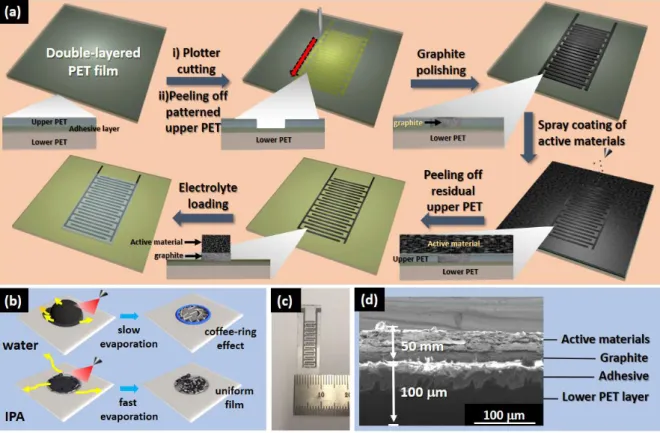
A simple diagram providing a comparison of Ni(OH)2/Ni and Ni(OH)2/3D-CuNi, Ni(OH)2/3D-Ni-5 film supercapacitor. A schematic diagram of the fabrication process for the micro-supercapacitor with a plotter-assisted approach is shown in Figure 3.1a. The electrochemical properties of the micro-supercapacitor were measured by cyclic voltammetry (CV) and galvanostatic charge/discharge (CDC) and electrochemical impedance spectroscopy (EIS).
The specific energy density of the micro-supercapacitor in this study was comparable to others. The electrochemical performances of the mSC were characterized by cyclic voltammetry (CV) and galvanostatic charge/discharge (CDC) curves and electrochemical impedance spectroscopy (EIS).
Plotter-assisted integration of wearable all-solid-state micro-supercapacitors
Introduction
The advancement of flexible and lightweight energy storage systems through simple manufacturing processes is essential for useful devices such as mobile implanted medical devices, 2,3 wearable electronics, 4 and sensors.1 Recent development of micro-supercapacitors quasi-solid-state (mSC) has shown a potential solution for energy storage and mobile systems,5–10 compared to electrolytic capacitors, which usually experience problems with short-circuiting and electrolyte exposure. To achieve micro-device applications, reduced quasi-solid micro-supercapacitors has become essential to take over from conventional capacitor power sources.11–14. Although many approaches have been designed to realize an on-chip micro-supercapacitor, the manufacturing process for micro-supercapacitors is limited by expensive and high-end technologies, such as electron beam lithography,15 laser etching,16 and magnetron sputtering.17 This serious limitation hinders the realization of advanced wearable and flexible micro-supercapacitors in the future use of portable devices.
In this study, we integrated a quasi-solid-state flexible micro-supercapacitor on the PET film using a plotter-assisted method. Then, an air spray coating method was used to attach an electrode material, and a PVA/LiCl gel served as a quasi-solid electrolyte.
Experimental methods
- Fabrication of 3DGN powder
- Preparation of 3DGN/SWNT/AgNW suspension
- Synthesis of PVA/LiCl gel polymer electrolyte
- Fabrication of 3DGN/SWNT/AgNW mSC electrode
- Calculation of capacitance of supercapacitors
- Material characterization
One milliliter of suspension was sprayed onto the polished graphite layer for the single-unit micro-supercapacitor. The surface capacitance (Ca) of the micro-supercapacitor was calculated according to the equation Ca = Cdevice/Acell, where Acell is the entire effective area of the mSC, which is determined by the active area of the plotter-assisted micro-supercapacitor ( 0.595 cm2, see Figure 3.2), the sum of both the positive and negative electrode areas. The structures of the materials were investigated using scanning electron microscopy (Hitachi S4800, Japan) and high-resolution TEM (FETEM, JEOL TEM 2100, Japan).
The crystallinity of the materials was characterized by an XRD system (Bruker AXS D8 Advance, USA). The electrochemical properties of all prepared samples were measured by cyclic voltammetry (CV) and galvanostatic charge/discharge profiles, and electrochemical impedance spectroscopy (EIS) measurements were performed using a multichannel potentiostat (VMP-3, Bio-logic).
Results and discussion
Even at a high current density of 100 μA cm−2, the specific capacitance of the micro-supercapacitor was maintained at 8.1 mF cm−2. The excellent electrochemical property of the micro-supercapacitor was further confirmed by the electrochemical impedance spectroscopy measurement, as illustrated in Figure 3d. The intersection of the Nyquist plot with the real axis at high frequencies exhibits the equivalent series resistance (ESR) of the micro-supercapacitor.
A micro-supercapacitor can be interpreted using the resistance and capacitance as a function of the pulsation (5 mV) ω, designated as R(ω) and C(ω) respectively. Real part and imaginary part of the complex capacitance for a 3DGN/SWNT/Ag NW mSC.
Conclusion
Kwak, M.-J.; Ramadoss, A.; Yoon, K.-Y.; Park, J.; Thiyagarajan, P.; Jang, J.-H., One-step synthesis of doped three-dimensional graphitic foams for high-performance supercapacitors. Ramadoss, A.; Yoon, K.-Y.; Kwak, M.-J.; Kim, S.-I.; Ryu, S.-T.; Jang, J.-H., Fully flexible, lightweight, high-performance solid-state supercapacitor based on 3-dimensional graphene/graphite paper. Hwang, J.; Kim, S.-I.; Yoon, J.-C.; Ha, S.-J.; Jang, J.-H., Realization of battery-like energy density with asymmetric supercapacitors achieved using highly conductive three-dimensional graphene current collectors.
Lieut.; Lee, H.; Shin, Y.; Yoon, Y.; Kim, D.; Lee, H., Highly transparent and tunable supercapacitors using graphene-graphene chelate quantum dots. Beidaghi, M.; Wang, C., Micro-supercapacitors based on interdigital electrodes of reduced graphene oxide and carbon nanotube composites with ultrahigh control performance.
Ultrathin few-layer MoS 2 plates embedded in nanoporous graphene film for flexible
Introduction
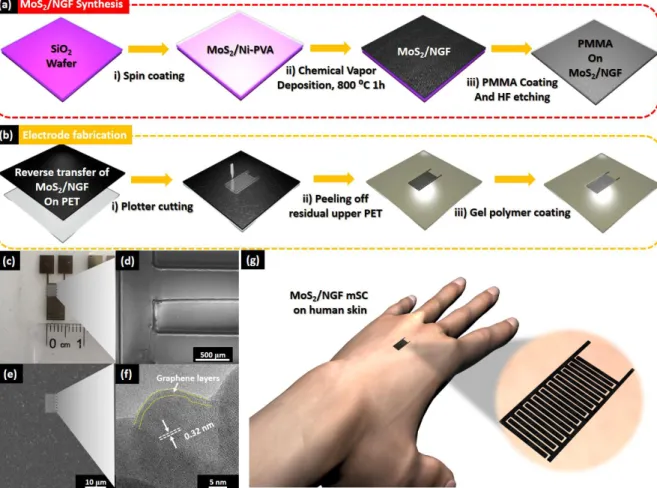
Nanoporous graphene film (NGF) is considered a promising candidate due to its superior electrical conductivity and relatively simple synthesis process.30 NGF produced by chemical vapor deposition (CVD) has been more exploited than single-crystal graphene because it can be produced on bulk rock and has additional accessible pores that still take advantage of high electrical conductivity and mechanical stability.31-35. In this study, a simple and scalable fabrication method was developed for ultrathin few-layer MoS2 panels embedded in nanoporous graphene film (NGF) by a combined wet solvothermal method and chemical vapor deposition (CVD). The transfer of MoS2/NGF onto a flexible substrate and subsequent plotter cutting enabled the highly efficient fabrication of mSCs with high flexibility, mechanical stability, and potential application in wearable electronics.
MoS2/NGF mSC simultaneously exhibited ultrahigh energy density of 7.64 mWh cm-3 and power density of 2.77 mW cm-3 in a H3PO4 gel polymer electrolyte. In particular, the MoS2/NGF mSC demonstrates a successful luminous performance when integrated into the wearable device.
Experimental methods
- Synthesis of ultrathin MoS 2 sheet dispersion
- Synthesis of PVA/H 3 PO 4 gel polymer electrolyte
- Synthesis of NGF and MoS 2 /NGF film
- Fabrication of NGF and MoS 2 /NGF mSC electrodes
- Calculation of capacitance of supercapacitors
The volumetric capacitance (Cv) of the mSC was calculated according to the equation Cv = Ccell/Vcell, where Vcell is the total effective volume of the mSC determined by the active volume of the microsupercapacitor cm3), the sum of the positive and the negative electrode area.
Results and discussion
NGF and MoS2/NGF maintained a quasi-triangular shape, indicating the capacitive behavior of the MoS2/NGF and discharge plateau was not observed. The specific capacitance value of the MoS2/NGF mSC was 55 F cm-3 at a current density of 0.5 A cm-3, which is 275 times higher than NGF. The specific capacitance of the MoS2/NGF mSC retained 82.2% of the initial value after 20,000 consecutive cycles.
As shown in Figure 4.7d, electrochemical impedance spectroscopy (EIS) was performed to comprehensively understand the capacitive behavior of MoS2/NGF mSC. The improved electrochemical properties of MoS2/NGF mSC can be attributed to three points: 1) the nanoporous graphene film can greatly increase the conductivity of the MoS2 ultrathin hybrid structure.
Conclusion
저를 믿어주신 아버지, 어머니, 할머니, 외할머니, 외가가족, 외가가족, 사촌들에게 말로나 문장으로 다 표현할 수 없는 감사의 마음을 전하고 싶습니다. 부산대학교 석사 졸업 후, 화학은 분석이 전부라고 생각하는 어린아이 같았지만, 교수님의 지도 아래 독립된 연구자가 될 수 있었습니다. 다가오는 2020년에도 우리는 우리의 연구 성과가 사람들이 관심을 가질 만한 새로운 발견을 통해 세상에 널리 도움이 될 수 있도록, 한 동료로서 연구소의 모범이 되도록 노력하겠습니다.
귀중한 시간을 내어 심사를 맡아주신 송현곤, 김영식, 강석주, 이준희 교수님께 감사드립니다. 저의 정신적 지주가 되어주신 이규호 선생님께 감사드립니다.