IMPROVEMENT OF PALM KERNEL EXTRACTION RATE (KER) AND PALM
KERNEL ANALYSIS
AUGUSTUS GALANG ANAK MINGGU
Bachelor of Engineering with Honours (Mechanical and Manufacturing Engineering)
2017
UNIVERSITI MALA YSlA SARA W AK
Grade:
Please tick ('-b
Final Year Project JWport Masters
PhD
DECLARATION OF ORIGINAL WORK
This declaration is made on the. :;10
ill ...
day of. ...?! . L1. ....
2017.Student's Declaration:
I, AUGUSTUS GALANG ANAK MINGGU wilh malric number 44873 from FACU LTY OF ENGINEERING hereby declare Ihal the work IMPROVEMENT OF PALM KERNEL EXTRACTION RATE (KER) AND PALM KERNEL ANALYSIS is my original work. I have nol copied from any other students' work or from any other sources except where due reference or acknowledgement is made explicitly in the text. nor has any part been written for me by another person.
')b I 0 '" ( ).0 f ~
Date submitted AUGUSTUS GALANG (44873)
Supervisor's Declaration:
I, ASSOC. PROF DR. SYED TARMIZI SYED SHAZALI, hereby certifies that the work entitled IMPROVEMENT OF PALM KERNEL EXTRACTION RATE (KER) AND PALM KERNEL ANALYSIS was prepared by the above named student, and was submitted to the "FACULTY' as a * partiallful1 fulfillment for the conferment of BACHELOR OF ENGINEERING WITH HONOURS (MECHANICAL AND
MANUFACTURING ENGINEERING), and the aforementioned work. to the best of my knowledge. is the said stude nt's work.
Received for examination by: Date: ;;t ( {
n !
;J.C' I 'i (ASSOC. PROF DR SYED TARMIZI S D SHAZALll[ declare that Projecttrhesis is classified as (Please tick (YJ):
o
CONFIDENTIAL (Contains confidential information under the Off,cial Secret Act 1972)'ORESTRICTED (Contains restricted information as specified by the organization where
Research was done)*
Bop
EN ACCESSValidation of ProjectiThesis
I therefore duly affirm with free consent and willingly declare that this said Project/Thesis shall be placed officially in the Centre for Academic Information Services with the abiding interest and rights as follows:
• This Pl'ojecttrhesis is the sole legal property ofUniversiti Malaysia Sal'awak (UNIMAS).
• The Centre for Academic Information Services has the lawful right to make copies for the purpose of academic and research only and not for other purpose.
• The Centre for Academic Information Services has the lawful right to digitalize the content for the Local Content Database.
• The Centre for Academic Information Services has the lawful right to make copies of the Projecttrhesis for academic exchange between Higher Learning Institute.
• No dispute or any claim shall arise from the student itself neither third party on this Project/Thesis once it becomes the sole property of UNIlVIAS.
• This Projectfrhesis or any material, data and information related to it shall not be distributed, published or disclosed to any party by the student except with UNIMAS permission.
Student signature:
_Q~ )ll " =- -, F- _ _ _
Supervisor signature: __'-+;;;J,-" ~ ~_._. ~ _
(Date J.O Ie 0,( ;LO I =t ) (Date: ).0 (u' (.M I.e,
Current Address:
SALCRA TAEE OIL PALM ESTATE.
P.O.BOX 25, 94707 SERIAN, SARAWAK
Notes: ' If the Projecttrhesis is CONFIDENTIAL or RESTRICTED, please attach together as annexure a letter from the organization with the period and reasons of confidentiality and restrlctioll.
[The instrument is duly prepared by The Centre for Academic Information Services]
STUDY ON THE IMPROVEMENT OF PALM KERNEL EXTRACTION RATE (KER) AND
PALM KERNEL ANALYSIS
AUGUSTUS GALANG ANAK MINGGU
Thesis is submitted to
Faculty of Engineering, University Malaysia Sarawak In Particular to Fulfillment of the Requirement
For the Bachelor Degree in Engineering
With Honours (Mechanical and Manufacturing Engineering) 2017
i
ACKNOWLEDGEMENT
With all the blessing and grace from the God, I was finally able to complete this thesis of Improvement of Palm Kernel Extraction rate and Palm kernel Analysis as my requirement for my bachelor degree in Mechanical Engineering in manufacturing at University Malaysia Sarawak (UNIMAS). I am feeling grateful for all the blessing, strength, health, financial and energy along my journey to complete this thesis. Firstly, I want to extend the most sincere gratitude to my supervisor, Assoc Prof. Dr. Syed Tarmizi Syed Shazali for guiding and give moral support to me throughout the final year project 1 and final year project 2. During the time period, he gave a lot of opinion on my project which the title of my project was selected and choose by myself as my proposal earlier. The selection of my title was confirmed by him as the project title was interested and never done by previous student. Secondly, my generous gratitude is also dedicated to Bau Palm Oil Manager, Mr. Mohd Aizat who allowed me to complete my analysis at Bau Palm oil Mill and allowed me to use all the machine and laboratory equipment in a way to complete my analysis. Then, I would like to dedicated special appreciation to Bau Palm Oil Mill Engineer, Miss Patricia Henry who gave her hand by conducted me on this analysis. She gave good motivation, moral support, guidance and analysis material for me to complete this palm kernel project. Besides that, I also want to dedicated special thanks and appreciation to Mdm. Juliana, laboratory assistant who gave the guidance from her experiences in palm kernel analysis in a way to complete my analysis in the same product. The most precious appreciation and special thanks I would like to dedicate to both of my parents, Mr. Minggu Anak Semana and Mdm. Linda Anak Dunggat who gave me a lots of moral support and financial support in a way to complete my project analysis. Special appreciation also I want to dedicate to my sibling and my dear friends for the fantastic moral support directly or indirectly given to me. It was the memorable memories for me to share with others in the future. For everyone who I had mention and not mention in this little gesture, I bid most sincere gratitude and thank you for all the support and guidance during my analysis.
ii
ABSTRACT
Palm kernel oil is edible plant oil derived from the palm fruit. The palm kernel was obtained from fleshy mesocarp of the palm fruit. The palm kernel has the oil that highly varied nutrient demand which by several factor that is soil moisture, temperature, plantations area, water and high/low humidity. The mass balance for palm kernel was categories as full kernel, shell and fibres. This purpose of this analysis was to improve the palm kernel extraction rate (KER) and palm kernel daily analysis. This analysis will improve the productions of palm kernel up to 6% from total 100% production of palm fruit or bunches. This analysis was made because of increasing in kernel losses which will reduce the company benefits and profits. The data collection was made at loading ramp station, digester station, press machine station, palm recovery station and kernel bunker and silo station. The data collection was made at Bau Palm Oil Mill SDN BHD that was supervised by mill engineer, Miss Patricia Henry. The data that has already collected will analysed at the mill laboratory to get the precious reading to avoid the error. The collections of data will compare with previous analysis to manipulate the actual problem of kernel losses. This procedure will repeated at least 8 times to get the actual value of kernel losses. The literature review for palm kernel analysis have been studied carefully through books, journal, articles, MPOB manual guidance, internet and other relevant sources for the purpose of studied and complete the palm kernel analysis accurately. The researched methodology is planned based on the objectives that need to be achieved. Gantt chart was developed to plan the frame work to meet the time line for the project. Through the research, the finding reveals that there is a lots of kernel losses at each station that selected due on human error and palm fruit accepted. This error will minimize by accurate analysis and precious laboratory analysis. As the recommendations for future research, a study to increase the efficiency of palm fruit production and accepting must be design to increase the palm kernel production.
iii
ABSTRAK
Minyak isirong sawit ialah minyak makan tumbuhan diperolehi daripada buah sawit. Kernel diperolehi daripada mesocarp berisi buah sawit. Kernel sawit mempunyai minyak yang permintaan nutrien yang sangat tinggi oleh beberapa faktor iaitu kelembapan tanah, suhu, kawasan lading, air dan kelembapan yang tinggi / rendah. Baki besar-besaran bagi kernel sawit dikategorikan seperti kernel penuh, shell dan serat.
Tujuan analisis ini adalah untuk meningkatkan kadar pengekstrakan kernel (KER) dan analisis harian kernel sawit. Analisis ini akan meningkatkan pengeluaran kernel melebihi 6% daripada jumlah pengeluaran 100% buah sawit atau tandan. Analisis ini dibuat kerana peningkatan dalam kerugian pengeluaran kernel yang mengurangkan manfaat syarikat dan keuntungan. Pengumpulan data dibuat di stesen pemunggahan, stesen pencerna, stesen pemerahan, stesen pemulihan sawit dan bunker kernel dan silo stesen . Pengumpulan data dibuat di Bau Palm Oil Mill SDN BHD yang diselia oleh jurutera kilang, Cik Patricia Henry. Data yang telah dikumpul akan dianalisis di makmal kilang untuk mendapatkan bacaan yang tepat untuk mengelakkan ralat. Kumpulan data akan dibandingkan dengan analisis sebelumnya untuk memanipulasi masalah sebenar kerugian kernel. Prosedur ini akan diulangi sekurang-kurangnya 8 kali untuk mendapatkan nilai sebenar kerugian kernel. Kajian literatur untuk analisis kernel sawit akan dikaji dengan teliti melalui buku-buku, jurnal, artikel, manual panduan MPOB, internet dan sumber-sumber lain yang berkaitan untuk tujuan pembelajaran dan melengkapkan analisis kernel sawit dengan tepat. Metodologi kajian dirancang berdasarkan objektif yang perlu dicapai. Carta Gantt telah dibuat untuk merancang kerja rangka untuk memenuhi jangka masa projek. Melalui kajian, ini dapatan menunjukkan bahawa terdapat banyak kerugian kernel di setiap stesen yang dipilih kerana kesilapan manusia dan buah kelapa yang diterima. Ralat ini dapat dkurangkan dengan analisis yang tepat dan kekerapan analisis makmal. Sebagai satu cadangan untuk kajian akan datang, kajian untuk meningkatkan kecekapan pengeluaran buah kelapa dan menerimanya perlu dibentuk untuk meningkatkan pengeluaran isirong sawit.
iv
TABLE OF CONTENTS
Contents Page
ACKNOWLEDGEMENT………..……….i
ABSTRACT……….…….ii
ABSTRAK……….……..iii
TABLE OF CONTENT………..iv
LIST OF TABLES………...………..vii
LIST OF FIGURES………..………viii
CHAPTER 1 ... 1
INTRODUCTION ... 1
1.1 Introduction ... 1
1.2 Background ... 2
1.3 Problem Statement ... 5
1.4 Research Objective ... 6
1.5 Research Aims ... 6
1.6 Scope of Research ... 6
1.7 Methodology ... 7
1.8 Summary ... 8
CHAPTER 2 ... 9
LITERATURE REVIEW ... 9
2.1 Introduction ... 9
2.2 Palm Kernel Extraction Rate (KER) ... 9
2.3 Palm Kernel Benefits ... 11
2.4 Efficiency and Practical Approach to Increase the Production of Palm Kernel ... 13
v
2.5 New Improvement to Increase the Kernel Extraction Rate (KER). ... 18
2.6 Minimize the Kernel Losses against Shell ... 8
2.7 Kernel Losses Analysis ... 19
2.8 Sample Equation for Production Losses ... 21
2.9 Kernel Analysis Flow Process ... 23
2.10 Boiler Energy Control and its Essential Fitting... 25
2.11 Power House Energy controller ... 28
2.12 Summary ... 29
CHAPTER 3 ... 30
METHODOLOGY ... 30
3.1 Introduction ... 30
3.2 Overall Research Outline ... 31
3.3 Research Framework ... 32
3.4 Research Method ... 33
3.5 Define Project Concept and Objective ... 33
3.6 Planning for Analysis ... 34
3.7 Interview Development ... 35
3.8 Define Sample Group ... 36
3.9 Data Collection and Result Analysis ... 37
3.10 Summary ... 37
CHAPTER 4 ... 38
RESULT, ANALYSIS AND DISCUSSION ... 38
4.1 Introduction ... 38
4.2 loading Ramp Station Analysis ... 39
4.3 Tabulate the Data for Loading Ramp Analysis ... 44
4.4 Digester Station Analysis ... 48
4.5 Tabulate the Data ... 50
4.6 Press Machine Station Analysis ... 53
4.7 Tabulate the Data ... 55
vi
4.8 Palm Kernel Recovery Station Analysis ... 59
4.9 Tabulate the Data ... 61
4.10 Bunker Storage Tank Station and Kernel Silo Analysis ... 65
4.11 Tabulate the Data ... 69
4.12 Discussion for the Analysis ... 75
4.13 Summary ... 76
CHAPTER 5 ... 77
CONCLUSION AND RECOMMENDATION ... 77
5.1 Introduction ... 77
5.2 Conclusion ... 78
5.3 Main Learning ... 81
5.4 Limitation ... 81
5.5 Recommendation for Future Studies ... 82
REFERENCES ... 83
APPENDIX A ... 86
APPENDIX 1 (LOADING RAMP SAMPLE OF DATA) ... 87
APPENDIX 2 (DIGESTER SAMPLE OF DATA) ... 102
APPENDIX 3 (PRESS MACHINE SAMPLE OF DATA) ... 112
APPENDIX 4 (PALM RECOVERY SAMPLE OF DATA) ... 122
APPENDIX 5 (KERNEL BUNKER AND SILO SAMPLE OF DATA) ... 127
vii
LIST OF TABLES
Contents Page
Table 1.1: Fresh fruit bunch quality inspection ... 3
Table 2.1: kernel losses analysis per day ... 20
Table 2.2: 13 essential fitting at boiler ... 27
Table 3.1: Flow chart of overall research outline ... 31
Table 3.2: Planning for palm kernel analysis ... 34
Table 3.3: Flow chart for overall interview research method design ... 36
Table 4.1: Selection station for this analysis with mill conductor ... 38
Table 4.2: Data taken by grader as data for before analysis ... 40
Table 4.3: The result of all sampling by grader ... 41
Table 4.4: The data taken by student as the after analysis ... 42
Table 4.5: The data of all sampling by student ... 43
Table 4.6: The sample of fruitlet inside digester before analysis ... 48
Table 4.7: The sample of fruitlet inside digester after analysis ... 49
Table 4.8: The samples of data inside press machine before analysis ... 53
Table 4.9: The samples of data inside press machine after analysis ... 54
Table 4.10: The samples of data at palm kernel recovery station before analysis ... 59
Table 4.11: The samples of data at palm kernel recovery station before analysis ... 60
Table 4.12: The samples of data at kernel bunker storage and kernel silo before analysis .... 66
Table 4.13: The samples of data at kernel bunker storage and kernel silo after analysis ... 68
viii
LIST OF FIGURES
Contents Page
Figure 1.1: Palm oil fruit ... 1
Figure 1.2: Mass balance ... 2
Figure 1.3: Nut mass balance ... 4
Figure 2.1: Palm kernel ... 10
Figure 2.2: Loading of FFB ... 13
Figure 2.3: 100% FFB grading ... 14
Figure 2.4: Grading form ... 15
Figure 2.5: Sterilization pressure chart ... 16
Figure 2.6: oil refinery station ... 17
Figure 2.7: kernel recovery station ... 17
Figure 2.8: Steam supply to production line ... 28
Figure 2.9: power house station ... 29
Figure 3.1: Bau Palm Oil Mill ... 36
Figure 4.1: Data of grading system by general workers at loading ramp ... 44
Figure 4.2: Data of grading system by research student at loading ramp ... 45
Figure 4.3: Comparison of data between general workers (before analysis) versus student (after analysis). ... 46
Figure 4.4: Amount of rejected FFB to avoid kernel losses during production ... 47
Figure 4.5: Graph of Total fruitlet, total Nut and total mesocarp before analysis ... 50
Figure 4.6: Graph of Total fruitlet, total Nut and total mesocarp after analysis ... 51
ix
Figure 4.7: comparison of data before and after analysis which data for before analysis
taken by general workers and after analysis done by research student ... 52
Figure 4.8: Total kernel production inside the digester by comparing the two data by general workers versus student ... 52
Figure 4.9: Total nut production between before and after analysis... 55
Figure 4.10: Total full kernel inside press machine before and after analysis ... 56
Figure 4.11: Total crack kernel inside press machine before and after analysis ... 57
Figure 4.12: Percentage of Nut production before and after analysis... 58
Figure 4.13: Overall data for kernel analysis at press machine station ... 58
Figure 4.14: chart for kernel moisture data before analysis ... 62
Figure 4.15: chart for kernel moisture data after analysis ... 63
Figure 4.16: chart for kernel moisture comparison between the data for before and after analysis ... 64
Figure 4.17: Percentage of the moisture error for this analysis ... 64
Figure 4.18: Total balance of kernel production before analysis... 70
Figure 4.19: Total balance of kernel production After Analysis ... 70
Figure 4.20: Comparison between balances of kernel production ... 71
Figure 4.21: the total production of the palm kernel before analysis ... 72
Figure 4.22: the total production of the palm kernel after analysis ... 72
Figure 4.23: Comparison of the kernel production before and after analysis ... 73
Figure 4.24: Percentage of kernel production for before and after analysis ... 73
Figure 5.1: Data collection for each selected station ... 80
1
CHAPTER 1
INTRODUCTION
1.1 Introduction
This researched was the overall analysis of kernel losses during production of palm oil. Palm kernel oil is adible plant oil derived from the palm kernel of the oil palm with scientific name “Elaeis guineensis” that is the most productive oil producing plant in the world. Palm kernel was obtained from fleshy mesocarp of the palm fruit which from the 100% of the fresh fruit bunch (FFB), the palm kernel consist of 6% of kernel production. In the daily kernel analysis, there are several losses for kernel productions due on the product error. This analysis has the aim to improving the production of the palm kernel extraction rate (KER) and palm kernel analysis. This analysis will include the losses of palm kernel at the selected stations which are loading ramp station, digester station, press machine station, palm kernel recovery station and kernel bunker and kernel silo station.
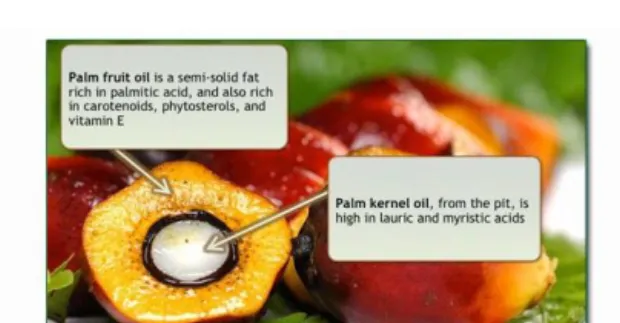
Figure 1.1: Palm oil fruit (Sources: MPOB, 2003)
2
The palm has a highly varied nutrient demand which depends mainly on the yield potential determined by the genetic make- up of the planting material and on yield limit set by several factors. For examples is soil moisture, temperature, plantation area, water, and high/low humidity. Besides the obvious benefits, palm kernel also significantly contributes to environmental degradation, health care product, beauty product and commercial cooking oil (Sudesh kumar, 2006).
Figure 1.2 shows the mass balance for palm fruit.
Figure 1.2: Mass balance (Data from Bau Palm Oil Mill)
1.2 Background
The palm kernel losses analysis must be overview at the several obvious stations that is loading ramp station, palm kernel recovery station and digester and press machine station. Here is some information about the selected analysis station:
i. Fruitlet Inspection
This is to check the exactly quality of the FFB from the estate instead of random grading. These grading to make sure that the oil extraction rate (OER) and kernel extraction rate (KER) meet the mass balanced (Muhammad Makkay, 2013).
3 No Type of FFB Accepted or
rejected
Remark
1 Ripped bunch Accepted At least 10 fresh sockets or more than 50%
of the fruitlet sent to mill within 24 hour after harvesting.
2 Under-ripe bunch
Accepted At least 10 fresh sockets and sent to mill within 24 hour after harvesting.
3 Unripe bunch Rejected Does not have any fresh socket of detached fruitlet at the time of inspection at the mill
4 Overripe
bunch
Accepted Has more than 50% of detached of fruitlet but at least 10% of the fruit still attached 5 Empty bunch Rejected More than 90% of detached fruitlet 6 Rotten bunch Rejected blackish in colour, rotten and mouldy 7 Long stalk
bunch
Accepted More than 5cm in length from lower stalk
8 Wet bunch Accepted Excessive free water
9 Old bunch Accepted Has been harvested and left at the field more than 48 hour before sent to mill 10 Dirty bunch Accepted Covered with mud, sand and dirt 11 Small bunch Accepted Weight less than 2.3kg
12 Loose fruit Accepted Detached from fresh fruit bunches 13 Un-fresh
bunch
Accepted Left at the field more than 48 hour
14 Pest damage bunch
Accepted More than 30% of it fruits damage by pest attack such as rat
15 Disease
bunch
Accepted More than 50% parthenocarpic fruit and not normal in term of size and density.
16 Dura bunch Accepted shell thickness, ratio shell to fruit, mesocarp to fruit, kernel to fruit and no fibre around the shell
Table 1.1: Fresh fruit bunch quality inspection
4
NUT MASS BALANCE
Figure 1.3: Nut mass balance (Sources: Bau Palm Oil Mill)
ii. Fruitlet Cutting and Pressing
Fruitlet digestion plays an important role in increasing the Oil Extraction Rate (OER) and kernel extraction rate (KER) (Md Zaidul, 2006). Dolphin's Automated Digester Level Control System determines the feed rate of fruitlets into the digester chamber by precisely weighing the digestion mass using load cells. When the digestion mass weight reaches high level, the hydraulically operated feed door is automatically closed and the discharged chute to the press opened to allow the discharge of the digested mass to the press. The general worker will control the feeding into the digester to make sure the smooth operation in the digester during production.
The main function of digester is to cut the fruitlet before enter the pressing machine to make the fruitlet easy to compressed and extract the oil and extract the kernel to minimize the oil losses and kernel losses in fibre during pressing section.
nut production (12%)
kernel
6%
shell
6%
5
The cutting process in the digester will maximum the oil extraction rate (OER) and kernel extraction rate (KER). Fruit capacity in the digester is controlled and maintained at a present value to ensure sufficient digestion time and cutting processes.
Then it is sent to continuous press machine. After pressing, oil palm fruit is divided into two parts: the mixture of oil, water and solid impurities and the fibre and nut. The pulp stone separation obtained CPO and stone, press machine adopts the double screw helix continuous discharge and hydraulic, greatly improving production efficiency. Palm Oil press station will separate palm fruit and kernel and oil press machine can obtain CPO (crude palm oil) and palm kernel. The adoption of double screw and hydraulic oil press machine can greatly improving working efficiency during palm oil productions. If the kernel are cracking during pressing process, the maintenance should check the pressing machine to check the problem occur in this situation. This is to avoid losses in (KER) AND (OER).
Then, the nut will sent to palm recovery station to separate the shell and kernel before sending to kernel silo and kernel bunker for final production stages.
1.3 Problem Statement
In Malaysia, there are currently about 360 active palm oil mills with a combined annual CPO and palm kernel production. There is big challenge for palm oil mill to maintain the productivity of palm kernel which big amount of kernel losses during productions. This may occur due on low grading procedure by grader and lack of production efficiency at digester and press station and palm kernel recovery station. The kernel losses will reducing mill benefit because of the market prices for palm kernel is higher in global market. As for the losses continues, some of productions line need to be analyse frequently by doing a kernel losses analysis. The analysis will increase the kernel extraction rate (KER) that profits more toward the company. Hence, researches and investigations need
6
to be done before main concept ideas to improve the of palm kernel extraction rate (KER) productions:
i. How to maximise the efficiency and practical approach to increase the production of palm kernel to maintaining the sustainability of the company?
ii. How to improving the separation and cracking process of palm nut during production?
iii. How to maintain more than 6% production of palm kernel to maintain the company sustainability?
1.4 Research Objective
The research embarks on the following objectives:
i. To increase the kernel extraction rate (KER).
ii. To implement the new improvements to increase the kernel extraction rate (KER).
iii. To minimise the kernel losses starting from loading ramp station, digester station, press machine station, palm recovery station and kernel bunker and silo station.
1.5 Research Aims
The aims of this research are:
i. To collect and analysis the data from (5) selected station with laboratory analysis so that the kernel losses during production can be investigate.
ii. To ensure that the kernel extraction rate (KER) increase during palm fruits productions.
iii. To know the percentages of kernel losses during production.
iv. To increase the mass balance of kernel production up to 6%.
7 1.6 Scope of Research
The scope of research for this palm kernel analysis is to maintain the palm kernel extraction rate (KER) and maintain the mass balance of the palm kernel which is more than 6% from total of 100% fresh fruit bunches. Therefore, this research will focus on the kernel losses during production for (5) selected station.
This palm kernel losses analysis will benefit the company to maintain the sustainability in palm oil industries. The test will be making based on the laboratory analysis. The study is limited to Malaysia palm oil industry only.
Different palm oil mill may have their respective methods to increase the palm kernel extraction rate (KER). Hence, this research is necessary to increase the production rate of palm kernel. The scope of research includes the study, improvement and analysis of collected data at local palm oil industry, Bau Palm Oil Mill SDN BHD (BAPOM).
1.7 Methodology
Methodology is a study of theoretical analysis of methods in which it will be applied in field of study and principles related to branch of knowledge. The stages making this study are as follow:
1) Stage 1: Literature review
2) Stage 2: Data collections/product samples 3) Stage 3: Analysis for data collection 4) Stage 4: Discussions
5) Stage 5: Conclusions/summary
8 1.8 Summary
A palm kernel losses was one of the losing economy and financial benefits toward the palm oil company. Therefore, the analysis for palm kernel process and losses during production should be made to increase the kernel extraction rate (KER). The analysis should be made at the selected station by taking samples from loading ramp station, digester station press machine station, palm kernel recovery station and kernel bunker and silo station. Those samples will be analysed at the laboratory to get the precise result for palm kernel losses at each station during productions and do the comparison for data collections with previous analysis result. To get the accurate data from selected stations, the samples should be taking at least 8 samples. Therefore, this analysis will profitable to the company because the market price for palm kernel was higher in global market with good quality inspection of the product. To get excellent result, good analysis, observations and investigations should be made during palm kernel analysis at Bau Palm Oil mill Sdn. Bhd (BAPOM).
9
CHAPTER 2
LITERATURE REVIEW
2.1 Introduction
This researched involving the three main problem statement which are how to find the efficiency and practical approach to increase the production of palm kernel to maintaining the sustainability of the company, how to improving the separation of palm nut from fibre inside the depericarper, and how to maintain the 6%-7% moistures of kernel to maintain the market price. This scope of problem statement need to include the main objective which are to increase the kernel extraction rate (KER), to implement the new improvement to increase the kernel extraction rate (KER), and to minimise the kernel losses starting from loading ramp station, digester station, press machine station, palm recovery station and kernel bunker and silo station.
2.2 Palm Kernel Extraction Rate (KER)
One of the two most important vegetable oils in the world’s oil and fats market is palm oil mill followed by soya beans. Oil palm or call by scientific name “Elaeis guineensis” is the most productive oil producing plant in the world, with one hectare of oil palm producing between 10 and 35 tons of fresh fruit bunch (FFB) per year. Life of palm is over 200 years, however the economic life is 20-25 years nursery 11-15 months, first harvest is 32-38 months from planting and peak yield is 5-10 years from planting (yusoff, 1996). Usually, the harvested
10
part is the fruit “fruit bunch” whereby oil is obtained from the fleshy mesocarp of the fruit. Oil extraction from flesh amounts to at least 21- 23% while kernel accounts for at least 6-7%. The palm has a highly varied nutrient demand which depends mainly on the yield potential determined by the genetic of the planting material and on yield limit set by climatic factors for example temperature, water and high/low humidity. Palm kernel contains fatty acid ester of glycerol commonly referred to as triglycerides, therefore, contributing to the worlds need of edible oil and fats (Thani et al, 1996). It is composed of approximately 50%
saturated fats and 40% unsaturated a unique composition if compared with other major fats. The distinctive colour of the oil is due to the fat soluble carotenoids (pigment) which are also responsible for its vitamins E content. There are several stages of processing the extraction of palm oil and kernel from fresh fruit bunches.
These include sterilization, bunch stripping, digestion, pressing, oil extraction, kernel extraction and finally clarification and purifications, each process with its own various unit operations. Palm oil has been related to the environment because it is land intensive industry. Any unplanned development will lead to the degradation of the forest systems, loss of habitats including plants and animals, extreme land degradation and pollution (water and airborne) due to the use of large quantities of pesticides and herbicides required to maintain the plantation.
Figure 2.1: Palm kernel (Source, MPOB, 2007)
11 2.3 Palm Kernel Benefits
1) Zero cholesterol
Zero cholesterol is the most important health care given by palm kernel oil. This is a perfect replacement for lard and butter in a cooking preparation. People with high cholesterol and heart disease can change over to healthy kernel oil for reducing healthy matter.
2) Unsaturated fats
The palm kernel oil was a healthy unsaturated fat than palm oil itself and has medium chain fatty acids (Md zaidul, 2006). This is what makes a perfect for use as a cooking preparation as the fatty acids of palm kernel oil lower than palm oil.
In result, this will ensure lower health care and suitable for beauty skin care.
3) Containing antioxidants
In beauty care, the amount of Vitamin E rarely found and being loaded with anti- oxidants, the palm oil provides amazing anti-aging benefits. It prevents the occurred of wrinkles and fine lines for face care. It is providing protection against harmful UV rays and other toxins during daily activities. Therefore, it is good to include palm kernel oil in our daily diet because of it powerful benefits. It will keep your skin healthy and youthful than your real ages.
4) Vitamin A
The other important benefit of palm kernel oil is it loaded with Vitamin A. This vitamin A is required for proper vision and good sight viewing. Vitamin A also prevents the occurrence of different eye disorders. Vitamin A provided an agent that can improvise the sight view in your eyes which good for morning or night view. In other words, the vitamin A good for eyes care.
5) Vitamin K
Vitamin K is one of the most important fat-soluble vitamins that required by your body. It boosts our bone health and also acts as our blood coagulant. Palm kernel oil contains high amounts of the vitamin K and each one of use need to take advantages from palm kernel oil for good health care.