Investigation on industrial heat transfer fluids degradation and prediction of their physical properties using a smart technique. A project dissertation submitted to the Chemical Engineering Program Universiti Teknologi PETRONAS in partial fulfillment of the requirement for the. This is to certify that I am responsible for the work submitted in this project, that the original work is my own, except as specified in the references and acknowledgments, and that the original work contained herein is not undertaken by unspecified sources or persons or not done. .
Heat transfer fluids (HTF) are widely used in industries where direct open flame heating is not practical. Since most industrial processes are operated at high temperatures, this implies the importance of using HTFs in industrial applications. In this project, the main objectives are to investigate the parameters affecting the degradation of HTFs, which are commonly used in industry, to predict the physical properties of fluids using an intelligent technique such as artificial neural network (ANN), to complete the degradation . rate of a type of HTF, and to give some suggestions to extend the life of the commonly used HTFs in the industry based on the analysis of the results and the investigation carried out.
Moreover, the degradation rate obtained can be used to analyze the performance of the HTF system for the next operating period, and the suggestions provided can be effectively applied to the industrial systems to improve their efficiency and to improve the HTF's to prolong life. Special thanks to the examiners for the Proposal Defense and Poster Presentation who supported me a lot and guided me through my mistakes to make the project even better.
INTRODUCTION
Background of Study
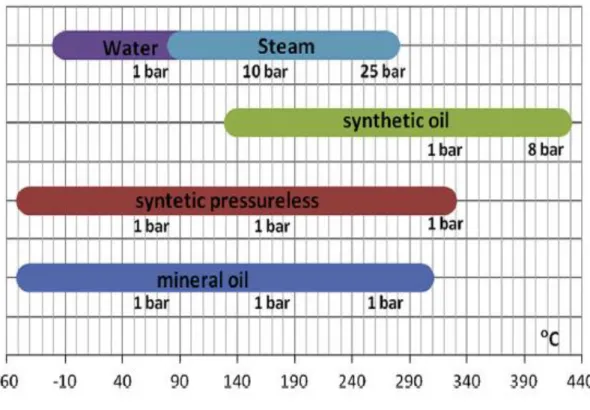
Hot oils or mineral oils come from the lubricant cut in the crude oil refinery. On the other hand, synthetics, also called aromatics, are man-made liquids. In other words, temperature is the most critical parameter that determines the efficient use of HTFs and their lifetime.
Therefore, it is very important to analyze the HTF's conditions, which can be done by analyzing their physical properties. Therefore, it is very useful to use a technique that can predict their physical properties. Furthermore, the design of the systems that use such oils is not carried out properly.
This insufficiency results in the shorter service life and the difficulty in the operation of the production process. In summary, the accurate prediction of the physical properties and the efficient design of the HTFs systems can help to significantly reduce the problems related to their operation.
Objectives
As they provide the high temperature operating conditions for the process, it is critical to maintain the proper conditions regarding their operation. Most are heated in an oven provided solely to meet the required temperature. Proper monitoring of their condition helps improve their use for a longer period of time as the most concerning problem of HTFs is extending their lifespan.
Scope of Study
LITERATURE REVIEW
- Artificial Neural Network
- Heat Transfer Fluid Properties
- Viscosity
- Pumpability
- Thermal Stability
- Carbon Residue
- Specific Gravity
- Metal Content
- Thermal Properties
- Rubber or Elastomic Seal
- Heat Transfer Fluid System
- Advancement in Heat Transfer Fluids
- METHODOLOGY
- Project Flowchart
The literature search shows that there is a need for a tool that can be used effectively to destroy the physical properties of the HTFs. The time it takes for a fixed volume of the liquid to flow through the capillary viscometer is measured. The kinematic viscosity can be calculated from the measured flow time and the calibration constant of the viscometer.
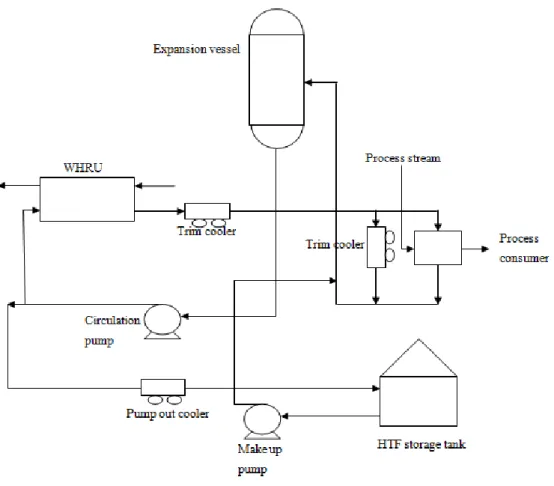
Conradson Carbon Residue is the percentage of residue remaining at the end of the test. One of the standard tests which can determine the thermal conductivity is ASTM D 2717: Standard Test Method for Thermal of Liquids [21]. During maintenance of the system or any connected equipment in the loop, HTFs are drained into the storage tank through the pump out cooler.
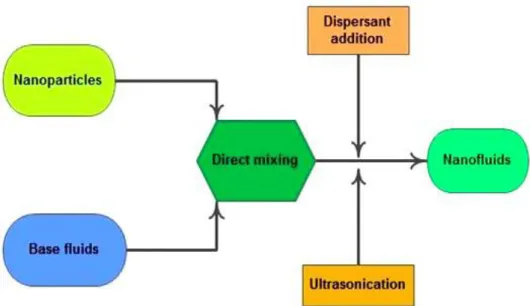
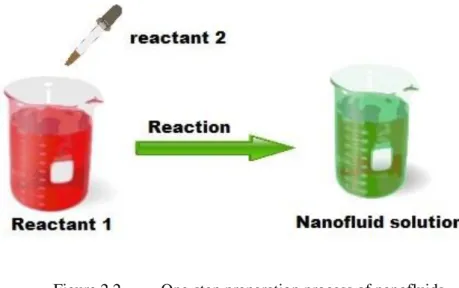
During maintenance, HTFs are collected from the low point drains in the closed circuit. Due to the reduced demand of HTFs during the shutdown of the plant, the system pressure increases. After that, nanofluids have become one of the attention of many researchers around the world.
The problem related to the HTFs degradation, prediction of their physical properties and the improvement of the HTFs system are addressed. Most often, regression analysis estimates the conditional expectation of the dependent variable given the independent variables. In all cases, the estimation measure is a function of the independent variables called the regression function.
In regression analysis, it is also relevant to characterize the variation of the dependent variable around the regression function that can be described by a probability distribution. The performance of regression analysis methods depends on the form of the data generation process. Regression validation is the process of determining whether the numerical results are acceptable as descriptions of the data.
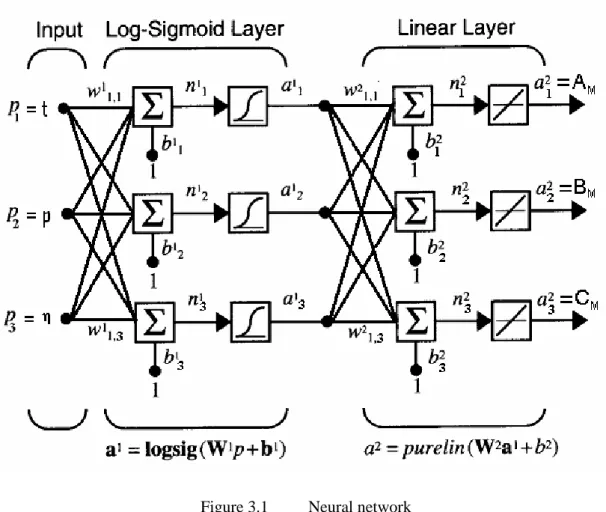
Where the inputs of the system are the independent variables, and the outputs are the dependent variables. This step is to find the relationship between the outputs of the network and the targets.
RESULTS AND DISCUSSION
- Physical Properties Prediction
- Effective Factors on the Degradation of HTFs
- Thermal Cracking
- Suggestion to Lengthen the Lifetime of Industrial HTFs
- Effect of Particles Concentration on Nanofluids Properties
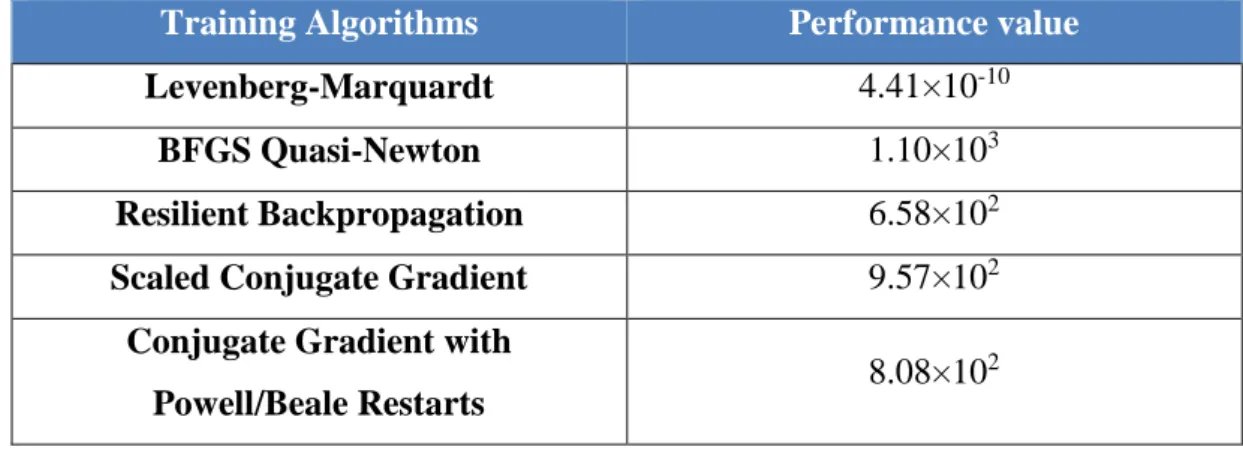
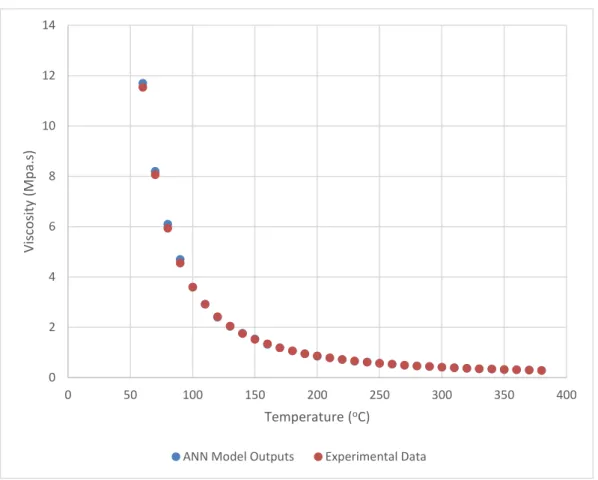
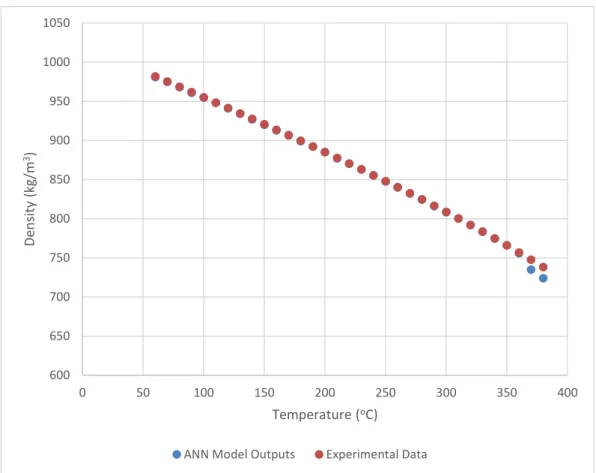
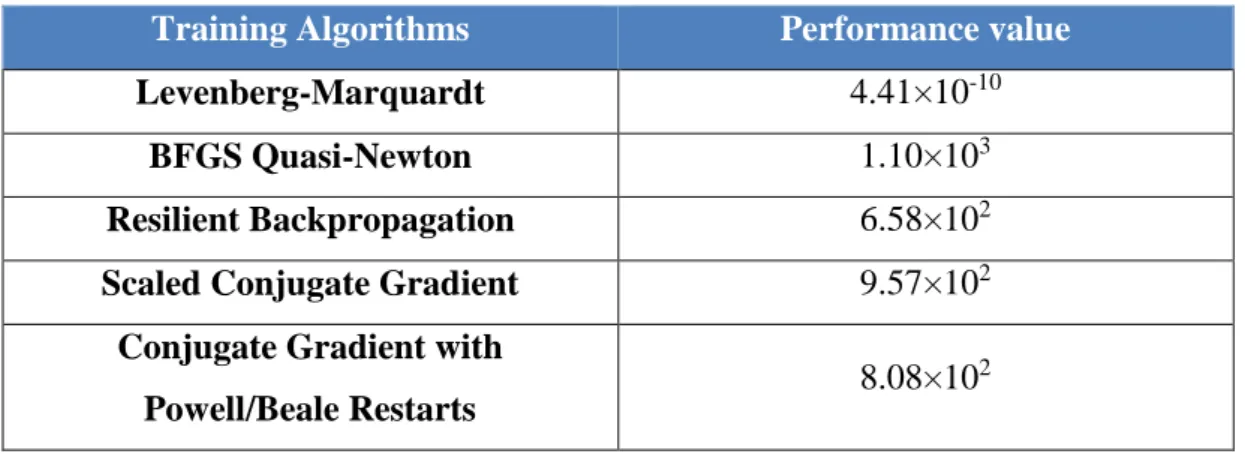
To select the best network to predict the physical properties of the HTFs, different neurons have been considered in the hidden layer. As can be seen, the ANN model output and the experimental data are very close to each other, which suggests the good agreement between the model outputs and the experimental data. As we can see, there is only one point in the ANN output model that differs from the experimental data.
Based on the result for each property of HTF, Therminol 66, the error is calculated using the following equation. Thermal cracking can occur when the heat transfer medium absorbs more heat than its capacity at that time, regardless of the chemistry of the heat transfer medium. Reduction in overall fluid viscosity and increase in volatility are the usual results of thermal cracking, which subsequently increase the risk of leakage and evaporation loss.
On the other hand, an open system cannot be tolerated, since the heated liquid is constantly in contact with the atmosphere. As HTF viscosity is the most important factor to be analyzed for degradation phenomena, data from a typical HTF over time were used to extract a simple relationship relating said physical property to run time. Another important factor affecting the degradation of HTF is the oxidation reaction of the liquid with air.
In addition, the acids synthesized due to the oxidation are polymerized and capable of modifying the fluid properties, causing precipitation as varnish and sludge as illustrated in Figure 4.11. For now, contamination is unlikely given that the pressure is greater on the liquid side. For example, a natural gas extraction plant carries an accidental leakage of the process hydrocarbons into the HTFs system.
For example, the selection should be made taking into account the temperature range of the HTF during operation and control fluctuations. This should be done after analyzing the physical properties, especially the viscosity, of the sample taken from the system. For example, to measure the flash point, auto-ignition temperature and viscosity to know the state of the HTF system.
Concentration of particles would be considered as one of the main features affecting the thermal conductivity of nanofluids. The polynomial was chosen because it fits most of the data from the experimental work.
Effect of Concentration on Thermal Conductivity
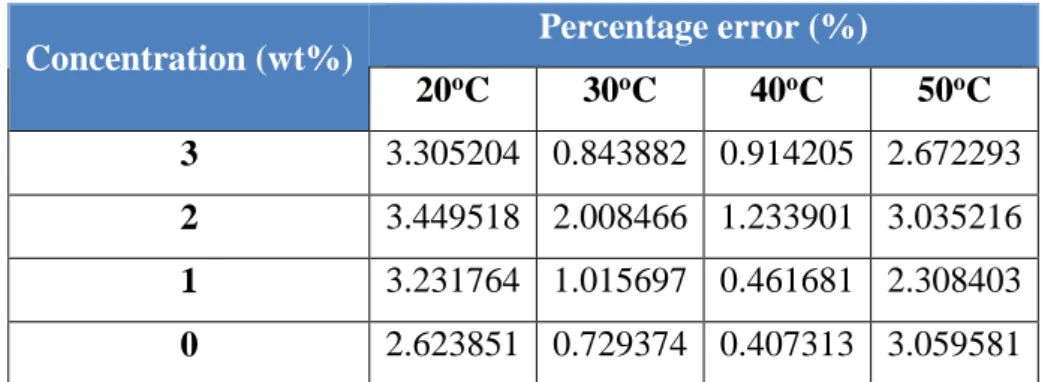
This is to find the best regression model to relate particle concentration to thermal conductivity. Resulting from the polynomial regression model, equation (2) is developed to find the relationship between particle concentration, Cp (wt%) and thermal. As can be seen from the table, the regression model is acceptable as the highest percentage error is 3.5%.
CONCLUSION AND RECOMMENDATION
Enhanced Thermal Conductivity and Viscosity of Copper Nanoparticles in Ethylene Glycol Nanofluid," Journal of Applied Physics, vol. Muraleedharan, "Applications of Artificial Neural Networks to Refrigeration, Air Conditioning and Heat Pump Systems - A Review," Rev. Wongwises, "Thermal Conductivity of Al2O3/ water nanofluids: measurement, correlation, sensitivity analysis and comparisons with literature reports,” J.
Saedodin, O.Mahian, S.Wongwises, “Thermophysical properties, heat transfer and pressure drop of COOH-functionalized multi-walled carbon nanotubes/water nanofluids,” Int. Dahari, “Experimental investigation of thermal conductivity of ethylene glycol-based nanofluids containing Al2O3 nanoparticles,” Int. Chen, "Viscosity and thermal conductivity of nanofluids containing multiwalled carbon nanotubes stabilized by chitosan."
Asadi, “An Empirical Study of the Dynamic Viscosity of Mg(OH)2-Ethylene Glycol at Different Solids Concentrations and Proposes New Correlation Based on Experimental Data,” Int. Saedodin, O.Mahian, S.Wongwises, “Heat transfer characteristics and pressure drop of COOH-functionalized DWCNTs/water nanofluid in turbulent flow at low concentrations,” Int. Wongwises, “Thermal conductivity modeling of MgO/EG nanofluids using experimental data and artificial neural networks,” J.
Reggiani, “Using an artificial neural network (ANN) to predict the thermal conductivity of oxide–. Beniwal, “Utility of Artificial Neural Networks for Predicting Effective Thermal Conductivity of Highly Porous Metal Foams,” J. Dahari, “Modeling Thermal Conductivity of ZnO-EG Using Experimental Data and ANN Methods,” Int.
Paria, "Preparation and Stability of Nanofluids-A Review," IOSR Journal of Mechanical and Civil Engineering, vol. Lee, “Enhanced thermal conductivity through the development of nanofluids,” Paper presented at the MRS Proceedings, vol. Yang, “Enhanced thermal conductivity of TiO2 water-based nanofluids,” International Journal of Thermal Sciences , vol.
APPENDICES