Report of the forty-seventh meeting of the Council of the Southeast Asian Fisheries Development Centre. NOTE FROM THE CHAIRMAN OF THE FISHERIES CONSULTATIVE GROUP (FCG) OF THE ASEAN-SEAFDEC STRATEGIC PARTNERSHIP (ASSP).
PROCEDURAL MATTERS 1.1 Opening of the Meeting
Election of the Chairperson for the Year 2015-2016
Joompol Sanguansin was unanimously elected Chairman of the SEAFDEC Board, in accordance with Article 5, paragraph 4 of the Agreement Establishing SEAFDEC. He also expressed hope that the outcomes of the 47th meeting of the SEAFDEC Council would be responsive and provide innovative strategies for the management and development of fisheries in the region.
Adoption of the Agenda and Arrangement for the Meeting
Joompol Sanguansin, the incoming Chairman of the SEAFDEC Board welcomed the participants back to Thailand and thanked the Board for the trust given to him to serve as the Chairman of the SEAFDEC Board for 2015-2016. While also thanking the outgoing Chairman for the guidance provided to the Board over the past year, he looked forward to the continued strong support and cooperation of the Board to SEAFDEC for the successful and fruitful implementation of its programs and projects in the coming years.
REPORT OF THE SECRETARY-GENERAL
The Director of the Council for Myanmar expressed appreciation to SEAFDEC for the programs and activities that were successfully implemented in 2014. The Director of the Council for Brunei Darussalam expressed appreciation to SEAFDEC for the successful implementation of various programs and projects in the past year.
NOTE OF THE CHAIRPERSON OF THE SEAFDEC PROGRAM COMMITTEE ON THE RESULTS OF THE THIRTY-SEVENTH MEETING
He cited that SEAFDEC has brought to the fore several instruments in the region that address emerging fisheries issues, such as measures to combat IUU fishing that are now closely linked to market access, establishing a common position for the region together with Member States in various issues in CITES. forums, and the development of the ASEAN Catch Documentation Scheme, among others. NOTE FROM THE CHAIRMAN OF THE SEAFDEC PROGRAM COMMITTEE ON THE RESULTS OF THE THIRTY-SEVENTH MEETING.
NOTE OF THE CHAIRPERSON OF THE FISHERIES CONSULTATIVE GROUP (FCG) OF THE ASEAN-SEAFDEC STRATEGIC PARTNERSHIP (ASSP) ON THE RESULTS OF
After providing their opinions and comments on the highlights of achievements of the activities implemented by SEAFDEC in 2014, the Council endorsed the Draft SEAFDEC Annual Report 2014. The Council also approved its publication and distribution to the member states, relevant organizations and the public.
POLICY CONSIDERATION ON IMPORTANT ISSUES 5.1 CITES Issues: Regional Implementation Support
Issues on Combating IUU Fishing
- ASEAN Guidelines for Preventing the Entry of Fish and Fishery Products from IUU Fishing Activities into the Supply Chain
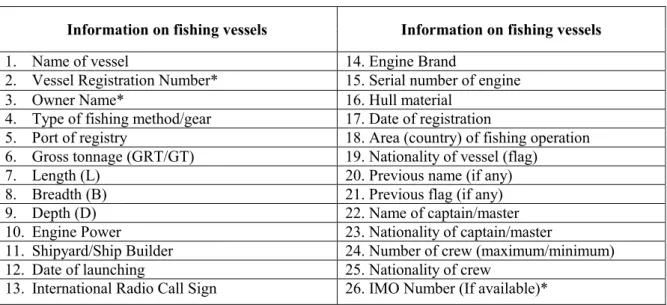
- Regional Fishing Vessels Record for Vessels 24 meters in Length and Over
- ASEAN Catch Documentation Scheme
While noting the "ASEAN Guidelines for Preventing the Entry of Fish and Fishery Products from IUU Fishing Activities into the Supply Chain" (Annex 11), the Council Director for Indonesia expressed. While acknowledging SEAFDEC's progress in developing the ACDS, the Council Director for Singapore shared the view that the comments expressed by member states should be accommodated in the ACDS.
Regional Cooperation to Promote Sustainable Fisheries and Aquaculture in ASEAN Region .1 Regional Plan of Action on Sustainable Utilization of Neritic Tunas in the ASEAN
- Regional Policy Recommendations on Conservation and Management of the Eel Resources and Promotion of Sustainable Aquaculture
- Regional Policy Recommendations for Development and Use of Alternative Dietary Ingredients in Aquaculture Feed Formulations
The Council Director for Indonesia also thanked the Government of Singapore for supporting the said training course. The Director of the Council for Thailand also requested AQD to investigate alternative aquaculture feed ingredients suitable for different species groups viz.
OTHER MATTERS
Proposed High-level Consultation on Regional Cooperation in Sustainable Fisheries Development Towards the ASEAN Economic Community 2015
While expressing support for the holding of the high-level consultation, the Director of the Council for Japan expressed concern about the budget that would need to be provided for the implementation of preparatory events and the high-level consultation. The Director of the Council for Japan supported the preparation of a joint ASEAN-SEAFDEC statement during the high-level consultation.
Policy Concept Note on EAFM Implementation
More specifically, the Council Directors for Thailand and Myanmar agreed to communicate with the ASEAN Secretariat to place this issue on the agenda for discussion at the upcoming meeting of the ASWGFi. He also encouraged that the high level and quality of training conducted by SEAFDEC must be maintained.
Summary of the Project Proposal on “Enhancing Coastal Community Resilience for Sustainable Livelihood and Coastal Resources Management”
COOPERATION WITH INTERNATIONAL/REGIONAL ORGANIZATIONS AND NON-MEMBER GOVERNMENTS
He then thanked the Government of Thailand and the Ministry of Fisheries for hosting the SEAFDEC Council meeting in the beautiful city of Chiang Rai. In addition, he also expressed gratitude to SEAFDEC for partnering with USAID in designing the program.
FUTURE DIRECTION OF SEAFDEC
He also informed the Council that SEAFDEC could play a leading role in creating a forum to conduct dialogue to strengthen and create new partnerships in the region. The specific details and parameters of this system would be developed in full cooperation with SEAFDEC and CTI countries, elements of which would continue in the new Oceans and Fisheries Partnership, e.g.
MANAGEMENT OF THE CENTER
- Plans of Operation and Programs of Work of SEAFDEC Departments and Secretariat 114. The Council took note of the proposed revisions of the Plans of Operation and Programs of Work
- Proposed Amendment of SEAFDEC Financial Regulations
- Operation of SEAFDEC Training and Research Vessels
- Third Revision of the Guidelines on the Cost Sharing Policy for the Operation of the M.V. SEAFDEC 2
- Collaborative Arrangements Between SEAFDEC and Other Organizations
During the discussion, the Council Director for Malaysia informed the Council that the proposed use of the M.V. The Council was informed about the proposed Guidelines for the chartering/renting of the M.V.
FINANCIAL MATTERS 10.1 Adoption of Audited Financial Report for the Year 2013
Un-audited Financial Report for the Year 2014, and Status of the Financial Situation in the Year 2015
Widi A Pratikto praised the establishment of cooperation agreements between CTI-CFF and SEAFDEC considering that SEAFDEC has been working in the region for a long time and is well equipped with infrastructures, facilities and activities that could be mobilized for the sustainable development of fisheries in the region. Additional areas of cooperation could also include human resource development, research and development, consultancy, information management and networking and other possible areas that could be identified in the near future.
Other Financial Matters
While expressing satisfaction with SEAFDEC's utilization of its budget, the Council endorsed and approved the proposed budget requirements for the Center for the year 2016 as shown in Annex 42. SEAFDEC 2, the Council Director for the Philippines expressed concern that conducting regular vessel maintenance every five years may be insufficient considering that the vessel is already 10 years old.
CONCLUDING MATTERS 11.1 Adoption of the Meeting Report and Press Statement
Date and Venue of the Forty-eighth Meeting of the SEAFDEC Council
However, the Council urged SEAFDEC to be cautious in spending its proposed budget bearing in mind the need to improve its activities amid emerging challenges in the fisheries environment.
Vote of Thanks to the Host Government
CLOSING OF THE MEETING
Joompol Sanguansin, Director General of the Department of Fisheries of Thailand, Distinguished SEAFDEC Council Directors,. Lee Kwong Weng as SEAFDEC Council Director for Singapore was elected Chairman of the Council.
Note of the Chairperson of the SEAFDEC Program Committee on the Results of the Thirty-seventh Meeting
Note of the Chairperson of the Fisheries Consultative Group (FCG) of the ASEAN- SEAFDEC Strategic Partnership (ASSP) on the Results of the Seventeenth Meeting of
Policy Consideration on Important Issues
Other Matters
Cooperation with International/Regional Organizations and Non-member Governments
Concluding Matters
Closing of the Meeting
- Rehabilitation of Fisheries Resources and Habitat/Fishing Grounds for Resources Enhancement - Member Countries should be involved more in site selection for the new phase of the project and
- Human Resources Development (HRD) Programs on Fisheries Management Approaches for Sustainable Fisheries
- Optimizing Energy Use/Improving Safety Onboard in Fishing Activities
- Resource Enhancement of International Threatened and Over-exploited Species in Southeast Asia through Stock Release
- Promotion of Sustainable and Region-oriented Aquaculture
- Chemical and Drug Residues in Fish and Fish Products in Southeast Asia “Biotoxin Monitoring in ASEAN”: ASP, AZA and BTX
- Traceability Systems for Aquaculture Products in the ASEAN Region
- Accelerating Awareness and Capacity Building in Fish Health Management in Southeast Asia - AQD to hasten the sharing of its experiences in the implementation of the project’s activities to
- Food Safety of Aquaculture Products in Southeast Asia
- Combating IUU Fishing in the Southeast Asian Region through Application of Catch Certification for Trading of Fish and Fishery Products
- Offshore Fisheries Resources Exploration in Southeast Asia
- Research and Management of Sea Turtles in Foraging Habitats in the Southeast Asian Waters - It was noted that the development of RPOA-Sea Turtles would enhance the country’s effort in
- Enhancing the Compilation and Utilization of Fishery Statistics and Information for Sustainable Development and Management of Fisheries in the Southeast Asian Region
- Comparative Studies for Management of Purse Seine Fisheries in the Southeast Asian Region - SEAFDEC to consider applying the “Total Effort Allowance System” which was developed by
- Research and Management of Sharks and Rays in the Southeast Asian Waters
- Strengthening SEAFDEC Network for Sustainable Fisheries
- Reinforcement and Optimization of Fish Health Management and the Effective Dissemination in the Southeast Asian Region
- Environment-friendly, Sustainable Utilization and Management of Fisheries and Aquaculture Resources
- Research for Enhancement of Sustainable Utilization and Management of Sharks and Rays in the Southeast Asian Region
- Enhancement of Sustainability of Catadromous Eel Resources in Southeast Asia - This project should be treated with urgency;
- Promotion of Responsible Utilization of Inland Fisheries in Southeast Asia
- Cold Chain Management of Seafood,
- Aquaculture Department
- Training Department
The thirty-seventh meeting of the Southeast Asian Fisheries Development Center (SEAFDEC) Program Committee was held in Ubon Ratchathani, Thailand from 1-3 December 2014 and was hosted by the Training Department (TD). SEAFDEC 2', the program committee made recommendations to be included in the proposals before submission to SEAFDEC for consideration at the next session in 2015.
Providing Policy and Advisory Services for Planning and Executing Management of Fisheries
Promoting sustainable and regionally oriented aquaculture AQD Y N Thrust II: Improving capacity and competitiveness to facilitate international and intra-regional trade. Food Safety of Aquaculture Products in Southeast Asia AQD Y N Thrust III: Improving Management Concepts and Approaches for Sustainable Fisheries.
Addressing International Fisheries-related Issues from a Regional Perspective 19. Assistance for Capacity Building in the Region to Address
Departmental Programs
Other Program
Pipeline projects
SEVENTEENTH MEETING OF THE ASEAN-SEAFDEC STRATEGIC PARTNERSHIP FISHERIES CONSULTATIVE GROUP (FCG/ASSP). Various concerns need to be taken into account and properly incorporated into the development of ASEAN CDS, e.g.
PROGRESS MADE FOR REGIONAL IMPLEMENTATION SUPPORT IN RESPONSE TO THE REGULATION ADOPTED AT THE COP16
Furthermore, to seek the advice of the SEAFDEC Council on the preparation for the seventeenth meeting of the CITES Conference of the Parties (CITES-CoP17) in 2016. The Council also requested SEAFDEC to take the opportunity to pledge to use the EU to provide funding for capacity building in activities related to the listing of marine species in the CITES appendices for the benefit of the region.
Declaration and Action Plan for the Implementation of CITES Requirements in Relation to Sharks and Manta Rays
Refers to the sixteenth meeting of the Conference of the Parties (CoP16) to the Convention on International Trade in Endangered Species of Wild Fauna and Flora (CITES), convened from 3 to 14 March 2013 in Bangkok, Thailand, at which five of the seven proposals relevant to shark and ray species were accepted and implemented in September 2014. Furthermore, the SEAFDEC Council at its 46th meeting encouraged SEAFDEC and the ASEAN Secretariat to take proactive initiative to strengthen the capacity of ASEAN-SEAFDEC Member States in addressing concerns related to the inclusion of commercially exploited aquatic resources in the CITES Appendices and exploring potential donors to support their relevant capacity building activities.
EU Funding Support on Capacity Building Program Through CITES Secretariat
- REQUIRED CONSIDERATION BY THE 47 TH COUNCIL MEETING
During the 37th Meeting of Program Committee, SEAFDEC member countries supported the establishment of common/coordinated position of the region if eel species were to be proposed for listing in the CITES appendices. Finally, Part 4, which is the most important part of the Guidelines, provides guidance on preventing the entry of fish and fishery products from IUU fishing activities into the supply chain based on the root cause of IUU fishing activities occurring in the region.
INTRODUCTION 1) Goals and Objectives
NATIONAL, BILATERAL/MULTI-LATERAL, REGIONAL INITIATIVES TO COMBAT IUU FISHING
- ASEAN-WEN 9.2 CTI-CFF
The introduction as part 1 includes the objective to ensure that fish and fishery products in the supply chain do not originate from IUU fishing activities. Finally, Part 4, which is the most important part of the guidelines, provides guidance on preventing fish and fishery products from IUU fishing activities from entering the supply chain based on the root cause of IUU fishing activities taking place in the region.
INTRODUCTION
- Goals and Objectives
- Nature and Scope
- Guiding Principle
- Definition of Terminologies
Appendices are also attached to the Guidelines to explain matters that need lengthy discussion. Trade measures introduced by the European Union (EU) such as the European Commission Regulation, the EC Regulation) are also mentioned in the development of the Guidelines.
FORMS OF IUU FISHING ACTIVITIES OCCURRING IN THE REGION 5. Common Issues
- Various Forms of IUU Fishing Activities
NATIONAL, BILATERAL/MULTI-LATERAL, REGIONAL AND RFMOs INITIATIVES TO COMBAT IUU FISHING
- National Initiatives
- Bilateral/Multi-lateral Enforcement Activities
- Regional and RFMOs Initiatives
The actions under the RPOA-IUU include the conservation of fisheries resources and their environment, the management of fishing capacity, and the combating of IUU fishing in the areas of the South China Sea, Sulu-Sulawesi Sea (Celebes Sea) and the Arafura-Timor Sea (www. rpoaiuu.org). 5 Comprehensive Action Plans of the Sulu-Sulawesi Ecoregion: A Priority Seascape of the Coral Triangle Initiative.
PREVENTING THE ENTRY OF FISH AND FISHERY PRODUCTS FROM IUU FISHING ACTIVTIES INTO THE SUPPLY CHAIN
- Managing Fishing Activities within a Country
- Regulating Transshipment and Landing of Fish/Catch across Borders
- Preventing Poaching in the EEZs of Other Countries
- Controlling Illegal Fishing and Trading Practices of Live Reef Food Fish, Reef-based Ornamentals, and Endangered Aquatic Species
- Strengthening the Management of Fishing in the High Seas and RFMO Areas
- Review of the Guidelines
- Licensing of Vessel
- POLICY RECOMMENDATION FOR RFVR DATABASE IMPLEMENTATION
- WAYS FORWARD FOR RFVR DATABASE IMPLEMENTATION
- REQUIRED CONSIDERATION BY THE 47 TH COUNCIL MEETING The 47 th Council Meeting is requested to
- Malaysia: provides the definition of Small Fishing Vessels as follows
- The Philippines: comments are as follows
- Thailand: comments are as follows
- INTRODUCTION
- ACTIVITIES IN 2015
- REQUIRED CONSIDERATION AND ACTION BY THE COUNCIL
List of meetings under the Japan Trust Fund Project for the development of the guidelines. Launch of the RFVR database system for vessels of 24 m length and above at the .. to be provided to all AMSs via Board Directors and.
Determining available data and information, improving data collection and developing key indicators
Improving sustainable fisheries management
The forty-fifth meeting of the SEAFDEC Council, 1-5 April 2013 Promoting the sustainable use of bluefin tuna resources. Promoting the involvement of ASEAN Member States in regional/sub-regional research/studies on the impact, adaptation and mitigation of climate change on fisheries, in particular on bluefin tuna.
Improving sustainable interaction between fisheries and marine ecosystem
Development of the ASEAN Standard (minimum requirements) for the management of fishing ports and landing sites (including safety, hygiene and sanitary standards). Carrying out the assessment of post-harvest losses of neritic tunas and describing the different ways to reduce post-harvest losses.
Enhancing Regional Cooperation
Introduction and Rationale
In this regard, SEAFDEC member countries namely Cambodia, Indonesia, Malaysia, Myanmar, Philippines, Thailand and Vietnam nominated their delegations to work as members of the scientific working group since October 2014 (Annex 1). To facilitate the work of the Scientific Working Group, SEAFDEC formulates the Terms of Reference (ToR) to be considered and finalized by all SWG members at the 1st Meeting of the Scientific Working Group on Neritic Tuna Stock Assessment in Southeast Asian Waters, 18 -20 November 2014 in Malaysia.
Role of SWG-Neritic tunas
It refers to the meeting of the Expert Group on the Regional Action Plan for the Sustainable Use of Bluefin Tuna Resources in Southeast Asian Waters held on June 18-20, 2014 in Krabi Province, Thailand, that one of the important outcomes during the workshop was the need to establish a scientific working group for the stock assessment of neritic tunas in Southeast Asian waters, hereinafter referred to as "SWG-neritic tunas". The objectives of the ToR are to ensure that the SWG and SEAFDEC can effectively implement the AMS Regional Cooperation on the Neritic Tuna Stock Assessment (Appendix 2) for continued support under the ToR after the end of the funded project.
Scope of Work
Terms of Reference of the SWG-Neritic tunas
Composition of the SWG-Neritic tunas
A working period of the Chief Scientist is dependent on the duration of the study period as decided by the SWG. Secretariat of the meeting will act as a Rapporteur of the SWG meeting in cooperation with the host country.
Nature of SWG Activities and Financial Arrangements
The Council is requested to consider and approve the proposed Terms of Reference for the Scientific Working Groups for Stock Assessment of Neritic Tuna in the Southeast Asian Region to ensure that the regional cooperation of AMS on Stock Assessment of Neritic Tuna can be effectively implemented by SWG after the end of the funded project. See the 36th meeting of the program committee requested SEAFDEC to spearhead the implementation of a survey of eel resources in the region in cooperation with member countries.
Sustainability of the Resources
Habitat Management
Consider implementing the precautionary approach to the sustainable use of eel resources despite insufficient data and information (may include limiting harvest and trade of certain eel stages). Strengthening the enforcement of laws and regulations, including capacity building and intelligent investigation.
Strengthening of Information and Education Campaign (IEC)
ISSUES AND CONCERNS STRATEGIC ACTION POLICY .. glass eels as inputs for eel aquaculture in the region 2) Lack of regional. Establishment of regional policy and guidelines on the collection, handling, transport, transboundary movement and trade of glass eels among AMS as inputs for eel aquaculture in the region.
Cross-cutting Issues
ISSUES AND CONCERNS STRATEGIC ACTION POLICY .. of glass eels as inputs for eel aquaculture in the region 2) Lack of regional management .. cooperative monitoring of eel fishery management. Development of measures to ensure that the promotion of eel aquaculture does not affect natural eel populations.
Regional Cooperation on Sustainable Development of Eel Aquaculture 2
Cross-cutting issues
- Key Issues on Management of Fishing Capacity
- Identified Issues, Feasible Measures, and Technical Assistances
The guidelines focus on strategies related to the effective management of national fishing capacity for the sustainable use of fishery resources for future generations. The Regional Technical Consultation on RPOA Capacity Development was organized with the aim of reviewing the management of fishing capacity by AMSs and identifying issues/problems as background information to be included in the RPOA Capacity.
INTRODUCTION
REGIONAL POLICY RECOMMENDATIONS FOR THE DEVELOPMENT AND USE OF ALTERNATIVE DIETARY INGREDIENTS IN AQUACULTURE FEED FORMULATIONS I. Specifically, it summarizes the results of the regional technical consultation on the development and use of alternative dietary ingredients or aquaculture substitutes in pyvi, fishmeal. , Myanmar on 9-11 December 2014.
HIGHLIGHTS OF THE MEETING
Efficiency of feed formulation R&D on aquafeed quality, formulation and use of alternative feed ingredients. Regional cooperation Develop the national action plan for the development and use of alternative feed ingredients in aquaculture feed development.
REQUIRED CONSIDERATION BY THE 47 TH COUNCIL MEETING
Status of Aquatic Feeds Capacity assessment of feed milling companies, status of import - export of raw materials for feed ingredients. ASEAN Program Center SEAFDEC/AQD to work closely with ASEAN Member States, R&D institutions, academia, industry and interregional organizations as a center for ASEAN programs to develop and use alternative nutritional ingredients in aquaculture feed development.
BACKGROUND AND INTRODUCTION
PREPARATORY MULTI-STAKEHOLDER CONSULTATION
Participants in the multi-stakeholder consultation will include senior officials from the agencies responsible for fisheries as well as other concerned agencies in Member States, relevant stakeholders including the private sector, officials from SEAFDEC and representatives from other international/regional organisations. Other issues (in view of the unification of the AEC) - Safety/hygiene of fish and fish products.
THE HIGH-LEVEL CONSULTATION
Southeast Asian Fisheries Development Center .. 2) Recommend the ways and means to address emerging issues and challenges as well as the possible roles and responsibilities of agencies involved. The expected outputs of the high-level consultation are the adoption of the "Joint ASEAN-SEAFDEC Declaration on Regional Cooperation for Combating IUU Fishing and Improving the Competitiveness of ASEAN Fish and Fishery Products" by high-level officials of the ASEAN Member States .
WORK PLAN
It is proposed that the budget for the high-level consultation would be financed from the Minimum Regular Contribution (MRC), and the implementation of preparatory events would be supported by other project resources.
REQUIRED CONSIDERATION BY THE 47 TH COUNCIL MEETING
Center for Fisheries Development in Southeast Asia .. 5) Conduct of "High Level Consultation" and Endorsement of "Joint Statement" by Senior Officials of ASEAN Member States (2-day meeting sometime in August-September 2015) V. Policy concept developed in close collaboration with the United States National Oceanic and Atmospheric Administration (NOAA) and includes an overview of the rationale for EAFM and what it is, and highlights recommendations on how EAFM can be used for fisheries management at national and regional levels across ASEAN member states.
Why EAFM?
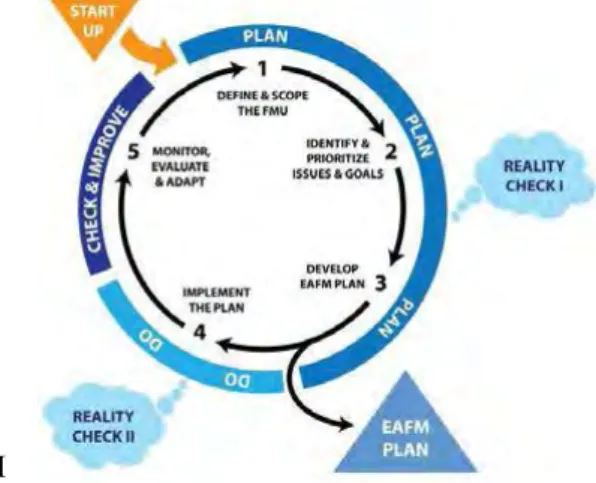
This Policy Concept Note on EAFM Implementation recommends a series of measures for discussion and consideration by ASEAN/SEAFDEC Member States to encourage and advance Member States' efforts to effectively implement the Ecosystem Approach to Fisheries Management (EAFM), including means to combat IUU fishing as a practical, efficient and equitable way to support sustainable fisheries, food security, livelihoods and prosperity of ASEAN Member States (AMS). The Council is also urged to support policy recommendations to move ASEAN Member States towards effective implementation of the EAFM.
What is EAFM?
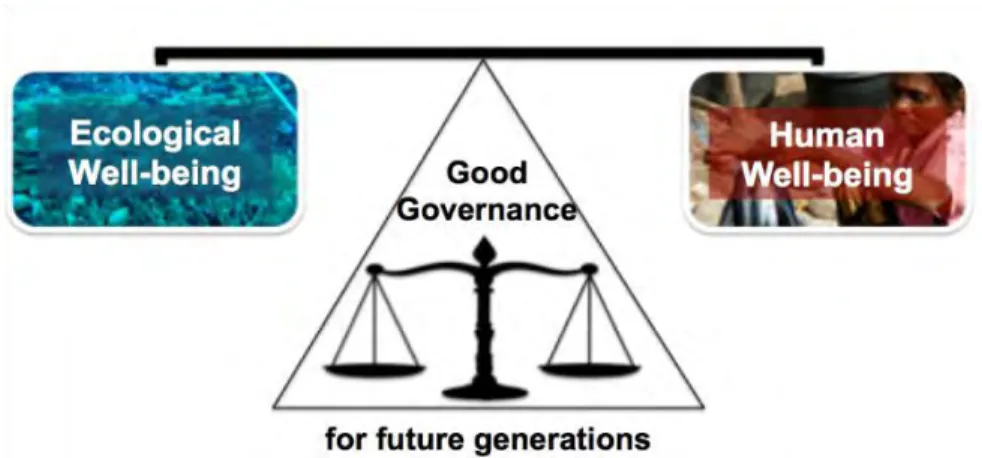
An EAFM is a practical and participatory way to manage fisheries by constantly striving to achieve a balance between ecological well-being and human well-being through good governance. The Food and Agriculture Organization of the United Nations (FAO) defined an ecosystem approach to fisheries (EAF) as “an approach to fisheries management and development that attempts to balance different societal objectives, taking into account knowledge and uncertainties about biotic, abiotic and human components of ecosystems and their interactions and the application of an integrated approach to fisheries management within ecologically significant limits' (FAO 2003).
Existing Policies and Activities Supporting an EAFM Regional Level
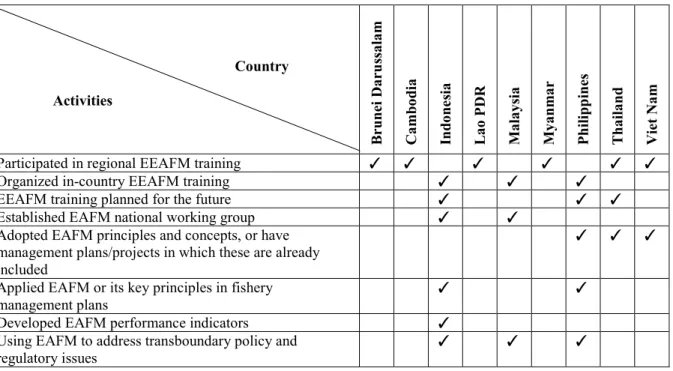
In November 2013, at the 9th Coral Triangle Initiative for Coral Reefs, Fisheries and Food Security (CTI-CFF) Senior Officials Meeting held in Manila, the Senior Officials of the CT6 countries approved the Regional Framework for Legislation and Policy to Support an EAFM endorsed. . A wide range of activities have been implemented by the ASEAN-SEAFDEC member states to develop increased capacity and initiate steps towards the implementation of an EAFM.
Policy Recommendations for moving the ASEAN-SEAFDEC Member Countries toward implementation of an EAFM
Moving forward, Indonesia will continue the Task Force's work in priority areas (aquatic health management, regional aquaculture improvement, sustainable food management and development, and fisheries improvement projects) in collaboration with Task Force members and the sector. other private and regional/international organizations including SEAFDEC and the Network of Asia-Pacific Aquaculture Centers (NACA). On SEAFDEC's efforts in response to member countries' requests during the 46th SEAFDEC Council meeting.
THE PROPOSED DEPARTMENT’S PLANS OF OPERATION AND PROGRAMS OF WORK
Each department must also have clear programs that support organizational goals, with strategies for achieving those goals; while SEAFDEC's future programs and projects should also be consolidated and aligned with the organization's direction. The workshop concluded with SEAFDEC's Strategic Action Plans, including Work Programmes, which was used as a baseline document for the further development of the Department's Action Plans and Work Programmes.
THE PROPOSED PLANS OF OPERATION MEETS THE REQUIREMENT OF AMSs PRIORITY ISSUES
The revised operational plans and work programs for TD, MFRD, AQD, MFRDMD, IFRDMD and the Secretariat have been developed as shown in WP09.1a, WP09.1b, WP09.1c, WP09.1d, WP09.1e and WP09.1f, respectively from working papers for the 47th meeting of the SEAFDEC Council.
INCREASING EFFICIENCY OF PROGRAM MANAGEMENT
The Council is requested to note and invite comments on the revision of Plans of Operation and Work Programs for all SEAFDEC Departments and Secretariat appearing as Appendix 4 – Appendix 9 respectively of working papers for the 47th Meeting of SEAFDEC Council . The Council is also requested to approve the Work Plans and Work Programs for TD, MFRD, AQD, MFRDMD, IFRDMD and Secretariat as amended or it is.
OVERALL PROJECT DESCRIPTION 1. Brief Project Description (300 words max)
- Background and Justification
- Activity, Sub-activity and Proposed Budget for 2013-2017) (in case of 5 year project from 2013) (Unit: USD)
- Information of Present Year Activity including Involved Stakeholders List of Actual Sub-activity Type of
- Achievements and Expected Outcome/Outputs of the Activity
- Evaluation from Participants of Member Countries for WS and Training Course Planned activity Evaluation/ Views from Participants
- Proposed Activity/sub-activity, work plan and estimated budget for the year 2015
- Expected Outcomes/Outputs of Activity for the year 2015
- Schedule of Activity for the year 2015
Current Year Activity Information including Stakeholders Involved Current Sub-Activity List Type Current Sub-Activity List Type i. Proposed activity Jan February March April May June July August September October November December Activity 1.
Report of Actual Result of Activities and Invested Budget/ Manpower by Project Leader/Secretariat
- Result of activities and invested budget/manpower
- Actual Outcome/Output
- Key Problems and Challenges, and Other Remarks on implementation of the project
- Evaluation sheet
- Additional input on the following aspects
- Relevance
- Sustainability
- PLAN OF OPERATION
- THE PROGRAM OF WORK
- Program of the Training Department
- Strategy, List of Activities and Linkage to Relevant Prioritized Issues 3
- Reduction of IUU fishing activities in the ASEAN region Strategy-2.1
- Developing of tools and effective solution to reduce post-harvest losses and energy optimization
Development of innovative fisheries management tools based on the EAFM concept Strategy-1.1: EAFM concept adapted to fit the context of the ASEAN region. Strategy-2.1: Assess the current status of the NJUU fishery and examine the negative impacts on the AMS and the entire region.