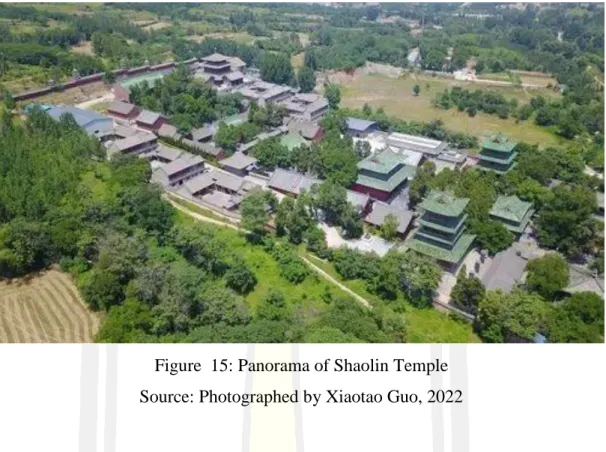
Kung Fu Mural at Shaolin Temple, Henan: Chinese Traditional Martial Culture in the Context of Premodern Nation-State. TITLE Kung Fu Mural at Shaolin Temple, Henan: Chinese Traditional Martial Culture in the Context of Premodern Nation-State.
Introduction
Zhao Yinghui, in the analysis of the reasons for the development of Shaolin Kung Fu cultural industry in Songshan, proposed:. This book records the historical process of the emergence, inheritance and development of Shaolin Kung Fu.
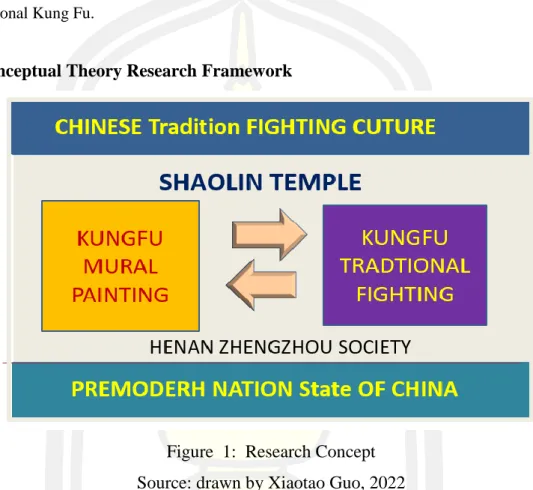
The historical background of China, Henan and Shaolin Temple in the pre-
Since Emperor Wu of the Han Dynasty established the policy of respecting Confucianism, Confucianism became the orthodox thought in Chinese feudal society. But at the same time it was also on the way to the end of feudal society.
The history of Henan and the history of Shaolin Temple
Henan is located in the interior of the Central Plains, with a rich culture and a long history of civilization. Politically, the support of the imperial court played a major role in the construction of the Shaolin Temple.
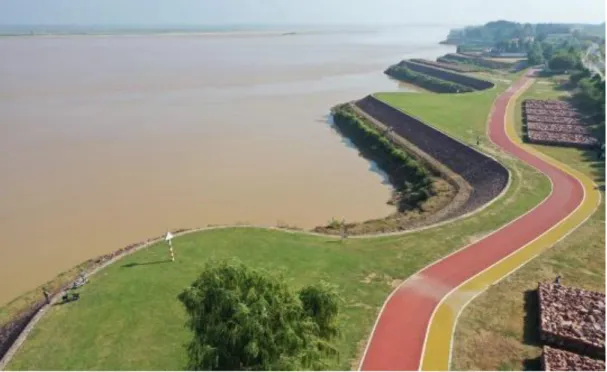
The relationship between China, Henan and Shaolin Temple
Due to the good mountains and rich primitive vegetation in the Songshan area, there are many rivers, and the density of rivers is 0.32 km2. In the process of blending these two cultures, the organic integration of Zen Buddhism and Shaolin Kung Fu can be said to be a successful model.
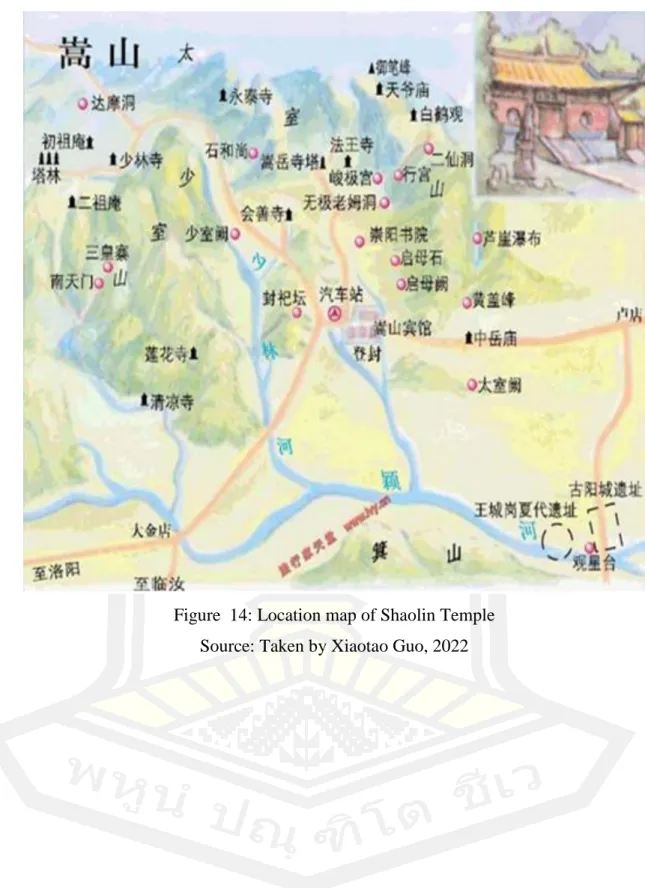
Shaolin Temple Site Selection
The earliest mountain worship of humans came from the dependence on the living environment of the mountains. Songshan is the source of Confucianism, Buddhism and Taoism, which has played a significant role in the formation and spread of the three religions. Fawang Temple, founded in the Eastern Han Dynasty, is one of the earliest Buddhist temples in China.
Located at the southern foot of Songshan Mountain, Songyang Academy was built in the eighth year of Taihe (484) of the Northern Wei Dynasty. Later achievements of the Shaolin Temple proved the correctness of the choice of location.
Shaolin Temple Shaolin Temple Kung Fu Murals
History of Murals
The murals of the Eastern Han Dynasty are generally characterized by bright lines and excellent colors. The murals of the Xianyang Palace in the Qin Dynasty are the earliest surviving palace murals in China. Most of the professional painters of the Song Dynasty inherited Wu Daozi's painting style.
The murals of temples and tombs in particular are the most important, and the content of the murals is also very diverse. The structure of the image is integrated with Western techniques and the solid structure is reflected in the streamlining.

ShaolinShaolin Temple Kung Fu Murals
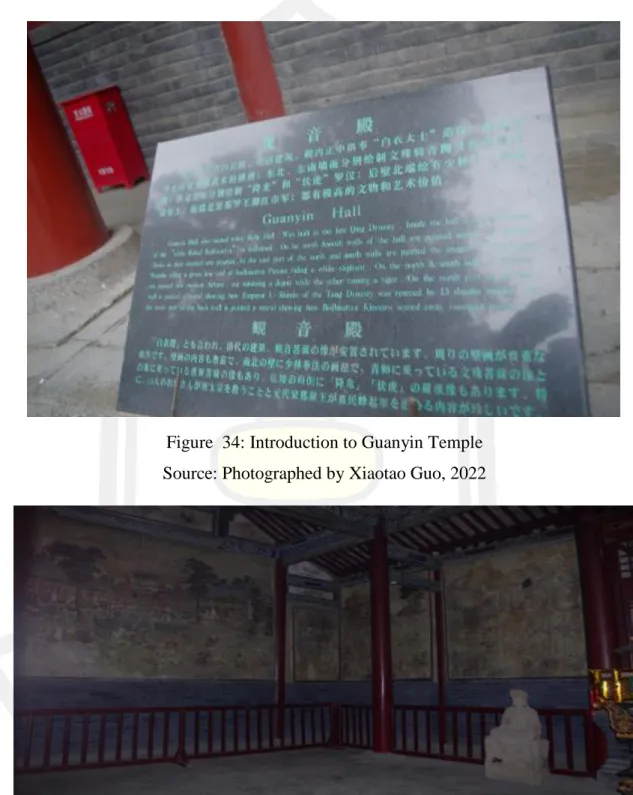
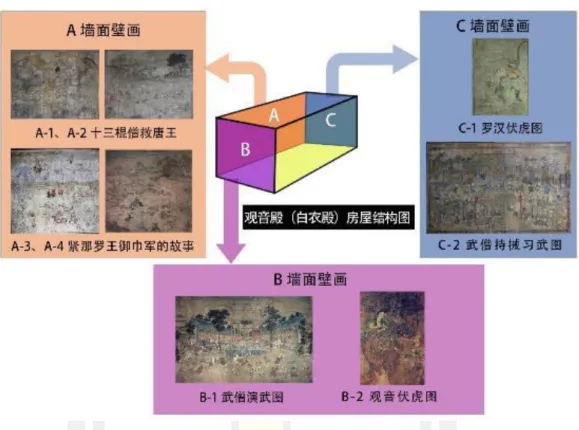
The first block is an ancient city in the rolling mountains on the left side of the picture. This is fully proven by the dynamics of the two monks in the cassock who strike with weapons. To the left of the center are the Shaolin Temple abbots and other deacons who organized the martial arts.
The composition of the painting is quite different from the frescoes of past dynasties. In the center of the picture is a two-story, three-sided Chinese-style palace with double eaves. Temple wall painting Source: Photographed by Xiaotao Guo, 2022 Final form.
Specializing in Kung Fu of the Two Palms and it is the core of Shaolin Kung Fu.
The Value of Murals
In addition, in the practice and development of art, the skills of painters are becoming greater and greater. The development of wall art over time has also greatly contributed to the study of the history of Chinese painting. Research on the Pictorial Characteristics of Twenty-Eight Places in the Sanqing Hall Murals of Yongle Palace [J].
The existence of ancient architectural murals is not isolated, it is not only a part of the architectural space, but also a member of the entire urban environment. Because architectural murals are immovable cultural relics, most of the exploitation is mainly based on tourism economy.
The History of Shaolin Temple Traditional Kung Fu and Pre-modern
It can be concluded that China is one of the important regions in the world for the origin of mankind. In the process of human origin, the evolution from ape to man went on for a long time. More than 100,000 stone tools were found in the caves where the Beijing monkey lived, showing that stone tools were widely used at that time, including chisels, scrapers, sword-shaped tools and so on.
Because the content is related to the battle, there are also interpretations of praying for victory in the war. The son of the Ba family was born in the red acupuncture, and all the sons of the four surnames were born in the black acupuncture.

Xia, Shang and Zhou martial arts
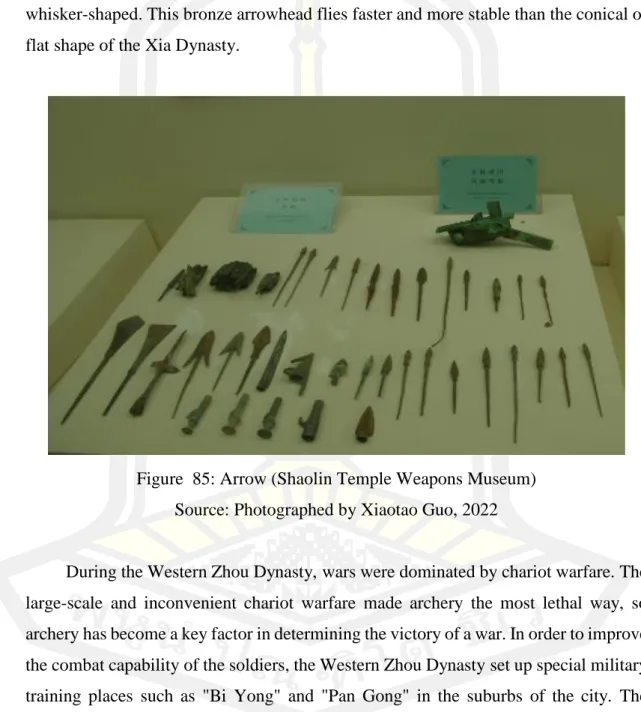
Bronze arrowheads of the Shang Dynasty evolved from the original whiskered or inverted flat stone arrowheads. This bronze arrowhead flies faster and more stable than the conical or flat shape of the Xia dynasty. To improve the fighting ability of the soldiers, the Western Zhou Dynasty set up special military training places such as "Bi Yong" and "Pan Gong" on the outskirts of the city.
The shape of the spear body is round or flat, the handle is cylindrical, and the arrow has thorns and stems. 34;The bronze spear of the Shang Dynasty also evolved from the gap between the spears to the shape of the tip of the spear, and the evolution stopped at the.
Spring and Autumn and Warring States Martial Arts
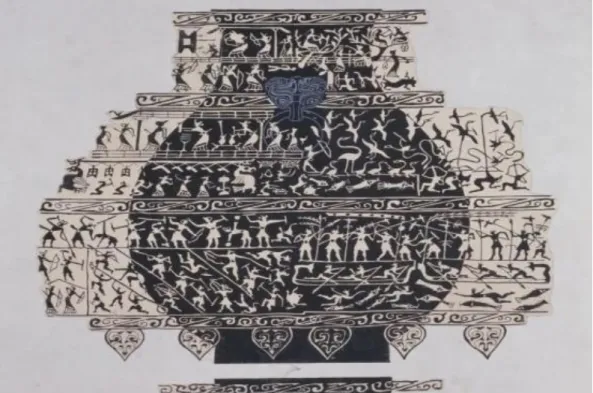
At the same time, all the martial arts skills of the famous brave generals came from war practice. The weapons and martial arts of the Sui, Tang and Five Dynasties had a certain connection with the changes in the main weapons and fighting techniques of the army at that time. The temple was built during the reign of Emperor Xiaowen of the Northern Wei Dynasty.
The above martial arts activities in the peasant uprising are only part of the ancient records, far from the whole picture of the fierce class struggle. Chinese martial arts have achieved great development in the experience of the anti-Japanese war.
The history of traditional Shaolin Kung Fu before modern times
The history of Shaolin Kung Fu can be traced directly to the founding of the Shaolin Temple. The miracle of Monk Chou's meditation had a profound influence on the belief in divine power in the early days of Shaolin Kung Fu. In the first year of Tang Hongdao (683), Master Faru, an important leader of the Zen sect.
The Ming dynasty emerged in the war between the Han Chinese and the Mongols. And only in the Shaolin Temple where Shaolin Kung Fu is rooted and developed can it be passed on relatively completely.
Relationship between Shaolin Temple Kung Fu Murals and Shaolin Temple
The evolution of traditional Shaolin fighting techniques is the basis for the
This period proves that the Shaolin Temple Kung Fu Murals make an important contribution to the exhibition of Chinese martial arts. Therefore, Shaolin Kung Fu has the cultural function of improving the spiritual world of man, especially in the aspect of religion. Shaolin Kung Fu preserves the ancient tradition through the legacy of the Shaolin Temple Kung Fu Murals.
The boxing technique obtained through analysis is the prototype of the early Shaolin Kung Fu standard. In the pre-modern era, internal and external aggression, Shaolin Temple monks used Shaolin Kung Fu and traditional Shaolin fighting equipment and fighting techniques to protect the temple.
Murals embody the idea of "harmony between man and nature" in
34;Shaolin Ten Commandments" states: "The heirs of Shaolin martial arts must strive to strengthen the body, engage in it day and night, and cannot stop arbitrarily." From this it can be seen that it is a corner of the spiritual connotation of ancient Chinese Shaolin Temple Kung Fu murals. At the end of the Sui Dynasty, the Shaolin monks who "don't want to be an official, just want to be a monk and serve the country" learned from Shaolin Kung Fu the core ideology and spirit of Shaolin Kung Fu - the rise and fall of the world is the responsibility of every human being. The patriotic spirit of Shaolin monks is not formed suddenly, but in the process of studying the Shaolin Kung Fu concept that integrates the excellent traditional Chinese culture and traditional thinking day and night, transforming the heart of reverence for martial arts into a heart of patriotism deeply rooted in the bone marrow, is a true representation and concentrated expression of the self-development orientation of ancient monks.
Buddhist theory focuses on softness, while Shaolin Kung Fu focuses on hardness, combining hardness and softness, and using softness to overcome hardness. It is not difficult to see that Shaolin Kung Fu in the murals embodies the observation of the state of nature, imitates the laws of movement of natural things, and is in accordance with the yin and yang principles of heaven and earth.
Summary, Discussion and Suggestions
In the pre-modern period, internal and external aggression, Shaolin Temple monks used Shaolin Kungfu and traditional Shaolin equipment, fighting and fighting techniques to protect the temple. In the pre-modern period, the artillery of the Opium War, the cold weapons have retired from the scene, and the Shaolin Temple recorded the memory of the former equipment fighting through the murals. not for war, but for a better heritage. The kung fu movements in the murals are formed after thousands of trials and hardships.
An exploration of the pictorial characteristics of the 28 places in the frescoes of the Sanqing Hall of Yongle Palace. On the causes of the rise and fall of tank warfare in the spring and autumn period and the period of warring states.