The purpose of this article is to investigate the job satisfaction of contact center agents at a Thai event organizing company. In addition, a ranking of the factors that they think are most significant; that affected their job satisfaction. Today, many companies have established contact center departments with the primary goal of nurturing relationships and retaining customers.
The contact center agent has to provide services to customers such as receiving requests, solving any problem, following up the case and contacting customers. The performance of a contact center agent can build or destroy the company's reputation depending on how they communicate throughout each phone call. Even in the worst circumstances, the voice and tone of the contact center employee must be respectful at all times when dealing with different types of issues.
A contact center agent's work routines are considered repetitive and many work under pressure. The company should put their efforts into developing and improving factors that will motivate their contact center agents. This paper will discuss how we can motivate contact center agents that would lead to job satisfaction.
Contextual Background
Research Objective
Research Scope and Framework
LITERATURE REVIEW
- Work Design and Work Environment of Call Center
- The Definition of Motivation
- The Definition of Job Satisfaction
- Relationship of Motivation and Job Satisfaction
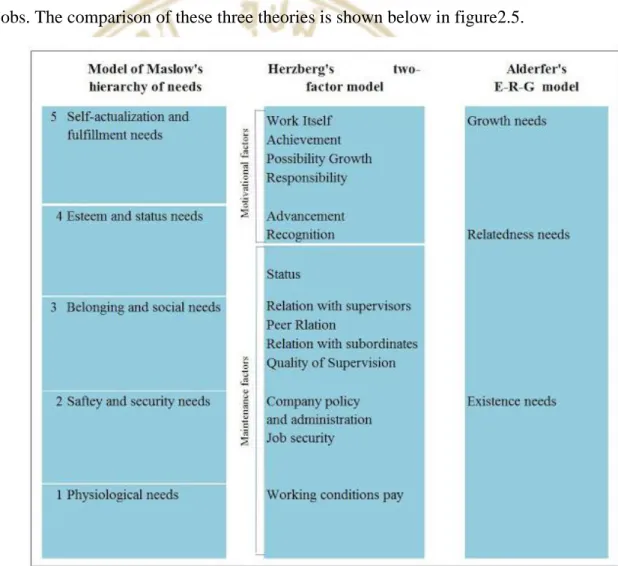
- Theories of motivation
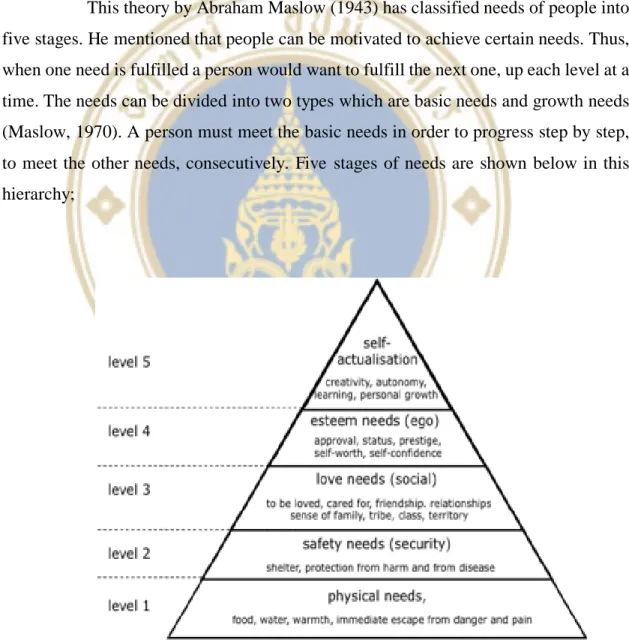
- Maslow’ Hierarchy of Needs
- ERG Theory
- Herzberg’s Two-Factor Theory
- Previous Relevant research
- Conclusion
Furthermore, there are many studies on motivation and job satisfaction in various industries, which could also demonstrate the correlation of motivational factors with job satisfaction. When they are then recognized through promotion and more money, it will lead to job satisfaction (Kaliski, 2007). A company must be concerned about motivation and job satisfaction because the well-being of their employees can increase job satisfaction (Stephen, 2014).
Therefore, the management team of the organization must develop and monitor the level of motivation as these affect the performance of employees and their job satisfaction (Bautista, January 2014). According to previous research conducted among call center agents in a mobile phone industry (Ndutta, 2011), it shows the relationship or correlation between motivation and job satisfaction. The study found that motivation is an important foundation to build job satisfaction for each individual employee, which relies on intrinsic and extrinsic motivation.
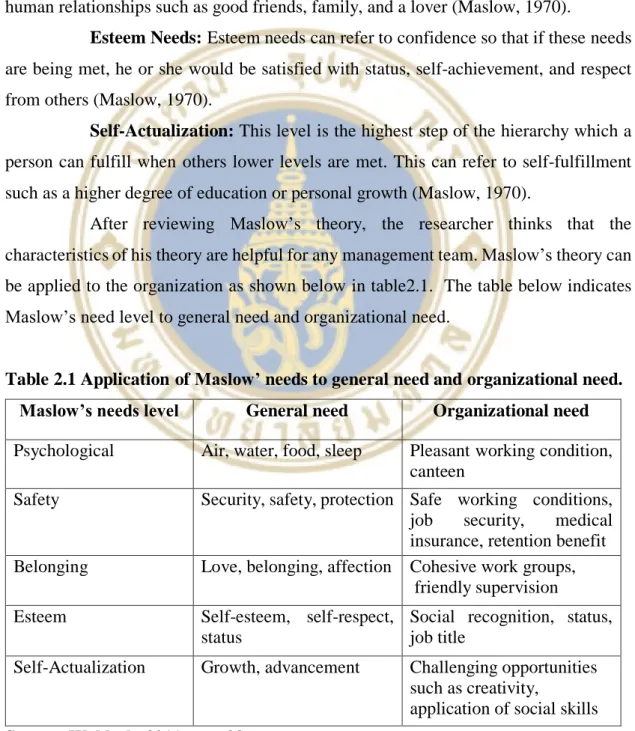
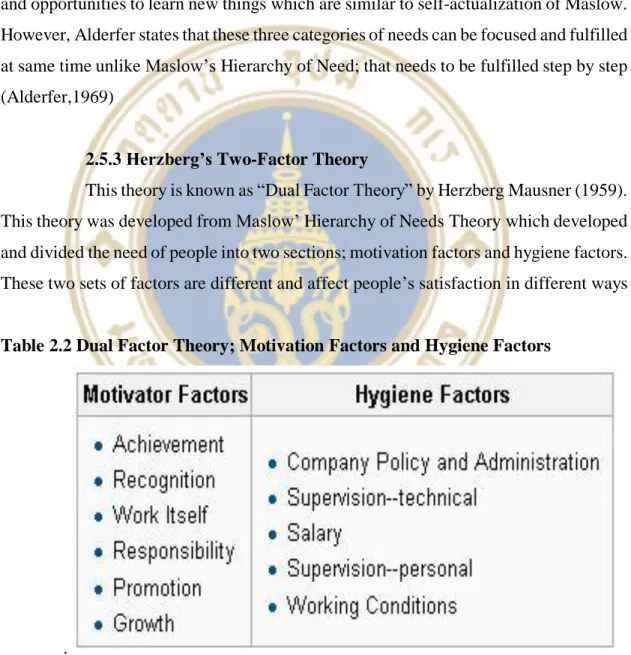
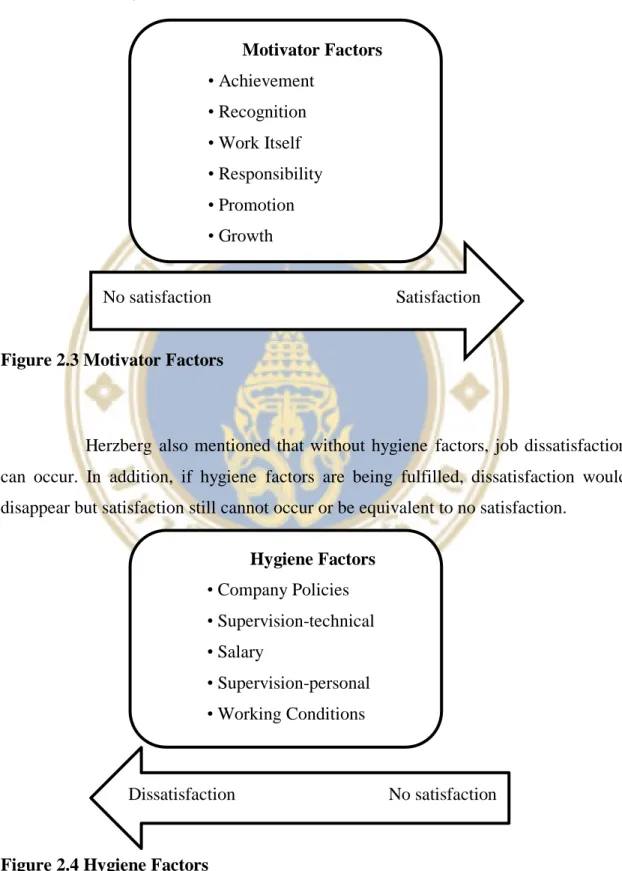
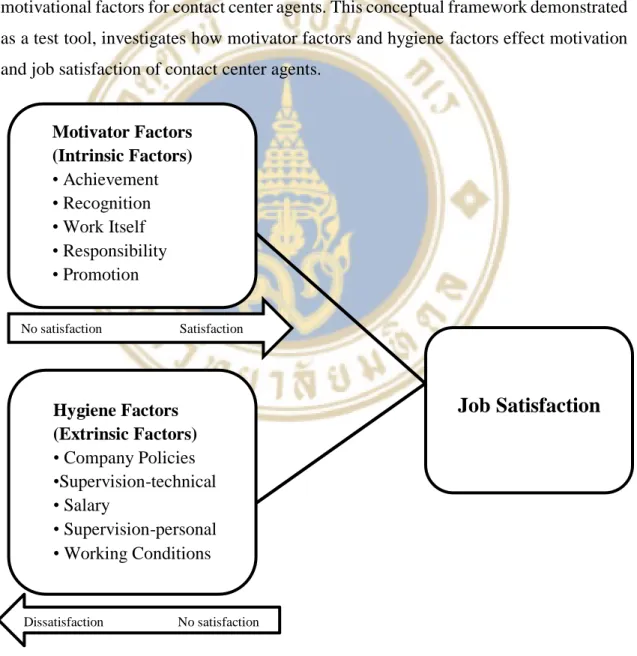
In addition, further recommendations mentioned as inspiring and monitoring the job satisfaction of call center agents to provide quality customer service as well as increase company productivity were also noted. Herzberg had mentioned that there are factors that can create job satisfaction in the workplace. When motivational factors stimulate a person, job satisfaction can be achieved. However, there is no satisfaction without motivational factors.
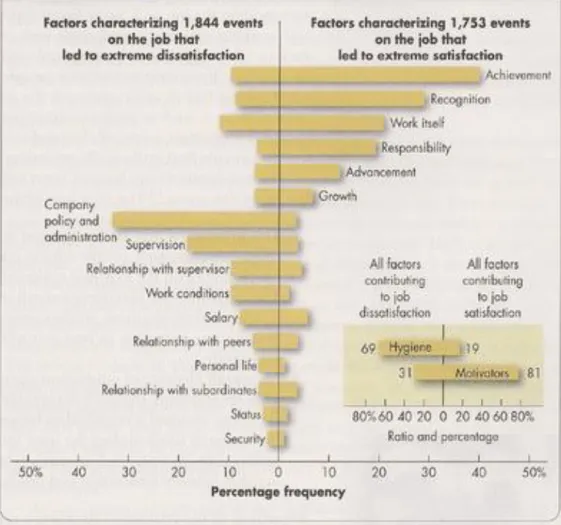
Herzberg, however, divided the factors into two main categories that indicate which factors could lead to job dissatisfaction or job satisfaction. The first study was conducted to determine the level of motivation and job satisfaction of call center agents at Medialink Contact Solution, Inc. The conclusion of this research showed that there is a significant correlation between the level of motivation and the level of job satisfaction.
In addition, the researcher mentioned that the "proposed company-wide improvement program" is the key to the motivation and job satisfaction of the call center agents at Medialink Contact Solution, Inc. The second study, based on the study of motivation and satisfaction at work in the Construction Delniška družba (PVNC), described the ranking of important motivational factors using the descriptive and narrative survey method. Nevertheless, good working conditions and other factors, such as growth in the organization, interesting work and recognition, are equally important for increasing motivation and job satisfaction at PVNC.
Therefore, the researcher would like to study what else can lead to job satisfaction or dissatisfaction of contact center agents.
RESEARCH METHODOLOGY
Conceptual Framework
Job Satisfaction
- Data Collection Method
- Sampling
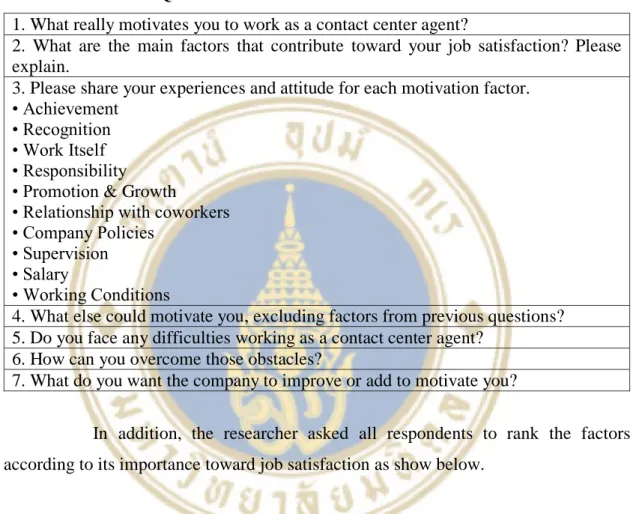
- Interview Questions
- Data analysis
For this study, the researcher used most two common qualitative methods, which are face-to-face interviews and participant observation. A wide range of questions according to the research study can be asked and clarified to gather useful information (Creswell, 2003). As the researcher had previously done an internship at company A as a contact center agent, the researcher would use qualitative methods to collect and analyze the data.
Strong relationships with colleagues allow the researcher to collect the data through personal interviews to gather the information efficiently. The researcher started by describing the purpose of the study to the respondents to clarify the purpose of this study. During the internship period, the researcher had coincidentally collected the information for this study on both observation and conversation.
In addition, the researcher asked the respondents for their permission to record their voices during the interviews, which allowed the researcher to interpret the information and analyze it in the later process. Therefore, the researcher decided. respondents based on different positions and backgrounds to obtain different views and information. All respondents were asked the same questions in the same way, which allowed the researcher to consistently repeat the interview.
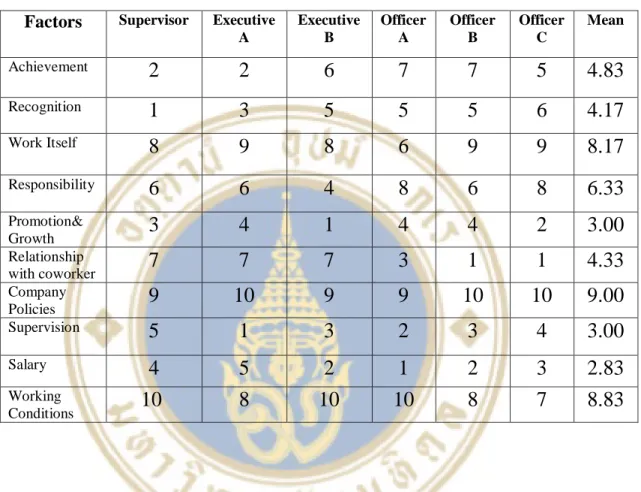
To obtain as much data as possible, the research questions were designed as shown in table 3.1. In addition, the researcher asked all respondents to rank the factors based on their importance to job satisfaction, as shown below. After conducting the interviews, the researcher divided the data into sets of factors according to Herzberg's two-factor theory to identify potential motivational factors that lead to job satisfaction.
The researcher analyzed the interview transcripts by extracting objective content to explore the meaning that demonstrates and reveals the interviewees. Therefore, the researcher had identified relationships and discussed information according to Herzberg's two-factor theory.

FINDING DISCUSSTION
- Influencing Factors Result and Discussion
- Interview Result and Discussion
- Conclusion
- Hygiene Factors (Extrinsic motivation) NOT DISSATIFIED &
- Motivator Factors (Intrinsic motivation) SATISFIED &
Most temporary workers seem to point out that salary is the factor that has the greatest influence on their job satisfaction. Company policies seem to be at the bottom, which they don't believe can lead to job satisfaction. Since the researcher separated the data into two tables, it would be easier to see how people with different statuses and positions in the company think.
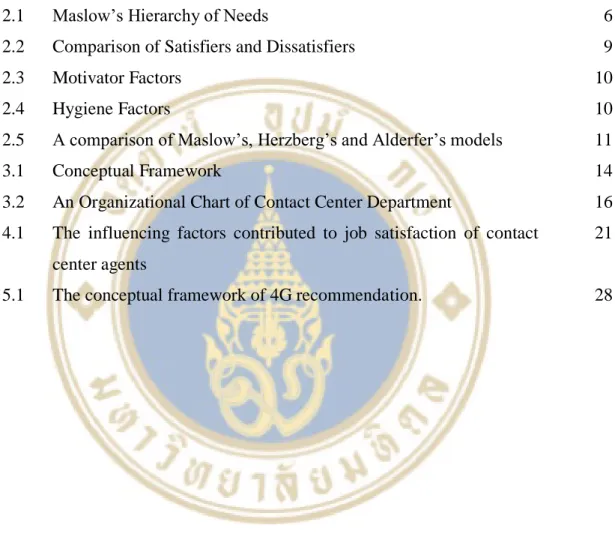
Combining Tables 4.1 and 4.2 together, the various factors affecting job satisfaction for employees and temporary workers are shown in Figure 4.1 below. However, the researcher discovered interesting issues that were mentioned by most of the interviewees in the opposite way. Furthermore, when the same question was put to temporary agent E, this was the response; "The main thing when looking for a part-time job is the salary and working hours.
However, three of the temporary agents mentioned that they did not know much about company policies. Temporary agent E said "The reason I work here is because of the salary, but it would be nice if we get more like commission or bonuses for a temporary worker." Furthermore, since the researcher worked at this company, the researcher felt that the salary was very impressive for internships and temporary workers when compared to other companies. The characteristics of Motivator Factors are that if motivator factors are fulfilled, a person will have job satisfaction.
For example, when the researcher asked them "What are the main factors that contribute to job satisfaction?" Four of the respondents mentioned that career advancement was a major driver of job satisfaction. However, four agents mentioned that they want the company to see the value of the Contact Center Department. Administrative and temporary employees have something in common; that they value salary as the most motivating factor for job satisfaction.
The researcher also found the same; that salary was the most important factor for contact centers in Company A. The conclusion of the factors affecting the job satisfaction of contact center agents in Company A is shown below. But from the interviews and the ranking of the important factors that affect the job satisfaction of each contact center agent, it can be concluded that salary or hygiene factors can motivate and lead to individual job satisfaction.
Therefore, we can conclude that hygiene factors can lead to job satisfaction as well as motivational factors for contact center agents in Company A.
RECOMMENDATION
Recommendations
The office was not designed properly due to the noise generated by each contact center agent. Considering these problems mentioned by the contact center agents, the recommendation of the 4G concept is presented as follows;. The company should provide rewards and benefits to the contact center agents when they have done a good job, such as gift certificate, free company gifts, good employee certificate, etc.
Additionally, it would be great if the company offered career opportunities to temporary employees, such as the option to join the company full-time. This would make temporary workers more productive as they realize they can be part of the company in the future. First, the company needs to expand the space by offering larger tables and leaving some space between each table of the contact center agents.
As contact center agents have to handle more than 100 calls per day, this leads to boredom and stress. Therefore, when contact center agents face difficulties or become stressed, they can come to the rest area where they can take a necessary break before returning. The researcher does not recommend "fixing" the attitude of each employee, but it would be good if the company pointed out that everyone in the company is equally important.
The researcher wants to share an example that a company can use as a guideline on how to make all employees into one important unit or family. This can demonstrate to the organization that everyone in the company has different roles and responsibilities, but they are equally important for the company to progress and succeed in business. The company must provide various training programs such as presentation skills, communication skills, negotiation skills, computer and language skills.
In addition, the company should allow temporary agents to attend all of these training programs as they meet with different customers during phone calls. Temporary employees should have the opportunity to attend an event organized by the company in
Limitations