
A number of studies have proven the effectiveness of oral PrEP when used appropriately alongside other HIV prevention strategies. While its effectiveness has been scientifically confirmed, there is limited academic knowledge about the perceptions of individuals and community structures that would support and facilitate the adoption of Oral PrEP among adolescent girls and young women (AGYW). The Department of Education's stance on HIV prevention in schools was also found to be a barrier to positioning schools as an environment that is conducive to the introduction of oral PrEP.
Community structures such as schools and health centers should be engaged in order to create a favorable environment for the uptake of Oral PrEP by school-going girls. CAPRISA Center for AIDS Research Program in South Africa CCA Culture-Centred Approach.
7 settings to assess the effectiveness of oral PrEP in reducing new HIV infections among users (Grant et al., 2010; Grant et al., 2014). In essence, this study sought to explore AGYW oral PrEP readiness from a school-based perspective. Chapter 3 presents the methodology used in this study to explore the role of schools in preparing AGYW for oral PrEP uptake in Vulindlela.
Chapter 4 presents the theoretical framework used in the study to understand the role of schools in preparing AGYW for oral PrEP uptake in Vulindlela. The last theme discusses the perceived role of schools in preparing schoolgirls for oral PrEP uptake.
This study highlights the effectiveness of implementing HIV prevention interventions that address the social issues underlying the risk of HIV acquisition (Harrison et al., 2010). The effectiveness of oral PrEP has been proven in the context of other HIV prevention methods. Oral PrEP is an important addition to biomedical HIV prevention interventions (Young et al., 2014), but adherence is critical to the effectiveness of oral PrEP.
Daily administration of oral PrEP has shown great efficacy in reducing the risk of HIV acquisition among defined high-risk populations (Montgomery et al., 2016). As such, Hosek et al. 2013) argue that the preventive efficacy of oral PrEP is directly related to high levels of adherence.
The first level of the SEMCHB is the individual level, which focuses on the individual's knowledge, beliefs and perceptions of a particular health problem (Mckee et al., 2014). In the case of this study, the individual level of the study is supported by the HBM while the CCA supports the community level of the model. Jones et al (2015) suggest that a health intervention is likely to be effective if all HBM constructs are considered.
Perceived severity refers to the individual's assessment of the seriousness of the risk of contracting a health condition (Taylor, 2007). However, the motivation to engage in the health intervention depends on the perceived benefits of the intervention in addressing their risks (Jones et al., 2015). As such, the lack of AGYW and school voices in promoting oral PrEP in Vulindlela would undermine acceptance of this biomedical intervention (PrEP).
Culture refers to the dynamic and changing meanings of the lived experiences of marginalized groups (Dutta, 2011). Although the study does not specifically address this cultural construct of CCA, the medical significance of HIV infection and the adoption of oral PrEP as a preventive health intervention are critical to this study. As discussed above, this study builds on the SEMCHB frameworks and adopts HBM to support the individual level of the framework and CCA for the community level.
This chapter provided the theoretical basis for understanding AGYW readiness for oral PrEP acceptance from the perspective of schools. This study is premised on the SEMCHB framework which emphasizes the interaction of different levels from the individual to the community and up to the social levels. To support the SEMCHB framework, HBM was adopted to support the individual level of the framework and CCA to disaggregate the community level.
All these studies highlight the intensity of the HIV burden among AGYW in the Vulindlela community, even with the implementation of HIV prevention strategies. This study adopts the constructivist paradigm to examine AGYW readiness for oral PrEP uptake from the schools' perspective. The qualitative research design allows the researcher to collect rich data that reflects the depth of participants' understanding (Mason, 2002).
Sampling refers to the process of selecting a proportion of the population that will be included in the study (Martinez-Mesa, et al., 2016). The probability sampling method refers to the selection of a sample that is statistically representative of the general population under study (Bottaglia, 2011). Semi-structured interviews were relevant to this qualitative study as they allowed a subjective exploration of the schools' role in preparing AGYW for oral PrEP uptake (Evans, 2017).
The first step in this approach requires the researcher to delve into the data to gain a deeper understanding of the topic under study and the data collected. The third step in the analysis was the search for themes emerging from the data. 63 After the coding of the interviews with the teachers, the researcher moved on to search for themes from the coded data.
The goal was to have themes that were coherent, valid, accurate, and representative of the data. The study attempted to ensure the accuracy and validity of the research results by applying the triangulation method. The triangulation method refers to the verification of the data using multiple data sources (Honorene, 2017).
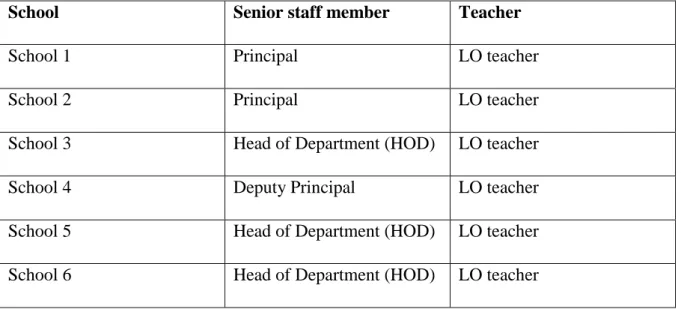
When asked about what oral PrEP is and what purpose it serves, the answers below were provided by some of the study participants. The study participants' perceptions of oral PrEP varied, and some noted major challenges in implementing it for AGYW. The greatest consensus on oral PrEP was the protective benefit considering the increasing rates of HIV infections among AGYW in the community of Vulindlela.
Oral PrEP has the potential to reduce HIV infections among AGYW in Vulindlela, study participants found. However, study participants still anticipated a large number of challenges associated with oral PrEP uptake, particularly among AGYW in the community. These challenges could represent barriers to the use of oral PrEP and its effectiveness among users.
Study participants noted challenges, including increased sexual risk behaviors, adherence, access to oral PrEP, and social challenges. The idea that oral PrEP can prevent HIV raises concerns as it is believed to encourage shameful behavior among AGYW in the community. These reasons posed serious challenges to adherence and ultimately to realizing the full effectiveness of oral PrEP.
Another behavioral challenge to the effective adoption of oral PrEP has been drug and alcohol use in the community. However, oral PrEP's reliance on condoms to achieve high effectiveness raised doubts among study participants. What is the point of oral PrEP if it has to be accompanied by another protective measure.
However, some study participants raised concerns about the Department of Education's stance on providing oral PrEP education in schools. This teacher-parent collaboration will also be important in the implementation of oral PrEP in Vulindlela.
Another potential barrier to the successful rollout of oral PrEP in schools relates to the attitudes of healthcare providers. Research question 3: The role of teachers and schools in the roll-out of oral PrEP in schools. Respondents noted that schools could educate their teenage girls and young women about the benefits and risks associated with the use of oral PrEP.
On the other hand, in their consideration of the use of oral PrEP in schools, they seemed to place little weight on the seriousness of the disease and its effects on the lives of schoolgirls in the community. This understanding of the benefits of oral PrEP versus its potential risks may be explained by the limited knowledge in the community, including among school teachers, about the drug. On the contrary, the introduction of oral PrEP in schools may instead lead to the loss of the possible benefits associated with the use of condoms and other prevention methods.
As a result of low self-efficacy, most of the school teachers interviewed for the study were unwilling to fully support the roll-out of oral PrEP in schools. Finally, the role played by the Department of Education (DoE), as the key stakeholder in the education sector, in catalyzing the uptake of oral PrEP by schoolgirls is also worth reflecting on here. This ambivalent attitude on the part of the department can no doubt be attributed to the limited knowledge available about oral PrEP.
The same would apply to the adoption of oral PrEP in schools to protect AGYW from HIV infection. This negative perception of the drug serves as a barrier to school teachers supporting the adoption of oral PrEP by school girls. A contextual understanding of the community, its challenges, cultural beliefs and values remains essential for the effective implementation of oral PrEP in the community of Vulindlela.
Project title: Exploring adolescent and young women's readiness for oral PrEP from a school perspective in Vulindlela, KZN. The purpose of this research is to understand the role of schools in preparing adolescent girls and young women to receive oral PrEP and the role of schools in promoting acceptance.
