In terms of representation, the intersectionality of race, gender, and disability is prevalent in the four textbooks. Gender and race bias in professional roles and careers are also evident in the texts, with women and "others".
Orientation to the study – setting the scene
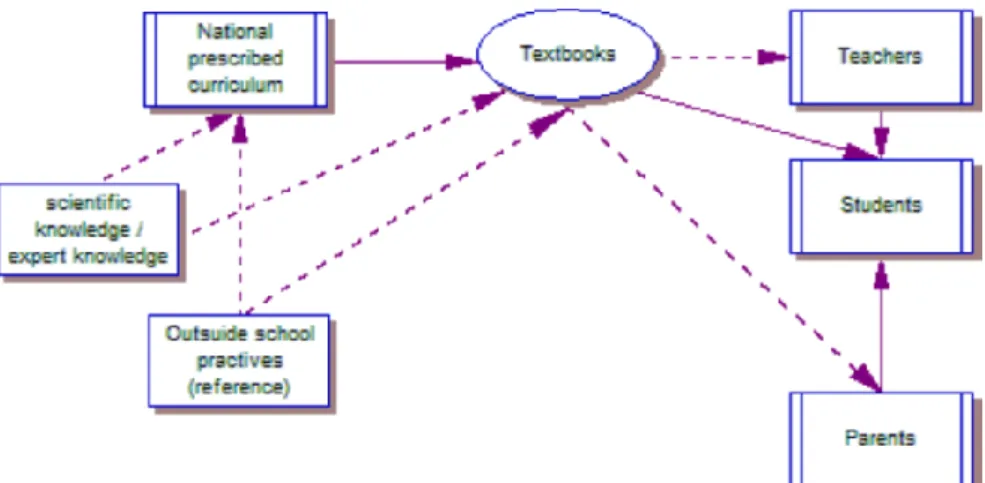
They are a means of socialization, providing representations of the world that can influence attitudes and orientations. The corporate male discourse in Business textbooks has become pervasive to the point of representing 'common sense' notions of how gender is viewed (Oyebola, 2003).
Rationale for the study
Dealing with the presentation of gender in business studies textbooks and seeking a deeper understanding of the complexities of these gender issues was in itself a strong motivation to undertake this research. Therefore, my aim is to provide a deeper insight into gender representation in business studies and especially in textbooks.
Focus and purpose of the study
Theoretical framework
Research design and methodology
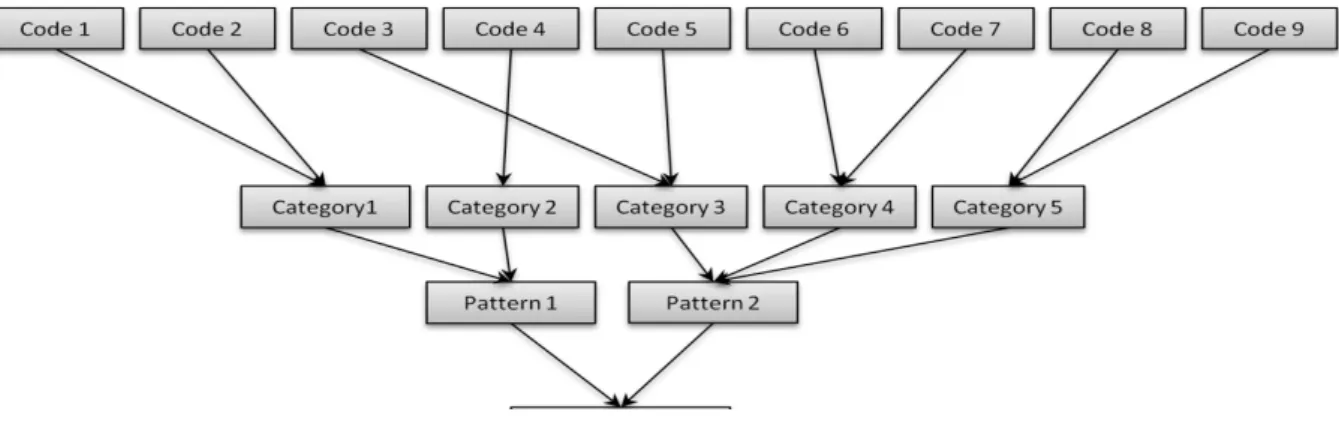
This meant that I had to read and re-read the data to identify a series of codes or themes, which were eventually grouped together into different categories to form the themes that will be discussed as the findings of my study.
Field of study
Overview of the education systems of the four SADC countries, with a specific focus
- Education in South Africa
- Education in Swaziland
- Education in Zimbabwe
- Education in Lesotho
While the Constitution of the Kingdom of Swaziland was declared the "supreme law" of the land, Swaziland had and still has a dual legal basis. The 2003 Protocol to the African Charter on Human and Peoples' Rights on the Rights of Women in Africa (hereinafter: the Women's Protocol) also guarantees the right to education and training for women in Article 12.1(c) and in particular insists that States must parties to take appropriate measures to "eliminate all stereotypes in textbooks, curricula and media that perpetuate such discrimination".
Structure of thesis
Chapter eight: In this chapter I address the question of why gender is represented as it was in the textbook sample. Finally, I refer to feminist poststructuralism to further understand why gender was represented as it was.
Conclusion
Introduction
Origins and purpose of textbook research
In 1949 after World War II, international efforts were deemed necessary to address the content of textbooks and examine its implications. While there are internationally recognized technical processes for evaluation, development and production of textbooks (see for example UNESCO, 2003), no compatible theoretical systems for textbook analysis as a research field have been established (Johnsen, 1993).
The pedagogical importance of a textbook
Textbooks are therefore powerful tools for society because they represent certain constructions of reality and reflect society's values and aspirations (Apple & Christian-Smith, 1991; Foster & Crawford, 2006; Sleeter & Grant, 1991). Because they contain legitimate knowledge, textbooks are reliable mirrors of the political culture of societies and therefore powerful political tools (Apple, 2001, p.169).
Textbooks and ideology
The author receives payment from the state if his chapter or unit appears in the textbook; therefore, they are less likely to challenge the plans of the state or the publishing industry in collecting their material (Sewall, 2005). Therefore, the importance of reviewing textbooks to uncover hidden assumptions and stereotypes in their content is imperative (Foster & Crawford, 2006).
Gender and textbook research – historical review
In 1995, the United Nations Fourth World Conference on Women held in Beijing found that gender stereotypes in textbooks had not been resolved and further calls were made for urgent attention to be given to the matter (UN, 1995, p. 52). Gender bias in textbooks is not a first world problem; many African countries face similar problems.
A gendered perspective of entrepreneurship as a focus of analysis
In examining shifts in the metaphorical representation of entrepreneurs and entrepreneurship, Nicholson and Anderson (2005, p. 163) concluded: “the entrepreneurial myth remains resolutely male. The literature on discourse and gender has focused on illustrating men's dominance over women in organizations, the media, education and so on, but more and more research is needed to understand 'the range of constructions/performances' of gender (Wagner &.
Representation of gender, disability and race
Second, the names of persons with disabilities were changed from 'handicapped' to 'persons with disabilities'. Third, disabled people were usually seen as the 'other', who needed to be helped or who inspired 'normal' people.
Heteronormativity as norm
In some cases, where African characters were represented in textbooks, a negative picture was presented. Globally, the content of school textbooks is "the result of competition between powerful groups who see it as central to the creation of collective national memory designed to meet specific cultural, economic and social imperatives" (Bazzul & Sykes, 2011, p 11).
Portrayal of management and leadership positions
Female characters in the textbooks had less access to leadership positions and fewer opportunities to participate in business than was actually the case. The findings showed that women's different roles in the family, society and workplace created multiple burdens that hindered their career development and advancement into leadership positions.
Sexist language
The author comments that using the generic 'he' would lead readers to believe that all the characters were male. The frequency of pronoun use indicates that men were more often depicted and described in the textbook, although there were several instances where the generic 'person' was used for both men and women.
Gendered occupational roles
Women, on the other hand, were depicted in the domestic sphere, performing household chores and caring for children. In the same year, a study of English textbooks in Pakistan (Hameed, 2012) and of Iranian EFL textbooks (Amini & Birjandi, 2012) found similar findings.
Portrayal of males as technology users and experts
The underlying assumption seemed to be that women were not interested in technology. The research described in “Gendered Science: Representational dynamics in British Columbia Science textbooks” found that women were portrayed as incompetent in using technology (Villar & Guppy, 2015).
Stereotypical personality traits in textbook characters
Men were presented as the predominant users of technology and as more knowledgeable and competent in information technology. In a study of the portrayal of personality traits in 19 Arabic textbooks in use in seven Arab countries (Egypt, Lebanon, Qatar, Saudi Arabia, Tunisia and Yemen) (Michel, 1986), findings showed that women were still portrayed according to tradition. the image of being dependent on men for well-being and economic status.
Implications of the literature
Feminist poststructuralism is used in this study as a theoretical lens to move beyond male-female binaries and "core practices" to provide nuanced explanations for the representation of gender in the selected texts. Poststructuralist feminist theory is used to explain why gender is represented in particular ways in previous studies in the literature, as well as in my own.
Introduction
Society decides what is acceptable to believe and what is unacceptable, the latter of which must be suppressed or simply ridiculed” (Foucault, 1981, p. 52).
Background of poststructuralism
Poststructuralist theory explains the relationship between the individual and the social and the binary oppositions therein. Poststructural theory rejects the possibility of absolute truth or objectivity; knowledge and meaning are seen as transitory and unstable, closely linked to power constructed within the social and material world.
Why a feminist poststructuralist theory?
Not only does it consider forms of social organization and associated values, but it also allows for theorizing of the individual's actions (Longhurst, 2011). The use of a feminist poststructuralist theoretical lens in this study will enable a critical examination of the way gender is represented in textbooks and offer possible explanations as to why this is so.
Language as a site for the construction and contestation of social meaning
This process of discourse and knowledge production will be examined to see if it is prevalent for Business Studies textbooks. The meaning of the words thus lies not in the words themselves, but in the differences between them.
The nature of discourse
The relationship between identity and gender is clarified by Butler's discussion of the actor and the work. Her theory of performance provides a rich and nuanced explanation of the ways in which gender is represented in discourse.
Conclusion
Introduction
Qualitative approach
Critique of qualitative analysis
The critical paradigm
By criticizing and encouraging criticism of discursive practices and reflecting on their role in the production of the social world, the researcher provides 'explanatory criticism' and raises 'critical linguistic awareness'. CDA can reveal how certain ideologies are disseminated through discourses of the education system at the micro level of Business Studies textbooks and the macro level of a social agenda or political intervention.
Methods of data production
- Difference between CDS and CDA
- The goals of CDS scholars
- CDA and ideology
- CDA and hegemony
- Towards a feminist CDA methodology
- Why feminist CDA is used in this study
- Methods of data analysis
- Analysis of visuals
- Critique of CDA
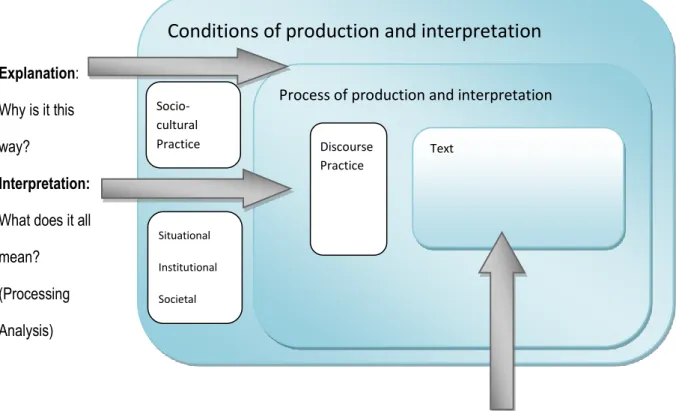
Fairclough's (2001) three-dimensional framework used for analysis of text and discourse in this study is: 1) linguistic description of the formal characteristics of the text; 2) interpretation of the relationship between the discursive processes/interaction and the text, where text is the end product of a process of text production and a resource in the process of text interpretation; and finally, 3) explanation of the relationship between discourse and social and cultural reality. It is related to possibility and ability, but is not subjective like the first two modalities (e.g.
Sampling
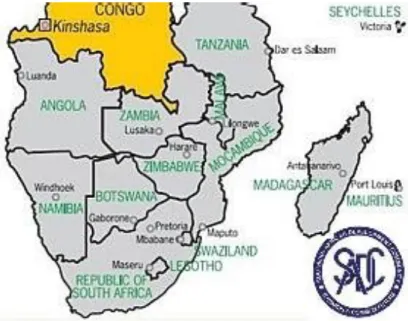
Another reason is that the selected SADC countries have historically promoted strong patriarchal values and cultural beliefs (Dijkstra, 2013). It is therefore important to investigate whether the various gender equality initiatives undertaken by these SADC countries permeate their Business Studies school textbooks, and whether the textbooks contain the historically strong patriarchal values and strong cultural relativism of gender.
Researchers’ positionality
In my Business Studies classes from 10th to 12th grade (before high school), I never saw women as important actors in business textbooks; they were (if involved at all) in supporting roles to men who achieved great success in the business sphere. Having stated my positioning and subjectivity, I describe the rigor of my research process in the next section so that the reader can find my work reliable/reliable.
Trustworthiness
First, I (as a researcher) will read the chapters to get an overall impression of the content. Open coding (Figure 4.2) will then be used to help me generate meanings and ideas and deepen my understanding of the data in detailed analysis which could provide more than one possible meaning.
Ethical considerations
I have also created an audit trail (Holloway & Wheeler, 2009) to ensure reliability so that other academics can review the process by which the research was conducted and the key decisions that informed the research process. In accordance with university research policy, ethical approval was sought and granted by the Humanities and Social Science Research Ethics Committee of the University of KwaZulu-Natal (reference no. HSS/0988/014D. See appendix for copy).
Methodological limitations
All ethical considerations required by the University of KwaZulu-Natal in relation to this type of research will be taken into account.
Conclusion
Introduction
Heteronormativity is the norm
- Normative relationships represented through exclusion
- Men and women are established as binary opposites
- Normative heterosexual relationships
- Heteronormative family paradigm
- Conclusion
The use of the nominalization 'survey' implies that there may have been some research carried out. While the noun 'partner' is gender neutral and the sentence can be interpreted as non-specific regarding the sexual orientation of the parties, the text is confronted with a conventional view of male/female couples (Figure 5.3).

Language as masculine
The generic ‘man’
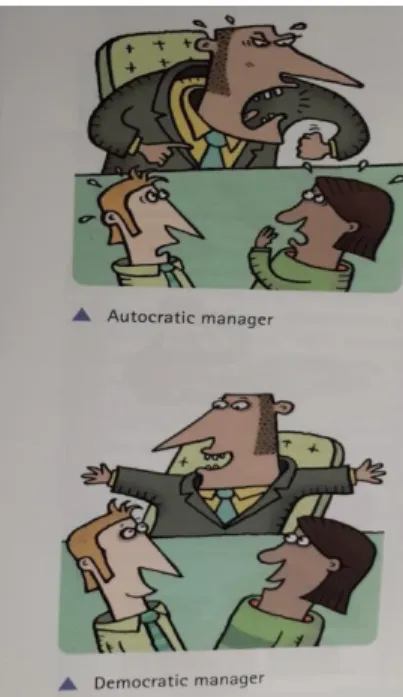
In the absence of the feminine pronoun “businesswoman,” the authors reinforce the message that entrepreneurship and business ownership is an exclusive entity best suited for men. The use of the pronoun “you” communicates that the authors are making certain assumptions about the reader's outlook and nature.
Conclusion
The authors could have been more neutral by referring to 'the chairman' as opposed to 'chairman'. The sentence could have read He suggested the chairman put this on the agenda to be more gender neutral; using the male pronouns 'his' and 'chairman' betrays the author's bias.
Introduction
Male dominance represented through gender roles and traits
Masculine features and traits presented as norm for success in entrepreneurship 129
The authors use individualization and specification to describe the person experiencing problems in the workplace. The idea of female passivity and subordination to male desires is repeated in the text.

Conclusion
The text above also reinforces a heterosexual essentialist position by establishing a binary polarity between the sexes and assuming that attraction necessarily exists between members of the opposite sex. The underlying ideological meaning that the text seems to carry seems to be the idea of 'normality' in terms of the powerful behavior of the man, as the boss once again colluded with the act.
Leadership, management and entrepreneurship as masculine
- The covers
- Case studies
- Depictions of men in top management positions as compared to women
- Men represented as competent, with the necessary educational skills
- Conclusion
Companies are not intermediaries, but institutions, but the authors talk about them in this way, which means that the owners or partners involved will close the company if it fails due to a lack of vision and leadership. Instead of saying 'Levi achieves culinary success', the authors masked the person responsible for the success and used a closely related phrase - 'taste success' as a metaphor.

Systematic, pervasive association of men with technology
The visual representation in the Lesotho textbook (p. 259) further reinforces the stereotypical assumption that men are technologically smart (Figure 6.12). Concealing the agent serves to enhance the degree of factuality in the use of technology.

Conclusion
The text technology has enabled businesses to reach new markets, shows the removal of the agent and nomination. The use of the word will also show the degree of certainty the authors have about this issue of technology.
Introduction
The interconnectedness of race and gender: White men dominate in the business sector
- African women represented as cleaners, domestic workers and subsistence farmers
- African women in need of development
- African women in unpaid domestic work
- African women as domestic workers
- The ‘needy’ discourse
- Concluding comments
On page 135 of the South African textbook, African women are again represented as farm workers engaged in the primary sector (Figure 7.2). On page 141 of the Lesotho textbook, under the section "Role and Relationship in Organization", the following statement was prominent: All business organizations need capable people to run it.

The intersection of gender, disability and race: Able-bodied men dominate in the
- Introduction
- Policy intent and apparent contradictions
- Representation of gender, disability and race across the four textbooks
- The intersection of gender, race and disability: ‘White able-bodied male’
- Summary of findings on the intersection of gender, disability and race
People with disabilities have limited representation across the four textbooks, particularly for African males and females. The silence about how Sam accommodates people with disabilities in the definition of flexibility in the workplace contributes to the exclusion and marginalization of people with disabilities.

Conclusion
This discourse may fail to challenge the basic assumptions that prevent people with disabilities from participating in the opportunities available to able-bodied people. The findings further portray white, able-bodied men as active and individuals with disabilities as passive.
Heteronormativity
As in the international research cited, heterosexual identity is almost all pervasive across the four textbooks (Bazzul & Sykes, 2011; Salami & Ghajarieh, 2015). Theoretically, the marginalization of LGBTI in the textbooks studied can be explained as a product of discriminatory customs and traditions of the selected countries.
Language is masculine – firstness of male pronoun/the generic 'he' and '-man'
Feminist linguists see this as an indirect way of excluding women (Lee & Collins, 2008), and this was evident across the four textbooks analysed. The gender biased use of language across the four textbooks suggests that textbook writers lack gender awareness and that their focus on disciplinary content takes priority over disadvantaged content.
Male dominance represented through stereotypical gender roles and traits
The content of the text depends on the authors and the way they view and treat gender (Baghdadi, 2012). This leads to the conclusion that the intention of the authors of the four textbooks is to entrench the discourse of patriarchy – as evidenced by the repeated representation of women in stereotypical professions with low economic status.
Masculine personality traits as norm in the business sector
The authors of the textbooks obviously reinforce assumptions about male behavior in their understanding of gender. The representation of the masculine as aggressive and dominant does not necessarily serve male interests.
Leadership, management and entrepreneurship is masculine
There are female ministers, leaders and successful business women in the business and economic environment in Southern Africa (HSRC, 2015). This is supported by the introduction to the SADC Development Plan, which encourages affirmative action to increase the share of women in leadership positions and entrepreneurship (Dudu, Gonye, Mareva and Sibanda, 2008).
Men are technologically astute
Intersectionality of race and gender: White men dominate in the business sector
Intersectionality of gender, race and disability: Able-bodied as the norm in the business
Overview of the study
Why is gender represented in these ways in the selected SADC textbooks?
Hegemony and power
Promotion of Western ideals
Propagating and/or reproducing patriarchy
Personal reflections on the study
Methodological reflection on the use of CDA
Relevance, value and contributions of this research to knowledge
Limitations of the study
Implications for Business Studies Curricula
Conclusion