1 UNIVERSITY OF KWAZULU-NATAL
THE GLASS CEILING: PERCEPTIONS OF ASPIRING FEMALE MANAGERS
By
KIAYE E. RISPER 209511565
A dissertation submitted in partial fulfilment of the requirements for the degree of
Master of Business Administration
Graduate School of Business Faculty of Management Studies
Supervisor: Prof. A.M. SINGH
2011
2
3 Dedication
This thesis is dedicated to
My loving mother Mrs Phoebe A. Kiaye who was promoted to glory
on 9th June 2011
Thank you mama for being there for me I miss you dearly
Jeremiah 29:11
4 Acknowledgements
Firstly, I am very grateful to God for giving me life and sustaining me in good health during the entire period of my MBA studies.
y dear husband Arthur Omondi Ondago, my pillar of strength: thank you for your constant support, encouragement and undying belief in me. My children Elsie-Marie and Alvin: thank you for your patience and encouragement.
A special thank you to my dear parents: Mr. Enoch Kiaye and the Late Mrs. Phoebe Kiaye whose words of encouragement, moral support, prayers and guidance kept me on track and gave me the motivation to complete my MBA studies.
My sisters „Asante‟ for your prayers and moral support.
Sincere gratitude to my supervisor, Prof. A. M. Singh, whose guidance, insights, positive critique, suggestions, recommendations and encouragement given during the period of my study made the dissertation experience a worthwhile and fruitful one. Your timely follow up and informative lectures enabled me to complete my dissertation, something that I am grateful to you for.
my respondents: a big thank you for your timely response and participation in my questionnaire. Your responses were critical to my drawing meaningful conclusions to my study and hence completing my dissertation.
my colleagues, thank you for your positive feedback on my pilot study, questionnaire design and formulation.
To the entire UKZN GSB administration staff, thank you for your administrative support services that was critical to the smooth running of my MBA course.
I would also like to thank Mrs. Annapurna Harza Ghosh of the Statistics School at UKZN Westville campus, for her valuable insights and critique that helped me make sense of my data.
„Asante sana‟ to you all and may the Almighty God shine His precious light upon you all now and always.
5 Abstract
___________________________________________________________________________
The glass ceiling has been defined as a subtle, intangible yet impenetrable barrier that hinders the accession of women to senior management positions. Its manifestations are unique to every country and organisation. The theoretical framework of the glass ceiling has pointed to person and situation centred theories, social role, interaction and human capital theory to try and provide explanations to the origin of the glass ceiling. The main aim of the study was to determine whether the existence of the glass ceiling was a myth or reality. Purposive and snowball sampling were the sampling methods used in this study. The questionnaire that was administered using the web based Question pro elicited a total of 117 responses from 290 questionnaires that were circulated to respondents, resulting in a 40% response rate. Due to the sampling method that was used, results obtained could not be generalised to the entire population of female managers in the Durban Metropolitan Area. Salient findings that emerged from this study were that 54% of respondents were aged between 35-44 years and were married (69%). In addition, the majority of respondents were White (41%), were employed in the Private Sector (62%) and held middle management positions (47%). Critical to this study, respondents felt that the glass ceiling was still firmly in place as female representation at senior management was minimal (86%). Some of the barriers to the upward career mobility of respondents were reluctance to relocate (48%), need to overachieve (52%) and consistently exceeding performance (64%). In addition, critical career mobility success factors were that respondents needed to be leaders geared towards high achievement (94%), be competitive and ambitious (90%), be confident and exhibit emotional suitability to hold senior management positions (84%), have a track record (77%), receive organisational support to balance their multiple roles (59%) and have a willingness to relocate (41%). For the ceiling to crack, it is essential for organisations‟ on one hand to commit to creating environments supportive of the roles of women (flexi time, work from home days, mentor staff) and women on the other hand need to have the desire to persevere and have faith in their abilities, cultivate their own leadership style, network and further their own education.
6
TABLE OF CONTENTS
Description Page
Title page
Declaration i
Dedication ii
Acknowledgements iii
Abstract iv
Table of contents v
List of Figures xii
List of Tables xiii
CHAPTER ONE
1.1 Introduction 1
1.2 Motivation for the study 1
1.3 Focus of the study 3
1.4 Problem statement 3
1.5 Research questions 4
1.6 Research objectives 5
1.7 Limitations of the research 5
1.8 The study structure 6
1.9 Summary 6
CHAPTER TWO
2.1 Introduction 7
2.2 Background to the origin of the glass ceiling concept 7
7
2.3 Defining the glass ceiling 8
2.4 Theoretical framework 9
2.4.1 Person Centred Theory 10
2.4.2 Situation Centred Theory 11
2.4.3 Social Role Theory 12
2.4.4 Interaction Centred Theory 13
2.4.5 Human Capital Theory 14
2.5 Quantifying the extent of the glass ceiling 14
2.5.1 Global Perspectives 14
2.5.2 South African scenario 16
2.6 Glass ceiling barriers 19
2.6.1 Non supportive corporate culture 20
2.6.1.1 Training and career development 20
2.6.1.2 Old boy networks 21
2.6.2 Work life balance 22
2.6.3 Societal stereotyping 24
2.6.4 Lack of female mentors 25
2.6.5 Tokenism 26
2.6.6 Leadership style 27
2.6.7 Access to higher education 28
2.7 Effects of the glass ceiling 30
2.8 Beyond the glass ceiling 31
8
2.8.1 Playing by male rules 31
2.8.2 Expatriate assignments 32
2.8.3 Entrepreneurship 33
2.9 Summary 34
CHAPTER THREE
3.1 Introduction 35
3.2 Aim and objectives of the study 35
3.3 Sampling Technique and description 36
3.3.1 Sampling 37
3.3.2 Sample description 38
3.3.2.1 Sample size 38
3.4 Data collection strategies 39
3.5 Research design and methods 41
3.5.1 Description and purpose 42
3.5.1.1 Construction of the instrument 43
3.5.2 Pretesting and validation 45
3.5.2.1 Reliability 46
3.5.2.2 Validity 48
3.5.3 Administration of the questionnaire 50
3.6 Analysis of data 51
3.6.1 Data presentation 52
3.6.1.1 Descriptive statistics 52
3.6.1.2 Inferential statistics 52
9
3.7 Level of significance 54
3.8 Summary 56
CHAPTER FOUR
4.1 Introduction 57
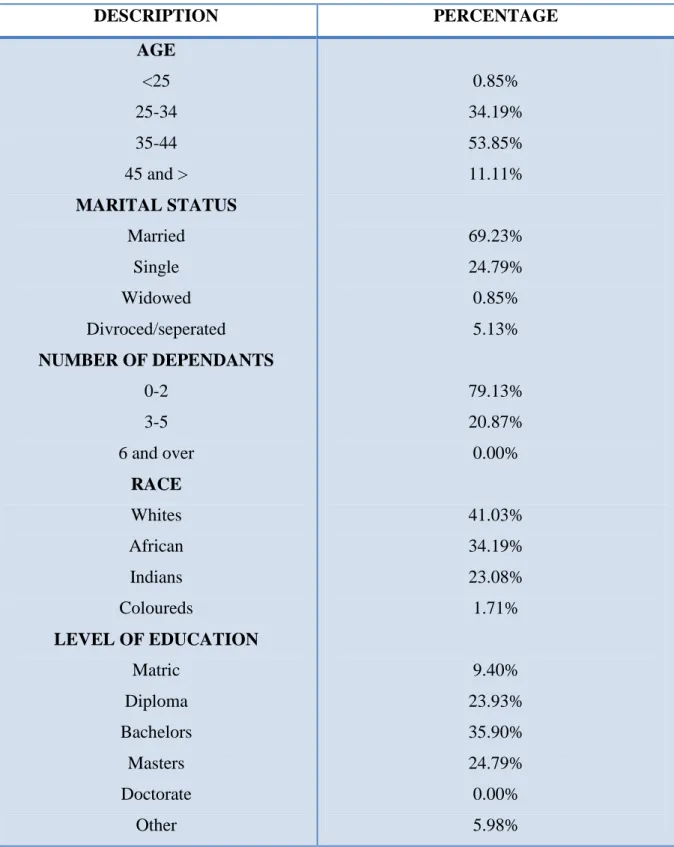
4.2 Profile of respondents 57
4.2.1 Demographic profile 57
4.2.2 Employment profile 59
4.3 Descriptive statistics of the glass ceiling perceptions 60 4.3.1 Objective 1: Work place barriers and the glass ceiling 60 4.3.2 Objective 2: Hindrances to upward career mobility 61 4.3.3 Objective 3: Work place barriers and promotions 62 4.3.4 Objective 4: Role of female managers as promotion agents 63 4.3.5 Objective 5: Personal characteristics and vertical career progression 64
4.4 Inferential statistics 65
4.4.1 Analysis of variance (ANOVA) 65
4.4.2 Cross Tabulations 67
4.4.2.1 Objective 1: Work place barriers and the glass ceiling 67 4.4.2.2 Objective 2: Hindrances to upward career mobility 71 4.4.2.3 Objective 3: Work place barriers and promotions 78 4.4.2.4 Objective 4: Women in senior management as promotional agents 81
10 4.4.2.5 Objective 5: Personal traits and vertical career progression 83
4.4.3 Correlation coefficients 94
4.4.3.1 Objective 1: Work place barriers and the glass ceiling 94 4.4.3.2 Objective 2: Hindrances to upward career mobility 96 4.4.3.3 Objective 3: Work place barriers and promotions 98
4.4.3.4 Objective 4: Women in senior management as promotion agents 99 4.4.3.5 Objective 5: Personal traits and vertical career progression 99
4.4.4 Regression analysis 101
4.4.4.1 Relocation and family responsibilities 101 4.4.4.2 Level in organisation and relocation 102 4.4.4.3 Work experience and organisational politics 102
4.4.4.4 Visibility and career development 102
4.4.5 Objective 6: Recommendations to facilitate upward career mobility 103
4.5 Summary 104
CHAPTER 5
5.1 Introduction 105
5.2 Sample Characteristics 105
5.3 Glass ceiling perceptions 107
5.3.1 Objective 1: To determine if work place barriers contribute to the creation
of the glass ceiling 107
11 5.3.2 Objective 2: To identify what factors hinder the vertical progression of
females to top management positions 111 5.3.3 Objective 3: To determine if work place barriers deter females from applying
for promotions 115
5.3.4 Objective 4: To determine if female managers have the power to promote
other females 117
5.3.5 Objective 5: To determine if personal traits influence vertical progression 119
5.4 Summary 121
CHAPTER 6
6.1 Introduction 123
6.2 Recommendations to increase the upward mobility of women 123 6.2.1 Faith and confidence in abilities/perseverance and focus on performance 124 6.2.2 Flexitime/onsite day care and work from home days 124
6.2.3 Networking and mentoring opportunities 124
6.2.4 Access to further education 125
6.2.5 Cultivating own leadership style 125
6.3 Implications of research findings 126
6.4 Limitations of the study 127
6.4.1 Sample size 127
6.4.2 Sampling technique 127
6.4.3 Questionnaire measurement scale 127
12
6.4.4 Response rate 128
6.5 Recommendations for further research 128
6.6 Summary 129
REFERENCES 130
APPENDICES
1 Letter of informed consent and questionnaire 136
2 Ethical clearance 141
13
LIST OF FIGURES
No Description Page
2.1 BWASA 2010 census statistics 16
3.1 Reliability measures 47
3.2 Validity measures 49
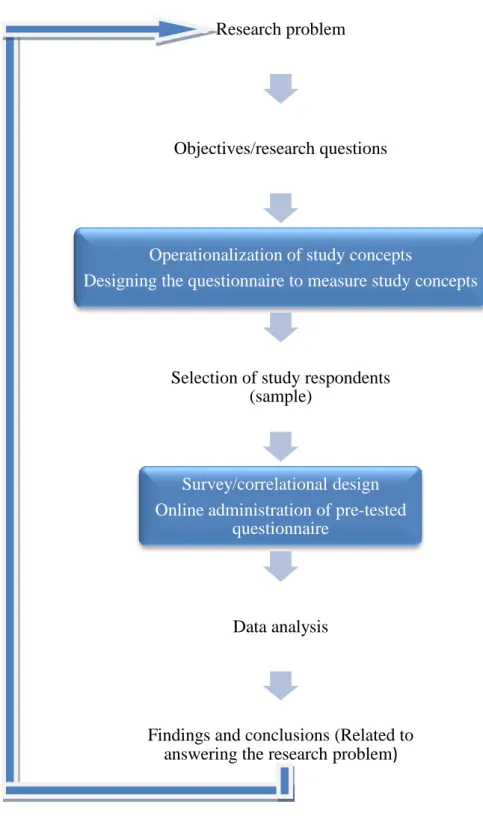
3.3 The Research process 55
4.1 Countering the glass ceiling 103
14 LIST OF TABLES
No. Description Page
2.1 BWASA (2010) management statistics by gender 17
2.2 MWIWA (2010) gender parity indicators 18
3.1 Sample size by management level 39
3.2 Cronbach alpha of glass ceiling perception scale 47
3.3 Guidelines to interpreting the correlation coefficient (r) 53
4.1 Demographic profile of respondents 58
4.2 Employment profile of respondents 59
4.3 Objective 1: Work place barriers and the glass ceiling 61 4.4 Objective 2: Hindrances to the upward career mobility 62
4.5 Objective 3: Work place barriers and promotions 63
4.6 Objective 4: Women in senior management as promotional agents 64
4.7 Objective 5: Personal characteristics 65
4.8 ANOVA between relocation and management level 66
4.9 ANOVA between work experience and management level 66
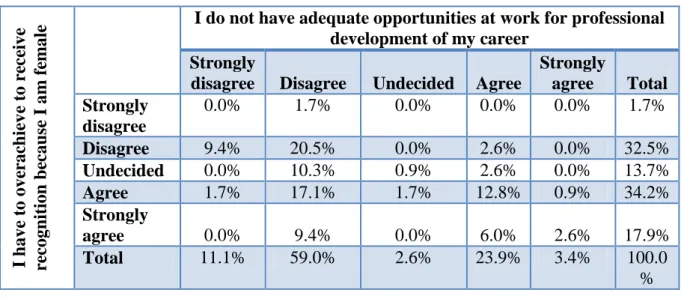
4.10 Overachievement and challenging assignments 67
4.11 Representation at senior management and challenging assignments 68 4.12 Development opportunities and assignment to challenging positions 68
4.13 Development opportunities and visibility 69
4.14 Overachievement and career development opportunities 70 4.15 Working twice as hard due to organisational support 70
4.16 Overachievement according to race 71
4.17 Lack of opportunities for development according to race 71 4.18 Visibility and assignment to challenging positions 72 4.19 Departmental visibility due to organisational politics 72 4.20 Working twice as hard according to educational level 73
15
4.21 Working twice as hard and overachievement 73
4.22 Isolation due to organisational politics 74
4.23 Reluctance to relocate according to management level 75
4.24 Relocation according to marital status 75
4.25 Relocation due to family responsibilities 76
4.26 Respect from male colleagues according to management level 76 4.27 Respect by male colleagues according to promotional challenge 77
4.28 Management level and work experience 77
4.29 Work experience and level of education 78
4.30 Organisational politics and work experience 78
4.31 Education level by organisational cluster 79
4.32 Managerial hindrance and working twice as hard 79
4.33 Promotional challenge and family responsibilities 80
4.34 Family responsibilities and emotional suitability 80
4.35 Organisational politics and working twice as hard 81 4.36 Organisational politics and women in top leadership 82 4.37 Women in top leadership according to work experience 82
4.38 Women in top leadership and working twice as hard 83
4.39 Emotional suitability according to education 83
4.40 Emotional suitability and organisational support 84
4.41 Emotional suitability and working twice as hard 84
4.42 Emotional suitability and work experience 85
4.43 Emotional suitability and women in top leadership 85
4.44 Competitiveness and ambitiousness according to age 86
4.45 Working twice as hard because I am competitive and ambitious 86 4.46 Reluctance to relocate though competitive and ambitiousness 87 4.47 Competitive, ambitious and up to promotional challenge 87
16 4.48 Exuding confidence due to organisational support 88
4.49 Exuding confidence due to work experience 88
4.50 Exuding confidence and education level 89
4.51 Exuding confidence and emotional suitability 89
4.52 Confidence from subordinates according to organisational cluster 90
4.53 High achievement according to race 90
4.54 High achievement according to management level 91
4.55 High achievement and organisational support 91
4.56 High achievement if competitive and ambitious 92
4.57 Leadership according to work experience 92
4.58 Leadership and working twice as hard 93
4.59 Leadership and promotion challenge 93
4.60 Leadership and emotional suitability 94
4.61 Association relationship of non assignment to challenging positions 94 4.62 Association relationship of professional development opportunities 95 4.63 Association relationship between evaluation and career opportunities 95 4.64 Association relationships of organisational support 96
4.65 Association relationship of overachievement 96
4.66 Association relationship between career opportunities and visibility 97 4.67 Association relationship between visibility and organisational support 97 4.68 Association relationship of reluctance to relocate 97 4.69 Association relationship between work experience and organisational politics 98 4.70 Association relationship between promotion challenge and family responsibilities 98 4.71 Association relationship between family responsibilities and emotional suitability 99 4.72 Association relationship of organisational politics 99 4.73 Association relationship between competitiveness and ambitiousness according
to age 100
17
4.74 Association relationships of personal traits 101
4.75 Variation in relocation due to family responsibilities 102
4.76 Variation in relocation due to management level 102
4.77 Variation in work experience due to organisational politics 102 4.78 Variation in departmental visibility due to career development 103
18
CHAPTER ONE
INTRODUCTION AND STUDY OVERVIEW
_________________________________________________________________________
1.1
IntroductionThe involvement of women in the labour market in the World in general and in South Africa in particular has been on the increase. Though female representation at lower and mid-level management is on the increase, what remains alarming is that this involvement does not mirror the representation of women at senior management positions. The under representation of women at top management has been attributed to what several authors have termed the
„glass ceiling‟. The concept of the „glass ceiling‟ emanated from corporate United States (US) where a commission termed the Glass Ceiling Commission (GCC) was set up to investigate why the involvement of women in labour in the US was not in proportion to their representation at top level management. The „glass ceiling‟ has thus been termed an invisible barrier akin to a concrete ceiling that is impenetrable and prevents the accession of women to the upper echelons of management. The way the glass ceiling manifests itself is different in different countries and organisations. This study hence attempts to provide insights into the glass ceiling phenomenon and is limited to the experiences of women in management in the greater Durban Metropolitan Area. The perceptions of the existence of the glass ceiling are limited to the experiences women in management have had and continue to have. The foregoing Chapter provides a brief explanation of the importance of the study by motivating the idea behind the research. A statement of the major aim and a list of research objectives and questions help to define the scope of what this study aims to achieve. Limitations identified while conducting the study are listed. A chapter by chapter layout of the dissertation is provided at the end of this chapter to show how this study will unfold.
1.2 Motivation for the study
The involvement of women in the economy more so at senior management has been hindered by barriers termed the glass ceiling (April et al., 2007). The subtleness of the ceiling means that barriers that are perceived to exist may take different forms within organisations without the knowledge of management. As a result, women fail to reach their full potential at the
19 work place. In this regard, it therefore becomes essential to study the perceptions female managers aspiring for the top echelons of management have as to why the ceiling exists hindering their vertical career mobility. Through this study, management will become cognisant about the potential existence of internal growth barriers which contribute to women encountering a glass ceiling which prevents their upward mobility within organisations.
Information obtained from this study will help potential employers to better understand female employee needs with regard to work cultures and environments that are perceived to be barriers to their advancement and thereby enable management to provide conducive environments which will be able to enhance greater involvement of women in leadership positions. Additionally, information so gained will act as inputs into the organisation‟s strategic decision making process leading to cracking or shattering of the ceiling if deemed to exist in an organisation. For organisations, inclusion of women in leadership roles has been known to have benefits especially with regard to decision making (Jain and Mukherji, 2010).
A diversified team of top leaders in an organisation is an indication of top managements‟
commitment to enhancing women‟s vertical mobility in organisations and hence their inclusion in senior managerial positions.
For potential women aspirants and those already in leadership positions, this research will provide useful information on the types of barriers that exist in organisations and thereby enable women in leadership roles in organisations to better influence the cultivation of internal work environments that support the advancement of their fellow women. For women aspiring to leadership roles the information from this study will equip them with vital knowledge on how to overcome organisational barriers capable of hindering their upward mobility.
Research on the glass ceiling and how the barriers manifest themselves at organisational levels will assist policy makers at national level to introduce legislation geared to increasing the participation of women and minority groups in a country‟s economy owing to the changing dynamics of the labour force. By making it mundane for organisations to abide by certain empowerment legislation will help lead to organisational cultural changes which may in totality work towards enhancing the vertical mobility of women.
This study will also add to the already existing body of knowledge and will examine the issue of the glass ceiling using information gathered from experiences women have had and
20 continue to have while on the job that hinders their career mobility. Potential areas for further research that are included in Chapter 6 will help to further contribute to the existing body of knowledge on the glass ceiling issues.
1.3 Focus of the study
According to the Glass Ceiling Commission (GCC) (1991), barriers like the glass ceiling presents themselves as societal, internal structural barriers and/or government barriers. For the purpose of this study, internal structural/organisational barriers in direct control of the business will represent the barriers of concern and will be collectively termed as “barriers to entry” to senior managerial positions. Such barriers as reviewed from literature may in part include lack of mentors, lack of opportunities for career advancement, existence of old boy networks, lack of promotions among others (Jain and Mukherji, 2010; April et al., 2007). In its entirety therefore, the study will try to unpack the perceptions that female managers have with regard to „barriers to entry‟ which act as hindrances to their advancement to senior leadership positions. According to the GCC (1991), perceptions, are what people believe and ultimately becomes personal behaviour. Therefore emphasis on perceptions true or not will be confined to personal experiences women have had and continue to have while in employment which they perceive as being „barriers to entry‟ to senior management positions.
Additionally, managers will be defined as women who hold leadership positions, are involved in some form of decision making and have a number of subordinate staff reporting to them within their organisations.
1.4 Problem statement
Despite gender socio-economic equality statistics in South Africa (SA) showing improvement according to the Master Card Worldwide Index of Women‟s Advancement (MWIWA) (2010), disparity between the number of men and women holding managerial positions more so senior management positions still exists, alluding to the existence of invisible barriers that different authors have termed the glass ceiling. Mavin (2000 as cited in Van der Boom, 2003:132), defined the glass ceiling as “ frustrations of working women at every level who can see where they want to go but find themselves blocked by an invisible barrier”.
21 A review of recent literature has pointed to person and situation centred, interaction, human capital and social role theories to provide explanations as to why the glass ceiling exists (Davidson and Burke, 2000; Powell, 2000). Though legislation more so Affirmative Action (AA) and Employment Equity Act (EEA) has done much to eliminate formal gender bias at the workplace, the concept of the glass ceiling shows that gender inequality is still rife and presents itself in a range of work practices and cultural norms that appear to be unbiased hence the term the glass ceiling (Research Focus, 2009). Further to this, the glass ceiling being a subtle barrier may exist within organisations without the knowledge of top executives in the firm. This is because the barriers may be organisational norms and practices that have become engraved as part of organisational cultures (Research Focus, 2009). By studying perceptions aspiring female managers have as pertains to the ceiling will help determine whether the glass ceiling‟s existence in this study is due to organisational barriers or not.
As long as the glass ceiling is perceived to exist in organisations, will women get a chance to reach their full potential in the workplace and will their participation in the upper echelons of management continue to remain limited?
1.5 Research questions
The aim of the study being to determine whether the existence of the glass ceiling is a myth or reality was achieved by providing answers to the major research questions listed below.
i) Do work barriers have an influence on the vertical career progression of women?
ii) What are the different types of barriers/work practices that hinder female managers from vertical career progression?
iii) What personal traits must women possess to enable them assume leadership positions in organisations?
iv) How can the upward career mobility of women be facilitated?
22 1.6 Research objectives
The scope of this study was guided by the following objectives
To determine whether work place barriers contribute to the creation of the glass ceiling.
To identify what factors hinder the vertical progression of females to top management positions.
To determine if work place barriers deter females from applying for promotions.
To determine if female managers have the power to promote other females.
To determine if personal traits influences vertical progression.
To make recommendations to facilitate the upward mobility of women in organisations.
The achievement of the above objectives was dependent on the respondents‟ level of agreement or disagreement with questionnaire variables which were significant at p≤0.05.
1.7 Limitations of the research
Challenges that were experienced in the course of carrying out this study are as listed but discussed in detail in Chapter 6.
The 40% response rate from the web based questionnaire powered by Question Pro that was achieved in this study was low despite constant reminders to respondents to respond.
The inability to generalise the study findings to mirror the perceptions of female managers in the greater Durban Metro area was impossible due to the use of non probability sampling.
The use of snow ball sampling though increased to some extent the number of respondents; it resulted in respondents recruiting other respondents who might have had similar views to themselves hence resulting in skewing the data on the basis of race and organisational cluster.
The Likert scale made it impossible to find out why the respondents made the choices that they did when responding to the questionnaire statements, hence the research responses lacked variability.
23 1.8 The study structure
To ensure that there is continuity from one chapter to the next, each chapter has an introductory paragraph of the concept under review, a main body with several sub sections providing in depth information on the chapter content and a concluding summary that links a preceding Chapter to the next new chapter. In summary, the study is structured as follows:
Chapter 1 gives in detail the main purpose, focus and motivation for the study. In addition, a definition of the scope of the study, objectives and research questions are listed together with limitations that were encountered in carrying out this study.
Chapter 2 provides a review of the relevant literature as pertains to the glass ceiling. A theoretical background to the glass ceiling concept and its definitions are provided to give readers a better understanding of what the glass ceiling means. In addition, the magnitude of the ceiling, barriers that result in creating the ceiling, its effects and ways to counter it are discussed.
Chapter 3 details the research methodology adopted in this study. The aim and objectives, data collection methods and generally the research design and methods are discussed.
Chapter 4 presents the study findings of data that were analysed using both descriptive and inferential statistics.
Chapter 5 provides a discussion of the findings of the study. It addresses the findings according to the objectives in order to determine whether they have been met or not.
Chapter 6 the final chapter concludes the study with a summary of the main findings, recommendations and potential areas for future research.
1.9 Summary
The under representation of women at senior management is attributed to subtle barriers termed as the glass ceiling. The subtleness of the barriers means that management may not be aware that barriers exist in organisations. Based on this premise, the motivation behind the study and the problem statement are detailed in this chapter. In addition, the focus of the study that was guided by research questions to be answered and limitations that were encountered are listed. Chapter 2 provides an overview of the glass ceiling concept.
24
CHAPTER TWO
THE GLASS CEILING OVERVIEW
_________________________________________________________________________
2.1 Introduction
The main aim of this Chapter was to review relevant literature in order to provide insights into the concept of the glass ceiling. The chapter attempts to give some background information on the glass ceiling, define and quantify the extent of the ceiling, explain how the ceiling manifests itself, and lastly alternative strategy that can be used to crack or go beyond the glass ceiling.
2.2 Background to the origin of the glass ceiling concept
Globally, there has been an unprecedented change occurring in the composition and participation of the workforce in the world economy. This change has been propelled by the active involvement of more women in the economy than before (April et al., 2007).
According to the International Labour Organisation (ILO) (2004), out of the world‟s 2.9 billion workers, 40% are women. Studies done worldwide show that the increasing involvement of women in the work force is not synonymous with their representation at senior management levels (Cross and Linehan, 2006). This increase in female participation in the workforce is mirrored in the South African scenario where though women are entering the workforce in large numbers, a vast majority of senior leadership positions remain a male preserve (Stelter 2002 as cited in April et al., 2007 and Mok Kim Man et al., 2009). What this means is that on the surface women are being accepted as part of the workforce, but their reception into senior management levels is stifled due to subtle forms of discrimination that present themselves in compensation, training and/or socialisation networks (Billy and Manoochehri, 1995).
With there being a need to increase diversity in the workforce, a study done by Powell and Graves (2003 as cited in Mok Kim Man et al., 2009), indicated that the proportion of women holding managerial ranks in lower and mid-level management positions had increased, concomitantly with their greater demand for equality in the work environment. As a result, the proportion of women reaching top management positions has remained relatively small
25 pointing to the existence of „barriers to entry‟ to top management that have been termed the
„glass ceiling‟ (April et al., 2007).
According to Insch et al., (2008), the concept of the glass ceiling originated from the United States and its usage gained popularity in the 1980s. The Federal Glass Ceiling Commission (GCC) was created as part of the US Civil Rights Act of 1991 to carry out a study and prepare recommendations for the US Congress on how to eliminate artificial barriers that hindered the advancement of women to senior management positions. The glass ceiling was perceived to exist in Corporate America because it was observed that women participating in labour could only rise up to a certain level in organisations. Their 11% representation at top management and 2% representation in corporate boards did not mirror their 50% composition of the total US labour force (Taylor and Waggoner, 2008). Once at mid- level they stopped and got stuck owing to artificial barriers that were attributed to the glass ceiling. The GCC findings attributed the glass ceiling to women being hired to „feminized‟ positions in the organisation, more so in human resources and personnel as opposed to holding top management positions in line positions like sales, marketing and production (Insch et al., 2008).
Compared to formal barriers to career advancement like lack of education or work experience requirements which may have relevance in the South African context, the subtleness of the ceiling means that glass ceiling barriers are less tangible and may be engraved in culture;
society and psychological factors that work collectively to impede the advancement of women to upper managerial positions (Jain and Mukherji, 2010). What is critical to note is that the glass ceiling phenomenon exists even in the 21st century where globalisation and technological advances have resulted to flattening of hierarchies and the emergence of 24 hour economies (Jain and Mukherji, 2010).
2.3 Defining the glass ceiling
With research into the glass ceiling gaining momentum, several authors have attempted to coin their own definitions and to provide explanations as to why the ceiling exists. The glass ceiling is a metaphor that has been used to explore organisational discriminative processes that inhibit the advancement of women and minority groups to senior management positions (Bendl and Schmidt, 2010). The Federal Glass Ceiling Commission (GCC) (1995 as cited in
26 Taylor and Waggoner, 2008) offered an initial definition of the glass ceiling concept and defined it as an "artificial, yet unseen and unreachable barrier hindering the advancement of women and minorities scaling the corporate ladder regardless of their qualifications or achievements”. Additionally, according to the GCC‟s report, the glass ceiling disregards merit and achievements of women by reinforcing discriminatory barriers that may take the form of gender bias, harassment or organisational norms that do not favour women hindering their upward career mobility.
Powell (2000), defined the glass ceiling as a „barrier so subtle and transparent, yet so strong that it prevented women and minorities from moving up the management hierarchy‟. Mavin (2000 as cited in Van der Boom, 2003), described the glass ceiling as „frustrations of working women at every level who can see where they wanted to go but find themselves blocked by an invisible barrier. Kreitner and Kinicki (2008) concurred with Powell and Mavin (2000) and defined the glass ceiling as an invisible barrier that hindered the advancement of women and minorities to senior leadership positions. Hoobler et al., (2009) concurred with Kreitner and Kinicki (2008) and asserted that the ceiling referred to barriers women faced that hindered their upward mobility in organisations, with the „glass‟ metaphor referring to the invisibility and subtleness of the barriers.
Har-Even (2004), defined the glass ceiling as artificial barriers that are based on attitudinal bias of both individuals and organisations that prevented deserving women from advancing to positions that they were qualified for. The glass ceiling can exist at different levels in organisations even though originally it meant a barrier to entry into top-level management positions only (Har-Even, 2004). According to Oakley (2000), the glass ceiling is not a single barrier (ceiling or a wall) in one spot within the organisation but rather may take varied forms of gender bias which overtly or covertly serve to hinder the career progression of women.
Broadbridge, (2001) argued that the glass ceiling is a barrier that hindered the progression of women past the middle management levels in organisations.
2.4 Theoretical Framework
In trying to explain why fewer women held management positions, different authors have devised theories to try and explain why the glass ceiling exists. Such theories are discussed below:
27 2.4.1 Person Centred Theory
First reviewers of person centred theories suggested that lack of socialisation practices and behavioural differences of men and women in leadership resulted in the glass ceiling (Rigger and Galligan 1980; Bartol 1978 as cited in Powell 2000). Additionally, women were said to lack the necessary qualities such as ambition and confidence when compared to their male counterparts as well as assertiveness and influential behaviour: that were critical qualities for leadership (Singh and Terjesen 2008). It was also postulated that women lacked the relevant experience and/or education needed to hold or assume leadership positions. Studies done by Cassell and Walsh (1994) challenged the person centred views as outlined by Galligan (1980) and Bartol (1978) and claimed that cultural factors mainly gender-based power dynamics, power in organisational bureaucracy and men‟s dominant norms and values resulted in the formation of barriers within organisations in the informal context (April, et al., 2007). These cultural factors according to Cassell and Walsh (1994 study as cited in April et al., 2007) are what appeared to strongly supersede the impact that individual differences in attributes between males and females may have as to cause the glass ceiling.
According to Morrison and Von Glinow‟s (1990 study as cited in Har-Even 2004), women‟s traits and behaviours, socialisation practices and attitudes do not make the woman inadequate or deficient in any way to assume a leadership position. Additionally, Morrison and Von Glinow‟s study refuted the assumption that women‟s risk averseness and fear of success made them unsuitable for leadership positions. Conclusions of that study showed that both male and female managers were more alike in personality, motivation and abilities. However, according to Simpson et al., (2004 as cited in April et al., 2007) situational organisational barriers are what can override individual characteristics like qualifications and skills to the extent that education alone may not be effective in securing career success for women.
With education being of relevance in the SA context, according to April et al., (2007) unless an appropriate person centred approach to education is adopted in South Africa (SA), access for women to executive careers will not be realised and women will remain lower down the management hierarchy in roles that offer no visibility and responsibility to the bottom/top line and hence impede career mobility. Davidson and Burke (2000) were of the opinion that women in top management positions in organisations had both a direct and indirect effect on the proportion of women at lower managerial levels in the organisation. Singh and Terjesen (2008) concurred with Davidson and Burke (2000) and asserted that the presence of females
28 at board level in organisations represented career opportunities for potential female employees, inspired female employees to seek senior management roles and helped engage women in networking through corporate networks that were all critical to enhancing the career visibility of women. As an example, a study done by Beckman and Philips (2005 as cited in Singh and Terjesen 2008) showed that law firms with key clients having female board representation were more likely to promote women to higher managerial positions within organisations. Another dimension that person centric theories attribute to why female representation at senior management is low are due to the cues that managers have about their female employees that then influences whether the female employee is selected for promotions or not based on what is recalled by the manager (Hoobler, et al., 2009).
2.4.2 Situation Centred Theory
According to Singh and Terjesen (2008), studies at individual and firm level assume an open and competitive labour market and focus on the individual‟s effort and the organisation to help females achieve senior management positions. On the contrary, situation centred theories are more concerned with the nature of the work environment faced by women aspiring for management positions that serve to determine their fate more than their own traits, skill or behaviour as advocated for in person centred theories (April et al., 2007). The work environment for women includes factors attributed to group dynamics that are directed towards „token‟ female workers and attitudes of workers towards female managers (Powell, 2000).
Token appointments have been attributed to the unintended consequence of the employment equity (EE) legislation wherein the individuals meant to be empowered by the legislation are instead paying a heavy price of their empowerment with their career immobility (April et al., 2007). With Affirmative Action (AA) also contributing to empowering the previously disadvantaged, what is emerging is a phenomenon termed „reverse discrimination‟ where the previously advantaged feel they are being discriminated against (Kreitner and Kinicki, 2008).
Through AA, there is a perception that individuals who lack requisite qualifications and skills, networks and experience are being appointed to executive leadership positions without the needed support structures, leading to a situation where people are being consciously set up to fail, not because they are incompetent but due to the fact that they are being denied
29 access to education and the accompanying networks of further education and social networks (April et al., 2007). Another point of contention with regard to AA and EE legislation is the perception that some women are appointed by companies concerned with „ticking off‟ their compliance to their black economic empowerment (BEE) and gender score card scores rather than the professional achievements of their appointees (Harris, 2010a).
Tokenism has created stigma for the previously disadvantaged especially women irrespective of whether they are competent in terms of possessing the requisite skills, experience, training and qualifications (Maddock, 1999 as cited in April et al., 2007). According to April et al., (2007) tokenism results in a lose-lose situation wherein those who are not affirmed withdraw psychologically and those who are affirmed are perceived by colleagues and other employees as having been appointed to their jobs on the basis of their EE status and not on merit or competence. This token predicament leads to women feeling isolated from their colleagues especially if they accept the position and for those who yearn for group acceptance/assimilation do their best to lose their visibility (April, et al., 2007).
2.4.3 Social Role Theory
According to April et al., (2007), the elements of social structure are reasons for the continued existence of the glass ceiling which hinders the vertical progression of women to senior management. Singh and Terjesen (2008) asserted that the existence of the glass ceiling was attributable to gendered social systems where work „designed by men and for men‟ and where patriarchy defined work roles by gender led to gender discrimination and stereotyping.
Where promotion systems work in a gender biased way, it is expected that career paths for corporate leaders are to be unbroken. Such systems work to exclude women who take maternity leave or part-time work or those who relocate due to their spouses‟ career moves leading to the creation of a glass ceiling (Singh and Terjesen 2008). Singh and Terjesen (2008) further explained that women‟s family responsibilities are what hindered or were perceived to hinder their commitment to the organisation and consequent lack of involvement in corporate networks that provided access to powerful people. Around mid-career, when a male counterpart is scaling the corporate ladder, the female may in most instances opt to take career breaks in order to raise a family or attend to family needs: breaks that indeed can prevent women from being seen as potential corporate candidates (April et al., 2007).
30 Hoobler et al., (2009), asserted that gender typical roles (breadwinner versus the homemaker) ascribed to men and women respectively shaped their behavioural expectations and beliefs about their talents and skills. This is in line with social role theorists who suggest that women are not associated with managerial effectiveness due to their nurturing, communal and supportive nature which is seen as not cognisant with top management astuteness, leading to a subconscious gender role stereotyping. This stereotyping that has associated women with being kind and caring and men as tough and achievement-oriented has been labelled „think leader think male‟ (Hoobler et al., 2009). Social role theorists associate women with being more of care givers and hence less committed to their careers: a situation that is incongruent with leadership and less prospects for promotion creating a glass ceiling (Hoobler et al., 2009). Lewis (2001 as cited in Hoobler, et al., 2009), contradicts the assertion that females are more of care givers. Instead he states that professional women who concentrate more on their careers are less likely to get married and have children. However, those who do get married are likely to have fewer children. Other social theorists according to Hoobler et al., (2009) state that the presence of work and family conflict that exists more for the female manager than her male counterpart result in creating a glass ceiling. According to Harris (2010), women are at a higher risk than men of suffering from increased stress levels and burn out due to the multiple roles they play, terming women as their own worst enemies. On the contrary, results from Byron (2005 as cited in Hoobler et al., 2009) concludes that men and women to a similar level have work interference with family and family interference with work.
2.4.4 Interaction Centred Theory
With respect to women‟s lack of career advancement and the resultant glass ceiling, interaction centred theorists‟ explanation point to women‟s reluctance to self promote themselves or to actively manage their careers in organisations within informal promotional processes where one clearly states their career ambitions to gatekeepers (Singh, Kumra and Vinnicombe 1998 as cited in Singh and Terjesen, 2008). In this instance, women self limit their own advancement. The consequent result of this phenomenon is that management assumes that women are happy to continue with their present positions „as is‟. Male peers on the other hand according to interaction centred theorists give clear indications to promotional gatekeepers about their career ambitions, career successes and their readiness for the next
31 step making their movement higher up the hierarchy even faster, a phenomenon that has been termed the „glass escalator‟ (Singh and Terjesen, 2008).
2.4.5 Human Capital Theory
The human capital theory‟s premise of the under representation of women in management is attributed to the free choices made by women with regard to their participation in the work force, the type of work and decisions they make to invest in their education and training (Hede and Ralston, 1993). According to human theorists, because women tend to place higher value on their domestic responsibilities, their voluntary choices as relates to work differs from those of their male counterparts (Hede and Ralston, 1993). According to Powell (2000 as cited in Davidson and Burke, 2000) the major flaw in this theory lies with the assumption of „free choice‟, and the theory‟s failure to recognise the differences in power structure between the employer and employee that may serve to hinder the progression of the female worker. Additionally, the theory does not explain why women with uninterrupted careers do not reach top management (Broadbridge, 2008). As a result, this theory however has not been supported by empirical evidence.
2.5 Quantifying the extent of the Glass Ceiling
Globally, women comprise the fastest growing labour force segment, but they are disproportionately under represented at top management while being over represented in informal employment, unpaid work and in undesirable sectors of the economy (ILO, 2004).
2.5.1 Global perspectives
Generally, according to a census study done in the United States (US), Canada and Australia, female representation at top management falls below 20% (BWASA, 2010). In the US, only 8% out of the 46.5% of women making up the workforce hold top managerial positions (Beck and Davis, 2005 as cited in Jain and Mukherji, 2010). In the UK 49.7% of women constituted the workforce with 34.5% holding managerial posts constituting a 3 fold increase since 1988 (Eurostat 2006 as cited in Broadbridge, 2008). According to the Institute of Management (2001 and Hakim 2003 as cited in Broadbridge, 2008), reasons for the increased representation of women in management in the UK were attributed to their investment in
32 higher education, changing attitudes towards the acceptance for women with children to work and a decreasing fertility rate. In addition, organisational policies which promote equal opportunities for both men and women and the growth of an information and service-based economy supportive of women are factors that have helped to increase the representation of women in management in the UK (Powell, 2000). However, like the US, representation of women in top management positions in a majority of UK‟s economic sector remains limited pointing to the existence of barriers that to date still are firmly in place (Singh and Vinnicombe (2000) as cited in Broadbridge, 2008).
According to a study done by Katz and Katz (1997 as cited in Broadbridge, 2008), the retail industry in UK being a crucial employment sector comprises 41% of women in management.
Though parity exists at the lower levels of retail management, higher up the hierarchy disparities in management are eminent (Broadbridge, 2008). According Broadbridge (2001) study, there was an inverse relationship between women and men based on levels in the organisational hierarchy. At departmental level, there were more women than men on a 2:1 ratio. Men on the other hand outnumbered women by a ratio of 3:1 at deputy management levels. Higher up the hierarchy at brand level management positions, the disparity between men and women was bigger reaching a ratio of 9:1 and 20:1 at area management levels.
According to Broadbridge‟s (1998) study as cited in Broadbridge, 2008), barriers to the ascension of women were ascribed to their domestic responsibilities and organisational attitudes (Broadbridge, 2008). On the other hand, both male and female retail managers attributed the disparity in management as being related to company cultures that did not support women and those that embraced leadership styles not akin to women, long work hours, lack of flexible work hours at senior management level that did not support family commitments and unfair promotional practises (Broadbridge, 2008). At top management positions in the retail industry, a study done by Thomas (2001 as cited in Broadbridge, 2008) showed that though there was an improvement in the access of women to top management their representation at this level was limited. This was attributed to women in top leadership being relegated to secondary positions with no visibility rather than in high visibility positions at the centre of corporate influence in retailing (Broadbridge, 2008). At this point it is evident that the Glass Ceiling phenomenon is a worldwide phenomenon and not one unique to South Africa (SA).
33 2.5.2 South African scenario
Coming closer home to Africa in general and SA in particular, despite the existence of empowerment legislation, gender equality is not taking place at the rate needed to impact positively on the economic wellbeing of women (BWASA, 2010). Although women form the majority of the population in SA, their participation in areas of the economy that are male dominated still remains limited (BWASA, 2010).
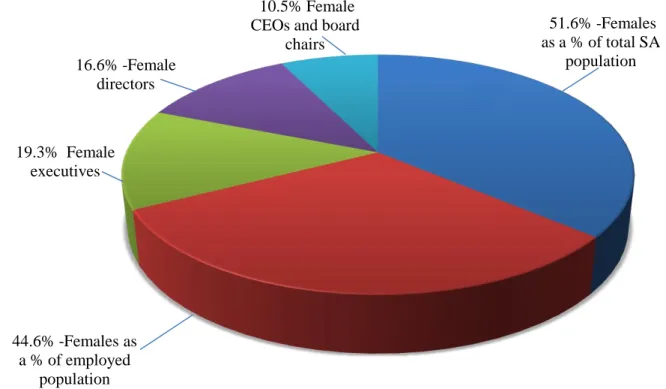
According to the National Labour Force Survey of 2009, 51.6% of women make up the total adult population in SA (Stats SA, 2009). Although a marginal increase of women in leadership positions is being experienced, women are still under represented in top management positions. Statistics from the Business Women‟s‟ Association of South Africa (BWASA) 2010 indicates that from the total adult population, 44.6% females are active labour participants. Only 19.3% and 16.6% constitute executive managers and company directors respectively as shown in Figure 2.1.
Figure 2.1 BWASA 2010 Census statistics
Adapted from: BWASA (2010). Women in leadership census 2010. In partnership with Nedbank and InWEnt [Online] Available at:
www.bwasa.co.za/Census/2010censusresults/tabid/14708/Default.aspx. (Accessed 20 July, 2011)
51.6% -Females as a % of total SA
population
44.6% -Females as a % of employed
population 19.3% Female
executives
16.6% -Female directors
10.5% Female CEOs and board
chairs
34 According to April et al., (2007), the 19.3% female representation at executive level falls way below the 30% parliamentary seats held by women, majority of whom are black. Reasons that have been cited for the increase of black female representation in Government is attributed to their active engagement in the liberation struggle and the affirmative action policies and Employment Equity Legislation that have served to empower the previously disadvantaged (April et al., 2007).
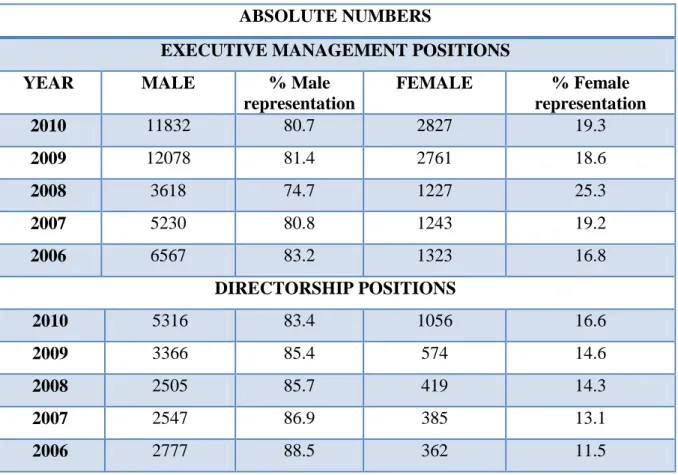
Comparing the female representation at executive management and directorship level to their male counterparts, the disparities come to light as shown in Table 2.1
Table 2.1: BWASA (2010) Management statistics by gender ABSOLUTE NUMBERS
EXECUTIVE MANAGEMENT POSITIONS
YEAR MALE % Male
representation
FEMALE % Female
representation
2010 11832 80.7 2827 19.3
2009 12078 81.4 2761 18.6
2008 3618 74.7 1227 25.3
2007 5230 80.8 1243 19.2
2006 6567 83.2 1323 16.8
DIRECTORSHIP POSITIONS
2010 5316 83.4 1056 16.6
2009 3366 85.4 574 14.6
2008 2505 85.7 419 14.3
2007 2547 86.9 385 13.1
2006 2777 88.5 362 11.5
Adapted from: BWASA (2010). Women in leadership census 2010. In partnership with Nedbank and InWEnt [Online]
Available at: www.bwasa.co.za/Cesus/tabid/9447/Default.aspx.
(Accessed 2 September, 2010)
35 From Table 2.1, the number of executive female managers increased from 16.8% to 19.3%
from 2006 to 2010 respectively. Women holding directorship positions increased marginally from 11.5% to 16.6% from 2006 to 2010 respectively. In comparison their male counterparts held over 80% of both executive and directorship positions (MWIWA 2010; BWASA 2010).
Though female representation is still dire locally, internationally, SA is tops with regard to female board representation in Johannesburg Stock Exchange (JSE) listed companies with a representation of 16.6% when compared to United States of America (USA) Fortune 500 companies with a female representation of 15.2%, Canada‟s FP 500 with a 13.0%
representation and Australia‟s ASX 200 with a 8.3% representation. Additionally, at the executive managerial level, SA‟s female representation is tops at 19.3%, followed by Canada- 16.9%, USA- 13.5% and Australia- 10.7% respectively (BWASA, 2010).
Shean (2010) asserted that despite there being disparities based on female representation in management, an improvement in the socio-economic equality between men and women was evident as per the MasterCard Worldwide Index of Women‟s Advancement (MWIWA) 2010 report. Four gender parity indicators that were used to assess this equality were labour force participation, tertiary education enrolment rate, incidence of management positions and above median income as shown in Table 2.2.
Table 2.2: MWIWA 2010 gender parity indicators
GENDER PARITY INDICATORS
2007 2008 2009 2010
Labour force participation 78.07 75.79 75.45 75.85 Tertiary education enrolment rate 125.87 127.87 129.91 131.98 Incidence of management positions 72.71 65.31 64.27 75.04
Above median income 108.59 104.16 82.22 91.12
MWIWA equality Index 96.31 93.28 87.96 93.50
Adapted from: Master Card Worldwide Index of Women’s Advancement (MWIWA), 2010. [Online]
Available at: www.masterintelligence.com/viewRegionReport.jsp?hid....
(Accessed 2 September, 2010)
36 From Table 2.2, a gender parity score below 100 indicates gender inequality in favour of males while a score above 100 indicates gender inequality in favour of females. A score equal to 100 shows equality between the sexes. According to MWIWA (2010 as cited in Shane, 2010), there was an increase in the tertiary education enrolment rate among women relative to that of men. From 2007 to 2010, the national enrolment rate showed consistent growth increasing by 611 basis points (125.87 to 131.98), approximately 6% from 2007 to 2010 respectively for every 100 men enrolled in institutions of higher learning. Despite an improvement in gender parity, what was critical was that noticeably fewer women than men reported holding top managerial posts (Shean, 2010). The incidence of top management positions though low increased by approximately 11 basis points (64.7 to 75.04), which translates to approximately 0.11% from 2009 to 2010 respectively, a score which according to the index shows gender inequality in favour of men. Above median income increased by 9% from 2009 to 2010. Generally, according to the equality index, SA‟s score increased by almost six basis points (87.96 to 93.5) 0.06% between 2009 and 2010 respectively, overall, signifying an improvement in equality indicators between men and women. The above statistics clearly show that the glass ceiling is a global phenomenon that affects women the world over and is mirrored in their minimal representation in top management.
2.6 Glass ceiling barriers
The existence of legislation and equal opportunity (EE) policies has not done much to eliminate work place barriers since widespread inequality in the work environment is in existence (Jain and Mukherji, 2010). Eagly, Wood and Diekman, (2003 as cited in April, et al., 2007) argued that women‟s access to senior leadership positions is and still remains limited due to the existence of „barriers to entry‟ to their advancement. Evidence from research carried out in the U.S, Europe and Hong Kong support this notion and states that women face career obstacles that their male counterparts do not face (Insch et al., 2008).
According to Oakley (2000), the causes of the lack of women in top/senior management positions can be explained from two perspectives:
Barriers created by behavioural and cultural causes are subjective in nature and therefore internal. Such barriers stem from stereotyping: where the woman adopts
37 stereotypical views of how society views her, tokenism, power preferred leadership styles, and „old boy‟ networks.
Barriers created from corporate practices comprise barriers that are objective in nature hence easier to change. The gender imbalance that results from such barriers emanate from recruitment, training and career development, retention, compensation and promotion practices that favour males over females especially in jobs associated with line positions (Har-Even, 2004). Oakley (2000) termed corporate practice barriers as external barriers since they are artificial and discriminatory in nature. Additional external barriers include lack of access to higher education, lack of role models, mentorship and networks.
2.6.1 Non supportive corporate culture
Corporate culture according to Ross, (2000 as cited in Jain and Mukherji 2010) „acts as the inter-personal glue that holds the organisation together and in turn helps to coordinate employee efforts‟. If biased, corporate cultures can become engraved in organisations, and can at times hinder the advancement of women. According to Oakley (2000), corporate practices that do not support training, career development, compensation equity and promotion are major components that create a glass ceiling for women hindering them from vertical career progression. A 2002 Leaders Edge/Executive Women research survey revealed that unsupportive corporate culture was the number one reason women cited as contributory to their leaving company jobs (Insch et al., 2008).
2.6.1.1 Training and career development
The majority of women holding management positions lack line experience, a prerequisite for reaching the senior management (Oakley, 2000). A US survey that was done by Lublin (1996 as cited in Oakley, 2000) found that more than 60% of the women interviewed held staff support positions in human resources (HR) and public relations. To be a candidate for senior management, managers need line experience in marketing, manufacturing and operations by mid career for them to be included in the pipeline for top management (April et al., 2007).
Placing women in genderised/ support/staff positions like HR, as opposed to critical on track line positions (manufacturing) that contribute to the revenue side of the business results in a
„glass wall‟ which in turn hinders the vertical advancement of women (Mok Kim Man et al.,
38 2009). If women are not career tracked while at lower management levels, their exclusion from top management becomes even more eminent (Oakley, 2000). Globally, men hold 93.2
% of top line positions which contribute to the revenue side of the business with women and minorities holding the remaining 6.8% (April, et al., 2007).
According to Mondy et al., (2002 as cited in Mok Kim Man et al., 2009), training and development in organisations serve to improve employee competency levels which in turn later becomes the organisation‟s intellectual capital and source of competitive advantage.
2.6.1.2 Old boy networks
The „old boy networks‟ are informal male social systems that stretch across and within organisations excluding less powerful males and all women from membership (Oakley, 2000). Old boy networks‟ according to Taylor and Waggoner, (2008:85) are informal associations formed over business lunches or deals made out on the golf course. Corporate practices that support „old boy networks‟ are likely to exclude women from top positions who in turn do not benefit from the exposure that such networks offer (Ryan, et al., 2007). Women who indeed reach the top are perceived as threats by their male counterparts since they advocate for change from the status quo: „inclusion into old boy networks‟ (Oakley, 2000).
According to similarity attraction theory, top level corporate culture is dominated by older, white males who tend to promote candidates who look, think and act like them, leaving the woman to have to fight twice as hard for career advancement opportunities against the prejudicial attitudes that this male culture supports (Insch et al., 2008). Results of a study done by Ryan et al., (2007) found that „old boy networks‟ were real where selections for top jobs were based on who- knew- who. „For women, belonging to an „out group‟ is a negative factor for promotions especially in a case where the supervisor too belongs to a similar „old boy network‟ as the subordinate. Women consequently lose out on the opportunities that the networks offer such as the exchange of inside information, planning platform for career strategies like knowledge of new assignments/promotions, professional and personal support, visibility and consequently upward mobility (Har- Even, 2004). Exclusion of women from
„old boy networks‟ is achieved through the process of competency testing where one is required to prove herself over and over again (Oakley, 2000). Responses from male executives in a study done by Rosener (1995 as cited in Oakley 2000), in North American