Mathematical Literacy, Mathematics and Mathematical Sciences
By
Mumtaz Begum Khan (202523846)
Supervisor Dr S. Bansilal
Submitted in partial fulfilment of the academic requirements for the degree of
Master of Education in the
School of Science, Mathematics, and Technology Education Faculty of Education
University of KwaZulu-Natal
December 2008
ABSTRACT
This was a qualitative study carried out with one Grade 9 MMLMS class. The purpose of the study was to explore the experiences of the learners with respect to the CTA that they completed for their summative assessment. The methods of data collection were classroom observation, document analysis and interviews. Data was gathered from 4 classroom observations, a document analysis of the 2005 CTA instrument, the detailed responses of 3 learners to the CTA as well as a focus group interview with the 3 learners. The document analysis was done against a framework of moderating criteria identified by the moderating board of the eTA. The 4 lessons were video taped while the researcher was a participant observer in the classroom. The transcription of the tapes, the field notes and observation schedules were analysed with the intention of providing answers to the main research question. Similarly the interviews were video taped, transcribed and then analysed to provide further insight into the research question. Finally the learners' responses to certain items were scrutinized for further details. The findings revealed that the task design, which relied on grounding each task within one context, was problematic for the learners. The learners struggled with the language used in the tasks and often could not pick out crucial information from all the details associated with the contextualization. The language of the tasks was set at a high level of readability, higher than the average Grade 9 level.
Furthermore, the teacher's interventions often seemed to hinder rather than facilitate their understanding of the mathematics. The results of the study have implications for teachers (to be careful of how they mediate the tasks), curriculum developers (to take note of the criticisms levelled at assessment tasks set in real life contexts) and mathematics educators (to voice their concerns about national assessment instruments which may themselves not be valid indicators of what learners can and cannot do).
PREFACE
The work described in this thesis was carried out in the School of Science, Mathematics and Technology Education, University of KwaZulu-Natal, fromJanuary 2005 to December 2008 under the supervision of Dr Sarah Bansilal (Supervisor).
This study represents original work by the author and has not otherwise been submitted in any form for any degree or diploma to any tertiary institution. Where use has been made of the work of others, it is duly acknowledged in the text.
December 2008
TABLE OF CONTENTS
ABSTRACT PREFACE
TABLE OF CONTENTS LIST OF TABLES LIST OF FIGURES ACKNOWLEDGEMENT DEDICATION
CHAPTER I: INTRODUCTION
1.1 Background of the study 1.2 Rationale
1.3 A Preview of the chapters that follow CHAPTER 2: LITERATURE REVIEW
2.1 Literature on 'Real-life' context
2.2 A review of relevant South African curriculum 2.3 Theoretical Framework
2.4 Chapter summary
CHAPTER 3: RESEARCH METHODOLY AND DESIGN OF STUDY 3. 1 Purpose of the Research
3.2 Research Approach 3.3 Context of the study
3.4 Ethical issues of the study 3.5 Design of the study
3.6 Data collection methods and instruments 3. 7 Triangulation and trustworthiness 3.8 Analysis of data
3.9 Limitations of the study 3.10 Chapter summary
11 III
IV VI VII
IX X
1 2
6
7 7 15 22 26 27 27 28 31 32 34 35
40 42 43 44
IN MATHEMATICAL LITERACY, MATHEMATICS AND MATHEMATICAL SCIENCES 45 4.1 Analysis of selected activities
4.2 A Critical Overview of the 2005 CTA 4.3 Chapter summary
CHAPTER 5: ANALYSIS
5.1 Presentation of individual cases
5.2 Presentation of classroom observations 5.3 Chapter summary
CHAPTER 6: FINDINGS
6.1 Answers to Research Question 1 6.2 Answers to Research Question 2 6.3 Answers to Research Question 3 6.4 Merits of the study
6.5 Implications/Recommendations 6.6 Conclusion
6.7 Summary REFERENCES APPENDICES
A Common Tasks for Assessment for Grade 9 in Mathematical Literacy, Mathematics and Mathematical Sciences for 2005 for Task 1 and Task 2 B Memorandum for 2005 CTA in MLMMS for Task 1 and Task 2
45 52 63
64 64
94 106 107
107 III 113 120 122 123 124 125 131
LIST OF TABLES·
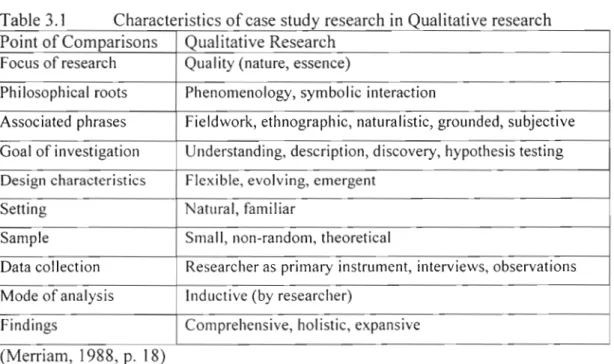
Table 3.1 Characteristics of case study in Qualitative research 30
Table 3.2 Six phases of the design of the study 34
Table 3.3 Strategies with which to establish trust'vvorthiness in this study 41 Table 4.1 F1esch Reading Ease score to Readability level 57 Table 4.2 Summary of statistics provided by the computer 58
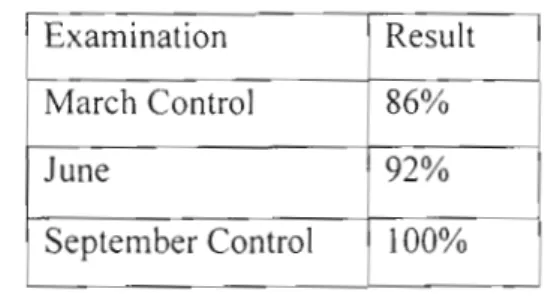
Table 5.1 Thabani's Examination Results 76
Table 5.2 Cleo's Examination Results 82
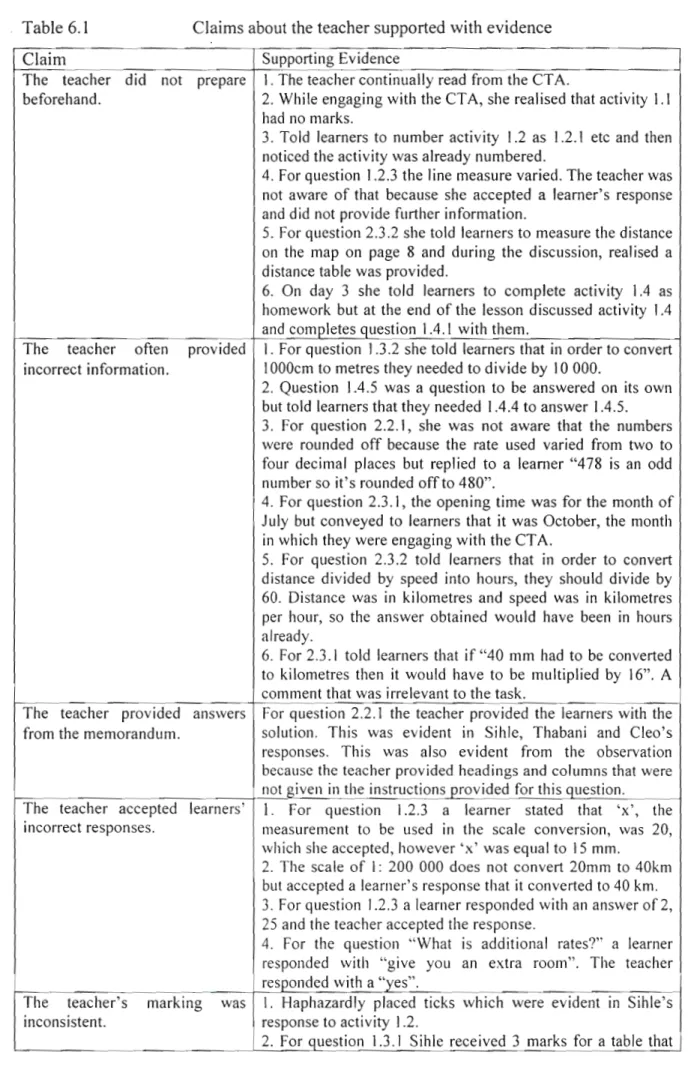
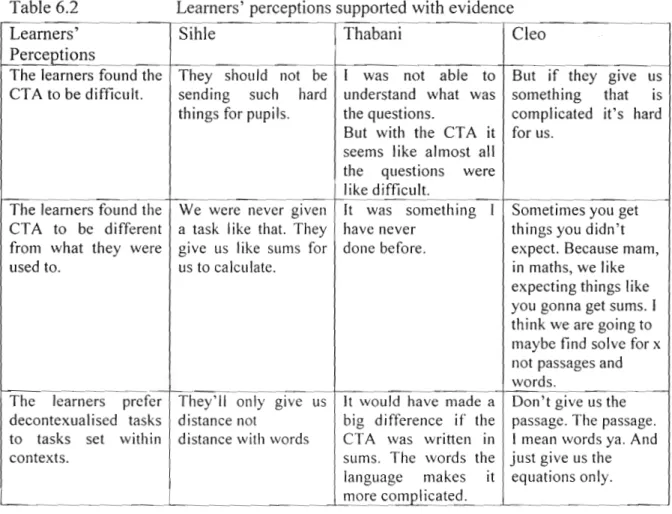
Table 6.1 Claims about the teacher suppolied with evidence 108 Table 6.2 Learners perceptions supported with evidence 111
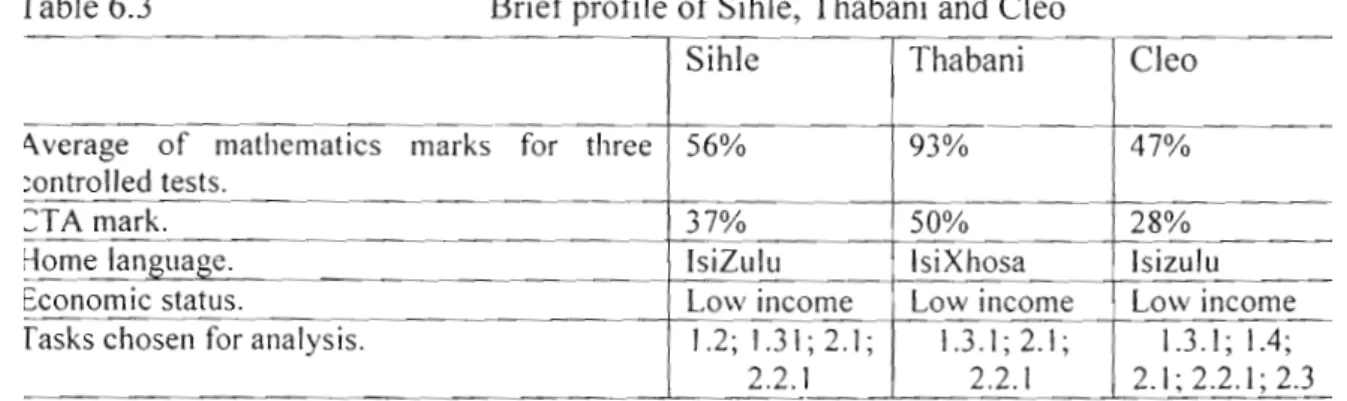
Table 6.3 Brief profile of Sihle, Thabani and Cleo 113
Figure 5.1 Activity 1.2 65
Figure 5.2 Memorandum for Activity 1.2 66
Figure 5.3 Sihle's response to Activity 1.2 66
Figure 5.4 Question 1.3.1 67
Figure 5.5 Memorandum for Question 1.3.1 67
Figure 5.6 S ih le's IsIresponse to Question 1.3. I 68
Figure 5.7 Sihle's 2nd response to Question 1.3.1 68
Figure 5.8 Activity 2.1 69
Figure 5.9 Table 3 to be used for Activity 2. I 70
Figure 5.10 Memorandum for Activity 2.1 70
Figure 5.11 Sihle's response to Activity 2.1 70
Figure 5.12 Question 2.2.1 73
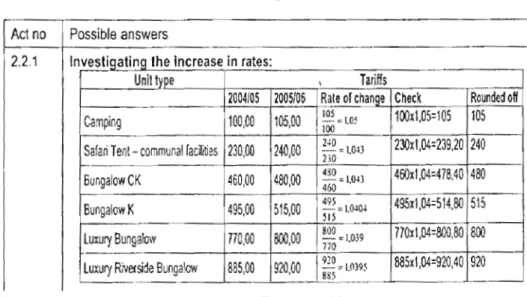
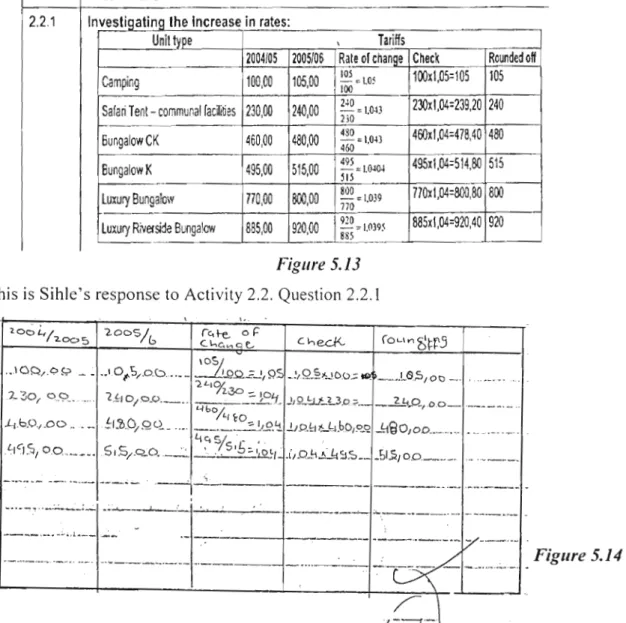
Figure 5.13 Memorandum for Question 2.2.1 73
Figure 5.14 Sihle's response to Question 2.2.1 73
Figure 5.15 Thabani's response to Question 1.3.1 77
Figure 5.16 Thabani's response to Activity 2.1 78
Figure 5.17 Thabani's response to Question 2.2. I 80
Figure 5.18 Cleo's response to Question 1.3.1 82
Figure 5.19 Activity 1.4 84
Figure 5.20 Memorandum for Activity lA 84
Figure 5.21 Cleo's response to Activity lA 85
Figure 5.22 Cleo's response to Activity 2.1 87
Figure 5.23 Cleo's response to Question 2.2.1 88
Figure 5.24 Activity 2.3 89
Figure 5.25 Memorandum for Activity 2.3 89
Figure 5.26 Cleo's response to Activity 2.3 90
Figure 5.27 A learner's response to Activity 2.1 91
With the deepest gratitude I wish to thank every person whom have assisted me and without whom I would not have been able to complete this dissertation.
Thanks to my supervisor Dr Sarah Bansilal for her constant supervision and support from the beginning of this research study to the final presentation of this thesis. I am grateful to Sarah for walking with me through this journey and inspiring me and generously sharing her wisdom with me and helping me move from darkness into light.
I am grateful to my colleague and her learners whose experiences with the eTA helped shape this thesis.
Thanks to my school Principal, Governing Body, Department of Education and parents for granting me permission to conduct this study.
Thanks to the University of KwaZulu-Natal for a bursary, The NRF for funding from The Thuthuka Project (Administered by Dr S. Hobden - Reference No:
GUN2063963), and The Thuthuka Project (Administered by Dr S. Bansilal - Reference No: TTK2007051900)
Thanks to my precIOUS friend Pam Pillay for her constant love, support and encouragement during trying times.
I am grateful to my mother whose love and support knows no limits, and in memory of my father whose love continues to shine through my life, and the rest of my family for their constant support and encouragement to complete my studies.
I am grateful to God for affording me the opportunity to study and giving me the strength and guidance to complete my studies.
Dedication
To my parents, Ahmed Basheer Khan and Fathima Bibi Khan
My parents gave me the greatest gift any parent could give their child, they believed mme.
CHAPTER 1 INTRODUCTION
In this chapter I briefly discuss the background, rationale and purpose of the study.
1.1 BACKGROUND OF THE STUDY
Since 1994 South Africa has experienced many changes. One of the most significant changes has been in education. The first outcomes-based curriculum known as Curriculum 2005 (C2005) was introduced into schools in 1998. Outcomes-based education is intended to allow learners to construct knowledge and develop skills and values in various ways.
According to the Department of Education,
Outcomes-based education, when practised well, allows all learners, irrespective of their background, abilities or personality, the space for:
• Reasoning and critical thinking
• Problem solving
• Retrieval, understanding and use of information
• Relating learning to existing knowledge and experience
• Thoughtful reflection on experience. (DoE, 2006, p. 26)
Furthermore "the curriculum seeks to create a lifelong learner who is confident and independent, literate, numerate, multi-skilled, compassionate, with a respect for the environment and the ability to participate in society as a critical and active citizen" (DoE, 2002, p. 3).
Parts of curriculum reform also saw the initiation of a new assessment process. Assessment in grade 9 consists of two components, namely an internal component and an external component. The internal assessment is school based called Continuous Assessment (CASS) and the external component is the Common Tasks for Assessment (CTA).
According to the Interim Policy Framework for the Assessment and Support of Learners in Grade 9 (DoE, 2003), the CTA'S are designed, developed and set by the Department of Education and must be administered at least once a year, during the fourth quarter. All learners in grade 9 must undertake the CTA'S.
According to the Assessment Guidelines for Inclusion (DoE, 2000), the CTA should not be seen separate from CASS and should actually build on and reflect the CASS. Various assessment opportunities should exist to accommodate learner diversity. The department of education strongly advocates that educators find multiple ways of exposing learners to learning opportunities that will help them demonstrate their full potential of knowledge, skills, values and attitudes (DoE, 2002). It also states that assessment: should involve learners actively using relevant knowledge in real-life contexts, should not be culturally biased and, should take into consideration learners who are limited in the proficiency of the Language of Teaching and Learning as well as those learners who are physically, emotionally and intellectually challenged.
The importance of the proficiency in the language of teaching and learning is emphasised by the department of education. Nowhere is this more evident as in the case of the Common Tasks for Assessment, which because of its design using 'real-life' contexts, has a heavy reliance on language. Von Glasersfeld (1989) stated, "language users must individually construct the meaning of words, phrases, sentences and texts" (p. 132).
Because learners are exposed to the language of mathematics and this mathematics is embedded in a context, I believe that learners' responses to the CTA will be influenced by their own perceptions and outlook.
1.2 RATIONALE
My 17 years of experience as a Mathematics educator has taught me that, for many learners whose home language is not English, the words used in Mathematics which appear within contexts pose particular problems. I have also noticed that textbook writers are often mindful with their use of certain words. For instance, this statement appeared in Mathematics textbook, "Discuss what it means to find the average mean" (Pretorius, Potgieter & Ladewig, 2005, p. 48). A further textbook example from Statistics is the use of the term 'class interval' within the tally table. My learners looked at the word 'class' and interpreted the word to mean their class as in class 9F. Some of them enquired if it meant many different classes.
direct proportion. The question posed to learners was 'A cricket does 10 chirps in one minute. If the rate of chirps were constant then how many chirps would there be in two minutes?' I expected learners to use this information to draw up a table followed by a linear graph. However I discovered that the only 'cricket' my learners were familiar with was the game of cricket. They were not aware that a cricket is a type of insect that makes a sound, which is referred to as a 'chirp'. As the cricket was something that my learners were not familiar with and could not relate to, the whole exercise of plotting a graph with the number of chirps had to be abandoned.
Over the years such incidents prompted me to start reading about issues around the use of language in mathematics especially when the mathematics is set within a context. I was heartened to find many writers with similar concerns. Schlebusch (2002) conducted a study with Grade 10 learners in an Economics classroom. The focus of the study was Limited English Proficiency (LEP) and the language of learning in an Economics classroom. He argues that in South Africa, an increasing amount of learners are taught through the medium of English and the difficulty arose when he tried to explain economic concepts and terminology in English to learners whose home language was not English. From his study he concluded that the language deficiency of many learners is often hidden in everyday conversation because these learners have sufficient knowledge of pronunciation, basic vocabulary and grammar, which allows learners to participate satisfactorily in undemanding everyday conversations. However a more refined command of language is required in order to achieve academic success.
Academic language proficiency allows learners to grasp concepts, establish relationships between concepts, and analyse, synthesize, classify, store and retrieve information. Boaler (2003) found that there was a total mismatch between the students' achievements in mathematics and their performance in the national testing, which was based on 'real-life' contexts. In addition Boaler (2003) established that the learners experienced problems with the standardised tests because the test questions have three distinguishing characteristics.
Firstly, the questions were set in a context that was confusing to linguistic minority and low-income students. Secondly, the solutions to the questions are closed because they do
not allow for multidimensional answers. Thirdly, the test uses long and confusing sentences.
Bansilal (2006) in her study on the 2003 CTA's for Mathematical Literacy, Mathematics and Mathematical Sciences identified poor language skills that acted as a barrier to learning. This barrier to learning emerged as a two-fold problem. The learners found it difficult to access the problem because of poor language skills and the problem was that, because of poor language skills, learners were unable to understand the instructions. As Boaler (2003) had identified that the standardised tests had long and confusing sentences, so too did Bansilal with the 2003 CTA. In her study, Bansilal identified a third obstacle to the learners' success in the 2003 CTA. The contextualization of the task contained many explanations and descriptions: "learners when faced with the mass of language sometimes could not distinguish between sentences which were part of the description or part of the instruction" (p.15). It is evident that language does play a significant role in external assessments that are based on 'real-life' context, and to a certain extent, disadvantages learners if they don't have a good command of the language that the assessment task is written in.
According to Cooper and Dunne (2004), "the national testing of children's mathematics mainly via 'realistically' contextualised items might have a variety of unintended consequences, especially for the validity of the assessment of working-class children's knowledge and understanding" (p.69). This is particularly relevant to South Africa.
Although there isn't much emphasis on class differences, South Africa does have people from diverse backgrounds and also has 11 official languages. Thus educators are not only faced with learners who speak another language other than English, they are also faced with multi cultural classrooms. The CTA is nationally set and is administered to learners who have different cultures as well as different home languages. As Cooper and Dunne caution, such an assessment might have a variety of unintended consequences especially in the validity of the assessment.
According to Boaler (1993), research findings suggest that students perform differently when faced with 'abstract' and 'in context' calculations aimed to offer the same mathematical demand. Boaler found that learners performed poorly in standardised testing
found that learners who usually performed well in Mathematics performed poorly in tests within context. This suggests that assumptions regarding enhanced understanding and transfer as a result of learning in context may be over- simplistic.
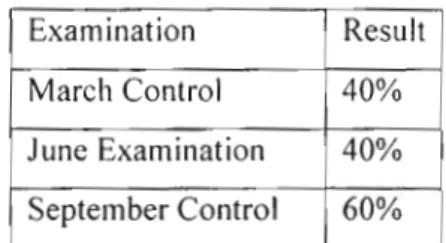
I found that the class in my study, their mathematics results dropped drastically when the CTA marks were considered. The class average for the continuous assessment (CASS) section was 51 %. The class average of the CTA marks was 39%. A learner, Thabani, a participant in this study, had an average CASS mark of 93% but his mark for the CTA was 52%. That is a drop of 41 %. Another example is Cleo, a second participant in this study, who's average mark was 48% compared to the 28% she obtained in the CTA. The Department of Education (2003) stated, "the Common Tasks for Assessment will also serve as a validation for school-based assessment" (p. 8). However if the CTA results were used as a basis to judge the validity of CASS marks, this would imply that the CASS marks were not good indicators of learners' performance in mathematics. However my impression is that it is actually the other way around.
It was my experiences in the classroom, and encompassing what has been written by Boaler (2003), Cooper and Dunne (2004), Schlebusch (2002) and Bansilal (2006), that prompted me to research whether the CTA for MLMMS, as a national assessment instrument that is language based and set within a context, is a good indicator of my learners knowledge of mathematics. Accordingly, in this study I set out to examine how three participants experienced the CTA. I examined the CTA assessment instrument, observed four CTA lessons, examined the written responses of the learners to the CTA and I also interviewed them.
1.3 A PREVIEW OF THE CHAPTERS THAT FOLLOW
In Chapter Two, I summarise the significant literature that was reviewed. In Chapter Three, the methodological approach to this study is discussed. Chapter Four is an analysis of two tasks of the 2005 Common Tasks for Assessment for Mathematical Literacy, Mathematics and Mathematical Sciences. In order to facilitate reading, aspects of the Common Tasks for Assessment have been scanned into Chapter Four. In Chapter Five questions from the CTA, answers to these questions and learner responses were scanned so as to make the study easily readable. Chapter Five encompasses an analysis of data gathered. This formed a basis for answers to my research questions, a discussion on the merits of the study and recommendations, which are discussed in Chapter Six.
LITERATURE REVIEW
This chapter has two parts. The first part is organised according to the following sub sections. Subsection one reviews literature on mathematics and real-life context.
Subsection two reviews theC200S Assessment guidelines (2002), the Draft Framework for the Development of CTA's (2002) and a report entitled Enhancing the Quality of Assessment through Common Tasks for Assessment by Poliah (2003) for Umalusi (Council for Quality Assurance in General and Further Education and Training in South Africa).
The second part of the chapter centres on a discussion on the theoretical framework that underpins this study.
2.1 LITERATURE ON 'REAL-LIFE' CONTEXT
In keeping with the visions of the Department of Education (DoE, 2002), one of the aims is that Mathematical knowledge, skills and values will enable the learner to apply Mathematics in a variety of contexts.
According to William (1997), contexts used for mathematics teaching are classified into three kinds:
• Contexts, which bear little or no relation to the mathematics being taught, and which serve primarily to legitimise the subject matter.
• Contexts having an inherent structure with elements that can be mapped onto the mathematical structures being taught.
• Contexts in which the primary aim is the resolution of a problem in which no particular mathematics need necessarily be used. (p. 1)
William (1997) draws on the notion of a Macguffin to illustrate the use of contexts in Mathematics. A Macguffin is a metaphor used by Alfred Hitchcock to describe a plot device used to motivate action in a film and to which little attention is paid. William states that relevance of contexts is a Macguffin. Sometimes contexts bear little or no relation to the mathematics being taught but somehow engaging learners in such activities convinces them that they are of relevance to the learners and linked to the real world. According to Cooper and Dunne (2004), 'real-life' contexts are characterised by the extent to which the
learners share contexts. The purpose of using 'real-life' contexts in mathematics is to make mathematical tasks more 'relevant to learners.
At this point the concept of 'real-life' 'esoteric' mathematics test items needs to be clarified. The following examples from Cooper and Dunne (2004), describe a 'real-life' item and an 'esoteric' item.
This is an example of a'real - life' test item.
Find all the possible ways boys and girls can be paired off from the following:
Boys Girls
David Ann
This is an example of an esoteric example.
Find the Cartesian product of the Sets of {a; b; c} and {d; e;f}
Rashid Rob
Katy Gita
Both these examples require the same process yet, by being presented differently, they appear to be different.
A large body of literature has been amassed in recent years, highlighting both the benefits and limitations of using the everyday in mathematics. Moschovich (2002b) states that research has indicated that learners need to be engaged in real- world mathematics and not the type of mathematics that is practiced in isolation of its mathematical applications.
Moschovich offers a definition of the words 'real world'. "Real world, when used to describe curriculum, assessments, or mathematical activity, can refer to activities in which students might engage during the course of their present daily lives or to future activities in which students might engage as adults at work" (p. 93). I consider this to be a suitable description for 'real-life' context.
Moschkovich (2002a) proposes that mathematical practices must change so as to close the gap between learning mathematics in and out of school by engaging learners in real-world mathematics rather than mathematics in isolation from its applications. She labels the different mathematical practices, as everyday, academic, professional, workplace and school mathematics. School mathematics refers to the practices of learners and teachers in school, while everyday mathematics refers to the mathematical practices that adults or children engage in. Everyday mathematical practices involve everyday activities such as
learners' activities from outside school must be brought into the classroom. These activities would then parallel 'workplace or non school practices' in that students would use mathematical tools to solve real problems, similar to those that children or adults might face outside school. She states that although schools aim to prepare learners for a combination of everyday, workplace and academic mathematical practices, traditional school mathematics is restricting and provides access to only mathematics experienced in school.
Arcarvi's (2002) View is that everyday mathematics depends on the context and the practice from which mathematics emerges. He proposes that by closely observing learners activities, experiences, interests and daily endeavours, it may be possible to capture everyday situations which can be used 'for establishing bridges to academic mathematics'.
He strongly opposes a view held by those who advocate word problems and claim that because of word problems, everyday mathematics and academic mathematics are always integrated. He says that "word problems were merely artificial disguises or excuses for applying a certain mathematical technique" (p. 21).
Arcarvi (2002) suggests that in order to bridge everyday mathematics with academic mathematics, two practices Mathematization and Contextualization need to be considered.
Mathematization moves from the everyday to academic, while Contextualization makes sense of a problem that is academically presented and a number of ways that can be used to expand one understands of the mathematics involved. Arcarvi states that these two practices "might be the tool to relate and re-engage us in meaningful contexts, not only for the sake of continuously developing and nurturing our common sense but also as a possible vehicle for enriching academic mathematics itself p. 23).
Masingila (2002) strongly advocates that learner's in-school practice of learning mathematics can and should be connected to their out of school practice and learning of mathematics. According to Masingila the aim of classroom instruction should be to prepare the learner to deal with real-world and non-real world problems. Educators should help learners acquire the skills that will be useful to solve problems that people encounter in life. However mathematics sometimes can be specific to a particular context. A learner
may be able to extract the mathematics required from one context and may not be able to transfer mathematical skills to another context. Masingila suggests that to alleviate this problem, learners need to generalise concepts and procedures. When a learner can generalise concepts and procedures it will be easier to work with a variety of contexts. This has implications for classroom practice. Masingila proposes that educators need to draw from learners out of school mathematics practice because "it provides contexts in which students can make connections and making connections is essential in constructing mathematical knowledge" (p. 31).
Civil (2002) identifies four characteristics of mathematics learning that occur outside school mathematics. Civil considers these four characteristics to be extremely important because she describes them as 'salient' characteristics. She states that learning that takes place in a context out of school occurs mainly by apprenticeship, involves work on contextualised problems, gives control to the person working on the task and lastly, often involves mathematics that is hidden. The value of 'real-life' context as opposed to school mathematics is clear when Civil states that a number of documented studies indicate that people perform 'error-free' mathematics in situations that are valuable to these people while the very same people performed less well in paper and pencil tests that had tasks designed to be similar to their everyday situation. According to Civil the only disadvantage to 'real-life' context is that the mathematics is bound to a particular context and cannot be generalised.
In addition to these authors, Brenner (2002) states that there are many good reasons for including everyday mathematics in the classroom. Bringing in the everyday into the mathematics classroom gives teachers opportunity to experience students' multi faceted approach and multi dimensional answers. Nonetheless she believes that more research is needed on "how the inclusion of everyday mathematics affects student learning and classroom functioning" (p. 63).
Is everyday mathematics really relevant to mathematics education? According to Carraher and Schliemann (2002) the answer to this question is, yes. Nevertheless they go on to point out that it is not directly relevant. Nonetheless, the article further says that mathematics can and must engage students in both realistic and unrealistic situations. Therefore the
methods of solving problems which give teachers an opportunity to understand how learners think and to appreciate learners who try very hard to 'bridge the gap' to advance their mathematical knowledge. These writers discuss the advantages of 'real-life' contexts and it is believed that these contexts enhance mathematical learning by linking school mathematics with real world problems. They also further add that mathematics must draw from the 'real' world to enhance mathematical practices and to draw from learners' everyday mathematics. By bridging these two practices, learners will be better prepared to apply mathematical knowledge to the real world and be prepared to continue with mathematics at higher educational institutes.
Moschkovich (2002a) on the other hand, cautions that "these everyday activities can still be described as limited, inflexible, and elementary when compared to the powerful and generalizable methods of academic mathematics" (p. 8). She also suggests that if the everyday is used during classroom instruction and excludes academic mathematics, then this can have huge implications for those learners who want to pursue higher education.
Arcarvi (2002) stated that one of the premIses In support of bridging everyday and academic mathematical practices is to build on that which students are familiar with.
However he warns by stating that familiarity with a context does not necessarily make life easier. If the context is familiar there is a tendency to believe that an everyday context will give students more leverage in making sense and learning than when confronted with decontextualised abstract mathematical problems. However he says that some everyday mathematical practices "may consist of a mindless application of a routine invented by others and hence may not be very promising in educational terms" (Arcarvi, 2002, p. 27).
Choosing a relevant context and expecting genuine mathematics to emerge from the context is not as straightforward as it may seem. Arcarvi says, "it may be that a mathematical and pedagogical eye is required to perceive and use the potential of everyday situations and that some kind of structuring and guidance are needed so as not to leave students at a loss" (p. 27).
Consistent with the theme of context, Boaler (1994) states those contexts are used in the belief that linking school mathematics with real world problems enhances mathematical
learning. On the contrary, research findings have indicated that learners are not able to transfer mathematics to 'either 'abstract' or 'real world' calculations that require some mathematical demand. Boaler (1998) also points out that research suggests that learners do not perceive a link between mathematics learned in school and problems in the 'real world' just because school mathematics examples were presented in context.
Another important point highlighted by Boaler (1994) is that learners are not able to perceive connections between mathematical situations presented in different contexts.
Another issue raised by Boaler (1999) was that sometimes 'real-life' contexts are more suited to the adults who teach it than learners themselves. Even though the article focuses on using 'real' contexts in the mathematics classroom and how learners perceive these 'real' contexts, the major problem with 'real' contexts is that learners are required to focus on the mathematics and ignore the context.
Cooper (2001) also questions the role of contexts and states "often children are not expected to treat these problems as real. Instead they either have to ignore real world considerations, or introduce just a very well-judged small dose" (p.256). A suggestion is made that if a 'real' context is to be used then it must only be used if learners have to take into consideration the context of the problem also. Presently learners are given problems with 'real' world context and are forced to ignore the context and focus on the mathematics. Solutions to such problems are often close-ended but the context creates the impression that solutions are open-ended.
Prestage and Perks (2001) state that most of the time, in problems set in context, the context may be 'real' but "it is hardly relevant to anyone other than the question setter" (p.
107). Problems that are set in context usually pose the biggest challenges to educators. It becomes the responsibility of educators to unpack the problem and to help learners answer mathematical questions regardless of the context. For that reason they state that most of the time educators advise learners to ignore the context and look for the school mathematics.
Thus what is the purpose of posing problems in context when learners are advised to ignore the context? Another interesting point Prestage and Perks raise is that learners realise that "lots of school mathematics problems are set in ridiculous contexts that are best ignored" (p.l 07).
mathematics classroom, Brenner (2002) cautions that problems may arise. In her study she used four teachers to carry out a study using a task designed as 'the pizza unit'. Not all the aspects of the 'pizza' problem were realistic or based on everyday life. The conclusions of her findings were that it was not only problematic and challenging trying to incorporate the everyday mathematics into the mathematics curriculum, but the attempt to connect everyday and school mathematics was limited. Murray (2003) reiterates this point by saying that 'so-called' 'real-life' contexts are not necessarily accessible to learners. She further goes on to say that, our 'real life' problems are in any case not really real, but rather 'pseudo-real', since even fairly realistic contexts may create barriers to learners' sense making. To even further emphasise this point, Sullivan, Zevenbergen and Mousley (2003), state that the suitability of contexts is complex and multidimensional. The ways task contexts are presented have potential to alienate some groups of students.
AlIen (1988) argues that there is a school of thought which reasons that if school mathematics is applied in a variety of problem solving situations, then two good things will happen, namely, "the student will somehow learn the mathematics needed to solve the problem" and "seeing that mathematics is useful, he will be motivated to learn more mathematics"(p. 2). AlIen argues that if this approach to mathematics is useful, it does not imply that it is valuable. By over emphasizing the utility of problem solving, it is done at the expense of "intrinsic values" of school mathematics, which "would serve the student better in the long run" (p. 2). This is a view that Moschovich (2002a) also shares, when she states that if everyday mathematics is the only 'type' used during classroom instruction then this can have huge implications for those learners who want to pursue higher education.
Taylor and Vinjevold (1999) commented that incorporating the everyday in mathematics may derail mathematics goals and should be treated 'judicially'. Subsequently Taylor (2000) stated, "the everyday should not be fore grounded to the extent that it obscures the formal knowledge of schooling" (p.8). Hence Sethole (2004) advocated that mathematics and the everyday are two different discourses and positioning them in an "open relationship" may result in the dominance of one discourse over the other.
The idea that mathematics education can be improved by transporting everyday activities directly into the classroom is simplistic (Boaler, 1993). While it is easy to transport the everyday mathematics into the classroom, it is not as straightforward as it is made out to seem. Cooper and Dunne (2004) caution that test items when placed within realistic contexts might have differential consequences. On the other children with different cultural backgrounds might read the tasks that are embedded in 'practical' or 'real-life' contexts differently. Carraher and Schliemann (2002) say that it is an over simplistic view that everyday activities can easily be transported to the mathematics classroom. Classroom situations are contrived to allow learners to experience everyday activities. However this starts to pose a problem when the everyday activities cannot be varied enough for further mathematical inquiry.
In her article, Boaler (2003) considers the inequities that are created by standardized tests.
The article focuses on a low-income school in which the learners made incredible achievements but however were labelled as 'under performing'. The judgement of 'under performance' was based on the results of the standardised tests, which were based on 'real- life' contexts. Boaler argues that the standardized tests and similar tests throughout the United States "stack the decks against language learners, and students from minority ethnic and cultural groups and low-income homes" (p. 502).
Myburgh, Oersen, Poggenpoel and Van Rensburg (2004) comment that due to political changes in South Africa which brought about changes in the country's educational system, it is becoming more evident to find learners from different cultural and language backgrounds in the same classroom. Learners also find themselves in classes where the language of instruction is different from their mother tongue. This situation is similar to the one Boaler (2003) discusses and states that "stacks the decks against language learners". In South Africa, as Myburgh et al. have pointed out, learners are in classrooms where the language of instruction is different from their mother tongue.
Cooper and Dunne (2004) also state that their research was partly motivated by a concern that the
National testing of children's mathematics mainly via 'realistically' contextualised items might have a variety of unintended consequences, especially for the validity of the assessment of working-class children's knowledge and understanding. Children are often required by
solution of their everyday knowledge and experience. (p. 69)
Both Boaler (2003) and Cooper and Dunne (2004) have focused on common testing programmes and from these articles it is clear that some learners are disadvantaged because the testing programme is based on 'real-life' context. Sullivan et al. (2003) argues that before using contexts, its mathematical suitability, interest and relevance to students, potential motivational impact, and the possibility of negative effects or tendency to exclude some students, need to be considered.
The common thread in these studies is the position, which suggests that the boundary between mathematics and the everyday is significant although crossing over cannot be done easily in the learning of mathematics.
2.2 A REVIEW OF RELEVANT SOUTH AFRICAN CURRICULUM
The South African education system has a legacy of apartheid education. One of the main reasons for changes in education was to, "move South African schools away from a fragmented, racially defined and ideologically biased curriculum that entrenched inequality', and to 'heal the divisions of the past and establish a society based on democratic values, social justice and fundamental human rights" (DoE, 2003, p. 5).
The C2005 Mathematics policy document states that,
Mathematical knowledge; skills and values will enable the learner to:
• Display critical and insightful reasoning and interpretative and communication skills when dealing with mathematical and contextualised problems;
• Apply Mathematics in a variety of contexts. (DoE, 2002, p. 5)
The Mathematics Teacher's Guide for the Development of Learning Programmes (2003) affirms that
For the most part Mathematical concepts are abstract. The use of concrete objects and apparatus in the early years - indeed in all years - can contribute to the development of understanding and must therefore be encouraged. The use of contexts for learning activities, which is contexts relevant to the lives of the learners can also contribute to understanding and is similarly encouraged. However, it is important that the teacher also recognises that learners eventually need to develop understanding in the absence of concrete objects and contexts. (p.
23) (Italics are mine)
The Department of Education is firm in its view on Mathematics and context. The inference from the above statement about context is that it 'can' contribute to the understanding of Mathematics. But then it eventually states that learners need to develop an understanding of Mathematics in the absence of contexts. What is the role of context in Mathematics? What is relevant context?
The focus of this research is the external component of assessment, which is the nationally set Common task for Assessment (CTA) for Mathematical Literacy, Mathematics and Mathematical Sciences (MLMMS).
Mathematics in the new South African Curriculum, (C2005), is described as
Mathematics has its own specialised language that uses symbols and notations for describing numerical, geometric and graphical relations. Mathematical ideas and concepts build on one another to create a coherent whole.
While sound mathematical development is very important, this Learning Area Statement recognises that access to Mathematics is a human right in itself, and it is not value or culture- free. In teaching Mathematics, try to incorporate contexts that can build awareness of human rights, and social, economic and environmental issues relevant and appropriate to the learners' realities. (DoE, 2001, p. 16)
The first paragraph defines mathematics while the second paragraph clearly indicates the teaching approach to mathematics. It emphasises an approach to mathematics teaching, which is compatible with a 'realistic' approach.
According to the Assessment Policy (DoE, 1998), 'assessment is the process of identifying, gathering and interpreting information about a learner's achievement, as measured against nationally agreed outcomes for a particular phase of learning' (p. 3).
Assessment in grade 9 consists of two components, an internal component and an external component. The internal assessment is called Continuous Assessment (CASS) and each school designs its own internal assessment. The external part of assessment is the Common Tasks for Assessment (CTA).
According to the Curriculum 2005 Assessment guidelines, the internal and external components "need to be structured in such a way that it provides equal opportunities for all learners to give a true reflection of their actual abilities" (DoE, 2002, p. 4). This document advocates that assessment should be based on the following four principles: Design Down, Clarity of Focus, High Expectations and Expanded Opportunities.
any teaching and learning activities.
Clarity of focus - educators must ensure learners are clear about the criteria that will be used for assessment and learners must be sure what they need to demonstrate for that particular assessment.
High expectations - Emphasis should be placed on learners progressing and experiencing success. (DoE, 2002, p. 5)
The last principle, Expanded Opportunities, is particularly interesting. According to this principle, educators need to find multiple ways in which to expose learners to learning opportunities that will help them demonstrate their full potential in terms of knowledge, skills, values and attitudes. Itis specified that,
Outcomes- Based Assessment (OBA) should
• Assist learners to reach their full potential
• Be participative, democratic and transparent
• Involve learners actively using relevant knowledge in real-life contexts
• Be integrated throughout the teaching and learning process
• Be used for remedial as well as enrichment purposes
• Allow expression or demonstration of knowledge in multiple ways
• Be linked to individualised, performance -based assessment
• Offer a variety of vehicles to assess multiple views of intelligence and learning styles
• Be less likely to be culturally biased relative to learners who are limited in proficiency in the Language of Teaching and Learning (LOLT) or in any other intellectual, physical or
emotional capacity. (DoE, 2002, pp. 5-6)
Note that since the CTA is an external part of assessment, it should therefore also follow the principles outlined in the Curriculum 2005 Assessment guidelines (DoE, 2002). From the "expanded opportunities" description, two statements that stand out are, "Involve learners actively using relevant knowledge in real-life contexts' and 'be less likely to be culturally biased relative to learners who are limited in proficiency in the Language of Teaching and Learning (LOLT) or in any other intellectual, physical or emotional capacity". In my view these two statements capture the essence of assessment. I consider the statement where learners should apply relevant knowledge in real-contexts, to be ambiguous in the following ways. What is considered relevant or irrelevant knowledge?
And the 'real-life' contexts that are used are they familiar to all learners? The last specification that assessment should not be culturally biased because of learners' limited proficiency in the language of teaching and learning and any other physical, emotional and intellectual disabilities is pertinent. The emphasis here is that assessment should take learners language of teaching and learning into account as well as other disabilities. Since both internal and external assessments should be structured in such a way as to provide equal opportunities for all learners, it follows that the CTA has to be designed so that the
language is taken into consideration and it should not be biased against learners "who experience barriers to learning and development" (DoE, 2002, p. 6).
Consistent with the Draft Framework for the Development of CTAs (DoE, 2002), the CTA is an external summative instrument that is used to assess whether grade 9 learners have achieved the specific outcomes of each learning area. The CTA assesses performance- based competencies as well other competencies. It is undertaken in the fourth term according to a national timetable. The CTA must reflect the South African constitution by emphasizing the relationship between Social Justice, Healthy Environment, Human Rights and Inclusivity. Therefore in the design of the CTA, barriers to learning must be taken into consideration.
The document further states,
The reality of all classrooms is that there is diversity of learning cultures, backgrounds,
strengths and weaknesses. Barriers to learning could be situated in the learners themselves, e.g.
sensory, physical, intellectual disabilities or disease/illness. They can also be in the learning context, e.g. inflexible curriculum, assessment or lack of resources. Barriers could also arise from the social context, e.g. poverty, violence, difficult home conditions. Assessment tasks must therefore be designed in such a way that diversity of learning styles and learning needs are accommodated. Any barriers to learning and development need to be identified and
understood so that learning and assessment can appropriately be adapted or modified to ensure learner success. (DoE, 2002, p. 3)
The implication from the above extract is that the CTA which is nationally set will offer all learners including those with intellectual disabilities, those whose second language is English and those who come from diverse backgrounds equal opportunities which should ensure learner success.
The purpose of the eTA is to be used as an external summative assessment instrument and to provide information on the validity, reliability and the fairness of CASS (DoE, 2002;
Poliah, 2003). Considering that the CTA is an external assessment tool, such claims about its validity functions are hard to justify but how is it able to measure the validity of CASS, which is school based? The implication here is that the learners CASS should be consistent with the mark obtained in the CTA. An inconsistency between CASS and CTA results would imply that school based assessment is of a higher or lower level than that of the CTA.
schools are really testing the competencies they are claiming to. For example an under resourced school with learners from Iow income groups whose home language is not English, will design and carry out assessments according to the context which is meaningful to their learners. In comparison, a well-resourced school in an affluent area, which may use a screening process for admission, will carry out CASS pertaining to their circumstances. How is it possible to design an instrument that can accommodate the needs of multicultural and diverse learners as well as those learners whose home language is not English while simultaneously fulfilling the function of validation of CASS?
However, my study will reveal that some of these all-encompassing claims are not warranted with respect to the 2005 CTA. From the Framework document it is clear that the CTA is based on a real-life context. The Plan for the development of the CTA indicates that the next step is to choose a 'context' (DoE, 2002, p. 5). Furthermore it states,
"Performance-based assessment permits learners to show what they can do in a real life situation. Performance based assessment provides a systemic way of evaluating those reasoning skills and outcomes, e.g. practical problem solving skills for MLMMS" (ibid, p.
10). These excerpts convey the importance attached to the particular context chosen for assessment.
The Interim Policy Framework for Assessment and Promotion of Learners in Grade 9 states that the Department of Education will fulfil a co-ordinating, supportive and monitoring role (DoE, 2003). In addition to that, "the teachers should mark the Common Tasks for Assessment using the marking guide or memoranda supplied by the Department of Education and officials of the provincial education department must monitor and moderate marking" (DoE, 2003, p. 7). It will be revealed later in my study that although teachers marked the Common Tasks for Assessment it was neither monitored nor moderated.
Poliah (2003) under the auspices of Umalusi (Council for Quality Assurance in General and Further Education and Training) released a report, "Enhancing the Quality of Assessment through Common Tasks for Assessment" on the Common Tasks for Assessment (CTA). The paper traces the philosophy underpinning the use of the CTA's, its
development and implementation. Poliah reported that teams of learning area experts drawn from provincial education departments developed the CTA's. The designing of the tasks was co-ordinated by the GETC Curriculum Directorate of the Department of education and supported by the Independent Examinations Board (lEB). One of the functions of the CTA is to strengthen the capacity for school based continuous assessment and is also designed as a developmental instrument to ensure that school based assessment is testing competencies and achievements.
According to Poliah (2003) the design of the CTAs adhered to the following principles:
• A task could assess a variety of specific outcomes
• The tasks should be grounded in real-life context
• The main question to be answered could be formulated as a problem
• Explicitly stated scoring criteria should be included as a part of the task
• The instructions should be clear
• The task should be challenging and stimulating to the learner
• The tasks should be structured so that you can help students succeed. (pp. 6-7)
I believe the last design feature contradicts the purpose of the CTA. I assume the 'you' in the statement refers to the educator. One of the main purposes of the CTA as stated by Poliah 'is to provide information on the validity, the reliability, and fairness of continuous assessment (CASS)'. On the one hand the CTA is used to validate CASS and on the other, the tasks must be designed with the intention that the educator can intervene and assist learners to succeed. How the CTA would be considered as valid if it allows educators to intervene? Any intervention in an assessment task would surely change the demand of the 'assessment task' .
As a Council for Quality Assurance in General and Further Education and Training, Umalusi was responsible for the moderation of the CTAs. The purpose for moderation was to approve the CTA with regards to quality, standard and suitability of the CTA.
Moderation also provides constructive feedback to the Department of Education and recommendations for the future developments of CTAs.
The following criteria were concentrated on during the moderation process:
• Content: accuracy, relevant appropriate and interesting?
• Standard: appropriate for Grade 9 learner?
• Use of language: easily accessible and free of bias?
• Appropriateness of forms of assessment to the task/activity?
• Diagrams, pictures, graphics, etc, clearly marked and easily readable? (Poliah, 2003, p. 7) The moderation criteria are particularly significant to this study. This report by Poliah on the moderation criteria of the CTA was released in 2003 and is therefore a suitable framework to use in order to analyse the 2005 CTA.
Poliah (2003) brings up the Common Assessment Tasks (CA1's) written by learners in the State of Victoria in Australia. While he avoids making inferences to the South African Common Tasks for Assessment (CTA's), one cannot escape the similarities between the names of these two types of assessments. Secondly, both the CAT and the CTA are external assessments. Thirdly, one of the functions of CAT was to validate the school- based assessment. The similarities between the names and functions convey the impression that the CTA is a replication of the Common Assessment Tasks of the State of Victoria?
I would like to conclude this section by raising four concerns of mine, arising from an analysis of the 2005 CTA. The Common Tasks for Assessment (CTA) for Mathematical Literacy, Mathematics and Mathematical Sciences (MLMMS) for 2005 comprised one paper to be undertaken for five hours. It was left to the discretion of the school how to administer the CTA. The 2005 CTA was a five-hour exercise with a mark allocation of 100 marks. The focus of the CTA was the Kruger National Park. It comprised four tasks with 13 activities and 39 sub questions.
Firstly the CTA is based on the assumption that all learners engaging in the CTA are familiar with the Kruger National Park. Secondly, the assumption is also that all learners are proficient in English and proficient in the language. Thirdly, there is the assumption that learners are familiar with the notions of National Parks, touring, upgrading of accommodation and animal management and control. Words such as 'base occupancy', 'moratorium', 'sustainable', 'census', just to mention a few, are assumed to be part of learners' vocabulary. Fourthly the questions in the CTA are not open-ended questions. If learners focus on the context instead of the mathematics, then learners' responses are going to be considered 'wrong'.
When one considers all the articles pertaining to school mathematics and everyday mathematics, I have realized that the CTA has huge cultural, sociological and political implications. My classroom is a multicultural classroom. Learners experience problems with language. Most public schools have learners whose mother tongue is a language other than English. South African schools have to contend with race, culture, class etc. Therefore I think there is not enough research on how South African learners experience the mathematics CTA. How relevant are the tasks to their everyday experiences? This therefore prompts me to pose some questions. What do we mean by everyday or real life mathematical activities? Are learners expected to find these activities relevant? Do the CTA's advantage or disadvantage learners?
2.3 THEORETICAL FRAMEWORK
The first outcomes-based curriculum introduced in democratic South Africa was known as Curriculum 2005 (C2005) and was introduced into schools in 1998. (DoE, 2006, p. 12).
The curriculum introduced new perspectives and challenges for the teaching and learning of mathematics. Amongst the various challenges, there is also a shift to a problem centred or constructivist approach to the teaching and learning of mathematics as implied in the new curriculum documents.
Moll (2002) stated that the underlying theory of the C2005 is constructivism. He commented that the document Curriculum 2005: Towards a Theoretical Framework (DoE, 2000) looked explicitly towards constructivism to provide the teaching and learning solutions called for by OBE (Outcomes-Based Education) in South African schools. He contends that the Department takes a position and holds 'constructivism' to be the basis of the new teaching approach called for by OBE (p. 6).
What is Constructivism? According to Epstein (2002), constructivism, a theory of learning, emphasizes the importance of the knowledge, beliefs, and skills an individual brings to the experience of learning. It recognizes the construction of new understanding as a combination of prior learning, new information, and readiness to learn.
principles of learning that are derived from constructivism. Of these nine principles, four are directly related to this study:
• Learning involves language: the language that we use influences our learning.
• Learning is a social activity: our learning is intimately associated with our connection with other human beings, our teacher, our peers, our family, as well as casual acquaintances.
• Learning is contextual: we learn in relationship to what else we know, what we believe, our prejudices and our fears.
• One needs knowledge to learn: it is not possible to absorb new knowledge without having some structure developed from previous knowledge to build on. (p. 3)
I will briefly discuss how these four principles relate to this study. The focus of this study is on the CTA's in MLMMS, which are based on 'real- life' contexts. The language used in the CTA influences how learners respond to the CTA. The 'language' in this case is not only the written language of the CTA; the dialect of learners will also influence how they respond to the CTA. Secondly, over the years, learners have related to a number of individuals including parents, teachers, community and peers. These relations would have influenced the knowledge learners have developed. Thirdly, learning is contextual. The 'context' here has various interpretations.
The word 'context' is not as simplistic as it is assumed to be. Context on the one hand, could refer to contexts that learners are familiar with. Familiar contexts also create belief systems, prejudices and fears. Contexts such as HIV/Aids may be a sensitive context while contexts such as the seaside or Robben Island, may be unfamiliar. Contexts could also refer to the situation in which a problem is embedded. The context of the classroom also influences learning. As a result the learners are influenced by a number of factors when relating to context as a situation with a problem embedded in it or to the context of the classroom or examination. Lastly learners will respond to the CTA's on the basis of what they already know. When these learners attempt the CTA in the fourth term, they have already successfully completed 8 years of schooling and three terms of grade nine.
During my study, I could not escape the fact that language was an issue since the MLMMS CTA is language based. I was forced to search for literature that would help me understand the situation better. I found Au's (1998) study helpful and enlightening. Au uses social constructivism to address the literacy achievement gap of students of diverse backgrounds.
Au describes learners of diverse backgrounds as learners who are from low-income families; African American, Asian American, Latina/o, or Native American ancestry; and speakers of a home language other than the standard American English. In her study, to develop the argument for a diverse constructivist perspective, Au discusses social constructivism and its application to school literacy learning.
Au (1998) identified 5 explanations for the literacy achievement gap.
The 5 explanations are:
Linguistic differences: linguistic differences stem from the fact that many students of diverse backgrounds speak a home language other than Standard English.
Cultural differences: students have difficulty learning in school because school instruction does not follow their community'S cultural values and standards for behaviour.
Discrimination: the system of schooling is structured, so as to prevent equality of education and outcome.
Inferior education: students of diverse backgrounds are exposed to deteriorating buildings, outdated textbooks, and inexperienced teachers. Material circumstances in these schools led to inequalities in education.
Rationales for schooling: high school fees, schools' constitutions/rationale favour mainstream learners instead of learners from diverse backgrounds. In this case, mainstream learners refer to those whose home and school language is English.
Although Au's (1998) explanations relate to her study on literacy achievement, it is applicable to any study across the curriculum. It is particularly relevant to this study because the school that was used has learners from low-income families. The school fee of R750 per year, is an indication of which income group the school services. It is also particularly relevant to this study, which focussed on the eTA, which involved extensive use of language.
While Mathematics has its own 'language' and terminology, nevertheless learners in my study were taught through the medium of English. As a result language plays a significant role in how learners interpret and make meaning. Vygotsky (1934) stated, "it is not merely the content of a word that changes, but the way in which reality is generalized and
MLMMS has mathematiCal tasks embedded in a context.
Zevenbergen (2001), states that "providing a context for a problem means it has to be embedded in words" (p. 46). This brings me back to the statement by Vygotsky, which says, "reality is generalized and reflected in words". The CTA is embedded in words and reality is generalized in these words. By embedding the tasks within a context is generalizing reality and assuming that the reality is familiar to all learners.
With reference to the 2005 CTA, the theme is the Kruger National Park. The reality of Kruger National Park is generalized and assumed to be familiar to all learners. However it is compulsory for all grade 9 learners to undertake the CTAs. Consequently learners from diverse backgrounds as well as learners whose home language is not English are compelled to write the eTA. Learners who lack proficiency in English are suddenly faced with tasks for mathematics centred on language because the reality of the Kruger National Park is generalized and reflected in language in the form of mathematical tasks embedded in words.
Vygotsky (1934) complements his earlier statement by stating that words lead to thought processes.
The relation of thought to word is not a thing but a process; the relation of thought to word undergoes changes that themselves may be regarded as development in the functional sense.
Thought is not merely expressed in words; it comes into existence through them. Every thought tends to connect something with something else, to establish a relation between things. Every thought moves, grows and develops, fulfils a function, solves a problem. (p. 2 I 8)
This is relevant to this study because the CTA had many tasks that involved a large number of words. With learners whose home language is not English, each word forces the learners to connect the words to something they already know so as to 'make sense' of the words.
Each word in English has to be understood before applying the mathematics in the particular context. Zevenbergen (2001) substantiates this point by stating that there are specific examples of language that can cause a barrier to the access learners have to learning mathematics. Walkerdine (as cited in Zevenbergen, 2001) emphasizes the point of language being a barrier. The study showed that two words namely, 'more' and 'less' are used differently according to social background. The study also documented that working-
class families are less likely to use the word 'less' than middle class families. This study suggests that "many of the working- class students may not have the language, and hence concepts, to comprehend clearly and unambiguously what is meant" (p. 43).
The role of how learners experience mathematical tasks based on real-context is also a central focus of this study. In some cases the real-context has no relevance to mathematics and learners have to ignore the context and focus on the mathematics. Mathematical tasks presented in real-context have the potential to produce a variety of responses as well as multifaceted solutions for some learners.
This study embraces the basic view of constructivism. Central to this broader study is that constructivism is used in a descriptive position. Built on this descriptive position is the firm belief in the use of both language and real-contexts as important mediators in the process of knowledge construction.
2.4 CHAPTER SUMMARY
In this chapter, the literature review focused on real-life context in mathematics and Department of Education curriculum documents. The theoretical framework that underpins this study was presented.
RESEARCH METHODOLOGY AND DESIGN OF STUDY
This chapter will present the research methodology and the design of the study. Secondly, the qualitative approach that was adopted for this research project, together with the critical questions upon which this research was based, is discussed. Thirdly, this chapter examines the context of the study and provides an explanation of the process of the selection of the participants. Finally, the design of the study and the data collection instruments, which were used to investigate how learners experienced the Common Tasks for Assessment in Mathematical Literacy, Mathematics and Mathematical Sciences, is discussed.
3.1 PURPOSE OF THE RESEARCH
The aim of this study was to understand how learners experience the Common Tasks for Assessment (CTA) in Mathematical Literacy, Mathematics and Mathematical Sciences (MLMMS), which are based on 'real-life' context. The related critical research questions are:
Research Question I:
How did the teacher mediate the Common Tasks for Assessment in Mathematical Literacy, Mathematics and Mathematical Sciences?
Research Question 2:
What are the learners' perceptions of the Common Tasks for Assessment in Mathematical Literacy, Mathematics and Mathematical Sciences?
Research Question 3:
What are learners' experiences of the Common Tasks for Assessment in Mathematical Literacy, Mathematics and Mathematical Sciences as revealed by the actual responses to certain tasks?
3.2 RESEARCH APPROACH
Qualitative research is a broad term for exploratory methodologies described as ethnographic, naturalistic, anthropological, field, or participant observer research.
According to Cohen, Manion & Morrison (2000) "the interpretive paradigm is characterised by a concern for the individual, to understand the subjective world of human experience, to retain the integrity of the phenomena being investigated, efforts are made to get inside the person and to understand from within" (p. 22).
Merriam (2000), states, "learning how individuals experience and interact with their social world, the meaning it has for them, is considered an interpretive qualitative approach" (p.
4), which is the main aim in this study. The emphasis here is that an individual socially constructs meaning as they interact with the world. Reality is not permanent because there are various constructions and interpretations of reality. The interpretive paradigm also emphasises the importance of looking at people in their natural settings, which is a characteristic of this study. The learners' experience of the Common Tasks for Assessment (CTA's) is a way of understanding how individuals experience the CTA's since there are various constructions and interpretations of reality.
The following characteristics of qualitative research particularly in the interpretive paradigm provided by Key (1997) are, "purpose, reality, viewpoint, values, focus, orientation, data, instrumentation, conditions and results" (p. 2).
Keys' (1997) characteristics are a useful tool that emphasises this study which is located in the interpretive paradigm:
Purpose: I am seeking to understand learner's interpretations of the CTA's.
Reality: my reality changes as I explore my learner's perceptions of the CTA's.
Viewpoint: reality is what each learner perceives it to be.
Values: as the researcher of this study, values will have an impact and must be understood and taken into account when conducting and reporting this research.
Focus: the focus of this study is holistic a complete picture is sought.
Orientation: in this study theories evolve from data as it is collected.
Data: the data collected can be subjective because the data in this study are perceptions of the learners in the environment.
Instrumentation: in this study the researcher is th