MARRIAGE IN CONTEMPORARY ZULU SOCIETY:
IMPLICATIONS FOR COUPLE COUNSELLING
Submitted in partial fulfillment of the academic requirement for the degree of
PhD in Social Work
by
CATHERINE MARY HASELAU
Supervisors:
Prof M.I. KASIRAM Dr. B. SIMPSON
Discipline of Social Work Faculty of Applied Human Sciences
College of Humanities University of KwaZulu-Natal
Durban, South Africa.
November 2015
Page | i COLLEGE OF HUMANITIES
DECLARATION – PLAGIARISM
I, CATHERINE MARY HASELAU... declare that:
1. The research reported in this thesis, except where otherwise indicated, is my original research.
2. This research has not been submitted for any degree or examination at any other university.
3. This thesis does not contain other persons’ data, pictures, graphs or other information, unless specifically acknowledged as being sourced from other persons.
4. This thesis does not contain other persons’ writing, unless specifically acknowledged as being sourced from other researchers. Where other written sources have been quoted, then:
a. Their words have been re-written but the general information attributed to them has been referenced.
b. Where their exact words have been used, then their writing has been placed inside quotation marks, and referenced.
5. This thesis does not contain text, graphics or tables copied and pasted from the Internet, unless specifically acknowledged, and the source being detailed in the thesis and in the reference sections.
Signed
...
Page | ii DEDICATION
This work is dedicated to my grandmother Clara Sjögren-Wittgenstein who first introduced me as a child to the need to respect and understand different cultural
beliefs, values and practices, and to
my sister-in-law Nomathemba Priscilla Haselau for introducing and welcoming me as an adult to respect and understand the different cultural beliefs, values and
practices of the Zulu people.
Page | iii ACKNOWLEDGEMENTS
I would like to thank the following people:
My sister-in-law Nomathemba Haselau for the inspiration for this study, as well as for her practical assistance in finding me many of the participants, booking and driving me to the interviews, and acting as my interpreter when necessary. Without her assistance this research study would not have been possible.
Both my and my husband’s colleagues and friends who also assisted in finding me many of the urban participants for this study.
SAASWIPP KZN and UNISA, Durban (Dept of Social Work) for allowing me to reach out to their social workers to ask them to participate in this study.
The Zulu couples, the Zulu family elders and the Zulu social workers in the community who agreed to participate in this study, for their thought, effort and their courtesy in answering my questions, even though it was a lengthy process. I really appreciate their input.
The staff and students of FAMSA Durban and FAMSA Pietermaritzburg who assisted me with their comments about my results, and who stimulated ideas of how to use this information in marriage counselling for Zulu couples.
The editors who corrected my grammatical errors, and polished my work.
The staff at the library, UKZN, especially Dr Nora Buchanan, who assisted me in finding literature when I battled with the technology.
The staff at Typescript (Pty) Ltd, Westville, Durban for their willingness and support in transcribing my interviews.
Page | iv ACKNOWLEDGEMENTS continued:
My supervisors Prof Madhu Kasiram and Dr Barbara Simpson for their patience, time, emotional support, encouragement and expert supervision. They were an excellent team.
My family and friends for their concern and interest, and their willingness to allow me to bounce ideas off them in order to clarify my thoughts. This includes the members of our “PhD Support Group”.
My husband Barry for his patience, and his emotional and practical support throughout this study, as well as his invaluable assistance with the computer.
Page | v ABSTRACT
Most Western therapeutic methods are based on the Western world view and are very individualistic, and may therefore not be appropriate for social work practice with African clients. This study focused specifically on marriage counselling. It aimed to explore the meaning of marriage among Zulu couples, elders and social workers with a view to recommending guidelines for marriage therapy with Zulu clients.
The research study was qualitative in nature and was guided by social construction theory. In social construction theory the social practices that people engage in to interact with each other influence the meaning that is ascribed, and how the world is viewed and understood. Thus social interaction within any culture determines how a person perceives reality, and this influences one’s world view. As a result people with different world views will have a very different of understanding.
The study explored the beliefs, values, traditions and practices of marriage in contemporary Zulu society, and examined the resulting implications for marriage counselling in order to develop best practice guidelines. The study took place in two phases. In the first phase twelve couples who defined themselves as Zulu, nine Zulu family elders who had given relationship advice to their family members, and ten Zulu social workers who worked with couples and families in the community were sourced using snow ball sampling. They were interviewed in depth about their experiences, beliefs and values of being married as Zulu people. Thematic and discourse analysis generated four main themes that were of significance in Zulu marriages: belonging, respect or hlonipha, spirituality and ubuntu. Each of these themes was interlinked with each other and generated a number of sub themes.
In the second phase these results were discussed with the Durban and with the Pietermaritzburg FAMSA (the Family and Marriage Society of South Africa) social workers who specialise in marriage counselling. The feedback received added to the trustworthiness of the study and also facilitated an exploration of the implications for marriage counselling.
The FAMSA social workers challenged the judgemental aspects of traditional helping and stressed that the social worker needs to rather facilitate change. As social workers
Page | vi therefore, we need to be familiar with both traditional African world views and values, and to appreciate how these values may be used in practice. Best practice guidelines were thus developed to include these traditional Zulu values.
Page | vii TABLE OF CONTENTS
COLLEGE OF HUMANITIES i
DECLARATION – PLAGIARISM i
DEDICATION ii
ACKNOWLEDGEMENTS iii
ACKNOWLEDGEMENTS continued: iv
ABSTRACT v
TABLE OF CONTENTS vii
LIST OF TABLES xi
LIST OF DIAGRAMS xii
LIST OF PHOTOGRAPHS xiii
LIST OF APPENDICES xiv
GLOSSARY OF RITUALS/PROCESSES xv
CHAPTER ONE 1
GENERAL OVERVIEW OF THE STUDY 1
1.1 Background and context of research problem 1
1.2 Theoretical framework 4
1.3 Research problem 14
1.4 Research questions 14
1.5 Aim and objectives 15
1.6 Rationale for research methods 16
1.7 Contribution of the study 18
1.8 Definition and clarification of terms 19
1.9 Overview of the thesis 20
1.10 Conclusion 21
CHAPTER TWO 22
THE ZULU WORLD VIEW AND CULTURAL PRACTICES 22
2.1 Culture, acculturation and enculturation 23
Page | viii
2.2. African world view 24
2.2.1 African culture 26
2.2.2 Communality – Ubuntu 27
2.2.4 Social identity and cultural practices 33
2.2.5 Belief in ancestors 38
2.3 Traditional Marriage counselling 41
2.4 Conclusion 42
CHAPTER THREE 44
WESTERN COUPLE AND FAMILY THERAPY 44
3.1 Introduction 44
3.1.1 The biology of love relationships 44
3.1.2 The biology of conflict and trauma 46
3.2 Western methods of relationship therapy 47
3.2.1 Cognitive behaviour therapy 48
3.2.2 Milan Family Therapy 51
3.2.3 Narrative therapy 55
3.2.4 Community Family Therapy 61
3.2.5 Imago Relationship Therapy 62
3.3 Indigenisation 65
3.4 Conclusion 71
CHAPTER FOUR 72
RESEARCH METHODS 72
4.1 Introduction 72
4.2 Research design 72
4.3 The Research Process 75
4.3.1 Selection of study’s geographical area 76
4.3.2 Sampling 77
4.3.3 Data collection using in-depth interviews 80
4.3.3.1 The research instruments – the in-depth interview guide 80
4.3.3.2. The pilot study 82
4.3.3.3. Collection of the data 83
4.3.3.4. Collection of the data – in-depth interviews 83
4.3.3.5. Collection of data – translation 86
Page | ix
4.4 Data management 88
4.5 Data analysis – thematic analysis of in depth interviews 88 4.6 – Data analysis - Discourse analysis of in depth interviews 90
4.7 Reflexivity 91
4.8 Group discussion of results 93
4.9 Issues of trustworthiness 94
4.10 Ethical considerations 96
4. 11 Limitations of the study 98
4.12 Summary of chapter 100
CHAPTER FIVE 101
DATA ANALYSIS 101
5.1. Introduction 101
5.2 Biographical Information 102
5.3 Over view of themes and subthemes – Phase 1 106
5.3.1 Belonging 108
5.3.2. Spirituality 140
5.3.3. Respect – Hlonipha 146
5.3.4. Ubuntu 157
5.4. General socially constructed discourses 162
5.5. Traditional Marriage counselling 165
5.6. Generic social workers’ counselling suggestions 167
5.7. Conclusion to analysis of Phase 1 169
5.8. Suggestions for marriage counselling – Phase 2 170
5.9. Conclusion – Phase 2 174
CHAPTER 6 176
CONCLUSIONS AND RECOMMENDATIONS 176
6.1. Introduction 176
6.2. Summary of research process 176
6.3. Limitations of this study 177
6.4. Potential problems in Zulu marriages 180
6.4.1. Respect/Hlonipha 181
6.4.2. Belonging 182
6.4.3. Spirituality 183
Page | x
6.2.4. Ubuntu 185
6.3. Recommended guidelines for marriage counselling with Zulu couples 185
6.3.1. Respect 186
6.3.2. Belonging 190
6.3.3. Spirituality 192
6.3.4. Ubuntu 194
6.4. Divorce vs. Reconciliation 196
6.5 General counselling skills 199
6.6 The prevention of marital problems at a macro level 200
6.7 Recommendations for Research 201
6.8 Conclusion 202
REFERENCES 1
Letter of Ethics Clearance 21
Letter 1 – Social Workers 22
Letter 2 - Social Workers- Unisa 23
Letter 3 -Couples 24
Letter 4 – Elders 25
Basic Interview Schedule Guidelines 26
PROGRAMME & QUESTIONS FOR FAMSA SOCIAL WORK GROUP
DISCUSSIONS 30
FAMSA DISCUSSION GROUPS - INPUT ON AFRICAN PHILOSOPHY 31
Page | xi LIST OF TABLES
.
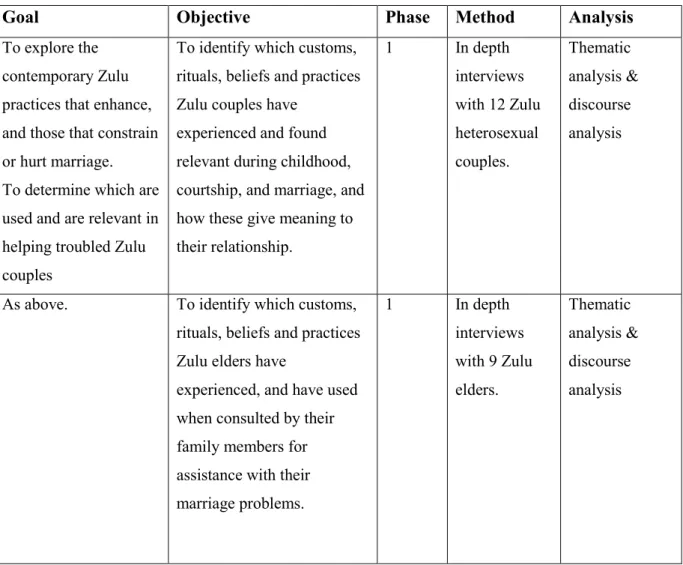
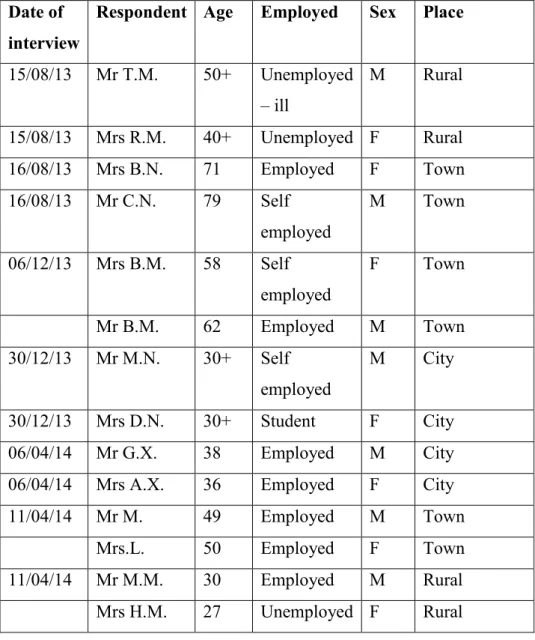
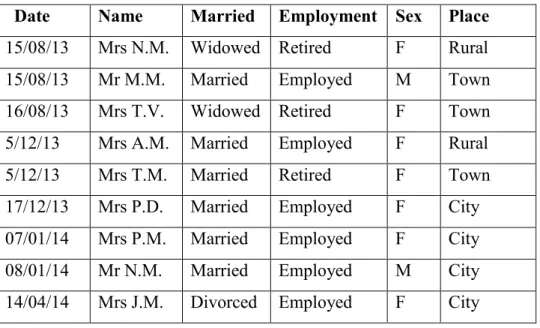
Table 1 Relationship between research objectives and phases of the research 73 Table 5.1 Biographical Information – Married Zulu Couples 102 Table 5.2 Biographical Information – Zulu family elders 104
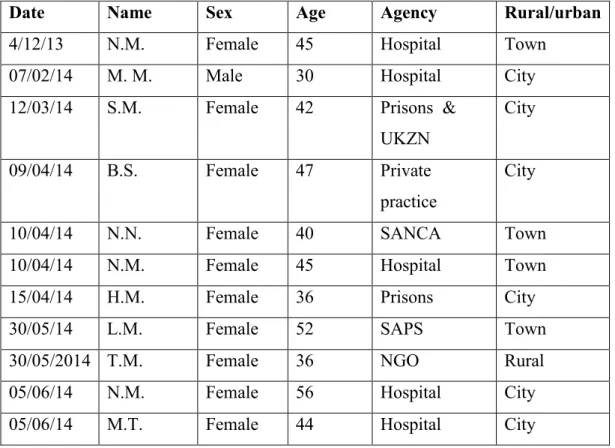
Table 5.3 Zulu Generic Social Workers 105
Page | xii LIST OF DIAGRAMS
Diagram 1 : Diagram of Research Process 76 Diagram 2: Themes Noted in the Interviews 108
Diagram 3 : Belonging 109
Diagram 4: Spirituality 141
Diagram 5: Respect – Hlonipha 146
Diagram 6: Ubuntu 157
Diagram7 : Themes for Marriage Counselling 196
Diagram 8: Divorce vs. Reconciliation 198
Page | xiii LIST OF PHOTOGRAPHS
Photograph 1 : Wittgenstein and his three sisters 8
Photograph 2: Composite photo 9
Page | xiv LIST OF APPENDICES
Letter of Ethics Clearance 21 Letter 1 – Social Workers 22 Letter 2 – Social Workers UNISA 23
Letter 3 - Couples 24
Letter 4 - Elders 25
Basic Interview Schedule Guidelines 26 Program for FAMSA group discussions 27
Page | xv GLOSSARY OF RITUALS/PROCESSES
Imbeleko - introducing the child to all the ancestors.
Umhlonyana / umgonqiswe – first period, puberty ritual
Umemulo – coming of age ritual.
Inhlawulo – A fine, “damages” or reparation for making a woman pregnant prior to marriage
iLobolo – negotiation of the bride price or dowry
Hlonipha - respect
Umembeso – husband’s family bring gifts to thank the bride’s family for agreeing to the marriage.
Umbondo – the bride’s family bring groceries to the groom’s family to set the date.
Umshado / umkhehlo – the traditional wedding during which the bride is introduced to the groom’s ancestors.
Umabo – the bride’s gifts to the groom’s family – blankets, mats, etc.
Page | 1 CHAPTER ONE
GENERAL OVERVIEW OF THE STUDY
This study explores the beliefs, values, traditions and practices of marriage in contemporary Zulu society, and examines the implications for marriage counselling.
In this chapter the context of the study is described, the theoretical framework is explored, the research questions, aim and objectives are presented, and the research methodology is summarized in order to highlight the value of this study.
1.1 Background and context of research problem
South Africa’s history is one of colonisation and apartheid where traditional indigenous cultural beliefs and practices were marginalized and devalued by people of European origin, and social injustice and oppression were the norm. More recently, the influences of globalization, Western cultural practices, women’s empowerment and the ideology of human rights have impacted on traditional African beliefs and practices regarding relationships (Sodi, Esere, Gichinga and Hove, 2010). Particularly since the change to a democratic political dispensation after the elections of 1994, South African society has undergone many rapid changes having been influenced by the beliefs and values of both developed and developing countries. It is a country of contrasts, due to its diverse geography and culture, and also through its heritage and lived experience (Morkel, 2011). Having transitioned peacefully to democracy, it heralded hope internationally, whilst simultaneously being afflicted by “crime and violence at family and political levels” (Kasiram and Oliphant, 2007:71). Crime statistics for KwaZulu-Natal are of concern in that there has been “an increase over the last year in crimes related to murder, attempted murder, assault, arson, stock theft, shoplifting, business robbery, truck hijacking, as well as drug related crimes”
(www.kznonline.gov.za State of the province address, 2015).
In addition, Ojong and Sithole (2007) and Morkel (2011) mention, that despite South Africa’s wealth of natural resources, it is characterized by acute socio-economic inequality. Poverty Trends in South Africa report released by Statistics SA (2014) is quoted by the SAInfo reporter which indicates that "the share of national consumption
Page | 2 between the richest and poorest remains stubbornly stagnant. The richest 20% of the population account for over 61% of consumption in 2011 (down from a high of 64%
in 2006). Meanwhile, the bottom 20% see their share remaining fairly constant at below 4.5%."
South Africa has one of the most liberal constitutions in the world that enshrines gender equality and individual rights, yet simultaneously, the constitution also makes provision for tribal cultures and values (Williams, 2010; Rudwick and Shange, 2009).
In South Africa at a national, provincial and community level, there are elected representatives who are voted for by the citizens. However, although not part of government, there are also traditional bodies of tribal chiefs and elders, with KwaZulu-Natal for example having an elected provincial premier, and a Zulu king, King Goodwill Zwelithini kaBhekuzulu. “KwaZulu-Natal is the only province with a monarchy specifically provided for in South Africa's Constitution”
(www.kznonline.gov.za).
This research is located in KwaZulu-Natal. While it's the country's third-smallest province, taking up 7.7% of South Africa's land area, it has the second-largest population, with 10.3-million people living there in 2011, 20% of South Africa’s population. The majority (77.8%) of the population is isiZulu speaking, whilst 13.2%
speak English. Remnants of British colonialism and a mix of Zulu, Indian and Afrikaans traditions give the province a rich cultural diversity (www.southafrica.info).
South Africa's growth had averaged 3.2% from 1994 to 2012, while the number of people in employment grew by approximately 60%, or 5.6-million people, between 1994 and 2013 (Ngwenya 2015). There has been an increase in the proportion of people living in formal housing from 64% in 1996 to 77% in 2011 (20 years review).
However, unemployment in KwaZulu-Natal lies at 20,8%, and the percentage of people living below the food poverty line of R 318 per month rose from 25% to 28 % between 2010 and 2014 (Ngwenya 2015). KwaZulu-Natal is thus a densely populated province with a lot of poverty.
As a result of all these above mentioned contrasts, there may be marked differences in values, beliefs and behaviour between generations within one family and between the
Page | 3 youth and the elders within the same community (Morkel, 2004). The meaning of marriage, its purpose, values and practices also differ widely in this country. Marriage in traditional pastoral societies in Africa and in Europe until the Industrial Revolution in the 19th Century was “primarily an economic and reproductive institution” (De Haas 1989:4), a way of increasing survival, social reproduction and kinship obligations (Padilla, Hirsch, Munoz-Laboy, Sember and Parker, 2007).
According to Wardlow and Hirsch (2006) there has been a global shift towards marital ideals characterized by emotional intimacy, companionship and mutual choice. In 19th Century Europe and North America demographic and economic factors such as urbanization, gains in life expectancy, wage labour, extended education and fewer children enabled conditions where marriage was increasingly viewed as an opportunity for self-actualisation and pleasure (Padilla et al, 2007). In South Africa these demographic and economic factors are also now playing a more dominant role in marital and family life. Wardlow & Hirsch (2006) describe how young people in various cultures across the world are deliberately emphasizing affective bonds in their relationships in contrast to the relationships of their parents.
Although in several of these cultures, there is still a strong emphasis on kinship obligations and responsibilities, the young people are changing this emphasis during their courtship. They are stressing romantic attraction and individual choice during their dating period. However as Wardlow &Hirsch (2006) state, it is one thing to emphasize romantic love during courtship, it is another to maintain it during marriage.
Therefore it may also be relevant to explore whether this emphasis on love and emotional intimacy during courtship continues to be stressed throughout the marriage, or if socio-economic and kinship factors grow to be more meaningful as a consequence of the deeply ingrained cultural background.
The context of this research therefore is that South Africa is a land of contrasts and differences at many levels where, ideally, many different ways of living and of being are respected, valued and celebrated; yet practically many of the indigenous beliefs, values and practices are still being marginalized (Ross, 2010). This impacts and influences the access to help for indigenous people with their marriages. Akinyela (2002:33) describes this at a global level where current African life “is dominated by
Page | 4 European ethics and values that shape social policy, spiritual life, and political and economic processes.”
1.2 Theoretical framework
It is important to understand the underlying philosophy of a particular study in order to understand the beliefs and values to which the researcher subscribes and appreciate the findings of a study accordingly.
This research is located within a social constructionist framework. This framework places its emphasis on social interpretation, and the influence of language, family and culture, and focuses on “how people interact with each other to construct, modify and maintain what their society holds to be true, real and meaningful” (Friedman and Coombs, 1996:27).
Ludwig Wittgenstein has been described as one of the most influential philosophers of the 20th Century (Klagge, 2001). He was my grandmother’s uncle, and therefore his life and ideas have been discussed within my family, resulting in my being interested and aware of his work. In my opinion, some of Wittgenstein’s philosophy was the precursor to social constructionism. Wittgenstein initially studied engineering, but became interested in Bertrand Russell’s The Principles of Mathematics which examines mathematics and logic. Wittgenstein expanded on Russell by trying to describe and understand the underlying deep structure of thinking and language:
logical atomism – a science of meanings. By “showing the application of modern logic to metaphysics, via language, he provided new insights into the relations between world, thought and language and thereby into the nature of philosophy”
(Anat and Anat, 2009: 1).
Wittgenstein wrote, and re-wrote his book Tractatus Logico-Philosophicus (1922) (Anat and Anat 2009, Monk 1991). It was written in an unusual manner – he structured it around seven numbered basic propositions which are elaborated by decimal expansions. It is extremely difficult to understand – in fact Wittgenstein’s philosophy is sometimes used as a metaphor for extremely complicated thoughts.
Page | 5 Anat and Anat (2009) suggested that in this book, Wittgenstein saw the world as consisting of facts which are states of affairs which in turn are combinations of objects. Objects have various logical properties and relationships to each other, and are either actual and in existence, or are possible. In this book, Wittgenstein clarified therefore between what can be said using words, and what can only be shown; that thoughts and propositions are pictures made up of several elements, and “the picture is a model of reality”. He differentiated between what is sense, what is senseless, and what is nonsense. Some interpreters describe this work as the basis of logical positivism and of realism (Anat and Anat, 2009:7).
Wittgenstein left philosophy for a few years, but as a very critical thinker, even of his own work, and of others, he returned to philosophy a few years later to challenge some of his own original thinking, although some writers suggested that he really expanded his original thinking (Monk 1991). He wrote Philosophical Investigations which was published posthumously in 1953. During this period one of his ideas was to use two metaphors to look at the issue of language, the world and thinking – the first was the use of language games. He never defined what he meant specifically with this term (Xanthos, 2006) and used it in three different ways – firstly how language ordinarily functions, secondly he relates it to children’s language-learning games, and thirdly to semiotic practices –“the socially shared ways of using signs, of signifying and of representing” ( Xanthos, 2006:1).
It is this third way that is of particular interest to me and to my study. He used this concept to explore whether or not certain words have a universal unequivocal underlying meaning that anyone and everyone would understand; or whether there is some form of “family resemblance” to these words. Wittgenstein suggested that when investigating the underlying meaning of words, the philosopher needs to ‘look and see’ the variety of uses to which the word is put – ‘don’t think but look!’” (Anat and Anat, 2009:11). Wittgenstein’s search for the common underlying factors of words found that what links words is the underlying human need or situation that they relate to, and the broader the need, the more variation in form; and the more specific the need, the more specific the form (Khatchadourian, 1966). As a result, Wittgenstein indicated that for an utterance to be meaningful, it must be able to be subjected to certain public standards of correctness – it is impossible for a person to have a
Page | 6 completely private language with no rules or meaning in order to be understood. Thus grammar expresses the norms for meaningful language – the essence – and is not just technical instructions on how to use words. However, grammar is not abstract but it is situated within the activity of language; and occurs not just in definitions but also in judgements; and not agreements in opinions but “in forms of life” (Anat and Anat, 2009:13).
Two important aspects of forms of life are described – firstly they are changing, dependant on culture, context and history. “When a person says something what he or she means depends not only on what is said but also on the context in which it is said.
Importance, point, meaning are given by the surroundings. Words, gestures, expressions come alive, as it were, only within a language game, a culture, a form of life.” (Richter, 2015: page unknown)
Secondly forms of life are the common behaviours of humankind which is the system of reference by which means we interpret an unknown language, or when we interpret an unknown culture. Hosking and Morley (2004:320) suggest that Wittgenstein’s observations are not new and may be similar to Vico, an 18th Century critic of the Enlightenment, whom they summarise as saying “to understand human history we need to understand cultural change. To understand cultural change we need to understand forms of life. Forms of life are explicable solely in terms of certain purposive activities”.
As Wittgenstein explored the definition of the word “games” for example which stretched from board games, to card games, to children’s play, to sport and the Olympic Games, he suggested that there is a wide range of possibility of meaning, and it is the context of the communication that gives us clarity about its meaning. As Widdershoven (1992) mentions, Wittgenstein suggests the activities of people from another culture may be different, but they have logic and meaning to those people and therefore they are understandable to an outsider once the context is understood.
Therefore “Wittgenstein suggests that we step outside of our language games, enough to understand what we are constructing” (Kavanagh, 2010:244). We need to realise that the meaning is different to different people. Wittgenstein used the metaphor of family resemblance to show that a language – vocabulary and grammar - has to have
Page | 7 sufficient commonalities for people to understand one another and for someone to learn a new language, yet at the same time there are differences in the meaning of the words and in the rules of grammar that are only given meaning within the social context.
.
Wittgenstein used his own photographs of himself and his three sisters to illustrate this concept – see below. The four separate photographs illustrate the idea that when words have no common factors, they are wholly separate and meaningless; yet the composite photograph of all the faces shows that there needs to be a certain overlap for different people to see that there is a family resemblance between all four siblings.
However, the formation of this particular composite was made at the discretion of Wittgenstein himself. Another person may have chosen different features of the siblings to form a different composite, yet there would still be a family resemblance.
In my opinion this is a very strong metaphor that illustrates social constructionism very effectively, and so this explanation is relevant to the theoretical framework of my study.
Page | 8 Photograph 1: Wittgenstein and his three sisters – the components of the composite photo
Page | 9 Photograph 2: Composite photo
This was based on a technique invented by Galton and was made by Wittgenstein with the assistance of Nähr in the 1920s, and from this experiment he later formed the central ideas of Philosophical Investigations (Nedo, 2011).
Bambrough (1966) therefore suggests that Wittgenstein’s philosophy of language goes beyond the nominalists’ view that the naming is the core of language, whilst at the same time the realists’ stress on form is insufficient to explain the complexity of language. Thus in my opinion, Wittgenstein’s emphasis on the dynamic relationship between the meaning of language and the social context leads to the ideas and concepts of social constructionism.
Burr (2003) also used the metaphor of family resemblance to define the concept of social constructionism, as she says there are a variety of writers whose ideas have the characteristics mentioned below which she suggests describe social constructionism.
Social constructionism stresses that we need to “take a critical stance towards our
“taken-for-granted ways of understanding the world, including ourselves” (Burr, 2003:2). It emphasizes that we cannot assume that the nature of the world can be understood only through observation, but need to be aware that the categories to
Page | 10 which we assign certain aspects of the world may be the result of normative prescriptions in a culture: “The ways in which we commonly understand the world, the categories and concepts we use, are historically and culturally specific” (Burr, 2003:3). As a result they are relative, as not only are they specific to that culture or time, but they are also the product of that culture and time.
It is impossible to know objective reality, as all we can do is interpret our experience of reality. There are many possibilities for how any given experience may be interpreted, but no interpretation is “really” true. The same “facts” may be retold from very different points of view, so they have very different meanings. We communicate and constitute our version of realities through language, and so realities are organized and maintained through interaction. As a result, there is a “reflexivity in understanding and meaning making” (Rodwell, 1998:19). It is in language that societies construct their view of reality, as language is an interactive process. In order therefore to understand the meaning an experience has for a person, it is also therefore necessary to be aware of their culture and their social context. People make sense of their lives through stories, both the socio-cultural narratives they are born into, and/or grow up in; and the personal narratives they construct in relation to the socio-cultural narratives.
Burr (2003) described two aspects of social constructionism – micro and macro constructionism. In micro social constructionism the focus is on the individual who is seen to build his/her own accounts of events through language, which develops the meaning they give to these events – examples of this are the constructivists and discursive psychology. In macro social constructionism the constructive power of language is acknowledged, but it is seen as related to social structures, social relations and institutionalised practices, and the concept of power is seen as central to this type of theory. Thus, for example, where in mainstream psychology the therapist explores the person’s internal state, their attitudes, opinions and emotions, when using social constructionism these are viewed as arising out of the concept of identity that are
“socially bestowed rather than essences of the person ....and that are constructed out of discourses that are culturally available to us” (Burr, 2003:106).
Page | 11 Each person’s identity is constructed from an interweaving of several threads of cultural discourses – of age, race, gender, education, sexuality, ethnicity, occupation, physically abled/disabled. Campbell (1999:77) stresses that social constructionism
“encourages family therapists to see clinical ` realities ' such as diagnostic labels, concepts of ` self ', and family roles as the products of social interaction across many levels from the cultural and societal down to the familial and individual”. Within these discourses, people hold subject positions for example the person with medical training in the medical discourse will be viewed as the person with the power to make diagnoses, take decisions and use the medical terminology, whilst those who consult him/her will be viewed as the patient who has less power and who receives and obeys the decisions. Therefore, when in interaction with another person or persons, an individual can offer, accept, claim or resist any particular subject position, moment by moment if necessary, and according to social constructionists, these “define us as persons” (Burr, 2003:114).
However, the criticisms that Burr has about constructionism, are that these positions mentioned above do not explain the emotional investments people have to their positions, the individual differences that people occupying the same position may have, and why individuals may occupy disadvantageous positions. Nor in fact does the concept of positioning explain the subjectivity and beliefs, values, motivations – the “self” of the individual.
In my opinion, social constructionism, both micro and macro, and psychological theories and humanistic concepts of the self are not two extremes of a dichotomy with the person on one end and society on the other, but in my view it is recursive. Burr (2003) describes Berger and Luckman’s suggestion that three aspects – externalisation; objectivation and internalisation occur, when firstly we attach meanings to external symbols, which we then use or describe as objects in other places and at other times, and finally these meanings are internalised and therefore can be passed on to future generations through socialisation. Burr (2003) also describes Sampson’s suggestion that the unit of analysis is not either the individual or society, but that it is the ecosystem that includes both the individual and society. Both these suggestions are inclusive, and in my opinion and in my experience, it is
Page | 12 extremely important not to analyse only the person, or only the society, but it makes more sense to be aware of both, and the recursive relationship between them.
In any culture, certain points of view and ways of being will come to be dominant over others. These dominant perspectives will specify the preferred and customary ways of believing and behaving within the particular culture. We tend to internalize the dominant norms and values of our culture, easily believing that they speak the truth of our identities. These dominant constructs tend to blind us to the possibilities that others might offer us. Whatever culture we belong to, has influenced us to ascribe certain meanings to particular life events and to treat others as relatively meaningless.
Some cultures have colonized and oppressed others, and the concepts of the dominant culture are then imposed on people of the marginalized cultures. However, because society is interactive and reflexive, the marginalised culture will also influence the dominant culture. In fact, Akinyela (2002:34) suggests culture is “actually a complex of contentious and complimentary interactions between asymmetrical class, gender, religious, language, sexual and other social groups. Viewed from this perspective, culture is in a constant dialectical process of construction and reconstruction”.
When looking at any community, it is necessary to also look at the broader socio- political context, and what the dominant views of the time were, and how this honoured some views over others. Foucault (1984:175) writes “we should admit, rather, that power produces knowledge…that power and knowledge directly imply one another; that there is no power relation without the correlative constitution of a field of knowledge, nor any knowledge that does not pre-suppose and constitute at the same time power relations.” White and Epston (1990) discuss Foucault’s view of how power subjugates and conscripts people into activities that support the proliferation of knowledge as well the techniques of power. Therefore all of us are acting within and through a given field of knowledge/power; and that “since we are all caught up in a net or web of power/knowledge, it is not possible to act apart from this domain, and we are simultaneously undergoing the effects of power and exercising this power in relation to others” (White and Epston, 1990:22).
The idea that certain knowledges should be ascended over others is challenged - what alternative knowledges would they disqualify and what persons or groups are likely to
Page | 13 be diminished through doing this? Burr (2003) suggests that analyzing discourses allows people to understand their own experience and behaviour, and how these are linked to the social structures and practices of society in a way that makes the power relations of society more visible.
When looking at the history of colonialism and apartheid in this country and this province, where the use of traditional methods of healing have been marginalized (an example is the 1974 Health Act and its 1982 amendments) Foucault’s view mentioned above is extremely important, and for this reason, the knowledges and meanings associated with marriage in traditional and contemporary Zulu society needs further exploration, as these alternative knowledges have been disqualified and dishonoured, thereby also diminishing the Zulu people.
The philosophy and ideas of social constructionism are of great value in this country as people are born into a socio-cultural context and through language and socialization, they learn to understand the norms and values of their particular family, community and culture. This then informs their view of reality, and “on shared meanings that could be said to reflect social constructions” (Williamson, 2006:85).
With people in this country being born into such different cultures and contexts, everyone has a different experience of reality. This is captured in the following quote and illustrates why social constructionism has such relevance in this country.
“An ecosystemic, post-modernist, deconstructionist view presupposes that there is no one culture, no one worldview or reality, and no one ‘correct’
model of psychology. It is particularly important to understand this point in the South African context, where so many cultural and ethnic groups live side by side in an ever-changing ecology of ideas” (Becvar and Becvar, 1998:221).
It is therefore very important for social workers to understand their clients’
experience of reality that gives meaning to their lives from the framework of each individual, and also in terms of the social constructs formed through the context of community and culture. Social constructionism therefore is the selected theoretical framework underpinning this research.
Page | 14 1.3 Research problem
Ross (2010) indicates that many African clients prefer not to go for counselling within a Western model, where they may be expected to describe their individual personal problems, and particularly their feelings, in detail, a practice that may be in conflict with their traditional world view. The consequences of marginalizing or ignoring specific world views means that people going for help for their marital problems will feel misunderstood, and will avoid returning for ongoing assistance. With such rich cultural diversity and potentially different ways of viewing marriage in this country, it is important not to make assumptions based only on a Western view of relationships.
South Africa lacks models and approaches that make professional relationship counselling more relevant and applicable for people from African backgrounds, and this impacts on the nature and appropriateness of social work intervention. To date, little research has been done to explore the meaning of marriage for couples who identify themselves as Zulu (hereafter termed Zulu couples) in order to offer best practices in professional marital counselling that are relevant and appropriate. Thus such alternative approaches need further exploration which this study strives to address.
1.4 Research questions
1. What are the underlying values, beliefs, rituals and practices of marriage in contemporary Zulu society?
2. How do these Zulu values, beliefs, rituals and practices (traditional and contemporary) enhance marriage?
3. How do these Zulu values, beliefs, rituals and practices (traditional and contemporary) constrain or hurt marriage?
4. What route is generally followed to get help by Zulu couples experiencing marital problems?
Page | 15 5. Based on this information, what guidelines can be developed to provide a
useful and relevant contribution to both the theory and the practice of professional marital counselling with Zulu couples?
1.5 Aim and objectives
The overall aim of this research was to explore the meaning of marriage for couples who identified themselves as Zulu (hereafter termed Zulu couples), in order to offer best practice guidelines in professional marital counselling that are relevant and appropriate.
In order to achieve this, the objectives of the research were
to determine and identify which values, customs, rituals and practices Zulu couples have found relevant during childhood, courtship, wedding and marriage, and how these give meaning to their relationship.
to determine and identify which values, customs, rituals, and practices Zulu elders have found relevant in their own lives, and which they used when consulted by their family members for assistance with their marriage problems.
to determine and identify which values, customs, rituals and practices Zulu social workers who work generically have found relevant in their own lives and how they use particular Zulu values and practices to assist their clients.
Based on this information, to develop best practice guidelines in professional marriage counselling with Zulu couples with the assistance of specialized marriage counselors.
The research was divided into two phases. The first phase used in-depth interviews with three different samples in order to explore the meaning and practices of Zulu
Page | 16 marriage. The different samples consist firstly of Zulu couples; secondly of Zulu family elders who have given marital advice to family members; and thirdly of Zulu social workers who work generically. The second phase used this information as a base from which to determine guidelines for marriage counselling with the assistance of two groups of Zulu social workers who specialise in couple counselling.
1.6 Rationale for research methods
The rationale for the methods used in this research study is briefly discussed in this introductory chapter. I later explain research methodology used in the study in detail in chapter four.
Overall approach
Durrheim in Terre Blanche and Durrheim (2006) indicates that the researcher needs to link and connect the purpose of the research to the theoretical paradigm informing the research, whilst bearing in mind the context in which the research is to be carried out, as well as the specific research techniques to be used to collect and analyze the data.
Design coherence ensures there is a logical flow between the rationale for the research, and the research methodology. The unit of analysis has to be clear so that there is no discrepancy when drawing conclusions. The researcher also needs to be aware of whether the research is exploratory, descriptive or explanatory, and whether it is basic or applied research (Durrheim 2006) as these also influence the format of the research design.
Fossey, Harvey, McDermott and Davidson (2002:717) explain that “qualitative research is a broad umbrella term for research methodologies that describe and explain person’s experiences, behaviours, interactions and social contexts without the use of statistical procedures or quantification.” Thus the paradigm of social constructionism, which is the theoretical base for this study, fits with qualitative research as both focus on people’s life experiences within their culture and social context; and the meaning that they ascribe to these experiences form the subject of this study. The meanings may be varied and multiple, so when using social
Page | 17 constructionist-based qualitative research, the researcher looks for a complexity of views (Creswall, 2007). This research is therefore qualitative research as it describes the participants’ experiences and understanding of marriage and how they deal with their marital issues, within a particular context; and it also explores the potential actions and interventions that can be used as a result. Durrheim (2006) stresses that qualitative researchers prefer designs that are fluid and flexible, open and pragmatic.
However he warns that this research framework is demanding as one constantly needs to refine and develop the research design throughout the process in order to obtain valid conclusions.
In-depth interviews were held with participants using an interview guide that aimed to explore certain themes. This results in verbal descriptions and explanations. It is an open-ended approach, starting with broad questions and areas of interest which are then refined and transformed through the research process, thereby becoming more focused.
Sampling, data collection and analysis
Qualitative sampling’s aim is to provide rich information, and so there are two main considerations – that of appropriateness, and of adequacy. The samples needed to complete all aspects of this research were purposive. Mack, Woodsong, MacQueen, Guest and Namey (2005) explain that purposive sampling occurs when participants are selected according to preselected criteria that are relevant to the particular research question. Participants need to be chosen so that they are the best people to provide the required information, and it needs to provide adequate sampling of the sources of information so that the research questions are addressed and a rich description is obtained (Fossey et al, 2002). Due to purposeful sampling providing a rich description of data, this enhances its transferability (Babbie and Mouton, 2001). In order to achieve the best possible sample, snowball sampling was used to source three samples as it was convenient and allowed the researcher to search for a wide variety of respondents for the first phase of the study.
The first sample of Zulu couples fitted with the basic criteria of being Zulu, over 21 years of age and married for at least two years; the second sample consisted of Zulu
Page | 18 family elders who had given marital advice to their family; whilst the third sample were Zulu social workers. Once the content of the interviews were analysed according to the themes identified, the social context was explored through the use of discourse analysis. Then for the second phase of the study these results were validated in two group discussions with FAMSA (the Family and Marriage Society of South Africa) social workers who specialise in marriage counselling, and then potential guidelines that were based on these results were identified.
1.7 Contribution of the study
When examining the history of marital and family therapy in South Africa, Western therapeutic methods were predominantly studied and applied by most marital and family therapists. Although several therapists (for example Nell and Seedat, 1989;
Henning, 1990; Lifshitz and van Niekerk, 1990; Mackintosh, 1990; Kasiram, 2000;
Rankin and Rankin, 2000; Appelt, 2000) wrote about working with indigenous clients, and therefore adjusting their methods to this work, their underlying theoretical perspective was still based on Western ideology. Ross (2010:44) writes about the
“over-reliance of South African social work on Western texts”, and “the need for indigenous social work education and practice”. Lifschitz (1989) stressed that we need to not only adjust our ways of working with indigenous clients, but we also need to adjust our world view, our ways of thinking, understanding, and our language so that our ways of healing are applicable to those people whose world view is not Western. He stressed that such alternative therapeutic procedures need to draw from both Western and African approaches in order to form a “hybrid” (1989:50).
This view challenges the alternative view that highlights issues of cultural competence – is it possible for a non-indigenous practitioner to be able to work appropriately and competently with indigenous couples? Should they in fact do so? Akinyela (2002) stresses that therapists from African traditions need to generate and identify culturally appropriate practices based on their own cultural and historical experiences as part of what he terms developing a “post-colonial therapy”. The Just Therapy team in New Zealand responded to this challenge by using what they term a cultural consultant to work with the non-indigenous therapist in order to avoid misunderstandings, and to
Page | 19 explain nuances of meaning (Campbell, Waldegrave and Tamasese, 1995). This issue is also relevant where a non-indigenous person is researching cultural issues in an indigenous culture, as is occurring in this research.
In my opinion, it is not only possible but also necessary for practitioners in South Africa of all races and cultures to be able, and to be competent to work across racial divides. However they need to understand the variety of differences across the cultures and to realize that these are socially constructed.
This study is important as it explores the world view, beliefs and practices of contemporary Zulu married couples, family elders and social workers who have been influenced by colonialism, apartheid, and globalisation, examining not only the content of the themes described, but also analysing the context of the social discourses. This therefore provides new knowledge. It will also assist service delivery by producing guidelines for relevant, effective marriage counselling.
1.8 Definition and clarification of terms
In this study the following terms are frequently used, and are defined as follows:
Zulu couple: In this study the couples were heterosexual , and so the definition of Zulu married couples include a man and a woman who define themselves as Zulu and who have been married by one or more of the accredited South African legal methods as follows:
Civil marriages: these are marriages registered according the Marriage Act, 1961. In the release of this Act, the term ‘civil’ is used to differentiate marriages that were solemnised by licensed lay marriage officers from marriages that were solemnised by religious marriage officers (Statistics PO307 25/03/2012).
Customary marriages: these are marriages that are negotiated, celebrated or concluded according to any of the systems of indigenous African customary law which exist in South Africa as described in the Recognition of Customary Marriages Act, 1998
Page | 20 (Statistics PO307 25/03/2012). It needs to be noted however, that customary marriages technically should have the marriage validated at the Department of Home Affairs. However, as a customary marriage is a process, and not everyone in this study completed the whole process, it was deemed applicable that if the couple had started the customary marriage process, were living together for at least two years, and defined themselves, and were viewed by the community as married, these research participants would be accepted as married for the purposes of this study.
Civil unions: refers to the voluntary union of two persons who are both 18 years of age or older, which is solemnised and registered by way of either a marriage or a civil partnership, in accordance with the procedures prescribed in the Civil Union Act, 2006 (Statistics PO307 25/03/2012)
Family elders are older people whose children or extended family have asked them for marriage advice.
1.9 Overview of the thesis
This report of the research study includes a literature review that describes the Zulu world view as well as the Zulu traditional beliefs, customs, rituals and practices. It also examines Western and traditional marriage counselling. The methodology chapter explains the type of research, the sampling, the tools used and the research process of data collection. Reflexivity is explored, and ethical issues are also clarified.
Limitations of the study are noted. The results chapter describes the data analysis using both thematic analysis as well as discourse analysis, and discusses the findings against the applicable literature. The final chapter draws conclusions from these results, looking at the recommendations within the parameters of the study.
Page | 21 1.10 Conclusion
This chapter has introduced the topic of this study. The background and context have been explained. The theoretical framework of social constructionism that underpins the whole study has been explored. The research questions that need to be answered in order to fulfil the aims and objectives have been clarified, and an overview of the research methods has been undertaken. Finally, the importance of this study into contemporary Zulu married life and the resulting implications for marriage counselling have been highlighted.
In the following chapter the underlying philosophy of Zulu life, which is called ubuntu, will be explored and the cultural rituals, beliefs and values that pertain to marriage will be described.
Page | 22 CHAPTER TWO
THE ZULU WORLD VIEW AND CULTURAL PRACTICES
This chapter will present a critical discussion of the literature of some of the Zulu philosophies or world views, values and cultural practices in order to understand what these are, the meaning and purpose that are ascribed to them, and how they influence marital and family lives.
One of the consequences of being brought up as a white person, resident in South Africa during the apartheid regime, was that knowledge of and contact with other race groups was very limited. Even today, it is possible for the different race groups to have very little experience of each other’s cultures. Over the years my contact with Zulu people was limited to informal socializing with colleagues, until my brother-in- law married a Zulu woman twenty years ago, and until I started running skills workshops for 4th year social workers. In both areas of my life, I started learning more about the Zulu culture from my sister-in-law and from my students. The impact of cultural differences on counselling became noticeable as many Zulu students at that time had commented that in their culture they were not allowed to verbalize their feelings, and so did not have the language to express empathy. I therefore researched and wrote a paper with a colleague on the use of empathy in social work counselling skills (Simpson and Haselau, 2006).
Therefore the purpose of this literature review was to gain knowledge about the traditional Zulu world view and philosophy and their cultural beliefs and practices about marriage and the family, as well as the critiques of these. For me this was important, as it links with my strong belief, as described in the previous chapter, that our social context influences the way we view, act and respond to the world. This knowledge could not only help when counselling Zulu couples, but helped guide my questions designing this research, the research interviews, and the process of analyzing and organizing the research results.
Page | 23 2.1 Culture, acculturation and enculturation
The concept of culture is abstract and depends on the context in which is it used. The following definitions of culture are helpful in providing a basic understanding of the concept and the ways in which it is used in this study, and then the concept is explored further.
The definition of culture according to the World English Dictionary is
“the total range of activities and ideas of a group of people with shared traditions, which are transmitted and reinforced by members of the group”. According to the
Oxford English Dictionary culture is defined as
“the behaviors and beliefs characteristic of a particular social, ethnic, or age group”.
Culture may be defined as the vehicle in which values, principles, beliefs and behaviours are transmitted and manifested in organizations, communities and families through the use of language (Karsten and Illa, 2005).
Van Rooyen and Nqweni (2012:52) warn against assuming that everyone belonging to a particular culture will practice, believe and give meaning to it in an identical manner so they define culture “to refer to a set of subjective, uneven, complicated interactions between individuals and the manner in which they express their experiences. This means that although there may be commonly accepted narratives around specific aspects of existence, the individual may still incorporate these in idiosyncratic ways”.
Some cultures have colonized and oppressed others, and the concepts of the dominant culture are then imposed on people of the marginalized cultures. As mentioned in the previous chapter, the Apartheid regime resulted in white Western people oppressing and dominating people of colour. However, because society is interactive and reflexive, the marginalized culture will also influence the dominant culture. Akinyela (2002:34) therefore suggests that culture is “actually a complex of contentious and complimentary interactions between asymmetrical class, gender, religious, language, sexual and other social groups. Viewed from this perspective, culture is in a constant dialectical process of construction and reconstruction”: cultures change. Yoon, Chang, Kim, Clawson, Cleary, Hansen, Bruner, Chan and Gomes (2013:13) defined two
Page | 24 processes that occur in such situations: acculturation is the cultural socialization of a person from a marginalized culture to the mainstream culture, whereas enculturation is the retention of, or cultural socialization to one’s culture of origin. These processes occur simultaneously in parallel. Berry (in Yoon et al 2013:16) described four possible strategies for acculturation:
a) Integration – the maintenance of the culture of origin and the acquisition of the new culture.
b) Assimilation – the acquisition of the new culture and the rejection of the culture of origin.
c) Separation – the maintenance of the culture of origin and the rejection of the new culture.
d) Marginalization – the rejection of both cultures.
When Yoon and his colleagues (2013) examined worldwide research relating to which strategies were constructive and which were destructive for individuals’ mental health, they found that integrating bicultural identities is easier in societies such as the present South Africa, that endorse cultural diversity, and that adopt multicultural policies, as opposed to culturally closed societies. They also found that the integration of two cultures may be less conflicting for identity, behaviours and knowledge, whereas integrating different cultural values may be difficult e.g. it may be difficult to integrate values of individualism and values of collectivism; and it may be difficult to integrate values of autonomy and of filial piety. Thus Yoon et al (2013) suggest that in order to assist clients to develop bicultural competency, external acculturation is important so that the individual learns the dominant culture’s language and behaviours in order to find employment and survive financially, and internal enculturation will give the person a sense of identity and belonging.
2.2. African world view
‘A world view refers to the way in which a people make sense of their surroundings;
make sense of life and of the universe’ (Ani, 1980:4 quoted by Carroll, 2008).
Therefore a cultural group’s understanding of the universe (cosmology), nature of
Page | 25 being (ontology), values (axiology), and knowledge (epistemology) all contribute to the ways in which a people make sense of reality, i.e. their world view.
However the concept of world view is contentious. It emphasizes homogeneity of billions of people in whole continents, who come from different cultural backgrounds.
The concept of world view cannot therefore be detailed and comprehensive enough to capture the complexities of the different African, European and Asian cultures. There are also differences in urbanization, class, tribal affiliation, religion and geographical location (Eagle 2005). The concept of world view also implies that culture and the view of the world that the people have is static, whereas it is flexible and constantly changing.
Carroll (2008) explored several authors’ views of African and Western world views and summarises their differences as follows:
When examining the African world view, mind, body and spirit are seen as one, and no distinction is made between physical and psychosocial problems - it is what Bakker and Snyders (1999) term holistic and integrative, and views life from a communalistic rather than an individualistic viewpoint. As Nwoye (2015:15) stresses, it is “holistic in depth and range”; whereas the Western view of the world sees a separation of parts with clear boundaries. In the African cosmology, the universe is interconnected, integrated and interdependent. As Nwoye (2015:14) indicates it is “a universe of multiple realities (natural, abstract and spiritual) in close proximity and complicated transactions with one another” in contrast to the Western world view of the universe as independent and separate. In African cosmology, human beings are part of a holistic system that includes relationships with nature, with human social networks and the supernatural (Eagle, 2005). An African ontology views reality as mainly spirit with some material manifestations whereas in the Western view, reality is mainly materialistic, based on what can be understood using the five senses. The African world view values communality and interpersonal relationships in the group, whereas the Western view is based on the individual within the group.
As a result of these contrasts between the African world view and the Western world view “social reality is not only lived differently, but also understood differently”
Page | 26 (Carroll, 2008:260). As a result of one’s life’s philosophy and practices evolving through socialization within a particular culture and world view, these may be so taken for granted that one is unaware that one subscribes to them, and that they are socially constructed. It is only when they are deconstructed that one is aware that there are alternative possibilities.
2.2.1 African culture
It is important when investigating a particular culture to examine the people’s values, beliefs, behaviour and ritualistic practices. When looking at African culture in more detail, Darley and Blankson (2008) examined the literature on indigenous African people’s culture who lived south of the Sahara, using Kluckhohn and Strodtbeck (1961) value orientation theory, as well as Hofstede’s (1980) four cultural dimensions.
These theoretical views were chosen by Darley and Blankson as they are foundational in understanding cultural patterns, are widely used and are stable across studies.
Kluckhohn and Strodtbeck (1961) as quoted by Darley and Blankson (2008) describe five cultural orientations common to all human groups: 1. human nature orientation;
2. man and nature orientation; 3. time orientation; 4. relational orientation; and 5.
activity orientation. Hofstede (1980) uses four dimensions of power distance, individualism-collectivism, uncertainty avoidance, and masculinity-femininity.
Bearing in mind Darley and Blankson’s (2008) three caveats that firstly these cultural categorisations may not be detailed and comprehensive enough to capture the complexities of African culture, nor secondly have they been empirically tested, and thirdly the shift from rural to urban living may influence traditional cultural practices, they were able to suggest a summary of African culture as follows:
The African is seen as good when his/her actions conform to the local customs. The African person must live in harmony with the universe – “obeying the natural, moral and mystical order” (Darley and Blankson, 2008:378), and therefore religion is central to all areas of his/her life. The African takes a circular as opposed to a linear view of
Page | 27 time, where the past and the present are more important than the future, and time is used for social obligations, so this takes priority over using time for other activities.
Another very important aspect of African society is the respect for elders, within the context of community. The cognitive style is that of synthesis with a high degree of harmony, and there is a strong use of symbols in the thinking. Darley and Blankson (2008) suggest that African communities have a high power distance with a strong degree of hierarchy, with a preference for structure and routine. African culture is communal, and the interests of the group take precedence over the rights of the individual, and so they value social relevance and the welfare of others. Finally there is a strong acknowledgement of the preservation of customs and rituals (2008).
Wilson and Williams (2013) suggest that individuals who comply with their culture of origin’s world view can positively impact mental health. They mention that African- Americans have maintained core values similar to ubuntu: humanness, caring, sharing, respect and compassion. They stress that Americans of African descent experience positive mental health through feelings of connectedness, social competence and group consciousness; as opposed to Americans of European descent who experience positive mental health through individuation, self competence and personal consciousness.
2.2.2 Communality – Ubuntu
When investigating what ubuntu is, Gade (2012) identified two aspects to the term – the first defines ubuntu as a moral quality of a person, whilst the second is described as a phenomenon, a philosophy, or a world view. So the Zulu concept of ubuntu is the dominant underlying philosophy of the Zulu people’s morals and ethics. Nyaumwe and Mkabele (2007:152) indicate that ubuntu “is premised on the reciprocal belief that an individual’s humanity is expressed through the personal relationships with others in a community and in turn other people in that community recognize the individual’s humanity”. It emphasizes collective identity, solidarity, caring and sharing, the connection between the physical and the meta-physical world, and the importance of interpersonal relationships. Ubuntu is a philosophy that many African tribes adhere