
The overall SERVQUAL score of the board members and the staff revealed that the perceptions were equal to the expectations. The results showed that the SERVQUAL calculated from the responses of the staff and board members was very similar and the gap between their perceptions and expectations was minimal. The results of the staff and the councilors were very similar because they were internal respondents who associate themselves with the Mpofana municipality.
This was not a satisfactory indication of the quality of service provided by Mpofana Municipality.

INTRODUCTION
BACKGROUND TO THE STUDY
The government of the Republic of South Africa consists of three spheres of government Le. The Republic of South Africa (Local Government: Property Rates (Act No. Section 2) authorizes the municipality to levy taxes on properties and for services provided within its jurisdiction. All revenues collected are used in accordance with the budget to provide services and develop and maintain infrastructure.
The Member of the Executive Council (MEC) for Local Government assigns powers and functions to municipalities, according to size and capacity.
MOTIVATION OF THE PROPOSED STUDY
RESEARCH PROBLEM
The study also aims to explore the perceptions of the various stakeholders, which are the community, administration and councillors, on the provision of services by Mpofana Municipality. This research will provide recommendations that will assist in advancing service delivery, which is considered the most fundamental ideology of all municipalities in South Africa as a fulfillment of the constitutional mandate. The study will provide recommendations that will help speed up service delivery not only in urban areas but also in rural areas.
RESEARCH OBJECTIVES
ANTICIPATED CONTRIBUTION
CHAPTER PLAN
The study will provide recommendations that will help speed up service delivery not only in urban areas but also in rural areas. are considered the main sources of information, and special attention will be paid to the principles of Batho Pele.
CHAPTER TWO: THEORETICAL FRAMEWORK OF SERVICE DELIVERY
INTRODUCTION
DEFINITION OF SERVICES
CHARACTERISTICS OF SERVICES
- INTANGIBILITY
- PERISHABILITY
- INSEPARABILITY
- VARIABILITY
A tool that can be used to understand customer expectations is marketing research (Zeithaml, 2003, p. 125). In the production of goods, quality depends on the production processes, while in services, the customer's involvement in the production process can affect the outcome of the service transaction, either positively or negatively (Zeithaml, 2003, p. 22). The quality of this interaction will determine whether the consumer will repeat the purchase of the service in the future (Zeithaml, 2003, p. 353).
This results in variation of the service to meet the specific needs of a particular customer (Gabbott and Hogg, 1998, p.28).
THE SERVICES MARKETING MIX
- SERVICE OUTCOME (PRODUCT)
- PLACE (DISTRIBUTION)
- PRICE
- PROMOTION
- PEOPLE
- PROCESS
- PHYSICAL EVIDENCE
Promotion is the part of the mix that determines how the service is advertised and promoted to customers. Their behavior could create an environment that distracts those offering the service, thus affecting the quality of service (Zeithaml, 2003, p.356). It is such steps that provide the customer with evidence of the quality of the service provided (Zeithaml et al., 1990, p.20).
The operational flow of the service is very important as it involves the customers in making decisions.
CUSTOMER SATISFACTION
The service marketing mix consists of elements that if managed properly would improve the quality of service provided and also narrow service quality gaps and result in customer satisfaction. Service characteristics can enhance service quality and also contribute to the level of customer satisfaction. The customer's emotional state at the time of the service experience can also affect the level of satisfaction.
The result of evaluating these reasons significantly contributes to the customer's judgment of whether the service experience meets the expectations held prior to the service experience.
SERVICE QUALITY
- DIMENSIONS OF SERVICE QUALITY
- SERVICE ENCOUNTERS
- EMPLOYEES' ROLE IN THE DELIVERY OF SERVICE QUALITY
- CUSTOMERS' ROLE IN SERVICE QUALITY DELIVERY
Customers will judge the quality of service based on the above dimensions, individually or in combination (Zeithaml, 2003, p.93). The certainty is also evident from the level of knowledge that the employees demonstrate and reassures the customer about the quality of the service provided (Zeithaml, 2003, p.97). Some customers judge the quality of service based on the company's ability to deal with problem customers.
An unhappy employee is unlikely to be responsive to customer needs and therefore has a negative impact on the quality of service provided (Zeithaml, 2003, p. 320).
CUSTOMER EXPECTATIONS OF SERVICES
- DESIRED SERVICE
- ADEQUATE SERVICE
A customer's experience with a service is a factor that determines the level of desired service expectations (Parasuraman et al, 1991, p. 4). Transient reinforcers are temporary factors that make the customer aware of the need for the service (Zeithaml, 2000, p. 68). As the customer gains more information about the service, the level of expectation increases, further narrowing the tolerance zone.
This is because expectations are formed based on the experience the customer has with the product.
CUSTOMER PERCEPTIONS OF SERVICES
This would mean that the customer becomes more sensitive to satisfaction or dissatisfaction due to the greater effort he puts into searching for more information about the service. As soon as the customer gains more experience and more information about the service, the minimum acceptable standard changes and also affects the size of the tolerance zone. Therefore, perceptions of service quality are assessed on the basis of the customer's service experience in relation to the expectations that preceded the experience.
Consequently, the perceptions that influence the service quality expectation are those held at the time of the next purchase.
GAPS MODEL OF SERVICE QUALITY
It is a relationship that is formed as a function of the combination of attributes that the customer considers components of service quality. Technical attributes are those that relate to the outcome of the service, while functional attributes relate to the process of providing the service. One of the findings of Palmer and O'Neill's (2003) study of the effects of perceptual processes on service quality measurement is that perceptions change over time.
They say in the study that the buyer's purchase intentions are influenced by their perceptions at the time of the repurchase and not those that prevail immediately after the consumption of the service.
GAPS
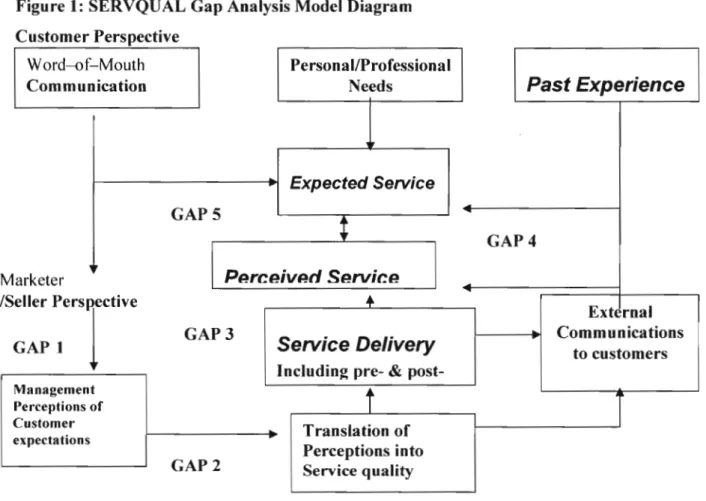
- GAP 1: CONSUMER EXPECTATION AND MANAGEMENT PERCEPTION
- GAP 2: MANAGEMENT PERCEPTIONS-SERVICE QUALITY SPECIFICATION GAP
- GAP 3: SERVICE SPECIFICATIONS-SERVICE DELIVERIES
- GAP 4: SERVICE DELIVERY-EXTERNAL COMMUNICATIONS
- GAP 5: EXPECTED SERVICES
- MEASURING SERVICE QUALITY
- DESCRIPTION OF A SERVQUAL INSTRUMENT
- CONCLUSION
- INTRODUCTION
- HISTORICAL CONTEXT OF SERVICE DELIVERY IN LOCAL GOVERNMENT
- NORMATIVE GUIDELINES OF PUBLIC ADMINIST ARTION
- LOCAL GOVERNMENT IN SOUTH AFRICA AFTER 1994
- STATUS OF MUNICIPALITIES
- CHARACTERISTICS OF MUNICIPALITIES
- MUNICIPALITIES AND SERVICE PROVISION
- INTEGRATED DEVELOPMENT PLAN
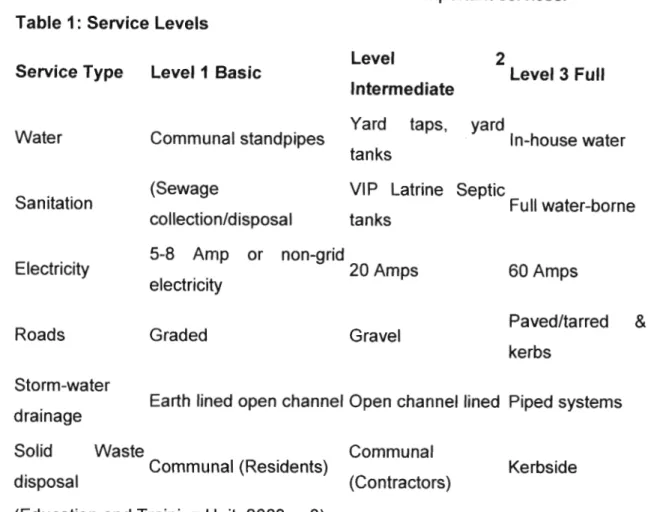
- MUNICIPAL SERVICE LEVELS AND MECHANISMS OF PROVIDING SERVICES
- FREE BASIC SERVICES
- MPOFANA MUNICIPALITY AND PROVISION OF SERVICES
- THE STATUS OF MPOFANA MUNICIPALITY
- VALUES UNDERPINNING SERVICE DELIVERY AT MPOFANA MUNICIPALITY
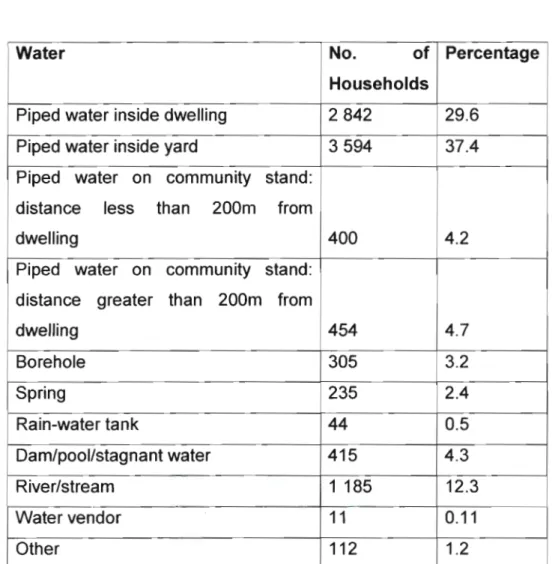
- AVAILABILITY OF SERVICES AT MPOFANA MUNICIPALITY
- PRICING
- CONCLUSION
The process side of the system helps evaluate the quality of the interaction between the customer and the service provider. Local government, under the Constitution of the Republic of South Africa (Act section 40(1)) is identified as one of the three spheres of government closest to the community. It also considers the provision of services by the Mpofana Municipality in the context of the local government system in South Africa.
Public servants must conduct themselves in a manner that shows respect for members of the public. One of the dimensions of service quality is the responsiveness of employees to customer needs. Government: Law on Municipal Systems, Section 6) calls for all municipalities to be responsive to community needs.
Information should be distributed to various municipal stakeholders to enable active participation in municipal affairs. The level of service quality must be communicated to the public. Municipalities seek the public's ideas regarding the level and quality of service to be provided.
The local government sphere consists of municipalities to be established throughout the republic. Better communication between the municipality and citizens will help the Council to determine the needs of the local community. This is a result of the large number of people employed in the agricultural sector.
One of the municipality's purposes is to provide basic services to the community.
CHAPTER FOUR: RESEARCH METHODOLOGY
PROBLEM STATEMENT
RESEARCH OBJECTIVES
RESEARCH DESIGN
- POPULATION
- SAMPLING
- QUESTIONNAIRE
- PRE-TESTING
It consists of three hundred and sixty-five (365) representing the community with 91.5% of the total sample; with the representative of ninety-one (91) per municipal division from the three wards and ninety-two (92) from the other municipal division. Seven councilors ((7) represented 1.8% of the total sample and twenty-seven (27) administrative staff represented 6.7% of the total sample of the Mpofana Municipality. According to Hair et al. 2003, p.340) the disadvantage of convenience sampling is that the data is not generalizable to the defined target group.
Respondents were randomly selected for their willingness to participate in the survey involving the community within the specified numbers per department and staff using the list received from the City Clerk's office. The advantage of the Servqual questionnaire is that it provides accuracy and a complete collection of all valuable factors, appropriately and with minimal bias (Parasuraman et al, 1988, p.445). The following 21 statements relate to the performance perceptions of the actual services provided by the municipality, both of which are fairly similar in sentence construction.
The questionnaire is structured as a Likert scale, i.e. a summed rating scale with 7 options, where 1 strongly disagrees, 2 disagrees, 3 somewhat disagrees, 4 is neutral, 5 somewhat agrees, 6 agrees and 7 strongly agrees. Empathy statements addressed the ability to show individual attention and care to customers (Mc Coli et al., 1998, p.155). 1996, p.52) addresses the importance of conducting a pre-test survey to test a questionnaire's clarity and "user-friendliness".
A questionnaire was pre-tested with ten respondents from the people who attended the workshop in Mooi River from the district municipality. The pre-test indicated that respondents did not experience problems with the questionnaire, leading to the assumption that there was no ambiguity in the questionnaire.
DATA COLLECTION PROCEDURE
ANALYSIS OF OATA
RELIABILITY
CONCLUSION
FINDINGS OF THE STUDY
- EXPECTATIONS OF THE COMMUNITY
- PERCEPTIONS OF THE COMMUNITY
- COUNCILLORS' EXPECTATIONS
- COUNCILLORS' PERCEPTIONS
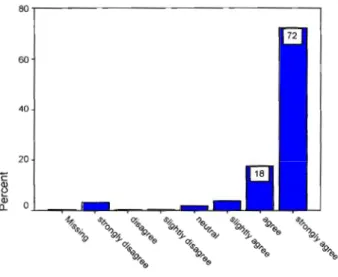
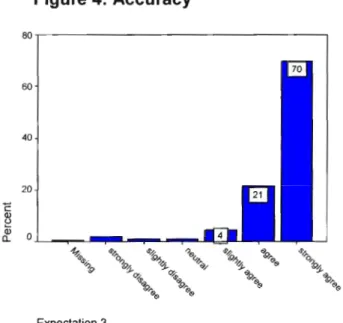
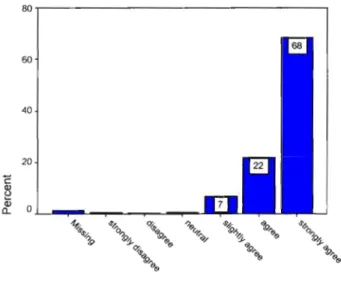
Most of the respondents (92%) agreed that employees in a municipality must always treat customers with courtesy. 85 percent of the respondents agreed that employees in a good municipality should give personal attention to customers, and 2.2% disagreed with the statement. The majority of respondents (83%) believe that employees in a good municipality must always appear neat.
Thirty-nine percent of respondents disagreed with the statement; 12% of respondents somewhat disagree with the statement. About a quarter (26%) of respondents agree with the statement that customers receive individual attention from municipal employees. Most respondents (40%) disagree with the statement; 15% of respondents somewhat disagreed with the statement;
Only 27% of the respondents agreed with the statement and felt that employees in Mpofana Municipality understand the needs of customers. Seventy-one percent of respondents strongly agree with the statement, or 14% slightly agree. The majority of respondents (85%) agree that municipal employees must always treat customers politely.
Most (85%) of the respondents expect that employees of a good municipality will have knowledge to answer their questions. Most (85%) of the respondents agreed that employees of a good municipality should give personal attention to customers and 14% disagreed with the statement.
![Strongly disagree [ ] Disagree [ ] Agree [ ] Strongly agree [ ] 2](data:image/gif;base64,R0lGODlhAQABAIAAAP///wAAACH5BAEAAAAALAAAAAABAAEAAAICRAEAOw==)