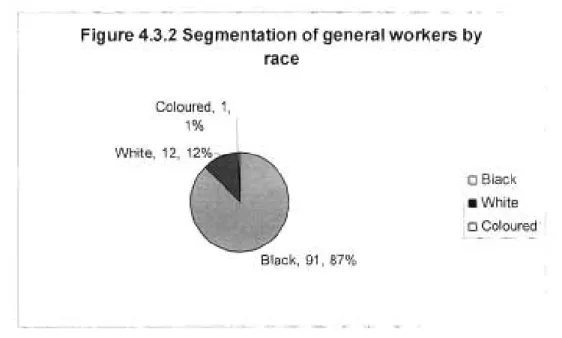
The remote St Apollinaris Hospital provides health care for approximately 150,000 of the 308,000 people who inhabit Sisonke District. A response rate of 85% was achieved which enabled the researcher to draw conclusions about all workers at St Apollinaris Hospital.
LIST OF TABLES
CHAPTER ONE
THE RURAL HEALTH CARE PROBLEM
- INTRODUCTION
- BACKGROUND AND CONTEXT
- THE PROBLEM STATEMENT
- THE OBJECTIVES OF THIS STUDY
- MOTIVATION FOR THE STUDY AND IMPORTANCE THEREOF
- LIMITATIONS OF THE STUDY
- ASSUMPTIONS
- STRUCTURE OF THE RESEARCH
- CONCLUSION
As such, it may not be a true representation of the real health care problem in rural areas. This chapter also describes the basic outline of the operating systems at St Apollinaris Hospital.
LITERATURE REVIEW
INTRODUCTION
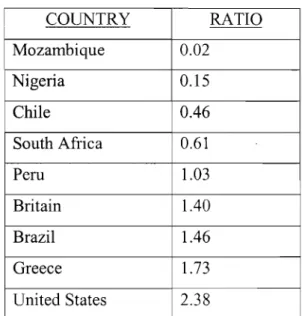
This healthcare discrepancy can be further illustrated by the fact that 62% of doctors and 58% of nurses work in the private sector, which serves 20%. Public health care has declined as a percentage of gross domestic product (Department of Health 2005).
THE AIM OF THE LITERATURE REVIEW
HUMAN RESOURCES AND POSSIBLE PROBLEMS THEREOF
- Human Resources in a Rural Health Care Institute
- Current Strategies to Improve Human Resources
- Human Resources from an MBA Perspective
- Staff Altitudes and Behaviour
- Staff Attitudes and Behaviour from an MBA Perspective
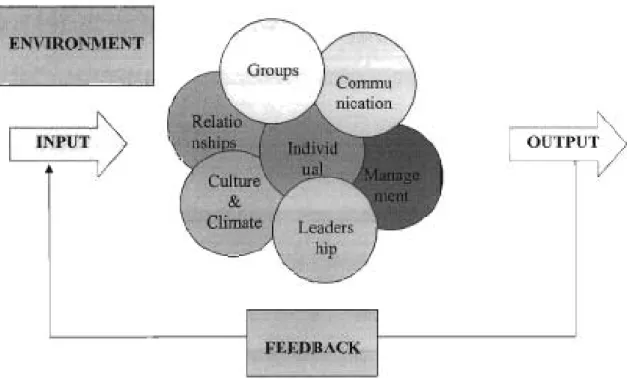
Human resources have increasingly been identified as one of the key factors to be taken into account when trying to improve the current healthcare system. In view of the current deficiencies in the human resources component, the concept of sustainability and possible methods to achieve this must be considered.
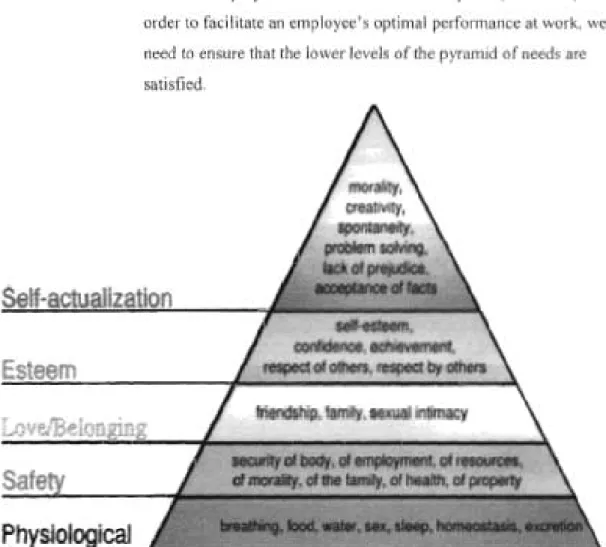
Esteem
- INVENTORY CONTROL
- ESSENTIAL EQUIPMENT AND THE CONTROL THEREOF
- THE OUTPATIENTS
- FINANCIAL/MANAGERIAL ACCOUNTING AND
The Medical Equipment Procedure Manual (2003) highlights that a proper record of equipment should be maintained and should have details of the serial numbers, year. In 2006, a quality improvement project concerning the efficiency of the outpatients at St Apollinaris Hospital was carried out by the medical team.
CONTROL THEREOF
CONCLUSION
This literature review focused on literature from the public health sector and a business management point of view. The equipment component emphasizes that there is a list of essential equipment for hospitals, which, although not exhaustive, is a good starting point of reference for a rural hospital.
CHAPTER THREE
RESEARCH METHODOLOGY
- INTRODUCTION
- THE OPERATIONAL SYSTEMS AT ST APOLLINARIS HOSPITAL
- STUDY DESIGN
- THE TARGET POPULATION
- The Human Resources Component
- The Out Patient Component
- SAMPLING TECHNIQUES
- The Human Resources Component
- The Out Patient Component
- THE SAMPLING FRAME AND SAMPLE SIZE
- THE EQUIPMENT COMPONENT
- THE BUDGET COMPONENT
- DATA COLLECTION INSTRUMENT/S
- The Human Resources Component
- The Out Patient Component
- The Equipment Component
- IMPROVING THE VALIDITY AND RELIABILITY
- Fieldworkers
- Conducting the interviews
- STATISTICAL ANALYSIS
- INCENTIVES FOR COMPLETING INTERVIEWS
- APPROVAL FOR CONDUCTING STUDY AND OTHER ETHICAL ISSUES
- PROBLEMS EXPERIENCED
- CONCLUSION
The non-administrative staff were not considered to be part of the target group as. Regarding the general staff: All members of the target population identified above were to be interviewed. The determination of the variables was based on the researcher's experience working at St Apollinaris Hospital.
The assessment of the healthcare problem in St. Apollinaris Hospital will be a descriptive cross-sectional study.
RESULTS OF THE STUDY
INTRODUCTION
DATA COLLECTION AND ANALYSIS
- The Sample Population
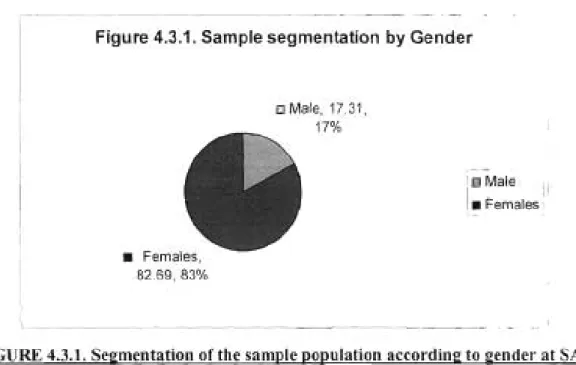
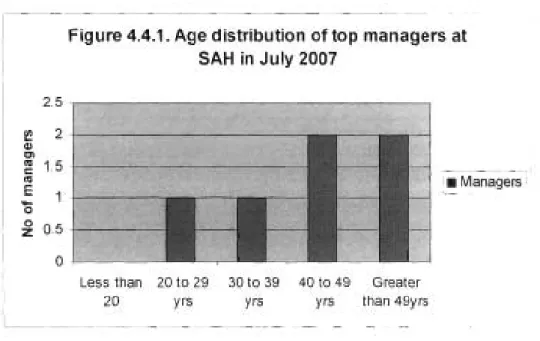
The characteristics of these data were examined by identifying the central location of the data and the data's variability. However, since the purpose of the study was to identify relationships and key areas of improvement, there was no need for extensive statistical testing with a description of percentages and cumulative percentages that would allow us to achieve our goals. According to the sampling frame of the duty roster allocation, there are 205 nurses, 14 doctors, 20 administrative staff and 8 top managers working at St Apollinaris Hospital.
This sampling frame did not account for those individuals who were not defined within the study's target population.
THE GENERAL STAFF INTERVIEW
- DEMOGRAPHIC STATISTICS
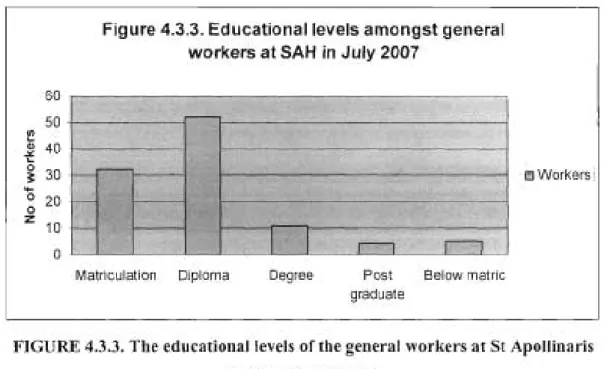
Regarding the academic qualifications of the general staff, it was observed that 32 workers had only matriculation, 52 workers had obtained diplomas and 11 workers had obtained diplomas. The staff component of the responses can be divided according to doctors, of whom there were 13, administrative staff who constituted 18 individuals and nurses of whom there were 73 individuals. Composition of general staff interviewed according to job descriptions at St Apollinaris Hospital in July 2007.
The duration of employment of the general employees can be described using a frequency table, which shows that most employees, namely 33%, work at St. Apollinaris Hospital.
APOLLINARIS HOSPITAL
GENERAL EMPLOYEE APOLLINARIS HOSPITAL
EXPECTATIONS OF ST
JOB SATISFACTION
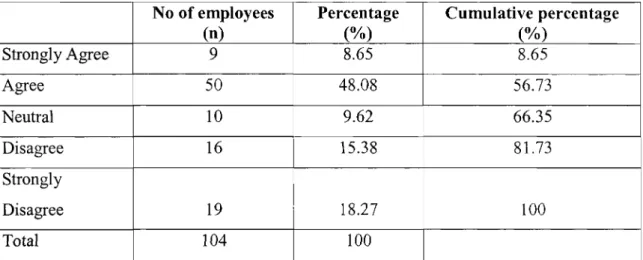
When individuals were further questioned about job satisfaction and why it did not meet their expectations, 8 individuals said that St. Apollinaris did not offer a career path and that they would not be able to improve their position.
EMPLOYMENT CONDITIONS
ACCOMODATION
SOCIAL LIFE
FAMILY LIFE
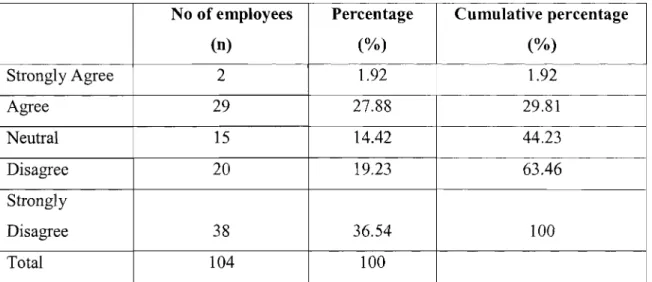
POSSIBLE REASONS THAT ST APOLLINARIS HOSPITAL FAILED TO MEET EMPLOYEES' EXPECTATIONS REGARDING SOCIAL LIFE IN JULY 2007. When asked further about the reasons for dissatisfaction with family life, 33 individuals answered that their families are too far away and that they are not there. spaces they can visit if they want to. POSSIBLE REASONS FOR ST APOLINARIS NOT MEETING WORKERS' EXPECTATIONS REGARDING FAMILY LIFE IN JULY 2007.
OTHER REASONS FOR DISSATISFACTION
POSSIBLE PROBLEMS ENCOUNTERED AT ST APOLLINARIS HOSPITAL·
- UNDERSTAFFING
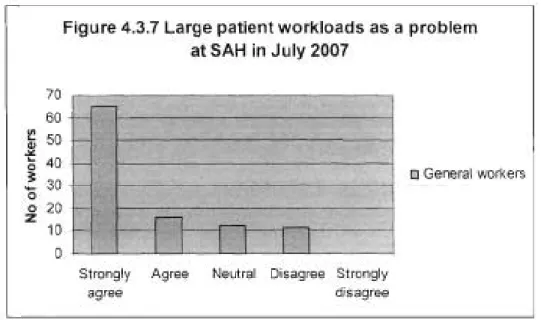
- LARGE PATIENT WORKLOADS
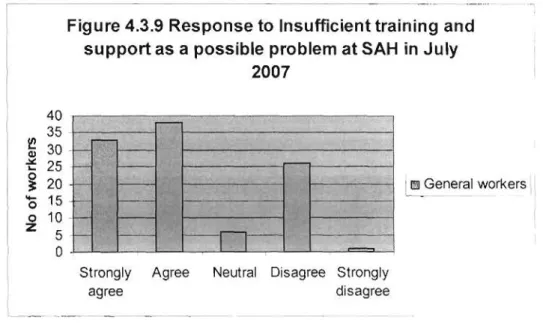
- LACK OF SUFFICIENT TRAINING AND SUPPORT
- INCOMPETENCE OF CO-WORKERS
- LACK OF ACCOUNTABILITY
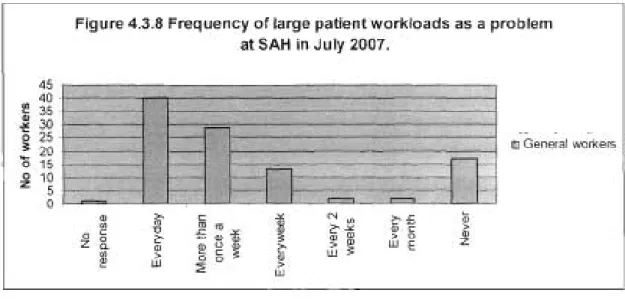
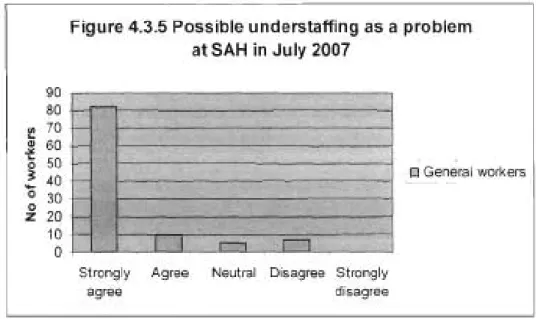
13 individuals said they experience heavy patient workloads every week, 2 individuals said it occurs every 2 weeks and 2 individuals said every month. Regarding the frequency with which the incompetence of co-workers is presented as a problem: 11 employees said that it occurs every day, 8 individuals said it happens more than once a week, 20 individuals said every week, 3 individuals said said to occur every week. 2 weeks and 7 individuals said this happens every month. 54 individuals stated that this had never occurred and there was one individual who did not respond to the question. The results are illustrated in Figure 4.3.12.
The lack of equipment and/or the 6 individuals 4 individuals stated that the condition of existing equipment strongly agreed occurred every day.
POSSIBLE REASONS AND SOLUTIONS FOR PROBLEMS ENCOUNTERED AT St APOLLINARIS HOSPITAL
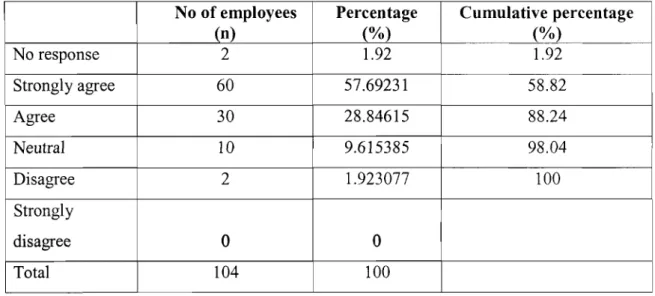
The General Staff was asked whether the lack of sufficiently trained personnel was a consequence of the high staff turnover. Members of the general staff were asked to identify one or more groups of people who they believed showed a lack of accountability. Members of the general staff were asked if they were able to identify members of staff whom they would identify as not responsible.
POSSIBLE GROUPS THAT MAY BE RESPONSIBLE FOR LACK OF RESPONSIBILITY AT ST APOLLINARIS HOSPITAL IN JULY 2007.
REASONS OR POSSIBLE METHODS OF RETAINING STAFF AT ST APOLLINARIS HOSPITAL
General staff were questioned about their stay at St Apollinaris if given a choice to leave. General staff responses when given a choice to stay at St Apollinaris Hospital in July 2007. General staff perceptions of incentives that might attract more workers to St Apollinaris Hospital in July 2007.
General staff were asked to identify the incentives they would have considered appropriate to attract more workers to St Apollinaris Hospital.

POSSIBLE EQUIPMENT PROBLEMS THAT MAY EXIST AT St APOLLINARIS HOSPITAL
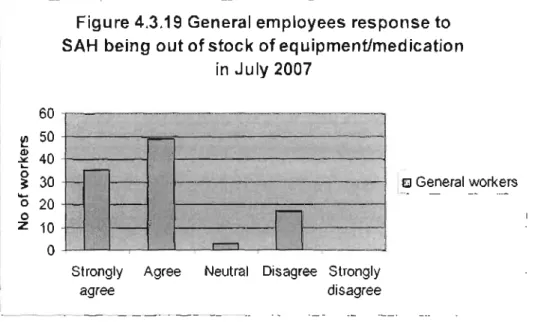
General workers' responses on whether current equipment was in good condition at St Apollinaris Hospital in July 2007. General workers were asked how often they found themselves complaining about the lack or condition of equipment at St Apollinaris Hospital. General workers' perception of the frequency of complaints regarding poor condition or lack of equipment at St Apollinaris Hospital i.
Responses to a questionnaire in which general staff were asked if they were able to identify wards that were under-equipped at St Apollinaris Hospital in July 2007.
GENERAL EMPLOYEES RESPONSE TO QUESTIONS ABOUT MANAGEMENT
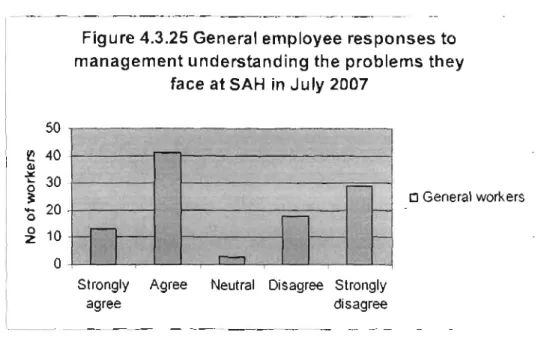
General staff views on reduced levels of essential equipment resulting in compromised patient care at St Apollinaris Hospital in July 2007. Responses from general staff regarding management understanding the issues they were facing at St Apollinaris Hospital in July 2007. General staff are were asked to identify what they would change about St Apollinaris Hospital if given the chance.
The answers included accommodation and better infrastructure of the hospital and surrounding areas, management, more monetary compensation, better/working equipment, more staff and better training and a more comprehensive budget.
THE TOP MANAGEMENT INTERVIEW
- DEMOGRAPHIC DATA
- PROGRAMMES IMPLEMENTED BY TOP MANAGEMENT
- PROBLEMS RECOGNISED BY TOP MANAGEMENT
Top managers were questioned about the formal management training they had received. We asked top managers about their reasons for accepting employment at St Apollinaris Hospital. Top managers were asked about the programs they implemented in St. Apollinaris, and although many have been started, only two members of management have started programs on their own initiative.
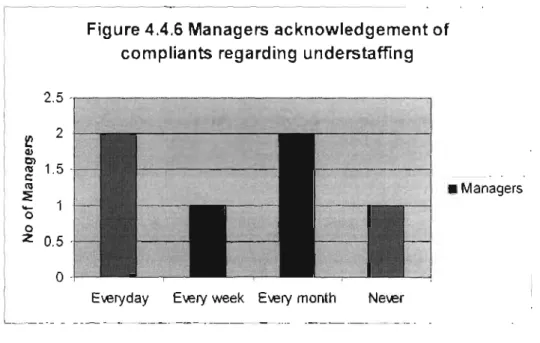
The top managers admitted that there was no instance in which no complaints were ever received. Nor did the complaints have a frequency of once every 6 months.
I _ Managers
- PROBLEMS THAT TOP MANAGERS EXPERIENCED
- TOP MANAGEMENT AND THE HOSPITAL BUDGET
- EQUIPMENT AT ST APOLLINARIS HOSPITAL
- OUT PATIENT SURVEY AT ST APOLLINARIS
- FINANCIAL INFORMATION FROM ST APOLLINARIS HOSPITAL
- CONCLUSION
One individual stated that none of the programs work yet. Other management members stated that all programs are still running and have been successful. One manager stated that they received complaints every week, while 3 stated that it happened every month, and 2 managers stated that it never happened. The results are shown in Figure 4.4.9. Management's acknowledgment of the frequency of complaints of worker incompetence at St Apollinaris Hospital in July 2007.
KEY MANAGERS RESPONSE TO BUDGET STRUCTURE AT ST APOLLINARIS HOSPITAL JULY 2007.
DISCUSSION, CONCLUSIONS AND RECOMMENDATIONS
- INTRODUCTION
- RESPONSE RATES AND DEMOGRAPHIC INFORMATION
- OBJECTIVE 1: THE HUMAN RESOURCES COMPONENT
- OBJECTIVE 2: THE MANAGEMENT COMPONENT AT ST APOLLINARIS HOSPITAL
- OBJECTIVE 3: THE OUT PATIENT COMPONENT AT ST APOLLINARIS HOSPITAL
- OBJECTIVE 4: THE EQUIPMENT COMPONENT AT ST APOLLINARIS HOSPITAL
- OBJECTIVE 5: THE FINANCIAL COMPONENT AT ST APOLLINARIS HOSPITAL
- LIMITATIONS OF THE STUDY
- CONCLUSION
Of the general employees who stated that they were thinking of resigning from St Apollinaris. About 70% of the workers said that they were not satisfied with the accommodation at St Apollinaris. Research must be done to evaluate the functioning of the middle management at St Apollinaris.
An obvious limitation of the study is that it was limited to the rural healthcare institute of St Apollinaris Hospital.
Available at http://www.hst.org.za/publications/167. strategic decision-making approach, McGraw-Hill Irwin, New York Noe & Hollenbeck & Gerhart & Wright. Rural Doctors Association of Southern Africa, Registration and Recruitment of Foreign Qualified Doctors, available at. http://www.rudasa.org.za/download/foregindocs.doc. Accessed 2 June (07) Rural Health Initiative, available at http://www.rhi.org.za. supply chain, second edition, New York, New York.
KZN Department of Health, St Apollinaris Hospital, Available at http://www.kznhealth.gov.za/stapollinarishospita1.htm.
LETTER OF INFORMED CONSENT
INTERVIEW SCHEDULE FOR GENERAL EMPLOYEES Interview Schedule
If a negative answer to the above, in what respect has the work at St Apollinaris Hospital not met your expectations. 11. If yes to the above question, how often do these problems occur at the institute? OJ Strongly agree rn Agree rn Neutral [I] Disagree rn Strongly disagree I 12.3 Is the lack of sufficiently trained staff a result of high staff turnover.
OJ Strongly agree rn Agree rn Neutral [I] Disagree rn Strongly disagree I 12.4 Is the lack of accountability primarily from.
INTERVIEW SCHEDULE FOR TOP MANAGERS
Interview Schedule
What measures have you taken since you started at St. Apollinaris to ensure the upliftment of the institute? What, in your opinion, are the most frustrating factors of working at St. Apollinaris Hospital.
LETTER OF PERMISSION FROM ST APOLLINARIS HOSPITAL
FAX TRANSMISSION SHEET
LETTER OF APPROVAL FOR STUDY FROM DEPARTMENT OF HEALTH - KWAZULU NATAL
LETTER OF ETHICAL APPROVAL