Conference Proceedings published by the South African Association of Public Administration
and Management (SAAPAM)
The 2
ndAnnual Conference on the Challenges of Local Government in
South Africa
ISBN: ISBN: 978-0-620-56749-7
EDITORS:
Professor M.P. Sebola
Department of Public Administration, University of Limpopo Professor J.P. Tsheola
Department of Development Planning & Management, University of Limpopo Professor K.G. Phago
Turfloop Graduate School of Leadership, University of Limpopo Dr S. Balkaran
Department of Public Administration & Management, Tshwane University of Technology
The Ranch Protea Hotel, Polokwane, South Africa August 15-16, 2013
Articles in this Conference Proceedings may be reproduced for pedagogic and non-commercial purposes. For republication in a journal, the author(s) have to secure written permission from the publisher, SAAPAM.
Publication decisions on each article were based on triple-blind peer review process of specialists with knowledge in the subject of local government in South Africa. The review process and Conference Proceedings were compiled in accordance with the Editorial Policy of the Journal of Public Administration published by SAAPAM.
The SAAPAM Limpopo Chapter is the provincial chapter of the well-established and esteemed academic association of the South African Association of Public Administration and Management, which draws together experts in subjects of public administration, development management and local government, among others. For years, SAAPAM has used its accredited Journal of Public Administration to serve the goal of knowledge exchange between academics, researchers and practitioners beyond South Africa’s borders. This compilation provides only 23 articles out of the 68 papers received and read at the Conference. This Conference Proceedings is published online in order to be as accessible to as many academics, researchers and practitioners interested in South Africa’s local government, as possible.
.
The Conference Proceedings is also printed in CD and e-Book at the University of Limpopo, South Africa, August 2013.
© Copyright 2013, SAAPAM
P.O. Box 14257, Hatfield, Pretoria, 0028, South Africa
Copyright of this Conference Proceedings as a whole and in part is vested in the South African Association of Public Administration and Management; and, no part may be reproduced in whole or in part without SAAPAM’s expressed permission in writing. All material used and presented in articles are the sole responsibility of author(s); and, the editors take no responsibility for author(s) transgressions on copyrights.
Professor M. Montesh, University of South Africa Dr M.H. Maserumule, Tshwane University of Technology Dr K. Dipholo, University of Botswana
Dr B. Mothusi, University of Botswana
Professor C.C. Ngwakwe, University of Limpopo Professor O. Mtapuri, University of Limpopo Professor D.M. Mello, Northwest University
Dr N.W. Nkuna, Department of Cooperative Governance and Traditional Affairs Dr L.B. Mzini, North West University
Professor F.G. Netswera, University of Limpopo Professor L.de.W. Fourie, Unitech of New Zealand Professor M. Marobela, University of Botswana
Professor B.C. Basheka, Uganda Technology and Management University Dr R.B. Namara, Uganda Management Institute
Professor P. Msweli, University of Limpopo Professor K.O. Odeku, University of Limpopo
Dr N. Matsiliza, Cape Peninsula University of Technology Professor M.S. Binza, Cape Peninsula University of Technology Professor R.S. Masango, Nelson Mandela Metropolitan University Professor Z. Mpehle, University of Limpopo
Mr R.K. Manyaka, University of Limpopo
GOVERNMENT IN SOUTH AFRICA 1 M.P. Sebola, J.P. Tsheola K.G. Phago & S. Balkaran
THE ROLE OF LOCAL GOVERNMENT: DEVOLUTION,
DEVELOPMENT, PUBLIC PARTICIPATION AND COLONIALITY IN
A DEMOCRATIC SOUTH AFRICA 10
J.P. Tsheola, M.D. Ledwaba & C. Mabila
INTEGRATED CRISIS MANAGEMENT, LOCAL GOVERNMENT
AND REGIONALISM: A CONCEPTUAL FRAMEWORK 24 S.B. Ramokgadi
THE LIMITATIONS OF THE WARD COMMITTEE SYSTEM
IN THE SOUTH AFRICAN MUNICIPALITIES 38
P.H. Munzhedzi & K.G. Phago
GENDER INEQUALITY AND POWER RELATIONS
IN LIMPOPO PROVINCE’S MUNICIPALITIES 49
S. Balkaran
PERFORMANCE MANAGEMENT IN SOUTH AFRICAN LOCAL GOVERNMENT: IS IT A MATTER OF A SYSTEM,
MODEL OR MEASUREMENT? 65
N.W. Nkuna
THE DILEMMA OF UNFUNDED MANDATES FOR LOCAL
GOVERNMENT IN SOUTH AFRICA 81
M. Basdeo & O.S. Sibanda
IMPROVING ACCOUNTABILITY IN SOUTH AFRICAN LOCAL GOVERNMENT: ELEMENTS FOR EFFECTIVE
LOCAL GOVERNMENT ACCOUNTABILITY 89
M.M. Mashamaite
CHALLENGES OF LOCAL GOVERNMENT IN SOUTH AFRICA 112 M.J. Bogopa
ISSUES OF CORRUPTION IN SOUTH AFRICA’S MUNICIPALITIES 121 B.K. Lekubu
CORRUPTION IN MUNICIPALITIES: A LEADERSHIP CRISIS 134 K.I. Theletsane
THE ROLE OF ASSET RECOVERY IN THE FIGHT AGAINST
CORRUPTION IN SOUTH AFRICA 143
M. Montesh
SOUTH AFRICA’S CORRUPTION MISNOMER, SOCIETAL
PERCEPTIONS AND DEVELOPMENTAL MANDATE FOR LOCAL
GOVERNMENT DEFERRED: EPISTEMOLOGICAL QUESTIONING 158 J.P Tsheola, P. Nembambula & S. Mtsweni
THE IMPLEMENTATION OF INTEGRATED DEVELOPMENT PLAN
FOR SERVICE DELIVERY PURPOSE IN SOUTH AFRICAN MUNICIPALITIES:
ARE WE THERE YET? 174
R.K. Manyaka & T.S. Madzivhandila
INTEGRATED DEVELOPMENT PLAN (IDP) AS AN IMPLEMENTATION VEHICLE FOR SERVICE DELIVERY FOR LOCAL GOVERNMENT IN
SOUTH AFRICA 186
S.F. Tau
PARTICIPATION OF GOVERNMENT DEPARTMENTS IN THE INTEGRATED DEVELOPMENT PLANNING PROCESSES IN
LIMPOPO PROVINCE’S LOCAL MUNICIPALITIES 195
C.M. Maloka & K.A. Mashamaite
MUNICIPAL SERVICE PARTNERSHIPS: ARE THEY USEFUL IN
ADDRESSING SERVICE DELIVERY BACKLOGS? 202
M.A. Mamabolo
T.M. Ramoroka
SOCIAL MEDIA AS A TOOL FOR DEMOCRATIC GOVERNANCE
IN THE SOUTH AFRICAN LOCAL GOVERNMENT 219
S.D. Ndou & M.P. Sebola
CONTEXTUALISING COMMUNITY PARTICIPATION FOR GIVING EFFECT TO THE LOCAL GOVERNMENT TURNAROUND STRATEGY
IN SOUTH AFRICA 229
N.W. Nkuna
ENVIRONMENTAL PROTECTION AND PUBLIC PARTICIPATION:
DISCOVERING MECHANISM TO CREATE LIVEABLE AND SUSTAINABLE
COMMUNITIES IN EMFULENI LOCAL MUNICIPALITY 240
L.B. Mzini
DETERMINACY OF SAFETY OF DISASTER FLOOD HAZARD ZONES IN SOUTH AFRICAN MUNICIPALITIES: INTERFACING SOCIAL AND
TECHNICAL KNOWLEDGE 255
M.H. Modipane & M.P. Sebola
THE ROLE OF FORMER BANTUSTAN UNIVERSITIES IN THE DEVELOPMENTAL MANDATE OF LOCAL GOVERNMENT
IN POST-APARTHEID SOUTH AFRICA 265
J.P. Tsheola & K.J. Maphatane
1
M.P. Sebola, J.P. Tsheola K.G. Phago & S. Balkaran
EDITORIAL: THE 21ST CENTURY CHALLENGES OF LOCAL GOVERNMENT IN SOUTH AFRICA M.P. Sebola, University of Limpopo J.P. Tsheola, University of Limpopo K.G. Phago, University of Limpopo S. Balkaran, Tshwane University of Technology
INTRODUCTION
This compilation does not seek for fundamentalist universality or turths; instead, it encourages pluriversal epistemic perspectives. Grosfoguel (2007: 221) argues that in the so-called post-independence era, the “colonial axis” remains inscribed in relation to domination, exploitation as well as in “the production of subjectivities and knowledge”. Citing from Frederick Cooper (2003), Ndlovu-Gatsheni (2007: 174) emphasizes that “meta-narratives of anti-colonialism and nationalism tended to obscure the nuances of colonial history”. In the modern/colonial world-system, the oppressed who are socially located in the subaltern position, are made “to think epistemically like the ones on the dominant positions” (Grofoguel, 2007: 213). Whereas there can be no claim of epistemic populism “where knowledge produced from below is automatically an epistemic subaltern knowledge”, the latter perspectives are knowledge “coming from below that produces a critical perspective of hegemonic knowledge in the power relations involved” (Grosfoguel, 2007: 213). Africa is yet to attain emancipation, “complete capture and control” of its development; and, at each turn of history, the alternative path is “commissioned to the West” (Kazingizi, 2009: 5, 6). Indeed, the “mythology about the „decolonization of the world‟ obscures the continuities between the colonial past and current global colonial/racial hierarchies and contributes to the invisibility of „coloniality‟ today” (Grosfoguel, 2007: 220). Is there anything such as
“post-apartheid” South Africa? Mkandiwire (2011: 22) makes a sour but intrinsically valid point on the coloniality of knowledge which is gripping Africa, including South Africa, thus:
“With current focus on interest, greed, rent-seeking, etc. and institutions, much less attention is paid to ideas which are simply dismissed as camouflage for class material interest or are part of the metanarratives that are now held in contempt. … The collapse of the educational system, the parlous state of Africa‟s publishing industry and the academic rituals and traditions of footnoting and citation, the self-inflicted misrepresentation by the many buffoons that somehow strutted and fretted on the centre stage of African politics … the cumulative effect of all this was tantamount to self-erasure”.
The constitutional responsibility given to local government in a democratic South Africa is complex and intricately interwoven with the unmasking, resisting and destroying the legacies of colonialism and apartheid. The rational for giving this momentous responsibility for development to the local sphere of development is concocted around the notion of the local state of the point of contact between policy and society.
The publics experience policy in terms of their lived daily experiences at the micro-scale of existence. However, the total impact experienced by the publics in their localities emanates from an idea or conceptualization of processes of change, including development. As evidenced through the evolution of concepts such public administration, sustainable development, public management and corruption, societal transformation involves deep slippages and opacity that entail thorough cognitive engagement for production of relevant knowledge.
Mkandawire (2011) writes that there is copious volumes of knowledge which is, however, largely irrelevant for
2
M.P. Sebola, J.P. Tsheola K.G. Phago & S. Balkaran
Africa. The same logic is relevant to the knowledge that the local government in South Africa requires in order to pursue the goal of a local developmental state.
It is in this context that the SAAPAM Limpopo Chapter convened its Second Annual Conference on
“the challenges of local government in South Africa”. Publication decisions on each article were based on triple- blind peer review process of specialists with knowledge in the subject of local government in South Africa. The review process and Conference Proceedings were compiled in accordance with the Editorial Policy of the Journal of Public Administration published by SAAPAM. The SAAPAM Limpopo Chapter is the provincial chapter of the well-established and esteemed academic association of the South African Association of Public Administration and Management, which draws together experts in subjects of public administration, development management and local government, among others. For years, SAAPAM has used its accredited Journal of Public Administration to serve the goal of knowledge exchange between academics, researchers and practitioners beyond South Africa‟s borders. This Conference Proceedings is published online in order to be as accessible to as many academics, researchers and practitioners interested in South Africa‟s local government, as possible. As the saying goes, knowledge is power; and, local government will require such power to win vies against coloniality lest the developmental mandate is deferred eternally.
KNOWLEDGE POWER: STRUGGLES AND VIES OF DECOLONIALITY
There exists no prior experience of a similar society that had experienced coloniality to the extent that South Africa endured, which adopted specific local government strategies that could now provide lessons for locally driven development. Given the enormity of the development task constitutionally accorded to local government in South Africa, could it be argued that the state was clumsy in making such a determination? It appears that unmasking, resisting and destroying the matrices of global coloniality entails an overt national political agenda and campaign (Grosfoguel, 2007; Ndlovu-Gatsheni, 2007), rather than a deferral to local government in the guise of people-centeredness, state-public partnership or public participation for exercise of active citizenry (Alloggio & Thomas, 2013). Criticising the most recent National Development Plan‟s call for civic virtues of sacrifice amidst the expectation of an active citizenry, Alloggio & Thomas (2013: 109) conclude that the majority of such citizens are ill-equipped to make such sacrifices because they are the same people who suffered “the worst forms of injustice under apartheid” who are presently required to be responsible for their own failures and, therefore, for their transcendence and transformation in the harshness of post-apartheid coloniality. Indeed, the abolition of colonialism and apartheid by itself does not obliterate lived experiences and matrices of existence of coloniality and apartheid. To this extent, vexed questions need to be posed as to how is local government expected to carry-out its constitutional developmental mandate in the unforgiving circumstances of coloniality of being, power and knowledge? The answers to these questions cannot be straightforward fundamentalist universality and truths. It should be expected that there will be complexity and pluriversal perspectives on these questions. However, the local government‟s pragmatic developmental mandate entails production of applied knowledge that could be immediately usable in the localities. Universities and research institutions have always held a special place in the production of knowledge for regional and local economic development (Woodward, Figueiredo, & Guimaraes, 2006; Youtie, & Shapira, 2008; Mkadawire, 2011; Tilak, 2011).
3
M.P. Sebola, J.P. Tsheola K.G. Phago & S. Balkaran
Knowledge production entail vies and struggles for domination. Mkandawire (2011: 25) writes eloquently that “the ravages of the consultancy syndrome that rewards reports over peer-reviewed academic papers, against the repressive practices and criminal negligence of their respective national governments and against the pressures for the commercialization of educational systems” have taken over hold of knowledge production. Western global designs have relied on epistemic strategy that hides away the location of the subject of enunciation in order to expand coloniality and to construct dominant hierarchies of “superior and inferior knowledge and, thus, of superior and inferior people around the world” (Grosfoguel, 2007: 214). In this context, copious knowledge that is presently at the disposal of local government in South Africa is equally irrelevant. In agreement with Cooper (2003), Ndlovu-Gatsheni (2007: 174) points out that “binaries of colonizer/colonized and domination/resistance, which began as useful devices for opening up questions of power, ended up constraining more complex scholarly interpretations of how power was deployed, engaged, contested, deflected and appropriated”. In a similar way, conceptualization does not escape the “location in the power structures ….
(of) the class, sexual, gender, spiritual, linguistic, geographical, and racial hierarchies of the „modern/colonial capitalist/patriarchal world-system‟ …. (because) “knowledges are always situated” (Grosfoguel, 2007: 213). It is in the same context that the SAAPAM Limpopo Chapter has hoped to make a contribution to the pluriversal epistemic tradition of knowledge production. These situations of knowledge production are, however, problematic as they are amenable to labelling, variously as “afro-centric epistemology”, “geopolitics of knowledge”, “body-politics of knowledge” and so on (Grosfoguel, 2007). All fundamentalisms, whether Eurocentric, Third Worldist or anti-European, assume that “there is only one sole epistemic tradition from which to achieve Truth and Universality” (Grosfoguel, 2007: 212). It is not the hope of this compilation to be the custodian of all knowledge relating to challenges of local government in South Africa. However, the significance of this contribution lies in the epistemic social and geographic location of the researchers, academic and practitioners who enunciate the knowledge on the challenges of local government in South Africa.
It should not be surprising that most of the knowledge available is unusable for Africa (Mkandawire, 2011) because the continent was characterized over different periods in history as “people without writing”,
“people without history”, “people without development” and, now, “people without democracy” (Grosfoguel, 2007: 214). It is in this characterization that the epistemological tradition informing the hegemonic perspective on development in Africa and South Africa, in particular, has to be tested. Hegemonic conceptualization of Africa‟s and South Africa‟s development is in no small way, part of the global designs articulated to the simultaneous production and reproduction … (of) the global racial/ethnic hierarchy of Europeans and non- Europeans” (Grosfoguel, 2007: 214). Along with the concept of “invention of tradition”, Ndlovu-Gatsheni (2007: 175) cites Ranger and Hobsbawn‟s (1983) theory that colonialism left behind two ambiguous legacies of
“invented traditions” that have continued to influence the ruling class culture as well as the traditional African cultural features reinvented during colonialism, to the extent that a return to an original African culture faces the ironic risk of embracing a set of colonial inventions. So, local government in South Africa is faced with developmental challenges that cannot be conceptualized in accord with the prevalent societal values, cultural virtues and morality. The existing “colonial situation” refers to “the cultural, political, sexual, spiritual, epistemic and economic oppression/exploitation of subordinate racialized/ethnic groups by dominant racialized/ethnic groups with or without the existence of colonial administrations” (Grosfohuel, 2007: 220) which engulfs localities in South Africa, providing complex matrices of coloniality within which local
4
M.P. Sebola, J.P. Tsheola K.G. Phago & S. Balkaran
government is challenged to be developmental. Indeed, “returning to the source is not possible … (because) “the sovereignty of the lost „Self‟ of the colonies cannot be restored” (Spivak, 1994 cited in Ndlovu-Gatsheni, 2007:
175-176). That is, the colonized will carry a painful nostalgia of a lost origin because historical and cultural effects of colonialism are irreversible” (Spivak, 1994 cited in Ndlovu-Gatsheni, 2007: 175-176). In practice, coloniality is characterized by both continuities and discontinuities. However, entry into a definition and/or description and practice of development for Africa and South Africa, in particular, without critical pluriversal epistemic examination will remain partial, as knowledge itself.
These concepts of colonial hegemony, mimicry and hybridity are helpful in drawing insight into the formulation of the meaning of knowledge, as applied to Africa and South Africa, in particular. Just as in the ambivalence of the construction of colonial hegemony, development as one of its products involves terrain of
“slippages, excesses and contradictions” (Ndlovu-Gatsheni, 2007: 175). Mimicry involves the “menace” of double articulation and vision, which is “a complex strategy of reform, regulation and discipline, which appropriate the „Other‟ as it visualized power” (Ndlovu-Gatsheni, 2007: 175). Hybridity is a strategic reversal of the process of domination through disavowal wherein the production of discriminatory identities secured the pure and original identity of authority (Bhabha, 1994 cited in Ndlovu-Gatsheni, 2007: 175). Experiences are ambiguous because coloniality elicited ambiguous conduct as a “‟historical anthropology of cultural confrontation – of domination and reaction, struggle and innovation‟ and that its impact „altered everyone and everything involved‟” (Comaroff & Comaroff, 1991: 34 cited in Ndlovu-Gatsheni, 2007: 176). It does appear that “the struggles of the dominated were purely ideological for they necessarily involved an effort to control the cultural terms by which the world was ordered and power legitimized” (Comaroff & Comaroff, 1991: 34 cited in Ndlovu-Gatsheni, 2007: 175-177). Is the notion of a National Development Planning appropriate for South Africa‟s local developmental government merely for its prioritization of active citizenry as a new approach?
How new is the NDP‟s new approach? Allogio & Thomas‟ (2013) special volume on the National Development Plan responds in the negative. How else is the local government supposed to address developmental challenges within the context of coloniality where the nation-state is consumed in the coloniality of konweledge? Articles in this compilation are attempting to unmask the challenges of local government in South Africa ranging from coloniality of local context, corruption, partnerships, public participation, integrated development planning, environmental planning and knowledge production by universities.
Decoloniality cannot be expected to be smooth sailing. To this extent, submissive reception and endurance of the coloniality of knowledge implies that the victim offers no moral and/or physical resistance to the tyrants‟ devilish outrages and scorn (Douglass, 2009). That is, if Africa accepts that its societies are uniformly corrupt, as measured through the crucibles set by alien cultural values and moralities, then such a status quo of coloniality of knowledge will persists. Coloniality of knowledge too entails a struggle of resistance. It is in this context that “the crisis of the African university is closely related to the crisis of development” (Mkandawire, 2011: 25). The limits of Africa cannot be freed from oppression without costs borne through labour, suffering and sacrifice (Douglass, 2009). Dascal (2007) identifies the “colonization of the mind” as one of the most prominent varieties of the subtle and lasting manifestation of colonialism. That is, the eradication of the “visible forms of political colonialism” left a legacy of the most damaging “epistemic violence” involving “the taking possession and control of its victims‟ minds” (Dascal, 2007). Development in Africa and South Africa is intricately intertwined with deep paradoxes of the possibility and/or impossibility of
5
M.P. Sebola, J.P. Tsheola K.G. Phago & S. Balkaran
complete decoloniality of the mind (Dascal, 2007; Grosfoguel, 2007; Maldonado-Torres, 2007; Ndlovu- Gatsheni, 2007, 2013; Gordnon, 2011).
ISSUES OF LOCAL GOVERNMENT IN SOUTH AFRICA
This compilation provides 23 articles out of the 68 papers read at the Conference. The first contribution by Tsheola, Ledwaba & Mabila discusses the matrices of coloniality within which the challenges of South Africa‟s local government should be interrogated. This article incites nuance framing that questions the relevance and appropriateness of the public policy mandates for local government, given the context of coloniality and the impending struggles of decoloniality. The inevitable conclusion it makes is that decoloniality requires an unambiguous political program that is led through national state activism because development for societies such as that of South Africa cannot be contemplated within the matrices of coloniality. That is, the giving of the developmental mandate and exercise of active citizenship responsibilities to the local government is an unwarranted deferral of obligation to unmask, resist and destroy coloniality.
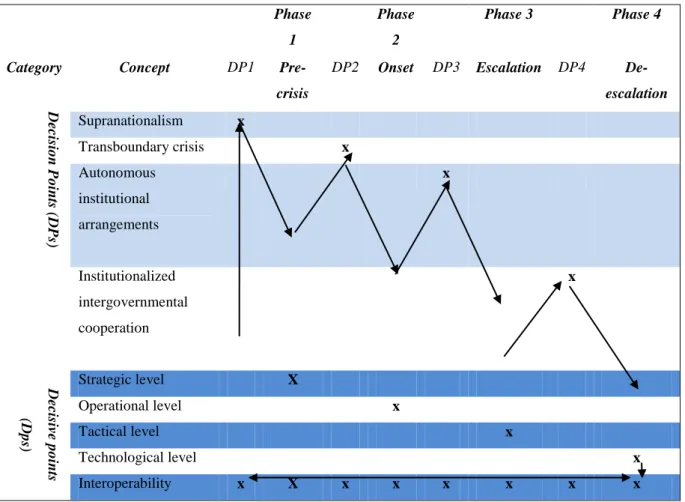
The conceptual framework of local government integrated crisis management for regionalism is analysed in the second contribution by Ramokgadi. The article follows international tendency by drawing lessons learned from military experiences, knowledge and skills related to crisis intervention and management.
The article reflects on the historical evolution of disaster management policies in South Africa with specific focus on divergences and convergences in local government structures, institutional machineries, political leadership and interoperability. Munzhedzi & Phago discusses the limitations of Ward Committees as one of the vehicles for the provision of public participation in South Africa‟s local governance. Ward committees were also considered with a particular aim which is not limited, to identifying and discussing local needs, helping communities to prioritise their needs, formulating proposals for the solution of identified local needs, determining the extent to which communities can satisfy their needs on a self-help basis, and developing a plan of action for their community areas. However, questions may be asked about their relevance in the local government sphere in South Africa. This is an attempt to highlight the limitations of ward committee system in the South African municipalities as an initiative intended to enhance public participation.
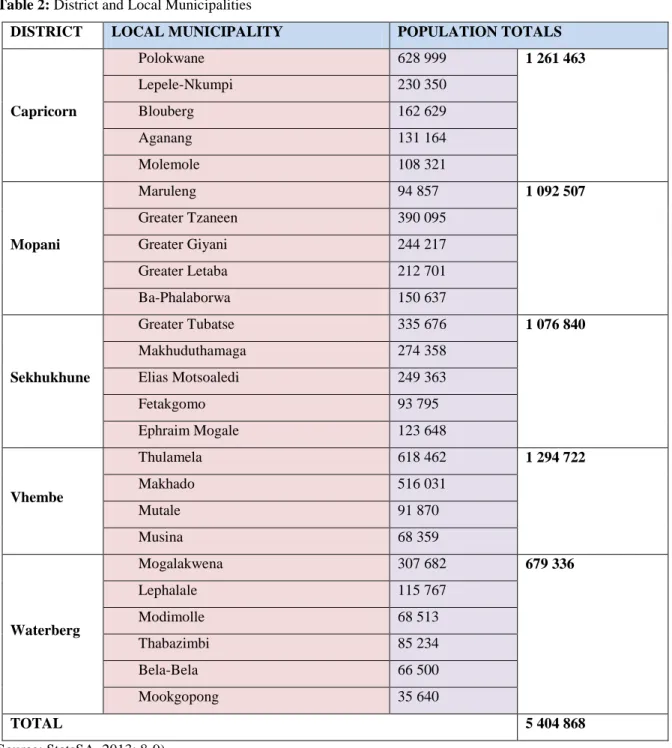
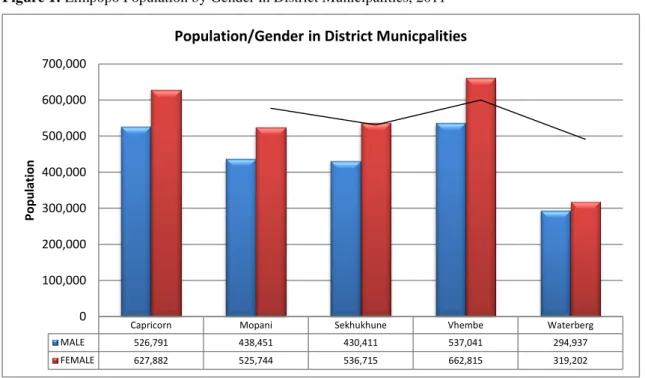
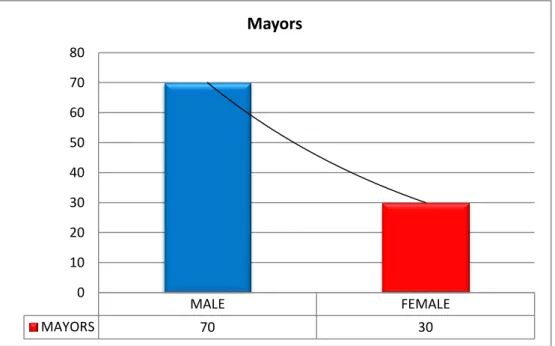
Balkaran points to the unused potential occasioned by gender inequality in the municipal power structures and relations. The narrative on local government‟s institutionalised responsibility to enhance gender equality with initiatives that support women's empowerment cannot be separated from associated developmental state theories. This article explores transformatory leadership at executive council, mayoral and senior management levels in the five District and twenty-five Local Municipalities in Limpopo Province. Nkuna questions performance management for local government to establish if it were a system, model or measurement. The argument is put forward in a critical perspective that exposes the variety of conceptualisations that practitioners are confronted with while attempting to develop such systems. He argues that transferring systems that have worked well in closed business like organisations will remain another management fad that will haunt the much anticipated developmental local government is South Africa for times to come.
Another sour challenge for local government is raised by Basdeo & Sibanda through the dilemmas of unfunded mandates which are given by the national state. These authors argue that unfunded mandates reflect systemic weaknesses of decentralised or federal allocation of powers and functions. Although there are
6
M.P. Sebola, J.P. Tsheola K.G. Phago & S. Balkaran
principled objections, unfunded mandates remain constitutional. Given the wide incidence of unfunded mandates the critical question arises as to how in a decentralised system, one level of government can impose mandates with cost implications on another. They question how is it constitutionally justifiable? Mashamaite outlines elements of effective local government accountability. The article concludes that in order to improve accountability in South African local governments, institutional bodies meant to enhance accountability should be evaluated continuously to assess their effectiveness.
Corruption has been in the news headlines in recent years; and, Matlala & Dintwe tackle the issues of procurement fraud red flags in the corporate model of municipal governance. The many municipalities that have had qualified audit reports for financial mismanagement, fraud, corruption and have been placed under administration, attest to some of the effects. Apart from the reactive measures such as investigation and prosecution of the perpetrators, there is a need to develop the required capacity for the early detection and implementation of preventative measures to deal with procurement fraud. The authors argue that if not effectively dealt with, the escalation of procurement fraud could have very adverse impacts on corporate governance in the South African municipalities; hence, it is imperative to use all available avenues including red flags to detect incidents of fraud.
Bogopa describes the challenges of local government in South Africa. It is the aim of this empirical study to investigate performance management in local government in order to ascertain the nexuses between performance management, corruption, skills shortages, political deployment and accountability as features that have direct or indirect link to municipal performance. The article will also suggest measures which if implemented, could see local government being the ideal choice of employment for various people. Lekubu revises issues pertinent to corruption in South Africa‟s municipalities; whereas Theletsane explores leadership crisis as one of the important components that explain the prevalence of corrupt action. Lekubu suggests that a major problem facing many municipalities is the small revenue base in the poorer areas. This is largely a structural problem that cannot be blamed on councillors and municipal officials. However, all efforts to overcome this stumbling block are being undermined by three key factors that are wholly avoidable: corruption, financial mismanagement and the appointment of senior officials solely on the basis of political connectivity and/or employment equity considerations. Municipal Managers tend to be under-qualified, overpaid and consequently do not perform. Theletsane addresses issues related to corruption and good governance in the South African municipalities as a leadership crisis. Failure of leadership and resultant corruption are a consequence of break down in discipline. Despite municipalities claims that they are fully committed to promoting democracy and human rights, many people in South Africa are denied an opportunity to participate meaningfully in policy formulation and other important activities that directly affect their lives. Although some municipalities have achieved commendable progress, it is a fact that municipalities are still experiencing a serious development crisis. The article further analyse corruption within municipalities and the impact it has on good governance. The issue of corruption in municipalities is indeed important to address not only because it is a “buzzword”, but also because it destroys the social and moral fibre of a society.
A democratic South Africa has put in place a variety of measure to deter, prevent and arrest corruption, including asset recovery. Montesh discusses the latter as instruments for the fight against corruption. He argues that asset recovery is a vital part of the war against corruption. It hits the corrupt where it hurts most - the pocket. But most importantly, forfeiture is a vital weapon to take the profit out of corruption. This is especially
7
M.P. Sebola, J.P. Tsheola K.G. Phago & S. Balkaran
important in economically motivated crime where deterrence is low at the moment. Tsheola, Nembambula &
Mtsweni raise epistemological question on the commonly accepted conceptualization of corruption. This article seeks to question the general acceptance of the hegemonic conception of corruption cast against South Africa‟s local government and to argue that some of the activities that are cast through this conceptualization may in practice be providing the opportunity for emancipation and development of former colonies. That is, the hegemonic conceptualization of corruption needs to be questioned and tested for its integrity and validity within the South African cultural values and morality matrices, which are inherently issues of “nostalgic” coloniality rather than pure African tradition. The conception of “clean saintly government” is value-laden; and, the key problem is that South Africa is trapped in such conceptualization of corruption as a crucible litmus test, to the extent that the strive to attain the perceived cleanliness or saintliness could as well be a deferral of the developmental mandate of the local government.
Manyaka & Madzivhandila, frame vexed questioning that teases out the emotive issues of the general lax and satisfaction with the implementation of integrated development planning for service delivery. The article argues that whereas the concept of IDP was introduced essentially to ensure effective and efficient service delivery, it is ineffectively implemented resulting in unresponsive, ineffective and inefficient service delivery in South Africa municipalities. The purpose of this article is therefore to examine the implementation of IDP in South African municipalities in order to determine whether it serve its intended objective of service delivery improvement. The article concludes by proposing measures for optimising the implementation for service delivery purpose.
Tau posits the Integrated Development Plan as the vehicle for local government service delivery. This article focuses on the IDP as an implementation vehicle within municipalities to deliver services to the people of South Africa. It is very much pivotal that we bear in mind that municipalities are the government closest to the people, and as a result have an obligation to delivery services as the custodian of IDP. The IDP is an implementation vehicle in the sense that it guides municipal officials and municipal stakeholders to prioritize and deliver goods and services to the people. In this article, the author follows the qualitative approach where descriptive data will be produced. The processes of integrated development planning provisions for the participation of government department are examined by Maloka & Mashamaite. This article argues that there is a need for sector department‟s participation in the municipal planning processes in order for Limpopo Province to realise the level of integration it seeks to achieve. Therefore, the purpose of this article is to evaluate and analyse the role and importance of participation of government departments in the integrated development planning.
Mamabolo analyses the role of Municipal Service Partnerships in addressing service delivery backlogs.
Municipalities are therefore under enormous pressure to accelerate service delivery to their communities in order to effect socio-economic transformation as per the Municipal Service Partnerships (MSPs) that have been introduced as a mechanism for optimising service delivery. It is within this context that the article seeks to assess the effects of MSPs on service delivery in South African municipalities in order to identify issues and challenges inherited in these partnerships. The article will argue from the policy implementation perspective to expose the MSPs failure to ensure proper service delivery within municipalities. It will conclude by proposing measures for optimising the alternative of MSPs as mechanisms of service delivery in South Africa. Ramoroka addresses public participation from the perspective of local government addressing safety and fear of crime in
8
M.P. Sebola, J.P. Tsheola K.G. Phago & S. Balkaran
their areas of jurisdiction. This article argues that the Crime Prevention through Environmental Design (CPTED) tool can be used effectively and efficiently to reduce and prevent crime within the congested urban areas, whilst simultaneously reducing the costs associated with the policing and security services. Theoretically, the article argues that local governments could adopt the CPTED principles of surveillance and visibility, territoriality, access and escape routes, image and aesthetics and target hardening within congested urban landscapes. The article concludes that local governments could use their legislative provisions to mobilize popular community participation in building defensible and safe urban environments.
From a social media perspective, Ndou & Sebola interrogate the possibility of democratic governance through public participation. This article centres an argument across the notion that if the role of social media is well defined and applied appropriately in municipal planning and management practices it can enhance democratic governance in South Africa. It seeks to provide a conceptual analysis on the use of social media, such as blogs, micro-blogs or electronic social networks, as tools for enhancing democratic governance. The article collects literature on the impact of social media in democratic credibility of government and relates it to a South African local government practice. The article concludes that adaptation to these tools could broaden the democracy agenda of local government in the sense that it will improve public participation and represent the collective good of the society in government action.
Nkuna examines the effectiveness of community participation in giving pragmatic effect to the local government turnaround strategy. This article takes issue on the extent to which contextualization of community participation, more specifically in identifying the community itself, has become a factor in ensuring the effectiveness of the implementation of the Local Government Turnaround Strategy (LGTAS) in South Africa.
The author adopts the view of the tenants of the systems thinking with a postmodern bias as an ontological base.
Eventually a complex reflexive argument that vied along the lines of critical thinking in that context will never be static. The management of environmental protection through public participation is discussed by Mzini. The article reports on the assistance provided to the School on matters of illegal dumping in the surrounding.
Littering and illegal dumping are seen as deleterious side-effect and worldwide public health problem.
Legislation at the different levels of government supports the implementation of waste mitigation plans; and, the article concedes that public participation is critical to the success of environmental management.
Modipane & Sebola proposes a safety determination for disaster flood hazards tool for use by local government. This article argues that a combination of social and technical knowledge of disaster flood zones will enable South African municipalities to be able to handle disaster flood zone problems. Disaster flood hazard is a phenomenon that threatens people‟s social, economic and environmental systems with an exception of loss or damage to property. Finally, Tsheola & Maphatane question former Bantustan Universities‟ capabilities to produce relevant usable knowledge for local government‟s developmental mandate. There is a momentous amount of knowledge in the world today; however, much of it, if not all, is irrelevant and unusable for Africa.
There is no historical example of a country that had successfully traversed the same route of decoloniality as what South Africa‟s local government is expected to trot. South Africa‟s local government is accorded a constitutional responsibility to be developmental, and the knowledge that is supposed to be used is not traditionally African. Perhaps, it should be asked if there was any knowledge that is uninfected by the colonial encounters in Africa. Presently, South Africa‟s local government practices are swamped by the consultancy syndrome, driven by “experts” who are trained alien lenses for profiteering, rather than for the decolonial
9
M.P. Sebola, J.P. Tsheola K.G. Phago & S. Balkaran
transformation of society. The question that becomes necessary relates to the role of the former Bantustan Universities in the production of relevant knowledge for local government in South Africa.
REFERENCE LIST
Alloggio, S. & Thomas, K. 2013. Resisting the lure of deferral: realising the South African National Development Plan. Social Dynamics: A Journal of African Studies, 39(1): 108-110.
Cooper, F. 2003. Conflict and connection: rethinking colonial history. In Le Seur, J.D. (ed.) The Decolonization Reader. New York: Routledge.
Dascal, M. 2007. Colonizing and decolonizing minds. The New York Times, 22 May 2007.
Grosfoguel, R. 2007. The epistemic decolonial turn. Cultural Studies, 21(2-3): 211-223.
Kalantzis, M. & Cope, B. 2006. On globalisation and diversity. Computers and Composition, 23(4):
402-411.
Mkandawire, T. 2011. Running while others walk: knowledge and the challenge of Africa‟s development. Africa Development, 36(2): 1-36.
National Planning Commission (NPC) 2012. National Development Plan 2013: Our Future – Make it Work. Pretoria: The Presidency.
Ndlovu-Gatsheni, S.J. 2007. Re-thinking the colonial encounter in Zimbabwe in the early twentieth century. Journal of Southern African Studies, 33(1): 173-191.
Ndlovu-Gatsheni, S.J. 2013. Why decoloniality in the 21st century? The Thinkers, 48: 10-15.
Nkondo, G.M. 2001. Turfloop Testimony: the Dilemmas of a Black University in South Africa.
Johanesburg: Ravan Press.
Shapira, P. & Youtie, J. 2004. University-Industry Relationships: Creating and Commercializing Knowledge in Georgia, USA. Georgia: Georgia Institute of Technology.
Tilak, J.B.G. 2011. Financing higher education in Sub-Saharan Africa. Africanus, 41(2): 4-31.
Woodward, D., Figueiredo, O. & Guimaraes, P. 2006. Beyond the Silicon Valley: University R and D and high-technology location. Journal of Urban Economics, 60: 15-32.
Youtie, J. & Shapira, P. 2008. Building an innovation hub: a case study of the transformation of university roles in regional technological and economic development. Research Policy, 37: 1188-1204.
10
J.P. Tsheola, M.D. Ledwaba & C. Mabila
THE ROLE OF LOCAL GOVERNMENT: DEVOLUTION, DEVELOPMENT, PUBLIC PARTICIPATION AND COLONIALITY IN A DEMOCRATIC SOUTH AFRICA J.P. Tsheola
M.D. Ledwaba
C. Mabila
University of Limpopo
ABSTRACT
The discourse of the role of local government in South Africa has readily accepted the constitutional developmental mandate and activation of popular public participation as given, therefore being captivated by the rhetoric of capacity tests that did not allow for the framing of questions of relevance and appropriateness of these responsibilities for that sphere of government. This article cautions that the historicity of development entails complex matrices involving legacies of slavery, colonialism, neo-colonialism, imperialism, apartheid capitalism, state capitalism, neoliberalism and globalization, which unfold at the local scale through the publics‟
lived everyday experiences, organized through principles of race, gender, ethnicity and such other divisive tendencies, especially for developing countries. The developmental responsibility given to local government in South Africa is, therefore, more than just a matter of capacity and active citizenry tests; instead, it encompasses struggles for unmasking, resisting and destroying a complex myriad of forces and processes that define everyday lived experiences of “coloniality of being, power and knowledge”. This article incites nuance framing that questions the relevance and appropriateness of the public policy mandates for local government, given the context of coloniality and the impending struggles of decoloniality. The inevitable conclusion it makes is that decoloniality requires an unambiguous political program that is led through national state activism because development for societies such as that of South Africa cannot be contemplated within the matrices of coloniality. That is, the giving of the developmental mandate and exercise of active citizenship responsibilities to the local government is an unwarranted deferral of obligation to unmask, resist and destroy coloniality.
INTRODUCTION
The argument of this article is best introduced through the philosophical debate about Africa having to run while others are walking. Mkandawire (2011: 1) argues that “Africa‟s quest for „catch-up‟ and economic development dates as far back, at least, as its humiliating encounter with the West which led to enslavement and colonization”. In this context of “development”, the discourse of local government‟s constitutional developmental mandate in South Africa which is captivated by the rhetoric of lack of capacity should be seen to condone matrices of poorly framed questioning. Often, the conclusions are frustratingly predictable as the cries of “lack of capacity” have grown louder over the recent past. Unsurprisingly, policy prescriptions have uniformly been dominated by “an endless process of reinventing the proverbial or capacity/building exercises”
(Mkandawire, 2011: 21), yet in vain. This article does not seek to underrate the significance of local government capacity and active citizenry tests; however, it rejects the shallowness of framing of capacity questions for carrying out the constitutional developmental mandate and for enforcing popular participation of the exercise of
11
J.P. Tsheola, M.D. Ledwaba & C. Mabila
citizenship. Development and participation are themselves slippery buzzwords and the determination of local government capacity as a static phenomenon will remain a futile “atheoretical” exercise. If there is, as it is, no universal replicability nor general consensus on the meaning and desirability of “development” (Mkandawire, 2011), how definitive is the developmental mandate for local government in the context of coloniality of being, power and knowledge? Given the difficulty of the oxymoron of development as societal vision, historical process of socio-economic transformation and political enhancement of institutions and organizations, how relevant and appropriate is the deferral of the developmental mandate and the exercise of active citizenry to local government sphere?
Historically, the notion of development was itself met with cognitive suspicions as expressed in tomes such as “the myth of development”, “development in crisis”, “the rise and fall of development”, “the impasse of development” and “post-development” (Mkandawire, 2011: 5), among others. The historicity of development entails complex matrices of slavery, colonialism, neo-colonialism, apartheid capitalism, state capitalism, neoliberalism and globalization which unfold at the local scale through the publics‟ lived everyday experiences, organized through principles of race, gender, ethnicity and so on for most developing countries (Grosfoguel, 2007; Maldonado-Torres, 2007; Ndlovu-Gatsheni, 2007, 2013; Gordon, 2011; Mkandawire, 2011). Presently, it can be drawn from Mkandawire‟s (2011: 5) questioning that the “homogenizing thrust” of coloniality has, for most developing countries, normalized and universalized itself through the “compulsions of the market” which are “rechristened as „globalization‟” where “emulation is a consequence of all human exchange”. Even with its universal legitimacy, post-apartheid South Africa appeared not to have the state courage to unambiguously confront, unmask, resist and destroy coloniality. As Pottie (2004: 606) puts it, “redressing the inherited inequalities of apartheid” involves a complex and challenging context in contemporary South Africa. The developmental responsibility of local government is, therefore, more than just a matter of capacity tests, it should embrace planning, management, unmasking, resisting and destroying a complex myriad of forces and processes that defines everyday lived experiences of the coloniality of being, power and knowledge. The constitutional provision for a development local state pales into an irrelevance and inappropriate futility in South Africa‟s context because it expects the local government “to enable markets to work in the name of poverty alleviation” (Pottie, 2004: 606). South Africa, like other developing countries, appears to have consciously opted for development trajectories that would ultimately be “circumscribed by the prevailing circumstances”
(Mkandawire, 2011: 6). Development was itself variously criticised as a disaster of social engineering, dustbin of history, accession to Western superiority, denigration of local knowledge and innovation, as well as a repressive meta-narrative that made for privilege of those defined to hold merit and oppression of those recognized as enthroning mediocrity (Mkandawire, 2011). An unquestioning acceptance of the constitutional developmental mandate for a democratic South Africa‟s local government evinces a deep fallibility in cognition because it predisposes development and post-apartheid society as ahistoric.
Questions of capacity should be extended through those of the relevance and appropriateness of the developmental responsibilities constitutionally accorded to local government. Generally, the developmental mandate for local government is understandably accepted as a given, without questioning. Equally, the goodness in the rationale of public participation as a provision for shifting from passive to active citizenry has become so imposing that its appropriateness and relevance is scarcely questioned. This article sets out to question the two key elements of the discourse of a developmental local government in South Africa, which involve the relevance
12
J.P. Tsheola, M.D. Ledwaba & C. Mabila
and appropriateness of local government developmental mandate and public participation of active citizenry.
Whereas these virtues cannot be reversed, their critical questioning has to be part of the Public Administration discourse, beyond mere capacity and public participation tests.
DEVELOPMENT CONTEXT: LOCAL GOVERNMENT, DEVOLUTION, PUBLIC PARTICIPATION AND COLONIALITY
In examining the role of local government in developing countries such as South Africa, it would be cognitive remiss to cast aside as idle, philosophical questions about the meaning of development and agency.
Much of the criticism of development was focused on the extensive focus on developmentalism that undermined the narratives of emancipation (Mkandawire, 2011). Reddy & Sabelo‟s (1997: 572) observation presents, perhaps, a useful entry to the argument of this article because local government is, indeed, “a peculiar theme, always recognized in developing countries as important, yet seldom comprehensively written about or understood”. That is, development should be part and parcel of societal self-responses to own “historical experiences and social needs” (Mkandawire, 2011: 7). Yet, South Africa‟s local government sphere is given the constitutional mandate to be developmental (Reddy & Sabelo, 1997; Pottie, 2004), with complete ignorance of the lived experience of coloniality of being, power and knowledge. This crucial developmental mandate, though, is accorded within the context of an on-going state-market paralysis and requirement for public participation through the integrated development planning process (Pottie, 2004; Smith, 2004). Given these contextual challenges, local governments in South Africa appear to have commonly settled for the default positioning of technocratic planning that is devoid of the possibility of unmasking, resisting and destroying the matrices of coloniality that continues its grip of the democratic society, almost eighteen years after 1994. The concomitance of the cumulative impacts of the processes of involving the legacies of slavery, imperialism, colonialism, apartheid capitalism, neo-colonialism, neoliberalism and globalization continues to unfold at the local scale through lived experiences of the coloniality of being, power and knowledge (Grosfoguel, 2007; Maldonado- Torres, 2007; Ndlovu-Gatsheni, 2007, 2013; Gordon, 2011). But local governments are given an important developmental mandate, which is tantamount to carrying the responsibility of leading struggles for decoloniality, amidst scarce public capital allocation for implementation, inflexible policy environment and the absence of popular public confidence, with the result that poor communities endure the worst effects within their localities (Smith, 2004; Spalding-Fecher, 2005). The latter could explain the roots of the public struggles that have increasingly become a violent vogue. Unavoidably, local governments are readily blamed for all the development ills as well as for failing to inculcate the spirit of public civic virtues, value and accountability, especially as community reactions involve violent protests (Auriacombe, 2010). That is, as the hope of the integrated development planning processes engendering collective community ownership and control of development fades into thin air, local governments are accused of failing to provide for qualitative public participation in their conduct public administration. The litany of concepts designed to capture the requirements for community consultation and public participation have remained hollow (Theron, 2009). Equally, local governments in South Africa have generally failed to achieve their developmental mandates, to the extent that the nuance National Development Plan (NDP) 2030 has come to emphasize the need for a new approach (National Planning Commission, 2012; Alloggio & Thomas, 2013). Inescapably, the NDP retorts the same approach that was held in the 1994 Reconstruction and Development Programme (RDP), which was substituted
13
J.P. Tsheola, M.D. Ledwaba & C. Mabila
through the 1996 Growth, Employment and Redistribution (GEAR). Apparently, a democratic South Africa‟s development trajectory, especially the constitutional deferral of the developmental mandate to local government fits in with a long genealogy of views that purports Africa as seeking to embark on a route that it knows little about and that such move might bring grief (Mkandawire, 2011). How else should the on-going violent public protests against the local government in South Africa be explained?
The article demonstrates that South Africa‟s development planning processes coerce local governments to seek delivery of their developmental mandates through divisible and exclusive private markets technocratic mechanisms, which are manifestations of coloniality. Indeed, development has more to do with complex processes of “intentionality” and “purposefulness” (Grosfoguel, 2007; Maldonado-Torres, 2007; Ndlovu- Gatsheni, 2007, 2013; Gordon, 2011; Mkandawire, 2011), which the local government cannot control or shape.
This professional technocratic planning approach strives for efficiency above popular dialogue, thereby alienating local communities as political deliberations are invalidated and nullified because of the absence of an overarching political programme of decoloniality. The article proposes that South Africa‟s local governments are, in the prevailing context of coloniality, disempowered through national deferral of developmental mandates and obligations to localities. Enforcement of active citizenry by local government, as this article insinuates, which is assumed to hold the potential to locate ownership and control of direction of the development process in local communities through decision-making processes in development planning, would be in vain within the context of the coloniality of being, power and knowledge (Grosfoguel, 2007; Maldonado-Torres, 2007; Ndlovu- Gatsheni, 2007, 2013; Gordon, 2011) among the majority of the publics. The article argues promotion of qualitative public participation for active citizenry, ownership, control and accountability through local government democracy and public administration would only be feasible and practicable within a comprehensive political national drive and state activism strive for decoloniality. Tacitly, the article suggests that local governments in South Africa tend to be blamed for the absence of public participation and accountability, without adequate analysis of the variable geometric contexts of coloniality within which they are required to execute their constitutional developmental mandates, which may as well be irrelevant and inappropriate. Describing the latter, Reddy & Sabelo (1997: 573) observe that “a major crisis experienced in the system of local government in developing countries is one of ill-adjusted functions”. However, this observation does not seek to describe local governments as holy cows.
The decision-making processes in development planning have never been straightforward prioritization exercises under the continued imposture of coloniality. The latter describes the collective impact and lived experiences at the local state of all myriad of processes, including legacies of slavery, imperialism, colonialism, apartheid capitalism, neo-colonialism, neoliberalism and globalization (Grosfoguel, 2007; Ndlovu-Gatsheni, 2007, 2013; Maldonado-Torres, 2007; Gordon, 2011). That is, local governments in South Africa are required to carry a constitutional developmental mandate within an unforgiving context of “a global power structure that sustains asymmetrical power relations” (Ndlovu-Gatsheni, 2013: 11) at all geographic scales. The persistence of coloniality and subjugation, though, is attributable to a variety of forces or extraversion, including decision- making processes of the local, provincial and national governments themselves. Decoloniality, which defines the struggles to unmask, resist and destroy coloniality (Ndlovu-Gatsheni, 2013), has to be a national government agenda and driven as such. South Africa‟s local government too are not hapless victims of coloniality and subjugation, notwithstanding the pre-eminence of the processes in question. Hence, this article deliberately
14
J.P. Tsheola, M.D. Ledwaba & C. Mabila
adopts a convoluted argument that ultimately purports this sphere of governance as the locus of the furnace that generates public frustration and anger that manifests in violent protests. However, the challenge is in the devolution that is not grounded in the tested relevance and appropriateness of the developmental mandates and such other national public policy responsibilities to the local government. Emphasis on decoloniality should not presuppose a thesis that assumes that history presents intellectual pathways to be slavishly and teleologically emulated; instead, development appears to have involved a process of “groping in the dark” (Mkandawire, 2011). In practice, though, Africa is goaded in order to emulate the development path trotted by others.
Devolution and giving the developmental responsibilities to local government that South Africa has adopted has been flirted with by developed nations such as the United States of America (Honadle, 2001). If development involves “self-discovery”, then South Africa has not as yet embarked on such a brutal route of self-selection.
The complexity of the development context of developing countries such as South Africa needs to be set out upfront because the role of the state and community participation will continue to be “marked both by the apartheid legacy as well as by the current dynamics and ideologies associated with the discourse of neoliberalism” (Pottie, 2004: 616). Local government across the world is accepted as the most critical point of societal contact with public policy. Importantly, as Reddy & Sabelo (1997: 572) contents, “the importance of local as the basis of all structures of governance, and hence in the universal quest for a stable democratic society cannot be overemphasized”. Consequently, devolution of state powers to localities has been accompanied by allocation of increased responsibilities to the local government for implementation of national development goals, even in countries where this sphere of governance operates under inflexible conditions riddled with barriers to local creativity (Honadle, 2001). In some instances, the new responsibilities of local government included policy-making, management and implementation of national plans and strategies. Through devolution and increase of responsibilities for local government, the national government hoped to lead the process of obliterating dependency and the entitlement paradigm to inculcate a developmental alternative (Alloggio &
Thomas, 2013). Alloggio & Thomas (2013: 108) make a crucial observation that is relevant to the devolution and according for increased developmental responsibilities to local governments that such a “move seeks to obliterate unresolved conflicts and produce a society free from its own history”. Inevitably, the framing of questions about the responsibilities given to local governments tended to focus largely on capacity, without questioning the relevance and appropriateness of such mandates. That is, the “question of whether local governments have the capacity to assume responsibilities seems to imply that the responsibilities they are being given are the right ones for their communities” (Honadle, 2001: 84). This section hopes to establish the theoretical and policy relevance of questioning the goodness and appropriateness of local government developmental mandate and public participation of active citizenry in the context of South Africa‟s coloniality.
Local government capacity is complex and multi-dimensional. Beyond physical, resources and financial material capacity, there exists a complexity of dimensions that relate to operational efficiency, accounting for change, spatiality and relativity (Honadle, 2001; Pottie, 2004). Tests of such capacity cannot ignore the local context of the local government, which includes even more complex variables such as culture and experience that are couched through coloniality (Honadle, 2001; Grosfoguel, 2007; Maldonado-Torres, 2007; Ndlovu-Gatsheni, 2007, 2013; Gordon, 2011). That is, the reading of local government capacity through the linear proxy of quantitative and qualitative human resources as well as material resources is an inadequate measurement of, for example, the quantity and quality of information being processed in decision-making and
15
J.P. Tsheola, M.D. Ledwaba & C. Mabila
the value of citizen participation as a civic virtue. The real test of capacity is in a social relation that takes into account the coloniality of context to determine efficiency of local government operations given the combined and cumulative local impact of the processes involving the legacies of slavery, imperialism, colonialism, apartheid capitalism, neo-colonialism, neoliberalism and globalization (Grosfoguel, 2007; Maldonado-Torres, 2007; Ndlovu-Gatsheni, 2007, 2013; Gordon, 2011). This coloniality is areas-specific, making it impossible to resolve the theoretical question whether “a bloated bureaucracy ipso facto has more capacity than a lean one”;
or, whether “a local government may not have the level of capacity” expected (Honadle, 2001: 81), given the quantity and quality of information-processing capabilities when staff expertise are incompatible with the computer and software resources at their disposal as well as a militant public moot. The drive towards devolution to local government and giving of increased developmental responsibilities to that sphere of government is theoretically justified on a variety of arguments. Other than the hope that devolution would allow for increased local discretion, creativity and innovativeness in the implementation of national public policy mandates, it is expected to “develop local capacity” (Honadle, 2001: 78).
In creating the opportunity for local citizens to participate in policy planning, it is understood to hold the potential for developing their “skills, experience, connections, and the will to plan and implement local policies, projects and programs” (Chaskin & Garg, 1997: 634 cited in Honadle, 2001: 78). This notion of active citizenry is intricately linked to the conception of development and governance being processes that involve “a learning curve”; and, to this extent, local government capacity is, given the developmental mandate, “a moving target” (Honadle, 2001: 82). Given the slippery nature of the concept and practice of development, local government capacity for carrying out constitutional developmental mandate should be understood as a complex phenomenon whose outcomes would be hard, if not impossible, to observe and/or measure. Rather than join the chorus that erroneously pronounces “a local government as lacking in capacity”, this article frames a critical question of the relevance and appropriateness of the developmental mandate for local government. From a theoretical perspective, the article purports the developmental mandate for local government as an exercise in perpetuity of deferral of state obligation through a broader comprehensive public discourse of “doublespeak”
(Alloggio & Thomas, 2013: 110), given the firm grip of coloniality on South Africa‟s localities. To this extent, the exercise of devolution in the hope of democratizing government should be futile. Local government on its own, notwithstanding the hope for co-operative governance, cannot uproot coloniality which has come to reproduce and sustain itself “through a combination of violence, deceit, hypocrisy and lies” (Ndlovu-Gatsheni, 2013: 11). This context explains the on-going challenges of the publics, who could have exercised their democratic rights to participate in decision-making and development planning, instead engaging in violent protests that destroys the meagre infrastructure and services already provided.
Deferral of the developmental mandate to the local government implies that the national government is not keen to deploy the state apparatus and popular public participation to unmask, resist and destroy coloniality, which has now been virtually normalized and universalized as “a natural state of the world” (Ndlovu-Gatsheni, 2013: 11). Hence, the local government is given a developmental mandate and required to implement national public policy within a fractured state-market paralysis. As (Ndlovu-Gatsheni, 2013: 11) puts it, decoloniality is
“a political-cum-epistemological liberatory project” because it is sustained not only by “by colonial matrices of power but also by pedagogies and epistemologies of equilibrium that continue to produce alienated” publics. To this extent, the national state cannot hope to be a bystander in the decoloniality struggle. The article does not